
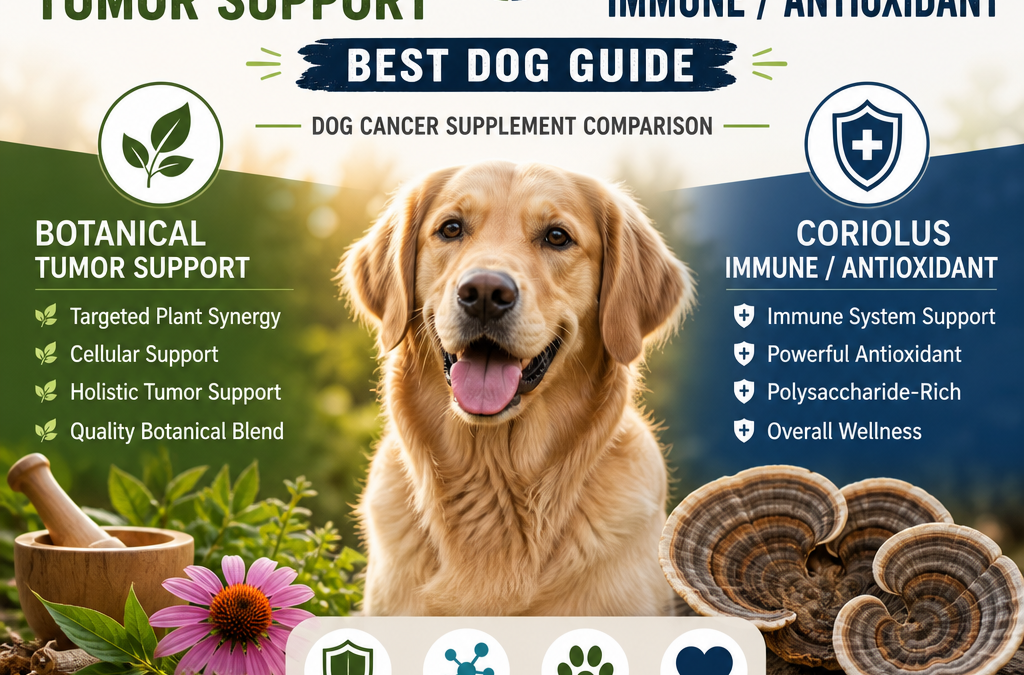
Botanical tumor support vs Coriolus / immune / antioxidant is an important comparison for dog owners exploring complementary support during cancer care. These products are not interchangeable, and their purposes, evidence, ingredients, and safety considerations can vary considerably. The best choice depends on the dog’s diagnosis, current treatment, overall health, and veterinary guidance—not on a supplement label alone.
Índice
Understanding the Main Supplement Categories
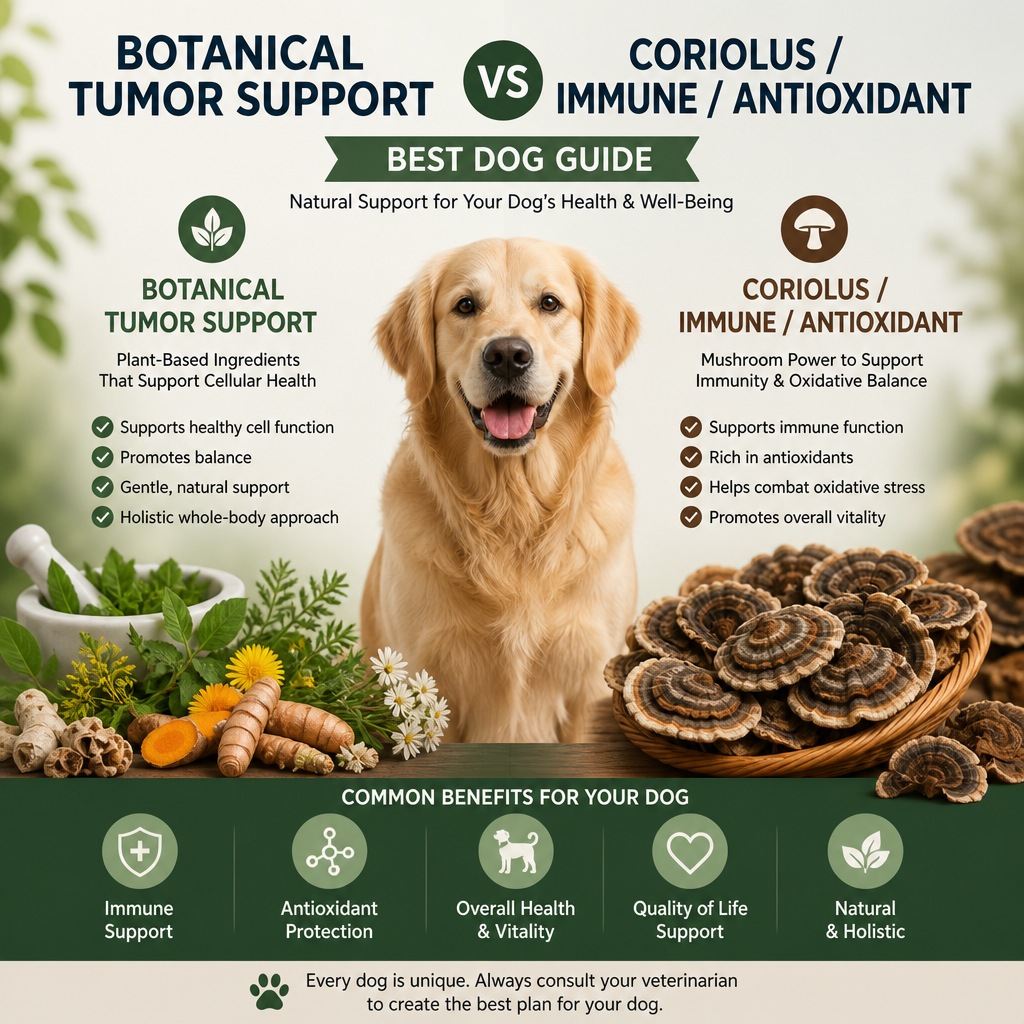
Canine cancer supplements are often grouped into three broad categories: botanical tumor-support formulas, Coriolus-based products, and general immune or antioxidant supplements. Although these groups may overlap, each is usually designed with a different goal. For dog owners trying to compare options, botanical tumor support vs Coriolus / immune / antioxidant is best approached as a question of purpose, not branding.
Botanical tumor-support formulas typically combine several plant-derived ingredients selected for their potential effects on inflammation, cellular signaling, circulation, or abnormal tissue growth. Common ingredients may include medicinal mushrooms, turmeric compounds, green tea extracts, milk thistle, resveratrol, or other herbs. Formulas differ widely, so the word “botanical” does not describe one standardized product.
Coriolus supplements are generally based on extracts from Trametes versicolor, also known as turkey tail mushroom. These products commonly contain polysaccharide-rich compounds, including polysaccharide-K, or PSK, and polysaccharide peptide, or PSP. Their primary focus is usually immune modulation rather than direct antioxidant support. In many cases, botanical tumor support vs Coriolus / immune / antioxidant comes down to whether the owner wants a broad blend or a more focused mushroom extract.
Immune supplements are formulated to support immune-system function, appetite, resilience, or recovery. They may contain mushroom extracts, beta-glucans, vitamins, minerals, colostrum, or other nutrients. Some products are intended for general wellness rather than cancer-specific use, so it is important to read the label carefully before assuming the product fits a treatment plan.
Suplementos antioxidantes aim to help manage oxidative stress by providing compounds such as vitamins C and E, selenium, coenzyme Q10, or plant polyphenols. Oxidative stress is involved in normal aging, inflammation, and disease, but antioxidant supplementation during cancer treatment requires particular care. That is one reason botanical tumor support vs Coriolus / immune / antioxidant should never be reduced to a simple “natural equals safe” assumption.
For readers looking at mushroom-based support more broadly, a related article may help provide context: veterinary mycotherapy guide for dogs in Switzerland.
Botanical tumor support vs Coriolus / immune / antioxidant
When comparing these categories, the most useful question is not which one is universally “best,” but which one matches the dog’s clinical needs. In practice, botanical tumor support vs Coriolus / immune / antioxidant choices depend on whether the goal is broad support, a more targeted mushroom-based strategy, or a carefully selected antioxidant role. This comparison is most useful when the owner has a clear objective, such as appetite support, immune balance, or better tolerance during treatment.
Botanical tumor-support products may appeal to owners seeking a broad, multi-ingredient approach. Their potential advantage is that several ingredients may target different biological pathways at once. However, this complexity can also create challenges. It may be difficult to determine which ingredient is responsible for a benefit or side effect, and multiple herbs may increase the possibility of interactions with prescription medicines. In other words, botanical tumor support vs Coriolus / immune / antioxidant is partly a question of simplicity versus breadth.
Coriolus products are often more focused. Turkey tail has been studied for immune-related activity, especially through mushroom polysaccharides that may influence immune-cell communication. Research in dogs remains limited compared with conventional cancer treatments, but some veterinary oncology discussions include turkey tail as a complementary option. Product quality is crucial because extraction methods, beta-glucan content, purity, and dosing can vary greatly. If you want a broader review of mushroom-based options, see this veterinary mycotherapy guide for dogs in Switzerland.
Immune-support products may be useful when a dog is recovering from illness, coping with treatment-related stress, or experiencing reduced appetite and energy. However, “immune boosting” is a broad marketing term. A strong immune response is not always desirable, particularly in dogs with autoimmune disease or those receiving medications that affect immune activity. Supporting balanced immune function is more appropriate than attempting to stimulate the immune system indiscriminately. That is why botanical tumor support vs Coriolus / immune / antioxidant decisions should be made with specific health goals in mind.
Antioxidants may help maintain normal cellular defenses and support general health, but they should not automatically be combined with chemotherapy or radiation. Some cancer treatments rely partly on oxidative mechanisms to damage cancer cells. Whether a specific antioxidant interferes with treatment depends on the compound, dose, timing, and therapy involved. Veterinary oncology guidance is essential before adding concentrated antioxidant products. The comparison between botanical tumor support vs Coriolus / immune / antioxidant is therefore not only about ingredients, but also about timing and compatibility with treatment.
For many owners, botanical tumor support vs Coriolus / immune / antioxidant also raises a practical question: which product is simplest to monitor? A focused formula is often easier to evaluate than a long ingredient list, especially when a dog is already receiving several medications. Simpler does not always mean better, but it can make adjustment and observation much more manageable.
A related regional example of product comparison can be helpful when browsing options: K9 Imunidade / K9 Imunidade Plus Alternativa: Melhores Suplementos para Tumores em Cães Finlândia.
A Practical Dog Cancer Supplement Comparison
A dog cancer supplement comparison should begin with product transparency. Look for a complete ingredient list, clearly stated amounts, lot or batch testing, expiration information, and manufacturing standards. Products made for humans may contain ingredients that are unsuitable for dogs, including certain sweeteners, excessive vitamin levels, or herbs that are poorly tolerated by animals. When owners compare botanical tumor support vs Coriolus / immune / antioxidant products, this transparency is often the first sign of product quality.
The diagnosis also matters. A supplement approach for lymphoma may not be appropriate for a dog with a mast cell tumor, osteosarcoma, hemangiosarcoma, or a noncancerous growth. Tumor type, stage, surgery status, chemotherapy protocol, radiation plan, and laboratory results can all influence the risk-benefit assessment. This is why botanical tumor support vs Coriolus / immune / antioxidant decisions should always be individualized rather than copied from another dog’s plan.
The dog’s existing medications must be reviewed as well. Potential concerns include effects on blood clotting, liver enzymes, blood pressure, blood sugar, sedation, or immune activity. For example, some herbs may increase bleeding risk around surgery, while others can alter how medications are metabolized. A supplement that is generally safe in a healthy dog may be unsuitable for a dog with liver disease, kidney disease, gastrointestinal ulcers, or low platelet counts.
When possible, compare brands using reliable product information rather than advertising language. The National Center for Complementary and Integrative Health’s herbs overview is a useful educational reference for learning how herbs may work, what evidence exists, and why safety matters.
A dog cancer supplement comparison also benefits from a simple checklist:
- What is the exact purpose of the supplement?
- Are the ingredients clearly labeled and dosed?
- Does the product fit the dog’s treatment plan?
- Could it affect surgery, chemotherapy, radiation, or lab results?
- Can the owner monitor a clear outcome, such as appetite or comfort?
- Is the formula easy to pause or adjust if needed?
Using these questions makes botanical tumor support vs Coriolus / immune / antioxidant much easier to evaluate in real-world care. It also helps prevent the common mistake of buying a supplement because it sounds “natural” rather than because it fits the dog’s needs. A thoughtful dog cancer supplement comparison should always prioritize clarity, compatibility, and monitoring.
What to Look for in a Product Label
When reading a label, pay attention to the form of each ingredient. For example, some mushroom products list raw powder, while others use hot-water or dual extraction. Those differences matter because extraction affects which compounds are actually present. The same is true for botanicals, where a whole herb extract may not behave like an isolated compound. This is especially relevant when evaluating botanical tumor support vs Coriolus / immune / antioxidant products side by side.
If a product combines many ingredients, ask why each one is included. A well-designed formula should have a clear purpose. In contrast, a long label with overlapping ingredients may simply create confusion. That is another reason a structured botanical tumor support vs Coriolus / immune / antioxidant comparison is so helpful for dog owners.
It is also wise to confirm whether the product was designed for animals or adapted from human use. Even when the ingredients appear familiar, canine dosing and tolerance can differ. Dogs can react differently to herbs, concentrated extracts, and excipients than people do. A label that looks impressive may still be unsuitable if the formulation was not built with canine metabolism in mind.
Owners should also look for practical information that supports day-to-day use: serving size, storage instructions, possible cautions, and consistency between batches. If a supplement is difficult to dose accurately, it becomes harder to assess whether botanical tumor support vs Coriolus / immune / antioxidant is actually helping or simply adding another variable.
Another useful sign is whether the company explains the intended use in plain language. A responsible product will usually describe whether it is meant for immune support, general wellness, or complementary cancer care. When the claims are vague or exaggerated, caution is warranted. No supplement label should replace informed veterinary advice.
Segurança e Monitoramento
Introduce only one new supplement at a time unless a veterinarian provides a different plan. This makes it easier to identify side effects and evaluate tolerance. Start with the veterinary-recommended amount, and never assume that a larger dose will produce better results. That principle applies whether the choice is botanical tumor support vs Coriolus / immune / antioxidant, or any other complementary option.
Watch for vomiting, diarrhea, reduced appetite, itching, lethargy, unusual thirst, changes in urination, bruising, or worsening discomfort. These signs should be reported to a veterinarian, especially if the dog is undergoing active cancer treatment. It may also be useful to note whether symptoms begin shortly after starting the supplement or whether they appear unrelated.
It is also useful to track practical outcomes. Record appetite, body weight, stool quality, activity, pain levels, and treatment-related symptoms. A supplement should be judged by meaningful improvements in quality of life or measurable clinical goals, not by claims that it can “cure” cancer. This is one of the most important parts of any botanical tumor support vs Coriolus / immune / antioxidant review.
Special caution is warranted around surgery, chemotherapy, and radiation. Some products that seem harmless can still influence clotting, liver processing, or sensitivity to treatment. If a dog has a scheduled procedure, the veterinary team should know about every supplement being used, including products that are marketed as natural or gentle.
Owners should also remember that monitoring is not only about side effects. A good supplement plan should be revisited periodically. If a dog’s condition changes, the product may need to be paused, adjusted, or replaced. Botanical tumor support vs Coriolus / immune / antioxidant choices may evolve as the disease progresses or as treatment goals shift.
How to Choose the Most Appropriate Option
For some dogs, a carefully selected Coriolus product may provide a relatively focused immune-support approach. For others, a botanical formula may be considered when broader complementary support is desired and the ingredient profile is compatible with treatment. An antioxidant product may be reasonable for a specific nutritional purpose, but concentrated antioxidants should be evaluated carefully during chemotherapy or radiation. In practice, botanical tumor support vs Coriolus / immune / antioxidant decisions are best made after the dog’s veterinary team reviews the full health picture.
In many cases, the most important supportive measures are not supplements. Adequate calories and protein, pain control, hydration, dental care, management of nausea, appropriate exercise, and regular veterinary monitoring often have a greater impact on daily well-being. Supplements should complement these foundations rather than replace them.
The central lesson in botanical tumor support vs Coriolus / immune / antioxidant comparisons is that categories do not guarantee quality or effectiveness. A focused, transparent product used for a clear purpose may be more appropriate than a complicated formula containing numerous poorly studied ingredients. Work with a veterinarian, preferably a veterinary oncologist or integrative veterinary professional, to review the product, dose, timing, and monitoring plan.
If you are reviewing this topic alongside other mushroom-based support options, the supplement choice should stay aligned with the dog’s condition and treatment goals. That is true whether the product is a botanical blend, a turkey tail extract, or a general immune formula. The most practical approach is usually the one that fits the diagnosis, supports the dog’s comfort, and does not complicate treatment.
Used thoughtfully, complementary supplements may support comfort and overall wellness for some dogs with cancer. They should always be treated as part of a coordinated care plan—not as substitutes for diagnosis, surgery, chemotherapy, radiation, or other evidence-based veterinary treatment.
In short, botanical tumor support vs Coriolus / immune / antioxidant decisions should be made with clear goals, realistic expectations, and veterinary oversight. When the product matches the dog’s needs, it is easier to support quality of life without adding unnecessary complexity. That is the most responsible way to approach a dog cancer supplement comparison in real-world care.
For owners who want to compare a different market example, this page can provide another useful reference point: VEBIOT Neoplasmoxan alternativa: 7 Poderosas Opções que Você Precisa Conhecer para Cães com Tumores na Polônia.