
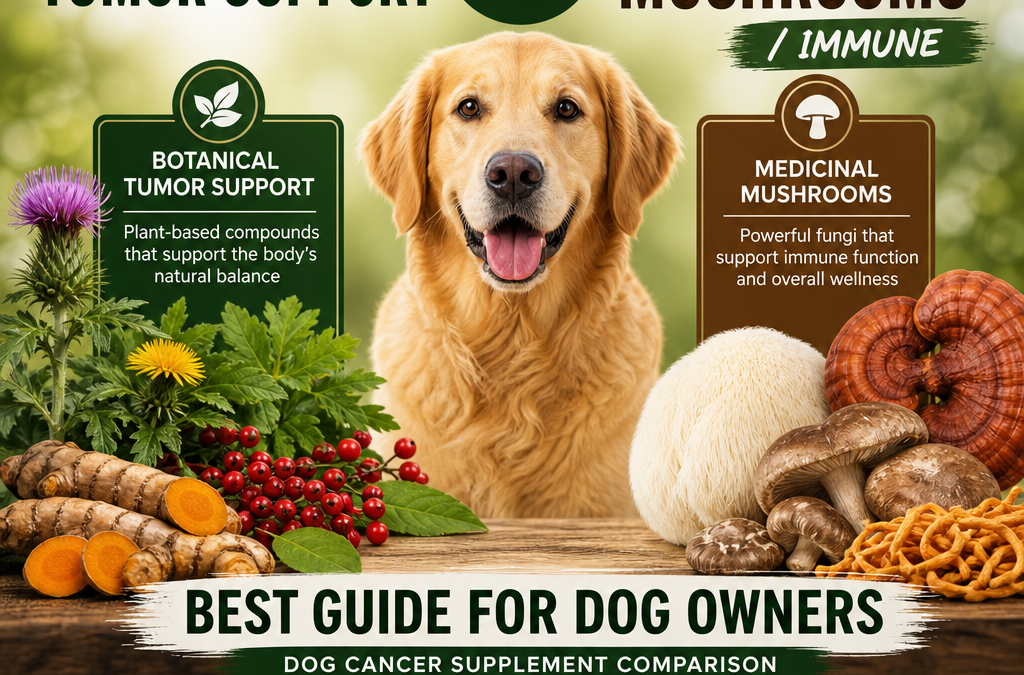
Botanical tumor support vs Medicinal mushrooms / immune is an important comparison for dog owners exploring complementary care after a cancer diagnosis. Both approaches may be used to support overall wellness, but they are not interchangeable, and neither should replace a veterinarian-directed treatment plan. The best choice depends on the dog’s cancer type, current medications, liver and kidney health, appetite, immune status, and treatment goals.
When people search for botanical tumor support vs Medicinal mushrooms / immune, they are usually trying to understand what each supplement category is meant to do, how much evidence supports it, and whether it is safe to use with conventional care. That is a smart place to start, because the most expensive product is not always the most appropriate one, and the most natural product is not always the safest one.
Innehållsförteckning
- Understanding the difference between the two approaches
- How they may work
- What research can and cannot tell dog owners
- Ingredient quality and product transparency
- Safety concerns and possible interactions
- Choosing between botanical and mushroom support
- A practical dog cancer supplement comparison checklist
Understanding the difference between the two approaches
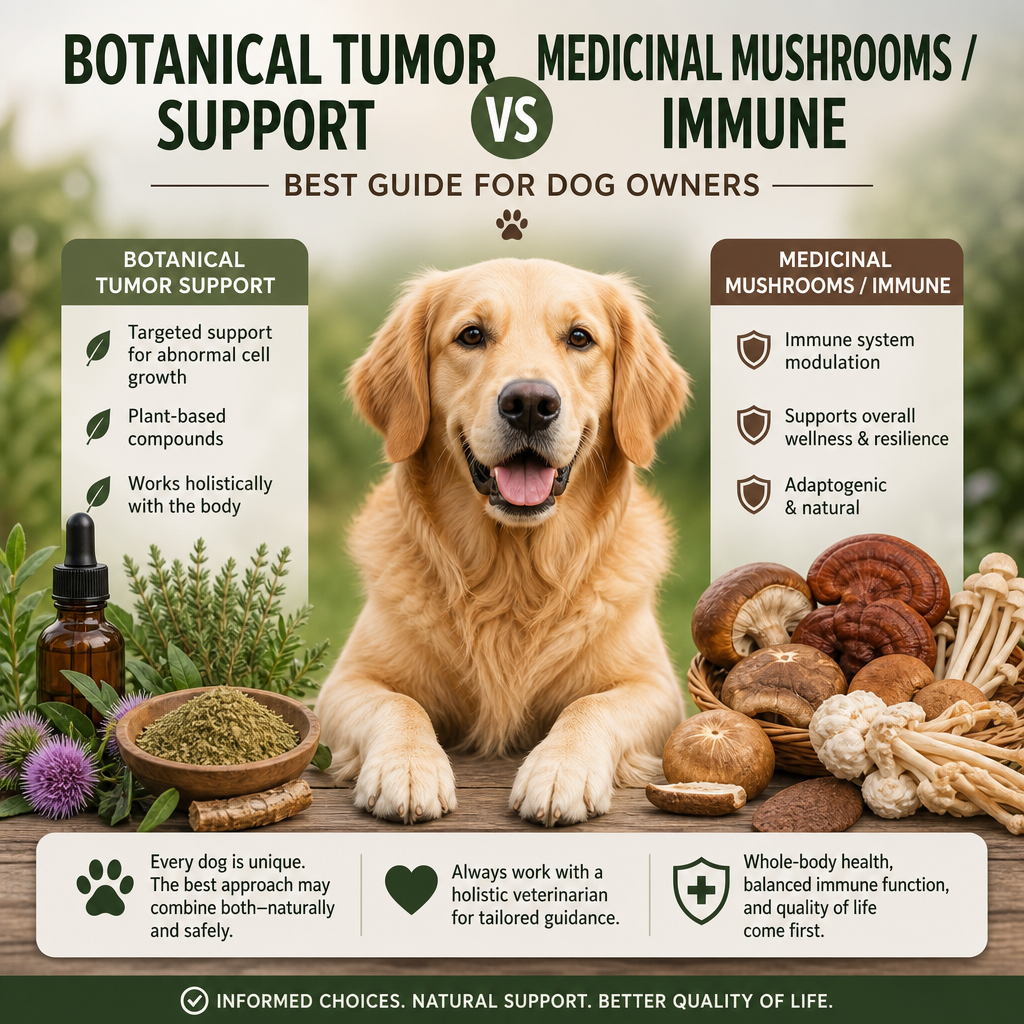
Botanical tumor support generally refers to plant-based ingredients selected for their antioxidant, anti-inflammatory, digestive, or cellular-support properties. These formulas may contain herbs, concentrated extracts, polyphenols, or other compounds traditionally used to help maintain normal immune function and overall resilience.
Medicinal mushrooms, by contrast, are fungi commonly used in wellness products for their beta-glucans and other naturally occurring compounds. Popular examples include turkey tail, reishi, maitake, shiitake, and cordyceps. Mushroom-based supplements are often positioned primarily as immune-support products, although some research has examined their potential role in cancer-supportive care.
The distinction matters because a product marketed for “tumor support” may be designed around several biological pathways, while a mushroom formula may focus more heavily on immune modulation. These labels are not standardized, however. Two products with similar claims can differ significantly in ingredient quality, concentration, testing, and safety.
For dog owners in Lithuania and elsewhere, this means the label alone is not enough. A careful botanical tumor support vs Medicinal mushrooms / immune review should start with the ingredient list, the intended use, and whether the product fits the dog’s medical situation.
In simple terms, botanical formulas are often broader in scope, while mushroom products are usually narrower and more immune-focused. That does not make one category better than the other. It only means the dog owner should match the supplement type to the need, instead of assuming all support products work the same way.
Botanical tumor support vs Medicinal mushrooms / immune: how they may work
A dog cancer supplement comparison should begin with the intended function of each formula rather than the marketing language on the label.
Botanical products may combine ingredients intended to support:
- Normal inflammatory balance
- Antioxidant defenses
- Healthy digestion and appetite
- Liver function and metabolic processes
- General cellular protection
- Comfort and quality of life
Medicinal mushroom products are commonly formulated to provide beta-glucans, which may interact with elements of the innate immune system. The goal is usually not to “boost” immunity indiscriminately, but to help maintain balanced immune signaling. This distinction is especially important for dogs receiving chemotherapy, corticosteroids, immunosuppressive drugs, or treatment for autoimmune disease.
Some mushroom extracts may also contain compounds associated with antioxidant and inflammatory pathways. However, laboratory findings do not automatically translate into proven clinical benefits for every dog or every cancer type. The strength of evidence varies by mushroom species, extract type, dosage, and study design.
In practical terms, botanical tumor support vs Medicinal mushrooms / immune comes down to the main aim of the formula. One may emphasize broader plant-based support, while the other may focus more specifically on fungal compounds and immune balance.
It is also helpful to understand that support formulas do not work in isolation. A dog’s hydration status, nutrition, medication schedule, and overall stress level can influence how well any supplement is tolerated. For that reason, the best supplement is usually the one that fits comfortably into the veterinary plan and can be used consistently without causing digestive upset or other new problems.
Another useful way to think about botanical tumor support vs Medicinal mushrooms / immune is to separate “supportive goals” from “direct treatment goals.” Supportive formulas may help a dog feel better, eat more reliably, or maintain steadier energy, while the primary cancer plan focuses on the disease itself. Keeping those roles separate makes it easier to make realistic decisions.
Some formulas are marketed as all-purpose wellness products, but a dog with cancer often needs a more specific approach. A product that seems attractive because it contains many ingredients may actually be harder to evaluate. Fewer ingredients can sometimes mean more clarity about what is helping and what is not.
Because dogs can vary so much in age, breed, size, and treatment history, the same formula can produce different results from one patient to another. That is one more reason why botanical tumor support vs Medicinal mushrooms / immune should be viewed as an individualized choice rather than a universal recommendation.
What research can and cannot tell dog owners
Turkey tail is among the most studied medicinal mushrooms in cancer-support research, including research involving dogs. Certain studies have explored its use alongside conventional treatment, particularly in dogs with specific cancers. These findings are encouraging but should not be interpreted as proof that every turkey tail supplement will produce the same result.
For readers who want a deeper overview of mushroom use in canine wellness, see Fördelarna med medicinska svampar för hundar: Stärka immunhälsan naturligt.
Research on botanical ingredients is similarly mixed. A plant may demonstrate promising effects in cell cultures or laboratory animals, yet behave differently in a living dog. Absorption, metabolism, dosage, product quality, and interactions with other treatments all influence real-world outcomes.
Another challenge is that supplements are often tested as individual ingredients, while commercial products may contain multi-ingredient blends. A formula that combines several herbs and mushrooms may be difficult to evaluate because the exact contribution of each ingredient is unclear.
For these reasons, supplements should be viewed as complementary tools. The most meaningful measure of success is often practical: maintaining appetite, energy, comfort, digestion, hydration, and quality of life while following the primary veterinary treatment plan.
When comparing botanical tumor support vs Medicinal mushrooms / immune, it helps to remember that research quality varies widely. A product with promising early data is not the same as a proven therapy, and veterinary guidance remains essential.
Owners sometimes ask whether a single ingredient with a strong research history is better than a more complex formula. In many cases, a simpler product with better transparency is easier to evaluate and monitor. If a dog’s condition changes, the veterinary team can more easily determine whether the supplement, the disease, or another medication is responsible.
One reason this comparison remains difficult is that supplement studies do not always use the same extract strength, growing conditions, or manufacturing standards. For example, two turkey tail products may look similar on the label but differ in active compound content. That makes it difficult to generalize results from one product to another.
Dog owners should also be cautious about extrapolating from human data. A botanical ingredient that appears useful in people may not behave the same way in dogs. Species differences in digestion, metabolism, and immune response can change both effectiveness and safety.
If the research sounds promising but the product information is vague, that is a sign to slow down and ask more questions. In the context of botanical tumor support vs Medicinal mushrooms / immune, the most responsible choice is usually the one with the clearest evidence, not the loudest claims.
Comparing ingredient quality and product transparency
The quality of a supplement can matter as much as the category. Dog owners should look for products that clearly disclose:
- The exact species and part of each mushroom or plant used
- Whether the ingredient is a powder, liquid extract, or standardized extract
- The amount provided per serving and per active compound when available
- Batch testing for contaminants, heavy metals, microbes, and pesticides
- Manufacturing standards and expiration information
- Clear dosing instructions based on a dog’s weight
For medicinal mushrooms, a label should ideally identify the mushroom species and explain whether the product contains fruiting body, mycelium, or both. These materials can differ in their active compounds and nutritional profiles.
For botanical formulas, vague terms such as “proprietary herbal blend” make it harder to assess safety. Transparency is particularly important when a dog is taking chemotherapy, pain medication, steroids, anti-inflammatory drugs, or anticoagulants.
A careful Botanical tumor support vs Medicinal mushrooms / immune decision should also account for testing and manufacturing standards. If a company cannot explain how its product is made or tested, that is a reason to be cautious.
Quality control is especially important because supplements sold for dogs can vary widely from one brand to another. Some products rely on raw plant powders that may contain only small amounts of the compounds people expect, while others use concentrated extracts with more predictable potency. In both categories, the best label is the one that tells you exactly what you are giving your dog.
If you are comparing products, ask whether the company provides a certificate of analysis, whether each batch is checked for safety, and whether the formulation is intended for dogs rather than adapted from a human product. Those details may seem small, but they can make a large difference in real-world use.
Owners should also think about storage and freshness. Some extracts lose potency when exposed to heat, moisture, or light. A product that is poorly packaged may not deliver the same consistency as a well-protected one, even if the ingredients look similar on paper.
It is also worth checking whether the product lists unnecessary fillers, artificial flavors, or sweeteners. Dogs with cancer often have sensitive digestion, and a clean formula is easier to monitor. In a Botanical tumor support vs Medicinal mushrooms / immune comparison, the simplest product with the most transparent label often has the advantage.
Safety concerns and possible interactions
Natural does not mean risk-free. Some herbs and mushroom extracts may affect blood clotting, blood pressure, blood sugar, liver enzymes, or immune activity. Others may cause digestive upset, loose stool, nausea, or reduced appetite.
A supplement may also interact with cancer medications by changing how a drug is absorbed or metabolized. Antioxidant-heavy products can be especially complicated because some conventional treatments rely partly on oxidative damage to abnormal cells. The clinical importance of this interaction depends on the specific therapy, but it is one reason a veterinary oncologist should review the full ingredient list.
Dogs with liver disease, kidney disease, bleeding disorders, diabetes, autoimmune conditions, or a history of pancreatitis may require additional caution. Puppies, senior dogs, and dogs with poor appetite may also respond differently to concentrated extracts.
Introduce only one new supplement at a time, unless a veterinarian gives different instructions. Starting with a conservative amount can make it easier to identify intolerance. Stop the product and contact the veterinary team if the dog develops persistent vomiting, diarrhea, unusual lethargy, yellowing of the gums or eyes, bruising, appetite loss, or other concerning symptoms.
Veterinary safety advice can also be checked through a trusted public source such as the U.S. FDA Center for Veterinary Medicine, which explains regulated animal-health information and safety considerations.
In any Botanical tumor support vs Medicinal mushrooms / immune plan, safety should come first. A conservative approach is usually better than adding multiple products at once.
This is also why timing matters. If the dog is already in a fragile phase of treatment, adding a new supplement may make it harder to identify the cause of changes in appetite, stool quality, or energy. A slow, monitored approach gives the owner and veterinarian more useful information.
Safety also includes thinking about surgery and procedures. If a dog is scheduled for a biopsy, operation, or dental treatment, the veterinary team may want certain supplements paused in advance. That is another reason to keep an updated list of everything the dog is taking, including botanical blends and mushroom formulas.
When in doubt, ask whether the product has any known effect on clotting, glucose, sedation, or liver processing. Those questions are especially useful for a Botanical tumor support vs Medicinal mushrooms / immune decision because the two categories can have different risk profiles depending on the ingredients involved.
Choosing between botanical and mushroom support
The right option is not necessarily the one with the most ingredients or the strongest claim. A better decision begins with the dog’s individual needs.
A mushroom-focused product may be considered when the primary goal is immune-supportive nutrition and the formula has strong quality controls. A botanical formula may be more appropriate when the goal includes digestive support, antioxidant balance, or broader wellness support. In some cases, a veterinarian may recommend neither, particularly if the dog is medically unstable or taking medications with a high interaction risk.
It is also possible that a dog does not tolerate a product that appears suitable on paper. Digestive comfort, palatability, and consistent use are practical factors. A complicated formula that causes nausea is unlikely to provide meaningful support.
For owners comparing botanical tumor support vs Medicinal mushrooms / immune, the best choice is the one the dog can tolerate consistently and safely. That often matters more than headline claims.
A useful way to think about the decision is to ask three questions: What is the current goal, what is the dog already taking, and what can be monitored over time? If a supplement does not clearly fit those three points, it may not be the right option yet.
Some dog owners also compare products based on country-specific availability, pricing, and formulation style. That can be helpful, but it should never override the basics: clear ingredients, safe dosing, and veterinary oversight. A less flashy product with better manufacturing standards may be the stronger long-term choice.
For broader comparison reading, the internal guide Alternatives to Medicinal Mushrooms / Veterinary Mycotherapy: 7 Best Dog Tumor Supplements in Switzerland may help you compare common options more clearly.
One practical strategy is to choose a single goal for the first product trial. For example, if the priority is appetite support, a formula with a cleaner digestive profile may be better than one that tries to do everything at once. If the goal is immune support, a mushroom-based product with clear testing may be the better fit.
Owners should also consider whether the supplement can be measured objectively. If the dog is eating a little better, having fewer stomach issues, or maintaining weight more steadily, those are concrete signs that the plan may be helping. That makes botanical tumor support vs Medicinal mushrooms / immune less about theory and more about real-life results.
If the veterinarian is already using diet changes, anti-nausea medication, or pain control, the supplement should complement those efforts rather than complicate them. The best support plan is coordinated, not crowded.
A practical dog cancer supplement comparison checklist
Before purchasing any supplement, dog owners can review these questions:
- What is the specific goal: immune support, appetite, digestion, comfort, or general wellness?
- Has the product been reviewed by the dog’s veterinarian or veterinary oncologist?
- Are all active and inactive ingredients listed?
- Does the company provide independent testing or a certificate of analysis?
- Is the dose appropriate for the dog’s weight and health status?
- Could any ingredient affect chemotherapy, surgery, clotting, or liver metabolism?
- Can the dog be monitored for side effects?
- Is the supplement being used alongside, rather than instead of, recommended cancer care?
Keeping a written list of medications, supplements, doses, and observed symptoms can help the veterinary team make safer decisions.
If you are building a plan around botanical tumor support vs Medicinal mushrooms / immune, it also helps to set a review date. For example, note the start date, the intended purpose, and the observations you want to track after one to two weeks. That simple habit can reduce guesswork and make follow-up conversations with the veterinarian much more productive.
Owners should also remember that quality of life may improve for reasons unrelated to tumor size. Better appetite, easier digestion, less nausea, or improved calmness can be meaningful outcomes even when the cancer itself is unchanged. A thoughtful supplement plan should support those day-to-day goals while remaining realistic about what complementary care can and cannot do.
If a product is difficult to administer, smells unpleasant, or causes repeated refusal, that is a practical sign it may not be sustainable. Compliance matters because the best formula in theory is not useful if the dog will not eat it or if it creates stress at every dose.
On the other hand, a well-formulated product that is easy to give and easy to tolerate can be much more valuable than a stronger-sounding product that sits unused on the shelf. The day-to-day experience of the dog matters just as much as the label claims.
Botanical tumor support vs Medicinal mushrooms / immune is ultimately a decision about fit, not fashion. The most useful supplement is the one that aligns with the diagnosis, supports the treatment plan, and can be monitored carefully for benefit and safety.
When choosing among botanical tumor support vs Medicinal mushrooms / immune products, remember the core priorities: evidence, transparency, safety, and veterinary guidance. Those four factors matter more than marketing language, and they are the best guide for making a responsible choice for your dog.
As a final reminder, botanical tumor support vs Medicinal mushrooms / immune is not a contest with a single winner. The right answer depends on the dog in front of you, the treatment plan already in place, and the supplement’s quality and tolerability. When those pieces line up, complementary support can be more practical and more helpful.