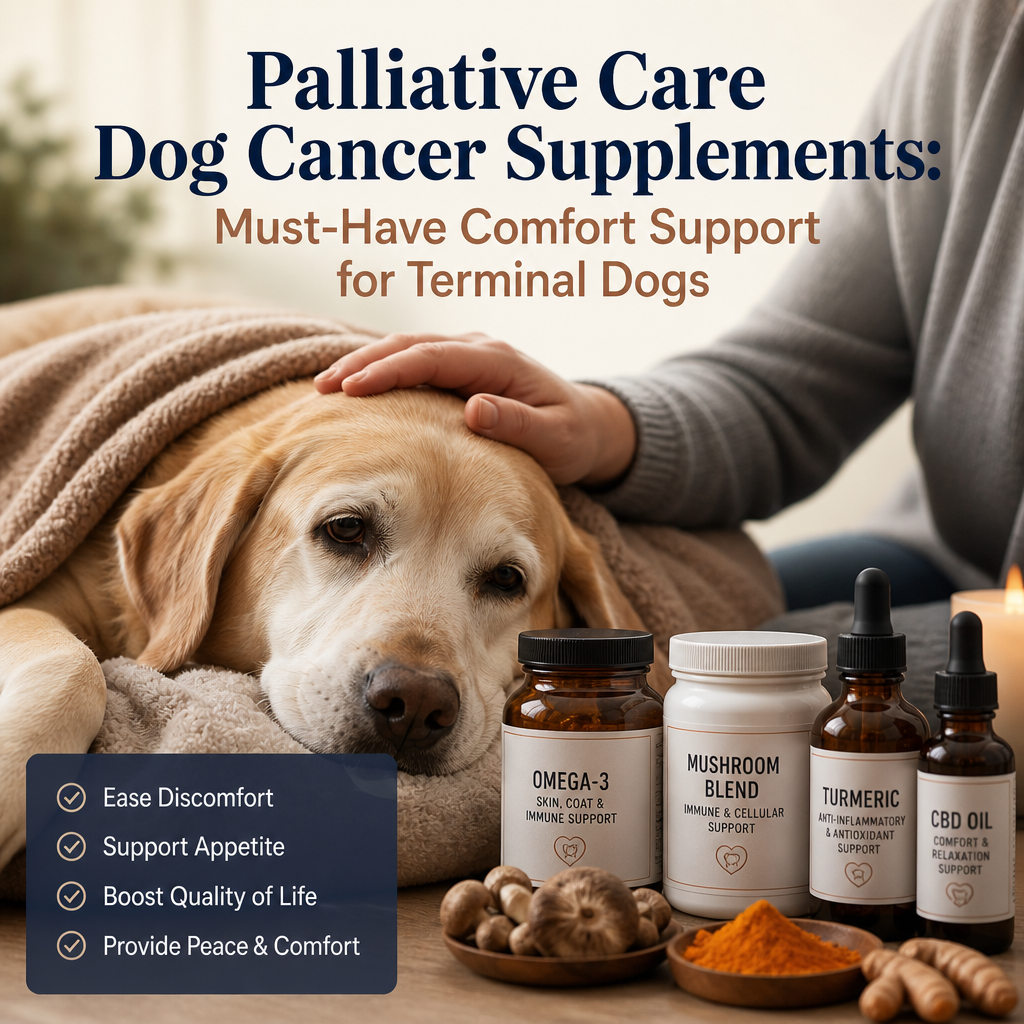
Palliative Care Dog Cancer Supplements can offer gentle, supportive care for dogs living with advanced cancer, but they should never replace veterinary treatment. When a dog’s disease is no longer curable, the goal often shifts from eliminating cancer to preserving comfort, mobility, appetite, and meaningful time with family. Carefully selected supplements may help support these goals when used alongside pain control, nutrition, environmental adjustments, and regular veterinary guidance.
Understanding palliative care for dogs with cancer
Palliative care focuses on quality of life rather than aggressive treatment alone. For a terminally ill dog, this may include managing pain, nausea, inflammation, anxiety, reduced mobility, poor appetite, and other symptoms associated with cancer or its treatment.
Every dog has different needs. A dog with bone cancer may require support for pain and mobility, while a dog with gastrointestinal cancer may struggle primarily with nausea, weight loss, and digestion. Palliative care dog cancer supplements should therefore be chosen according to the dog’s diagnosis, medications, laboratory results, age, and overall condition.
Before adding any product, discuss it with a veterinarian. Some supplements can interfere with chemotherapy, surgery, blood clotting, liver function, or prescription medications. “Natural” does not automatically mean safe, particularly for a dog with weakened organs or advanced disease.
In many cases, the most effective plan combines veterinary treatment, careful feeding, and a few targeted supportive products. Used thoughtfully, palliative care dog cancer supplements can fit into that plan without overwhelming the dog’s routine.
Palliative Care Dog Cancer Supplements for nutritional support
Cancer can increase the body’s energy demands while reducing appetite. Some dogs lose weight because of nausea, pain, altered taste, difficulty chewing, or changes in metabolism. Nutritional support may help maintain strength and make daily activities easier.
Veterinarians may recommend calorie-dense foods, therapeutic diets, or carefully selected nutritional supplements. Omega-3 fatty acids from fish oil are commonly discussed because they may help support normal inflammatory balance and skin health. They can also provide concentrated calories, which may be useful for dogs eating small amounts. However, dosing matters, and fish oil may not be appropriate for every dog, especially those with pancreatitis, bleeding disorders, or certain digestive conditions.
A veterinary-approved multivitamin may be useful when a dog is eating a very limited homemade diet, but indiscriminate supplementation can create nutritional imbalances. Dogs receiving a complete and balanced commercial or therapeutic diet often do not need large amounts of additional vitamins.
Digestive support may also be considered. Probiotics and veterinarian-approved digestive products can sometimes help maintain normal stool quality and gut function, particularly after antibiotic use or during periods of digestive upset. They are not a cure for cancer, and a dog with persistent vomiting, diarrhea, abdominal pain, or refusal to eat needs prompt veterinary attention.
Some families also look for broader guidance on supportive care, and this related guide on best supplements for dogs with cancer can be a helpful starting point.
When nutrition becomes difficult, palliative care dog cancer supplements should be viewed as support tools rather than a complete answer. The priority is to help the dog eat comfortably and maintain enough energy for normal daily life.
Dog cancer comfort support for pain and mobility
Pain management is one of the most important aspects of palliative care. Prescription pain relievers, anti-inflammatory medications, nerve-pain medications, and other veterinary treatments usually form the foundation of comfort care. Supplements may provide additional support but should not be used instead of appropriate analgesia.
Joint-support ingredients such as glucosamine, chondroitin, green-lipped mussel, and undenatured type II collagen are often used for mobility concerns. Their effects may be gradual and are generally more relevant to joint function than severe cancer pain. A dog with bone or soft-tissue cancer may need a much more comprehensive pain plan.
Some products containing cannabidiol, or CBD, are marketed for dog cancer comfort support. Research remains limited, product quality varies widely, and CBD can affect liver enzymes or interact with medications. Any use should be discussed with a veterinarian, with careful attention to product testing, dosage, sedation, appetite changes, and possible side effects.
Gentle physical support can be just as valuable as supplements. Orthopedic bedding, nonslip rugs, ramps, padded harnesses, and short, comfortable walks may help a dog conserve energy and avoid injury. Heat should be used cautiously, since some tumors, inflammation, or circulation problems may make warming inappropriate.
For many households, palliative care dog cancer supplements work best when they are paired with changes to the home environment. A softer bed, easier access to water, and less stair climbing can matter as much as the supplement itself.
Supplements for terminal dog cancer and appetite concerns
Loss of appetite is common in advanced cancer, but it can result from several different problems. Pain, nausea, constipation, dehydration, medication side effects, and organ dysfunction may all reduce interest in food. Treating the underlying cause is more effective than simply adding an appetite supplement.
Veterinarians may prescribe anti-nausea medication, appetite stimulants, acid reducers, or other treatments. Feeding small portions several times a day can be easier than offering one large meal. Warmed food may have a stronger aroma, and soft textures can help dogs with mouth pain or weakness.
Supplements marketed for appetite or immune support often contain herbs, vitamins, or concentrated compounds that have not been adequately studied in dogs with cancer. Some may irritate the stomach or place additional strain on the liver and kidneys. Avoid forcing food, especially when a dog is nauseated or distressed, because it can increase anxiety and create food aversion.
Hydration is equally important. Fresh water should remain easy to access, and a veterinarian can advise whether oral fluids, electrolyte products, or assisted hydration are appropriate. Signs of dehydration include dry or sticky gums, weakness, sunken eyes, and reduced urination.
For reputable background information on hospice and comfort-focused care, the AVMA overview of palliative care is a useful educational resource.
In this stage of illness, palliative care dog cancer supplements may be most helpful when they reduce stress around meals rather than trying to force a big improvement. Small, realistic gains in appetite and hydration can make a meaningful difference.
Safety guidelines for using cancer supplements
Bring a complete list of every product your dog receives to veterinary appointments. Include supplement names, ingredients, strength, serving size, and frequency. This information helps the veterinarian identify potential interactions and determine whether a product should be stopped.
Choose products manufactured by reputable companies with transparent ingredient lists and independent quality testing when available. Avoid products containing undisclosed blends, excessive doses, alcohol, xylitol, or ingredients known to be toxic to dogs. Never give human supplements without veterinary approval, since some contain unsafe additives or doses.
Monitor for vomiting, diarrhea, unusual sedation, agitation, bruising, yellowing of the gums or eyes, changes in thirst, or worsening appetite. Stop the product and contact the veterinarian if concerning symptoms develop.
If you are comparing products across countries, this article on best supplements for dogs with cancer can help you understand the main categories before making a choice.
Good safety habits are essential because palliative care dog cancer supplements can still cause problems if they are layered on top of multiple medications without supervision. Clear communication with the veterinary team lowers that risk.
Making comfort the central goal
Supplements can be one small part of a broader palliative plan. The most meaningful support often comes from controlling pain, maintaining hydration, providing appealing nutrition, preserving gentle movement, and keeping the dog close to familiar people and routines.
Track daily quality-of-life indicators such as appetite, comfort, mobility, sleep, interaction, breathing, toileting, and enjoyment. Good days and difficult days can be recorded on a simple calendar. This helps families recognize trends and make compassionate decisions with their veterinary team.
For dogs with terminal cancer, the best care is individualized and flexible. Palliative care dog cancer supplements may offer limited supportive benefits, but comfort should always guide their use. Thoughtful veterinary supervision ensures that every treatment—including supplements—serves the dog’s wellbeing rather than adding unnecessary burden.
When families stay focused on comfort, palliative care dog cancer supplements can fit into a practical plan that supports appetite, mobility, and calm. Used carefully, palliative care dog cancer supplements may help a dog feel a little better through the hardest days. In the end, palliative care dog cancer supplements should always be chosen with the dog’s comfort and dignity in mind.
Dog Cancer Surgery Not an Option does not mean there is nothing you can do. When a tumour cannot be safely removed, supportive care can still help control symptoms, preserve comfort, and protect your dog’s quality of life. The right plan depends on the cancer type, its location, how quickly it is progressing, and your dog’s overall health. Working closely with your veterinarian can make this stage more manageable and ensure that care remains focused on your dog’s individual needs.
A tumour may be considered inoperable for several reasons. It might be located near vital organs, major blood vessels, the spinal cord, or other structures that cannot be safely disturbed. Some cancers spread throughout the body rather than forming one removable mass. Surgery may also be too risky if a dog has severe heart, kidney, or liver disease, or if the expected recovery would be difficult and unlikely to improve comfort.
“Inoperable” does not always mean “untreatable.” Your veterinarian may recommend radiation therapy, chemotherapy, immunotherapy, targeted medication, pain relief, or palliative procedures. In other cases, the most appropriate approach is comfort-focused care without aggressive treatment. A veterinary oncologist can help explain the available choices, expected benefits, possible side effects, and likely costs.
Inoperable dog tumour support should begin with a clear quality-of-life plan. The goal is not necessarily to eliminate the cancer, but to reduce suffering and help your dog continue enjoying daily activities for as long as possible.
Pain control is often central to supportive care. Depending on the type and location of the tumour, your veterinarian may prescribe anti-inflammatory medication, opioid pain relievers, nerve-pain medication, or other drugs. Never give human painkillers unless a veterinarian specifically instructs you to do so. Medications such as ibuprofen, naproxen, and acetaminophen can be dangerous or fatal to dogs.
Nausea, poor appetite, constipation, diarrhoea, coughing, and breathing difficulty may also need targeted treatment. Anti-nausea medication, appetite support, stool management, or oxygen therapy may improve comfort significantly. If a tumour interferes with eating or swallowing, your veterinarian may recommend softer foods, a feeding tube, or other options depending on the situation.
When supportive care is working well, your dog may still have good days that include eating, resting comfortably, and moving around the home with less effort. Watching for these moments can help you judge whether the current plan is still giving meaningful benefit. In many cases, the best care for dog cancer surgery not an option is a flexible plan that is reviewed often and adjusted as symptoms change.
Nutrition and hydration
Cancer can alter metabolism and cause weight loss, muscle wasting, or reduced appetite. Providing nutritious, appealing food in small, frequent meals may be more successful than offering one large portion. Some dogs prefer warmed food because the heat increases its aroma. Moist food may also be easier to eat, particularly for dogs with mouth pain or dental problems.
Your veterinarian may recommend a therapeutic diet based on your dog’s diagnosis and bloodwork. Avoid making major dietary changes without professional guidance, especially if your dog has kidney, liver, or pancreatic disease. Unbalanced homemade diets can create nutritional deficiencies at a time when the body needs reliable nourishment.
Hydration is equally important. Keep fresh water available in several easy-to-reach locations. Signs of dehydration can include dry or sticky gums, weakness, sunken eyes, and reduced urination. A dog that cannot keep water down, refuses fluids, or becomes suddenly weak needs prompt veterinary attention.
If appetite is poor, ask your veterinary team whether nausea control, pain control, or a different food texture would help more than changing the diet itself. Many families find that a practical feeding routine is easier to maintain than a complicated menu. In the context of dog cancer surgery not an option, steady nutrition often matters more than perfection, so small improvements can still be meaningful.
Simple feeding changes that may help
Offer smaller meals two to four times per day.
Warm food slightly to improve smell and acceptance.
Use shallow bowls for dogs with facial or neck discomfort.
Keep water and food close to the resting area.
Track which foods are tolerated best and which cause nausea or refusal.
Supplements for dogs with cancer
Supplements for dogs with cancer are sometimes considered as part of a broader care plan, but they should not replace proven veterinary treatment. Products commonly discussed include omega-3 fatty acids, medicinal mushrooms, antioxidants, probiotics, and nutritional support formulas. Evidence varies widely, and some supplements can interact with chemotherapy, radiation therapy, blood thinners, steroids, or anti-inflammatory medications.
Omega-3 fatty acids may support skin, joint, and general inflammatory health, but the appropriate dose depends on your dog’s weight, diet, medical history, and product quality. Some herbal products may affect liver enzymes or blood clotting. Antioxidant supplements can also be inappropriate during certain cancer treatments, because some therapies rely partly on oxidative damage to cancer cells.
Always provide your veterinarian with the product name, ingredient list, and intended dose before starting a supplement. Choose products made by reputable manufacturers with quality-control testing, and avoid supplements containing toxic ingredients such as xylitol. “Natural” does not automatically mean safe for dogs.
When to ask about supplements for dogs with cancer
It is worth asking about supplements for dogs with cancer when your dog is already on medication, has liver or kidney disease, or is receiving chemotherapy or radiation. Your veterinary team can help you weigh possible benefits against interaction risks so that any added product fits safely into the larger care plan.
If you are researching product categories, it can also help to compare them against broader veterinary advice rather than marketing claims alone. A second practical resource is the Best Supplements for Dogs with Cancer: 7 Essential UK Support Tips, which can give you a clearer framework for discussing choices with your vet.
Gentle exercise and environmental changes
Exercise should be adapted to your dog’s energy, mobility, and pain level. Short, gentle walks may provide mental stimulation and help maintain muscle without causing exhaustion. Dogs with bone tumours, severe weakness, or balance problems may need restricted activity and non-slip flooring.
Make the home easier and safer by placing food and water near your dog’s resting area, using ramps instead of stairs, adding soft bedding, and keeping rooms comfortably cool or warm. Help your dog change position if they are unable to move easily, but do so gently and ask your veterinarian to demonstrate safe handling.
Mental enrichment remains valuable. Quiet time outdoors, gentle grooming, scent games, and companionship can provide enjoyment without physical strain. Let your dog set the pace and stop activities when signs of fatigue or discomfort appear.
Comfort-focused adjustments are often most effective when they are small, consistent, and tailored to the home. A dog with cancer may not need major lifestyle changes to feel better; sometimes the most helpful steps are also the simplest. For many households facing dog cancer surgery not an option, safer movement and predictable routines reduce stress for both the pet and the family.
Home comfort checklist
Use rugs or mats on slippery floors.
Keep blankets and beds clean, soft, and easy to reach.
Move obstacles away from walking paths.
Provide a quiet place away from heavy foot traffic.
Check whether your dog needs help getting up, turning, or settling down.
Monitoring comfort and knowing when to seek help
Keep a simple daily record of appetite, drinking, pain, breathing, mobility, toileting, sleep, and interest in family activities. This can reveal gradual changes that are difficult to notice from day to day. A quality-of-life scale may also help you discuss patterns with your veterinarian.
Contact your veterinary team urgently if your dog has uncontrolled pain, severe breathing difficulty, repeated vomiting, collapse, heavy bleeding, seizures, a swollen abdomen, or an inability to urinate. These signs may indicate a crisis requiring immediate treatment.
Eventually, supportive care may no longer control discomfort adequately. Euthanasia can be a compassionate medical decision when suffering outweighs enjoyment, and discussing this possibility early does not mean giving up. Planning ahead allows you to focus on your dog’s needs rather than making decisions during an emergency.
It can also help to ask your veterinary team what changes would signal that the current plan is no longer enough. Appetite loss, repeated distress, or increasing difficulty breathing may mean that the situation has moved beyond routine management. Having that conversation early gives you time to prepare emotionally and practically. When dog cancer surgery not an option, the most humane care often comes from watching closely and responding before suffering becomes severe.
When dog cancer surgery not an option, attentive palliative care can still make a meaningful difference. With veterinary guidance, careful symptom control, suitable nutrition, safe activity, and loving daily support, many families can provide their dogs with comfort and dignity throughout the time they have together. If you are building a broader care plan, remember that dog cancer surgery not an option is not the end of the conversation; it is the point where comfort, monitoring, and informed choices matter most.