
by TCMVET | Aug 28, 2026 | Research and News
Medicinal mushrooms / mycotherapy are gaining attention among dog owners in Germany who want supportive, integrative options for dogs diagnosed with tumors. These natural products may help support general wellbeing, appetite, digestion, and immune function, but they should never replace veterinary diagnosis or cancer treatment. The most appropriate approach combines evidence-based veterinary care with carefully selected supplements, regular monitoring, and realistic expectations.
Understanding mycotherapy for dogs

Mycotherapy refers to the therapeutic use of mushrooms or mushroom extracts. In veterinary care, medicinal mushrooms are usually offered as powders, capsules, liquid extracts, or ingredients in combined formulas. They contain biologically active compounds such as beta-glucans, triterpenes, sterols, and antioxidants.
The goal is generally supportive rather than curative. Depending on the product and the individual dog, medicinal mushrooms / mycotherapy may be used to help maintain immune balance, support normal inflammatory responses, promote appetite, or improve quality of life during conventional cancer treatment. However, research in dogs remains limited compared with human medicine, and results can vary substantially.
A tumor diagnosis requires a complete veterinary assessment. The tumor type, grade, location, stage, age of the dog, existing illnesses, and current medications all influence which supplements may be appropriate. This is why any discussion of medicinal mushrooms / mycotherapy should begin with the full clinical picture rather than with a product label.
Owners sometimes hear broad claims about “immune boosting,” but a more accurate goal is immune modulation and supportive care. That distinction matters because a balanced immune response is not the same as simply increasing immune activity. In practice, the safest use of medicinal mushrooms / mycotherapy is individualized and reviewed over time, especially when the dog is already receiving treatment for a tumor.
Dog cancer supplements Germany: What owners should know
The market for dog cancer supplements Germany has expanded, with products available through veterinary practices, specialist pharmacies, pet retailers, and online shops. Product quality can differ widely. Some supplements are made from clearly identified mushroom species and provide standardized extracts, while others use proprietary blends that make it difficult to determine the actual amount of each ingredient.
When comparing products, owners should look for:
- The exact mushroom species and part used
- A clear declaration of beta-glucan or active-compound content
- Batch or laboratory testing for heavy metals, pesticides, bacteria, and contaminants
- Dosage guidance based on the dog’s weight
- Transparent manufacturing and storage information
- A German or European distributor that can provide product documentation
It is also important to distinguish whole mushroom powder from concentrated extracts. Powders may contain fiber and a broader range of compounds, whereas extracts can provide higher concentrations of selected constituents. Neither form is automatically better; suitability depends on the dog, the intended use, and the product’s quality.
Owners comparing medicinal mushrooms / mycotherapy products should also ask whether the brand explains how the raw material is sourced. The fruiting body, mycelium, and growth medium can all affect composition, and the differences are not always obvious from marketing language. Clear labeling is especially valuable for dog cancer supplements Germany, where quality control can vary from one manufacturer to another.
For a broader look at product selection and alternatives, see The Benefits of Medicinal Mushrooms for Dogs: Boosting Immune Health Naturally.
Medicinal mushrooms commonly used in canine support
Several mushroom species are frequently discussed in veterinary mycotherapy.
Turkey tail (Trametes versicolor) contains polysaccharides and beta-glucans and is one of the most researched medicinal mushrooms in relation to cancer support. Some preliminary canine research has investigated compounds derived from turkey tail, but owners should not assume that a supplement has the same composition or effect as a standardized research preparation.
Reishi (Ganoderma lucidum) is traditionally used to support immune regulation and general vitality. It may also have calming or anti-inflammatory properties, although evidence in dogs is still developing. Reishi can affect blood clotting, making veterinary guidance especially important before surgery or when anticoagulant medication is being used.
Shiitake (Lentinula edodes) provides beta-glucans and nutritional compounds. It is sometimes included in immune-support formulas, but concentrated extracts should be introduced carefully because gastrointestinal upset or intolerance can occur.
Maitake (Grifola frondosa) is another mushroom used in immune-support products. It may influence blood sugar and immune activity, so it requires caution in dogs with diabetes, autoimmune conditions, or complex medication plans.
Cordyceps species are marketed for energy, stamina, and immune support. The quality and identity of cordyceps products vary, particularly when cultivated alternatives or blended extracts are used. Veterinary assessment is advisable before use in dogs with kidney, liver, or immune disorders.
These mushrooms are not interchangeable, and combining several products can increase the risk of excessive dosing, interactions, or digestive problems. If you are comparing options for Medicinal mushrooms / mycotherapy, focus on species transparency, testing, and suitability for the individual dog rather than marketing claims.
Another practical point is that some supplements include added herbs, minerals, or flavorings. Those extras may be useful, but they can also complicate tolerance assessment. If a dog has a sensitive stomach or multiple medications, a simpler formula may make medicinal mushrooms / mycotherapy easier to use safely.
How to compare Medicinal mushrooms / mycotherapy products
Owners often do better when they compare mushroom supplements by label clarity, extract strength, and intended use. A product that appears simple can be more reliable than a complex blend with vague ingredient amounts. In many cases, the safest way to use Medicinal mushrooms / mycotherapy is to choose one well-documented product, monitor carefully, and reassess after a short trial period with the veterinarian.
When you compare Medicinal mushrooms / mycotherapy options, ask whether the company identifies the fruiting body or mycelium, whether the extraction method is explained, and whether the active compounds are standardized. These details matter because two products with the same mushroom name can differ greatly in potency.
It also helps to think about the dog’s practical needs. Some dogs tolerate capsules better than powders, while others accept liquid preparations more easily. Flavoring, dosing frequency, and the size of the daily serving can all influence compliance. A product that is easy to give consistently is often more useful than a stronger product that the dog refuses.
If the label uses a proprietary blend, ask for the percentage of each ingredient and any supporting test results. Good manufacturers are usually willing to share documentation on purity, batch testing, and product origin. For dogs with cancer, this level of transparency can be just as important as the mushroom species itself.
In real-world use, owners should also consider whether the supplement fits the dog’s treatment timeline. If surgery, chemotherapy, or radiation is planned, the veterinary team may want to pause certain products. That is another reason medicinal mushrooms / mycotherapy should be chosen with a clear protocol instead of as a last-minute add-on.
It may help to compare your options in a simple checklist: ingredient transparency, dosage clarity, independent testing, ease of use, and veterinary compatibility. If a product meets all five points, it is usually a stronger candidate than a product that relies mainly on broad wellness claims. This is especially true when medicinal mushrooms / mycotherapy are being considered for long-term supportive use.
Dog tumor support Germany: Building a safe plan
Dog tumor support Germany should be approached as a coordinated care plan rather than as a single supplement. The first step is to discuss the diagnosis and treatment strategy with a veterinarian, ideally one experienced in oncology or integrative veterinary medicine. Depending on the tumor, conventional options may include surgery, chemotherapy, radiation therapy, pain management, nutritional support, or palliative care.
A supplement plan should be documented. Record the product name, mushroom species, extract ratio, amount given, starting date, and any other medications or supplements. Introduce only one new product at a time, beginning with the lowest reasonable amount recommended by a qualified professional. This makes it easier to identify whether the dog experiences a benefit or an adverse reaction.
Watch for signs such as vomiting, diarrhea, reduced appetite, itching, unusual tiredness, increased thirst, changes in urination, bruising, or bleeding. Stop the product and contact a veterinarian if concerning symptoms appear. Supplements should also be reviewed before surgery, biopsy, chemotherapy, radiation, or changes in prescription medication.
Support plans often work best when they are simple and measurable. Owners can note the dog’s appetite, stool quality, energy level, sleep, mobility, and comfort each day. Small changes over time may show whether a supplement is helping, or whether the overall plan needs adjustment. This kind of tracking is especially useful when Medicinal mushrooms / mycotherapy are being used alongside prescription treatment.
Diet and timing also matter. Some dogs do better when supplements are given with food to reduce stomach upset, while others need a different schedule to fit medication routines. If the dog is already receiving other supportive products, review the entire regimen with the veterinarian to avoid unnecessary overlap or dosing confusion.
In a broader supportive plan, food quality, hydration, body condition, and pain control may have a larger day-to-day impact than any single supplement. Medicinal mushrooms / mycotherapy can fit into that plan, but they are only one part of tumor support. A steady routine often makes it easier to judge whether a product is helping the dog maintain comfort and appetite.
For owners who want to compare more German and European support options, the following post may also be useful: Vicano Support Life Tabs alternative: 5 Smart, Affordable, Helpful Options for Dogs in Germany.
Potential interactions and precautions
Natural does not mean risk-free. Mushroom extracts may affect immune activity, blood pressure, blood sugar, liver enzymes, or blood clotting. Particular caution is needed when a dog receives corticosteroids, immunosuppressive drugs, chemotherapy, anticoagulants, diabetes medication, or nonsteroidal anti-inflammatory drugs.
Dogs with liver or kidney disease may need a different approach because some products contain concentrated compounds, herbs, minerals, or additives that place additional demands on metabolism. Puppies, pregnant dogs, and dogs with severe gastrointestinal disease should not receive medicinal mushroom products without veterinary supervision.
Avoid human supplements containing xylitol, alcohol, high levels of vitamin D, essential oils, or other ingredients that may be toxic to dogs. A product specifically formulated for veterinary use is generally easier to dose and assess.
For evidence on mushroom compounds and safety discussions, the U.S. National Center for Complementary and Integrative Health offers a helpful reference on medicinal mushrooms: NCCIH overview of medicinal mushrooms.
Owners should also keep in mind that side effects can be delayed. A product may seem well tolerated for several days before appetite changes, loose stool, or lethargy appear. If that happens, stop the supplement and speak with the veterinary team before restarting or changing the dose. Careful observation is one of the most important parts of safe use of Medicinal mushrooms / mycotherapy.
Before introducing any new mushroom product, ask whether it could interfere with surgery, imaging, biopsy interpretation, or the timing of medication. In some dogs, the safest option may be to delay supplementation until the treatment plan is stable. In others, a cautious trial may be reasonable if the veterinary team agrees and the dog is closely monitored. That practical approach keeps medicinal mushrooms / mycotherapy in the role they are best suited for: supportive care, not replacement therapy.
It is also sensible to check whether the supplement has any added sweeteners, fillers, or flavor systems that may not suit a dog with cancer. Products designed for dogs tend to be easier to evaluate, especially when treatment protocols change. The goal is to reduce uncertainty, not add more variables to an already complex medical plan.
Supporting quality of life beyond supplements
The most meaningful tumor support often comes from a broad care strategy. A complete, highly digestible diet can help maintain body weight and muscle mass. Adequate hydration, gentle exercise, comfortable bedding, dental care, and effective pain control are equally important.
Owners can track appetite, weight, mobility, sleep, breathing, stool quality, and enjoyment of normal activities. This information helps the veterinary team evaluate whether treatment is helping and whether adjustments are needed. Quality-of-life assessments are particularly valuable when a tumor is advanced.
In practice, Medicinal mushrooms / mycotherapy may be a reasonable complementary option for some dogs, but they work best as part of individualized veterinary care. Choosing a tested product, avoiding unsupported claims, monitoring closely, and maintaining open communication with the veterinary team can help owners make safer decisions while focusing on comfort, function, and the dog’s overall wellbeing.
For owners researching related formulations, the following article may also be helpful: Pyravet Immunity + Cancer Support For Dogs With EBC-46 alternative: Powerful Affordable Options.
When owners evaluate medicinal mushrooms / mycotherapy alongside a tumor care plan, the most useful question is often not “Which product is strongest?” but “Which option is most appropriate, transparent, and practical for this dog right now?” That mindset helps keep expectations realistic and decisions grounded in veterinary guidance.
Used thoughtfully, Medicinal mushrooms / mycotherapy can be one piece of a larger support plan for dogs with tumors. The best results usually come from careful product selection, realistic expectations, and regular veterinary follow-up rather than from trying multiple supplements at once.
For many families, the right decision is a measured one: confirm the diagnosis, choose one well-documented product, monitor response, and reassess if the plan changes. That approach keeps medicinal mushrooms / mycotherapy aligned with the dog’s comfort, safety, and long-term care needs.
by TCMVET | Aug 28, 2026 | Research and News
Alternatives to Imported cancer-support / Turkey Tail products can be useful for New Zealand dog owners seeking practical, locally available ways to support a dog with a tumour. However, no supplement can replace veterinary diagnosis, surgery, chemotherapy, radiation, pain relief, or other evidence-based treatment. The best approach combines professional guidance with carefully selected nutrition and supportive care that suit the dog’s specific condition.
Understanding dog tumour support
A tumour may be benign or malignant, and cancers can behave very differently depending on their location, size, grade, and stage. A supplement that is appropriate for one dog may be unsuitable for another, particularly when the dog has liver or kidney disease or is taking prescription medication.
Before choosing dog tumour supplement alternatives, ask your veterinarian about the diagnosis and treatment plan. Important questions include whether the tumour has been biopsied, whether it has spread, what treatment is recommended, and whether any supplement could interfere with medication or surgery. A complete blood count and chemistry panel may also help identify problems that affect nutritional and supplement choices.
For more background on evidence-based pet nutrition and safety, the WSAVA Global Nutrition Guidelines offer a helpful starting point for discussing feeding plans with your veterinary team.
Why people look beyond imported Turkey Tail
Turkey Tail mushroom, commonly known as Trametes versicolor or Coriolus versicolor, is often discussed because of its polysaccharide compounds and limited research involving canine cancer support. Some studies have produced interesting results, but evidence remains specific to certain products, doses, cancer types, and clinical settings. A human supplement or poorly labelled imported product may not provide the same preparation used in research.
New Zealand owners may also face shipping delays, uncertain storage conditions, limited batch information, currency costs, and difficulty confirming ingredient quality. For these reasons, many people search for alternatives to Imported cancer-support / Turkey Tail products that are transparent, locally available, and easier to discuss with a veterinarian.
When people compare alternatives to Imported cancer-support / Turkey Tail, they are usually trying to balance quality, convenience, and safety. That means looking at ingredient sourcing, product freshness, and whether the formulation fits a dog’s diagnosis rather than chasing the most heavily marketed option.
Some owners also want options that are easier to reorder consistently. In cancer care, consistency matters because the goal is not a one-time “boost” but a stable plan that fits into the dog’s routine and can be monitored over time. That is one reason these alternatives to Imported cancer-support / Turkey Tail are best evaluated alongside your vet’s recommendations rather than in isolation.
Veterinary nutrition as a foundation
The most important supportive “supplement” is often a complete, balanced diet that maintains body weight and muscle. Dogs with cancer may lose appetite, muscle mass, or energy. Feeding a highly digestible food in small, frequent meals can make eating easier, especially when nausea or treatment side effects are present.
A veterinary nutritionist can help adjust calories, protein, fat, and fibre according to the dog’s condition. Some dogs benefit from calorie-dense meals, while others require a modified diet because of pancreatitis, kidney disease, diabetes, or gastrointestinal problems. Avoid making extreme dietary changes without guidance. Raw diets, prolonged fasting, and unbalanced homemade recipes can create infection or nutrient risks, particularly in dogs receiving cancer treatment.
If you are comparing alternatives to Imported cancer-support / Turkey Tail, start by asking whether diet alone needs improvement first. In many cases, improving calories, protein quality, and digestibility delivers more day-to-day support than adding several supplements at once.
Practical feeding changes can sometimes make a bigger difference than expected. Warming food slightly, offering meals in a quiet space, or splitting the day’s ration into three or four smaller servings may help a reluctant eater. These simple steps do not replace therapy, but they can support strength, hydration, and quality of life while a treatment plan is underway.
Practical nutrition priorities
- Keep meals consistent and easy to digest.
- Offer smaller portions if appetite is low.
- Track body weight weekly when possible.
- Adjust food choices to match other health issues.
- Use veterinary advice before adding powders, oils, or herbal blends.
Omega-3 fatty acids
Marine-derived omega-3 fatty acids, especially EPA and DHA, are among the more commonly considered dog tumour supplement alternatives. They may support normal inflammatory regulation and help maintain skin, coat, and general nutritional health. In some cancer-care plans, omega-3s are considered as part of broader nutritional support.
Choose a veterinary-quality fish oil that clearly lists the amounts of EPA and DHA rather than only stating the total amount of “fish oil.” Products should also provide oxidation or freshness information where possible. Dosing must be confirmed with a veterinarian because high amounts may cause diarrhoea, affect platelet function, or interact with medication. Dogs with pancreatitis or bleeding disorders may need special caution.
Green-lipped mussel products from New Zealand are another source of marine nutrients and may be useful when joint comfort and mobility are concerns. They are not cancer treatments, but maintaining movement and comfort can improve daily wellbeing. Dogs with shellfish sensitivities should not receive them without professional advice.
For some families, these practical options fit neatly among alternatives to Imported cancer-support / Turkey Tail because they are easier to source locally and simpler to monitor for quality. That said, the right dose and product choice still depend on the dog’s health status.
When comparing fatty acid products, it is worth checking whether the company explains how the oil is protected from rancidity, how it should be stored, and whether the batch has been tested. A quality product may be more useful than a larger bottle with unclear labelling, especially if you are trying to reduce avoidable variables in a dog’s supportive care plan.
How to compare omega-3 products
- Check EPA and DHA amounts on the label.
- Look for freshness, storage, and expiration details.
- Ask whether the product is designed for pets.
- Avoid adding extra oils without a clear reason.
Medicinal mushrooms and immune-focused products
Besides Turkey Tail, products may contain mushrooms such as reishi, maitake, shiitake, or cordyceps. These ingredients are often marketed for immune support, but research quality varies, and products differ substantially in extraction method and concentration. “Mushroom blend” labels may not provide enough information to judge potency or safety.
If a mushroom product is considered, select one made for dogs or one specifically approved by a veterinarian. Look for clear species identification, standardised active compounds, batch testing, contaminant screening, and dosing instructions. Avoid products containing multiple herbs and mushrooms with undisclosed quantities. Immune-modulating ingredients may not be appropriate for every tumour or alongside immunosuppressive drugs.
Many owners searching for alternatives to Imported cancer-support / Turkey Tail are drawn to mushroom blends first because they sound familiar. The safer approach is to verify the actual species, the extraction method, and whether the product has any quality assurance behind it.
Antioxidants, herbs, and cautions
Some New Zealand dog owners also ask about antioxidants and herbal blends as part of the search for alternatives to Imported cancer-support / Turkey Tail. These products can seem appealing because they are often marketed as natural support, but “natural” does not automatically mean safe for a dog with cancer.
Antioxidants may be helpful in specific contexts, yet they can also be inappropriate around certain treatments depending on timing, dose, and the type of cancer care being used. Herbs can have active pharmacological effects, and some may alter liver enzymes, blood clotting, appetite, or blood pressure. That is why a veterinarian should review any product that claims broad immune, detox, or anti-tumour benefits.
If a supplement list includes multiple ingredients and no clear testing information, it is usually better to pause and ask for better documentation. The most responsible alternatives to Imported cancer-support / Turkey Tail are the ones that can be explained clearly, sourced reliably, and used without creating avoidable risks.
Choosing products in New Zealand
Availability matters when a dog needs ongoing supportive care. Products that are easy to source in New Zealand may be more practical than imported items with delayed shipping or unclear quality control. Look for labels that identify the manufacturer, country of origin, batch number, expiry date, and exact ingredient amounts.
It is also sensible to verify whether a product is designed for dogs, whether it has third-party testing, and whether the company provides customer support for questions about storage or dosing. If the supplement is expensive, compare the cost per effective dose rather than the shelf price alone.
For owners comparing alternatives to Imported cancer-support / Turkey Tail, a local product with clear documentation may be a better long-term choice than an imported product that is difficult to replace or monitor. Consistency and transparency often matter more than marketing claims.
When possible, bring the product label to your veterinary appointment. Your vet can help identify overlapping ingredients, unnecessary fillers, or ingredients that may interfere with treatment. If a product has no clear label or a vague “proprietary blend,” that is usually a sign to choose a different option.
What to check before buying
- Exact ingredient amounts and source information.
- Storage guidance and expiry date.
- Batch testing or quality assurance details.
- Compatibility with prescription medicines.
Monitoring your dog’s response
Any supportive plan should be monitored for both benefits and side effects. Keep notes on appetite, stool quality, energy, mobility, thirst, vomiting, and weight. A sudden change in behaviour or digestion can signal that a supplement is not a good fit, even if it seemed promising at first.
Start only one new product at a time when possible. That makes it easier to tell whether a supplement helps or causes problems. If your dog is already taking medication, ask whether there should be a gap between dosing times. Some products are better given with food, while others may be more appropriate at a different time of day.
Many owners looking at alternatives to Imported cancer-support / Turkey Tail want a simple answer, but the safest answer is usually a monitored one. A careful trial, guided by your veterinarian, is far more useful than adding several new products at once.
If the dog’s tumour care plan changes, revisit every supplement on the list. A product that made sense before surgery may not be appropriate during chemotherapy, and a blend that was tolerated earlier may need to be stopped if the dog develops nausea, poor appetite, or abnormal bloodwork.
A sensible support plan
For New Zealand families, the best approach is to build supportive care around the dog’s diagnosis, treatment goals, and daily comfort. Start with nutrition, then consider carefully selected options such as omega-3 fatty acids or veterinarian-approved mushroom products. Keep the plan simple enough to monitor and practical enough to maintain.
The most useful alternatives to Imported cancer-support / Turkey Tail are not the ones with the boldest claims. They are the ones that are safe, transparent, and realistic for your dog’s condition and your household routine. Work with your veterinary team, recheck bloodwork when advised, and adjust the plan as the dog’s needs change.
With that approach, supportive care becomes more than a shopping list. It becomes a steady part of your dog’s overall cancer management, designed to protect comfort, maintain nutrition, and support quality of life as well as possible.
If you want to compare another locally relevant support option, see The Healthy Hound Pure Turkey Tail Alternative for New Zealand dogs for a related guide.
by TCMVET | Aug 28, 2026 | Research and News
K9 INU is often searched by dog owners looking for additional support when a beloved pet has been diagnosed with a tumor. In Norway, interest in supplements marketed for canine cancer support has grown alongside awareness of nutrition, quality of life, and integrative veterinary care. However, choosing a product should never replace professional diagnosis or treatment. Owners need clear information about what a supplement may offer, how it should be used, and what questions to ask a veterinarian before adding it to a dog’s care plan.
Understanding Tumors in Dogs
A tumor is an abnormal growth of cells. Some tumors are benign, meaning they may not spread to other parts of the body, while malignant tumors can invade nearby tissue or metastasize. Canine cancer may appear as a lump under the skin, unexplained weight loss, persistent coughing, changes in appetite, bleeding, reduced energy, or changes in bathroom habits.
Because these signs can also result from infections or other health conditions, a veterinary examination is essential. Diagnostic tests may include a physical examination, blood work, fine-needle aspiration, biopsy, ultrasound, or imaging such as X-rays and CT scans. A confirmed diagnosis helps determine whether surgery, chemotherapy, radiation, immunotherapy, pain management, or palliative care is appropriate.
Owners sometimes begin researching supplements at the same time they are trying to understand the diagnosis itself. That is understandable, but it is important to keep priorities clear: the first step is identifying the tumor type and the stage of disease. Once that information is known, a veterinarian can explain whether supportive nutrition, symptom control, or a treatment plan offers the best chance of helping the dog feel better.
Different tumor types behave very differently. Some grow slowly and remain localized, while others progress quickly or spread to other organs. This is one reason why general internet advice can be misleading. A supplement that seems promising in one situation may be unsuitable in another, especially when a dog is already taking medication or has other health concerns.
In practice, supportive care often works best when it is matched to the dog’s specific condition. A young, otherwise healthy dog may tolerate treatment differently from an older dog with kidney, liver, or heart disease. That is why any new supplement should be discussed in the context of the full medical picture, not as a stand-alone solution.
What Is K9 INU?
K9 INU is commonly presented as a nutritional supplement intended to support dogs facing serious illness, including tumor-related conditions. Products in this category may contain a combination of plant extracts, medicinal mushrooms, vitamins, minerals, antioxidants, or other ingredients associated with immune and general health support.
The exact formula, dosage, and manufacturing standards are important. Product names alone do not confirm effectiveness, and formulations can vary by country or distributor. Before purchasing K9 INU in Norway, owners should check the official ingredient list, serving instructions, batch information, storage requirements, and whether the product is legally marketed for animals.
A supplement should be viewed as supportive care rather than a cure. There is no responsible basis for claiming that a nutritional product can eliminate cancer or replace evidence-based veterinary treatment.
It is also worth noting that the word “support” can be used very loosely in supplement marketing. In some cases, it may simply mean general wellness. In others, it may imply stronger claims about immunity, recovery, or tumor control without strong evidence to back those claims. Reading labels carefully helps owners separate marketing language from practical usefulness.
If the product lists several active ingredients, the best question is not just what is included, but why those ingredients are there and in what amounts. Without that information, it becomes difficult to judge whether the formula is meaningful, underdosed, or likely to cause unnecessary expense without real benefit.
Owners may also want to compare the product’s instructions with the dog’s current diet. A complete and balanced diet already provides many essential nutrients, so adding a supplement should have a clear purpose. Otherwise, the dog may simply be taking extra capsules or powder with little measurable effect.
K9 INU dog cancer support: What Owners Should Know
The phrase “K9 INU dog cancer support” refers to the idea of using a supplement alongside veterinary care to help maintain a dog’s general condition. Potential goals may include supporting appetite, maintaining body weight, helping normal immune function, and contributing to overall wellbeing. These goals are especially relevant for dogs undergoing treatment or experiencing reduced energy.
However, evidence for individual supplements can be limited. Research conducted on a particular ingredient, laboratory model, or human population does not automatically prove that a complete product will benefit dogs with cancer. The dog’s tumor type, age, breed, medications, liver and kidney function, and current diet all affect safety and suitability.
Owners should also be cautious about immune-related claims. Some cancer treatments work partly by influencing the immune system, and adding immune-active substances without veterinary guidance could theoretically interfere with treatment or worsen certain conditions. “Natural” does not always mean harmless.
Some dogs with cancer experience reduced appetite, nausea, constipation, or fatigue. In those situations, families often hope a supplement will help restore strength quickly. While that hope is understandable, the safest approach is to look for measurable improvements such as better eating, stable weight, more interest in daily life, or fewer digestive problems rather than expecting dramatic changes from a single product.
Supportive care should also be realistic. A supplement may help some dogs feel a little better, but it cannot replace surgery, chemotherapy, radiation, or pain control when those treatments are medically indicated. A product that fits one dog’s care plan may be unnecessary for another, which is why individualized advice matters so much.
For broader background on supplement use in dogs with cancer, you may also find this affordable dog tumor supplements guide helpful when comparing products and ingredients.
Owners should keep an eye on timing as well. If a dog is already struggling with medication side effects, introducing a new supplement at the same time can make it hard to tell what is helping or hurting. When possible, changes should be introduced slowly and with clear veterinary oversight.
Another practical point is expectation management. Even when a supplement is well tolerated, the effect may be subtle. Supportive products are often judged by small gains rather than dramatic changes. A dog may eat slightly better, seem a bit brighter, or recover a little faster between appointments. Those modest improvements can matter, but they should be interpreted carefully and in context.
Evaluating a K9 INU review
When reading a K9 INU review, look beyond testimonials and dramatic before-and-after claims. A useful review should explain the product’s ingredients, intended use, possible side effects, manufacturing information, and limitations. It should also distinguish personal experience from clinical evidence.
Consider the following questions:
- Is the full ingredient list easy to find?
- Are ingredient amounts provided rather than only a proprietary blend?
- Does the manufacturer identify quality-control procedures?
- Is the product intended specifically for dogs?
- Are dosage instructions based on body weight?
- Does the review cite veterinary or scientific evidence?
- Does it avoid promising to cure cancer?
- Is there clear information about refunds, shipping, and customer support?
Independent reviews can be helpful for assessing packaging, taste, delivery, and customer service. They are much less reliable for proving that a supplement treats tumors. A dog may appear better because of surgery, medication, improved nutrition, or natural changes in the disease—not necessarily because of one product.
It also helps to separate emotion from evidence. Reviews written during a stressful medical journey can be sincere and still be medically inconclusive. A family may report that a supplement gave them hope, and that emotional value is real. But hope alone does not show that a product changed the course of disease.
When evaluating any supplement review, look for signs of balanced writing. A trustworthy review usually mentions both strengths and weaknesses, explains who the product might suit, and acknowledges when the evidence is incomplete. Reviews that sound too certain or too dramatic are often the least useful.
If multiple people report the same side effect, that may deserve attention even if formal studies are limited. Repeated reports of digestive upset, refusal to eat, or changes in stool quality can be meaningful for pet owners trying to decide whether a supplement is worth trying. At the same time, one dog’s experience should never be treated as proof for every dog.
K9 INU Norway: Purchasing and Regulatory Considerations
For owners searching for K9 INU Norway, practical issues matter as much as marketing claims. Verify whether the product is shipped from within Norway, the European Economic Area, or another country. International purchases may involve customs procedures, taxes, delivery delays, and different consumer protections.
Check the seller’s business details and read the terms for recurring orders. Some online supplement websites enroll customers in subscriptions unless the buyer actively declines. Owners should also confirm that the product is labeled for animal use and stored correctly during transport, particularly if it contains oils, probiotics, or other ingredients affected by heat and moisture.
Norwegian pet owners can discuss products with a veterinarian and consult relevant Norwegian authorities when they have questions about animal-feed regulations, labeling, or import requirements. A reputable seller should not discourage veterinary consultation or make claims that conflict with established cancer care.
For authoritative guidance on pet food and supplement safety in Europe, the European Food Safety Authority provides science-based information that can help owners evaluate product claims more carefully.
Storage matters after purchase, too. Many supplements lose quality when exposed to humidity, heat, or direct light. In a climate where homes, travel, and shipping conditions can vary, following label instructions helps preserve product integrity. Owners should also avoid using expired supplements, even if they still look and smell normal.
It is sensible to keep the invoice, lot number, and packaging until the product has been used safely for a while. If a dog has a reaction or the product needs to be reported, those details make follow-up easier. Good recordkeeping also helps when comparing one batch with another or checking whether a supplier changed the formula.
Regulatory language can be confusing. Terms such as supplement, feed additive, nutritional support, or complementary product do not automatically mean the product has been proven to treat disease. In general, the more a product sounds like a medical treatment, the more carefully it should be discussed with a veterinarian before use.
Possible Benefits and Limitations
A well-formulated supplement may help fill nutritional gaps or support a dog whose appetite and condition have declined. Some ingredients may have antioxidant or anti-inflammatory properties, but the practical benefit depends on dose, absorption, the dog’s health, and the specific disease.
There are also important limitations. Supplements may cause stomach upset, diarrhea, allergic reactions, or changes in appetite. Certain ingredients can affect blood clotting, blood pressure, blood sugar, or the metabolism of prescription medicines. Products containing high levels of particular vitamins or minerals may be harmful when combined with a complete commercial diet.
Cost is another consideration. Long-term supplementation can become expensive, especially when a dog also needs regular examinations, medication, diagnostic tests, and treatment. Owners should weigh the expected value against the available evidence and the dog’s comfort.
It may also help to compare ingredient priorities across different products before making a decision. Some owners review more than one supplement option, including this best affordable dog tumor supplements guide for Italy, to better understand how formulas, pricing, and intended use can differ by market.
When thinking about benefits, it is useful to define what success would look like. For one dog, it may mean maintaining appetite through treatment. For another, it may mean fewer digestive issues or better energy during recovery. Clear goals make it easier to judge whether the supplement is worth continuing.
Limitations are just as important as potential benefits. A product may be expensive, hard to source, or poorly tolerated, even if the label sounds promising. If the dog does not improve after a reasonable trial period, continuing indefinitely may not make sense. The decision should be based on the dog’s response, not on wishful thinking.
Ingredients can also overlap with what a dog already receives from food or medication. Extra antioxidants, herbs, or mushroom blends may not always add value and may sometimes complicate a treatment plan. The simplest approach is often the safest: add only what has a clear purpose and a good reason for being there.
Finally, owners should remember that quality of life is the main goal. If a supplement helps but creates stress during dosing, disrupts meals, or causes digestive upset, the trade-off may not be worthwhile. The best supportive product is the one that fits the dog comfortably and safely into the overall care plan.
How to Discuss K9 INU With a Veterinarian
Bring the product packaging or a complete photograph of the label to the appointment. Provide the veterinarian with the dog’s current medications, diet, supplements, diagnosis, and treatment schedule. Ask whether any ingredient could interact with chemotherapy, steroids, anti-inflammatory drugs, anesthetics, or other medicines.
The veterinarian may recommend monitoring appetite, stool quality, weight, drinking, energy, pain, and blood-test results. If the supplement is introduced, adding only one new product at a time makes it easier to identify adverse reactions. Stop and seek veterinary advice if the dog develops repeated vomiting, severe diarrhea, facial swelling, breathing difficulty, unusual bleeding, marked weakness, or a sudden decline.
A good conversation is usually more productive when owners bring specific questions. For example: Is there any known benefit for this ingredient in dogs? Could it affect current medication? How long should a trial last before we decide whether it is helping? What signs would mean it should be stopped right away? These questions help move the discussion away from sales claims and toward patient safety.
If the veterinarian is unfamiliar with the product, that does not necessarily mean it is inappropriate; it may simply mean there is not enough reliable information to recommend it confidently. In that case, the most responsible answer is often to proceed cautiously or not at all.
Owners should also be open about online purchases made before the appointment. Vets are much better able to help when they know exactly what has been started, how often it is given, and how the dog has responded so far.
Supporting a Dog With a Tumor
The most valuable support often involves basic comfort and careful monitoring. Follow the prescribed treatment plan, provide fresh water, offer a balanced diet suited to the dog’s condition, and keep meals appealing without making unapproved dietary changes. Maintain gentle activity if the dog is comfortable, provide a quiet resting area, and monitor pain or distress.
Regular veterinary follow-up is essential because treatment needs can change. Quality-of-life discussions can help owners make compassionate decisions based on mobility, appetite, comfort, interaction, and the balance between good and difficult days.
When evaluating K9 INU for dogs with tumors, it is best to treat the supplement as one small part of a larger care plan. For dog owners in Norway, checking ingredients, sourcing, labeling, evidence, and potential interactions is the safest way to make an informed decision while keeping proven medical care at the center of the dog’s treatment.
It can also help to write down daily observations. Short notes about eating, energy, mobility, stool quality, and mood give a more accurate picture than memory alone. If a supplement is tried, those notes make it easier to tell whether the dog is genuinely improving or simply having a temporary good day.
Support can be practical as well as medical. Easy-to-reach water bowls, non-slip flooring, soft bedding, calm routines, and help with stairs or vehicle access can improve comfort more than many owners expect. Small environmental changes often make a noticeable difference for dogs dealing with pain or weakness.
Families should also prepare for changing needs. A dog that tolerates a supplement now may not tolerate the same product later if treatment changes or the disease progresses. Reassessing regularly is part of good care, and that includes stopping products that no longer serve a clear purpose.
Above all, the goal is to support the dog’s comfort, dignity, and safety. Supplements may have a place, but they work best when they are chosen carefully, used with realistic expectations, and kept secondary to veterinary care that is proven, monitored, and tailored to the individual dog.
by TCMVET | Aug 26, 2026 | Research and News
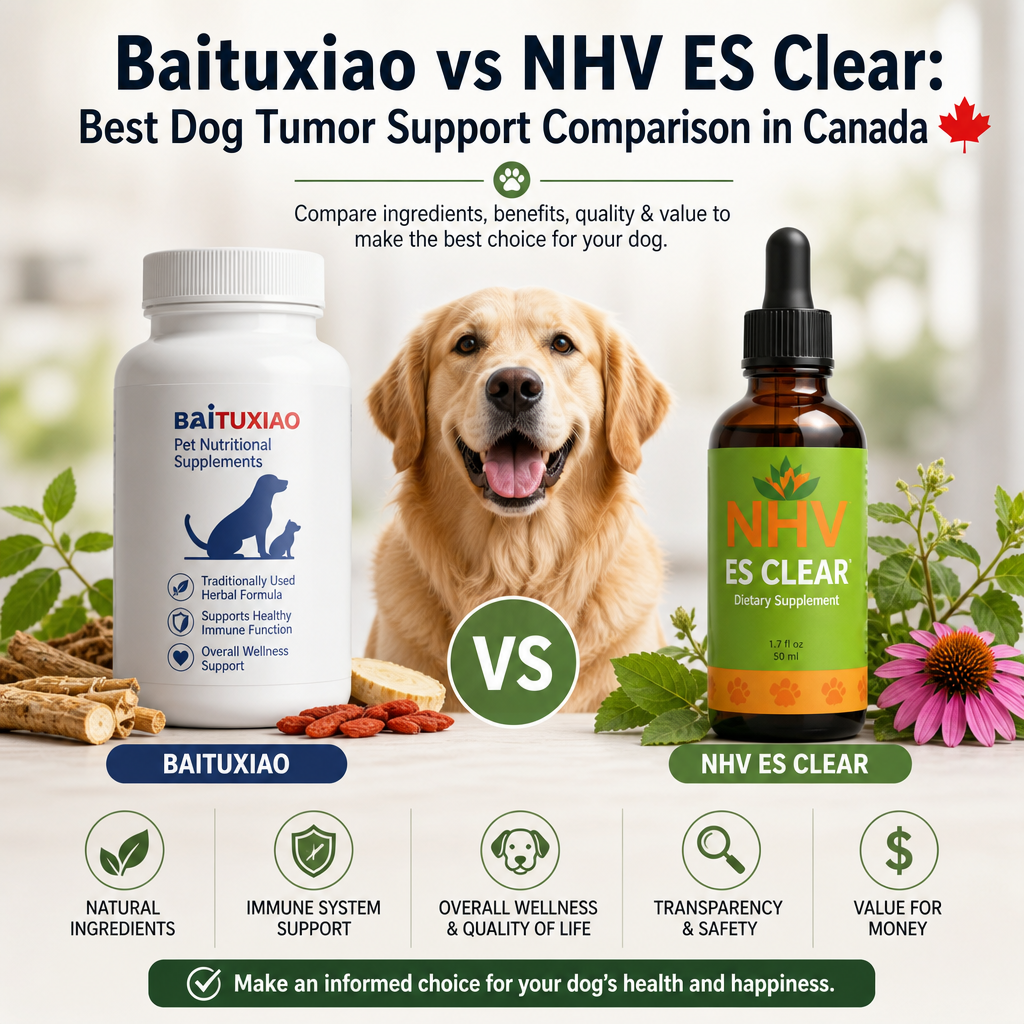
Baituxiao vs NHV ES Clear is a comparison many Canadian dog owners explore after discovering a lump, mass, or suspected tumor. Both products are marketed as supportive herbal formulas, but they are not substitutes for veterinary diagnosis or cancer treatment. The right choice depends on your dog’s condition, current medications, treatment plan, and overall health. Understanding the differences can help you have a more productive conversation with your veterinarian.
Why Veterinary Guidance Comes First
A lump can have many causes, including a benign fatty growth, cyst, infection, or malignant tumor. Appearance alone cannot reliably identify the problem. A veterinarian may recommend a physical examination, fine-needle aspiration, biopsy, blood testing, ultrasound, or other diagnostic procedures.
This step is essential because supportive supplements may affect appetite, digestion, liver metabolism, bleeding risk, or the way certain medications work. Dogs receiving chemotherapy, corticosteroids, anti-inflammatory drugs, pain medication, or surgery-related care require especially careful supervision.
Herbal products should therefore be viewed as complementary support rather than cures. Neither Baituxiao vs NHV ES Clear should be used to delay biopsy, surgery, oncology referral, or emergency treatment. If your dog already has a confirmed diagnosis, your veterinarian can help you decide whether Baituxiao vs NHV ES Clear fits the care plan.
For general reference on cancer evaluation and follow-up in pets, the American Veterinary Medical Association provides helpful educational material: AVMA cancer information for pet owners.
Baituxiao vs NHV ES Clear: What Are They?
Baituxiao and NHV ES Clear are both commonly discussed in natural-support circles, but their product positioning and ingredient profiles differ. Baituxiao is generally presented as a traditional herbal formula intended to support dogs with masses or abnormal tissue growth. NHV ES Clear is marketed as a targeted herbal blend designed to provide support for dogs dealing with growths and related health concerns.
Because formulas, serving instructions, and product versions may change, Canadian pet owners should read the current product label rather than rely only on older online descriptions. Check the complete ingredient list, concentration, recommended dosage, storage requirements, country of manufacture, and importer information.
The practical distinction is that Baituxiao is often chosen by owners seeking a more traditional multi-herb approach, while NHV ES Clear is commonly considered by those who prefer a product from a supplement line with broader pet-health resources. Neither general reputation nor marketing language proves that one formula is clinically superior.
In a real-world Baituxiao vs NHV ES Clear decision, it also helps to ask how the product will be used alongside diagnostics, surgery, or medication. A supplement that sounds appealing in theory may be less suitable if your dog has a sensitive stomach, a clotting issue, or a complex treatment schedule.
For owners comparing products over time, Baituxiao vs NHV ES Clear often comes down to practical details such as how easy the formula is to source in Canada, how clearly the label is written, and whether the serving routine can be followed consistently at home. Those factors can matter just as much as the marketing claims.
NHV ES Clear comparison: Ingredients and Formulation
A meaningful NHV ES Clear comparison should begin with the actual label. Herbal formulas may contain multiple botanical ingredients, and their effects can depend on dose, extraction method, and the dog’s individual metabolism. Two products can appear similar while differing significantly in strength and tolerability.
When evaluating NHV ES Clear, consider:
- The full list of active and inactive ingredients
- The amount provided per millilitre, capsule, tablet, or serving
- Whether the formula is alcohol-free or contains another liquid base
- Instructions for small, medium, and large dogs
- Potential cautions for liver, kidney, gastrointestinal, or bleeding disorders
- Whether batch, expiration, and quality-control information is available
It is also important to distinguish between “supports immune health” or “supports healthy cellular function” and proven tumor reduction. These claims generally describe intended supplement support, not confirmed cancer treatment outcomes.
When owners compare Baituxiao vs NHV ES Clear, the label details matter more than general product category. A shorter ingredient list is not automatically better, and a longer list is not automatically more effective.
In practice, many owners also compare how each formula is tolerated over time. Baituxiao vs NHV ES Clear may look similar at first glance, yet the one that best suits your dog could be the product that causes fewer stomach issues, is easier to dose, and fits better with your veterinarian’s recommendations.
If you are reviewing an NHV ES Clear comparison for the first time, take a few minutes to look at serving size, storage instructions, and manufacturer contact details. These small details can help you judge whether the product is a reliable option or simply a convenient-sounding purchase.
Comparing Baituxiao and NHV ES Clear for Canadian Dogs
The best dog tumor support comparison is not simply a question of which product has more herbs. It should assess safety, transparency, convenience, compatibility with veterinary care, and the dog’s response.
For some households, Baituxiao vs NHV ES Clear comes down to which product is easier to verify, easier to administer, and easier to fit into a veterinary plan. That practical lens is often more useful than online testimonials.
Ingredient transparency
Choose a product with a clearly listed formula and understandable serving instructions. Avoid products that conceal all active ingredients under vague proprietary blends, especially when your dog takes prescription medication.
Veterinary compatibility
Ask your veterinarian to review the label before starting either supplement. This is particularly important if your dog has a confirmed tumor, is scheduled for surgery, or receives chemotherapy. Some herbs may influence clotting, sedation, blood pressure, liver enzymes, or immune activity.
Ease of administration
A liquid may be easier for dogs that refuse tablets, while capsules or tablets may be more practical for owners who need consistent, mess-free dosing. The best product is one your dog can take reliably without significant stress or digestive upset.
Product quality and Canadian availability
Canadian buyers should verify shipping conditions, seller reputation, return policies, labeling compliance, and whether the product is imported. Supplements purchased through unofficial marketplaces may be expired, improperly stored, counterfeit, or different from the manufacturer’s current formula.
Cost over time
Compare the cost per day rather than the price of one bottle. A product that appears inexpensive may require a larger serving or more frequent reordering. Also account for shipping, taxes, and possible delays at the border.
If you want to compare similar supportive products, our guide to dog tumour supplements explains how to assess ingredient lists, safety, and quality before buying.
For a practical buying checklist, remember that Baituxiao vs NHV ES Clear should be judged against the same basics: clear labeling, appropriate dosing, reliable sourcing, and compatibility with your dog’s treatment plan. Those factors often matter more than brand familiarity.
When Canadian owners compare Baituxiao vs NHV ES Clear, they often ask which one is more natural or more advanced. A better question is which option is better documented, better tolerated, and less likely to complicate the care your veterinarian has already planned.
One more useful point is consistency. If you choose a product, keep the same dose schedule unless your veterinarian advises a change. Switching repeatedly between supplements can make it difficult to tell whether a change in appetite, stool quality, or energy is related to the product itself or to the underlying condition.
Possible Benefits and Limitations
Owners often seek herbal support to help maintain appetite, energy, digestion, or general comfort. Some dogs tolerate supplements well, and a carefully selected product may fit into a broader wellness plan. However, evidence for herbal tumor-support products in dogs is limited compared with established veterinary treatments.
Possible limitations include inconsistent research, variable product quality, uncertain interactions, and individual differences in response. A dog may experience vomiting, diarrhea, reduced appetite, itching, lethargy, or other symptoms after starting a supplement. Stop the product and contact a veterinarian if concerning reactions occur.
Do not interpret a stable or shrinking lump without appropriate testing. Similarly, a dog seeming brighter does not confirm that a tumor is responding. Objective monitoring may require repeat examinations, measurements, imaging, bloodwork, or pathology.
Baituxiao vs NHV ES Clear can both be part of supportive care, but neither should be viewed as a stand-alone solution. The safest approach is to treat them as optional aids that may or may not fit your dog’s medical needs.
It is also wise to consider your dog’s overall comfort. If appetite drops, stools change, or energy declines after starting a supplement, the timing may be a clue. In that situation, your veterinarian can help you decide whether to stop the product, adjust the plan, or pursue further testing.
Supportive products may play a role in quality of life, especially when they are used with realistic expectations. The goal is not to replace veterinary oncology or surgery, but to support your dog while the medical team addresses the underlying disease. That is why Baituxiao vs NHV ES Clear should always be weighed against the full treatment picture.
How to Choose Between the Two
When deciding between Baituxiao vs NHV ES Clear, create a simple comparison with your veterinarian. Record your dog’s diagnosis, medications, allergies, liver and kidney status, planned procedures, and treatment goals. Then review the current labels side by side.
A veterinarian may recommend avoiding both products, selecting one, or waiting until after surgery or other treatment. In some cases, the most useful support may be a balanced therapeutic diet, pain control, nausea management, hydration, dental care, or nutritional assistance rather than an herbal formula.
If your dog has rapid tumor growth, bleeding, breathing difficulty, repeated vomiting, severe pain, collapse, pale gums, or sudden weakness, seek urgent veterinary care. These signs require prompt evaluation and should not be managed with supplements alone.
When comparing Baituxiao vs NHV ES Clear, it also helps to set a short trial period with clear goals, such as appetite, stool quality, comfort, and energy. If those markers worsen, the product may not be a good fit.
Some owners find it helpful to keep notes for one to two weeks after starting a supplement. A simple log can show whether your dog is eating better, resting comfortably, or showing side effects. That record can make future follow-up visits more productive.
It can also help to involve your pharmacy or veterinary clinic if your dog is on multiple medicines. A quick medication review may identify potential overlap in liver metabolism, blood pressure effects, or bleeding concerns before you commit to long-term use.
If cost is a deciding factor, look beyond the bottle price and compare the total monthly expense. Baituxiao vs NHV ES Clear may differ in serving frequency, bottle size, shipping charges, and how often you need to reorder. A more affordable option on paper may become less practical over time.
Final Considerations
Baituxiao vs NHV ES Clear is best understood as a supportive-care decision, not a contest between two proven cancer cures. A responsible dog tumor support comparison should prioritize diagnosis, veterinary oversight, label transparency, medication safety, product quality, and measurable outcomes.
For Canadian pet owners, the most appropriate choice is the product—if any—that fits safely into an individualized veterinary plan. Keep a record of the supplement, dose, start date, appetite, stool quality, energy, lump measurements, and any side effects. This information can help your veterinary team determine whether continuing the product makes sense while ensuring that evidence-based diagnosis and treatment remain the foundation of your dog’s care.
In the end, Baituxiao vs NHV ES Clear should be approached carefully, with your veterinarian guiding the decision and your dog’s comfort and safety remaining the priority. If you revisit the comparison later, use the same criteria each time so your decision stays based on your dog’s current needs rather than marketing claims.
To make the decision process easier, focus on a few repeatable questions: Is the label clear? Does the product fit your dog’s current medications? Can you source it reliably in Canada? Does your dog tolerate it well? If the answer to any of these is no, the safer choice may be to pause and reassess with your veterinarian before continuing.
With that approach, Baituxiao vs NHV ES Clear becomes less about choosing a winner and more about choosing a support option that is sensible, transparent, and medically appropriate for your dog.
by TCMVET | Aug 26, 2026 | Research and News
HerbalVet Turkey Tail is attracting attention among Hungarian dog owners looking for gentle, supportive options during a pet’s cancer care journey. Made with turkey tail mushroom, a natural source of bioactive compounds, the supplement is commonly discussed as part of a broader wellness routine. However, it is important to understand what this product may offer, how it should be used, and why it cannot replace professional veterinary treatment.
What Is HerbalVet Turkey Tail?
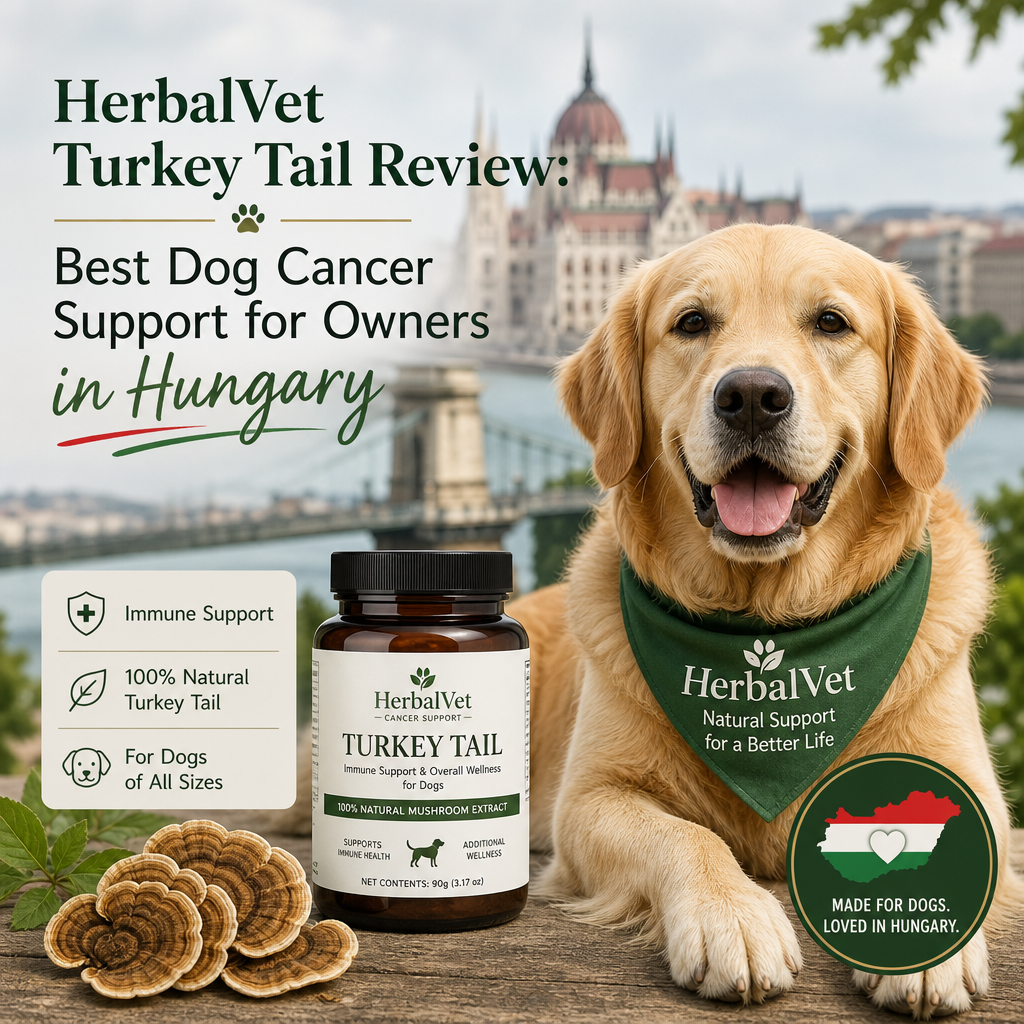
HerbalVet Turkey Tail is a mushroom-based supplement formulated for dogs. Its primary ingredient, turkey tail mushroom, is known scientifically as Trametes versicolor or Coriolus versicolor. The mushroom contains polysaccharides, including beta-glucans and compounds often studied for their potential effects on immune function.
Turkey tail has a long history of use in traditional wellness practices, and modern research has examined mushroom-derived compounds in connection with immune support. For dogs with serious illnesses, including cancer, owners may consider this type of supplement to help maintain general resilience, appetite, energy, and quality of life.
The exact benefits depend on the product’s formulation, concentration, extraction method, and the dog’s individual health status. A supplement made from a standardized extract may differ significantly from one containing only powdered mushroom material.
If you are comparing different options, it can help to review broader guidance on mushroom-based pet supplements as well. For example, this guide to affordable dog tumor supplements in Hungary can provide useful context when evaluating ingredients and pricing.
HerbalVet Turkey Tail dog cancer support: What Owners Should Know
The phrase HerbalVet Turkey Tail dog cancer support generally refers to using turkey tail as a complementary product during veterinary cancer care. “Complementary” is the key word. The supplement should be viewed as an addition to a veterinarian-approved treatment plan rather than a cure or replacement for chemotherapy, surgery, radiation, pain management, or other prescribed care.
Dogs respond differently to cancer and to supplements. Some may tolerate mushroom products without difficulty, while others could experience digestive upset or changes in appetite. In addition, dogs may be taking several medications at once, making it especially important to check for possible interactions.
Owners should discuss the supplement with a veterinarian before giving it to a dog diagnosed with cancer. This is particularly important when the dog has liver or kidney disease, an autoimmune condition, bleeding problems, or a history of allergies. Veterinary guidance is also essential for puppies, senior dogs, pregnant dogs, and pets recovering from surgery.
For general evidence on mushroom compounds and veterinary cancer support, the National Center for Complementary and Integrative Health offers a helpful overview of medicinal mushrooms and their research status: NCCIH medicinal mushrooms science summary.
HerbalVet Turkey Tail review: Potential Benefits
A balanced HerbalVet Turkey Tail review should consider both possible advantages and limitations. The main reason owners explore turkey tail is its naturally occurring beta-glucans and other compounds that may interact with immune pathways. While research in this area is promising, results from laboratory studies, human research, and veterinary studies should not be treated as identical.
Potential reasons for considering a turkey tail supplement include:
- Supporting normal immune system function
- Helping maintain general vitality during demanding treatment
- Providing nutritional support when appetite is inconsistent
- Complementing a balanced diet and veterinary wellness plan
- Giving owners an additional way to support quality of life
These potential benefits do not mean that every dog will show an obvious improvement. Supplements usually work, if at all, as part of a wider approach that includes appropriate medical care, good nutrition, hydration, rest, and regular monitoring.
Owners should also be cautious about claims that promise to shrink tumors, eliminate cancer, or guarantee longer survival. Such statements are not appropriate substitutes for evidence-based veterinary advice.
Product Quality and Ingredients Matter
Not all turkey tail products are equal. Before purchasing HerbalVet Turkey Tail, examine the label carefully. Important details include the amount of turkey tail per serving, whether the product uses a concentrated extract, the beta-glucan content, recommended dosage, batch information, and quality-control testing.
A transparent manufacturer should provide clear ingredient information and directions designed specifically for dogs. Products intended for humans may contain additives, sweeteners, herbs, or dosage levels that are unsuitable for pets. Avoid any supplement containing ingredients known to be dangerous to dogs, such as xylitol.
It is also wise to check storage instructions and expiry information. Mushroom products can lose quality if exposed to heat, humidity, or improper storage. Buying from an established supplier may reduce the risk of counterfeit, contaminated, or poorly labeled products.
HerbalVet Turkey Tail Hungary: Buying and Delivery Considerations
For people searching for HerbalVet Turkey Tail Hungary, availability, delivery times, and product authenticity are practical concerns. Hungarian buyers should confirm whether the seller ships directly to Hungary, provides an invoice, and clearly explains delivery charges. It is also useful to check whether the product is sold through an authorized retailer or the manufacturer’s official distribution channel.
Product labeling and consumer information may vary depending on where the supplement is purchased. Buyers should look for clear instructions in a language they understand and verify that the packaging is sealed and undamaged upon arrival. If the package appears altered, lacks a batch number, or differs from the product description, it should not be given to the dog until its authenticity has been confirmed.
Owners should also consider the total cost of regular use. A product may appear affordable initially but become expensive if the recommended serving is high or if ongoing use is required. Cost should never lead an owner to reduce prescribed medication or skip veterinary appointments.
How to Use It Responsibly
The correct amount depends on the dog’s weight, age, health, diet, and other treatments. Follow the manufacturer’s instructions unless a veterinarian provides different guidance. Never assume that a higher dose will produce better results.
When introducing a new supplement, many owners prefer to begin cautiously and monitor the dog for several days, but this should be discussed with a veterinarian when the dog has cancer or another serious condition. Watch for vomiting, diarrhea, unusual tiredness, itching, swelling, reduced appetite, or any sudden change in behavior. Stop use and seek veterinary advice if concerning symptoms appear.
Keep a simple record of the dog’s appetite, weight, energy, bowel movements, medication schedule, and overall comfort. This information can help the veterinarian determine whether the supplement is well tolerated and whether changes in the dog’s condition require further investigation.
When in doubt, ask the clinic managing your pet’s care whether the supplement fits into the current treatment plan. That extra step is especially useful when multiple therapies, prescription diets, or pain medications are already part of daily care.
A Supportive, Not Standalone, Approach
The most responsible way to view HerbalVet Turkey Tail is as one possible component of comprehensive canine care. A dog with cancer may benefit from a tailored combination of medical treatment, pain relief, nutritional planning, exercise appropriate to its condition, emotional comfort, and regular checkups.
A supplement cannot diagnose cancer, determine its stage, or replace diagnostic tests. It also cannot guarantee a particular outcome. Nevertheless, a carefully selected product may have a role in supporting general wellness when used with realistic expectations and professional supervision.
For Hungarian dog owners considering HerbalVet Turkey Tail, the best decision involves checking product quality, discussing the ingredients with a veterinarian, monitoring the dog closely, and maintaining the primary treatment plan. In that context, turkey tail may serve as a thoughtful complementary option rather than an unsupported promise of a cure.
If you want a broader comparison before buying, review a second opinion from a product-focused guide and use it alongside veterinary advice rather than instead of it. That approach makes it easier to choose a supplement that matches your dog’s needs, budget, and treatment plan.
