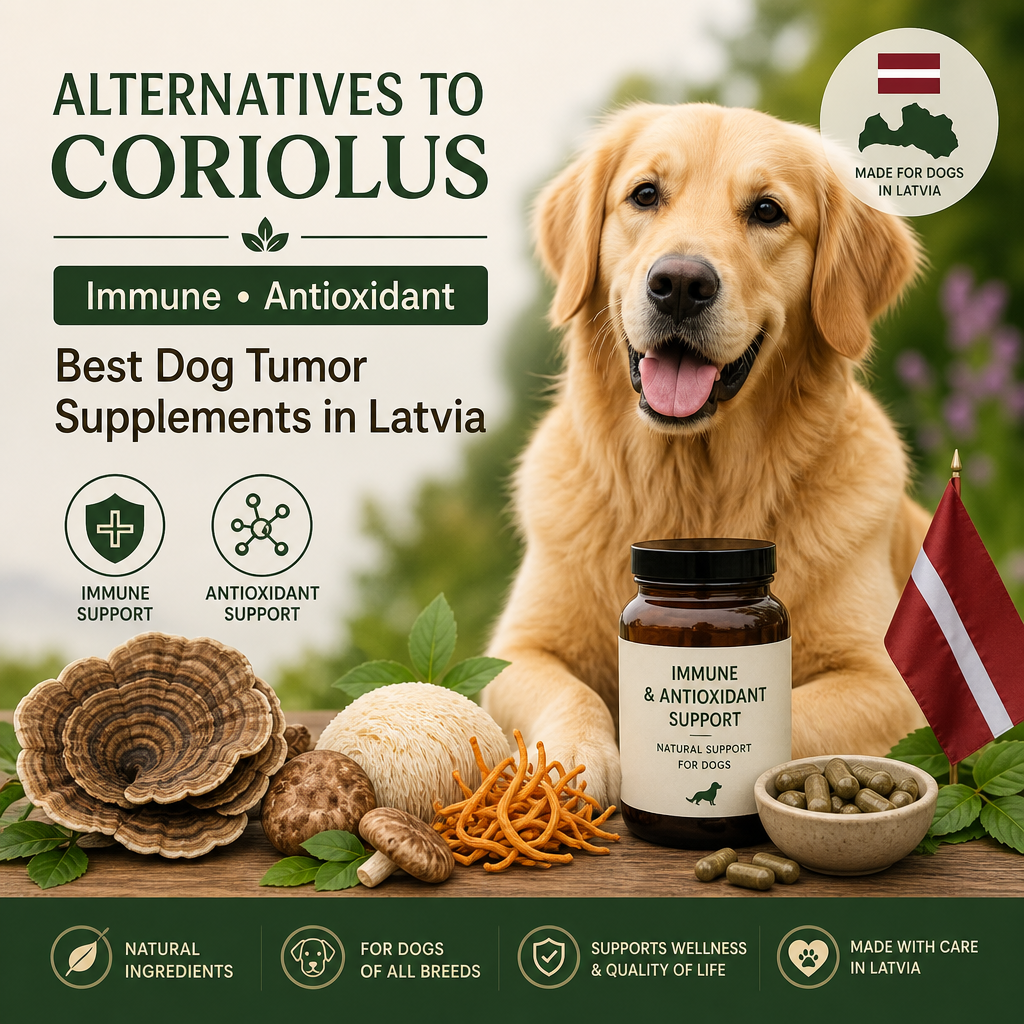
Alternatives to Coriolus / Immune / Antioxidant: 7 Best Dog Tumor Supplements in Latvia
Alternatives to Coriolus / immune / antioxidant supplements can be useful for supporting a dog’s overall health during cancer treatment, but they should never replace veterinary diagnosis or prescribed care. In Latvia, owners may encounter products containing medicinal mushrooms, vitamins, omega-3 fatty acids, herbal extracts, or other antioxidant ingredients marketed for dogs with tumors. Choosing among these options requires careful attention to scientific evidence, product quality, dosage, and possible interactions with surgery, chemotherapy, radiation, or other medication.
Table of Contents
Why supportive nutrition matters for dogs with tumors
A tumor can affect a dog’s appetite, digestion, energy levels, immune function, and body weight. Some dogs experience nausea or reduced food intake during treatment, while others lose muscle even when they continue eating. A suitable nutritional plan may help maintain strength, support recovery, and improve quality of life.
Supplements are generally intended to complement a complete diet and a veterinary treatment plan. They may provide nutrients that are difficult to obtain in adequate amounts from food alone, such as marine omega-3 fatty acids or specific vitamins. However, “natural” does not automatically mean safe. Some substances influence blood clotting, liver enzymes, immune activity, or the metabolism of prescription drugs.
Before starting any dog tumor supplement alternatives, discuss the product with a veterinarian who knows the dog’s medical history. This is especially important when a dog has liver or kidney disease, is scheduled for surgery, or is receiving anticancer medication.
For owners comparing options in Latvia, the most important question is not which product has the boldest marketing claim. It is whether the formula fits the dog’s diagnosis, treatment stage, and nutritional needs. A product that looks helpful on paper may still be unsuitable if it overlaps with another supplement or contains ingredients that are too concentrated for daily use.
You can also review the ingredients in a broader context by checking the manufacturer’s quality controls and whether the label explains the intended use clearly. If a product does not provide transparent information, it is harder to know whether it belongs in a cancer-support plan at all.
In practical terms, the best supplement strategy usually starts with a clear goal. Some dogs need help maintaining weight, others need digestive support, and some may benefit from a carefully selected antioxidant or mushroom-based formula. Alternatives to Coriolus / immune / antioxidant products can serve different purposes, but they should be matched to the dog rather than chosen because they sound advanced or natural.
It also helps to think about the whole care plan. A supplement may make sense only if the dog is already eating a balanced diet, has a stable medication schedule, and is being monitored for side effects. That is why owners should view every new product as one part of a larger treatment approach, not as a standalone solution.
Dog tumor supplement alternatives to Coriolus products
Coriolus versicolor, also known as Trametes versicolor or turkey tail mushroom, is commonly used in pet supplements designed to support immune function. Research into mushroom-derived compounds has produced interesting findings, but evidence in dogs remains limited and products can vary considerably in purity and concentration.
Owners seeking alternatives to Coriolus / immune / antioxidant products may consider several nutritional categories:
Omega-3 fatty acids
Fish oil containing EPA and DHA is among the most commonly discussed supportive supplements for dogs with cancer. These fatty acids may help maintain skin, coat, and general inflammatory balance. They can also be useful when a dog has a poor appetite or needs additional calories in a concentrated form.
Choose a veterinary-quality product that clearly states the amount of EPA and DHA rather than listing only the total fish oil content. Possible side effects include loose stools, vomiting, weight gain, or an increased bleeding tendency at high doses. Fish oil should be used cautiously before surgery and in dogs taking medications that affect clotting.
The American Kennel Club’s nutritional guidance on omega-3s offers a helpful overview of why EPA and DHA are used so often in canine wellness plans: AKC overview of omega-3 fish oil for dogs.
Omega-3 formulas are often considered when the goal is to support overall condition rather than to target a single pathway. For many families, this makes them a practical first step among alternatives to Coriolus / immune / antioxidant products. They are easy to compare, relatively familiar, and usually have clearer labeling than more complex blends.
Still, the quality of the oil matters. Freshness, source, and storage conditions can influence how well the product works and how well the dog tolerates it. A rancid fish oil can cause digestive upset and may be worse than no supplement at all. In Latvia, as in other markets, owners should check packaging, expiration dates, and whether the manufacturer provides testing for oxidation or contaminants.
If a dog already eats a diet rich in fish or receives another fatty-acid supplement, the veterinarian may adjust the dose or decide that extra omega-3s are unnecessary. More is not automatically better, especially when the dog is already receiving many medications and supportive products.
Antioxidant vitamins and nutrients
Vitamins E and C, selenium, and other antioxidant nutrients help protect cells from oxidative damage. They are sometimes included in canine cancer-support formulas, although more is not always better. Excessive supplementation may create nutritional imbalances and could potentially interfere with certain treatment strategies.
A complete commercial diet already supplies essential vitamins and minerals in appropriate proportions. Additional antioxidants should therefore be used only when a veterinarian identifies a reason for supplementation or recommends a specific product and dose.
When people search for alternatives to Coriolus / immune / antioxidant supplements, they often assume a stronger immune formula is automatically the best choice. In practice, the safest option may be a simpler product with one or two clearly identified ingredients rather than a crowded blend that is hard to evaluate.
It is also important to remember that antioxidant support does not mean cancer treatment support in every case. Some antioxidant strategies are best used in limited, carefully monitored situations. A veterinarian may advise avoiding certain high-dose antioxidant combinations during specific phases of therapy, especially if there are concerns about timing or interaction with prescription drugs.
If a supplement label groups several vitamins into a proprietary mixture, it becomes difficult to know how much of each nutrient the dog is actually getting. That makes dose adjustments harder and increases the chance of unnecessary overlap with the dog’s regular food. Transparency is one of the strongest signs that the product is designed with veterinary use in mind.
Medicinal mushroom blends
Some products combine several mushrooms, such as reishi, maitake, shiitake, and turkey tail. These blends are marketed for immune support, but their concentrations and manufacturing standards differ widely. A label should identify the exact mushroom species, extract ratio, active compounds, batch information, and testing for contaminants.
Mushrooms may cause digestive upset or allergic reactions. They can also affect immune activity or blood clotting, so they are not automatically suitable for every dog receiving cancer treatment.
For dogs whose guardians prefer a mushroom-based approach, careful comparison is essential. A well-made product may be more useful than a single high-profile brand name, but only if the ingredient sources are clear and the formula is consistent from batch to batch. Among alternatives to Coriolus / immune / antioxidant formulas, mushroom blends tend to vary the most in quality and documentation.
Manufacturing transparency becomes especially important when buying online. If the seller cannot explain where the mushrooms were grown, how the extract was prepared, or whether contaminants were tested, it is wise to be cautious. A product that omits these details may not be appropriate for a dog whose body is already under stress from illness or treatment.
Curcumin and botanical ingredients
Curcumin, derived from turmeric, is often promoted for antioxidant and inflammatory support. Other formulas may contain green tea compounds, milk thistle, boswellia, or medicinal herbs. The challenge is that absorption, dosing, and safety data in dogs are often limited.
Botanical ingredients may interact with chemotherapy, steroids, pain medications, or drugs processed by the liver. Products containing multiple herbs can make it difficult to determine which ingredient caused a reaction. Single-ingredient products are usually easier to evaluate than complex blends.
Some owners are drawn to botanical supplements because they sound gentler than synthetic options. However, plant-based does not guarantee compatibility with cancer care. A dog taking medication for pain, nausea, or inflammation may respond very differently from a healthy adult dog. This is why veterinarians often prefer a conservative approach when reviewing alternatives to Coriolus / immune / antioxidant supplements.
If a botanical product is chosen, the timing should be deliberate. Starting several new formulas at once makes it harder to judge what helps and what causes side effects. A step-by-step approach is usually safer and easier to monitor. For that reason, a veterinarian may suggest introducing one product at a time and observing the dog’s stool quality, appetite, and energy over several days.
Probiotics and digestive support
Probiotics are not tumor treatments, but they may help support normal digestion in some dogs, particularly those experiencing stress, dietary changes, or gastrointestinal upset. A veterinary probiotic should list the bacterial strains and guaranteed number of live organisms.
Dogs with severely weakened immune systems require extra caution. The veterinarian should decide whether a probiotic is appropriate, especially during intensive treatment or hospitalization.
Digestive support products can be valuable when the biggest challenge is not the tumor itself but the strain that treatment places on the stomach and intestines. For some dogs, nausea or loose stool becomes the main barrier to maintaining weight and comfort. In those cases, the right supportive product may be more useful than a broad immune formula.
Owners may also pair probiotics with other supportive strategies, such as a highly digestible food or smaller, more frequent meals. That kind of practical planning often matters more than chasing the most aggressive-sounding supplement. Even when browsing alternatives to Coriolus / immune / antioxidant products, it is wise to ask which option truly supports daily function and which merely promises it.
For dogs that need a more structured plan, some owners compare product categories first and then narrow the search to a shortlist of supplement types that fit the treatment stage. If you want to see another regional example of how these products are organized, review the Product page for a broader overview of the available approach.
What to look for on the label
Good labeling is one of the clearest signs that a supplement deserves further attention. A useful product should identify each active ingredient, the exact amount per serving, the intended animal species, storage instructions, and any important warnings. If a label uses vague language such as “proprietary blend” without quantities, it is difficult to judge whether the product is appropriate for a dog with cancer.
Batch numbers, expiry dates, and manufacturer contact details also matter. They make it easier to trace a product if there is a recall or quality concern. In addition, check whether the company explains how it tests for contaminants, since contamination can be a bigger issue in plant-based or mushroom-based formulas.
In Latvia, imported products may arrive with translated labels that are incomplete or simplified. If the original packaging does not clearly explain the dosage and ingredients, ask the seller for documentation before use.
When you compare alternatives to Coriolus / immune / antioxidant products, read the label as a decision-making tool rather than a marketing page. The label should tell you what the ingredient is, how much is included, and whether the product was designed for dogs. Those details are especially important when a dog is already receiving medication or has a history of sensitive digestion.
Labels should also tell you whether the formula needs refrigeration, whether it is meant to be given with food, and whether there are warnings for pregnant, nursing, or medically fragile animals. Missing instructions can lead to inconsistent dosing or wasted product. Clear instructions make the supplement easier to use safely over time.
How to choose supplements in Latvia
When comparing products available in Latvia, look beyond attractive packaging and claims such as “boosts immunity” or “fights tumors.” Check whether the manufacturer provides a full ingredient list, feeding instructions for dogs, batch or lot numbers, expiry dates, and contact information. Reliable companies should be willing to explain how their products are tested for heavy metals, pesticides, microbes, and inaccurate ingredient levels.
Purchasing through a veterinary clinic, established pharmacy, or reputable pet retailer can reduce the risk of counterfeit or poorly stored products. Imported supplements may have different labeling standards, and online marketplaces can include products that are not intended for sale in the European Union. Keep the original packaging and show it to the veterinarian.
It is also useful to calculate the total amount of each nutrient supplied by the dog’s food and supplements. A multivitamin combined with a fortified diet may result in excessive intake of certain vitamins or minerals.
If you are evaluating alternatives to Coriolus / immune / antioxidant products in Latvia, compare them the same way you would compare prescription support: by purpose, ingredient quality, and fit with the dog’s current treatment plan. A product that is easy to buy is not necessarily the right one to use.
A practical shopping strategy can save time and reduce risk. Start by eliminating products with vague labels, then remove formulas that duplicate ingredients already in the dog’s diet. After that, review the remaining options with the veterinary team. This process is usually more effective than searching for the most popular supplement first.
If the dog has a diagnosis that changes quickly or if the treatment protocol is still being adjusted, avoid making several supplement changes at once. A slow, organized approach makes it easier to see whether a product is helping. That is especially relevant for alternatives to Coriolus / immune / antioxidant products, because these formulas are often marketed as broad wellness aids rather than targeted therapies.
Safety during cancer treatment
The timing of supplementation matters. Some ingredients may affect bleeding before an operation, while others may alter liver enzyme activity or influence how medicines are absorbed. A veterinarian may recommend stopping certain products before surgery or during particular stages of chemotherapy.
Watch for signs of intolerance, including vomiting, diarrhea, itching, facial swelling, unusual tiredness, loss of appetite, pale gums, bruising, or changes in drinking and urination. Stop the supplement and contact a veterinary professional if a concerning reaction occurs.
Most importantly, supplements should not delay biopsy, imaging, surgery, chemotherapy, radiation, pain control, or other evidence-based treatment. A carefully selected nutritional supplement may support comfort and wellbeing, but it cannot be relied upon to shrink a tumor or cure cancer.
When the treatment plan changes, the supplement plan may need to change as well. A product that seemed reasonable during recovery after surgery may no longer be suitable during chemotherapy. That is why owners should keep the veterinarian updated on every product, including powders, capsules, oils, and chewables.
Many adverse effects are mild at first, such as softer stools or a reduced appetite, but they can become serious if ignored. The safest response is to pause the supplement and seek guidance rather than trying to “push through” the symptoms.
Some products are best stopped temporarily before invasive procedures, while others may be continued if the veterinarian feels they do not increase risk. Because every dog’s diagnosis is different, there is no universal rule that works for all cases. The safest decision is always based on the dog’s current condition, medication list, and treatment schedule.
If a dog is already weak, dehydrated, or losing weight, even a mild side effect from a new product can matter. That is another reason to approach alternatives to Coriolus / immune / antioxidant supplements conservatively. When the margin for error is small, predictable products with clear dosing are usually preferable to complex formulas with unclear interactions.
Creating a practical support plan
A useful plan begins with the tumor type, treatment goals, current diet, body condition, blood-test results, and the dog’s symptoms. The veterinarian may recommend one targeted supplement rather than several overlapping products. Regular monitoring of weight, appetite, stool quality, energy, and laboratory values helps determine whether the supplement is beneficial.
For many dogs, the most valuable support includes a highly digestible complete diet, sufficient calories and protein, access to fresh water, effective pain control, and prompt treatment of nausea or digestive problems. Supplements can be considered as part of this broader approach.
In Latvia, owners have access to a growing range of dog tumor supplement alternatives, including omega-3 products, selected antioxidant nutrients, medicinal mushroom formulas, botanical compounds, and digestive-support products. The safest choice is not necessarily the product with the longest ingredient list. It is the option with transparent labeling, appropriate quality controls, a clear purpose, and approval from the dog’s veterinary team.
For readers comparing alternatives to Coriolus / immune / antioxidant formulas across different European markets, the general principle stays the same: keep the plan simple, document every product, and prioritize veterinary oversight. That approach makes it easier to choose supplements that support the dog without creating new risks.
To make the plan even more practical, keep a written record of the supplement name, dose, start date, and any changes in the dog’s symptoms. This makes follow-up visits more productive and helps identify whether the supplement is worth continuing. It also prevents accidental duplication when more than one caregiver is involved.
Owners should think of supportive care as a series of small, manageable decisions. Food quality, hydration, medication timing, and symptom control often have more impact than any single supplement. Alternatives to Coriolus / immune / antioxidant products can still play a role, but they work best when they are chosen carefully and used consistently.
In the end, alternatives to Coriolus / immune / antioxidant products should be selected with the same caution used for any part of a cancer-support protocol. Evidence, safety, and compatibility with treatment matter more than marketing claims, and a thoughtful plan gives the dog the best chance for steady support.
If you are unsure which option fits best, ask the veterinarian to review the ingredient list, compare the dose with the dog’s current diet, and identify any possible interactions. That extra step can prevent wasted money and reduce the risk of avoidable side effects. For dogs with cancer, a measured approach is usually the most dependable one.
When comparing alternatives to Coriolus / immune / antioxidant formulas, the best results usually come from consistency, not experimentation. A stable supplement routine, combined with regular veterinary follow-up, is often the simplest way to support a dog through treatment.
That is why many owners choose one product, monitor it carefully, and only expand the plan if the veterinarian recommends it. This careful method keeps alternatives to Coriolus / immune / antioxidant products aligned with the dog’s real needs instead of the latest trend.