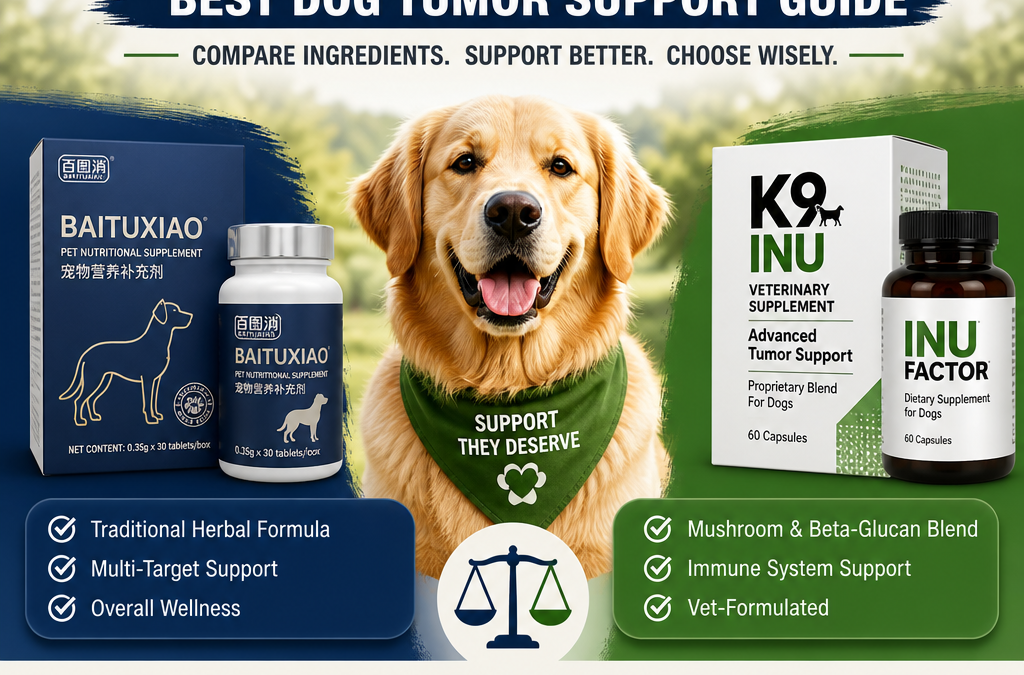
Baituxiao vs K9 INU / INUFactor: Best Dog Tumor Support Guide
Baituxiao vs K9 INU / INUFactor is a comparison many dog owners explore after learning that their companion has a tumor or another serious health condition. Both products are commonly discussed as complementary wellness options, but they are not substitutes for veterinary diagnosis, surgery, chemotherapy, radiation, or other evidence-based treatments. The right choice depends on the dog’s diagnosis, current medications, overall health, and the veterinarian’s recommendations.
If you are comparing supplements in Sweden or anywhere else, the safest starting point is still a veterinarian-led plan. You can also review general cancer-support guidance from the American Veterinary Medical Association’s cancer in pets resource while keeping your dog’s own case front and center.
For broader context on supportive care, it can also help to review our canine cancer support guide before deciding whether any supplement belongs in your dog’s plan.
Table of Contents
Understanding the K9 INU / INUFactor comparison
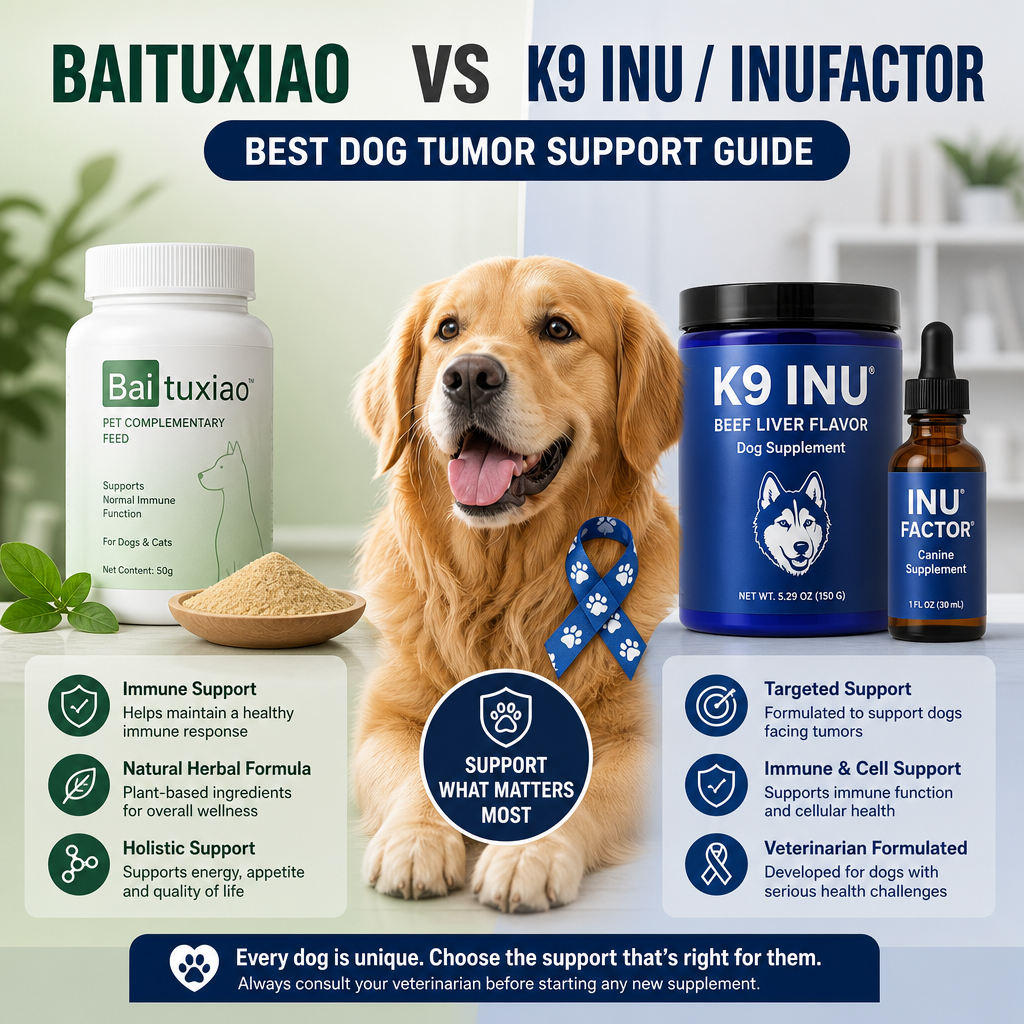
K9 INU, also known as INUFactor in some markets, is generally presented as a nutritional supplement designed to support immune function and overall vitality. Its formula may include ingredients such as medicinal mushroom extracts, plant compounds, vitamins, minerals, or other nutritional components, depending on the specific product and region.
The product is typically used as part of a broader wellness plan. Supporters often consider it for dogs dealing with chronic illness, recovery after procedures, reduced appetite, or the stress associated with long-term treatment. However, supplement formulations can change, so owners should read the current label carefully rather than relying only on descriptions found online.
The most important point in a K9 INU / INUFactor comparison is that immune support does not mean a supplement can directly eliminate a tumor. A dog’s immune system is complex, and supplements cannot be assumed to produce a predictable anticancer effect in every patient.
In practical terms, Baituxiao vs K9 INU / INUFactor often comes down to how each formula is positioned and how clearly the manufacturer explains the ingredients. That clarity matters more than any broad claim on the front of the package.
Many owners also want to know whether a supplement is meant for short-term comfort or long-term use. That distinction matters because cancer care often changes over time. A product that seems reasonable during recovery from surgery may not be appropriate during chemotherapy, and a dog’s tolerance can change as the disease progresses. This is one reason Baituxiao vs K9 INU / INUFactor should always be reviewed in the context of the full treatment plan.
Owners in Sweden may also need to consider availability, import delays, and product labeling in another language. Even when a supplement is easy to find online, the actual pack you receive may not match the description on a reseller page. Checking the label, lot number, and ingredient list before use can prevent misunderstandings later.
What is Baituxiao?
Baituxiao is another supplement frequently discussed in relation to canine tumor support. It is marketed as a traditional or natural formula containing multiple botanical and other active ingredients. Depending on the product version, the label may reference compounds associated with inflammation, cellular health, circulation, or immune balance.
Because Baituxiao may contain several concentrated herbal ingredients, the formula deserves especially careful review. Natural does not automatically mean risk-free. Herbal products can affect the liver, kidneys, blood clotting, blood pressure, digestion, or the metabolism of prescription medicines.
In a Baituxiao vs K9 INU / INUFactor review, the exact ingredient list matters more than broad marketing claims. Owners should verify the serving instructions, ingredient amounts, manufacturing information, expiration date, and quality-control statements. Products with unclear labeling make it more difficult for a veterinarian to assess safety.
For dog owners trying to understand Baituxiao vs K9 INU / INUFactor, the first question should always be whether either product fits the dog’s current treatment plan. A supplement that looks promising online may still be the wrong choice for a dog with liver disease, clotting concerns, or multiple prescriptions.
It is also worth remembering that “support” can mean very different things depending on the brand. Some products are aimed at general vitality, while others are positioned as tumor-focused formulas. That difference does not prove superiority. Instead, it tells you where each manufacturer is placing its emphasis and what type of expectation the owner may reasonably have.
If your dog has been prescribed a specific medication schedule, ask the veterinarian whether the supplement should be taken with food, away from food, or not at all. Timing matters because some ingredients may affect stomach tolerance or interfere with how certain drugs are absorbed. A careful review now is better than trying to fix a problem after side effects appear.
Baituxiao vs K9 INU / INUFactor: key differences
The two products may differ in their primary positioning, formulation style, dosing instructions, and intended use. K9 INU / INUFactor is often viewed as a general immune and nutritional support product, while Baituxiao is more commonly associated with a multi-herbal approach to tumor-related wellness.
Neither distinction proves that one product is more effective. A supplement with more ingredients is not necessarily stronger, and a simpler formula is not necessarily safer. The practical comparison should focus on the individual dog.
When Baituxiao vs K9 INU / INUFactor is evaluated properly, owners should compare the label, the manufacturer’s transparency, and the veterinarian’s view of possible interactions. That approach is more useful than comparing advertising language.
Ingredient transparency
Look for a complete label that identifies each active ingredient and its quantity. Proprietary blends can make it difficult to determine how much of each substance the dog receives. Transparent labeling allows the veterinarian to identify possible interactions and avoid duplicate ingredients.
Ingredient transparency also helps owners compare products across markets. A supplement sold under one name may have a slightly different formulation in another country, and that can change the risk profile. Baituxiao vs K9 INU / INUFactor is therefore not just a brand comparison; it is a formulation comparison.
Evidence and product quality
There is a major difference between evidence for an individual ingredient, evidence for a supplement formula, and evidence for treating a specific canine tumor. Owners should be cautious when testimonials are presented as proof. Ask whether the product has undergone independent quality testing and whether the manufacturer follows recognized manufacturing standards.
Reliable quality control is especially important when comparing Baituxiao vs K9 INU / INUFactor because the formulas may differ across regions and distributors. A product that appears familiar by name may not be identical from one market to another.
It can also help to look for batch consistency and basic manufacturing details. Even if a product is not a prescription drug, the company should still be able to explain where it is made, how it is tested, and how it is stored. Vague quality claims are not reassuring when a sick dog is involved.
Medication interactions
Dogs with tumors may receive pain relievers, steroids, antibiotics, chemotherapy drugs, anti-nausea medicines, or medications for unrelated conditions. Some herbal ingredients may increase bleeding risk, alter drug metabolism, or intensify gastrointestinal side effects. Combining several supplements can create additional concerns.
Veterinarians often rely on standard pharmacology references when checking for interaction risks, and the Merck Veterinary Manual is a useful general reference for pet health and medical background.
Because interactions are not always obvious, owners should treat every new product as a medical decision rather than a wellness accessory. The fact that a supplement is sold for dogs does not mean it is safe for every dog. Age, breed, liver function, kidney function, and concurrent medication use can all affect whether a product is sensible.
Tolerance and administration
A dog with cancer may already have nausea, diarrhea, constipation, poor appetite, or difficulty swallowing. A product that is difficult to administer or causes digestive upset may reduce quality of life. Start only under professional guidance and monitor the dog closely.
In Baituxiao vs K9 INU / INUFactor discussions, palatability and ease of dosing can matter just as much as ingredient lists. If a dog refuses the supplement or becomes ill after taking it, the theoretical benefit becomes irrelevant.
Practical administration issues are often underestimated. Powder, capsule, tablet, and liquid formats can all affect whether the dog actually receives the intended dose. If you cannot give the product consistently, it is not the right choice, no matter how attractive the marketing sounds.
Dog tumor support comparison: what should owners prioritize?
A useful dog tumor support comparison should begin with the diagnosis, not the supplement. Tumors vary widely in their behavior and treatment. A localized mass, lymphoma, mast cell tumor, bone tumor, and metastatic disease may require completely different management plans.
Before choosing a supplement, ask the veterinary team:
- What type of tumor has been diagnosed?
- Has the tumor been staged?
- Is surgery recommended?
- Could chemotherapy or radiation improve control or comfort?
- Which symptoms should be monitored at home?
- Could the supplement interfere with current treatment?
- Are there safer ways to support appetite, hydration, mobility, or pain control?
Quality of life should remain the central goal. Appropriate nutrition, pain management, hydration, rest, emotional comfort, and timely treatment often provide more meaningful benefits than an unproven product used alone.
That is why Baituxiao vs K9 INU / INUFactor should be a secondary question after the medical plan is established. The best supportive choice is the one that fits the dog’s diagnosis and daily needs without creating new risks.
When owners compare options carefully, Baituxiao vs K9 INU / INUFactor becomes less about brand preference and more about fit, safety, and practicality. One dog may tolerate a supplement well, while another may need to avoid it entirely because of medication interactions or digestive sensitivity.
It is also wise to think about how much monitoring the dog will need once a product is started. Even a seemingly mild supplement can change stool quality, energy, or appetite. If you are unsure whether a change is caused by the supplement or by the disease itself, stop and check with the veterinarian before continuing.
In real-world care, the best dog tumor support comparison includes the logistics of daily life. Can the product be given with food? Will the dog accept the taste? Is the dose easy to measure? Those practical details can determine whether a supplement is truly usable or just attractive on paper.
Owners should also consider whether the dog is eating enough to justify a supplement that must be taken with meals. In some dogs, the right immediate priority is nutritional stabilization, not adding another product. A veterinary nutrition plan may do more for strength and recovery than any supplement chosen in isolation.
Another useful question is whether the supplement would still make sense if the diagnosis changes. Tumor care is not static. A product that seems reasonable for a slow-growing mass may become less useful after surgery, or after the oncology team changes the medication schedule. A flexible, reevaluated approach is safer than a fixed one.
Possible risks and warning signs
Supplements may cause vomiting, diarrhea, appetite changes, lethargy, itching, or allergic reactions. More serious problems can include liver injury, kidney stress, abnormal bleeding, or interactions with anesthesia and prescription medicines.
Stop the product and contact a veterinarian promptly if the dog develops repeated vomiting, black or bloody stool, pale gums, severe weakness, yellowing of the eyes or gums, difficulty breathing, facial swelling, collapse, or a sudden worsening of pain.
Do not give human cancer medications, concentrated essential oils, or multiple herbal products without veterinary approval. Dogs process many substances differently from humans, and some seemingly harmless ingredients can be toxic.
Any owner researching Baituxiao vs K9 INU / INUFactor should also remember that “more support” is not always better. When several products are used together, it becomes harder to tell which one caused a side effect or whether the combination is safe.
That caution matters even more if the dog is already receiving prescription therapy. A supplement that seems helpful at first may still create problems later if the dog’s condition changes or another medicine is added. Careful re-checks are part of responsible long-term management.
It can be helpful to write down the date the supplement was started and any symptoms that appear afterward. That simple log can make follow-up visits more productive and may help the veterinary team identify patterns that are otherwise easy to miss.
If your dog has surgery scheduled, always ask whether the supplement should be stopped beforehand. Some products may affect bleeding or anesthesia safety, and the surgical team needs a complete list of everything your dog has taken recently. This applies just as much to Baituxiao vs K9 INU / INUFactor as it does to conventional medicines.
How to make a responsible choice
When comparing Baituxiao and K9 INU / INUFactor, create a complete list of everything the dog receives, including food, treats, supplements, flea and tick products, and prescription medicines. Bring product labels or clear photographs of the packaging to the veterinarian.
Choose a product only when the ingredients are clearly disclosed, the manufacturer provides reliable quality information, and the veterinary team believes it is appropriate for the dog’s condition. Use the recommended amount, avoid stacking similar products, and keep a record of appetite, stool quality, energy, weight, and other symptoms.
If you are still weighing Baituxiao vs K9 INU / INUFactor, make the decision based on safety, compatibility, and the dog’s overall care plan rather than on marketing promises. A conservative choice is often the best choice.
Most importantly, treat these products as optional supportive tools rather than primary tumor therapies. A supplement may have a place in an individualized care plan, but it should never delay diagnosis or replace a treatment with established veterinary benefits. A careful, veterinarian-guided approach offers the best balance between hope, safety, and meaningful support for a dog living with cancer.
It is also reasonable to ask the veterinarian what success would look like. For some dogs, the goal may be better appetite or more comfortable days at home. For others, the goal may be to support recovery while the oncology plan continues. Clear goals make it easier to judge whether a product is truly helping or simply adding complexity.
Keep in mind that supportive care can be layered. A thoughtful diet, pain control, anti-nausea medication, mobility support, and stress reduction may work together more effectively than any single supplement. The question is not only which product sounds better, but which overall plan is likely to keep the dog comfortable and stable.
For many owners, the best outcome is not choosing the most aggressive supplement; it is choosing the least risky option that still supports the dog’s comfort. That approach aligns well with Baituxiao vs K9 INU / INUFactor because it prioritizes evidence, practicality, and safety over hype.
In the end, Baituxiao vs K9 INU / INUFactor is not about finding a miracle product. It is about choosing the safest, most sensible support for a dog already facing a serious illness. When in doubt, ask your veterinarian to review the label, the diagnosis, and the treatment schedule before you start anything new.
For Swedish dog owners, that final step is especially important if the product must be imported or ordered through a reseller. Availability should never outrank medical suitability, and a well-informed veterinary recommendation is the best safeguard against unnecessary risk.
If you are still uncertain after reviewing both options, step back and compare them against the same standard: clear ingredients, known quality control, low interaction risk, and a realistic role in the dog’s care. That is the most practical way to decide whether either product belongs in the plan at all.
By keeping the focus on the dog’s actual condition, you can evaluate Baituxiao vs K9 INU / INUFactor with less confusion and more confidence. The final decision should support the veterinary treatment plan, not compete with it.