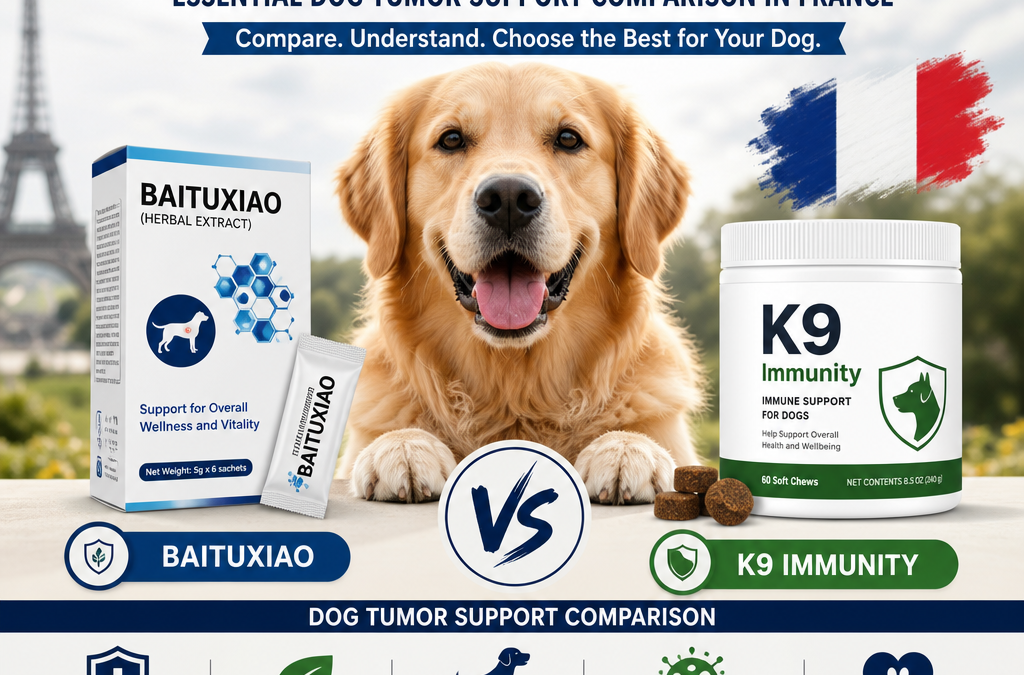
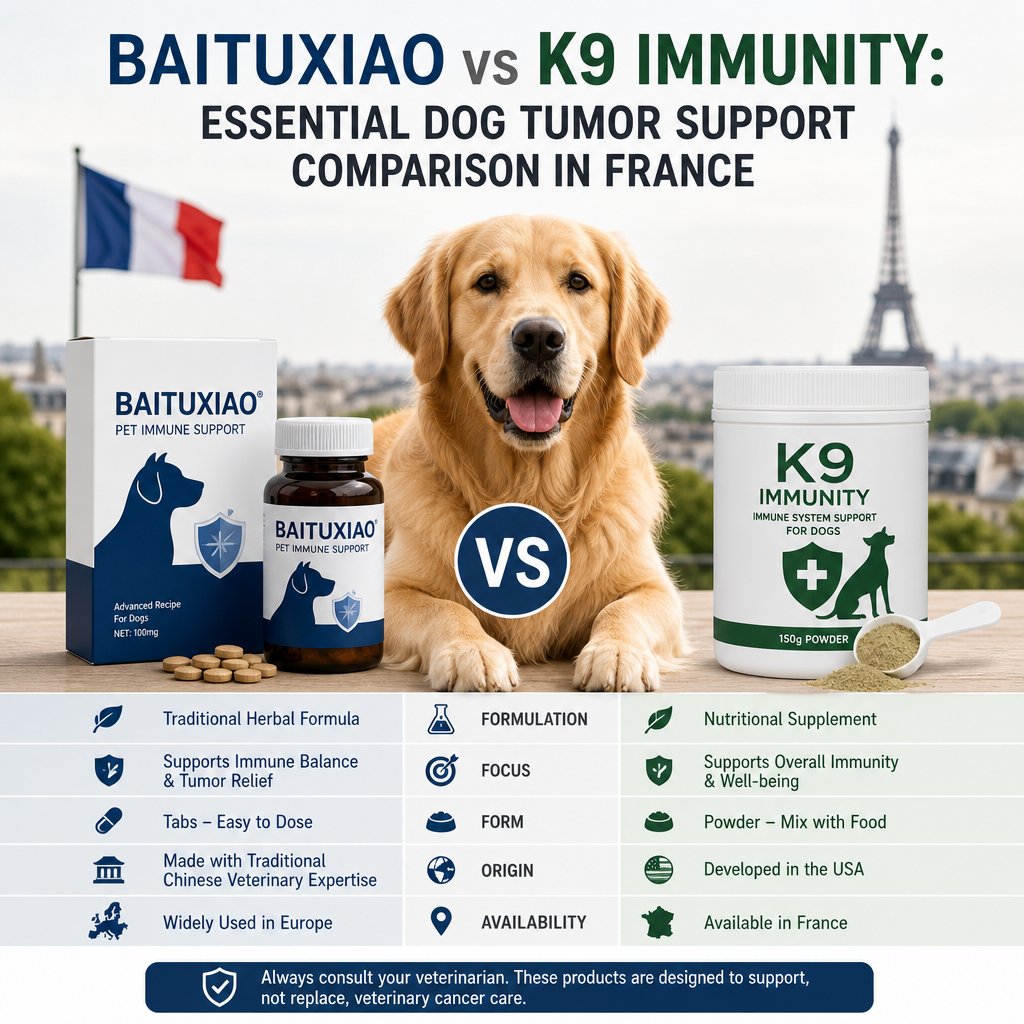
Baituxiao vs K9 Immunity / K9 Immunity Plus is a comparison many dog owners explore after a pet receives a tumor diagnosis or develops concerning lumps, abnormal growths, or other signs requiring veterinary attention. Both products are marketed as supportive supplements, not replacements for diagnosis or treatment, but they differ in ingredients, intended use, product format, and the type of nutritional support they emphasize. Understanding these differences can help owners have a more productive discussion with a veterinarian.
A supplement should be evaluated within the larger context of a dog’s health plan. Tumors can be benign or malignant, and similar-looking growths may require completely different approaches. A veterinarian may recommend cytology, biopsy, imaging, blood testing, surgery, chemotherapy, radiation, or monitoring depending on the suspected condition.
Supplements may provide nutritional or immune support, but they cannot confirm what a lump is or determine whether cancer is present. They also should not delay professional care. The most useful comparison focuses on formulation, safety, compatibility with conventional treatment, quality control, and whether the product meets a specific dog’s needs. For broader reading on supportive care, see natural supplements for dogs with cancer.
When owners search for Baituxiao vs K9 Immunity / K9 Immunity Plus, they are often trying to decide which option fits a dog’s diagnosis, appetite, and treatment plan. That decision should begin with the condition itself, not with the supplement label. A product that seems appealing in marketing materials may still be the wrong choice if it does not match the dog’s medical situation.
It also helps to remember that supportive care works best when it is specific. One dog may need digestive support and gentle nutrition; another may need an immune-focused formula or a product that is easier to give every day. Baituxiao vs K9 Immunity / K9 Immunity Plus should therefore be treated as a practical decision, not a branding exercise.
Baituxiao vs K9 Immunity / K9 Immunity Plus: Formulation Differences
Baituxiao is commonly presented as a traditional herbal formula intended to support dogs dealing with masses, abnormal tissue changes, circulation concerns, and general wellness. Its formula may include a blend of botanical ingredients associated with traditional Chinese medicine. Because herbal formulas can contain multiple active compounds, the overall effect and safety profile depend on the exact product, concentration, manufacturing standards, and the dog’s medical condition.
K9 Immunity and K9 Immunity Plus are generally positioned as immune-support products. Their formulations commonly emphasize medicinal mushrooms and other nutritional ingredients selected for immune-system support. K9 Immunity Plus is typically marketed as a more comprehensive or enhanced option compared with the standard K9 Immunity formula, although the exact differences can depend on the current label and manufacturer’s formulation.
When reviewing Baituxiao vs K9 Immunity / K9 Immunity Plus, owners should read the complete ingredient panel rather than relying only on product names or marketing claims. Look for the amount of each ingredient, whether mushroom extracts are standardized, whether botanical sources are identified, and whether the product uses powders, concentrated extracts, or proprietary blends.
In practice, the most important difference may be the style of support each formula is designed to provide. Baituxiao tends to represent a broader herbal approach, while K9 Immunity products usually focus on immune nutrition. That difference matters because a dog with digestive sensitivity, medication restrictions, or liver disease may tolerate one style of formula better than the other.
Another useful way to compare them is by simplicity versus breadth. A simpler formula may be easier to evaluate and easier to monitor for side effects, while a broader formula may offer more ingredients but also more variables. In a Baituxiao vs K9 Immunity / K9 Immunity Plus review, that tradeoff matters just as much as the label claim.
K9 Immunity / K9 Immunity Plus Comparison: Main Considerations
A practical K9 Immunity / K9 Immunity Plus comparison should begin with the intended purpose of each product. Standard K9 Immunity may appeal to owners seeking a simpler immune-support formula, while K9 Immunity Plus may be considered when a broader ingredient profile is desired. However, “more ingredients” does not automatically mean “better.” A larger formula may also create more opportunities for intolerance, interaction, or unnecessary supplementation.
The comparison should also include:
Ingredient transparency: Clear labels make it easier for veterinarians to assess potential benefits and risks.
Extract quality: Concentrated extracts may differ substantially from whole-powder ingredients.
Dosage instructions: The appropriate amount often depends on body weight, age, and health status.
Product testing: Independent testing, batch information, and good manufacturing practices can increase confidence.
Dog-specific tolerance: A supplement that works well for one dog may cause digestive upset or other problems in another.
Treatment compatibility: Certain ingredients may be inappropriate around surgery, chemotherapy, radiation, or prescription medications.
Owners should confirm whether the product is intended for long-term daily use, short-term support, or use only under veterinary supervision.
It is also worth considering the dog’s current stage of care. A newly diagnosed dog may need a cautious, minimal approach while test results are pending. A dog already receiving treatment may need a formula that is easier to coordinate with medications and follow-up visits. In both situations, Baituxiao vs K9 Immunity / K9 Immunity Plus should be framed as supportive care rather than a treatment decision on its own.
If a dog has a history of sensitive digestion, it may be wise to introduce any supplement slowly and observe stool quality, appetite, and energy level. That kind of careful monitoring can be more useful than comparing brand names alone, especially when Baituxiao vs K9 Immunity / K9 Immunity Plus is being considered for a medically fragile patient.
Dog Tumor Support Comparison: What Each Approach Emphasizes
In a dog tumor support comparison, Baituxiao is often viewed as a multi-herbal approach focused on traditional botanical support. This may appeal to owners interested in herbal combinations and holistic care. However, herbal products can be pharmacologically active. Their ingredients may influence bleeding, liver metabolism, blood pressure, inflammation, or immune activity, making veterinary guidance especially important.
K9 Immunity products are generally associated with medicinal mushroom and immune-nutrition support. Mushroom-derived compounds, including beta-glucans, are studied for their relationship with immune signaling, although research in dogs varies by ingredient and clinical situation. These products should still be considered supportive rather than curative. Immune stimulation is not universally appropriate, particularly for dogs with autoimmune disease or those receiving medications that affect immune function.
For owners comparing mushroom-based support with other traditional options, an informative overview is Alternatives to Medicinal mushrooms / mycotherapy: 7 Powerful Dog Tumor Support Options in Austria. The most appropriate option depends on the dog’s diagnosis, current treatment, laboratory results, appetite, digestive health, and overall condition—not simply on which product has the longer ingredient list.
Some owners are drawn to mushroom formulas because they are familiar with the broader idea of immune support. Others prefer herbal blends because they seem more traditional or more comprehensive. Either preference can be reasonable, but the final choice should still be filtered through the dog’s medical history. In other words, Baituxiao vs K9 Immunity / K9 Immunity Plus is a question of fit, not popularity.
The dog tumor support comparison becomes even more important when owners are trying to balance comfort, daily routine, and medical caution. A product that is easy to administer may improve consistency, while a product that causes refusal or stomach upset may be impractical, even if its ingredient list looks impressive.
How a Veterinary Cancer Care Plan Shapes the Choice
Many owners begin with a supplement comparison, but the diagnosis should always guide the decision. A mast cell tumor, mammary mass, lymphoma, lipoma, or inflammatory swelling can all look similar at first glance. Once the veterinarian identifies the problem, the support plan can be matched more accurately to the dog’s needs.
That is why Baituxiao vs K9 Immunity / K9 Immunity Plus should never be treated as a standalone answer. A dog that is stable after surgery may need a different approach than one preparing for chemotherapy. A dog with poor appetite may need digestibility and palatability to matter more than a long ingredient list. A dog with liver disease may need a simpler formula with fewer botanicals or mushroom extracts.
Veterinarians also consider whether the dog is currently inflamed, recovering from tissue damage, or struggling with fatigue. Those details can change what “supportive” really means in practice. A product that appears suitable in theory may not be ideal if it worsens digestive upset or complicates medication timing. For that reason, Baituxiao vs K9 Immunity / K9 Immunity Plus should be discussed alongside the dog’s treatment timeline, not apart from it.
It can be useful to ask whether the supplement is intended to support immune function, inflammation balance, appetite, or recovery after treatment. Those goals are not identical. Clarifying the goal helps avoid choosing a product for the wrong reason, which is a common issue in any Baituxiao vs K9 Immunity / K9 Immunity Plus decision.
Evidence, Quality Control, and Label Review
When deciding between products, label review is only the first step. Owners should also ask whether the manufacturer provides batch testing, country of origin, storage guidance, and clearly stated serving sizes. Supplements that make strong claims without specific dosing or quality information are harder to evaluate.
For general safety and reference information about supplement quality and medication interactions, the NIH Office of Dietary Supplements offers educational material on dietary supplement use and safety. While this resource is not pet-specific, it can help owners understand why product quality and label accuracy matter.
It can also help to compare the language used on the package. Vague terms such as “advanced,” “maximum strength,” or “premium” do not tell owners much about actual composition. A better label will identify ingredients clearly, explain the form of each ingredient, and provide realistic usage directions. Those details are especially helpful when reviewing Baituxiao vs K9 Immunity / K9 Immunity Plus with a veterinarian.
Owners should also look for consistency across the product listing, label, and instructions. If a formula changes frequently or the ingredient disclosure is incomplete, it becomes harder to track tolerance and response over time. That matters because a thoughtful Baituxiao vs K9 Immunity / K9 Immunity Plus review depends on repeatable information, not guesses.
In addition, documentation can make follow-up care easier. If a dog’s symptoms change after a supplement is started, having the exact name, lot number, and dose on hand can help the veterinarian decide whether the product should be continued, adjusted, or stopped.
Safety and Veterinary Supervision
Natural does not mean risk-free. Dogs may experience vomiting, diarrhea, reduced appetite, allergic reactions, or changes in liver enzymes after taking supplements. Some products may also affect platelet function or interact with medications.
Veterinary supervision is especially important for dogs that:
Are scheduled for surgery or have recently had surgery
Receive chemotherapy, radiation, corticosteroids, or immunosuppressive drugs
Take blood thinners, anti-inflammatory medications, or seizure medication
Have liver or kidney disease
Have an autoimmune disorder
Are pregnant, elderly, or medically fragile
Have unexplained weight loss, persistent vomiting, bleeding, or rapid tumor growth
Introduce only one new supplement at a time, follow the label unless the veterinarian provides different instructions, and monitor appetite, stool quality, energy, skin changes, and any progression of the mass. Keep a written list of every supplement and medication the dog receives.
If a dog is already taking prescription therapy, coordination matters just as much as ingredient choice. Even a well-liked supplement may need to be paused around procedures or adjusted during treatment cycles. That is one more reason Baituxiao vs K9 Immunity / K9 Immunity Plus should be reviewed as part of the broader care plan.
Careful supervision is especially valuable when a dog has multiple health issues. For example, a pet with tumor concerns and chronic illness may be more likely to react to a new formula than a generally healthy dog. In those cases, the safest approach is often to move slowly and document every change.
How to Choose Between the Products
The decision in a Baituxiao vs K9 Immunity / K9 Immunity Plus review should be based on evidence, transparency, and individual suitability. Ask the veterinarian to review the exact label and explain whether any ingredients could interfere with the treatment plan. It may also be useful to ask whether baseline bloodwork or follow-up testing is appropriate.
Owners should be cautious of products that promise to shrink tumors, cure cancer, or replace surgery or oncology care. Reliable supplement manufacturers should clearly state that their product is supportive and should provide dosing information, contact details, storage instructions, and quality-control information.
Ultimately, Baituxiao and K9 Immunity products represent different supplementation philosophies: one centers on a broad herbal formula, while the other emphasizes immune-focused nutritional support. Neither should be judged solely by testimonials or advertising. A careful review of the diagnosis, ingredients, safety considerations, and veterinary treatment plan offers the most responsible path for supporting a dog with a tumor or other serious health concern. For additional context on mushroom-based support, you can also compare Turkey Tail Mushroom: A Natural Supplement for Supporting Breast Tumor Treatment in Dogs.
In short, Baituxiao vs K9 Immunity / K9 Immunity Plus is less about finding a universal winner and more about matching the supplement to the dog’s diagnosis, treatment stage, and tolerance. If you are unsure which option is more appropriate, ask your veterinarian to help you weigh the risks and benefits before starting anything new.
For many owners, the safest outcome is not choosing the product with the boldest claims, but the one that fits the dog’s health status with the fewest risks. That careful approach keeps Baituxiao vs K9 Immunity / K9 Immunity Plus grounded in real-world veterinary decision-making rather than marketing.
When used thoughtfully, supportive supplements can be part of a broader comfort and care strategy. The key is to keep expectations realistic, monitor the dog closely, and revisit the plan if the diagnosis, medications, or appetite changes. That is the most responsible way to approach Baituxiao vs K9 Immunity / K9 Immunity Plus in everyday veterinary care.
Baituxiao vs K9 Immunity is a comparison many French dog owners encounter when looking for additional support after a tumor diagnosis. Both products are discussed as complementary options, but they should not be treated as replacements for veterinary diagnosis, surgery, chemotherapy, radiation therapy, or other clinically recommended care. The right choice depends on the dog’s condition, treatment plan, overall health, and the quality and safety of the product.
A tumor can be benign or malignant, localized or widespread, slow-growing or aggressive. Because of this variety, no supplement can be evaluated properly without knowing the diagnosis. A veterinarian may recommend imaging, biopsy, blood tests, or monitoring before deciding on treatment. In France, owners should also consider the importance of purchasing products through reliable channels and discussing any supplement with a veterinary professional.
Supportive products may be used with goals such as maintaining appetite, supporting normal energy levels, helping a dog cope with treatment, or providing nutritional assistance. However, claims about shrinking tumors, eliminating cancer, or replacing medical therapy require particular caution. A supplement’s marketing language is not equivalent to clinical evidence.
If you are comparing options after a diagnosis, Baituxiao vs K9 Immunity should be reviewed as part of a broader care plan rather than as a stand-alone decision. That perspective helps keep expectations realistic and reduces the risk of delaying needed medical treatment.
For trusted background on canine cancer and treatment planning, the Veterinary Practice News resource offers widely read clinical and practice-oriented articles that can help owners better understand current veterinary guidance.
What the comparison involves
The Baituxiao vs K9 Immunity discussion generally focuses on differences in formulation, intended use, evidence, administration, and suitability for individual dogs. Product formulas can change depending on the manufacturer and market, so owners should read the current label rather than relying solely on online descriptions.
Baituxiao is commonly presented as a traditional herbal-style supplement intended to provide broad support during serious illness. K9 Immunity is generally marketed as an immune-support product for dogs, often with an emphasis on nutritional ingredients and general wellness. These descriptions do not establish that either product treats cancer. They simply indicate how each product is positioned.
A meaningful comparison should examine:
The complete ingredient list and amount of each ingredient
Manufacturing standards and quality testing
Directions for the dog’s weight and age
Potential interactions with medication
Suitability for dogs with liver, kidney, digestive, or immune problems
Availability and labeling compliance in France
The level of independent scientific evidence
For a useful Baituxiao vs K9 Immunity review, the label matters more than marketing claims. That is why it helps to compare the product facts line by line instead of judging by testimonials alone.
K9 Immunity comparison: ingredients and formulation
A proper K9 Immunity comparison should begin with the current product label. Owners should identify whether the formula contains vitamins, minerals, mushrooms, herbs, enzymes, antioxidants, or other compounds. “Natural” does not automatically mean safe, especially for a dog receiving chemotherapy, corticosteroids, anti-inflammatory medication, anticoagulants, or drugs processed by the liver.
Some supplements contain ingredients that may affect digestion, blood clotting, blood pressure, or drug metabolism. Dogs can also react differently depending on breed, age, body size, and existing disease. Products with multiple active ingredients may be difficult to assess because an adverse reaction cannot easily be linked to one component.
Baituxiao should be assessed in the same way. Instead of judging by brand reputation or testimonials, compare the precise formula, dosage instructions, batch information, expiration date, and manufacturer transparency. A product with a long ingredient list is not automatically more effective than a simpler formula.
When French owners compare Baituxiao vs K9 Immunity, a practical question is whether the product fits the dog’s current treatment phase. A supportive supplement that seemed helpful during recovery may not be appropriate during a different stage of care.
It can also help to review basic veterinary nutrition and safety guidance from reputable references such as the VCA Animal Hospitals library, especially when checking ingredients that may affect digestion, appetite, or medication tolerance.
Evidence versus testimonials
Online testimonials may describe improvements in appetite, mood, mobility, or energy. These changes can be meaningful to an owner, but they do not prove that a supplement reduced tumor size or extended survival. A dog may feel better because pain is controlled, infection has improved, dietary intake has increased, or the disease is temporarily stable.
Scientific evidence should be considered separately from personal stories. Look for published research, clearly identified ingredients, appropriate studies in dogs, and information about dosage and safety. Evidence from laboratory experiments or human studies may provide useful background, but it cannot automatically be applied to canine cancer treatment.
Veterinary oncology is complex, and tumor response varies considerably. A supplement should therefore be viewed as a possible supportive measure, not as a guaranteed anti-cancer therapy. If a company claims otherwise, that claim should be treated with caution.
For French readers trying to compare Baituxiao vs K9 Immunity with a practical mindset, the safest approach is to ask whether any evidence exists for the exact formulation being sold, not just for an ingredient that appears in a broader category of supplements.
It is also wise to ask whether the product’s claims match what the evidence can realistically support. Many owners find that a calmer, more evidence-based view leads to better decisions and fewer regrets later.
How to compare safety, quality, and convenience
Beyond the label and evidence, a careful Baituxiao vs K9 Immunity decision should also include day-to-day use. A product can look appealing online but still be difficult to give consistently or unsuitable for a sensitive dog.
Helpful points to review include:
How many capsules, tablets, or drops are needed each day
Whether the product can be given with food
Whether the flavor is likely to be accepted by picky dogs
Whether the packaging protects the product from heat and moisture
Whether the seller provides clear customer service and traceability
Whether the cost is realistic for long-term use
It also helps to compare consistency. A supplement that is easy to source repeatedly is often more practical than one that is difficult to repurchase or frequently out of stock. For dogs with ongoing medical needs, steady supply can matter just as much as the marketing message.
Owners should also think about the dog’s comfort and routine. Some dogs do better with a product that is easy to split, mix, or hide in food, while others tolerate liquids or soft chews more easily. Convenience matters because a supplement that cannot be given reliably is unlikely to provide meaningful support.
Before introducing either product, owners should provide the veterinarian with the full label and explain all other medications and supplements the dog receives. This is especially important before surgery or during chemotherapy. Some ingredients may interfere with clotting, sedation, immune activity, or the body’s ability to process medication.
Monitor for vomiting, diarrhea, loss of appetite, unusual tiredness, itching, swelling, breathing difficulty, or changes in thirst and urination. Stop the product and contact a veterinarian promptly if a serious reaction occurs. Never delay urgent care while waiting to see whether a supplement works.
French owners should also verify whether the product is legally marketed for animal use, whether labeling is available in French, and whether the seller provides traceability and customer support. Avoid products with unclear ingredients, exaggerated promises, missing batch details, or pressure to discontinue conventional veterinary care.
When in doubt, ask the veterinary team to review the label before the first dose. That simple step can prevent problems that are much harder to solve after a reaction has already started.
If a dog already has a complex medical history, this step is even more important. Dogs with cancer may also have liver, kidney, digestive, or immune concerns that change what is safe. In those cases, Baituxiao vs K9 Immunity should be reviewed only after the veterinarian confirms that the ingredients will not create avoidable risk.
How to compare safety, quality, and convenience
Owners often want a simple answer, but the best comparison is methodical. Start with the diagnosis, then check treatment goals, then look at the product details. That order keeps the decision grounded in the dog’s actual needs rather than in advertising language.
A practical checklist includes the following:
Ask what the confirmed tumor type is and whether it is stable or progressing.
Review all active ingredients and look for any that may affect clotting or digestion.
Check the recommended dose for your dog’s weight and body condition.
Look for clear storage instructions and batch or lot information.
Confirm whether the product can be used alongside current medication.
Observe the dog carefully during the first week of use.
A good Baituxiao vs K9 Immunity choice should be based on the product that fits your dog’s real situation, not the product with the loudest claims. If your dog is eating poorly, for example, a supportive supplement may matter less than changing the feeding approach, controlling nausea, or adjusting pain medication under veterinary supervision.
Cost is another practical factor. A supplement that seems affordable for a few weeks may become expensive if it must be used long-term. Compare the daily cost, not just the bottle price, so you know what ongoing support will actually require.
Finally, remember that “support” is only helpful if it does not distract from core care. That means regular checkups, symptom tracking, and prompt communication with the veterinary team remain essential.
Choosing the most appropriate support
The best dog tumor support comparison is individualized. A dog recovering from surgery may have different needs from a dog receiving chemotherapy or a dog receiving palliative care. Appetite, weight, hydration, pain control, stool quality, and emotional comfort may be more important immediate goals than adding multiple supplements.
Ask the veterinarian:
What is the confirmed tumor type and stage?
Could this product interact with the proposed treatment?
Are the ingredients appropriate for the dog’s liver and kidney function?
Is there a clear reason to use this supplement?
Which signs should lead to discontinuation or urgent examination?
How will progress be monitored?
Keeping a simple record of weight, appetite, activity, vomiting, stool quality, and medication can help identify whether a product is tolerated. It also prevents owners from attributing every change to the supplement.
French owners who are comparing Baituxiao vs K9 Immunity may also want to review broader canine tumor support resources and speak with their veterinarian about options that fit the dog’s diagnosis, age, and current treatment plan.
Before you order either supplement, ask a few extra questions that can save time and reduce risk. Is the seller clear about returns and batch traceability? Does the product have enough information to show exactly what your dog will receive? Is the formula consistent from one purchase to the next?
These details matter because a supplement for a dog with cancer should be predictable. If the formulation changes without notice, it becomes harder to tell whether your dog is benefiting, tolerating the product, or reacting to a new ingredient.
It can also help to look for independent signs of quality rather than relying on polished marketing pages. Clear labeling, responsible instructions, and transparent contact details are more useful than dramatic promises. That is especially true when comparing Baituxiao vs K9 Immunity in a real-world care plan.
A balanced conclusion
Baituxiao vs K9 Immunity should not be viewed as a contest between two guaranteed cancer treatments. Both require careful review of ingredients, safety information, manufacturing quality, and compatibility with veterinary care. A responsible K9 Immunity comparison also recognizes that product claims may exceed the available evidence.
For French dog owners, the safest approach is to treat these products as optional complementary support only after consultation with a veterinarian. The foundation of care remains an accurate diagnosis, an appropriate treatment plan, pain and symptom management, good nutrition, and regular follow-up. Supplements may have a place in that plan, but informed decisions and professional oversight should come before brand preference.
In practice, Baituxiao vs K9 Immunity is less about finding a miracle product and more about choosing the safest, most appropriate support for one specific dog. That careful approach gives owners a better chance of helping their pet comfortably and responsibly.
When the discussion stays grounded in evidence, the comparison becomes clearer: Baituxiao vs K9 Immunity is best handled as a support decision, not a substitute for medical care. That perspective is the most helpful one for French owners who want to act quickly without overlooking safety.
For more context on canine cancer support options, Baituxiao vs K9 Immunity can be revisited alongside the dog’s diagnosis, age, and treatment plan. Used that way, Baituxiao vs K9 Immunity becomes a practical comparison instead of a marketing choice.
By keeping Baituxiao vs K9 Immunity tied to veterinary guidance, owners can make a clearer, safer decision for their dog’s long-term care. That is the most responsible outcome for any family facing a tumor diagnosis.
Ultimately, Baituxiao vs K9 Immunity should support, not replace, the veterinarian’s plan. If you remember that rule, the comparison stays useful, realistic, and focused on your dog’s well-being.
Picture this: You’ve just given your dog a much-deserved belly rub after a fun-filled walk. Suddenly, your fingertips brush against a small bump you’ve never noticed before. Cue the suspenseful music—Has an alien invader (read: malignant tumor) set up camp, or is it just a harmless squatter (benign growth) chilling under your dog’s skin? Before you sound the alarm or shrug it off, let’s shed some light on how to decode these mysterious new tenants in your furry friend’s body.
1. “Growth CSI”: Forensic Clues That Matter
Think of yourself as the detective in a high-stakes crime drama. Your job is to gather all the evidence:
Texture and Mobility: Malignant tumors often feel irregular and may adhere to surrounding tissues, while benign lumps tend to be smoother and more mobile.
Rate of Growth: Is that bump rapidly inflating like a balloon, or has it remained the same size over weeks or months? Faster growth can point to malignancy.
Associated Symptoms: Changes in appetite, lethargy, weight loss, or localized pain might be extra red flags that require immediate attention.
The key takeaway? Don’t jump to conclusions just from how the lump feels. But do keep your “detective notebook” updated with observations.
2. Scientific Intel: Diagnostic Tests Reveal the Truth
Just like any good thriller, you’ll need a qualified partner to crack the case. In this episode, it’s your trusted veterinarian, armed with high-tech tools and a keen eye for detail:
Fine Needle Aspiration (FNA): A quick, minimally invasive test that can provide immediate cellular clues. Think of it as collecting “fingerprints” of the lump’s identity.
Biopsy: Sometimes, a closer look is needed—like analyzing a suspect’s DNA. A biopsy offers a deeper dive into the tissue’s structure and cell behavior.
Imaging Tools: X-rays, ultrasounds, or MRIs act as the detective’s magnifying glass, spotting hidden clues about the growth’s boundaries and potential spread.
3. Tumor or Benign Growth? Understanding the Verdict
After collecting evidence and running tests, the verdict will be in. Malignant tumors—our “alien invaders”—carry the risk of infiltration and metastasis. This often calls for prompt, sometimes aggressive, treatment, which may include surgery, chemotherapy, or radiation. Benign growths—our “harmless squatters”—generally grow slowly and stay confined, but that doesn’t mean you can always ignore them. Some benign masses can still press on vital organs or become ulcerated over time, necessitating removal or periodic monitoring.
4. Crafting a Treatment Masterplan
Whether the diagnosis is a harmless squatter or a confirmed alien invader, having a solid game plan is non-negotiable:
Surgical Removal: Often the first line of defense—like evicting a bad tenant.
Medications & Therapies: Chemotherapy, targeted therapy, or immunotherapy can tip the scales in your dog’s favor if the tumor is malignant.
Lifestyle Adjustments: From specialized diets to gentle exercise routines, holistic support helps your dog feel their best throughout treatment.
Ongoing Monitoring: Think of this as your perimeter patrol to ensure no suspicious lumps return or appear elsewhere.
5. Celebrating the Wins and Sharing the Journey
Finding a new lump can be a scary twist in your beloved pet’s story. Yet remember: not every bump is a doom-and-gloom scenario. Armed with vigilance and a proactive approach, you can turn this “alien vs. squatter” mystery into a manageable subplot in your dog’s life adventure. Share updates with your vet, celebrate small victories (a stable lump, successful surgery, good energy levels), and cherish each tail wag along the way.
Because at the end of the day, every detective story worth telling concludes with hope—and maybe a few extra treats for the world’s best sidekick, your dog.
When you notice a lump on your dog’s skin, it can be alarming. For many pet owners, the first thought might be “Is this cancer?” or “What if it’s something serious?” One common culprit behind such lumps in dogs is lipomas, benign fatty tumors that can appear on the body. But are they dangerous? Let’s explore the facts, myths, and nuances of lipomas in dogs.
What Exactly Are Lipomas?
Lipomas are soft, rubbery growths that develop under the skin. They’re made up of fat cells and typically feel movable when you gently touch them. They can vary in size and location, but most lipomas are harmless. While these fatty tumors are generally non-cancerous, the uncertainty they cause in pet owners is understandable, given their mysterious appearance.
The Good News: Lipomas Are Usually Benign
The good news is that lipomas are almost always benign, meaning they are not cancerous. Most dogs will have one or two lipomas in their lifetime, often as they age. These tumors tend to grow slowly and are not typically painful. The majority of lipomas don’t spread to other parts of the body, making them non-threatening to your dog’s overall health.
When Do Lipomas Become Problematic?
Though most lipomas are benign, some may cause complications if they grow large enough or are located in sensitive areas. Here are some cases where lipomas might pose a problem:
Pressure on Surrounding Tissues: If a lipoma grows too large, it may begin to press against muscles, nerves, or other vital structures. This could lead to discomfort, pain, or difficulty moving.
Interference with Movement: Lipomas located on the legs or near joints can limit your dog’s mobility. They might create a sense of heaviness or restrict motion, causing lameness or an altered gait.
Risk of Malignant Transformation: Though rare, some lipomas may transform into liposarcomas, a malignant form of cancer. These are much less common but more aggressive. The risk is higher if a lipoma becomes unusually hard, grows rapidly, or shows signs of pain.
How Do You Know If Your Dog’s Lipoma Needs Attention?
While most lipomas are harmless, regular monitoring is essential. If you notice any of the following, it’s time to consult a veterinarian:
Rapid growth: A sudden increase in size could indicate a problem.
Pain or sensitivity: If your dog seems to be bothered by the lipoma, it may require attention.
Changes in texture: A hardening or firming of the lipoma could be a red flag.
New lumps: If your dog develops multiple lumps in a short period, a vet checkup is recommended.
Treatment Options: To Remove or Not to Remove?
In most cases, lipomas don’t require any treatment. If the lipoma is not causing any pain or difficulty, your vet may recommend simply monitoring the lump. However, in cases where the lipoma is problematic—either due to its size, location, or growth rate—surgical removal might be suggested. This is typically a straightforward procedure, but like all surgeries, it carries some risks, especially in older dogs.
Preventing Lipomas: Can It Be Done?
Unfortunately, lipomas are primarily genetic, and there’s no surefire way to prevent them from forming. However, maintaining a healthy weight for your dog through a balanced diet and regular exercise might reduce the risk of developing large lipomas. Obesity tends to exacerbate fatty tumor growth, so controlling your dog’s weight is always a good preventive measure.
Final Thoughts: Lipomas Are Not the Enemy
While lipomas might initially sound scary, they are often more of a nuisance than a danger. In most cases, they are benign and manageable. By staying vigilant and consulting your veterinarian regularly, you can ensure that your dog stays comfortable and healthy, regardless of any lumps and bumps along the way. So, while lipomas can be concerning, remember that they are rarely a cause for alarm.
Abnormal growths in a dog’s lower intestines can cause significant health concerns, ranging from discomfort to life-threatening conditions. These growths, often located in the rectum or colon, can be benign or malignant. Understanding their causes, symptoms, and treatment options is crucial for timely intervention.
Common Types of Growths
Polyps
Polyps are benign growths that develop in the lining of the intestines.
They may cause minor bleeding, diarrhea, or constipation.
If untreated, polyps can sometimes transform into malignant tumors.
Adenocarcinoma
A malignant tumor affecting the glandular cells lining the intestine.
This is one of the most aggressive types of lower intestinal cancers.
Early detection is critical for effective treatment.
Leiomyosarcoma
A rare type of cancer that originates in the smooth muscle of the intestines.
It can cause obstruction and severe digestive issues.
Hemangiomas and Hemangiosarcomas
These vascular tumors can either be benign (hemangiomas) or malignant (hemangiosarcomas).
They often lead to bleeding and anemia.
Symptoms of Abnormal Growths
Dogs with abnormal growths in the lower intestines may exhibit the following symptoms:
Blood in Stool: Bright red or tar-like black stool.
Straining to Defecate: Difficulty or pain during bowel movements.
Changes in Stool Shape: Narrow or ribbon-like stool due to obstruction.
Diarrhea or Constipation: Persistent changes in bowel habits.
Weight Loss: Unexplained loss of weight and appetite.
Vomiting or Lethargy: Indications of gastrointestinal distress.
Causes and Risk Factors
While the exact cause of abnormal growths varies, some contributing factors include:
Diet: Poor-quality or processed diets may contribute to inflammation and tumor development.
Age and Genetics: Older dogs and certain breeds like Boxers and German Shepherds are more prone to intestinal tumors.
Chronic Inflammation: Conditions like colitis may predispose dogs to growths.
Exposure to Toxins: Environmental toxins and carcinogens can increase cancer risk.
Diagnosis
Veterinarians use a combination of methods to diagnose intestinal growths:
Physical Examination: Palpation to identify masses.
Imaging: X-rays, ultrasounds, or CT scans to visualize growths.
Endoscopy: Insertion of a camera to examine the intestines and collect tissue samples.
Biopsy: Lab analysis of tissue to determine if the growth is benign or malignant.
Treatment Options
The treatment approach depends on the type and severity of the growth:
Surgical Removal: Polyps and localized tumors can often be removed surgically.
Chemotherapy or Radiation Therapy: Used for malignant growths, particularly adenocarcinoma.
Dietary Management: High-fiber or prescription diets to manage symptoms.
Palliative Care: Pain relief and quality-of-life management for advanced cases.
Prevention and Monitoring
Regular Check-ups: Routine veterinary visits can help detect growths early.
Healthy Diet: A diet rich in natural, high-quality ingredients can reduce inflammation.
Screening in At-Risk Breeds: Periodic screenings for breeds prone to intestinal issues.
When to See a Vet
If your dog shows signs of rectal bleeding, chronic digestive problems, or significant changes in stool, it’s essential to consult a veterinarian promptly. Early diagnosis and treatment can dramatically improve outcomes.
By staying informed and proactive, pet owners can better safeguard their dogs’ health and address potential problems before they escalate.