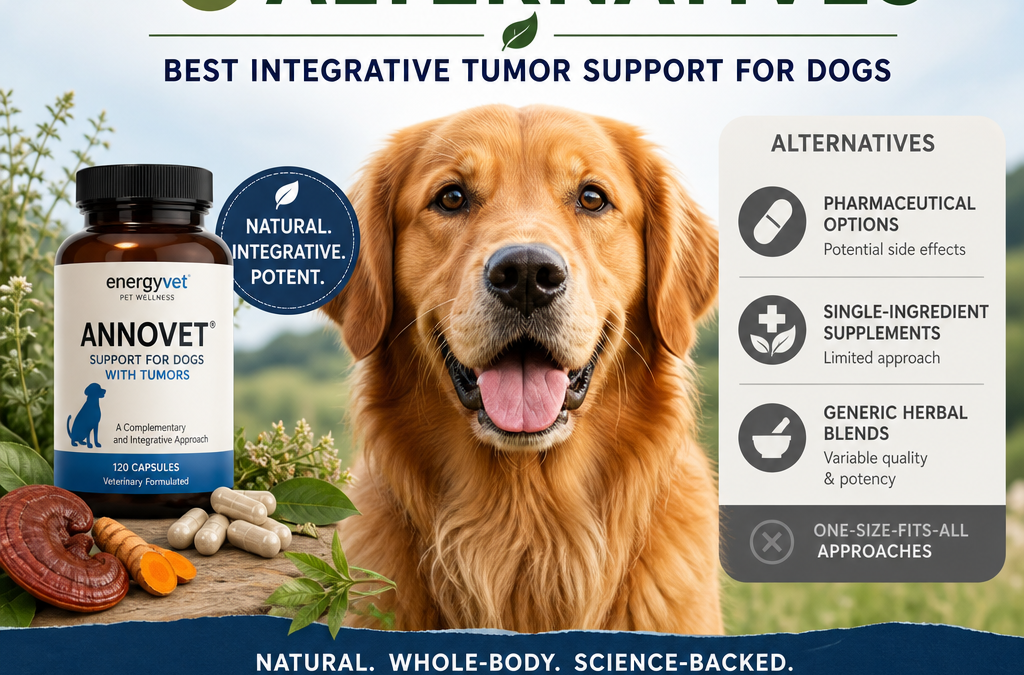
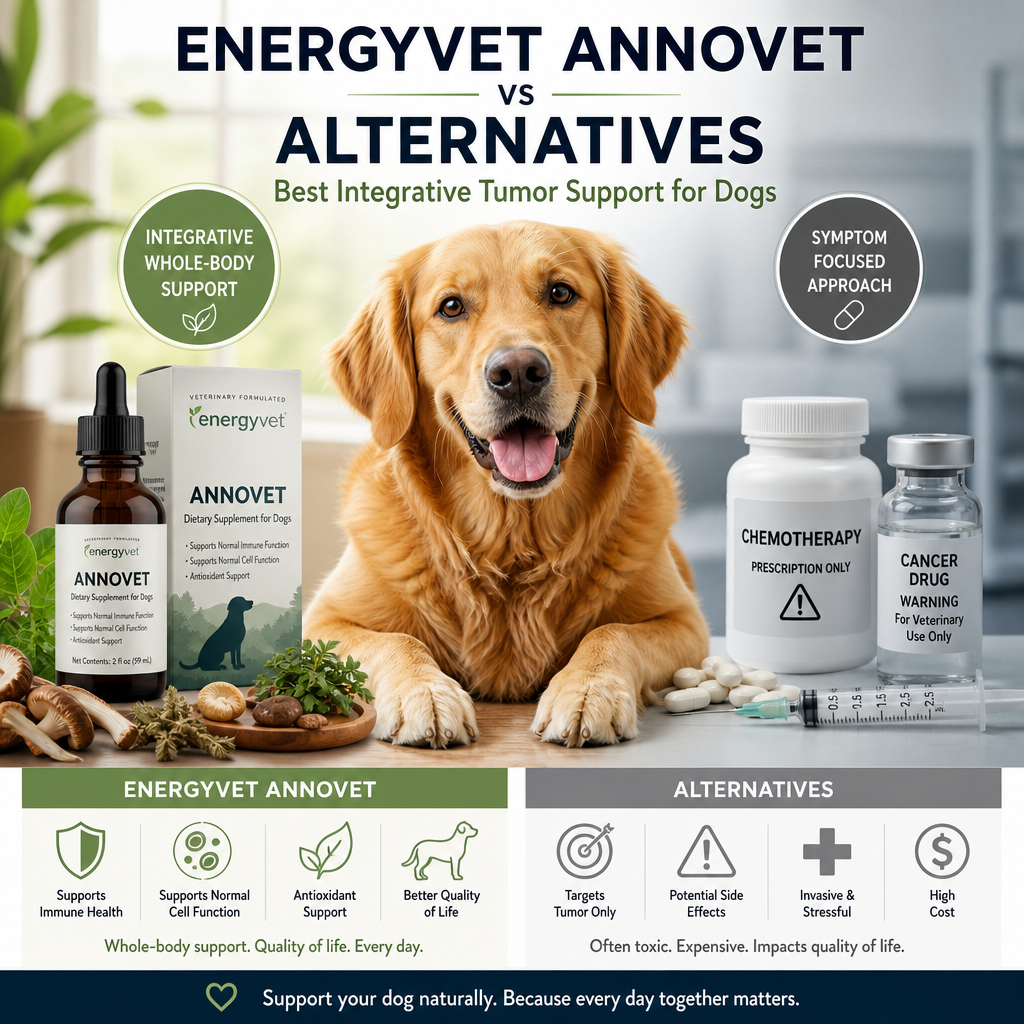
Energyvet Annovet vs Alternatives: 7 Best Integrative Tumor Support Options for Dogs
Energyvet Annovet vs Alternatives is an important comparison for dog owners exploring supportive care during a cancer diagnosis. While no supplement should be considered a cure for cancer, integrative approaches may help support comfort, appetite, digestive function, hydration, and overall quality of life when used alongside veterinary treatment. The best plan depends on the type of tumor, disease stage, current medications, and the dog’s individual needs.
Table of Contents
Understanding natural and integrative oncology support
Natural/integrative oncology support combines conventional veterinary medicine with carefully selected complementary therapies. Conventional care may include surgery, chemotherapy, radiation, targeted medication, or palliative treatment. Integrative care focuses on the whole patient, adding nutritional strategies, symptom management, rehabilitation, and selected supplements where appropriate.
The goal is not to replace evidence-based cancer treatment. Instead, supportive therapies may help a dog tolerate treatment, maintain strength, manage side effects, and enjoy a better quality of life. A veterinary oncologist or veterinarian with integrative training should guide the process, especially because supplements can interact with chemotherapy, steroids, anti-inflammatory drugs, anticoagulants, and anesthetic agents.
For owners who want to compare broader product categories, this context is useful when reviewing Energyvet Annovet Alternative: 7 Best Affordable Dog Tumor Supplements in Czech Republic alongside a dog’s medical plan.
In practice, Energyvet Annovet vs alternatives should be assessed through the same lens: does the product support the dog’s current needs, and is it appropriate for the treatment stage the dog is in?
It also helps to remember that supportive care is not a single decision but an ongoing process. As a dog’s condition changes, the balance between appetite support, comfort, hydration, and medication tolerance can change too. A product that seems useful early on may become unnecessary later, while another option may become more important after surgery or during chemotherapy. That is why Energyvet Annovet vs alternatives should be rechecked at each major treatment step rather than decided once and forgotten.
Owners often feel pressure to act quickly after hearing a cancer diagnosis, but a careful review usually leads to better choices. Taking time to understand how each supplement or supportive measure fits into the broader care plan can prevent unnecessary spending, reduce the risk of interactions, and keep the dog’s comfort at the center of the decision.
What is Energyvet Annovet?
Energyvet Annovet is marketed as a veterinary complementary product for animals with serious health conditions, including tumor-related concerns. Product formulations and recommended uses may vary by region, so owners should carefully review the current label and discuss the product with a veterinarian before use.
Some practitioners consider products in this category as part of a broader supportive-care program. However, claims about directly shrinking tumors, eliminating cancer, or replacing medical treatment should be treated cautiously. Cancer is not one disease; lymphoma, mast cell tumors, osteosarcoma, mammary tumors, and hemangiosarcoma all behave differently and require different treatment strategies.
Before considering Annovet, owners should ask:
- What is the confirmed diagnosis?
- Is the product intended for general support or a specific condition?
- Could its ingredients affect clotting, liver metabolism, blood pressure, or immune function?
- Should it be stopped before surgery or chemotherapy?
- How will the dog’s response and safety be monitored?
A supplement should have a clear role in the treatment plan rather than being added simply because it is labeled “natural.” That same rule applies when comparing Energyvet Annovet vs alternatives for dogs with tumors.
In many cases, the most useful question is not whether a supplement sounds promising, but whether it fits the dog’s current situation. For example, a dog with poor appetite and weight loss may need nutrition and anti-nausea support before any additional supplement is considered. A dog with bleeding risk may need certain ingredients avoided entirely. Those practical details matter more than marketing claims, and they are central to a safe comparison of Energyvet Annovet vs alternatives.
It is also important to understand that supportive products are not all aiming at the same problem. Some are designed to support digestion, some to improve nutrient intake, some to help with inflammation, and some to fit into broader integrative oncology routines. That is why comparing labels carefully, alongside the dog’s diagnosis and lab work, is more useful than comparing product names alone.
Energyvet Annovet vs Alternatives: key comparison factors
When evaluating Energyvet Annovet vs alternatives, the most useful comparison is not based solely on brand reputation. Owners should examine evidence, safety, ingredients, quality control, and compatibility with the dog’s primary treatment.
1. Evidence and transparency
Look for clearly identified ingredients, standardized amounts, manufacturing information, and realistic claims. A product that promises to cure multiple forms of cancer is a warning sign. Veterinary supplements often have less research than prescription medications, so transparency is especially important.
Transparency also means understanding what the product is not meant to do. A supportive supplement may be used to assist comfort, digestion, or recovery, but that is very different from a treatment proven to control tumor growth. When Energyvet Annovet vs alternatives are compared honestly, the best option is usually the one with the clearest purpose and the most understandable label.
2. Safety and interactions
Natural products can produce side effects. Certain herbs and concentrated compounds may affect liver enzymes, kidney function, blood clotting, blood pressure, or immune activity. This matters greatly for dogs undergoing surgery, chemotherapy, radiation, or long-term medication.
Interactions are especially important when several products are used together. A supplement that seems harmless by itself can become a concern when combined with another ingredient that also affects the same body system. This is one reason veterinarians often want a full list of everything the dog receives, including treats, powders, oils, and chews. In a thoughtful review of Energyvet Annovet vs alternatives, safety should always be considered before convenience.
3. Quality control
Choose products from manufacturers that test for contamination, ingredient identity, and consistency between batches. Supplements intended for humans may contain ingredients or concentrations that are inappropriate for dogs. Products containing xylitol, high doses of vitamin D, essential oils, or other toxic substances should never be given without explicit veterinary approval.
Quality control is particularly important in long-term support. A dog may receive a product for weeks or months, so the same formula should be consistently manufactured. If a brand changes ingredients or sourcing, the response in the dog may change too. That is another practical reason Energyvet Annovet vs alternatives should be reviewed with attention to product quality, not only to price.
4. Practical goals
A supplement should address a specific concern, such as poor appetite, gastrointestinal upset, muscle loss, or general nutritional support. Vague goals make it difficult to determine whether the product is helping or causing problems.
These same rules apply to Energyvet Annovet vs alternatives in everyday practice: if a product does not fit the diagnosis, the dose, and the treatment timeline, it is probably not the right choice.
Good decision-making also includes setting a time frame. A product should be evaluated after a reasonable trial, with attention to appetite, stool quality, comfort, activity, and lab values when relevant. If no meaningful benefit appears, it may be better to stop it and focus on more direct supportive measures.
Dog tumor support options to discuss with a veterinarian
There are several dog tumor support options that may complement cancer treatment. Their suitability depends on the dog’s diagnosis and medical status.
Nutrition and weight maintenance
Maintaining body weight and muscle is often one of the most important supportive goals. A complete, balanced diet with adequate calories and protein may help preserve strength. Some dogs benefit from highly palatable therapeutic diets, while others need customized feeding plans because of nausea, pancreatitis, kidney disease, or gastrointestinal problems.
Restrictive “cancer diets” can be risky if they cause weight loss or nutritional deficiencies. Homemade diets should be formulated by a veterinary nutritionist rather than assembled from internet recipes.
In many cases, good nutrition is the foundation for evaluating Energyvet Annovet vs alternatives because a supplement cannot compensate for inadequate calories or uncontrolled nausea.
Feeding support may also involve practical adjustments at home. Smaller meals, warmed food, hand feeding, changing food texture, or adding veterinary-approved toppers can make a major difference in intake. These simple strategies often provide more immediate relief than introducing multiple products at once. When owners are overwhelmed by choices, it helps to remember that the most effective dog tumor support options are often the simplest ones that improve eating and hydration.
Omega-3 fatty acids
Veterinary-formulated fish oil may support skin health, inflammation management, and nutritional balance. It can also add calories, which may be useful for some dogs. However, high doses may cause diarrhea or affect platelet function, so dosing should be determined by a veterinarian. Fish oil is not appropriate for every patient, particularly dogs with certain bleeding or pancreatic disorders.
Omega-3 products are often discussed in integrative oncology because they can be part of a broader nutritional strategy. Still, dose and timing matter. A product that is too concentrated may upset the stomach, while a product that is too low in EPA and DHA may not provide the intended benefit. If Energyvet Annovet vs alternatives is being considered in a dog already using fish oil, the veterinarian should review the full supplement list to avoid unnecessary overlap or digestive upset.
Digestive and appetite support
Cancer and its treatments may cause nausea, constipation, diarrhea, or appetite loss. Prescription anti-nausea medications, appetite stimulants, hydration therapy, and dietary adjustments often provide more predictable benefits than untested supplements. Probiotics may be useful in selected cases, but product quality and strain selection matter.
When owners compare Energyvet Annovet vs alternatives, digestive support often matters more than a supplement’s marketing language because comfort and food intake can change quickly during treatment.
Digestive support should also be matched to the underlying issue. A dog with nausea needs a different plan from a dog with loose stool or a dog that simply feels too tired to eat. Because of that, the best dog tumor support options are often the ones that target a specific symptom rather than trying to do everything at once.
Pain management and rehabilitation
Pain control is a central part of integrative oncology. Depending on the condition, care may include prescription analgesics, acupuncture, physical rehabilitation, massage, laser therapy, mobility support, or environmental changes. These approaches should be coordinated so that complementary therapies do not delay necessary treatment.
For many dogs, pain control and mobility support are the most meaningful dog tumor support options because they directly affect activity, sleep, and willingness to eat.
Rehabilitation can be especially helpful after surgery or when a tumor affects movement. Short, gentle walks, traction on slippery floors, ramps, supportive bedding, and careful exercise planning may reduce strain and improve confidence. These non-drug approaches are often overlooked, yet they can be a major part of a dog’s comfort and day-to-day quality of life.
Herbal and antioxidant products
Herbal formulas and antioxidant supplements are sometimes used in integrative care, but they require particular caution. Some antioxidants or plant compounds may theoretically interfere with radiation or chemotherapy, while others may increase bleeding risk or alter drug metabolism. “Natural” does not automatically mean safe, especially at concentrated doses.
This is one reason Energyvet Annovet vs alternatives should always be reviewed with a veterinarian who knows the dog’s full treatment plan.
Herbal products may also vary in strength and purity. The same plant-based ingredient can behave differently depending on how it is extracted, standardized, and stored. If an owner is considering an herbal supportive product, consistency and monitoring become just as important as the ingredient list itself.
Because tumors and treatments differ widely, there is no single best choice among dog tumor support options. A dog with early-stage disease may need a different approach than a dog receiving palliative care. That is why individualized guidance is essential before starting any product.
Comfort-focused supportive care
Not every useful measure has to be a supplement. Warm resting areas, gentle grooming, easier access to water, reduced stair use, and low-stress routines can all support a dog receiving cancer care. These comfort measures do not replace medical treatment, but they can improve daily living in a very real way.
When owners compare Energyvet Annovet vs alternatives, it is worth remembering that the most effective support plan usually combines products, medications, and home adjustments rather than relying on one category alone. This broader perspective helps prevent disappointment and supports more realistic expectations.
How to build a safer integrative plan
Start with a confirmed diagnosis and a written list of every medication, supplement, treat, and diet the dog receives. Ask the veterinary team to identify the primary goals of supportive care. These may include maintaining appetite, reducing nausea, controlling pain, preserving mobility, or supporting recovery after surgery.
Introduce only one new product at a time. This makes it easier to identify side effects and determine whether the product is producing a meaningful benefit. Keep a simple daily record of appetite, water intake, vomiting, stool quality, energy, pain signs, weight, and general comfort.
Stop a product and contact the veterinarian if the dog develops persistent vomiting, diarrhea, jaundice, unusual bruising, severe lethargy, breathing changes, seizures, or a sudden decline. Supplements should also be reviewed before procedures, changes in chemotherapy, or the addition of new prescriptions.
If you are still weighing Energyvet Annovet vs alternatives, use the same safety checklist for every option so the final plan is based on evidence and observation rather than assumptions.
One practical way to keep decisions grounded is to compare any product with the dog’s real-world response over time. If appetite improves, nausea settles, or mobility becomes easier, that is meaningful. If nothing changes, or side effects appear, the product may not belong in the plan.
Supportive care also works best when everyone on the veterinary team is informed. A general practitioner, oncologist, surgeon, and rehabilitation specialist can each notice different risks. Sharing the full list of products helps avoid duplicate ingredients and accidental interactions.
Owners in the Czech Republic often face the same challenge as pet parents elsewhere: there are many options, but not every option suits every dog. That is why a calm, structured review of Energyvet Annovet vs alternatives is more valuable than a quick decision based on online claims.
It can also help to write down questions before each veterinary visit. Asking how a product might affect anesthesia, whether it should be paused during chemotherapy, and what signs of intolerance to watch for can make supportive care safer and less stressful. This kind of planning turns the comparison of Energyvet Annovet vs alternatives into a practical decision rather than a guess.
If the dog has more than one medical issue, the plan may need to be even more selective. Heart disease, kidney disease, liver disease, or endocrine disorders can all affect which supportive products are appropriate. In those cases, the most useful dog tumor support options are often the ones that do not complicate existing disease management.
Making an informed choice
The best natural/integrative oncology support is individualized, evidence-aware, and safety-focused. Energyvet Annovet may be considered by some owners as one component of a broader supportive plan, but it should not replace diagnosis, oncology consultation, surgery, chemotherapy, radiation, or appropriate palliative care.
Comparing Energyvet Annovet vs alternatives requires more than choosing the product with the strongest marketing. Consider the dog’s tumor type, current treatment, laboratory results, nutritional status, comfort, and quality of life. A carefully monitored plan that combines proven veterinary care with appropriate supportive measures is generally safer and more useful than relying on a single supplement as a stand-alone cancer treatment.
For more details on the practical product landscape, review the options in Czech Republic with your veterinary team and use trusted sources such as the American Veterinary Medical Association cancer care guidance for pets to help guide discussion and expectations.
In short, Energyvet Annovet vs alternatives should be decided by diagnosis, safety, and goals of care. The right choice is the one that supports the dog’s comfort and treatment plan without creating unnecessary risk.
When in doubt, ask the veterinarian to rank the available dog tumor support options by urgency: what is essential now, what may help later, and what should be avoided entirely. That approach keeps treatment organized and gives the dog the best chance of staying comfortable during care.
For many families, the most reassuring decision is the one that blends realism with hope. There may not be a cure in every case, but there is still value in comfort, appetite, and time together. A thoughtful comparison of Energyvet Annovet vs alternatives can help owners choose support that truly fits the dog in front of them, rather than a generic idea of cancer care.
As treatment progresses, the plan may need to evolve. A product that was useful after diagnosis may no longer be needed months later, or a new supportive therapy may become appropriate if side effects increase. Regular reassessment keeps care aligned with the dog’s changing needs and makes the entire integrative approach more effective.