Alternatives to Medicinal Mushrooms / Immune: 7 Best Dog Tumor Supplements in Lithuania
Alternatives to Medicinal mushrooms / immune products are becoming increasingly relevant for Lithuanian dog owners looking for supportive care during a pet’s tumor treatment. While supplements cannot replace veterinary diagnosis, surgery, chemotherapy, radiation therapy, or prescribed medication, carefully selected ingredients may help support general wellness, appetite, digestion, and immune function. The safest approach is to treat any dog tumor supplement as part of a veterinary care plan rather than as a standalone cure.
For readers comparing options, this guide explains practical choices, safety concerns, and what to discuss with a veterinarian before starting anything new. If you want to explore another regional example of tumor-support products, see this related post on K9 Immunity / K9 Immunity Plus Alternative for Finland.
- Why consider dog tumor supplement alternatives?
- Omega-3 fatty acids for nutritional support
- Antioxidant support: a balanced approach
- Medicinal herbs and other botanical options
- Digestive and nutritional support
- What to look for in Lithuania
- Questions to discuss with a veterinarian
- A practical and safe routine
Why consider dog tumor supplement alternatives?
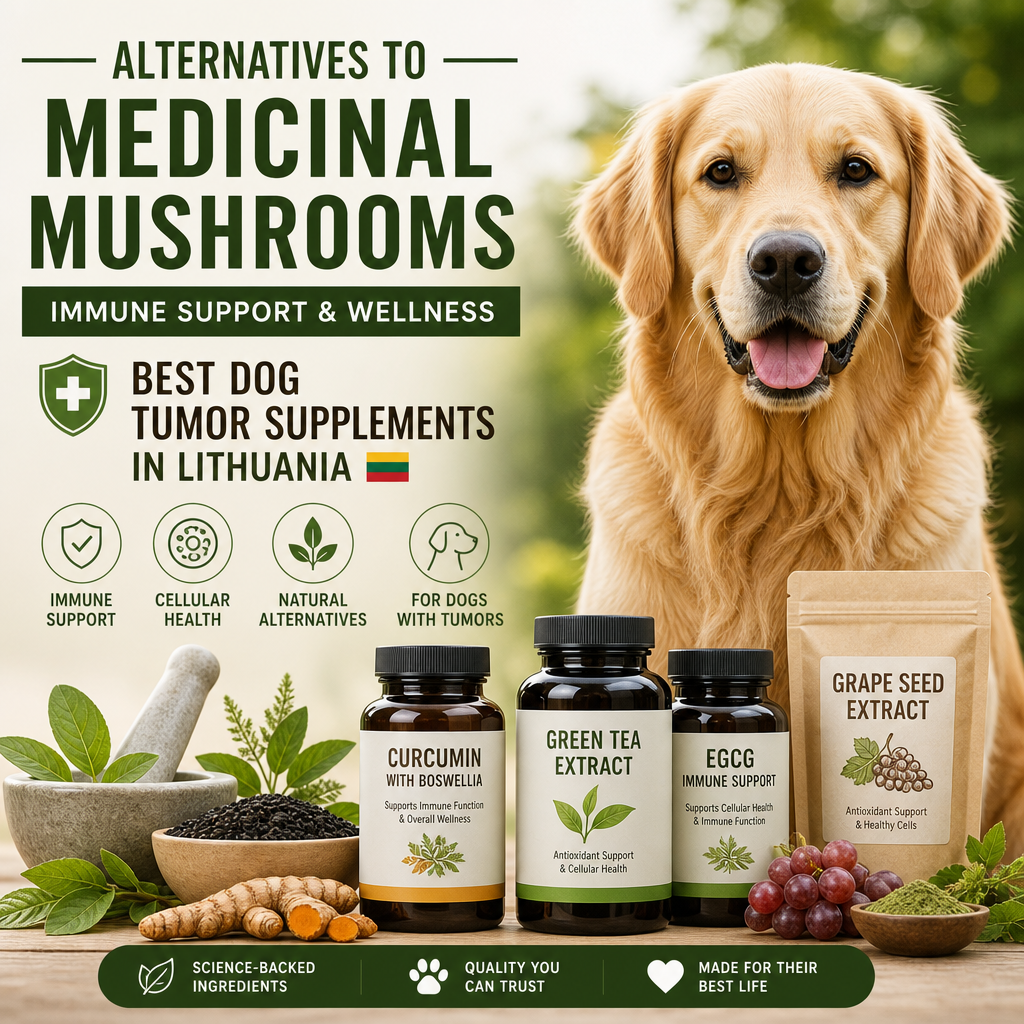
Medicinal mushrooms such as turkey tail, reishi, shiitake, and maitake are often discussed because they contain compounds called beta-glucans. These compounds may influence immune activity, but not every dog responds in the same way, and product quality varies considerably. Some dogs may also experience digestive upset, allergic reactions, or interactions with medicines.
Dog tumor supplement alternatives can be useful when a dog cannot tolerate mushroom-based products, when a veterinarian recommends a different nutritional strategy, or when an owner wants to focus on correcting a specific deficiency. The right supplement depends on the dog’s age, breed, tumor type, treatment plan, bloodwork, appetite, and overall health.
In many cases, the goal is not to “boost” anything aggressively, but to support the body in a steady and measurable way. That makes alternatives to Medicinal mushrooms / immune formulas worth considering only when they fit the dog’s medical picture. For dogs in Lithuania, the most sensible path is usually a plan built around safety, diet quality, and symptom support rather than broad claims about immunity.
Common reasons owners start looking
Some owners begin comparing supplements after a dog develops poor appetite, mild nausea, or weight loss. Others simply want a product with a clearer ingredient profile than the mushroom formulas they have seen online. In both situations, the same rule applies: choose a product only when there is a specific reason for using it. Many families start with alternatives to Medicinal mushrooms / immune products because they want something easier to explain, monitor, and tolerate.
Omega-3 fatty acids for nutritional support
Fish oil containing EPA and DHA is one of the most commonly considered alternatives to medicinal mushrooms / immune supplements. These essential fatty acids may help support normal inflammatory balance, skin health, cardiovascular function, and body condition. They can also be useful for dogs receiving treatment that affects appetite or mobility.
Choose a veterinary-quality product with clearly stated amounts of EPA and DHA rather than relying only on a general “fish oil” label. The dosage should be based on the dog’s weight and medical condition. Fish oil may not be appropriate for every patient, particularly dogs with pancreatitis, clotting problems, or certain gastrointestinal disorders. It can also interact with anticoagulant medicines, so veterinary guidance is important.
Because product quality matters, owners should review the label carefully and look for testing or manufacturing standards. The National Center for Complementary and Integrative Health offers a useful overview of supplement safety and evidence at Dietary Supplements and Health.
Omega-3 products are often easier to fit into a routine than more complex formulas. They are available in capsules, liquids, and veterinary blends, which can help owners choose the format that suits their dog best. Even so, consistency matters more than variety, and a supplement that is tolerated well is usually more useful than one that looks impressive on paper. For many dogs, omega-3 support is one of the most practical alternatives to Medicinal mushrooms / immune products because it is straightforward to dose and monitor.
When omega-3 support may be a better fit
Omega-3 fatty acids may be especially helpful when a dog needs calorie support, skin support, or a gentler option than mushroom-based formulas. In some dogs, the simplest nutritional option is also the easiest to maintain consistently.
They may also be a practical choice when a dog is already taking multiple medications and the care team wants to avoid unnecessary complexity. In those cases, the benefit of a straightforward fatty-acid supplement is that it is easy to monitor for tolerance and response.
Antioxidant support: a balanced approach
Antioxidants are found in vitamins, minerals, fruits, vegetables, and other nutritional ingredients. Vitamin E, selenium, and vitamin C are sometimes included in canine wellness formulas, but more is not always better. High doses may interfere with treatment, create nutritional imbalances, or place unnecessary strain on the body.
Dogs generally benefit more from a complete, balanced diet than from large quantities of isolated antioxidants. During chemotherapy or radiation therapy, supplementation should be discussed directly with the veterinary oncologist. Some treatments rely partly on oxidative mechanisms, and the timing and dose of antioxidant products may therefore matter.
For this reason, alternatives to Medicinal mushrooms / immune formulas should not be chosen only because they are described as “natural.” A natural ingredient can still be inappropriate for a dog undergoing cancer care. In fact, the most useful products are often the modest ones that support nutrition without competing with medical treatment.
When owners compare dog tumor supplements, antioxidants are sometimes presented as a major solution. In practice, they are better viewed as one small piece of a broader nutritional plan. If a diet already provides adequate micronutrients, adding more is not necessarily helpful and may even create problems. That is why alternatives to Medicinal mushrooms / immune products should be reviewed as part of the whole care plan rather than as stand-alone fixes.
Why timing matters during treatment
If a dog is already receiving medical treatment, even a common vitamin can be a poor fit at the wrong time. That is why it is important to coordinate any supplement plan with the oncology team.
Timing can matter before surgery as well. Some ingredients may affect bleeding risk or anesthesia recovery, so the safest approach is always to ask the veterinary team before starting or stopping anything.
Medicinal herbs and other botanical options
Herbal products are sometimes marketed as dog tumor supplement alternatives, including turmeric, milk thistle, astragalus, and cannabis-derived products. Their effects can vary depending on extraction method, concentration, contamination risk, and the dog’s individual metabolism.
Turmeric products, for example, are frequently promoted for inflammatory support, but absorption is limited in many formulations. Milk thistle may be considered for liver support in selected cases, yet it can interact with medicines. Cannabis and cannabidiol products require particular caution because product strength and purity are inconsistent, while evidence in dogs remains limited for many tumor-related claims.
Never assume that a natural ingredient is automatically safe. A supplement may affect liver enzymes, blood clotting, sedation, blood pressure, or the absorption of prescribed drugs. For owners exploring alternatives to Medicinal mushrooms / immune products, the label and safety profile matter as much as the marketing language. The question is not whether the product sounds holistic, but whether it is appropriate for the dog’s current condition.
It is also wise to be skeptical of blends that hide meaningful amounts of individual herbs inside a “proprietary” formula. If a company does not disclose the exact dose of each ingredient, it becomes much harder to assess whether the product is appropriate for a dog with cancer-related needs.
Important herb safety reminders
Botanical products are not automatically mild. Ask whether the product has a standardized extract, how it was tested, and whether the brand provides batch-level quality control.
Owners should also check whether the herb has been researched in dogs or whether most of the claims come from human wellness marketing. That distinction can help prevent unrealistic expectations and reduce the chance of choosing a product that is not a good fit.
Alternatives to Medicinal mushrooms / immune: practical ways to compare options
When comparing alternatives to Medicinal mushrooms / immune products, it helps to think in terms of purpose rather than popularity. Ask what problem the supplement is meant to solve. Is the dog losing weight? Is digestion unstable? Is there a concern about inflammation, joint comfort, or general vitality? A targeted answer is usually better than an all-purpose promise.
This is especially important for dogs with cancer, because many products marketed for “immunity” overlap in ingredients and may duplicate what is already present in the diet. If a dog is already eating a complete therapeutic food, only carefully chosen additions should be considered.
The same logic applies to taste and administration. A product that a dog refuses to eat offers no benefit, while a supplement that can be given consistently may support the plan more effectively over time. For many households, practicality matters just as much as the ingredient list. In real-life treatment routines, the best alternatives to Medicinal mushrooms / immune supplements are usually the ones that fit easily into the day.
Simple comparison checklist
- Does the product identify every ingredient and its amount?
- Is there a clear reason to use it for this dog?
- Does it fit the current cancer treatment plan?
- Is it easy to give every day?
- Are there signs of quality testing or veterinary oversight?
Digestive and nutritional support
Some dogs with tumors lose weight, develop nausea, or become reluctant to eat. In such cases, a nutritional strategy may be more valuable than an immune-focused supplement. Veterinary probiotics, soluble fiber, digestive enzymes, or calorie-dense nutritional products may help selected dogs, especially when digestive function is affected.
Probiotics should contain clearly identified strains and storage instructions. They may support intestinal balance, but they are not a treatment for tumors. Fiber must also be introduced gradually because too much can reduce calorie intake or worsen gas and diarrhea. A veterinarian or veterinary nutritionist can help determine whether the dog needs additional calories, a higher-protein diet, or a specially formulated therapeutic food.
These options are often overlooked when owners search for alternatives to Medicinal mushrooms / immune formulas, yet they can be the most practical support for a dog that is struggling to eat enough. In many dogs, improving nourishment has a bigger day-to-day effect than adding a complex supplement stack. That is especially true when the dog needs stable weight maintenance during active treatment.
Hydration is another part of nutritional support that is easy to underestimate. Dogs that drink less because of nausea or weakness may need more careful monitoring, especially if they are taking medications that affect the gastrointestinal tract. A simple routine of offering fresh water, wet food, or vet-approved feeding strategies can make a meaningful difference.
What supportive feeding can do
A good feeding plan may improve comfort, maintain weight, and help a dog tolerate treatment better. It may also make it easier to track whether a supplement is helping or causing side effects.
It can also reduce stress for the owner. When feeding is structured and predictable, it is easier to notice subtle changes in appetite, stool quality, or energy, which can be valuable during active treatment.
What to look for in Lithuania
When comparing Lithuania dog tumor supplement alternatives, product transparency should be a priority. Look for:
– A full ingredient list with exact quantities
– Clear directions based on body weight
– Batch or lot identification
– Expiration date and storage instructions
– Testing for contaminants such as heavy metals, pesticides, and microbes
– A manufacturer with traceable contact information
– Advice from a veterinarian familiar with the dog’s treatment
Products sold through veterinary clinics or reputable animal-health retailers may offer better quality control than supplements promoted through anonymous online marketplaces. Lithuanian owners should also check whether products are legally marketed for animals, whether labels are available in a language they understand, and whether claims sound exaggerated. Statements promising to “destroy tumors,” “replace chemotherapy,” or “cure cancer naturally” are major warning signs.
For readers seeking alternatives to Medicinal mushrooms / immune products, the same quality standards apply whether the product is bought locally or online: test results, clear labeling, and realistic claims should come first.
Another useful step is to keep a short written record after starting any new supplement. Note the date, product name, dose, appetite changes, stool changes, and any unusual behavior. This simple habit can make follow-up visits more productive and help the veterinarian decide whether the product is worth continuing.
Questions to ask before buying
Ask where the ingredients come from, whether third-party testing is available, and whether the company provides dosage guidance for dogs with special medical needs.
Questions to discuss with a veterinarian
Before starting any supplement, provide the veterinarian with the complete product label and the dog’s current medication list. Important questions include whether the ingredient is suitable for the tumor type, whether it may affect anesthesia or surgery, and whether blood tests are needed for monitoring.
It is also worth asking whether the dog actually has a nutritional deficiency or a specific symptom that requires support. A supplement should have a clear purpose, such as maintaining appetite, supporting digestive comfort, or providing omega-3 fatty acids. Using several products at once makes it difficult to identify side effects and increases the risk of overlapping ingredients.
When discussing alternatives to Medicinal mushrooms / immune options, bring up the dog’s current appetite, energy level, stool quality, and any history of pancreatitis, liver disease, or clotting concerns.
If the dog has already undergone surgery or is scheduled for a procedure, ask whether the supplement should be paused beforehand. Many owners forget to mention supplements because they do not think of them as medications, but they can still influence the care plan.
Useful vet questions
- Does this supplement fit my dog’s treatment plan?
- Could it interfere with medicines or surgery?
- What side effects should I watch for?
- How long should I try it before deciding if it helps?
A practical and safe routine
Introduce only one new supplement at a time and begin with the dose recommended by the veterinarian. Monitor appetite, stool quality, energy, drinking, vomiting, itching, and any unusual behavior. Stop the product and seek professional advice if the dog develops persistent diarrhea, repeated vomiting, facial swelling, breathing difficulty, severe lethargy, or bleeding.
Most importantly, supplements should complement—not delay—proper diagnosis and treatment. Imaging, biopsy results, surgery, oncology consultations, pain control, and regular follow-up remain central to cancer care. For many dogs, the most effective supportive plan combines a balanced diet, appropriate medical treatment, careful symptom control, and individualized nutritional support.
The best dog tumor supplement alternatives in Lithuania are not necessarily the most heavily advertised products. They are the options that are transparent, evidence-informed, suitable for the individual dog, and approved by the veterinary team managing the case. If you are comparing alternatives to Medicinal mushrooms / immune formulas, focus on safety, clarity, and practical support rather than dramatic promises. In a well-managed plan, the supplement should make life easier for the dog and the owner, not add confusion.
For many families, that means keeping the routine simple, watching closely for changes, and revisiting the plan as the dog’s condition evolves. The most responsible choice is usually the one that fits the medical situation and can be used consistently over time.
In short, alternatives to Medicinal mushrooms / immune products can be helpful when they address a specific need, are chosen carefully, and are used with veterinary oversight. That measured approach gives Lithuanian dog owners a safer way to support their pets through tumor care.