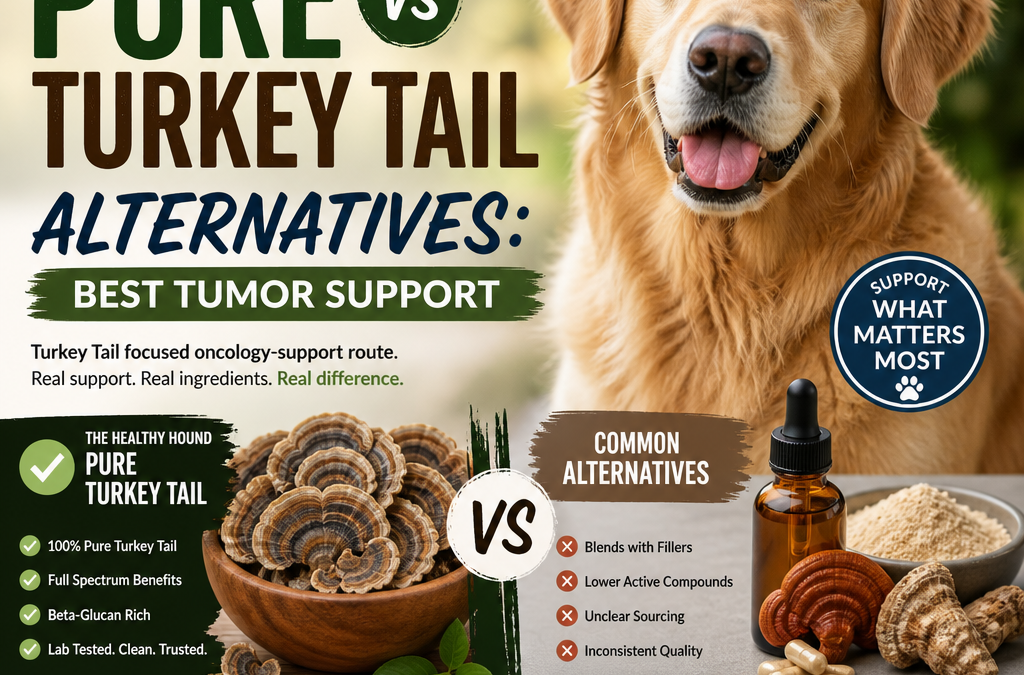
CanineCeuticals Pure Turkey Tail vs Alternatives is an important comparison for dog owners exploring supportive care during a cancer diagnosis. Turkey tail mushroom supplements are widely discussed because they contain polysaccharopeptides and other compounds studied for immune-system activity. However, products vary considerably in mushroom quality, extraction methods, dosing guidance, testing, and suitability for individual dogs. The best choice should support—not replace—veterinary oncology care.
Turkey tail, scientifically known as Trametes versicolor or Coriolus versicolor, is a mushroom recognized by its colorful, fan-shaped appearance. It contains beta-glucans and polysaccharide compounds that have attracted research interest for their potential effects on immune signaling.
In canine cancer support, turkey tail is generally considered a complementary option. It is not a cure for cancer, and it should not be used instead of surgery, chemotherapy, radiation, pain control, or other treatments recommended by a veterinarian. Its role is better understood as part of a broader wellness plan focused on immune support, appetite, comfort, and quality of life.
Research involving turkey tail-derived compounds in dogs has produced encouraging findings, but evidence remains limited compared with conventional cancer treatments. Results from one study, product, or mushroom extract cannot automatically be applied to every dog or every tumor type.
For readers looking for a broader overview of supportive mushroom use, this guide on Exploring Turkey Tail Mushrooms: A Natural Ally for Dogs Fighting Cancer can help put the topic in context. It also shows why CanineCeuticals Pure Turkey Tail vs alternatives should be evaluated carefully rather than by label claims alone.
When owners first compare CanineCeuticals Pure Turkey Tail vs alternatives, the main question is usually not whether turkey tail can be helpful at all. The more useful question is how a specific product may fit into a dog’s care plan, how consistent the formulation is, and whether the supplement aligns with the dog’s current treatment goals.
What Makes CanineCeuticals Pure Turkey Tail Different?
When comparing CanineCeuticals Pure Turkey Tail vs alternatives, several product characteristics deserve attention. A reputable supplement should clearly identify the mushroom species, the portion used, and the form of extraction. Whole mushroom powders may contain useful fiber and natural compounds, while concentrated extracts may provide higher levels of beta-glucans or polysaccharides. Neither format is automatically best for every dog.
CanineCeuticals Pure Turkey Tail is positioned as a focused single-mushroom product rather than a broad blend. This can appeal to owners who want a simpler ingredient profile and a more straightforward way to monitor their dog’s response. A single-ingredient approach may also make it easier for a veterinarian to assess potential interactions with medications or other supplements.
Important quality factors include:
Clear identification of Trametes versicolor
Information about extraction and standardization
Batch testing for heavy metals, microbes, and contaminants
Absence of unnecessary fillers, artificial colors, or sweeteners
Serving guidance based on a dog’s size and health status
Manufacturing practices designed for animal supplements
A clean label is helpful, but it does not guarantee that a product is appropriate for a particular dog. Veterinary guidance remains essential, especially when a dog is receiving chemotherapy, corticosteroids, immunomodulating drugs, or medications for liver and kidney disease.
Why the single-ingredient approach matters
For many owners, CanineCeuticals Pure Turkey Tail vs alternatives comes down to clarity. A single-ingredient product makes it easier to understand what the dog is actually receiving. That can be especially helpful when a pet is already taking several prescribed medications and supportive supplements.
It also helps narrow down the source of any digestive change. If a dog develops loose stools, reduced appetite, or mild nausea, a focused formula is easier to assess than a multi-mushroom blend with several active components.
Owners who value simplicity often prefer this style of product because it creates a cleaner starting point. If the dog tolerates the supplement well, the care team can keep monitoring without wondering which mushroom in a blend may be causing the effect.
That is one of the practical advantages that comes up repeatedly in CanineCeuticals Pure Turkey Tail vs alternatives comparisons. Simplicity does not guarantee superiority, but it can make day-to-day management easier for pets already balancing medication, diet changes, and follow-up visits.
Comparing Turkey Tail With Mushroom Blends
One of the most common alternatives is a mushroom blend containing turkey tail, reishi, maitake, shiitake, cordyceps, or other fungi. These formulas may provide a wider range of naturally occurring compounds, and some owners prefer the convenience of one product for general immune support.
The drawback is that blends can make it difficult to determine which ingredient is responsible for a benefit or side effect. They may also contain smaller amounts of each mushroom than a dedicated turkey tail formula. In addition, several mushroom extracts may increase the complexity of evaluating drug interactions.
For dogs with a clear oncology-support goal, a single-mushroom product may offer a more controlled starting point. For general wellness, a blend might be reasonable if it has transparent labeling and veterinary approval. The decision should depend on the dog’s diagnosis, treatment plan, age, weight, and overall condition.
When owners compare CanineCeuticals Pure Turkey Tail vs alternatives, it is worth asking whether a broader formula truly adds value or simply adds complexity. In some cases, a cleaner formulation gives the care team a better chance to monitor tolerance and response.
A blend may still be appropriate when the goal is broader immune support rather than a narrow trial of one ingredient. Even then, the owner should check whether each mushroom is listed in meaningful amounts and whether the company explains how the extract is made.
Another practical issue is consistency. If one product changes its formula often or sources mushrooms from different suppliers without clear batch testing, it becomes harder to judge the results. That is why CanineCeuticals Pure Turkey Tail vs alternatives often comes back to documentation, not just promises on the front label.
Turkey Tail oncology-support route: Where It Fits
The Turkey Tail oncology-support route should be viewed as a carefully monitored complementary strategy. A dog’s primary treatment plan may include tumor removal, chemotherapy, radiation, targeted medication, nutritional support, or palliative care. Turkey tail may be considered alongside these measures, but it should never delay diagnosis or proven treatment.
Before adding a supplement, the veterinarian may consider:
The tumor type and stage
Current medications and treatment schedule
Liver and kidney function
History of digestive sensitivity or allergies
Immune-system disorders
Planned surgery or anesthesia
The dog’s appetite, hydration, and body weight
Monitoring is especially important during active treatment. Possible concerns can include loose stools, vomiting, reduced appetite, lethargy, or unexpected changes in bloodwork. A supplement should be stopped and discussed with a veterinarian if concerning symptoms develop.
Veterinarians often describe the Turkey Tail oncology-support route as one piece of a larger plan. That perspective helps owners focus on comfort, safety, and consistency instead of expecting any supplement to do the work of medical treatment.
In practice, this route works best when it is treated as a coordinated decision. The oncology team, primary veterinarian, and owner should all know exactly what product is being used, what dose is given, and how the dog is responding.
That approach also makes CanineCeuticals Pure Turkey Tail vs alternatives easier to assess over time. If the dog’s appetite improves, stools remain normal, and there are no medication conflicts, the team can review whether continuing the product makes sense.
Dog Tumor Support Options Beyond Turkey Tail
Turkey tail is only one of many dog tumor support options. Nutritional management is often a central part of care because cancer and its treatments can affect appetite, digestion, and muscle mass. A veterinarian or veterinary nutritionist may recommend a complete diet with appropriate calories, high-quality protein, and adjustments for specific medical conditions.
Other supportive options may include prescribed anti-nausea medication, appetite stimulants, pain management, hydration support, dental care, and strategies to reduce stress. Maintaining a healthy body condition is important because excessive weight loss can affect strength and treatment tolerance.
Owners should also be cautious with popular natural products such as turmeric, CBD, medicinal herbs, and antioxidant concentrates. “Natural” does not automatically mean safe, and some products can affect blood clotting, liver enzymes, sedation, or the activity of cancer medications.
How a veterinary team may compare support choices
Veterinarians often look at the full picture before recommending any supplement. That means reviewing the dog’s cancer type, lab work, appetite, medications, and symptom pattern. A supplement that seems promising on paper may still be a poor fit if the dog has a sensitive stomach or is already taking multiple treatments.
For that reason, a product comparison should focus on practical questions: Is the ingredient list clear? Is the dosing easy to follow? Is the formula single-ingredient or blended? Has the manufacturer provided quality testing? Those questions are more useful than marketing claims alone.
Some owners also compare CanineCeuticals Pure Turkey Tail vs alternatives with a budget in mind. Price matters, but the cheapest option is not always the best value if the label is unclear or the dosing is difficult to follow.
Support decisions should also reflect the dog’s daily routine. If a supplement is hard to measure or difficult to give with food, owners may skip doses. A well-designed product is one that can be used consistently enough to judge whether it is doing anything useful.
For dogs already receiving cancer treatment, it is often better to choose one clearly documented supplement than several loosely researched products. That is another reason CanineCeuticals Pure Turkey Tail vs alternatives tends to favor products with a cleaner profile and straightforward instructions.
How to Choose a Quality Supplement
When evaluating CanineCeuticals Pure Turkey Tail vs alternatives, transparency is more valuable than dramatic marketing claims. Look for a product that provides a complete ingredient panel, serving instructions, lot information, and accessible testing or quality documentation.
Avoid products that promise to shrink tumors, cure cancer, or replace veterinary treatment. Be wary of vague labels that list only “mushroom complex” without naming species or extract amounts. Human supplements may also contain ingredients unsuitable for dogs, including xylitol, excessive vitamin D, concentrated essential oils, or other additives.
Introduce any approved supplement gradually and keep a simple record of the serving amount, appetite, stool quality, energy, and other changes. This information can help the veterinary team determine whether the product is tolerated and whether it should remain part of the plan.
If you are comparing products in the Australian market, it also helps to read independent veterinary information and official guidance. The Cornell Richard P. Riney Canine Health Center is a reliable reference for general canine health topics and evidence-based pet care principles.
It is also sensible to check whether the product has clear storage instructions, an expiration date, and a dosing guide that matches your dog’s weight. Small details can make a supplement easier to use consistently over time.
If the manufacturer provides third-party testing, that is a useful sign, but the details still matter. Good testing should show what was checked, whether contaminants were found, and whether the final product matches the label. Without that information, the product comparison is incomplete.
Owners should also compare the format of the supplement. Capsules, powders, chewables, and liquids each have different advantages. A powder may be easy to mix into food, while capsules may offer more precise dosing. The best format is the one the dog will actually take reliably.
Questions to ask before buying
Is the mushroom species named clearly?
Does the company explain whether it uses fruiting body, mycelium, or both?
Is extraction method information available?
Are the batch testing and sourcing details easy to find?
Does the serving guide match your dog’s weight and health status?
Has your veterinarian checked for possible interactions?
These simple questions can make CanineCeuticals Pure Turkey Tail vs alternatives much easier to judge. They also reduce the chance of choosing a product based only on branding or price.
A Practical, Evidence-Conscious Approach
The most responsible approach combines veterinary oncology care with thoughtful supportive decisions. Turkey tail may be a useful option for some dogs, particularly when the product is well documented and used under professional supervision. However, the ideal supplement is not necessarily the most expensive, the most concentrated, or the one with the longest ingredient list.
CanineCeuticals Pure Turkey Tail may appeal to owners seeking a focused formula, while mushroom blends or other supportive products may suit different circumstances. The right choice depends on the individual dog rather than a universal ranking.
Ultimately, dog tumor support options should be evaluated according to safety, evidence, product quality, and compatibility with the dog’s medical treatment. A carefully selected turkey tail supplement can be part of a broader support plan, but the foundation should always remain accurate diagnosis, appropriate veterinary care, regular monitoring, and attention to the dog’s comfort and quality of life.
When used carefully, CanineCeuticals Pure Turkey Tail vs alternatives becomes less about hype and more about matching the right support to the right dog at the right time. That is the most useful way to think about the Turkey Tail oncology-support route, especially when the goal is quality of life rather than unrealistic promises.
In other words, the best supplement choice is the one that fits the dog, the treatment plan, and the family’s ability to use it consistently. When those three elements line up, CanineCeuticals Pure Turkey Tail vs alternatives becomes a practical decision instead of a marketing one.
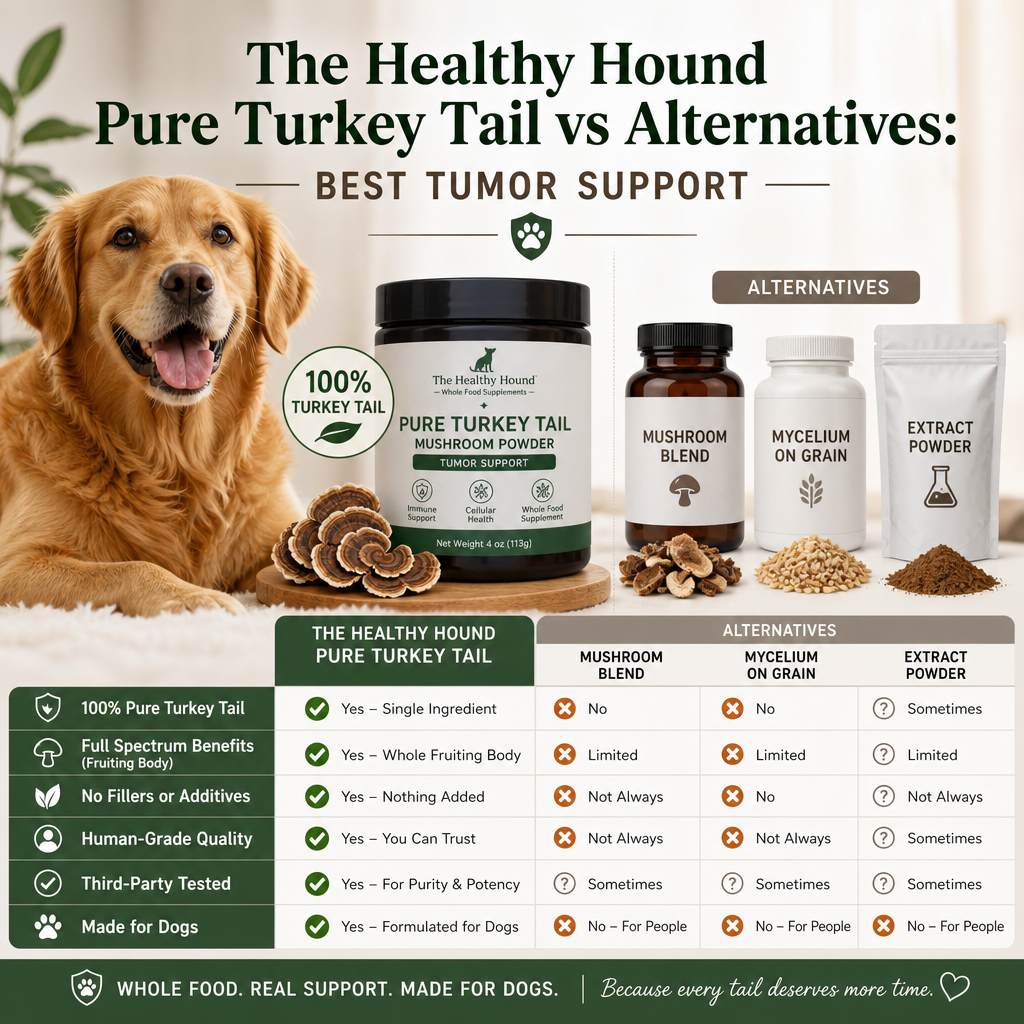
The Healthy Hound Pure Turkey Tail vs Alternatives is an important comparison for dog owners exploring supportive care during a cancer diagnosis. Turkey tail mushroom supplements are often discussed because they contain beta-glucans and other compounds that may help support normal immune function. However, no supplement should be viewed as a replacement for veterinary diagnosis, surgery, chemotherapy, radiation, or other recommended treatment. The best approach combines evidence-informed veterinary care with carefully selected nutritional support.
In New Zealand and elsewhere, many families begin by asking whether a focused turkey tail formula, a broader mushroom blend, or a completely different supportive option is the most practical choice. That question is reasonable because every dog’s diagnosis, medications, appetite, and tolerance level are different. The Healthy Hound Pure Turkey Tail vs alternatives is therefore not just a product comparison; it is a way to think through how a supplement fits into the whole care plan.
Turkey tail, scientifically known as Trametes versicolor or Coriolus versicolor, is a medicinal mushroom recognized for its layered, fan-shaped appearance. It contains polysaccharides, including beta-glucans and protein-bound compounds such as PSK and PSP. These substances have attracted scientific interest because they may interact with immune cells and support a balanced immune response.
In canine oncology, turkey tail is generally considered a complementary option rather than a standalone cancer treatment. Research in dogs remains limited compared with human research, but some early veterinary studies have investigated turkey tail mushrooms in dogs with certain cancers. Results have suggested potential benefits in areas such as immune support and quality of life, although more large-scale, controlled studies are needed.
The product’s quality matters significantly. A supplement may contain whole mushroom powder, a concentrated extract, or a blend of mushroom species. These forms are not interchangeable. Extraction methods can affect the concentration and availability of active compounds, while growing conditions, testing standards, and ingredient transparency influence safety and consistency.
For many pet owners, the search for The Healthy Hound Pure Turkey Tail vs alternatives begins with one question: which option fits the dog’s treatment plan without adding unnecessary complexity? That answer depends on the cancer type, medications, and the dog’s ability to tolerate the product.
It also helps to think about what kind of support the dog actually needs. Some dogs are mainly struggling with appetite or digestive upset, while others are in active treatment and need a supplement that is easy to dose and easy to monitor. In both cases, the best outcome usually comes from choosing a product that can be used consistently and discussed openly with the veterinary team.
Another practical point is that support products should be evaluated by their ingredient transparency. If a label does not clearly identify the mushroom species, extraction method, or testing standards, it becomes harder to judge whether the supplement is suitable. That is one reason The Healthy Hound Pure Turkey Tail vs alternatives deserves a careful look instead of a quick label-based decision.
The Healthy Hound Pure Turkey Tail vs Alternatives
When comparing The Healthy Hound Pure Turkey Tail vs alternatives, dog owners should look beyond the front label. Important factors include the mushroom species used, whether the product is made from fruiting bodies or mycelium, the extraction process, beta-glucan content, serving guidance, and third-party testing.
A focused turkey tail product may appeal to owners who want a simple formula with one primary functional mushroom. This can make it easier to monitor tolerance and avoid unnecessary ingredients. It may also be more practical when a veterinarian prefers introducing one supplement at a time. On the other hand, a multi-mushroom formula may provide broader nutritional or immune support, although it can be more difficult to determine which ingredient is responsible for a benefit or side effect.
The phrase “pure turkey tail” should also be evaluated carefully. Purity may refer to the absence of fillers, grains, artificial flavors, or unrelated herbs, but it does not automatically confirm potency. Owners should look for a complete supplement facts panel, batch testing, contaminant screening, and clear information about the amount provided per serving.
If you are comparing products for a dog undergoing treatment, the most useful question is often not which label sounds best, but which option is most compatible with the dog’s care plan. In that sense, The Healthy Hound Pure Turkey Tail vs alternatives is really a comparison of formulation, transparency, and clinical fit.
In practice, the healthiest choice is often the one that can be used consistently and monitored closely. A supplement that is easy to dose, simple to track, and approved by the veterinary team usually creates less confusion during treatment decisions.
When families ask whether to stay with a single-ingredient product or move to a broader formula, the answer usually depends on goals. If the aim is to support one mushroom’s profile and keep the routine as simple as possible, a dedicated turkey tail product may be the more logical choice. If the goal is to explore more than one functional mushroom, then a blend may be discussed, but only with a clear understanding of what each ingredient is meant to do.
That is why The Healthy Hound Pure Turkey Tail vs alternatives should be viewed in context. The right supplement is not necessarily the one with the most claims. It is the one that gives the care team the clearest picture of what the dog is receiving, how the dog is responding, and whether any adjustments are needed.
Owners should also remember that some products are marketed aggressively but provide limited practical detail. Helpful labels usually explain whether the product uses fruiting body material, how it is extracted, and whether it has been checked for heavy metals, microbes, and pesticides. If those details are missing, confidence should be lower, even if the marketing language sounds impressive.
Choosing Between Extracts, Powders, and Blends
Turkey tail powder is made by drying and milling the mushroom. It may provide naturally occurring fiber and a broad range of mushroom compounds, but its concentration of beta-glucans can vary. Extracts are processed to concentrate certain compounds and may be easier to administer in smaller amounts. Hot-water extraction is commonly used for mushroom polysaccharides because it can help make them more accessible.
Mushroom blends may include reishi, maitake, shiitake, or cordyceps. These products are marketed for general immune, energy, or stress support. While a blend can be convenient, it may not be ideal for every dog, particularly one taking multiple medications or experiencing liver, kidney, gastrointestinal, or immune-related concerns.
Supplements containing herbs, vitamins, or minerals require additional caution. Ingredients such as turmeric, green tea extract, or high-dose antioxidants may interact with medications or affect bleeding, digestion, or liver metabolism. A shorter ingredient list is not always superior, but it can make clinical oversight easier.
When a family is weighing The Healthy Hound Pure Turkey Tail vs Alternatives, the form of the product matters as much as the mushroom itself. A concentrated extract may be more appropriate for some dogs, while a powder may suit another dog better if the veterinary team wants a gentler starting point.
For owners comparing products, a simple checklist can help:
Identify the exact mushroom species and whether it is fruiting body, mycelium, or both.
Check whether the supplement is a powder, capsule, chew, or liquid extract.
Review testing for heavy metals, microbes, and pesticides.
Look for clear dose instructions based on body weight.
Ask whether the formula includes extra ingredients that could affect medications.
A useful rule is to choose the form that fits the dog’s routine. Some dogs will take a capsule hidden in food without any issue, while others need a powder that can be mixed into a meal. If the dog is nauseous, picky, or sensitive to texture, the most advanced formulation in the world will still fail if the dog refuses it. Practicality matters.
For dogs that are already on prescription medication, the timing of the supplement may matter just as much as the ingredients. A veterinary team may prefer separating supplements from certain medicines or introducing them gradually so that any change in stool quality, appetite, or energy can be tracked accurately.
A Turkey Tail Focused Oncology-Support Route
A Turkey Tail focused oncology-support route usually begins with a veterinarian’s approval and a clear understanding of the dog’s diagnosis. The purpose is to complement conventional treatment, maintain nutritional status, and support comfort and daily function. This route may be considered for dogs undergoing cancer therapy, recovering from surgery, or receiving palliative care, depending on the veterinarian’s assessment.
Before adding a supplement, discuss the dog’s cancer type, current medications, planned procedures, bloodwork, and history of allergies or digestive sensitivity. Some supplements may influence immune activity or blood clotting, making timing especially important around surgery. Others may affect how medications are absorbed or processed.
Introduce only one new product at a time. Begin with the veterinarian-recommended amount rather than assuming that a larger dose will produce better results. Monitor appetite, stool quality, vomiting, energy, skin changes, and any unusual symptoms. Keep a written record so that changes can be discussed accurately with the veterinary team.
This is also where a thoughtful comparison helps. The Healthy Hound Pure Turkey Tail vs Alternatives may lead to different choices depending on whether the goal is simple immune support, easier dosing, or a broader mushroom formula. A dog with a sensitive stomach may do better on one product, while another dog may respond well to a more concentrated preparation.
For example, a veterinarian may recommend a cautious step-by-step approach if the dog is already receiving prescription medication. In that case, the supplement is not chosen for marketing claims; it is selected because it can be integrated safely into the broader care routine.
Some families also prefer to think in phases. First comes diagnosis and stabilization, then a discussion of diet and symptom control, and then, if appropriate, a support supplement. That sequence helps keep expectations realistic. The supplement is there to support the plan, not define it.
The most important question is whether the dog is doing better in observable ways. Is appetite steadier? Is stool quality stable? Is energy acceptable for daily life? If the answer is yes, the product may be earning its place. If the answer is no, the care team may need to revise the plan.
In real-world use, that is one reason The Healthy Hound Pure Turkey Tail vs alternatives can be evaluated more usefully through observation than through promises. A supplement that looks good on paper still needs to prove that it fits the dog’s actual needs.
Comparing Dog Tumor Support Options
Dog tumor support options extend far beyond supplements. Nutrition is one of the most important foundations. Dogs with cancer may need calorie-dense, highly palatable meals that provide adequate protein and hydration. A veterinary nutritionist can help create a diet suited to the dog’s tumor type, treatment plan, body condition, and appetite.
Pain control and nausea management are equally important. Prescription medications, appetite support, fluid therapy, and mobility assistance can substantially improve quality of life. In some cases, rehabilitation, acupuncture, or other integrative therapies may be considered alongside standard treatment.
Supplements can be useful in selected situations, but they should not distract from measurable care goals. Those goals may include maintaining weight, preserving muscle, improving appetite, reducing treatment-related discomfort, or supporting normal activity. A supplement that does not contribute to a meaningful, observable outcome should be reassessed.
When owners evaluate The Healthy Hound Pure Turkey Tail vs Alternatives, they are often also deciding how much complexity they want in the care plan. A single-ingredient mushroom product may be easier to monitor, while a broader support protocol may make sense if the veterinary team is already tracking multiple interventions.
Supportive care is most effective when it is practical. A supplement that the dog accepts well and the caregiver can give consistently is usually more valuable than a product that looks impressive but is hard to use every day.
Another helpful perspective is to compare supportive products by the type of problem they are trying to solve. Some products are aimed mainly at immune support, while others are designed around digestive tolerance, recovery, or general wellness. A dog with a tumor does not benefit from vague “all-in-one” promises as much as from a plan that addresses the most pressing daily concerns.
That is why the best decisions are often made by combining medical facts with practical caregiving. The veterinarian can help assess whether a supplement is appropriate from a safety standpoint, while the owner can judge whether it is realistic to give consistently. Both perspectives matter.
For additional guidance on supporting dogs during cancer treatment, the American College of Veterinary Internal Medicine provides helpful educational resources at ACVIM.
Families looking for broader reading on mushroom-based support may also find it helpful to compare educational material about best supplements for dogs with cancer so that decisions are not made from a single product page alone.
In a careful comparison, The Healthy Hound Pure Turkey Tail vs Alternatives can be just one piece of a larger supportive strategy. That strategy may include diet, hydration, prescribed medications, symptom tracking, and regular rechecks. In other words, the supplement works best when it is embedded in a plan that is already stable and well monitored.
Safety, Quality, and Veterinary Oversight
Natural products are not automatically risk-free. Dogs may experience diarrhea, vomiting, allergic reactions, or interactions with medications. Products may also vary in strength from one batch to another if manufacturing standards are inconsistent. Contamination with heavy metals, pesticides, bacteria, or undeclared ingredients is another concern.
Choose products made by reputable manufacturers that provide transparent labeling and independent testing. Avoid relying solely on customer reviews or dramatic claims about shrinking tumors or curing cancer. A trustworthy product description should explain what the supplement contains without promising guaranteed results.
Veterinary oversight is especially important for dogs receiving chemotherapy, corticosteroids, immunosuppressants, anticoagulants, or nonsteroidal anti-inflammatory drugs. The oncology team may recommend pausing a supplement before a procedure or adjusting its use during treatment.
Ultimately, The Healthy Hound Pure Turkey Tail vs Alternatives is less about finding a universal winner and more about matching the product to the dog’s medical needs, treatment plan, and tolerance. A focused turkey tail formula may be a reasonable complementary option when its quality is documented and its use is approved by a veterinarian. Used responsibly, it can fit within a broader plan centered on evidence-based cancer care, nutrition, comfort, and quality of life.
Many families also compare The Healthy Hound Pure Turkey Tail vs Alternatives with other supportive strategies already discussed by their veterinary team, including prescription diet changes and symptom management. That broader view helps keep the focus on what matters most: the dog’s comfort, safety, and response over time.
If you are still deciding, ask your veterinarian which product details matter most for your dog’s stage of disease, current medications, and appetite. A careful conversation now can prevent confusion later and make the support plan easier to follow.
When comparing options, it can also help to revisit the reason the supplement was considered in the first place. If the goal is gentle, consistent immune support, then a simple product with clear sourcing may be enough. If the goal is to support a more complex care plan, then product transparency and ease of monitoring become even more important. The Healthy Hound Pure Turkey Tail vs Alternatives should ultimately be decided by fit, not by hype.
For dogs whose treatment plans already include symptom management, it can be wise to avoid stacking too many new items at once. If one change is made at a time, the care team can better tell whether a supplement is helping, doing nothing, or causing a problem. That disciplined approach is especially useful in oncology, where many factors can affect appetite, energy, and digestion.
In the end, the safest path is usually the simplest one that still meets the dog’s needs. Good supportive care is steady, measurable, and discussed openly with the veterinarian. With that mindset, The Healthy Hound Pure Turkey Tail vs alternatives becomes a practical decision rather than a marketing puzzle.