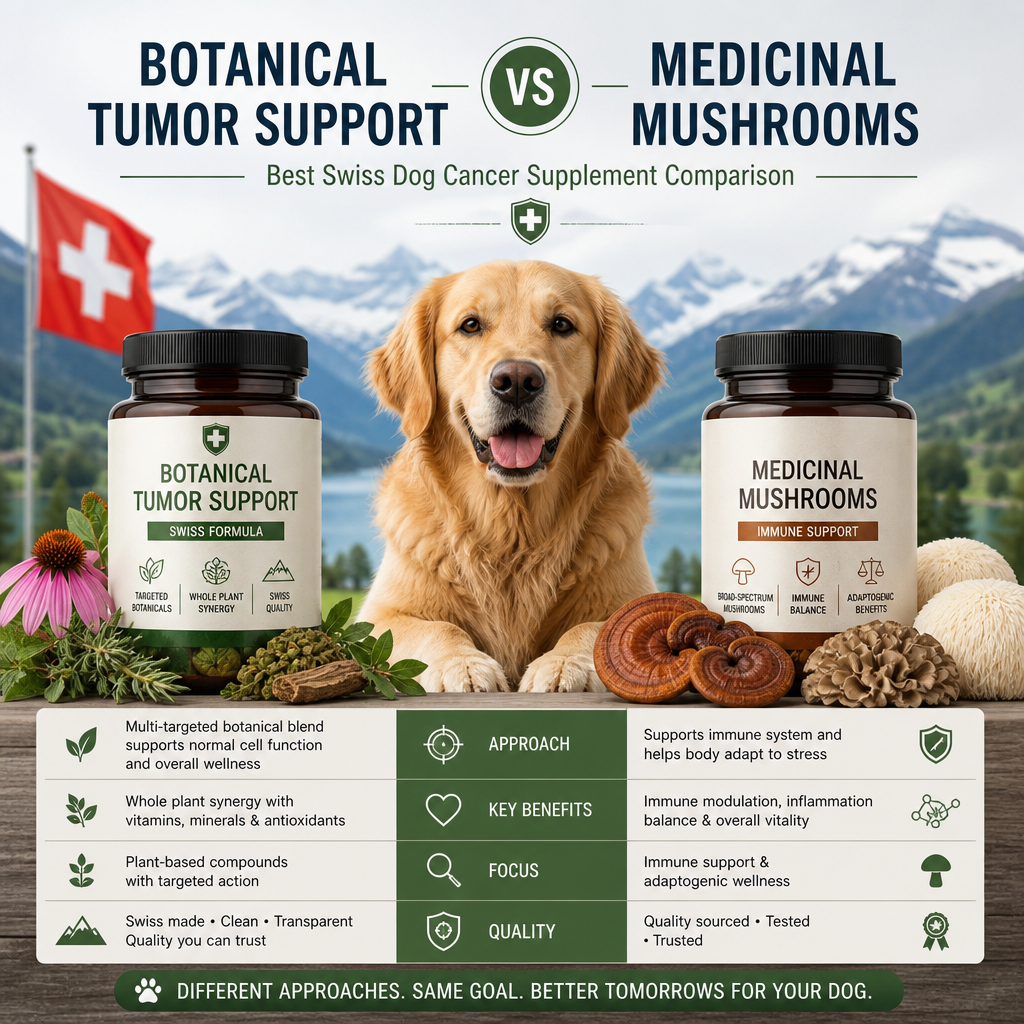
Botanical tumor support vs Medicinal mushrooms / veterinary mycotherapy is an important comparison for dog owners exploring complementary care during a cancer diagnosis. Both approaches may provide supportive compounds, but they are not interchangeable, and neither should replace veterinary oncology treatment. The right dog cancer supplement depends on the type of cancer, current medications, liver and kidney function, appetite, digestive health, and the overall goals of care.
Botanical tumor support generally refers to formulas containing plant-derived ingredients selected for antioxidant, anti-inflammatory, immune-modulating, or cellular-support properties. Common examples may include turmeric extracts, green tea compounds, milk thistle, medicinal herbs, or standardized plant polyphenols.
Medicinal mushrooms, by contrast, are fungi used for their polysaccharides, beta-glucans, triterpenes, and other bioactive compounds. Veterinary mycotherapy is the clinical use of medicinal mushrooms or mushroom-derived extracts as part of an integrative veterinary plan. Frequently discussed species include turkey tail, reishi, maitake, shiitake, and cordyceps.
The most useful distinction is not that one category is automatically better. Rather, botanical and mushroom supplements offer different chemistry, research backgrounds, manufacturing challenges, and potential interactions.
For readers who want a broader overview of mushroom-based support, the article on the benefits of medicinal mushrooms for dogs provides helpful background on how these products are commonly used in integrative care.
Botanical Tumor Support vs Medicinal Mushrooms: Key Differences
When comparing botanical tumor support vs medicinal mushrooms, it helps to examine several practical factors instead of focusing only on marketing claims.
Active compounds
Botanical formulas may contain flavonoids, terpenes, alkaloids, phenolic compounds, and other plant chemicals. Their effects can vary considerably depending on the plant species, extraction method, and concentration.
Mushroom products are often standardized around beta-glucans or polysaccharides. However, “mushroom powder” and “mushroom extract” are not necessarily equivalent. A basic powder may contain substantial fiber and less concentrated active material, while a hot-water or dual extract may be designed to increase the availability of specific compounds.
Research depth
Some mushroom species, particularly turkey tail, have attracted interest in canine cancer research. Early and limited studies have examined immune response and survival-related outcomes in dogs with certain cancers. These findings are promising but should not be interpreted as proof that every mushroom product treats cancer.
Botanical ingredients also have varying levels of evidence. Certain compounds have been studied in laboratory models, while others have traditional use but limited controlled research in dogs. Evidence from human studies or cell cultures cannot automatically be applied to a canine patient.
Intended role
Botanical supplements are often chosen for broad supportive goals, such as helping maintain normal inflammatory balance, supporting liver function, or improving nutritional resilience.
Medicinal mushrooms are more commonly selected for immune modulation. This does not mean they “boost immunity” in a simple or universally beneficial way. Cancer involves a complex interaction between abnormal cells, inflammation, immune surveillance, and treatment effects. Immune-modulating supplements should therefore be selected with professional guidance.
For dogs with tumor-related immune concerns, you may also find it useful to read about dog cancer biology and helpful immune imbalance factors, since understanding the disease process can make supplement decisions clearer.
Veterinary Mycotherapy and Canine Cancer Care
Veterinary mycotherapy can be considered an adjunct to surgery, chemotherapy, radiation, targeted therapy, or palliative care. Its purpose may include supporting quality of life, appetite, energy, immune function, or recovery. The specific mushroom matters, and so do the product’s extraction process and laboratory testing.
Turkey tail is one of the most frequently discussed mushrooms in canine oncology because of interest in its polysaccharide compounds. Reishi is often used in wellness formulas for immune and inflammatory support, while maitake and cordyceps may appear in broader mushroom blends. Yet combining several mushrooms does not automatically create a stronger product. Blends can make it harder to determine which ingredient is responsible for an effect or adverse reaction.
A veterinarian may also consider whether a mushroom supplement could affect blood clotting, blood pressure, blood sugar, liver enzymes, or immune activity. These issues are especially important before surgery or when a dog is receiving chemotherapy, corticosteroids, nonsteroidal anti-inflammatory drugs, or anticoagulant medication.
If you are comparing mushroom-based support options across different regions, product selection articles such as Ocoxin Pets alternative 5 Powerful Ways to Support Dogs in Spain can be useful for understanding how integrative formulas are positioned in practice.
Dog Cancer Supplement Comparison: What to Evaluate
A meaningful dog cancer supplement comparison should focus on quality and suitability rather than the number of ingredients listed on the label.
1. Product identity and standardization
Look for clearly identified species, extract type, serving size, and measurable active compounds. A label that simply states “proprietary blend” provides limited information. For mushrooms, beta-glucan content may be more useful than total polysaccharide content, because not all polysaccharides have the same biological relevance.
For botanical products, standardized levels of key constituents can help improve consistency. The source of the ingredient and the extraction method should also be disclosed.
2. Independent testing
Choose products supported by testing for heavy metals, pesticides, microbes, mold, and unwanted contaminants. This is particularly important with mushrooms because fungi can accumulate substances from their growing environment.
Quality assurance does not prove that a product treats cancer, but it reduces the risk of contamination and inaccurate labeling.
3. Veterinary compatibility
A supplement should be reviewed against the dog’s complete medical profile. A product that is reasonable for a healthy dog may be inappropriate for a dog with liver disease, kidney impairment, gastrointestinal ulcers, clotting problems, or an upcoming operation.
The oncology team should know about every supplement, including powders, chews, oils, teas, and concentrated liquid extracts.
4. Dosing transparency
Avoid products that provide vague instructions or encourage rapid dose increases. Dosing may depend on body weight, extract concentration, the dog’s health status, and the intended use. More is not necessarily better, particularly with concentrated extracts.
Potential Benefits and Limitations
Both botanical and mushroom supplements may support general wellness, but expectations should remain realistic. Possible benefits may include improved appetite, digestive support, maintenance of normal inflammatory balance, or assistance with recovery from demanding treatments. Some dogs may show no noticeable response, while others may experience digestive upset or other adverse effects.
Supplements cannot reliably shrink tumors, eliminate cancer, or guarantee longer survival. They also should not delay diagnostic testing or evidence-based treatment. The strongest approach is usually integrative: use proven veterinary care as the foundation and consider carefully selected supplements as an additional layer of support.
Owners seeking wider clinical perspective can also review peer-reviewed biomedical research on NCBI to better understand how veterinary nutrition and oncology studies are reported.
Safety Considerations for Dog Owners
Introduce only one new supplement at a time so that changes can be monitored. Watch for vomiting, diarrhea, reduced appetite, itching, lethargy, unusual bruising, or changes in urination. Stop the product and contact a veterinarian if concerning symptoms appear.
Extra caution is warranted before surgery, during chemotherapy, and when a dog takes medication that affects immunity, clotting, blood pressure, blood sugar, or liver metabolism. Antioxidant-heavy products may also require discussion during radiation or certain chemotherapy protocols, since treatment mechanisms can vary.
Keep a record of the product name, lot number, dose, start date, and any observed changes. This information helps the veterinary team make safer decisions.
Making the Best Choice
The choice between botanical tumor support and medicinal mushrooms should be individualized rather than based on a universal ranking. A mushroom extract may be considered when immune-focused support is a priority and the product has reliable standardization. A botanical formula may be more suitable when the goal involves digestive, liver, inflammatory, or general nutritional support. In some cases, a veterinarian may recommend neither, at least temporarily, because treatment interactions or organ function make supplementation unsuitable.
The most responsible dog cancer supplement comparison considers evidence, product quality, safety, and the dog’s specific diagnosis. Veterinary mycotherapy and botanical support can have a place in compassionate, integrative care, but they work best when selected transparently and monitored alongside conventional treatment.
For dogs with age-related concerns that overlap with cancer care, the article on senior dog cancer and important tumor risks may also help owners think through the bigger picture of long-term support.
Medicinal mushrooms / veterinary mycotherapy are gaining attention among Swiss dog owners seeking complementary support for dogs diagnosed with tumors. While no mushroom product can replace surgery, chemotherapy, radiation, or other veterinary treatment, carefully selected medicinal mushroom extracts may support overall wellbeing when used under professional guidance. Choosing appropriate dog cancer supplements in Switzerland requires attention to product quality, dosage, diagnosis, and possible interactions with conventional medicines.
Veterinary mycotherapy is the therapeutic use of medicinal mushrooms or their extracts as part of an integrative veterinary care plan. Mushrooms such as turkey tail, reishi, shiitake, maitake, and cordyceps contain naturally occurring compounds, including beta-glucans, triterpenes, polysaccharides, and other bioactive substances.
These compounds are being studied for their potential effects on immune regulation, inflammation, antioxidant activity, and general resilience. In dogs with cancer, the purpose is usually not to “cure” a tumor. Instead, mycotherapy may be considered to support quality of life, appetite, recovery, immune balance, and the body’s ability to cope with illness and treatment.
The scientific evidence is still developing. Some mushrooms have been investigated in laboratory studies, animal research, or small clinical studies, but results cannot automatically be applied to every dog or every cancer type. A responsible approach combines promising evidence with realistic expectations and close veterinary supervision. For a broader overview of complementary support options, see Best Supplements for Dogs with Cancer: 7 Essential UK Support Tips.
For owners comparing options, medicinal mushrooms / veterinary mycotherapy are best viewed as part of a support strategy rather than a stand-alone solution. That perspective helps set expectations and keeps treatment decisions focused on the dog’s comfort and long-term wellbeing.
What dog owners should know before starting
Before starting medicinal mushrooms / veterinary mycotherapy, it helps to confirm the cancer diagnosis, the stage of disease, and the current treatment plan. A supplement that seems gentle may still affect the timing or tolerance of medications. That is why the treating veterinarian should always know exactly what is being added.
It is also important to review the dog’s appetite, stool quality, liver and kidney values, and any history of allergies or digestive sensitivity. A dog with an upset stomach, for example, may need a slower introduction or a different product altogether. This is one reason why medicinal mushrooms / veterinary mycotherapy should be personalized rather than selected only by popularity.
Medicinal mushrooms / veterinary mycotherapy and dog cancer care
The most widely discussed mushroom for canine cancer support is turkey tail, also known as Trametes versicolor. It contains polysaccharide compounds that have attracted research interest because of their possible influence on immune responses. Some veterinary discussions focus on turkey tail as an adjunct for dogs with certain tumors, particularly when maintaining quality of life is a priority.
Reishi, or Ganoderma lucidum, is traditionally used for immune modulation and general vitality. It may also have anti-inflammatory and calming properties, although individual dogs can respond differently. Shiitake and maitake are valued for their beta-glucan content and are sometimes included in broader wellness formulas.
Cordyceps is often used in products designed to support energy and stamina. However, dogs with specific medical conditions may not be suitable candidates for every mushroom, and products containing several ingredients can make it more difficult to identify the cause of a side effect.
The ideal choice depends on the dog’s diagnosis, age, weight, liver and kidney function, medications, appetite, and treatment plan. A supplement appropriate for one dog may be unsuitable for another.
When owners compare medicinal mushrooms / veterinary mycotherapy options, it helps to focus on the reason the product is being used. Some formulas are designed for immune support, while others emphasize vitality, digestion, or recovery. That distinction matters because the most suitable product for a dog receiving chemotherapy may differ from one used in long-term palliative care.
In practice, clinicians often use medicinal mushrooms / veterinary mycotherapy to complement conventional oncology. That may include supporting appetite during treatment, helping the dog stay comfortable, and keeping energy levels as stable as possible while the primary cancer plan continues.
Different tumor types can create different priorities. A dog with a slow-growing mass and stable appetite may need a different support plan than a dog with rapidly progressing disease, weight loss, or treatment-related nausea. Medicinal mushrooms / veterinary mycotherapy can be part of both scenarios, but the goals are not the same.
That distinction matters for communication with the veterinary team. If the aim is appetite support, the monitoring plan may focus on food intake and digestion. If the goal is broader resilience, then energy, sleep, stool quality, and overall comfort become equally important. Clear goals make medicinal mushrooms / veterinary mycotherapy easier to evaluate and safer to use.
Choosing dog cancer supplements in Switzerland
When comparing dog cancer supplements Switzerland, look beyond attractive packaging and broad claims. Quality and transparency are especially important because supplements are not always subject to the same evidence and manufacturing requirements as approved veterinary medicines.
Look for products that clearly state:
The exact mushroom species and scientific name
Whether the product contains fruiting body, mycelium, or both
The extraction method used
The amount of active compounds or beta-glucans
Batch testing for contaminants
Recommended canine dosage
Storage instructions and expiration date
Manufacturer contact details and traceability
Organic certification can be useful, but it does not by itself prove clinical effectiveness. A product should also be tested for heavy metals, pesticides, bacteria, mold, and other contaminants. Avoid formulas that rely on vague “mushroom complex” wording without identifying the quantities of individual ingredients.
Swiss dog owners may find products through veterinary practices, specialized animal-health providers, pharmacies, or reputable online retailers. However, availability does not guarantee suitability. It is wise to discuss any imported product with a veterinarian, particularly when labeling, dosage instructions, or quality-control information is unclear. If the owner wants to understand how a mushroom formula fits into a treatment plan, the National Cancer Institute overview of complementary and alternative medicine is a useful educational reference for discussing integrative care with a professional.
Before buying, it also helps to compare whether the label explains how the extract is standardized and whether the dose is appropriate for the dog’s body weight. Clear labeling makes it easier to compare dog cancer supplements Switzerland on something more meaningful than packaging or price alone.
Questions to ask before you buy
A practical way to narrow the options is to ask a few simple questions. Is the species identified by its full Latin name? Is there evidence of third-party testing? Does the company explain how the extract is made? Can the product be dosed accurately for a medium or large dog? These questions reduce guesswork and help owners compare medicinal mushrooms / veterinary mycotherapy products more objectively.
It also helps to ask whether the company offers clear veterinary guidance. A manufacturer that understands dog cancer supplements Switzerland should be able to explain how the product is intended to be used, what the expected range of doses looks like, and what signs suggest the formula may not be tolerated well. That kind of transparency matters more than claims about being “natural.”
Dog tumor support Switzerland: taking an individualized approach
Dog tumor support Switzerland should be based on the whole patient rather than the tumor alone. A supportive plan may include pain management, appropriate nutrition, hydration, dental care, mobility support, stress reduction, and monitoring of appetite and body weight. Medicinal mushrooms may be one component of this plan, but they should not distract from essential veterinary care.
Before starting a supplement, the veterinarian should know the dog’s complete medication list. Potential concerns may arise with drugs that affect blood clotting, immune activity, blood pressure, blood sugar, or liver metabolism. Some mushroom extracts may also be inappropriate before surgery or during certain chemotherapy protocols. The timing of administration can matter as well.
A practical monitoring plan may include recording appetite, stool quality, energy, sleep, pain signals, weight, and any changes around treatment days. If vomiting, diarrhea, unusual bruising, marked lethargy, facial swelling, breathing difficulty, or worsening pain occurs, stop the product and contact the veterinary team promptly.
Families looking at medicinal mushrooms / veterinary mycotherapy should also ask whether their veterinarian wants the supplement paused before procedures or during medication changes. This simple step can reduce avoidable complications and makes it easier to identify whether a new product is truly helping.
For many owners, the best dog tumor support Switzerland plan is the one that can be adjusted over time. As the dog’s condition changes, the supplement choice, dose, and monitoring goals may need to change too.
Medicinal mushrooms / veterinary mycotherapy tend to work best when they are woven into a broader plan instead of being treated as the main event. That broader plan may include pain relief, anti-nausea medication, calorie support, routine blood work, and scheduled rechecks. In many cases, the supplement becomes one small part of a coordinated strategy rather than an isolated intervention.
This integrated approach is especially helpful when the dog has multiple needs at once. For example, a dog may need support for appetite, inflammation, and stamina all at the same time. In those cases, the veterinary team can decide whether medicinal mushrooms / veterinary mycotherapy are appropriate alongside other treatments or whether a different priority should come first.
Extract quality and dosage matter
Not all mushroom supplements are equivalent. Powders made from whole mushrooms may contain less concentrated active material than standardized extracts, while alcohol and hot-water extraction can produce different profiles of compounds. A trustworthy manufacturer should explain how the product is made and provide clear dosing information for dogs.
Dosage should be calculated according to the dog’s body weight and medical situation, not copied from a human product label. Starting with a low amount and increasing gradually may help identify tolerance, but this should follow veterinary advice. More is not necessarily better, and high doses can increase the risk of digestive upset or interactions.
Products containing sweeteners, artificial flavorings, excess fillers, or ingredients toxic to dogs should be avoided. In particular, owners should check for xylitol, which can cause life-threatening low blood sugar and liver injury in dogs.
When a clinician recommends medicinal mushrooms / veterinary mycotherapy, the intended extract strength should be clear. If a label does not specify the species, extraction method, or active-compound standardization, it is difficult to compare products fairly. In that situation, choosing a more transparent option is usually safer than selecting the cheapest bottle.
Quality control matters because the same mushroom species can vary widely from one product to another. A well-made extract can be easier to evaluate, easier to dose, and more consistent for dogs that are already dealing with cancer treatment.
What to watch for after starting a new product
After introducing medicinal mushrooms / veterinary mycotherapy, owners should pay attention to subtle changes. A mild improvement in appetite or energy may be encouraging, but so can a mild change in stool quality or thirst. Tracking small details helps the veterinary team decide whether the product is worth continuing.
If the dog becomes more uncomfortable, refuses food, vomits, or develops unusual behavior after a new supplement is started, the product should be reviewed promptly. Not every reaction means the mushroom itself is the problem, but close observation helps separate coincidence from true intolerance.
Realistic expectations for families
A cancer diagnosis can create understandable urgency, especially when owners encounter claims that a natural product can shrink tumors or replace conventional treatment. Such promises are unreliable and may delay therapies that offer the best chance of controlling disease.
A more realistic goal is supportive care: helping the dog remain comfortable, maintain normal activities where possible, eat adequately, and tolerate treatment. The success of an integrative plan should be assessed through veterinary examinations and meaningful quality-of-life measures rather than online testimonials alone.
Veterinary mycotherapy may have a role for selected dogs, but it works best when the product is high quality, the dosage is individualized, and the primary veterinarian or veterinary oncologist is involved. In Switzerland, owners can also ask whether the practice has experience with integrative veterinary medicine or can refer them to a qualified professional.
Medicinal mushrooms may offer promising complementary options for canine tumor support, but careful selection and medical oversight are essential. The safest path combines evidence-informed supplements with timely diagnosis, conventional cancer treatment when indicated, regular monitoring, and compassionate attention to the dog’s comfort and daily wellbeing. When used this way, medicinal mushrooms / veterinary mycotherapy can be part of a thoughtful support plan rather than a replacement for oncology care.
In short, medicinal mushrooms / veterinary mycotherapy can be worth discussing with a veterinarian when the goal is safe, realistic, and individualized support. Used carefully, they may fit into a broader plan for dog tumor support Switzerland without overstating what supplements can do.
Families comparing options should remember that the best results usually come from consistency, careful monitoring, and honest expectations. Medicinal mushrooms / veterinary mycotherapy are not miracle cures, but in a well-managed plan they may contribute to comfort, resilience, and a better day-to-day experience for some dogs.
That is why the final decision should be guided by the dog’s diagnosis, the oncology plan, and the quality of the supplement itself. When those pieces align, medicinal mushrooms / veterinary mycotherapy can become a practical part of supportive care rather than a confusing extra.