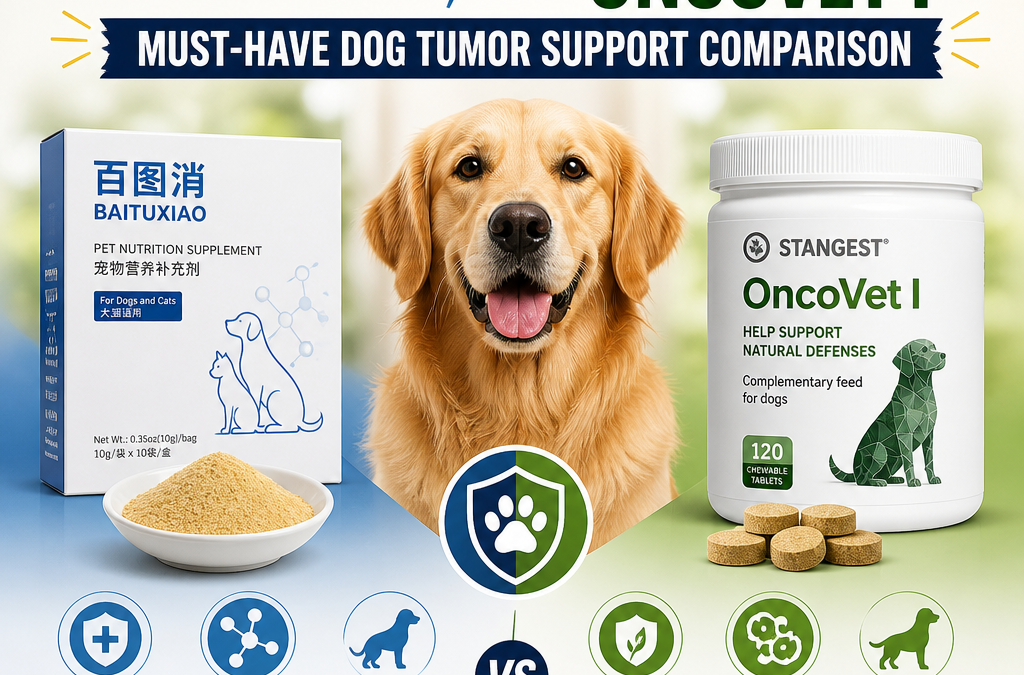
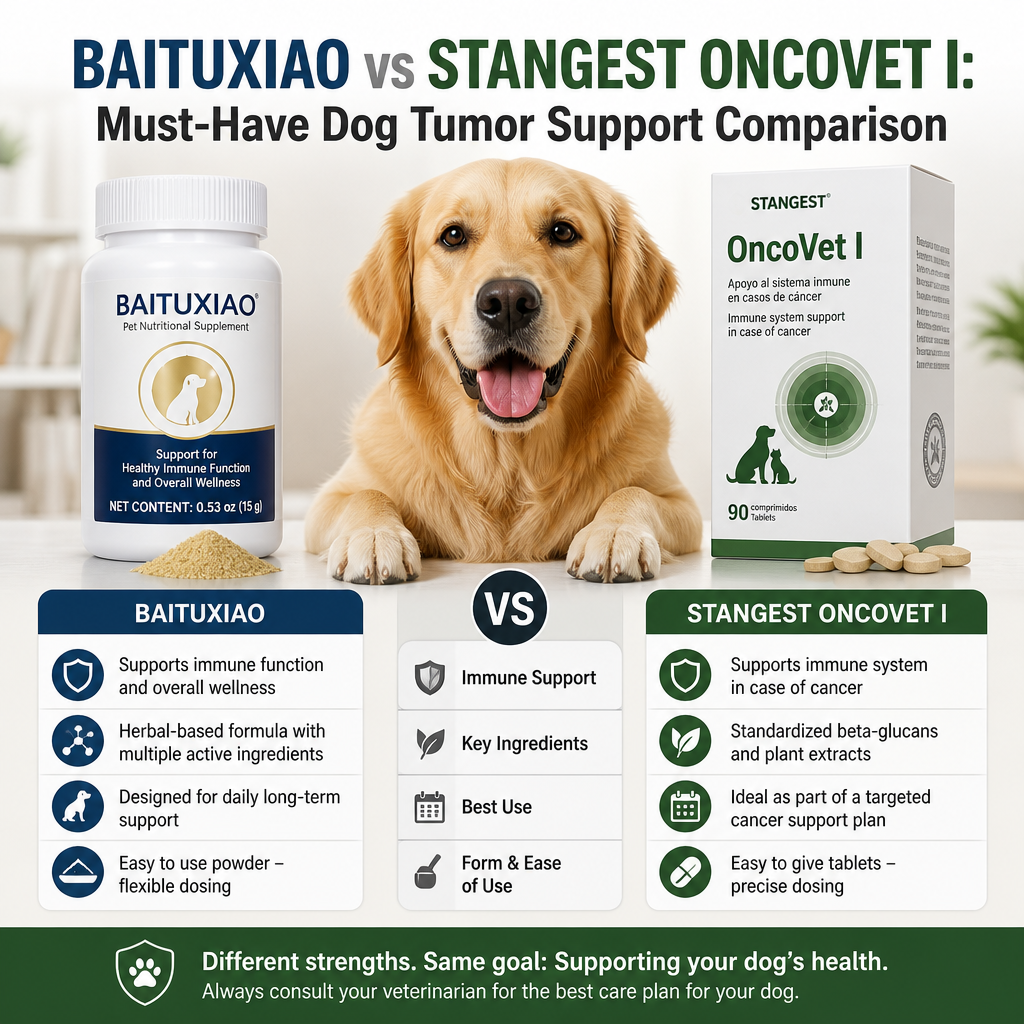
Baituxiao vs Stangest OncoVet I is a comparison many dog owners consider when looking for nutritional support during a tumor diagnosis. Both products are designed to complement veterinary care, but they may differ in ingredients, formulation, intended use, and availability. Understanding those differences can help owners have a more productive conversation with their veterinarian and choose an option that fits their dog’s individual treatment plan.
A supplement should never be viewed as a replacement for surgery, chemotherapy, radiation, prescription medication, or other therapies recommended by a veterinary oncology team. Instead, the goal of a dog tumor support product is usually to provide targeted nutritional assistance, help maintain overall condition, and support quality of life alongside professional medical care.
Baituxiao vs Stangest OncoVet I is a comparison many owners begin when they want to understand supportive options during cancer care. Both products are marketed for dogs requiring additional nutritional support during serious health challenges, including tumor-related conditions. Their exact role depends on the ingredients, dosage, the dog’s diagnosis, and the broader treatment plan.
Baituxiao is commonly discussed as a traditional-support formula containing a blend of botanical and animal-derived ingredients. It is generally presented as a product intended to support immune function, circulation, and general vitality. Because herbal ingredients can have biological effects, its use deserves particular care when a dog is receiving chemotherapy, anti-inflammatory drugs, anticoagulants, or other medications.
Stangest OncoVet I is formulated specifically as veterinary nutritional support for dogs and cats with oncological needs. Its product positioning focuses on providing nutrients that may help maintain body condition, immune support, and normal physiological function during periods of illness or treatment. The formula and recommended use should always be checked on the current packaging or through a veterinarian, since product details and regional availability can change.
For many owners, the first step in Baituxiao vs Stangest OncoVet I is simply understanding what each product is meant to do. That means looking past product names and asking whether the supplement is designed to support appetite, maintain weight, or fit into a longer-term oncology plan. This kind of evaluation is especially important when a dog is already dealing with fatigue, poor appetite, digestive changes, or medication side effects.
It also helps to remember that supportive care is just one part of a larger picture. If your dog is receiving a diagnosis of cancer or a tumor, your veterinarian may be focused on staging, pathology results, surgical options, and follow-up monitoring. A supplement can fit into that plan, but it should be selected with the same care used for any other part of treatment.
Baituxiao vs Stangest OncoVet I: Formula and Intended Role
The most important part of any Baituxiao vs Stangest OncoVet I comparison is not simply counting ingredients. A long ingredient list does not automatically make a product more effective. Owners should consider whether the formula is transparent, whether the ingredients are appropriate for the dog’s condition, and whether the supplement has a clearly defined nutritional purpose.
Baituxiao may appeal to owners who prefer a broader traditional botanical approach. Its ingredients are often selected for supportive properties rather than as a complete diet or direct cancer treatment. However, botanical formulas can be difficult to evaluate because the concentration of active compounds, manufacturing standards, and evidence may vary between products and markets.
OncoVet I is generally positioned as a veterinary-oriented nutritional supplement. This may make it easier to integrate into a conventional oncology plan, particularly when the veterinarian is familiar with the product. Veterinary formulations may also offer clearer dosing guidance based on species and body weight, although owners should still verify the instructions before use.
In both cases, the product should be judged by its suitability for the individual dog rather than by marketing language. A dog with weight loss may need calorie-dense nutrition, while a dog with kidney disease may require careful control of certain nutrients. A dog undergoing chemotherapy may need a completely different approach from a dog recovering after tumor removal.
One reason Baituxiao vs Stangest OncoVet I comes up so often is that owners want a supportive product that feels practical, gentle, and easy to use. But practicality is not the same as suitability. A product may be simple to administer yet still be inappropriate if it conflicts with medication schedules, triggers digestive upset, or does not align with the dog’s current stage of care.
Ingredients also matter because they can influence how a product works in real life. For example, some formulas may emphasize herbal support, while others are built around a more conventional nutritional approach. The former may appeal to owners looking for traditional options, while the latter may be preferred when the goal is straightforward supplementation under veterinary supervision. In either case, Baituxiao vs Stangest OncoVet I should be assessed based on the dog’s actual needs, not on general assumptions about “natural” or “clinical” products.
If the dog is already taking other supplements, the comparison becomes more important. Multiple products may duplicate nutrients or add unnecessary complexity. In that case, the most responsible version of Baituxiao vs Stangest OncoVet I is not about which option sounds stronger, but which one fits cleanly into the rest of the dog’s care routine.
Comparing Safety and Medication Interactions
Safety is one of the most important factors in any dog tumor support comparison. Natural does not always mean risk-free, and supplements can affect the body in ways that overlap with conventional drugs.
Some herbal compounds may influence blood clotting, blood pressure, liver enzymes, or immune activity. These effects could be significant for a dog scheduled for surgery or receiving medications that affect bleeding, inflammation, or immune response. For this reason, veterinarians should know about every supplement a dog is taking, including products purchased online.
OncoVet I should also be reviewed with a veterinarian, especially if the dog has liver disease, kidney disease, diabetes, digestive problems, or a history of food allergies. Nutritional products can contain proteins, fats, minerals, or other ingredients that may not be suitable for every patient.
When people compare Baituxiao vs Stangest OncoVet I, they often focus on “what it helps with,” but safety questions may be more important. Does the product fit the dog’s medication list? Could it interfere with blood clotting before surgery? Could it worsen loose stool or reduce appetite? These are practical concerns, and they deserve straightforward answers before a supplement is started.
Share the full product label with the veterinarian.
Confirm the correct dose for the dog’s weight.
Ask whether the supplement should be stopped before surgery.
Discuss possible interactions with chemotherapy and prescription drugs.
Monitor for vomiting, diarrhea, appetite changes, itching, lethargy, or unusual bleeding.
Stop the product and contact the veterinary team if concerning reactions appear.
It is also wise to monitor the dog closely during the first few days after starting any new product. Even if a formula seems appropriate on paper, the dog’s individual response matters most. Some dogs tolerate a supplement well but show no meaningful benefit, while others may experience digestive upset right away. In Baituxiao vs Stangest OncoVet I, that early response can be a useful signal about whether the product deserves a longer trial.
Owners should also ask whether the product needs to be given with food or away from meals. That small detail can affect absorption, palatability, and tolerance. A supplement that is technically suitable but difficult to administer consistently may not be the best real-world choice.
Which Option May Be More Suitable?
There is no universal winner in the Baituxiao vs Stangest OncoVet I discussion. The better choice depends on the dog’s diagnosis, current treatment, nutritional status, and tolerance.
A veterinarian may prefer a clearly standardized veterinary supplement when the dog is undergoing a complex treatment protocol. In other situations, a carefully selected botanical product may be considered, provided the veterinary team has reviewed the ingredients and believes they are appropriate.
Owners should also consider whether the dog can realistically take the product. Some supplements are available as tablets, powders, liquids, or pastes. A product that causes stress or is consistently rejected may be less useful than one the dog accepts easily. Palatability, dosing frequency, storage requirements, and cost all affect whether a supplement can be used consistently.
Another useful way to approach Baituxiao vs Stangest OncoVet I is to look at the dog’s primary problem. If the biggest issue is reduced appetite, the owner may prioritize something that is easy to administer and gentle on the stomach. If the main concern is maintaining body condition, the decision may lean toward a product that fits better with food intake and daily calorie support. If the dog is in recovery after surgery, tolerability and medication compatibility may matter more than anything else.
There are also practical household considerations. Some families need a product that can be purchased reliably, while others need a supplement that is easy to ship or store. In a long treatment journey, convenience affects adherence. A great product that is hard to find can become less useful than a simpler product that is always available.
Practical questions to ask before choosing Baituxiao vs Stangest OncoVet I
Before deciding between Baituxiao vs Stangest OncoVet I, ask whether the dog needs appetite support, immune support, or help maintaining body condition. It is also wise to confirm whether the current treatment plan includes surgery, chemotherapy, or other medications that could interact with ingredients in the supplement. A simple product that fits the dog’s routine is often more useful than a more complicated formula that the dog refuses to take.
Another helpful step is to track how the dog responds during the first one to two weeks of use. If appetite, stool quality, energy, or comfort worsens, the veterinary team may recommend stopping the product or adjusting the plan. In that sense, Baituxiao vs Stangest OncoVet I should be treated as a living decision rather than a one-time purchase.
It may also help to ask whether the product is intended for short-term support or longer-term use. Some dogs only need nutritional support during a specific phase of treatment, while others may benefit from an ongoing plan. Knowing the intended duration can make it easier to judge value and set realistic expectations.
For some families, the best question is not “Which one is better?” but “Which one is safest and easiest for my dog right now?” That framing often leads to better outcomes because it keeps the focus on the individual patient rather than on general product comparisons.
Evidence, Expectations, and Quality of Life
Supplements should be approached with realistic expectations. They are not proven substitutes for tumor-directed treatment, and they should not delay diagnostic testing or a recommended intervention. The strongest benefits may be supportive rather than curative, such as helping maintain appetite, body condition, normal digestion, or general resilience.
Quality of life should remain the central measure. Owners can track appetite, hydration, activity, comfort, sleep, weight, bowel movements, and interest in normal activities. These observations help the veterinary team determine whether a supplement appears helpful, neutral, or poorly tolerated.
Product quality also matters. Look for clear labeling, reputable manufacturing, batch information, expiration dates, and dosing instructions. Be cautious of products that promise to cure cancer, replace chemotherapy, or work for every tumor type. Such claims are not consistent with responsible veterinary care.
When discussing Baituxiao vs Stangest OncoVet I, it helps to think in terms of support rather than cure. A supplement may be valuable if it helps a dog eat better, maintain strength, or tolerate treatment a little more comfortably. That kind of benefit is meaningful, even if it is not dramatic. In oncology care, small improvements in appetite, energy, or comfort can matter a great deal to both the dog and the family.
Some owners also compare supportive products with different natural ingredients or complementary approaches. If you are exploring that broader area, it may be helpful to read more about carefully selected options like Supporting Your Dog with Tumors Naturally: Benefits of Jinyinhua. This can give more context on how herbal support is discussed alongside conventional veterinary treatment.
Baituxiao vs Stangest OncoVet I also becomes easier to evaluate when owners look at the dog’s current stage of care. A newly diagnosed dog may need a different supportive approach than one recovering after surgery or managing chronic side effects from treatment. That broader context can prevent unrealistic expectations and help the family focus on comfort, appetite, and daily function.
Long-term monitoring is important as well. A supplement that seems helpful during the first month may not remain the best choice if the dog’s treatment changes or if new lab results show a different medical priority. Periodic reassessment keeps the plan aligned with the dog’s real condition, which is exactly what supportive care should do.
Owners should also keep in mind that evidence may be uneven across brands and regions. Two products with similar-sounding goals can differ substantially in formulation quality, ingredient sourcing, and dosing clarity. That is another reason Baituxiao vs Stangest OncoVet I should be discussed with a veterinarian rather than judged only by product descriptions.
Making a Responsible Choice
The most useful dog tumor support comparison combines ingredient review with professional medical guidance. Before choosing between Baituxiao and Stangest OncoVet I, identify the dog’s specific diagnosis and treatment goals, review the complete ingredient list, and ask the veterinarian how the product fits into the overall plan.
The choice should support—not compete with—evidence-based treatment. With careful supervision, an appropriate supplement may contribute to nutritional management and quality-of-life care. The right decision is ultimately the one that is safe, practical, transparent, and tailored to the dog’s individual medical needs.
For many families, the most useful outcome is not finding a product with the loudest claims, but choosing the most reliable support for their dog’s daily comfort and treatment plan. That is why the Baituxiao vs Stangest OncoVet I decision should always be made with veterinary input, especially when the dog is already receiving oncology care.
When you revisit Baituxiao vs Stangest OncoVet I later in the treatment process, reassess appetite, weight, energy, and any side effects. A product that seemed promising at the start may no longer be the best fit if the dog’s condition changes. Ongoing monitoring keeps the choice practical and safe.
In short, Baituxiao vs Stangest OncoVet I is less about picking a universal winner and more about matching the right support to the right patient. With the veterinarian’s guidance, owners can make a calmer, more informed choice that fits the dog’s needs.
For readers comparing Baituxiao vs Stangest OncoVet I, the safest approach is to keep the discussion centered on the dog’s diagnosis, current medications, and day-to-day comfort. That keeps the decision grounded in real-world veterinary care rather than in marketing claims.
Ultimately, Baituxiao vs Stangest OncoVet I should be reviewed as part of a wider supportive-care plan. When owners ask the right questions and monitor the dog carefully, they are more likely to choose a supplement that is both practical and genuinely helpful.
If the dog’s needs change, the best choice may change too. Revisiting Baituxiao vs Stangest OncoVet I with the veterinary team can help ensure the supplement still matches the dog’s current health status and treatment goals.
Before making a final decision, it can help to write down the dog’s current medications, recent symptoms, appetite pattern, and any previous supplement reactions. Bringing that information to the appointment makes the Baituxiao vs Stangest OncoVet I discussion more productive and may help the veterinarian recommend the more suitable option faster.
That simple preparation can also reduce confusion later. If the dog improves or if the oncology plan changes, the family can revisit the same notes and make a more informed adjustment. In a long treatment journey, that kind of organized, careful decision-making is often just as valuable as the supplement itself.
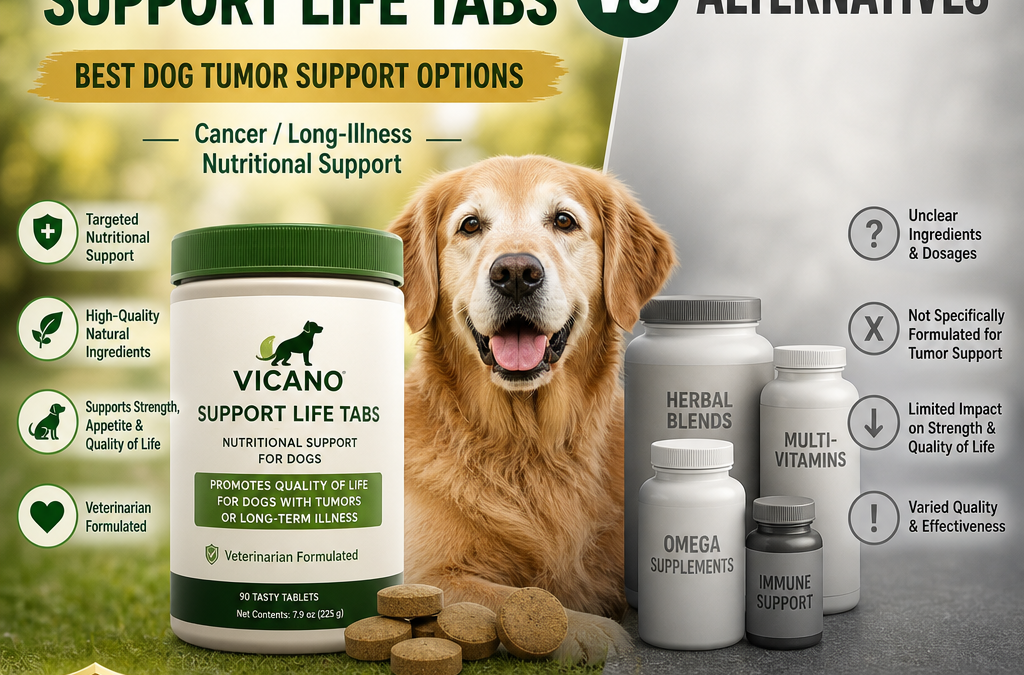
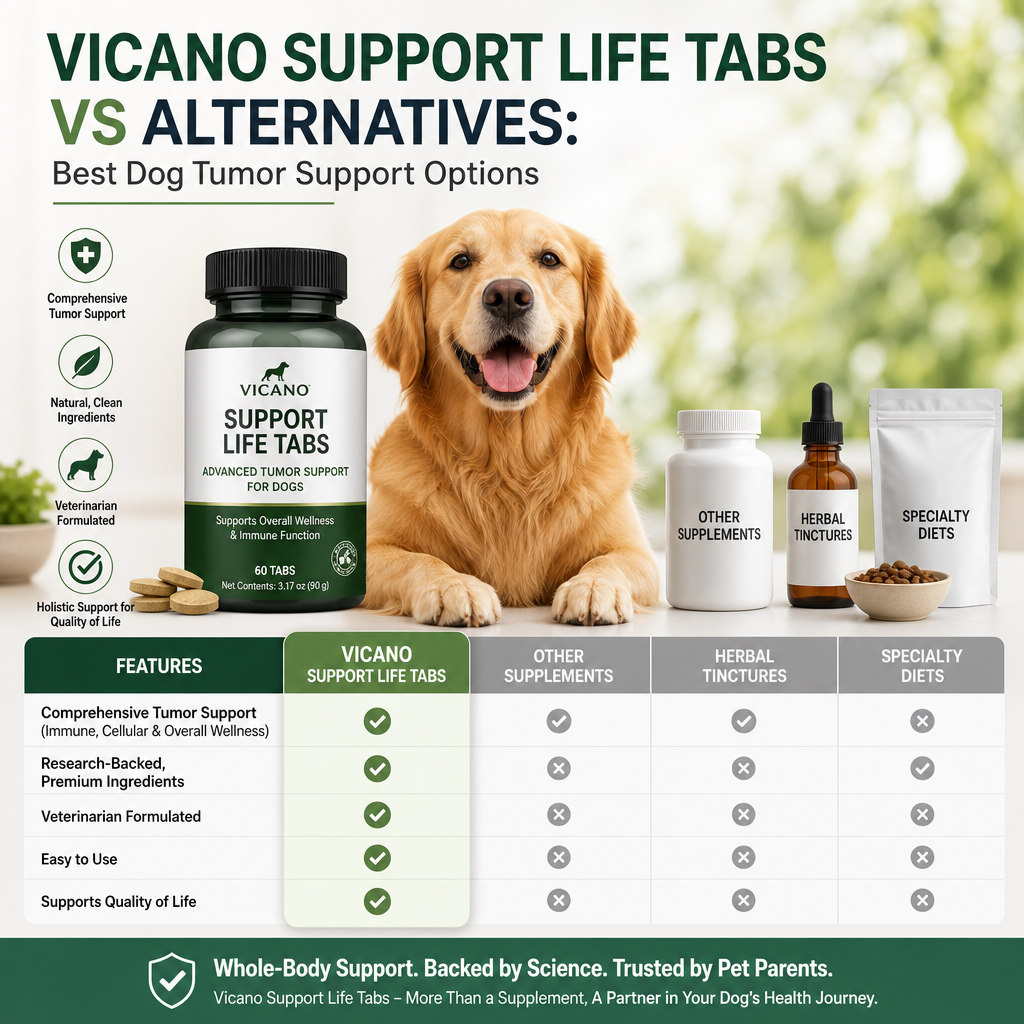
Vicano Support Life Tabs vs Alternatives is an important comparison for dog owners looking for nutritional support during cancer, recovery, or another prolonged illness. When a dog develops a tumor or faces a long-term health condition, nutrition may become more challenging: appetite can decline, body weight may fall, and maintaining muscle can become difficult. Supplements can sometimes help fill nutritional gaps, but they should complement—not replace—veterinary diagnosis and treatment.
In many cases, the goal is not to find a product that treats cancer directly, but to choose the most practical dog tumor support options for the dog’s current condition, appetite, and treatment plan. That is why Vicano Support Life Tabs vs alternatives should be judged by safety, usability, and how well the product fits the dog’s daily routine.
Understanding cancer and long-illness nutritional support
Dogs with cancer or chronic illness often have changing nutritional needs. Some may eat less because of nausea, pain, stress, medication side effects, or changes in taste and smell. Others may lose weight despite eating normally because illness can alter metabolism and increase the body’s demand for energy and protein.
The primary nutritional goals are usually to support adequate calorie intake, preserve lean muscle, maintain hydration, and provide a balanced diet that the dog can tolerate. The right approach depends on the tumor type, treatment plan, organ function, age, existing conditions, and current appetite.
A supplement cannot treat a tumor directly. However, a carefully selected product may provide concentrated nutrients or calories when a dog is eating poorly. It may also be useful during recovery from surgery, chemotherapy, radiation, infection, or another prolonged condition.
For many owners, the practical issue is whether Vicano Support Life Tabs vs alternatives can help keep the dog eating enough without upsetting the stomach or making mealtime stressful. That comparison becomes even more relevant when appetite is inconsistent or the dog is already on several medications.
Nutrition support also matters because illness can make a dog’s body use protein and calories less efficiently. If the dog begins to lose muscle, everyday movement can become harder, recovery may slow, and quality of life can decline. A good support plan tries to interrupt that cycle early.
Because every dog is different, a product that works well for one patient may be poorly tolerated by another. Breed size, body condition, oral health, digestive sensitivity, and concurrent disease all play a role. That is why owners should think about the entire feeding plan, not just one supplement bottle.
Vicano Support Life Tabs vs Alternatives
Vicano Support Life Tabs are generally considered a nutritional support product rather than a standalone cancer treatment. When comparing them with alternatives, owners should look beyond marketing claims and examine the product’s ingredients, dosage, palatability, intended use, safety information, and compatibility with veterinary care.
A tablet-based supplement may be convenient for dogs that willingly accept pills or tablets hidden in food. It can provide a consistent serving and may be easier to store and measure than liquid products. However, tablets can be difficult for dogs experiencing nausea, mouth pain, swallowing problems, or appetite loss. Some dogs may also reject unfamiliar flavors.
Alternatives may include veterinary recovery diets, high-calorie nutritional gels, liquid supplements, powdered formulas, prescription diets, or targeted nutrients recommended by a veterinarian. Each option has advantages and limitations. A recovery diet, for example, may offer complete and balanced nutrition with a soft texture, while a supplement tablet may be more practical for a dog that already eats a normal diet but needs additional nutritional support.
The best choice is not necessarily the product with the longest ingredient list. It is the option that meets the dog’s needs safely and consistently. In that sense, Vicano Support Life Tabs vs alternatives is really a comparison of convenience, tolerance, and overall support value.
Owners should also consider whether the product can be used long enough to matter. If a dog only accepts a supplement once in a while, the benefit may be limited. On the other hand, a slightly simpler formula that the dog accepts every day may be more helpful than a more complex product that is repeatedly refused.
When Vicano Support Life Tabs vs alternatives is discussed in practice, the most useful question is often: which option helps this dog maintain eating habits, muscle condition, and comfort with the least friction? That answer may differ between dogs in active treatment, dogs recovering from surgery, and dogs receiving palliative care.
Comparing common dog tumor support options
Complete veterinary recovery diets
Veterinary recovery diets are often useful when a dog needs concentrated calories, digestible ingredients, and a soft texture. Many are formulated to be nutritionally complete, which is important when a dog is eating very little. They may be appropriate after surgery or during periods of weakness, although a veterinarian should determine whether the formula suits the dog’s condition.
These diets are usually more reliable as a primary food source than a general supplement. Their limitation is that some dogs may dislike the flavor, and certain medical conditions may require restrictions on protein, fat, phosphorus, sodium, or other nutrients.
In a dog with poor appetite, a recovery diet can sometimes do more than a tablet supplement because it contributes actual calories and hydration support. That makes it a strong option in the broader Vicano Support Life Tabs vs alternatives discussion, especially when the dog is losing weight or only eating small amounts.
High-calorie gels and liquid formulas
Gels and liquids can be helpful when a dog needs extra calories in a small volume. They may be easier to administer to dogs with poor appetite or difficulty chewing. Some products are designed as short-term energy sources rather than complete diets, so owners should read the label carefully.
High-fat formulas are not suitable for every dog. Dogs with pancreatitis, digestive disease, or certain metabolic problems may require a lower-fat approach. Vomiting, diarrhea, or abdominal discomfort after introducing a product should be reported to a veterinarian.
These products may also be useful when a dog needs support between meals or after a treatment day when food intake drops temporarily. For some families, a liquid formula is easier to mix into the feeding routine than tablets, which can get lost in the bowl or spit out by a careful dog.
Powdered nutritional supplements
Powders can be mixed with wet food, broth, or a prescribed diet. They may contain vitamins, minerals, amino acids, fatty acids, fiber, or other nutritional components. Their flexibility can be useful, but taste and texture may affect acceptance.
Owners should avoid combining multiple products without professional guidance. Overlapping ingredients can lead to excessive intake, particularly with fat-soluble vitamins or minerals.
Powders can be a smart middle ground when a dog refuses tablets but still tolerates food fairly well. Because they blend into meals, they may offer a quieter, less stressful option than direct pill administration. Still, the overall feeding plan matters more than the form of the supplement alone.
Targeted supplements
Some veterinarians may recommend specific nutrients, such as omega-3 fatty acids, depending on the dog’s overall health and treatment plan. Other supplements may be considered for digestive support or maintaining appetite. Evidence varies considerably between products, and “natural” does not automatically mean safe.
Targeted supplementation should take into account medications, liver and kidney function, bleeding risk, and the possibility of interactions with chemotherapy or surgery. When reviewing Vicano Support Life Tabs vs alternatives, this safety step is especially important.
Targeted products are not always meant to replace food support. Instead, they may be added to a larger nutrition strategy when a veterinarian believes a specific nutrient could be useful. In some cases, a simple and well-tolerated support product is better than trying to stack multiple specialized formulas at once.
Homemade diets
Homemade food may seem appealing when a dog refuses commercial diets, but improvising meals for a seriously ill dog can create nutritional imbalances. Meat alone, for example, does not provide all the vitamins and minerals a dog requires. If a homemade diet is necessary, it should be formulated by a veterinary nutrition professional.
Homemade food can sometimes help with palatability because owners can adjust texture, temperature, and aroma. However, that flexibility does not guarantee nutritional completeness. The more complex the illness, the more important it becomes to avoid guesswork.
For readers comparing Vicano Support Life Tabs vs alternatives, homemade diets are best viewed as a special case rather than a default answer. They may be appropriate when a dog needs carefully tailored meals, but they should be planned with the same caution as any other long-term feeding strategy.
Prescription diets and palatability-focused diets
Prescription diets can be useful when a dog has cancer plus another condition such as kidney disease, pancreatitis, or gastrointestinal trouble. These diets are designed to address specific medical needs and may offer a more complete solution than a general supplement alone.
Some therapeutic diets are also formulated with palatability in mind, which can matter a great deal when the dog is selective or nauseated. If a dog refuses one product, another texture or flavor may work better. The best option is often the one that the dog will actually eat consistently.
That reality is central to Vicano Support Life Tabs vs alternatives: nutritional theory matters, but daily acceptance matters more.
Simple food toppers and appetite helpers
Some owners try food toppers, broth-style additions, or other appetite helpers to encourage eating. These can sometimes make meals more appealing, but they should be chosen carefully. Ingredients, sodium content, and compatibility with the dog’s medical condition all matter.
A topper can be helpful when a dog is otherwise close to eating normally but needs a small push. It is less useful when the dog has true appetite suppression or significant weight loss. In those cases, more structured support is usually needed.
As with other dog tumor support options, the key is matching the tool to the problem rather than expecting one product to solve every feeding challenge.
How to evaluate a supplement safely
Before choosing among dog tumor support options, check whether the manufacturer provides a complete ingredient list, feeding instructions, batch information, storage guidance, and clear warnings. Look for products intended for dogs rather than human supplements, as human products may contain unsafe ingredients or inappropriate doses.
Ask the veterinarian whether the supplement is appropriate for the dog’s diagnosis and treatment. This is especially important if the dog is receiving chemotherapy, corticosteroids, anti-inflammatory medication, anticoagulants, or seizure medication. Supplements can affect absorption, digestion, blood clotting, or liver metabolism.
It is also helpful to introduce only one new product at a time. This makes it easier to identify the cause of side effects such as vomiting, diarrhea, itching, lethargy, or refusal to eat. Begin according to the label or veterinary instructions rather than assuming a larger amount will provide greater benefit.
It is wise to keep a simple journal during the first week of any change. Note how much the dog eats, whether the stool changes, whether nausea appears, and whether the dog seems brighter or more tired. This can help the veterinarian judge whether the product is useful or should be replaced.
Also remember that supplements can be risky when they are stacked without a plan. A dog already receiving a therapeutic diet may not need another calorie-dense product. Another dog may need more calories but less fat. This is why professional guidance matters more than product popularity.
Practical feeding strategies during long-term illness
Small, frequent meals may be easier to tolerate than one or two large servings. Warming wet food slightly can increase its aroma, but food should never be heated enough to burn the mouth. A quiet feeding area may reduce stress, and some dogs respond better when food is offered by hand or on a shallow plate.
Hydration is equally important. Fresh water should always be available, and a veterinarian can advise whether fluids or a specially formulated electrolyte product is appropriate. Do not force-feed a dog that is vomiting, struggling to swallow, or showing signs of distress, because aspiration is a serious risk.
Weight should be monitored regularly, ideally using the same scale and similar conditions. Contact the veterinarian if the dog loses weight rapidly, stops eating, vomits repeatedly, develops persistent diarrhea, becomes unusually weak, or shows difficulty breathing or swallowing.
In practice, the most useful Vicano Support Life Tabs vs alternatives comparison is the one that helps you feed the dog consistently without worsening nausea, stool issues, or stress at mealtimes.
Feeding routines should also stay realistic for the family. A plan that requires complicated preparation several times a day may be difficult to maintain. Simpler routines often work better, especially when the dog is already on medication schedules and follow-up visits.
If the dog has a favorite texture, start there. Some dogs do better with soft food, while others prefer a more familiar kibble mixed with a little moisture. The point is to improve intake without turning every meal into a struggle.
When the condition changes, the nutrition plan may need to change too. A dog that initially tolerates tablets may later need a softer or more concentrated product. Vicano Support Life Tabs vs alternatives should therefore be revisited over time, not treated as a one-time decision.
Making the best choice
Vicano Support Life Tabs vs Alternatives is ultimately a decision about suitability, not simply brand preference. Tablets may work well for a dog that accepts them and eats a reasonably complete diet, while a recovery diet or liquid formula may be better for a dog with severe appetite loss. A targeted supplement may have a role in a carefully managed treatment plan, but it should not distract from pain control, anti-nausea treatment, tumor-directed care, and regular veterinary monitoring.
The most effective nutritional plan is individualized, practical, and sustainable. By reviewing the dog’s diagnosis, appetite, body condition, medications, and digestive tolerance with a veterinarian, owners can choose nutritional support that promotes comfort and preserves quality of life throughout a difficult illness.
When comparing Vicano Support Life Tabs vs alternatives, the best result is usually the option that the dog can tolerate every day and that fits the veterinary plan without creating new problems. For owners who want to compare another regional option, K9 Immunity / K9 Immunity Plus Alternative: Best Dog Tumor Supplements in Sweden provides a similar decision-making framework.
In short, Vicano Support Life Tabs vs alternatives should be judged by real-world usefulness: whether the product is safe, whether the dog will actually take it, and whether it supports feeding goals during cancer care or another long illness. That practical test matters more than any single claim on the label.
For some dogs, the best answer may be a supplement tablet. For others, a soft recovery diet, a liquid calorie booster, or a veterinarian-formulated meal plan will be more effective. The right choice is the one that supports intake, protects digestion, and can be used consistently.
Owners comparing Vicano Support Life Tabs vs alternatives should also keep expectations realistic. Nutritional support can help maintain strength and comfort, but it cannot substitute for diagnosis, monitoring, or treatment adjustments. If appetite, energy, or body weight changes quickly, veterinary review should come first.
Used thoughtfully, the best dog tumor support options can make day-to-day care easier and help the dog stay stronger for longer. That is the real goal behind Vicano Support Life Tabs vs alternatives: not finding a miracle product, but choosing the most reliable support for the individual dog.
Ocoxin Pets is a nutritional supplement designed to support dogs during serious illness, including cancer treatment. For pet owners in Bosnia and Herzegovina, understanding what this product can and cannot do is important before adding it to a dog’s care plan. This Ocoxin Pets review explains its intended use, possible benefits, limitations, safety considerations, and practical questions to discuss with a veterinarian.
Ocoxin Pets is a veterinary nutritional supplement formulated to provide supportive care for dogs and other companion animals. It is generally associated with nutritional support during periods of illness, reduced appetite, weakness, or demanding medical treatment. Its formulation may include ingredients such as vitamins, minerals, antioxidants, amino acids, and plant-derived compounds, depending on the specific product version and market.
The purpose of a supplement like this is not to replace veterinary treatment. Instead, it may help support general condition, appetite, hydration, energy, and recovery while a dog is undergoing diagnosis or treatment. Dogs with cancer can experience significant physical stress, and maintaining adequate nutrition is often an important part of overall care.
Product formulas, dosage instructions, and availability can vary by country. Owners should therefore check the label supplied in Bosnia and Herzegovina and confirm the current composition with a veterinarian or authorized distributor.
Ocoxin Pets dog cancer support: What can it realistically do?
Ocoxin Pets dog cancer support should be viewed as complementary care rather than a cure. Cancer is a complex group of diseases, and the appropriate treatment depends on the tumor type, stage, location, and general health of the dog. Veterinary options may include surgery, chemotherapy, radiation therapy, immunotherapy, pain management, dietary support, or a combination of these approaches.
A nutritional supplement may be considered for several supportive goals:
Helping maintain normal nutritional status
Supporting a dog with reduced appetite
Providing additional nutrients during recovery
Supporting general vitality and body condition
Complementing a veterinarian’s cancer-care plan
Helping owners manage the challenges associated with long-term illness
However, there is no reliable basis for treating Ocoxin Pets as a standalone cancer treatment. It should never be used to delay diagnosis, replace surgery, stop prescribed medication, or substitute for chemotherapy or other therapies recommended by a veterinary oncologist.
Potential benefits for dogs with serious illness
Dogs affected by cancer may lose weight, eat less, become tired, or experience digestive problems. These issues can make it more difficult for the body to cope with disease and treatment. A carefully selected supplement may help fill nutritional gaps, particularly when a dog is not eating a complete diet in sufficient quantities.
The possible value of Ocoxin Pets may be greatest when it is included in a broader plan involving appropriate food, pain control, anti-nausea treatment, regular examinations, and monitoring of weight and hydration. Some dogs may tolerate supportive supplements well, while others may show no noticeable benefit or may develop digestive upset.
Owners should monitor practical indicators rather than relying only on general impressions. Appetite, body weight, stool quality, activity level, vomiting, water intake, and comfort can all provide useful information. Keeping a simple daily record can help the veterinarian determine whether the supplement is beneficial.
Veterinary nutrition references, such as the WSAVA Global Nutrition Guidelines, can also help owners understand why complete nutrition matters during illness.
In many cases, the biggest benefit is not a dramatic change but steadier daily support. A dog that can keep eating, hold weight, and stay a little more comfortable may handle treatment better than one that is struggling to maintain nutrition. That is why veterinarians often focus on the whole picture rather than any single product.
Supportive care can also reduce stress for owners. When a dog is sick, small improvements in appetite or energy can make home care easier and can help families stay consistent with the broader treatment plan. Even so, expectations should remain realistic so that the supplement is judged fairly.
Ocoxin Pets review: Safety and veterinary guidance
A responsible Ocoxin Pets review must emphasize that “natural” or nutritional ingredients are not automatically risk-free. Dogs may react differently based on age, breed, size, kidney function, liver health, allergies, and current medications.
Before use, consult a veterinarian if the dog:
Is receiving chemotherapy, corticosteroids, antibiotics, or pain medication
Has kidney or liver disease
Has a history of pancreatitis
Is pregnant or nursing
Has severe vomiting or diarrhea
Is unable to eat or drink normally
Has recently undergone surgery
Is taking multiple supplements
The veterinarian may recommend adjusting the dose, avoiding the product, or monitoring specific blood values. It is also important not to combine several antioxidant, herbal, or vitamin products without professional advice. Excessive intake of certain nutrients can be harmful, and supplements may interact with prescribed medicines.
Seek urgent veterinary help if a dog develops repeated vomiting, bloody diarrhea, severe weakness, breathing difficulty, collapse, facial swelling, or signs of uncontrolled pain.
Safety also depends on using the exact product intended for pets. Owners should avoid substituting another formula, repackaged bulk product, or an item with unclear instructions. If the label is missing key details, treat that as a warning sign and ask a clinic or pharmacist for help before giving it to the dog.
How to use it responsibly
Follow the dosage printed on the official packaging or the instructions provided by a veterinarian. Do not assume that a human dosage or a dose intended for another animal is appropriate. The dog’s body weight, health status, and treatment plan should all be considered.
Introduce any new supplement carefully and observe the dog for changes over the following days. Giving it with food may improve tolerance, but the product instructions should take priority. If the dog refuses food, vomits after administration, or develops diarrhea, contact the veterinarian before continuing.
Storage also matters. Keep the product in its original container, away from heat, moisture, and direct sunlight, and keep it out of reach of pets and children. Check the expiration date and packaging integrity before use.
If you are comparing supportive products, one practical approach is to discuss expected benefits, ingredient differences, and cost with your veterinarian before deciding whether Ocoxin Pets is the right fit for your dog’s plan.
It can help to make a short checklist before the first dose. Write down the dog’s current weight, appetite level, ongoing medications, and any recent stomach or bowel changes. This gives the veterinarian a clearer starting point and makes follow-up easier if the dog’s condition changes.
Ocoxin Pets Bosnia and Herzegovina: Buying considerations
When searching for Ocoxin Pets Bosnia and Herzegovina, buyers should focus on authenticity and reliable supply. Purchase through a veterinary clinic, reputable veterinary pharmacy, or an authorized seller whenever possible. Avoid products with unclear labeling, missing batch numbers, damaged packaging, or unusually low prices.
The label should clearly identify the manufacturer, ingredients, recommended use, dosage, storage conditions, and expiration date. Since imported products may have different packaging or instructions, ask a veterinarian or pharmacist to confirm that the product is appropriate for the dog and that the information is understandable.
Availability can change, and some products may need to be ordered through veterinary channels. A professional source can also help explain whether the supplement is suitable alongside the dog’s existing treatment.
If you are unsure about ingredient quality or whether the formula matches your dog’s condition, bring the product label to your clinic before purchasing a full supply.
Because market availability can vary, it is also wise to compare the total cost of treatment support over several weeks, not just the first purchase price. A product that seems affordable at first may become expensive if the dog needs a long course of care.
Questions to ask your veterinarian before buying
Before starting Ocoxin Pets, ask whether your dog’s diagnosis, current medications, and appetite level make the supplement a sensible choice. A few clear questions can save time and reduce the risk of using something that does not fit the treatment plan.
Is this supplement appropriate for my dog’s current cancer treatment?
Could it interact with any medication my dog is taking?
What changes should I watch for after starting it?
How long should we try it before deciding whether it is helping?
Are there signs that mean I should stop it right away?
Would another nutritional approach be more suitable?
These questions are especially helpful when a dog has other health problems, such as liver disease, kidney disease, or digestive sensitivity. In those cases, the safest choice is often the one that fits the whole medical picture, not just the cancer diagnosis.
A supplement is only one part of cancer care
The most effective supportive plan usually combines medical treatment with good daily care. Offer a complete, highly digestible diet recommended for the dog’s condition, provide fresh water, keep the environment calm, and maintain gentle activity if the dog is comfortable. Regular veterinary checkups are essential for tracking tumor progression, treatment response, pain, weight, and quality of life.
Quality of life should remain the central goal. A supplement may be useful if it helps a dog eat, maintain strength, or feel more comfortable, but it should be discontinued or reassessed if it causes side effects or offers no clear benefit.
Overall, Ocoxin Pets may have a role as supportive nutrition for some dogs with cancer or other serious illnesses. Its value depends on the individual animal, the product’s verified formulation, and the guidance of a qualified veterinarian. For families in Bosnia and Herzegovina, careful sourcing and professional advice are especially important. The supplement should complement evidence-based veterinary care—not replace it.
If your dog is already on a treatment plan, the best next step is usually to review the label with your vet and decide whether this product fits the larger goal of comfort, appetite support, and stable nutrition. Used thoughtfully, supportive care can be a helpful part of a compassionate routine.