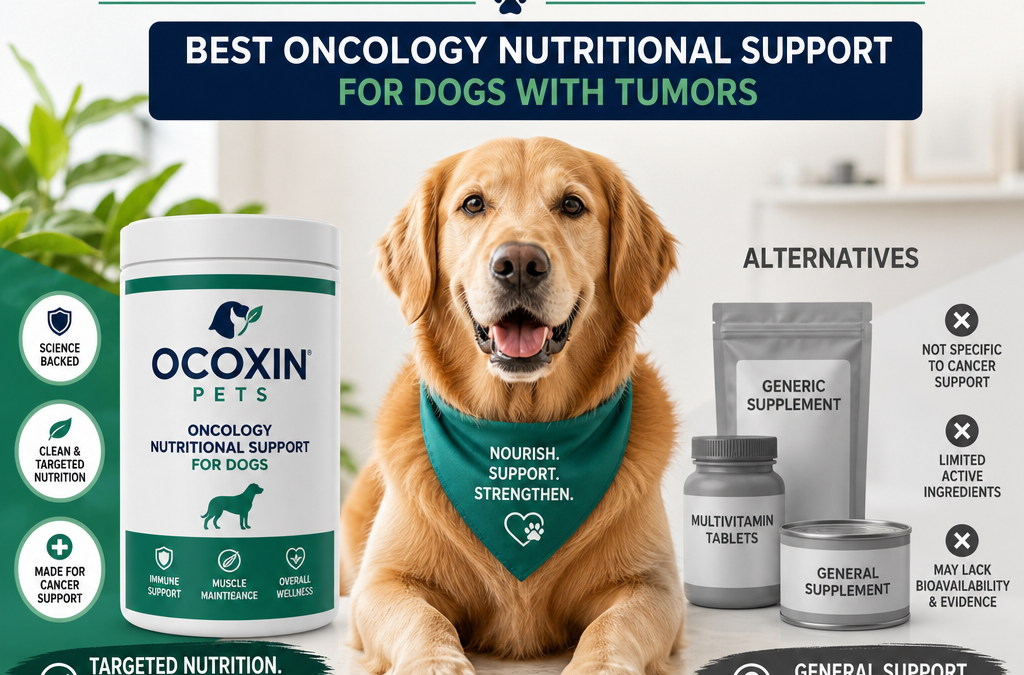
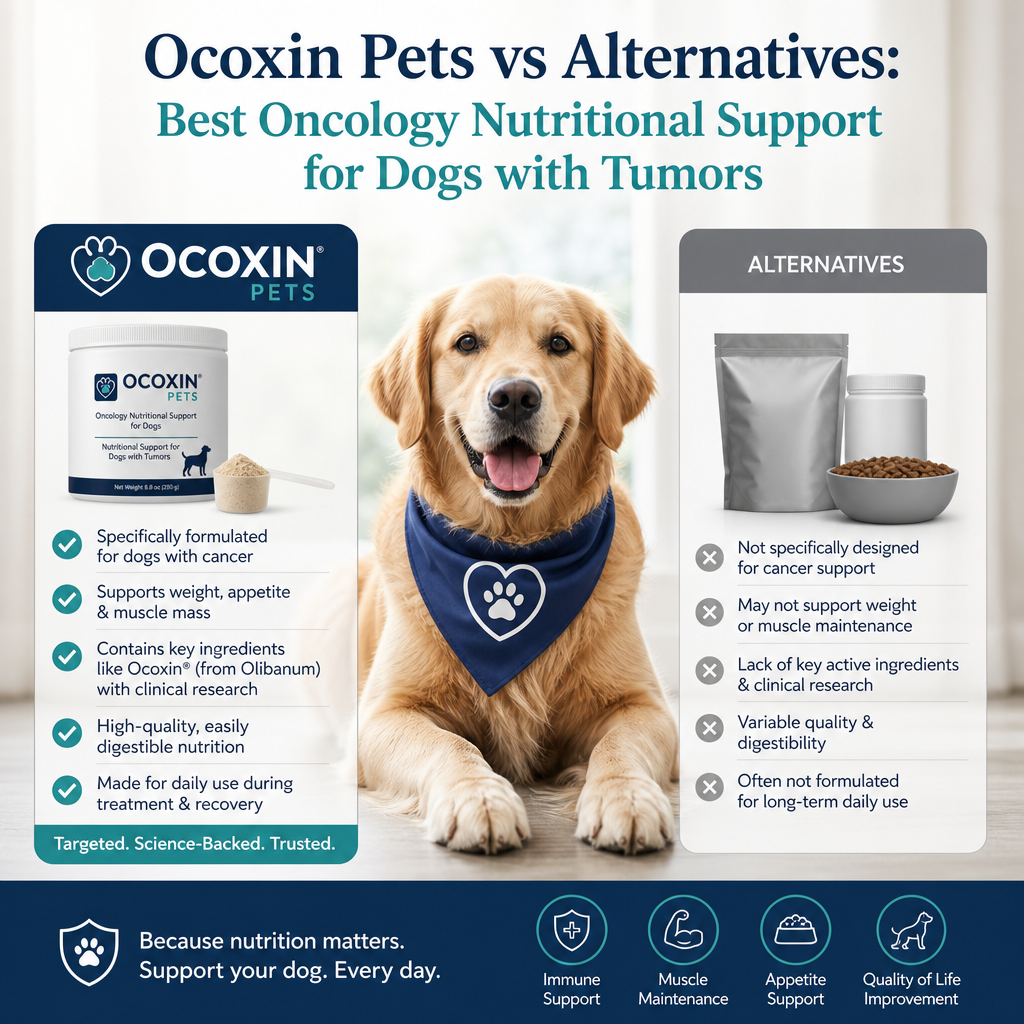
Ocoxin Pets vs Alternatives: 5 Best Oncology Nutritional Support Options for Dogs with Tumors
Ocoxin Pets vs Alternatives is an important comparison for owners seeking supportive care for a dog diagnosed with cancer. Nutritional products cannot replace surgery, chemotherapy, radiation, targeted treatment, or veterinary monitoring, but they may help address appetite, weight maintenance, recovery, and overall well-being. The right choice depends on the dog’s tumor type, treatment plan, current diet, laboratory results, and individual tolerance.
Table of Contents
What is oncology nutritional support?
Oncology nutritional support refers to dietary strategies and supplements designed to help dogs maintain strength and body condition during cancer care. Tumors and cancer treatments can affect appetite, digestion, metabolism, immune function, and muscle mass. Some dogs lose weight because they eat less, while others experience increased nutritional demands or treatment-related nausea. In that setting, Ocoxin Pets vs alternatives becomes a practical question about how best to keep a dog eating and comfortable.
A useful plan typically focuses on:
- Providing adequate calories and high-quality protein
- Maintaining hydration
- Supporting lean muscle mass
- Improving palatability when appetite declines
- Managing digestive problems such as vomiting or diarrhea
- Avoiding unnecessary dietary restrictions
- Monitoring weight, body condition, and muscle condition regularly
Nutritional support should be personalized. A food or supplement that benefits one dog may be unsuitable for another, especially when kidney disease, pancreatitis, diabetes, liver disease, or medication interactions are present. For a broader overview of feeding and supplement planning, see Best Supplements for Dogs with Cancer: 7 Essential UK Support Tips.
In many cases, the goal is not to force a dramatic change overnight. Instead, oncology nutritional support works best when it gradually improves intake, reduces stress around meals, and fits the dog’s medical plan. That is why Ocoxin Pets vs alternatives should be evaluated as part of the whole care plan, not as a stand-alone fix.
Owners often do best when they start with a clear goal. If the priority is weight maintenance, the plan may look different from a case where the priority is appetite stimulation or digestive comfort. Because of that, Ocoxin Pets vs alternatives should be matched to the dog’s current needs rather than a general promise on the label.
Ocoxin Pets: potential benefits and limitations
Ocoxin Pets is marketed as a complementary nutritional product for dogs and cats receiving support during serious illness, including cancer. Its formulation may include ingredients such as antioxidants, plant-derived compounds, vitamins, minerals, and other nutritional components. The exact composition, dosage, and availability can vary by region, so owners should review the product label and discuss it with a veterinarian.
The potential appeal of Ocoxin Pets is that it offers a combined formula rather than requiring owners to select multiple individual supplements. Some veterinary teams may consider products like this when a dog needs additional nutritional support during treatment, particularly if appetite, weight, or recovery is a concern. For some families, Ocoxin Pets feels simpler than building a supplement stack from scratch.
However, several limitations deserve attention. A supplement is not a cancer cure, and evidence for any product should be interpreted carefully. Laboratory or preliminary research on individual ingredients does not necessarily prove that the complete product improves survival or treatment response in dogs. Some supplements may also cause gastrointestinal upset, interact with medications, or provide nutrients that are unnecessary when a dog is already eating a complete therapeutic diet.
The most important questions are whether the product is appropriate for the specific patient, whether its ingredients are clearly disclosed, and whether the veterinary team can monitor its use safely. When Ocoxin Pets vs alternatives are compared properly, the decision becomes less about marketing and more about fit.
Owners often ask whether a broad-support product can replace a structured plan. In most cases, Ocoxin Pets works best as part of a larger strategy rather than as a standalone answer. That is also true for other oncology nutritional support products, which should be judged by practical benefit, tolerability, and compatibility with treatment. If a dog is already on a prescription diet or receiving symptom control medication, the supplement should support that plan rather than complicate it.
It is also useful to think about the dog’s daily routine. If meals are inconsistent or the dog becomes anxious around feeding, even a promising formula may not help enough. In real-world practice, Ocoxin Pets vs alternatives often comes down to which option the dog will actually accept consistently.
Some owners prefer a product with fewer moving parts, while others want a highly targeted approach using separate ingredients. Neither path is automatically better. The most appropriate choice is the one that fits the dog’s appetite, the owner’s ability to administer it, and the veterinarian’s safety considerations.
Ocoxin Pets vs Alternatives: key comparison points
When evaluating Ocoxin Pets vs alternatives, owners should compare more than brand names. The quality of the decision depends on the dog’s medical needs and the role the product is expected to play.
1. Nutritional completeness
Some products are complete diets, while others are supplements intended to be added to food. A complete and balanced veterinary diet can provide a reliable foundation for daily nutrition. A supplement should not displace essential calories or dilute the nutritional balance of the main diet unless a veterinary nutritionist has approved the plan.
For dogs with tumors, this point matters because the plan should first cover basic needs. If a product is advertised as supportive but does not meaningfully improve intake or maintain body weight, its value may be limited. Ocoxin Pets vs alternatives should therefore be judged against the dog’s nutrition baseline, not only against marketing claims.
2. Ingredient transparency
Look for clear labeling, stated amounts, feeding directions, expiration dates, and manufacturer quality controls. Products with vague “proprietary blends” can make it difficult to determine how much of each active ingredient the dog receives. Transparency also helps the veterinarian assess whether a supplement overlaps with other products the dog already uses.
3. Evidence and intended use
The strongest support usually comes from veterinary research, clinical experience, and a logical nutritional purpose. Products marketed with broad claims about detoxification, tumor shrinking, or guaranteed immune enhancement should be approached cautiously. Nutritional support is generally most valuable when it addresses a measurable problem, such as inadequate calorie intake or loss of muscle.
If a product is meant to help with appetite, the question is whether the dog eats more and maintains weight. If it is meant to help with recovery, the question is whether the dog tolerates treatment better and regains strength. These practical outcomes matter more than abstract promises, especially when comparing Ocoxin Pets vs alternatives.
4. Safety during cancer treatment
Some antioxidants and herbal ingredients may theoretically affect oxidative mechanisms involved in chemotherapy or radiation. This does not mean all antioxidants are harmful, but it does mean timing, dose, and treatment type matter. The oncology veterinarian should review every supplement before it is started.
That review is especially important if the dog is already using pain medication, anti-nausea drugs, steroids, or other cancer-related prescriptions. A product that seems mild can still change how the dog responds when combined with treatment. In practice, Ocoxin Pets vs alternatives should always be considered in the context of the full medication list.
5. Cost and consistency
A product that is unaffordable or difficult to obtain may not be practical for long-term use. Consistent feeding, hydration, and follow-up are often more valuable than adding several expensive products with overlapping ingredients.
In short, Ocoxin Pets vs alternatives should be judged by what the dog actually needs. If the core issue is poor appetite, a palatable food or appetite support may matter more. If the issue is muscle loss, protein and calorie planning may matter more. If the issue is treatment tolerance, the right choice may be symptom control first and supplementation second.
It can also help to think in categories instead of labels. Some options are nutritional foundations, some are targeted supplements, and some are comfort-focused support tools. Ocoxin Pets vs alternatives becomes easier to assess when owners separate these roles clearly. This is especially useful when the dog’s condition changes over time, since a plan that works early in treatment may need adjustment later.
Common dog tumor support options
Dog tumor support options extend beyond a single supplement. In many cases, the foundation is a highly digestible, palatable complete diet that matches the dog’s health status. Some dogs benefit from calorie-dense food in small portions, while others need a prescription diet adapted to gastrointestinal, kidney, or liver concerns.
Veterinarians may also recommend omega-3 fatty acids, particularly EPA and DHA, when appropriate. These fats can contribute to overall nutritional support, although the dosage should be calculated carefully and adjusted for conditions such as pancreatitis or bleeding risk.
Appetite support may involve anti-nausea medication, pain control, appetite stimulants, warming food, hand-feeding, or changing textures. A dog that refuses food because of pain or nausea may not need a new supplement; it may need better symptom management. In those cases, Ocoxin Pets vs alternatives is less important than getting the dog comfortable enough to eat.
For dogs losing muscle, adequate protein and resistance through gentle, veterinarian-approved activity can be important. Severe weight loss may require a consultation with a veterinary nutritionist and, in some cases, assisted feeding.
In some cases, owners compare broader support products such as Ocoxin Pets alternative: 5 Powerful, Affordable Options for Dogs With Tumors in the Netherlands when looking for a practical fit, availability, or cost balance.
When cancer spreads or a tumor changes over time, supportive nutrition may also need to change. That is why it helps to understand general disease progression, including resources like VCA’s overview of cancer metastasis in dogs, before deciding how aggressive the nutritional plan should be.
Other common dog tumor support options may include feeding schedules built around treatment days, hydration support, and short-term adjustments to meal texture or flavor. These practical changes often make a bigger difference than switching among many products.
Some families also consider whether an approach is easy to maintain on stressful days. If the dog is tired after treatment, a simple plan may be better than a complicated routine. That practical reality is one reason Ocoxin Pets vs alternatives should always be considered alongside the owner’s daily ability to follow the plan.
In addition, support products should not crowd out the basics. Clean water, calorie intake, monitoring, and follow-up appointments remain the core of care. Supplements can help, but they work best when the core nutrition plan is already solid.
How to choose the best approach
Before adding Ocoxin Pets or another product, establish a baseline. Record the dog’s weight, appetite, stool quality, activity level, and any vomiting or discomfort. Ask the veterinarian whether the primary goal is weight maintenance, recovery after treatment, appetite improvement, gastrointestinal support, or general nutritional coverage.
Introduce only one new supplement at a time whenever possible. This makes it easier to identify side effects and determine whether the product is helping. Stop and contact the veterinary team if the dog develops persistent vomiting, diarrhea, marked lethargy, worsening appetite, itching, or other unusual symptoms.
Regular reassessment is essential. A plan that is suitable during chemotherapy may need to change after surgery, during remission, or if kidney or liver values shift. Blood tests, body-condition scoring, and muscle evaluation can help guide those adjustments.
For owners in the Netherlands, practical access and availability may also shape the choice, especially when comparing region-specific options with Ocoxin Pets alternative: 7 Powerful Dog Tumor Supplement Options in Romania or other international product references. The goal is not the trendiest product; it is the most appropriate one for the dog in front of you.
A useful way to narrow the choice is to ask three simple questions: Will this help the dog eat better? Will it fit the current treatment plan? Can we use it safely for more than a few days? If the answer to any of these is no, another option may be better.
Another helpful question is whether the product can be measured. If the dog’s appetite or stool quality improves, the choice may be worth continuing. If nothing changes after a fair trial, the plan should be reconsidered rather than continued automatically. Ocoxin Pets vs alternatives should be decided by observed benefit, not by habit.
Owners may also want to set a timeline with the veterinarian. For example, a supplement trial might be reviewed after one or two weeks, with attention to appetite, energy, and gastrointestinal tolerance. Clear checkpoints make it easier to tell whether the supportive plan is truly helping.
The role of veterinary guidance
The best oncology nutritional support is not necessarily the product with the longest ingredient list. It is the approach that safely supports eating, hydration, body condition, and quality of life while fitting into the medical treatment plan. Ocoxin Pets may be appropriate for some dogs, while a complete therapeutic diet, a targeted omega-3 supplement, prescription medications, or no additional supplement may be better for others.
Owners should provide the oncology team with a complete list of foods, supplements, medications, and treats. With careful monitoring and individualized advice, nutritional support can become a practical part of comprehensive cancer care rather than an isolated or unproven treatment.
If you are reviewing Ocoxin Pets vs alternatives for a dog with tumors, the safest path is to combine veterinary guidance, symptom tracking, and realistic expectations. That approach gives your dog the best chance of benefiting from supportive care without adding unnecessary risk.
In the end, the best result comes from steady, practical care. Ocoxin Pets vs alternatives should be considered with the dog’s diagnosis, appetite, and treatment plan in mind, not as a one-size-fits-all decision. A thoughtful plan can make eating easier, reduce stress around meals, and support the dog’s comfort during a difficult time.
Used carefully, oncology nutritional support can be one more tool that helps preserve quality of life. The best outcome usually comes from combining the right diet, the right symptom management, and the right level of monitoring, rather than relying on any single supplement alone.
For many families, that balanced approach is what turns a confusing choice into a manageable one. When the conversation is framed around the dog’s real needs, Ocoxin Pets vs alternatives becomes less about brand comparison and more about compassionate, evidence-aware care.
Practical takeaways for dog owners
To keep the decision simple, focus on the essentials first. The dog should be able to eat enough, keep food down, and maintain a reasonable body weight. If a product supports those goals without causing side effects, it may be a reasonable addition. If it does not, the plan should be adjusted.
When in doubt, ask the oncology team to help prioritize. Some dogs need appetite support more than supplementation. Others need a more calorie-dense diet more than another bottle of pills. Ocoxin Pets vs alternatives is easiest to answer when the priorities are clear.
For owners comparing options across markets, local availability can matter, but it should not outweigh safety and fit. Regional product differences, veterinary recommendations, and the dog’s own response all deserve attention before a final choice is made.
With a careful, individualized approach, supportive nutrition can be a meaningful part of cancer care. The right plan should be realistic, well tolerated, and aligned with the veterinarian’s treatment strategy.