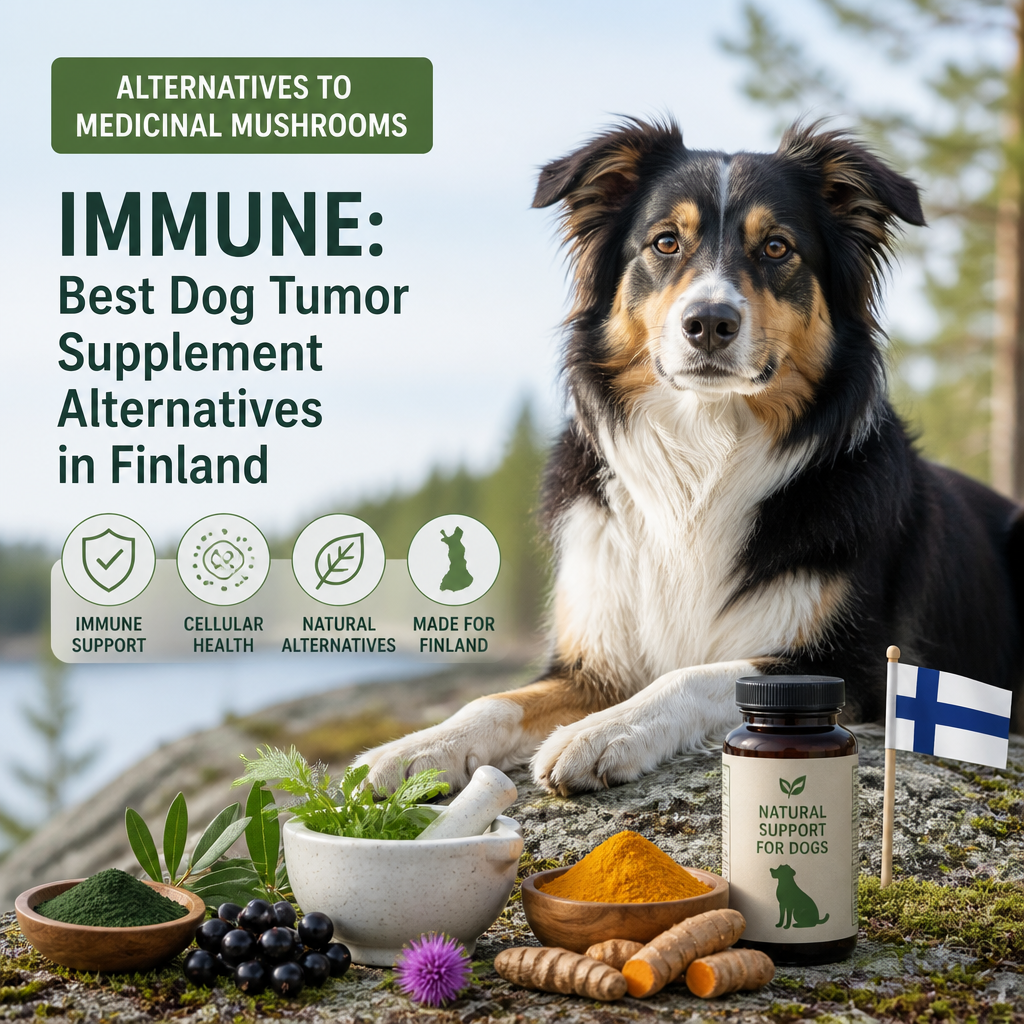
Alternatives to Medicinal Mushrooms / Immune: 7 Best Dog Tumor Supplement Alternatives in Finland
Alternatives to Medicinal mushrooms / immune support can be useful for Finnish dog owners looking for complementary ways to support a dog diagnosed with a tumor. However, no supplement should replace veterinary diagnosis, surgery, chemotherapy, radiation, pain management, or other recommended treatment. The most appropriate dog tumor supplement alternatives depend on the tumor type, treatment plan, age, medications, and overall health of the dog.
Cancer care in dogs is highly individual. A supplement that appears helpful for one dog may be unsuitable for another, especially when liver or kidney function is affected. Before introducing any new product, discuss it with a veterinarian who knows the dog’s medical history. When you are comparing alternatives to Medicinal mushrooms / immune products, the goal is to support comfort, appetite, and daily function without creating avoidable risk.
In Finland, pet owners often want practical options that are easy to source, safe to use, and realistic for long-term care. That is why the best dog tumor supplement alternatives are usually the ones with straightforward ingredients, clear dosing, and a sound reason for being included in the care plan. They should fit into veterinary guidance rather than compete with it.
Table of Contents
- Why consider dog tumor supplement alternatives?
- Omega-3 fatty acids for nutritional support
- Antioxidant support and balanced nutrition
- Probiotics and digestive health
- Joint, mobility, and quality-of-life support
- CBD and herbal products: use extra caution
- Choosing supplements in Finland
- The most important form of support
Why consider dog tumor supplement alternatives?
Medicinal mushrooms are often marketed for immune support because they contain compounds such as beta-glucans and other bioactive substances. Yet product quality, dosage, safety, and clinical evidence can vary considerably. Some dogs may also experience digestive upset or potential interactions with medications. For that reason, many owners begin searching for alternatives to Medicinal mushrooms / immune formulas when they want something more transparent or easier to match with veterinary treatment.
For these reasons, owners may look for dog tumor supplement alternatives that focus on nutrition, inflammation management, digestive health, and maintaining strength during treatment. The goal is not to “cure” cancer with supplements. Instead, carefully selected support may help preserve appetite, body condition, energy, and quality of life when used as part of a veterinary-supervised plan. In that sense, alternatives to Medicinal mushrooms / immune products should be judged by practicality, not marketing promises.
Some products may overlap in purpose, but not all overlap in quality. One supplement may mainly provide fatty acids, another may support digestion, and another may be designed to help with mobility. When owners compare alternatives to Medicinal mushrooms / immune options, the useful question is not “which one sounds strongest?” but “which one best fits this dog right now?”
For more background on broader supplement choices, some readers also compare options such as K9 Immunity / K9 Immunity Plus Alternative: Best Dog Tumor Supplements Finland when researching support products in the region.
Omega-3 fatty acids for nutritional support
Fish oil containing EPA and DHA is one of the most commonly discussed supplements in canine cancer care. These marine omega-3 fatty acids may help support normal inflammatory balance and provide nutritional support during illness. They can be particularly relevant when a dog is losing weight or muscle, although they are not a substitute for adequate calories and protein.
Choose a veterinary-quality product with clearly stated EPA and DHA amounts. Avoid relying only on the total amount of “fish oil,” since the active fatty acid content can differ significantly between products. In Finland, products should be stored according to label instructions, especially during warm periods, because oils can become rancid. This matters even more when you are evaluating alternatives to Medicinal mushrooms / immune products and want to avoid unnecessary digestive upset.
Fish oil is not suitable for every dog. Caution may be needed in dogs with pancreatitis, bleeding disorders, gastrointestinal disease, or those receiving anticoagulant medication. A veterinarian can help determine whether it is appropriate and establish a safe dose. If the dog already takes several medications, it is especially important to review the full plan before adding another item to the routine.
When owners compare dog tumor supplement alternatives, omega-3s are often one of the first supportive options to discuss because they are widely available and easy to measure accurately. They are also among the most familiar alternatives to Medicinal mushrooms / immune blends, because the benefit is easier to explain and the ingredient panel is usually simpler.
Practical use matters too. A dog that refuses capsules may do better with a measured liquid, while a dog with a sensitive stomach may need to start with a lower amount and increase only if tolerated. That kind of step-by-step approach helps make alternatives to Medicinal mushrooms / immune support safer in daily life.
Antioxidant support and balanced nutrition
Dogs undergoing cancer treatment need a complete and balanced diet that supplies adequate energy, protein, vitamins, and minerals. In many cases, improving food intake is more important than adding several supplements. A veterinary nutritionist can recommend an appropriate diet if the dog has lost weight, has difficulty eating, or needs nutritional adjustments because of treatment. This is often the foundation that makes any of the alternatives to Medicinal mushrooms / immune products more useful.
Antioxidant supplements require special care. Some cancer treatments depend partly on oxidative mechanisms, and high-dose antioxidants may interfere with certain therapies. This does not mean that all antioxidants are harmful, but it does mean that concentrated vitamin products should not be added casually. When discussing alternatives to Medicinal mushrooms / immune options, many veterinarians will prioritize food quality before recommending concentrated nutrients.
Nutrients such as vitamin E, selenium, and vitamin C should be used only under professional guidance. Whole-food ingredients may be safer in some situations, but even natural foods can be inappropriate for dogs with kidney disease, diabetes, food allergies, or digestive problems. For example, a diet that is gentle on the stomach may be more important than a supplement that claims broad immune support.
In practical terms, the safest dog tumor supplement alternatives are often the ones that improve daily intake first and add concentrated nutrients only when the veterinarian agrees they fit the treatment plan. This is where alternatives to Medicinal mushrooms / immune formulas can be especially useful: they can shift the focus from vague immune claims to measurable care goals such as appetite, body condition, and stool quality.
Owners should also keep in mind that “natural” does not always mean well tolerated. A product may still cause soft stools, nausea, or changes in appetite. When that happens, the supplement may be more trouble than it is worth, even if it was chosen as one of several alternatives to Medicinal mushrooms / immune products.
What balanced nutrition can do during treatment
Balanced nutrition cannot replace cancer therapy, but it can help the dog feel steadier from day to day. If a dog is eating well, digesting food comfortably, and maintaining strength, treatment may be easier to tolerate. That is why many clinicians see nutrition as one of the most important alternatives to Medicinal mushrooms / immune supplements, especially when the main problem is poor intake rather than a missing ingredient.
Sometimes the best next step is simply to improve palatability, offer smaller meals more often, or choose a more appropriate therapeutic diet. These changes may not sound dramatic, but they are often more helpful than adding a long list of products.
Probiotics and digestive health
Chemotherapy, antibiotics, stress, dietary changes, and reduced appetite can affect a dog’s digestive system. A veterinary probiotic may support normal gut function in selected cases. Healthy digestion can contribute to better nutrient absorption and may make it easier for a dog to maintain regular eating habits. Among alternatives to Medicinal mushrooms / immune products, probiotics are attractive because they are easy to understand and can be used for a clearly defined purpose.
When choosing a probiotic, look for a product designed specifically for dogs, with identifiable strains, clear storage instructions, and quality-control information. Introduce it gradually and monitor for gas, diarrhea, constipation, or worsening appetite. Not every probiotic suits every dog, and a product that helps one pet may do little for another.
Probiotics should not be used as a treatment for tumors. They are best viewed as supportive care, particularly when gastrointestinal symptoms are present or when the veterinarian believes they may benefit the individual dog. In the broader category of alternatives to Medicinal mushrooms / immune formulas, probiotics fill a different role: they target the gut rather than making broad claims about cancer support.
If the dog is taking antibiotics or recovering from a bout of stomach upset, the timing of the probiotic may matter. Some products are best given at a different time from medication, while others are designed for easier routine use. That is another reason to review label instructions carefully.
For owners who want more than a single “immune” promise, digestive support can be one of the most practical alternatives to Medicinal mushrooms / immune supplements because it addresses a real-life issue that often affects quality of life: whether the dog can actually eat and absorb food well.
Joint, mobility, and quality-of-life support
Some dogs with tumors experience reduced mobility because of pain, weakness, surgery, or inflammation. Supplements containing ingredients such as glucosamine, chondroitin, or green-lipped mussel are sometimes used to support joints. These products may be relevant when a dog has both cancer and age-related osteoarthritis. In that situation, the best alternatives to Medicinal mushrooms / immune products may be the ones that improve movement and comfort rather than chasing an immune target.
Green-lipped mussel products can contain omega-3 fatty acids and other marine nutrients, but quality varies. Dogs with seafood allergies may need an alternative. Joint supplements also take time to show potential benefits and should not delay appropriate pain relief. If a dog is already struggling to rise, walk, or use stairs, veterinary pain management should remain the priority.
In Finland’s cold and icy seasons, maintaining mobility may require more than a supplement. Warm bedding, non-slip flooring, shorter walks, protective clothing for sensitive dogs, and carefully managed exercise can make everyday life safer and more comfortable. These supportive changes often matter as much as the supplement itself.
If your dog already uses a mobility product, it can be helpful to review whether it overlaps with other dog tumor supplement alternatives or whether it adds a genuinely different benefit. A supplement stack can become confusing quickly, and not every item deserves a place in the routine.
For many owners, mobility support becomes one of the most meaningful alternatives to Medicinal mushrooms / immune products because it helps the dog participate in normal life: getting up, going outside, and resting more comfortably.
Signs mobility support may be worth discussing
If your dog hesitates before standing, slips on smooth floors, tires quickly on walks, or seems uncomfortable after activity, bring those observations to the veterinarian. Those signs may point to pain, weakness, or joint degeneration. In these cases, alternatives to Medicinal mushrooms / immune supplements should be part of a larger comfort strategy, not the only intervention.
CBD and herbal products: use extra caution
CBD products and herbal formulas are increasingly marketed for dogs with serious illnesses. Evidence regarding their benefits for canine tumors remains limited, and product quality can vary. Some preparations may contain inaccurate concentrations, contaminants, or ingredients that are unsafe for dogs. This is one area where alternatives to Medicinal mushrooms / immune products can become confusing, because some brands overstate the evidence behind their formulas.
CBD may affect liver enzymes and could interact with chemotherapy, pain medication, sedatives, or other drugs. Herbal ingredients can also influence blood clotting, blood pressure, or immune activity. “Natural” does not automatically mean safe, particularly for a dog receiving cancer treatment.
Owners should provide the veterinarian with the complete ingredient list, product concentration, and intended dose before using any CBD or herbal product. Avoid products that make claims to shrink tumors, replace conventional treatment, or guarantee a cure. If a product sounds too good to be true, it usually does not belong on a list of sensible alternatives to Medicinal mushrooms / immune support.
For an evidence-based reference on cannabidiol and safety considerations, the National Center for Biotechnology Information review on CBD in veterinary medicine is a useful starting point.
Because the evidence is still developing, CBD should not be treated as a default option. It may have a place in some care plans, but it should be considered carefully and with full disclosure to the veterinary team.
Choosing supplements in Finland
When comparing dog tumor supplement alternatives in Finland, select products from reputable manufacturers that provide transparent labeling and batch information. Look for clear ingredient quantities rather than vague claims such as “immune blend” or “detox formula.” Veterinary clinics and licensed pharmacies may offer more reliable guidance than unverified online sellers.
Finnish and European regulations can help establish labeling standards, but they do not guarantee that every supplement is appropriate for a particular dog. Check whether the product is intended for dogs, whether it contains xylitol or other toxic ingredients, and whether storage requirements can be followed throughout delivery and use. These checks are especially important when evaluating alternatives to Medicinal mushrooms / immune formulas from unfamiliar brands.
It is also helpful to introduce only one new product at a time. This makes it easier to identify side effects and prevents unnecessary combinations. Keep a written record of the product, dose, start date, appetite, stool quality, energy, and any changes in symptoms. If a dog seems better after one supplement and worse after another, you will want to know which one was responsible.
Owners who want to compare regional supplement approaches can also review K9 Immunity Alternative: 7 Best Affordable Dog Tumor Supplements in Norway as another example of how product positioning and ingredient transparency can differ by market.
Questions to ask before buying
Ask who manufactures the product, where it is made, how the active ingredients are measured, and whether the company provides batch testing. Also ask whether the product is appropriate for dogs taking medication or receiving treatment for cancer. A thoughtful buyer is less likely to end up with a supplement that sounds impressive but does little in practice.
These questions are useful because the label alone does not tell the whole story. Two products can look similar on paper while differing greatly in quality, digestibility, and safety.
Practical checklist before starting any supplement
Before adding any new product, ask whether the dog is currently eating well, whether a supplement could interact with medication, and whether the ingredient list is clear enough to verify dosing. For many dogs, the simplest plan is the safest plan.
- Confirm the diagnosis and treatment plan with your veterinarian.
- Check for liver, kidney, or pancreatic disease before starting supplements.
- Use products made for dogs, not human formulas with added sweeteners or fillers.
- Start one product at a time and watch for changes in appetite, stool, or energy.
- Stop the supplement and contact your vet if vomiting, diarrhea, or weakness appears.
This checklist can help owners narrow down dog tumor supplement alternatives without creating unnecessary risk. It also helps separate practical support from products that are mostly marketing.
When the goal is to improve quality of life, it is usually better to choose a few carefully selected items than to stack many products together. That approach makes it easier to see what truly helps.
How to think about the best support for your dog
The best support strategy is the one that matches the dog’s current needs. For one dog, that may mean omega-3 fatty acids. For another, it may mean a probiotic, a more suitable diet, or mobility support. What matters is whether the choice is reasonable for the diagnosis, the medication plan, and the dog’s comfort level.
Alternatives to Medicinal mushrooms / immune products work best when they are evaluated like any other part of care: by safety, clarity, and usefulness. They should have a clear purpose, a sensible dose, and a realistic expectation. If a product promises much more than that, it is probably not the right option.
It is also wise to remember that dogs with cancer may have changing needs over time. A supplement that made sense early in treatment may no longer be appropriate later if appetite changes, lab values shift, or medications are adjusted. Reviewing the plan regularly keeps support aligned with the dog’s condition.
The most important form of support
The strongest foundation for a dog with cancer is a coordinated veterinary care plan. Regular examinations, laboratory testing, imaging when needed, pain control, dental care, hydration, and nutritional monitoring can have a greater effect on well-being than any single supplement.
Owners should contact a veterinarian promptly if the dog stops eating, vomits repeatedly, develops persistent diarrhea, has difficulty breathing, becomes unusually weak, shows uncontrolled pain, or experiences rapid changes in behavior. These signs may require immediate treatment and should not be managed with supplements alone.
The best dog tumor supplement alternatives are therefore those chosen cautiously, based on evidence, and matched to the dog’s specific needs. Nutritional support, omega-3 fatty acids, digestive care, and mobility assistance may have a place in a broader plan, but safety and quality of life should always come first.
For Finnish dog owners, the right choice is usually not the most aggressive supplement claim. It is the most sensible support that fits the diagnosis, the current treatment plan, and the dog’s daily comfort. When in doubt, keep the focus on veterinary care, transparent labeling, and products that truly support the dog rather than the marketing message.
In that sense, alternatives to Medicinal mushrooms / immune products are not about replacing medical care. They are about selecting careful, evidence-informed support that can fit into a well-managed cancer plan. When those choices are made thoughtfully, they can complement treatment without distracting from it.
For many families, the best result is a dog that can still eat, rest, move, and enjoy familiar routines. That practical outcome is often more meaningful than any broad promise of immune boosting.
Choosing alternatives to Medicinal mushrooms / immune support wisely
When you compare alternatives to Medicinal mushrooms / immune support, the most important step is to stay focused on the dog in front of you. A product that sounds impressive may not help if the dog cannot tolerate it, if it conflicts with medication, or if it adds complexity without a clear benefit. The safest path is to match the supplement to a specific need and keep the plan simple enough to monitor.
That approach also makes it easier to notice improvement. If appetite, energy, mobility, or stool quality changes after adding one item, you will know whether the product is actually contributing something useful. If nothing changes, you can reassess with your veterinarian instead of continuing a supplement out of habit. In practical terms, that is how alternatives to Medicinal mushrooms / immune products become part of thoughtful care rather than guesswork.
Most importantly, the right support should work alongside veterinary treatment, not around it. When supplements are chosen carefully and used with a clear purpose, they can provide a modest but meaningful layer of comfort for dogs with tumors.