
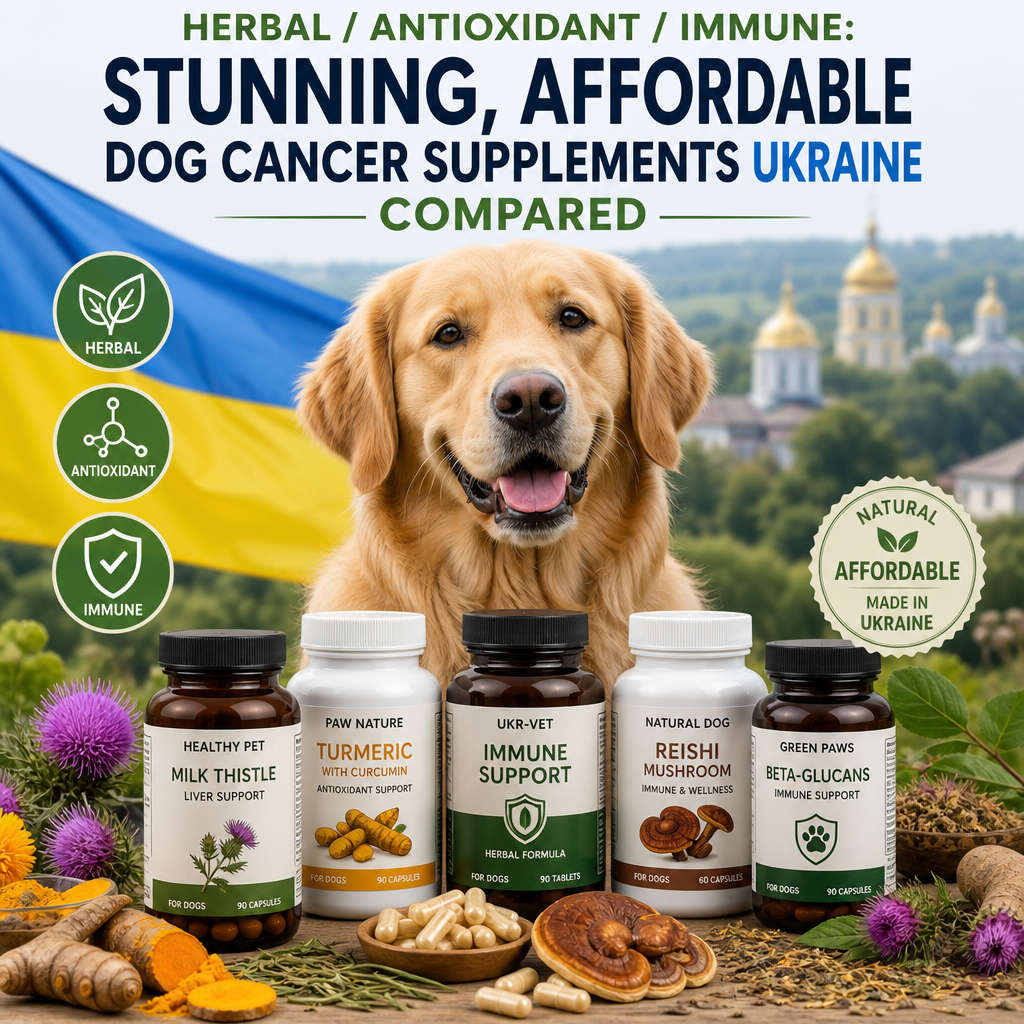
Herbal / antioxidant / immune support can play a useful complementary role in a dog’s cancer-care plan, particularly when chosen carefully and used under veterinary supervision. For Ukrainian pet owners comparing dog cancer supplements Ukraine options, the most important factors are not impressive packaging or broad promises, but ingredient quality, safety, evidence, availability, and compatibility with surgery, chemotherapy, radiation, or palliative care.
A supplement cannot cure cancer, replace a veterinary oncologist, or guarantee a particular outcome. However, some products may help support appetite, digestion, normal immune function, antioxidant defenses, mobility, or general wellbeing. The right choice depends on the dog’s diagnosis, treatment plan, age, organ health, and current medications.
目錄
Understanding dog tumor support Ukraine options
The phrase dog tumor support Ukraine covers a wide range of products. These may include herbal extracts, medicinal mushrooms, omega-3 fatty acids, vitamins, minerals, digestive support formulas, and veterinary nutritional products. Some are sold through veterinary clinics, while others are available from pet pharmacies, online retailers, or general supplement stores.
Before purchasing, owners should identify the intended purpose of the product. A supplement designed to support appetite is different from one marketed for joint comfort or immune health. Combining several products without professional guidance can create unnecessary risks, especially if multiple formulas contain the same herbs, vitamins, or minerals.
A veterinarian should also review whether the product is appropriate for the type of tumor involved. A dog with lymphoma, for example, may have different nutritional and treatment considerations from a dog with a mast cell tumor or a bone tumor. Kidney, liver, and gastrointestinal conditions can also affect which ingredients are safe.
For broader background on integrative care, many owners also find it helpful to review 為癌症寵物提供的草藥支持, which explains how natural products can fit into a veterinary plan without replacing proven treatment.
Herbal support: benefits and cautions
Herbal products are among the most popular choices in the herbal / antioxidant / immune category. Common ingredients may include turmeric or curcumin, milk thistle, medicinal mushrooms, green tea compounds, boswellia, ginger, or plant-based polysaccharides.
Some of these ingredients have shown antioxidant, anti-inflammatory, or immune-related activity in laboratory studies. That does not automatically mean they treat cancer in living dogs. Laboratory findings may involve concentrations that are not practical or safe to administer, and results in cells or animals do not always translate into proven clinical benefits.
Turmeric, for example, is often selected for its curcumin content, but absorption can be limited. Products may combine curcumin with oils or other compounds to improve bioavailability. These combinations can affect medication metabolism or blood clotting, so veterinary approval is particularly important before surgery or when a dog is receiving drugs.
Milk thistle is commonly considered for liver support, although its suitability depends on the dog’s condition and other medicines. Medicinal mushrooms are also widely marketed for immune support, but product quality can vary considerably. Look for clearly listed mushroom species, standardized ingredients, batch information, and testing for contaminants.
Owners who want to compare practical product categories can also review herbal remedies for dogs with tumors for a clearer look at gentle supportive options.
Herbal / antioxidant / immune choices that deserve extra scrutiny
Because the market is crowded, it helps to slow down and compare ingredients one by one. In the Herbal / antioxidant / immune category, the best choices are usually the ones that state exactly what they contain, why the formula exists, and how it should be used. That clarity matters more than flashy labels or dramatic claims.
Look for formulas that explain whether they are intended for general wellness, digestive support, liver support, or immune support. When a product tries to do everything at once, it may end up doing very little well. Simple formulas are often easier to review with a veterinarian and easier to stop if a side effect appears.
If you are unsure how a product fits into the bigger picture, ask whether it adds something meaningful beyond diet alone. In many cases, that question helps separate a useful supportive item from an expensive marketing bundle. The best Herbal / antioxidant / immune products tend to have a clear purpose and a transparent ingredient list.
For owners who want to understand why antioxidants are discussed so often in cancer care, the National Cancer Institute’s overview of dietary supplements and cancer treatment interactions 是一個有用的教育參考資料。.
Antioxidants and cancer treatment
Antioxidants are often included in dog cancer supplements Ukraine products because they help protect cells from oxidative stress. Vitamins C and E, selenium, carotenoids, and plant compounds may all be described as antioxidants.
The subject is more complex during cancer treatment. Some chemotherapy and radiation protocols work partly through oxidative mechanisms, meaning high-dose antioxidant supplementation could theoretically interfere with treatment in certain situations. Research is still developing, and the effect may depend on the antioxidant, dose, timing, and specific therapy.
For this reason, owners should not begin a concentrated antioxidant formula immediately after a cancer diagnosis without discussing it with the treating veterinarian. A balanced complete diet may already provide adequate levels of many nutrients. In some cases, a carefully selected supplement may be reasonable; in others, adding extra antioxidants may offer little benefit or create complications.
If a product is advertised as a broad immune enhancer, it is worth checking whether the formula has any overlap with existing nutritional support. The goal is not to stack every possible ingredient, but to keep the dog’s overall plan simple, safe, and appropriate for the stage of care.
Why timing matters with an antioxidant formula
Timing is often as important as the ingredient itself. A supplement that seems harmless during recovery may not be appropriate during chemotherapy sessions or immediately before surgery. That is why any Herbal / antioxidant / immune plan should be reviewed alongside the dog’s active treatment calendar.
Veterinary teams may ask owners to pause certain products before procedures, especially if a formula could affect bleeding, sedation, or digestion. Even when an ingredient is considered gentle, the combined effect of several supplements can still create avoidable risk. Careful timing keeps the support plan practical and safer.
In many cases, the safest approach is to keep the plan focused. One carefully chosen supplement may be enough if it matches the dog’s current needs. A second Herbal / antioxidant / immune product should only be added when there is a clear reason and the veterinarian agrees.
Immune support without overstimulation
Immune-support products are frequently promoted for dogs with cancer. Ingredients such as beta-glucans, medicinal mushrooms, zinc, probiotics, and selected herbs may be used to support normal immune function.
Supporting normal immunity is not the same as stimulating the immune system indiscriminately. A dog may have inflammation, an autoimmune condition, infection, or treatment-related immune suppression. An ingredient that is appropriate in one situation may be unsuitable in another.
Probiotics can be helpful for some dogs experiencing digestive upset, especially when stress, dietary changes, or medication affect the intestinal tract. However, severely ill or immunocompromised dogs require additional caution. The product should be formulated for veterinary use, stored correctly, and introduced gradually.
For a broader look at how immune health relates to cancer risk and inflammation, see the 狗狗免疫系統指引:有益的癌症風險、炎症. It provides useful context for owners who want to understand why immune balance matters so much.
Support the immune system with balance, not hype
Many owners search for Herbal / antioxidant / immune solutions because they want to do something proactive. That instinct is understandable, but balance matters more than volume. A dog does not benefit from every immune product on the shelf; it benefits from the right one, used at the right time, at the right dose.
A thoughtful plan usually focuses on one or two goals, such as digestive stability, appetite support, or immune balance. When the plan stays focused, it becomes easier to measure whether the product is actually helping. This is especially important for older dogs or dogs already taking prescription medication.
Owners often ask whether one formula is better than several smaller products. In practice, the answer depends on the dog and the veterinary plan, but the simplest useful option is often best. That is especially true when a Herbal / antioxidant / immune product is being added during active cancer care.
How to compare products in Ukraine
When evaluating dog tumor support Ukraine products, examine the label carefully. A reliable product should identify each active ingredient and provide an amount per serving. Vague phrases such as “proprietary blend” make it difficult to assess the actual dose.
Also check the manufacturer, expiration date, storage instructions, country of production, and quality-control information. Products intended for animals should clearly state the species and recommended serving guidance. Third-party testing for heavy metals, pesticides, bacteria, and other contaminants is an important advantage, particularly for herbal products.
Price is another consideration, but the cheapest product is not always the most affordable in practice. A concentrated, tested formula may cost more per package while requiring a smaller daily amount. Conversely, a product with a very low price may contain minimal active ingredients or lack useful quality documentation.
Pet owners in Ukraine should purchase from reputable veterinary pharmacies, established clinics, or distributors that can provide traceability. Be cautious with imported products that have unclear labeling, inconsistent packaging, or claims that sound too good to be true.
When product lines are not available locally, some owners compare similar veterinary options in other countries to better understand ingredient standards. For example, the 藥用蘑菇 / 獸醫真菌療法的替代品:瑞士 7 款最佳狗腫瘤補充劑 article shows how careful product comparison can be approached in a different market.
What to compare before you buy
- Active ingredients and exact amounts per serving
- Purpose of the formula and whether it matches the dog’s needs
- Manufacturing quality, testing, and traceability
- Potential overlap with food, medications, or other supplements
- Whether the product is easy to stop if problems appear
These five checks keep the Herbal / antioxidant / immune search process practical. They also help owners avoid buying multiple overlapping products that sound helpful but do not improve the care plan.
It is also worth checking whether any product has a clear reason for being used in a canine oncology plan. If the label cannot explain its purpose in simple language, the product may not be the best fit for a thoughtful supportive routine.
Safe use alongside cancer care
Introduce only one new supplement at a time whenever possible. This makes it easier to identify side effects such as vomiting, diarrhea, itching, lethargy, or appetite changes. Keep a written record of the product, dose, start date, and any changes in the dog’s condition.
Tell every veterinarian involved in the dog’s care about all supplements being used. This includes herbal teas, oils, powders, chewable products, and human supplements. Some ingredients may increase bleeding risk, affect blood pressure, alter liver enzyme activity, or change the absorption of prescription medicines.
Avoid human products containing xylitol, excessive vitamin D, iron, caffeine, alcohol, or other ingredients that can be dangerous to dogs. Do not assume that a natural product is automatically safe. Natural substances can have powerful biological effects and may be harmful at the wrong dose.
It can also help to compare supportive formulas with more general nutrition-focused resources such as Baituxiao 有助於整體狗狗支持免疫健康, especially when the goal is to understand a product’s role rather than its marketing claims.
When to stop a supplement
If your dog develops vomiting, diarrhea, tremors, unusual bruising, marked fatigue, or a sudden change in appetite after starting a new product, stop it and contact the veterinary team. Even a well-known Herbal / antioxidant / immune formula can be a poor fit for an individual dog.
Stopping early is often safer than trying to “push through” a reaction. A good supplement should make the plan easier, not create new complications. This mindset is especially important for dogs already coping with pain, nausea, or treatment side effects.
When in doubt, pause the product and ask the veterinarian to review the ingredient list. That simple step can prevent interactions and can help the care team decide whether the formula should be removed, replaced, or restarted later.
Choosing a practical support plan
The strongest foundation for a dog with cancer remains appropriate veterinary treatment, adequate calories, hydration, pain control, emotional comfort, and regular monitoring. Supplements should support that plan rather than distract from it.
A practical approach is to define one clear goal, select a transparent veterinary product, confirm compatibility with current treatment, and reassess after a reasonable period. If the dog’s appetite, stool quality, energy, or comfort worsens, stop the product and contact the veterinary team.
For owners comparing dog cancer supplements Ukraine choices, careful research is more valuable than dramatic claims. Herbal, antioxidant, and immune products may have a place in individualized supportive care, but their quality and suitability differ widely. With professional guidance and realistic expectations, a carefully chosen supplement can become one small part of a broader plan focused on comfort, nutrition, and the best possible quality of life.
In the end, the best results usually come from steady, sensible decisions rather than aggressive stacking of many products. A thoughtful Herbal / antioxidant / immune strategy may help support day-to-day comfort, but it works best when matched to the dog’s diagnosis, monitored closely, and kept aligned with veterinary oncology advice.