
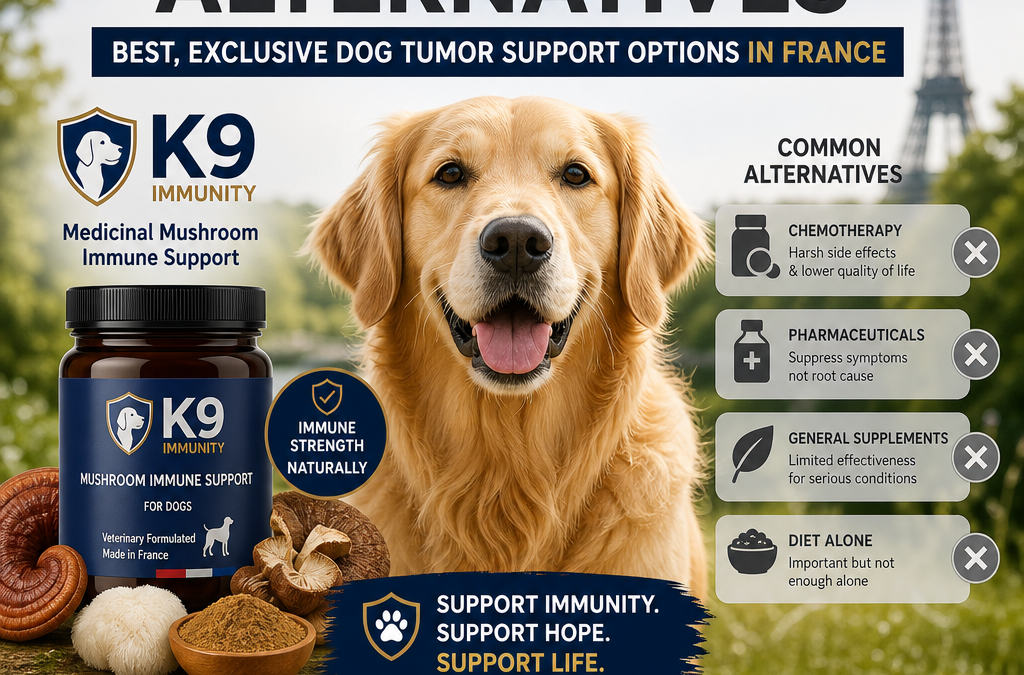
K9 Immunity vs Alternatives is an important comparison for owners exploring supportive care for a dog with cancer or another serious tumor-related condition. In France, families may encounter medicinal mushroom extracts, veterinary supplements, nutritional protocols, and complementary therapies promoted as immune support. These products can sometimes play a role alongside veterinary treatment, but they are not interchangeable, and none should replace diagnosis, surgery, chemotherapy, radiotherapy, or other evidence-based care recommended by a veterinarian.
For readers comparing options in a broader supplement landscape, it can also help to review related approaches such as alternatives to medicinal mushrooms / veterinary mycotherapy, especially when ingredient quality, dosing, and treatment compatibility matter.
Understanding dog tumor support options
“Tumor support” can refer to several different goals. Some owners are looking for help maintaining appetite and body weight, while others want to support normal immune function, energy, digestion, or recovery during treatment. A responsible plan begins by identifying the dog’s actual needs rather than choosing a supplement based only on marketing claims.
Veterinary support may include:
– Pain and nausea management
– Nutritional support and appetite assistance
– Treatment of infections or inflammation
– Surgery, chemotherapy, radiotherapy, or targeted treatment
– Monitoring of bloodwork and organ function
– Carefully selected complementary supplements
The appropriate approach depends on the tumor type, its location, stage, treatment plan, and the dog’s age and overall health. A supplement that is tolerated by one dog may be unsuitable for another, particularly when liver disease, kidney disease, bleeding risk, or medication interactions are involved.
Many owners search for a simple answer, but dog tumor care is rarely simple. A dog with mild digestive upset may need a very different plan from a dog that is losing muscle mass, and both may differ again from a dog preparing for surgery. This is why K9 Immunity vs alternatives should be viewed through the lens of the dog’s current medical priorities, not as a one-size-fits-all decision.
In practice, the most useful support options often address the most immediate problem first. If a dog is nauseated, controlling nausea may matter more than adding another supplement. If appetite is low, getting enough calories may matter more than choosing between two immune products. This sequence helps owners avoid piling on products that sound helpful but do not meet the dog’s real needs.
When owners review K9 Immunity vs alternatives, they should also ask whether the plan supports comfort, stability, and monitoring. A measured approach is usually better than making several changes at once, because it becomes easier to see what is actually helping.
K9 Immunity vs Alternatives: what is being compared?
K9 Immunity is commonly discussed as a canine immune-support product associated with medicinal mushroom ingredients and other nutritional compounds. The exact formulation, dosage, manufacturing standards, and availability may vary by market, so owners should check the current product label and consult a veterinary professional before use.
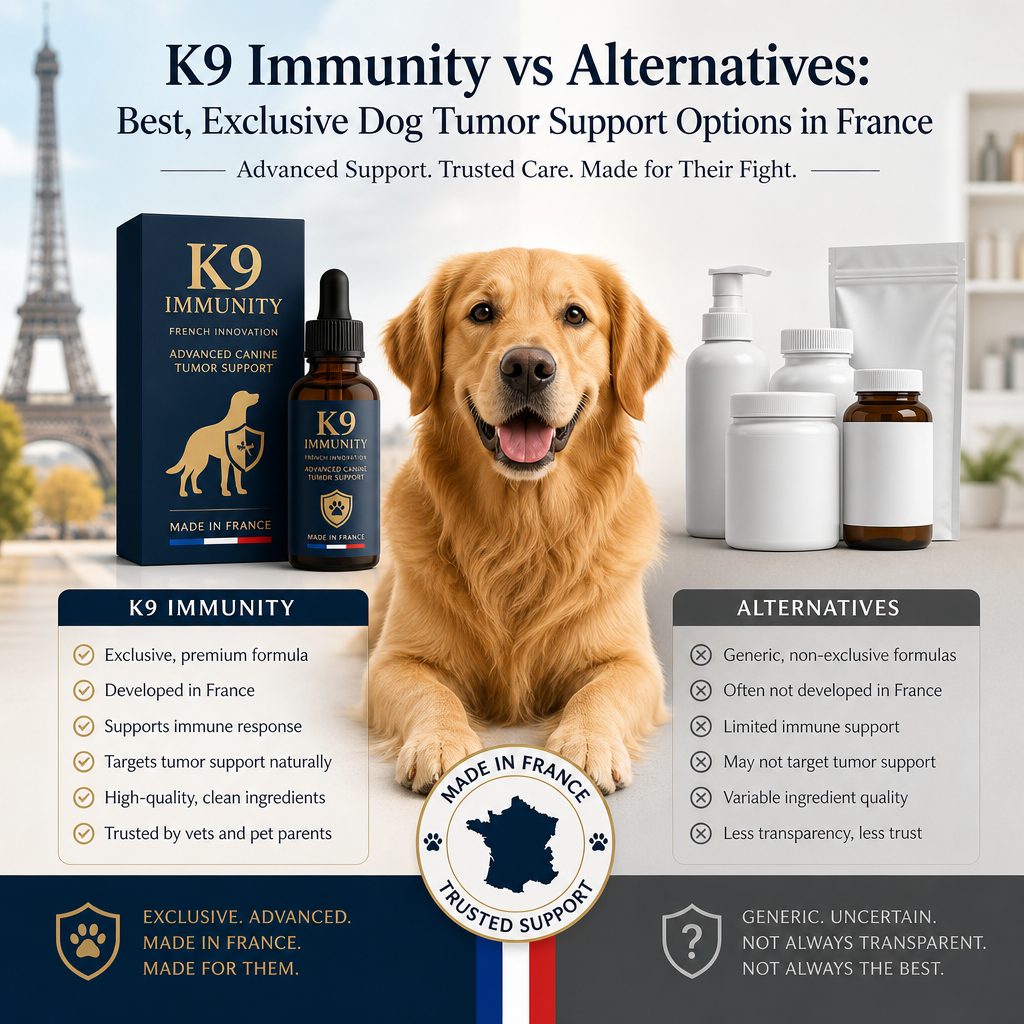
When comparing K9 Immunity vs alternatives, it is useful to examine five factors:
1. 成分透明度: 活性成分和數量是否清楚列出?
2. Product quality: Is there evidence of consistent manufacturing, testing, and contamination control?
3. 獸醫相容性: Could the formula interact with prescribed medication or affect surgery and chemotherapy?
4. Practical suitability: Can the dog tolerate the product, and is the dosage realistic?
5. Evidence and expectations: Does the product make reasonable support claims rather than promising to cure cancer?
The strongest choice is not necessarily the most expensive or the most heavily advertised. It is the option that fits the dog’s veterinary plan, has clear labeling, and can be monitored safely.
Owners in France often compare commercial immune-support products against a more conservative approach: using only what is needed, when it is needed, and with enough information to judge whether it is helping. That approach can be especially important when a dog is already taking multiple medications or undergoing active treatment.
When K9 Immunity vs alternatives is discussed online, the conversation can sound more decisive than the science really is. A supplement may be popular, but popularity is not proof of benefit. Likewise, a lower-cost product is not automatically inferior if it is transparent, well tolerated, and appropriate for the dog’s condition.
It is also worth remembering that K9 Immunity vs alternatives is not only a debate about ingredients. It is also about whether the owner can realistically track response, side effects, and compatibility with the rest of the care plan. That practical question often matters more than the branding.
Medicinal mushroom / immune support
Medicinal mushroom / immune support products often contain extracts from mushrooms such as turkey tail, reishi, maitake, shiitake, or cordyceps. These mushrooms contain compounds, including beta-glucans, that have attracted scientific interest because of their potential effects on immune signaling and inflammation.
However, laboratory findings do not automatically prove that a supplement will shrink a tumor or extend a dog’s life. Research in veterinary oncology is still developing, and studies may involve specific extracts, doses, or tumor types that do not apply to every commercial product. Whole mushroom powders, concentrated extracts, and blended formulas can have very different chemical profiles.
Owners should also be cautious with products that use broad claims such as “boosts immunity” or “kills cancer cells.” The immune system is complex, and stimulating immune activity is not always appropriate. Dogs receiving immunomodulating drugs, corticosteroids, chemotherapy, or other treatments require individualized advice.
A practical way to evaluate this category is to ask whether the product tells you exactly what it contains and why those ingredients were chosen. If the label is vague, the support claim is broad, or the company cannot explain quality control, the product deserves skepticism. That is true even when the product is presented as a natural option.
Some owners are drawn to mushroom-based formulas because they seem holistic and familiar. But “natural” products can still vary widely in purity, strength, and safety. In the context of K9 Immunity vs alternatives, the difference may come down less to the source of the ingredient and more to how well the product is manufactured, dosed, and matched to the dog’s treatment plan.
For evidence-informed readers, an educational starting point is the National Center for Complementary and Integrative Health’s overview of medicinal mushrooms, which explains that research is still evolving and that safety and interaction questions remain important: Medicinal Mushrooms: What You Need To Know.
For some dogs, the phrase K9 Immunity vs alternatives can be simplified further: the question is whether a mushroom-based product adds anything meaningful beyond a carefully monitored treatment plan. If the answer is unclear, conservative support may be the better choice.
Comparing supplements with nutritional support
One alternative to a mushroom-based product is a veterinary nutrition plan. Nutrition does not treat cancer directly, but maintaining adequate calories, protein, hydration, and essential nutrients can be valuable during illness. Some dogs experience appetite loss, vomiting, diarrhea, difficulty chewing, or increased metabolic demands. In these cases, a complete and palatable diet may provide more practical benefit than adding several untested supplements.
Veterinary nutritionists can help select food based on the dog’s condition. The plan may include a therapeutic diet, calorie-dense meals, feeding adjustments, or appetite support prescribed by a veterinarian. Homemade diets should not be improvised, because nutritional imbalances can develop quickly, especially when a dog is already ill.
This is one of the most important points in any K9 Immunity vs alternatives comparison: a product that sounds specialized may still be less useful than a well-built nutrition strategy. If the dog is losing weight, refusing food, or struggling to digest meals, then feeding support often deserves priority.
Owners can also monitor changes more easily with nutrition than with many supplements. Appetite, stool quality, weight, and energy provide practical clues about whether the plan is working. That feedback can help veterinarians adjust the diet faster and more safely than trial-and-error supplement stacking.
In some cases, nutritional support may also include omega-3 fatty acids or highly digestible diets if the veterinarian thinks those additions are appropriate. Even then, the focus should remain on tolerance, consistency, and the dog’s overall treatment goals rather than on the number of products used.
When evaluating K9 Immunity vs alternatives, nutrition is often the baseline against which every other support option should be judged. If the dog’s food intake is poor, no supplement can compensate for inadequate calories for long.
Herbal and antioxidant alternatives
Herbal products, omega-3 fatty acids, probiotics, and antioxidant formulas are also marketed among dog tumor support options. Some may help address specific concerns, such as gastrointestinal function or dietary support, but they should be evaluated individually.
Antioxidants deserve particular care during chemotherapy or radiotherapy. Although oxidative stress can contribute to cellular damage, some cancer treatments rely partly on oxidative mechanisms. This does not mean antioxidants are always inappropriate; it means timing, dose, and treatment type matter. The veterinary oncologist should approve any supplement used during active treatment.
Herbal products can also affect blood clotting, blood pressure, sedation, liver enzymes, or drug metabolism. “Natural” does not mean risk-free, and products intended for humans may contain ingredients or concentrations unsuitable for dogs.
When comparing K9 Immunity vs alternatives in this category, the key question is whether the product addresses a real need. For example, a probiotic may be useful if a dog has digestive upset, while a calming herbal blend may be irrelevant or even unhelpful if the dog’s main issue is poor appetite. Matching the product to the symptom is more meaningful than using a broad “immune” label as the deciding factor.
It is also wise to avoid combining multiple products that overlap in ingredients. Stacking several formulas can accidentally increase the dose of the same herb or antioxidant, making side effects harder to identify. A simple plan is easier to review, easier to stop if needed, and easier for the veterinary team to evaluate.
Some owners ask whether a human supplement can be adapted for a dog. The safe answer is usually no unless a veterinarian specifically approves it. Human products may differ in sweeteners, flavorings, dosing, and inactive ingredients that are not appropriate for pets.
That is why K9 Immunity vs alternatives should not be reduced to a single “best supplement” claim. The better question is which option is least risky and most useful for the dog’s current symptoms, medications, and treatment phase.
Additional options worth discussing with your veterinarian
Beyond mushroom-based formulas and general immune blends, several other dog tumor support options may be considered in France depending on the case. These should always be selected with veterinary guidance, because the right choice depends on the diagnosis, treatment stage, and the dog’s tolerance.
Possible discussions may include:
- 食慾支持: helpful when nausea or early satiety reduces food intake
- 消化支持: useful if treatment affects stool quality or gut comfort
- Weight-maintenance strategies: important for dogs losing muscle mass
- Pain-control adjustments: often more valuable than adding a new supplement
- 水分補充: may improve comfort and recovery in select cases
- Prescription oncology support: when the veterinarian recommends a specific medical product rather than a general supplement
These choices can be more practical than chasing a single product promise. In many cases, K9 Immunity vs alternatives becomes less about a brand-name supplement and more about deciding whether the dog needs symptom relief, nutrition help, or a carefully supervised adjunct to treatment.
Owners sometimes overlook the value of reassessment. A support option that made sense at diagnosis may no longer be the best fit after surgery, after a treatment cycle, or if the dog’s appetite changes. Rechecking the plan keeps care aligned with the dog’s current needs.
Safety and regulatory considerations in France
In France, owners should distinguish between a complementary feed, a nutritional supplement, and a veterinary medicinal product. These categories may have different requirements for labeling, approved claims, quality control, and veterinary oversight. A product sold online may not meet the same standards as one distributed through a regulated veterinary channel.
在購買之前,請檢查:
– The full ingredient list and quantities
– Batch or lot information
– Manufacturer contact details
– Expiration date and storage instructions
– Recommended canine dosage
– Warnings and contraindications
– Whether the product is intended for dogs rather than humans
– Independent quality testing, where available
Be particularly cautious with imported products, unclear dosage instructions, exaggerated testimonials, and promises of guaranteed tumor reduction. Discuss the product with a French veterinarian, veterinary oncologist, or veterinary pharmacist who understands the dog’s diagnosis and current medications.
It is also important to consider the timing of supplements around procedures. Some ingredients can influence clotting or anesthesia risk, while others may affect liver metabolism. If surgery is planned, the veterinary team should know about every supplement well before the procedure date.
Owners who are comparing K9 Immunity vs alternatives often benefit from a simple safety checklist: what is in the product, why is it being used, how will we know if it helps, and what side effects should trigger a stop? Those questions keep the conversation grounded in the dog’s welfare rather than in marketing language.
For practical guidance on product quality and pet supplement labeling, the U.S. Food and Drug Administration’s animal health pages are also useful background reading, especially when evaluating claims and ingredient transparency: FDA Animal & Veterinary.
In real-world care, K9 Immunity vs alternatives may also depend on availability and continuity. If a product is hard to source consistently, it can be difficult to assess whether the dog is responding well or simply experiencing fluctuations from inconsistent use.
How to make a responsible choice
A useful comparison starts with the dog’s treatment goals. For example, a dog struggling to maintain weight may need nutritional intervention, while a dog experiencing treatment-related nausea may benefit more from prescribed anti-nausea medication and hydration support. A mushroom extract may be considered only after these immediate needs are addressed.
Introduce only one new supplement at a time, unless the veterinarian provides a different plan. Keep a written record of the product, dose, start date, appetite, stool quality, energy, and any changes in medication. Stop the supplement and contact the veterinary team if the dog develops vomiting, diarrhea, facial swelling, breathing difficulty, unusual bleeding, marked lethargy, or worsening appetite.
If your veterinarian approves a supplement trial, set a review date in advance. That way, the decision is based on observed changes rather than hopes alone. A clear review point also makes it easier to discontinue products that are not helping.
Owners may find it helpful to define success before starting anything new. Success might mean better appetite, steadier weight, improved stool quality, or simply no negative interactions with treatment. These are realistic goals, and they make it easier to judge whether an option belongs in the care plan.
Ultimately, K9 Immunity vs alternatives is not a contest with one universal winner. The best dog tumor support options are those supported by transparent information, appropriate veterinary supervision, and realistic expectations. Complementary care can help improve comfort and quality of life for some dogs, but it should remain part of an integrated medical plan rather than a substitute for professional cancer treatment.
For many French dog owners, the smartest next step is a discussion with the veterinary team about whether a supplement is needed at all. In some cases, the right answer will be a carefully selected product; in others, it will be dietary support, symptom control, or simply close monitoring. That is why K9 Immunity vs alternatives should always be decided in the context of the whole case, not just the label on the bottle.
In summary, K9 Immunity vs alternatives should be treated as a careful medical decision rather than a brand comparison. The safest path is the one that supports the dog’s comfort, fits the treatment plan, and stays flexible as needs change. Before choosing, ask whether K9 Immunity vs alternatives is truly the best fit for the dog’s current condition, or whether a simpler, better-supported approach would serve the dog more effectively.