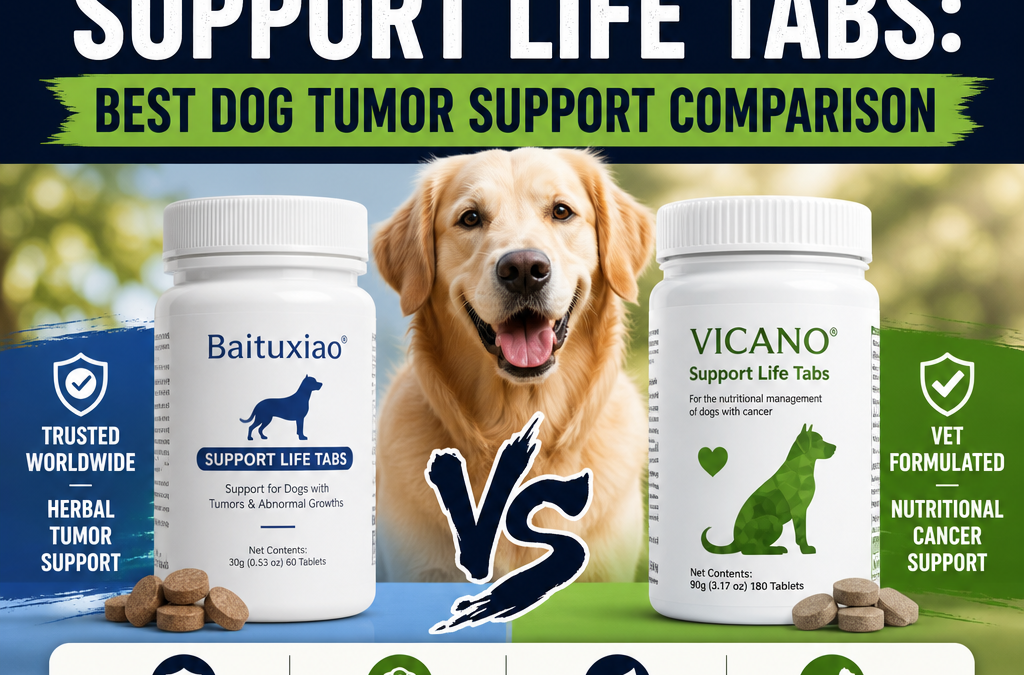
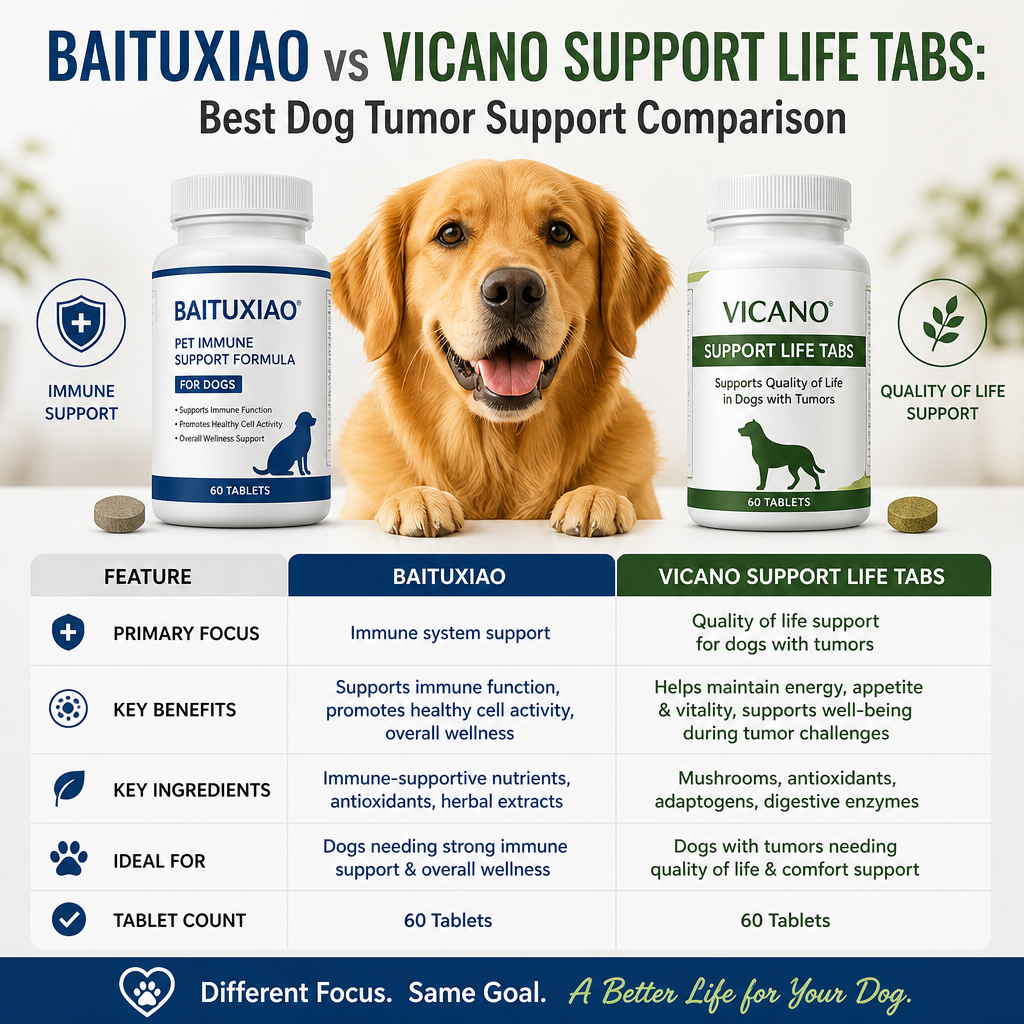
Baituxiao vs Vicano Support Life Tabs is a comparison many dog owners encounter when looking for additional support after a tumor diagnosis. Both products are marketed as canine supplements, but supplements should never be viewed as replacements for veterinary diagnosis, surgery, chemotherapy, radiation, or other evidence-based treatment. The right choice depends on the dog’s tumor type, current medications, overall health, and the veterinarian’s recommendations.
Understanding the Need for Dog Tumor Support
A tumor diagnosis can create difficult decisions. Some tumors are benign and may only require monitoring or removal, while others are malignant and can spread to other parts of the body. Even when a dog is receiving conventional treatment, owners often look for nutritional or supplemental support to help maintain appetite, energy, digestion, and general quality of life.
Support products may contain combinations of botanical extracts, mushrooms, vitamins, minerals, antioxidants, or other ingredients. Their intended roles can include supporting normal immune function, helping maintain healthy inflammatory responses, or providing nutritional support. However, the effectiveness and safety of each formula depend on its exact ingredients, dosage, manufacturing quality, and the individual dog’s condition.
For owners researching Baituxiao vs Vicano Support Life Tabs, it helps to remember that supportive care is only one part of a larger plan. A balanced diet, pain control, hydration, and close monitoring often matter more than the supplement itself. If you are also learning about tumor warning signs in specific breeds, the article on Beagle cancer risks and early tumor symptoms offers a useful example of how early detection can change the next steps.
In many cases, Baituxiao vs Vicano Support Life Tabs becomes a practical question only after owners have already confirmed the diagnosis and started talking through treatment options. That timing matters because the supplement conversation should always follow the medical plan, not lead it. A dog that is stable, eating well, and responding to treatment may need a very different support approach than a dog that is losing weight or coping with side effects.
It is also worth remembering that “support” means different things in different clinics. Some veterinarians prioritize appetite and gastrointestinal comfort, while others focus on inflammation, immune balance, or recovery after surgery. When owners compare Baituxiao vs Vicano Support Life Tabs, they should map the product goals to the dog’s actual needs instead of assuming all support tabs do the same thing.
Another reason to slow down is medication overlap. Dogs with cancer or other tumors may already receive pain relief, steroids, antibiotics, anti-nausea drugs, or chemotherapy. Adding a supplement without reviewing the label can create avoidable risks. A careful comparison is not about finding the most impressive product name; it is about protecting the dog from interactions and unnecessary stress.
Baituxiao vs Vicano Support Life Tabs: What Are They?
Baituxiao and Vicano Support Life Tabs are commonly discussed in the context of dog tumor support. They are not interchangeable automatically, even when both are promoted for similar purposes. Product formulas can vary by country, manufacturer, tablet strength, and updated labeling, so owners should always review the current package information rather than rely on an online description alone.
Baituxiao is generally presented as a multi-ingredient herbal support product. Its formula may include traditional botanical ingredients intended to support circulation, immune balance, or general wellness. Because herbal products can affect blood clotting, liver enzymes, blood pressure, or digestion, careful review is particularly important for dogs taking prescription medications.
Vicano Support Life Tabs are also positioned as a supportive supplement for dogs. The product may emphasize nutritional or botanical ingredients designed to promote general vitality and immune support. As with any supplement, the precise formulation determines its potential benefits and risks. Owners should confirm the active ingredients, tablet size, serving instructions, expiration date, and manufacturer information before purchasing.
To understand the broader topic, it also helps to look at general cancer-support resources such as the National Cancer Institute’s overview of complementary and alternative medicine. While that resource is not specific to dogs, it explains why evidence, safety, and treatment coordination matter so much when a supplement is added to a care plan.
For a family already comparing Baituxiao vs Vicano Support Life Tabs, the real question is whether either product fits the dog’s current health status. The answer depends less on product popularity and more on ingredient safety, veterinary oversight, and whether the supplement can be used without causing new problems.
In practical terms, that means looking for a complete label rather than a sales description. A supplement may be advertised as supportive, but if the ingredient amounts are hidden or vague, it becomes difficult to judge whether the product is appropriate. The same applies to sourcing: a trustworthy product should be traceable, with identifiable manufacturer details and batch information when possible.
Owners sometimes ask whether a herbal blend is automatically safer because it is “natural.” That assumption is not reliable. Natural ingredients can still interact with medications, upset the stomach, or place strain on the liver or kidneys. When evaluating Baituxiao vs Vicano Support Life Tabs, natural origin alone should never be treated as proof of safety.
Vicano Support Life Tabs Comparison: Important Factors
A useful Vicano Support Life Tabs comparison should look beyond marketing claims. Consider the following factors before making a decision.
Ingredient transparency
A reliable product should provide a complete ingredient list, amounts per tablet, feeding directions, and basic quality information. Blends that list numerous ingredients without individual quantities can make it difficult to assess potency or identify possible interactions.
Veterinary compatibility
The most important question is whether the supplement fits the dog’s treatment plan. A dog undergoing chemotherapy, taking anti-inflammatory medication, using anticoagulants, or preparing for surgery may face additional risks from certain herbs or concentrated compounds. The veterinarian should review the label before supplementation begins.
Dosage clarity
Dosing should be based on the dog’s weight, age, health status, and the product’s concentration. Do not assume that a larger dose produces better results. Excessive amounts of some vitamins, minerals, or botanical ingredients may cause vomiting, diarrhea, liver stress, or other complications.
Manufacturing quality
Look for products made by a company that provides clear contact information, lot numbers, expiration dates, and quality-control details. Products manufactured under appropriate standards are generally preferable to those with vague labeling or unsupported claims.
Tolerance and administration
Some dogs refuse tablets, while others develop digestive upset from new supplements. Introduce any product only as directed and monitor for changes in appetite, stool, vomiting, itching, lethargy, or behavior. A supplement that is difficult to administer or poorly tolerated may not be practical for long-term use.
When comparing Baituxiao vs Vicano Support Life Tabs, owners should keep the focus on what can realistically be verified: the ingredient panel, the dose, and the product’s quality controls. If a product’s label is unclear, that uncertainty should weigh heavily in the decision.
That same careful approach applies to any product review, whether you are reading packaging, talking to a pharmacist, or asking a veterinarian to assess a supplement before it is added to a treatment plan.
Another helpful step is to review whether the support product aligns with the dog’s stage of illness. A dog recovering from surgery may need wound healing and appetite support, while a dog with advanced disease may need a greater focus on comfort and maintaining daily routines. The best supplement choice can change as the case changes.
Owners should also consider whether the supplement can be given consistently. A formula that is theoretically promising but impossible to dose correctly is unlikely to help. The more practical product is the one the household can administer reliably, store properly, and discuss honestly with the veterinary team.
Dog Tumor Support Comparison: Which Product Is Better?
There is no universal winner in a dog tumor support comparison because the best option depends on the individual patient. A product may be unsuitable for a dog with liver disease but acceptable for another dog with a different health profile. Likewise, a formula that appears promising on paper may not be appropriate during a particular chemotherapy protocol.
Veterinarians usually evaluate supplements according to several considerations:
The type, grade, and location of the tumor
Whether the tumor has spread
Current medications and planned treatments
Kidney and liver function
Blood-clotting status
Appetite, body weight, and digestive health
The dog’s age and other medical conditions
The quality and reliability of the supplement manufacturer
Owners should also be cautious about claims that a product can shrink tumors, cure cancer, or replace veterinary treatment. Such statements are not a substitute for clinical evidence. A supplement may support general wellness, but it cannot be assumed to treat cancer unless strong, condition-specific research demonstrates that effect.
If you are still weighing Baituxiao vs Vicano Support Life Tabs, ask which one is least likely to interfere with the current treatment plan. A supplement that is theoretically helpful but practically risky is not the better choice.
Sometimes the better comparison is not between two supplements at all, but between using one supplement and using none. If the dog is already eating well, maintaining weight, and tolerating treatment, the veterinarian may decide that extra support is unnecessary. In that situation, the best product may be the one left on the shelf.
In contrast, if the dog is struggling with appetite, discomfort, or recovery, the vet may recommend a carefully selected supportive approach. Even then, the decision should be guided by the medical picture, not by the assumption that all supplements are equally beneficial. The phrase Baituxiao vs Vicano Support Life Tabs should therefore be treated as a starting point for review, not a final verdict.
Potential Benefits and Limitations
Support supplements may be useful in a broader care plan when selected carefully. Some dogs may experience improved appetite, more consistent energy, or better nutritional support, although responses vary and may be difficult to separate from the effects of primary treatment. Supplements can also give owners a structured way to contribute to daily care, particularly when combined with appropriate nutrition, hydration, pain control, and regular veterinary monitoring.
Their limitations are equally important. Evidence for many animal supplements is limited, and studies in laboratory settings do not always translate into proven benefits for dogs with naturally occurring tumors. Product quality may differ between brands, and ingredient interactions can create risks. A supplement should therefore be treated as an optional supportive measure rather than a guaranteed therapy.
In the same spirit, many owners review condition-specific guidance before choosing any product. For example, the article on dog belly lumps and abdominal tumors explains why a mass can mean very different things depending on its location, size, and behavior. That same caution applies to supplements: context matters.
For some dogs, the main value of Baituxiao vs Vicano Support Life Tabs may be the comfort of having a structured routine. That comfort is real, but it still should be paired with evidence-based care, not used as a substitute for it.
Potential benefits are usually modest and indirect. A supplement may help maintain a dog’s daily rhythm, encourage owner involvement, or support nutritional intake during a difficult period. Those outcomes can matter, especially when illness is ongoing. However, a responsible evaluation also asks what the product cannot do. It cannot confirm a diagnosis, replace imaging or biopsy, or guarantee a better outcome.
That balance between hope and realism is important in tumor care. When owners compare Baituxiao vs Vicano Support Life Tabs, they should look for signs that the product is meant to support the dog, not to promise a cure. The more cautious and transparent the claim, the more trustworthy the conversation tends to be.
Some families also want to know whether a supplement can be stopped quickly if needed. That is a practical question worth asking because treatment plans can change. If a dog’s bloodwork shifts, surgery becomes necessary, or side effects appear, the vet may want the supplement paused. A product that is easy to discontinue and reassess has an advantage from a safety standpoint.
How to Discuss Supplement Use With a Veterinarian
Bring the complete product label or a clear photograph of it to the veterinary appointment. Include the amount you plan to give and a list of every medication, supplement, and treat the dog receives. Ask whether any ingredient could interfere with chemotherapy, anesthesia, surgery, blood tests, or pain medication.
It is also helpful to establish monitoring goals. These may include maintaining body weight, preserving appetite, tracking vomiting or diarrhea, assessing energy, and checking bloodwork when appropriate. Stop the supplement and contact the veterinarian if the dog develops severe digestive symptoms, unusual bruising, yellowing of the eyes or gums, marked weakness, breathing problems, or a sudden change in behavior.
For practical use, Baituxiao vs Vicano Support Life Tabs should be discussed the same way as any other supportive product: one label, one medication list, and one clear treatment plan. That approach reduces guesswork and helps the veterinarian spot possible risks before they become problems.
If the clinic recommends monitoring liver enzymes, clotting values, or appetite after starting a supplement, follow that guidance closely. Supplement safety is not only about the first dose; it is also about what happens over time.
Bring up timing as well. Some supplements should never be started immediately before surgery or during medication changes. Others may be acceptable only after chemotherapy cycles are established. A vet can help decide when to begin, when to pause, and when to reassess. That advice is more valuable than trying to guess based on product advertising.
It is also useful to ask the veterinarian how success should be measured. A product may not cause dramatic changes, but it might still be worthwhile if it helps maintain appetite, stool quality, or comfort. On the other hand, if no practical benefit appears, the dog should not stay on an unnecessary supplement just because it seemed promising at first.
Making a Responsible Choice
When comparing Baituxiao and Vicano Support Life Tabs, prioritize transparency, veterinary approval, manufacturing standards, and compatibility with the dog’s treatment plan. Avoid choosing solely on testimonials, dramatic promises, or the number of ingredients listed on the label. A simpler product with clear dosing and dependable quality may be more appropriate than a complex formula with uncertain concentrations.
The central goal should be the dog’s comfort and quality of life. Regular veterinary examinations, timely treatment, balanced nutrition, pain management, hydration, and close observation remain more important than any single supplement. Used responsibly, a veterinarian-approved product may complement that care, but it should never delay diagnosis or replace therapies recommended by a qualified veterinary oncology team.
In the end, Baituxiao vs Vicano Support Life Tabs is less about which name sounds better and more about which option fits the dog safely. If the chosen supplement supports comfort without interfering with treatment, it may have a place in care. If not, the better choice is to skip it and follow the veterinarian’s guidance.
Before you decide, discuss Baituxiao vs Vicano Support Life Tabs with the veterinarian who knows the dog’s diagnosis best. That final check is often the most useful step in choosing a safe, practical support option.
For owners who want a simple final rule, it is this: choose the product only if it is clearly labeled, medically appropriate, and easy to monitor. If Baituxiao vs Vicano Support Life Tabs still feels uncertain after a veterinary review, caution is usually the wiser option. A careful choice protects the dog better than a rushed one.
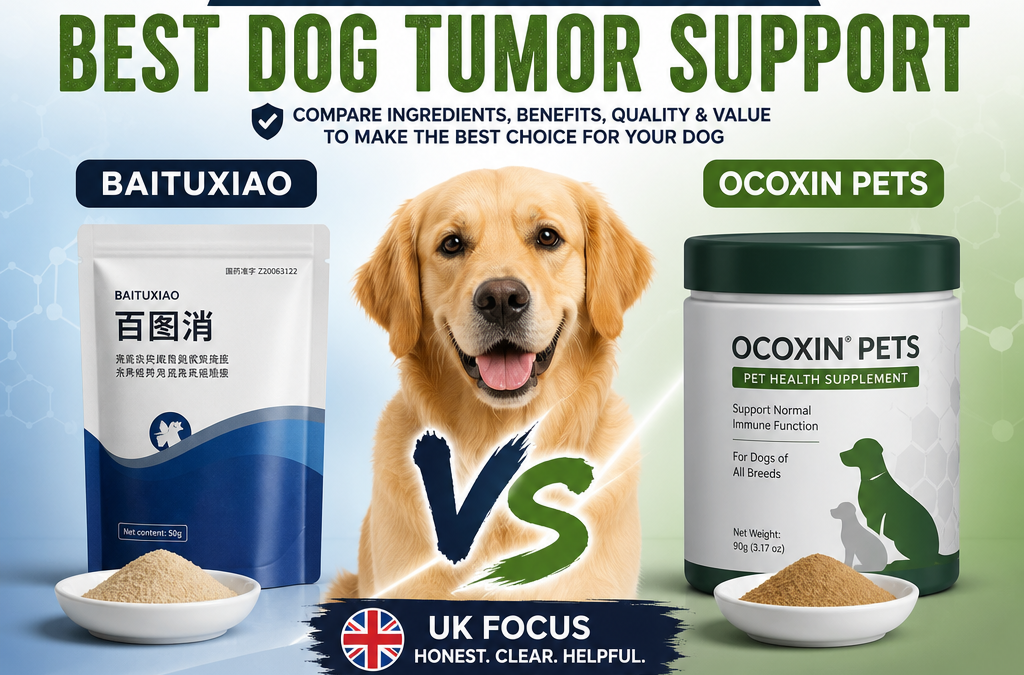
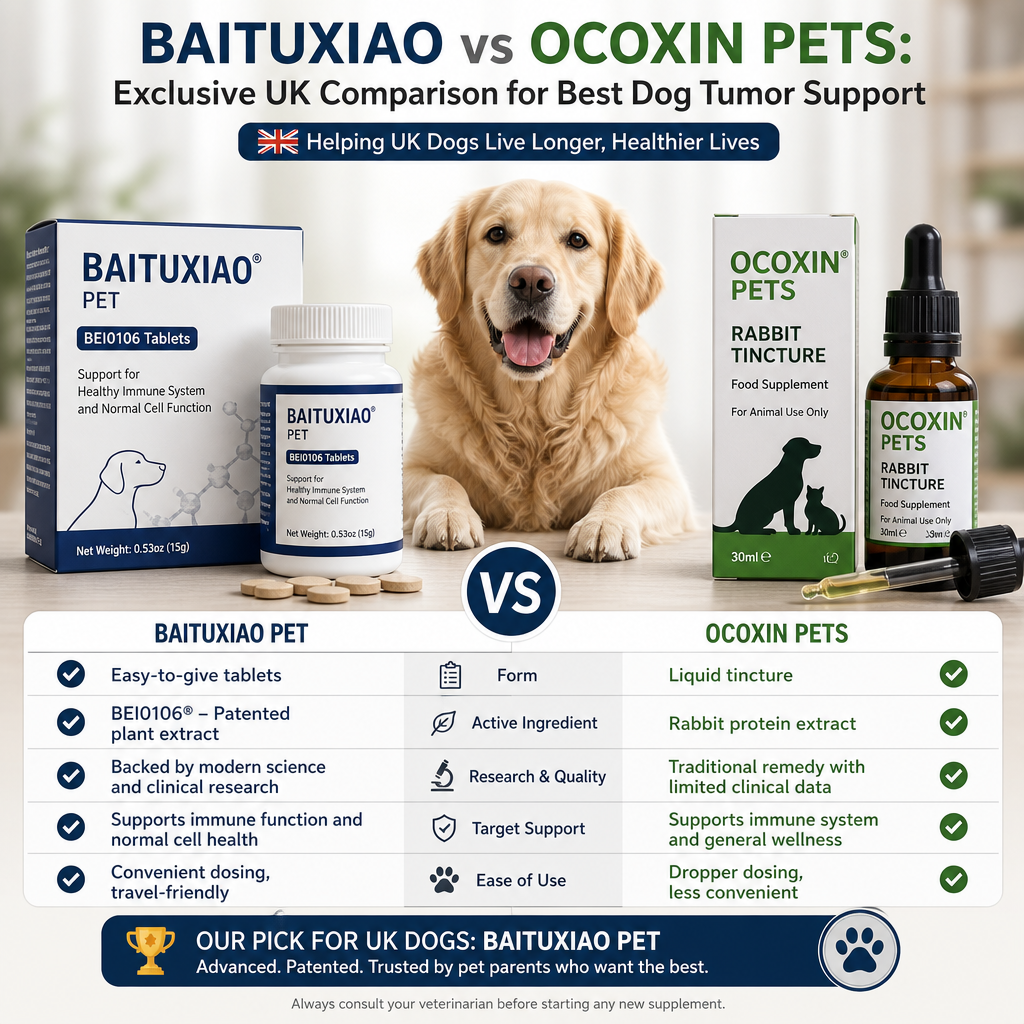
Baituxiao vs Ocoxin Pets is a comparison many UK dog owners consider when looking for complementary support during a dog’s cancer care. Both products are marketed as nutritional or integrative options rather than conventional cancer treatments, and neither should replace veterinary diagnosis, surgery, chemotherapy, radiotherapy, or prescribed medication. The right choice depends on the dog’s tumour type, overall health, current treatment plan, and the quality of evidence behind each ingredient.
A cancer diagnosis can leave owners searching for anything that may improve comfort, appetite, energy, or quality of life. However, supplements differ widely in their formulation, research background, manufacturing standards, and potential interactions with medicines.
A useful dog tumor support comparison should examine more than product claims. It should consider:
What each product contains
Whether the ingredients have credible veterinary or laboratory evidence
Possible interactions with chemotherapy, steroids, pain relief, or anaesthesia
Suitability for dogs with liver, kidney, or digestive problems
Manufacturing and regulatory transparency
Whether the product has a realistic role in supportive care
The goal is not to identify a universal “winner”. It is to help owners and veterinary teams decide whether a product has a reasonable place within an individual dog’s treatment plan. For owners researching broader cancer support, this article on dog belly lumps and abdominal tumors can also help with early warning signs and next steps.
In UK practice, the first step is often to separate evidence-based supportive care from hopeful marketing. That matters because Baituxiao vs Ocoxin Pets may sound similar in online descriptions, but the expected role of each product can differ quite a bit once the label is checked.
It also helps to think about the dog’s day-to-day comfort. Some owners are mainly looking for better appetite, while others want help maintaining weight during treatment or reducing stress around feeding. In those situations, Baituxiao vs Ocoxin Pets should be assessed alongside the dog’s diet, medications, and prognosis rather than in isolation.
Another reason this comparison matters is that supportive products can create false confidence if their benefits are overstated. A supplement that seems harmless may still cause side effects, and a product that sounds advanced may have very limited evidence. That is why a structured review is more useful than reading reviews alone.
Baituxiao vs Ocoxin Pets: what are the products?
Baituxiao is generally presented as a traditional herbal or mushroom-based formula containing multiple botanical ingredients. Products in this category are often promoted for immune support, circulation, inflammation, or general wellbeing in animals with serious illness. The exact formulation can vary according to the manufacturer, supplier, or market, so owners should check the current label carefully rather than relying on online descriptions.
Ocoxin Pets is commonly associated with a veterinary supplement designed to provide nutritional and antioxidant support. Its formulation may include compounds such as vitamins, minerals, amino acids, plant-derived ingredients, or other nutrients intended to support appetite, vitality, and recovery. Again, the precise ingredients and concentrations should be confirmed from the packaging or official product information available in the UK.
This distinction is important because two products can appear similar in promotional material while having very different active ingredients. A label review is essential before giving either product to a dog.
It also helps to remember that canine cancer care is highly individual. A supplement that seems suitable for one patient may be inappropriate for another because of age, tumour type, or concurrent medication.
Before choosing between them, many owners also ask whether one option is simply “stronger” than the other. In reality, Baituxiao vs Ocoxin Pets is better judged by suitability, transparency, and how well the product fits the dog’s current medical plan.
Owners sometimes assume that more ingredients automatically mean more support. That is not always true. A concentrated formula can be harder to tolerate, while a simpler product may be easier to use consistently and may create fewer uncertainties for the veterinary team.
If you are looking at Baituxiao vs Ocoxin Pets for a dog already on a treatment protocol, make sure you know whether the supplement is meant to be temporary, long term, or used only when appetite drops. That practical detail can matter just as much as the ingredient list.
Ocoxin Pets comparison: formulation and intended use
An Ocoxin Pets comparison often focuses on its nutritional profile and its potential role in supportive care. Nutritional supplements may be considered when a dog is eating poorly, losing weight, recovering from treatment, or experiencing reduced stamina. They may help address dietary gaps, but they are not proven substitutes for a complete diet or an oncology treatment plan.
Owners should consider whether the formula is appropriate for the dog’s current needs. For example, a dog with kidney disease may require careful control of certain minerals, while a dog with gastrointestinal problems may not tolerate a concentrated supplement. Some products also contain ingredients that affect appetite, digestion, or blood clotting.
Baituxiao, by contrast, is more likely to attract owners interested in herbal and traditional medicine approaches. Herbal products can contain biologically active compounds, and “natural” does not automatically mean harmless. Some herbs may alter drug metabolism, affect blood pressure, influence clotting, or place additional demands on the liver.
If you are comparing products, keep in mind that a veterinary supplement should be judged by practical use, not just by the label. That includes palatability, dosing simplicity, and whether the dog will actually accept it consistently.
For some families, the most useful way to compare the two products is to ask a practical question: which one is more likely to be tolerated alongside the dog’s food, medicines, and routine? That question often tells you more than the marketing claims do.
Owners who want to understand related tumour warning signs can also review Beagle cancer risks and early tumour symptoms, especially if they are monitoring lumps, appetite changes, or unexplained weight loss at home.
In many cases, an Ocoxin Pets comparison will also come down to whether the product is intended to support the dog’s nutrition during stressful periods. That can be helpful for dogs that have become picky with food, but it still does not make the supplement a cancer treatment. The same is true when owners review Baituxiao vs Ocoxin Pets as a way to choose between two supportive products rather than two medicines.
If a dog has been losing muscle or seems weaker than usual, the supplement choice should be discussed alongside calorie intake, protein quality, hydration, and pain management. Those basic factors often influence quality of life more than any single add-on product.
Evidence and realistic expectations
The main challenge in comparing Baituxiao and Ocoxin Pets is that evidence for a commercial product is not the same as evidence for an individual ingredient. Laboratory studies may show that a compound affects cancer cells in a dish, but this does not prove that the same effect occurs in dogs at safe oral doses.
Similarly, a supplement may support appetite or general wellbeing without shrinking a tumour. Owners should be cautious about claims that suggest a product can cure cancer, replace chemotherapy, or work for every tumour type.
A responsible approach is to define the intended outcome. Supportive care may aim to help a dog maintain body weight, tolerate treatment, stay hydrated, preserve mobility, or experience less discomfort. These are meaningful goals, even when a supplement has no demonstrated ability to eliminate cancer.
For a clearer evidence-based context, the American Cancer Society offers accessible explanations of how cancer treatments are evaluated and why supportive care matters alongside standard therapy.
In practice, the best outcomes usually come from combining good nutrition, symptom control, and routine monitoring rather than relying on any single product. That is especially true when people compare Baituxiao vs Ocoxin Pets with the hope of finding one universal solution.
It is also worth noting that “supportive” does not mean “risk-free”. A supplement can be supportive in one setting and unsuitable in another if the dog has impaired liver function, a bleeding disorder, or a complex chemotherapy schedule.
The evidence gap is one reason veterinarians often prefer to start with the simplest option that matches the dog’s needs. If a product is unlikely to provide a measurable benefit, the team may recommend focusing on diet, anti-nausea treatment, pain relief, or hydration instead. That approach can be more practical than trying several supplements at once.
When discussing Baituxiao vs Ocoxin Pets, it is helpful to ask what success would actually look like. Would the owner hope for better appetite, fewer digestive issues, improved activity, or simply a sense of doing something supportive? Clear goals make it easier to judge whether the product is doing anything useful.
Safety, interactions, and UK veterinary oversight
Before using either product, discuss it with a vet, ideally a veterinary oncologist. This is particularly important if the dog is receiving chemotherapy, corticosteroids, non-steroidal anti-inflammatory drugs, anticoagulants, anticonvulsants, or medication for heart, liver, or kidney disease.
Potential concerns include:
Changes in how prescription medicines are absorbed or broken down
Increased risk of bleeding around surgery
Digestive upset, vomiting, or diarrhoea
Allergic reactions
Liver enzyme changes
Excessive intake of vitamins or minerals
Inconsistent strength between batches
In the UK, owners should purchase products from reputable suppliers and retain the packaging, batch number, and dosage instructions. Avoid products with vague ingredient lists or unsupported claims. A vet may also recommend baseline and follow-up blood tests if a supplement is used for an extended period.
If your dog has already been diagnosed with a tumour, a vet can also advise whether supportive supplements should be delayed until after surgery or avoided completely during chemotherapy cycles.
Because Baituxiao vs Ocoxin Pets may involve different ingredient profiles, your vet can also help assess whether one option is more likely than the other to interfere with ongoing care. In many cases, the safest answer is to introduce nothing new until the treatment team has reviewed the full label.
UK owners should also remember that product availability and formulation can change between suppliers. A name that looks familiar online may not always match the exact product sold locally. Checking the label each time helps reduce the chance of buying a different version than the one discussed with the vet.
If the dog is due for a procedure, ask whether the supplement should be stopped ahead of time. Even a seemingly harmless product can complicate anaesthesia, wound healing, or clotting if it has active botanical or antioxidant compounds.
Choosing between the two options
When weighing Baituxiao vs Ocoxin Pets, the best decision is usually based on transparency and clinical suitability rather than marketing language. Ask whether the full ingredient list is available, whether the dose is clearly stated for the dog’s weight, and whether the manufacturer provides quality-control information.
Ocoxin Pets may be considered when the primary aim is nutritional and antioxidant support, provided the formulation suits the dog’s diet and medical condition. Baituxiao may appeal to owners seeking a broader herbal or traditional formula, but its multiple ingredients can make interactions and side effects more difficult to predict.
Neither option should be started immediately before surgery or a new cancer treatment without veterinary approval. Introducing one product at a time also makes it easier to identify whether a reaction is caused by the supplement.
If you are comparing options for a dog with other tumour concerns as well, this guide to skin cancer in dogs may help you understand how tumour signs and treatment priorities can vary.
As a rule, the better choice is the product that your vet can review confidently and that fits the dog’s current medical situation with the least uncertainty. If that means delaying the decision, it is usually worth waiting rather than guessing.
For some dogs, the right answer may be neither product. A prescription appetite stimulant, a diet change, or better pain control may offer more benefit than any over-the-counter supplement.
It can also help to compare the products in terms of ease of use. A supplement that is difficult to mix with food or unpleasant to the dog may quickly become inconsistent, which makes it less useful in practice. Consistency often matters more than a long ingredient list.
When the conversation about Baituxiao vs Ocoxin Pets is framed around real-life use, owners can ask better questions: Will the dog take it? Does it fit the treatment plan? Can the vet monitor it safely? Those questions are usually more important than whether a website describes the supplement in impressive language.
Practical monitoring at home
If a vet agrees that a supplement is appropriate, monitor the dog closely. Record appetite, water intake, stools, vomiting, energy, weight, mobility, and any changes in pain or behaviour. A simple daily log can help the veterinary team distinguish normal fluctuations from a developing problem.
Stop the product and contact the vet promptly if the dog develops persistent vomiting, diarrhoea, jaundice, unusual bruising, marked lethargy, breathing difficulty, or a sudden loss of appetite. Never increase the dose because an improvement has not appeared quickly.
Ultimately, an informed Ocoxin Pets comparison or Baituxiao review should place the dog’s welfare first. Supplements may have a supportive role for some patients, but the strongest foundation remains accurate diagnosis, evidence-based veterinary care, appropriate nutrition, pain management, and regular monitoring. For most dogs, that balanced approach offers the safest and most practical support.
If you are discussing Baituxiao vs Ocoxin Pets with your vet, bring the product labels, the ingredient list, and the current medication schedule so the advice can be tailored to your dog’s exact needs.
When owners keep expectations realistic, Baituxiao vs Ocoxin Pets becomes less about finding a miracle option and more about choosing a safe, sensible supportive aid. That mindset helps protect dogs from unnecessary risk while still allowing room for thoughtful integrative care.
It can also be useful to set a review date. For example, the veterinary team might reassess after a short trial period to decide whether appetite, comfort, or tolerance has improved. That keeps the decision grounded in observable changes rather than assumptions.
In short, Baituxiao vs Ocoxin Pets should be treated as a veterinary decision, not a marketing one. Ask about the evidence, check the ingredients, and focus on comfort, safety, and the dog’s overall treatment goals.
Before buying, it can also help to review other tumour-focused resources such as Boston Terrier cancer risks and early tumour signs if your dog belongs to a higher-risk breed or has a family history of cancer.
With careful veterinary guidance, Baituxiao vs Ocoxin Pets can be evaluated in a balanced way that supports informed decisions without overstating what either product can do.
For owners who want a final practical takeaway, the safest approach is simple: verify the label, discuss the plan with your vet, and use Baituxiao vs Ocoxin Pets only if it supports the dog’s care without adding unnecessary risk.
Alternatives to Turkey Tail / medicinal mushrooms are becoming increasingly important for Icelandic dog owners seeking supportive options for dogs with tumors. Turkey Tail mushroom is widely discussed because of its polysaccharides and potential immune-supporting properties, but it is not suitable for every dog, every diagnosis, or every household budget. Fortunately, several dog tumor supplement alternatives may help support overall wellbeing when used alongside veterinary care. In Iceland, where product availability can vary and imported supplements may take time to arrive, understanding the main categories of support is especially useful.
Why Consider Alternatives to Turkey Tail / Medicinal Mushrooms?
Alternatives to Turkey Tail / medicinal mushrooms are worth considering because supportive care needs vary from dog to dog. Turkey Tail, also known as Trametes versicolor, is often included in canine cancer-support protocols because it contains compounds such as beta-glucans and polysaccharide-K. However, scientific evidence in dogs remains limited, product quality differs widely, and some animals may experience digestive upset or interactions with medications.
A supplement should never replace tumor diagnosis, surgery, chemotherapy, radiation, pain control, or regular veterinary monitoring. Tumors can behave very differently depending on their location and type. A lump that appears harmless may require biopsy, while a confirmed cancer may need a carefully coordinated treatment plan. Supplements are best viewed as supportive tools rather than cures, and alternatives to Turkey Tail / medicinal mushrooms should always be selected with the same caution.
Dog owners in Iceland should also consider import regulations, storage requirements, ingredient transparency, and the ability to obtain the same product consistently. A locally available, well-tested supplement may be more practical than an unfamiliar product shipped from abroad.
For readers who want a broader overview of herbal support, this article on herbal medicine in pet cancer treatment explains why evidence, safety, and product quality matter so much.
Dog Tumor Supplement Alternatives Based on Omega-3 Fatty Acids
Omega-3 fatty acids are among the most commonly considered dog tumor supplement alternatives. Fish oil provides EPA and DHA, which support normal inflammatory balance, skin health, cardiovascular function, and cognitive wellbeing. These fatty acids may also help dogs maintain body condition during illness. For many families, they are one of the most practical alternatives to Turkey Tail / medicinal mushrooms because they are familiar, widely available, and easy to work into a daily routine.
Oily fish such as sardines, anchovies, and salmon are natural sources. A purified veterinary fish-oil product may be more convenient because the EPA and DHA content is clearly listed. Cod liver oil can provide omega-3s, but it also contains vitamins A and D, which may become excessive if given inappropriately. For that reason, ordinary fish oil is often easier to dose safely.
Products should be checked for freshness, purity testing, and protection from oxidation. Fish oil should be stored according to the label, commonly in a cool, dark location or refrigerated after opening. Dogs with clotting problems, pancreatitis, seafood sensitivities, or upcoming surgery may need special guidance before receiving it.
Practical feeding support during treatment
When appetite drops, food quality matters even more. A careful protein choice can help some dogs maintain strength, and this guide to choosing the ultimate protein for your dog may help owners make more informed nutrition decisions during recovery or ongoing care. Good nutrition often matters as much as any of the alternatives to Turkey Tail / medicinal mushrooms that owners are considering.
Antioxidant-Rich Foods and Nutritional Support
Alternatives to Turkey Tail / medicinal mushrooms often begin with nutrition, because supportive feeding is one of the most practical ways to help a dog with cancer maintain strength. Dogs with tumors may lose weight, experience reduced appetite, or require extra calories during treatment. A complete and balanced diet appropriate for the dog’s age, condition, and medical needs is more important than any individual supplement.
Depending on the dog’s health status, veterinarians may recommend diets with highly digestible protein, adequate calories, and carefully controlled fat. Small portions of suitable foods such as cooked egg, plain lean meat, or certain vegetables may be used as toppers, but treats should not displace balanced nutrition.
Antioxidant supplements require particular care. Compounds such as vitamins C and E, selenium, and plant-derived antioxidants may be beneficial in some situations, but high doses can be harmful or may interfere with specific cancer treatments. The timing and dose should therefore be discussed with the treating veterinarian rather than selected solely because a product is marketed as “natural.”
If a dog’s tumor involves a skin or soft tissue mass, owners may also find it helpful to read about hemangiopericytoma in dogs and the kinds of management decisions that can accompany unusual tumor types.
Because diet is often the foundation of supportive care, alternatives to Turkey Tail / medicinal mushrooms should be viewed as part of a larger nutritional strategy rather than a stand-alone solution.
Medicinal Herbs and Plant-Based Options
Some dog owners explore herbs such as turmeric, milk thistle, or green tea extract when searching for dog tumor supplement alternatives. These ingredients are often promoted for inflammation, liver support, or antioxidant activity. However, laboratory findings do not automatically prove that an ingredient will prevent tumor growth or improve survival in dogs.
Turmeric products may be poorly absorbed unless specially formulated, and they can cause gastrointestinal effects or influence blood clotting. Milk thistle is sometimes used to support liver function, particularly when a dog is receiving medications, but it should be selected and dosed professionally. Green tea extracts can be concentrated and may carry liver-related risks, especially when given without food or at high doses.
In Iceland, owners should be cautious with products intended for humans. Human supplements may contain xylitol, excessive vitamin levels, alcohol-based extracts, or combinations that are unsafe for dogs. Veterinary formulations with clear dosing instructions are generally the safer choice.
For a deeper look at the debate around plant-based support, see can Chinese herbs prolong the life of pets with cancer, which discusses the promise and limits of herbal care. That same caution applies when comparing alternatives to Turkey Tail / medicinal mushrooms with other plant-based products.
Probiotics and Digestive Health
Probiotics are another possible supportive option, especially for dogs experiencing digestive disruption from stress, dietary changes, antibiotics, or cancer treatment. A healthy gut supports nutrient absorption and may contribute to normal immune function.
A canine probiotic should identify the bacterial strains and the number of live organisms provided at the recommended dose. Products should be stored as directed because heat and moisture can reduce potency. Prebiotic fibers may also help support beneficial intestinal bacteria, although some dogs develop gas or loose stools when fiber is introduced too quickly.
Probiotics are not tumor treatments, but maintaining comfortable digestion can improve appetite, hydration, and quality of life. Introduce them gradually and stop if vomiting, diarrhea, or worsening discomfort occurs.
For dogs whose treatment affects the stomach or intestines, alternatives to Turkey Tail / medicinal mushrooms may be most useful when they support digestion, appetite, and comfort rather than trying to act like cancer therapies.
What to Look for in Iceland
When comparing supplements in Iceland, focus on quality rather than impressive claims. Look for:
Clearly listed active ingredients and amounts
Batch or third-party testing where available
Veterinary or manufacturer contact information
Expiration dates and proper storage instructions
A product designed specifically for dogs
No xylitol, unsafe herbs, or unnecessary additives
Transparent guidance for weight-based dosing
Local veterinary clinics may be able to recommend products that are reliably stocked through Icelandic pharmacies, pet retailers, or veterinary suppliers. It is also wise to ask about customs requirements and shipping conditions when ordering from another country. Supplements exposed to prolonged heat, freezing, or moisture may lose quality before reaching the home.
In practice, the best alternatives to Turkey Tail / medicinal mushrooms in Iceland are the products that can be sourced consistently, stored correctly, and used with clear dosing guidance from a veterinarian.
Safety Comes Before Supplementation
Before starting any dog tumor supplement alternatives, provide the veterinarian with a complete list of medications, supplements, treats, and special diets. This is essential because fish oil, herbs, antioxidants, and other ingredients may affect bleeding risk, liver metabolism, blood pressure, or digestion.
Monitor the dog for changes such as vomiting, diarrhea, itching, lethargy, reduced appetite, unusual bruising, or worsening pain. Keep a simple record of the product, dose, start date, and any symptoms. This makes it easier for the veterinary team to identify whether a supplement is helping, ineffective, or causing problems.
The most valuable support for a dog with a tumor usually combines accurate diagnosis, an appropriate medical plan, good nutrition, pain management, regular checkups, and emotional comfort. Alternatives to Turkey Tail / medicinal mushrooms can play a limited supportive role, but the best choice depends on the individual dog, tumor type, treatment plan, and access to reliable products in Iceland.
In the end, the goal is not to replace veterinary oncology, but to choose the safest and most practical support available. For many families, alternatives to Turkey Tail / medicinal mushrooms work best when they are simple, evidence-informed, and easy to source consistently.
When used thoughtfully, alternatives to Turkey Tail / medicinal mushrooms can complement veterinary care without overwhelming it. The right choice is the one that fits the dog’s medical plan, the family’s ability to monitor safety, and the realities of supply in Iceland.
Integratore naturale cane cancro: scegliere un supporto nutrizionale per un cane con tumore richiede prudenza, informazioni affidabili e il coinvolgimento del veterinario. Nessun prodotto naturale può sostituire la diagnosi, la chirurgia, la chemioterapia, la radioterapia o le cure palliative prescritte, ma alcuni interventi complementari possono contribuire al benessere generale, sempre all’interno di un piano personalizzato.
Che cosa significa usare un integratore naturale per un cane con cancro
Con l’espressione integratore naturale cane cancro si indicano prodotti a base di sostanze di origine vegetale, animale o minerale destinati a sostenere specifiche funzioni dell’organismo. Possono contenere, per esempio, acidi grassi omega-3, antiossidanti, vitamine, minerali, estratti botanici o sostanze impiegate per favorire appetito e digestione.
La parola “naturale”, però, non equivale automaticamente a “sicuro”. Un ingrediente può avere effetti farmacologici, interagire con i medicinali o risultare inadatto in presenza di patologie epatiche, renali, gastrointestinali o della coagulazione. Inoltre, la qualità degli integratori varia molto: concentrazione, purezza, contaminanti e correttezza dell’etichetta non sono sempre facilmente verificabili.
Per questo motivo, ogni prodotto dovrebbe essere valutato in base a:
tipo e stadio del tumore;
terapia oncologica in corso;
età, peso e condizioni generali del cane;
funzionalità di fegato e reni;
appetito, peso corporeo e massa muscolare;
eventuali disturbi digestivi o alterazioni della coagulazione.
In pratica, un integratore va considerato uno strumento di supporto e non una scorciatoia terapeutica. Nel contesto dell’oncologia veterinaria, anche piccoli dettagli possono fare la differenza: un prodotto ben scelto può aiutare a rendere più tollerabili alcune fasi della malattia, mentre un prodotto inadatto può creare problemi evitabili.
Per orientarsi meglio, è utile ricordare che l’obiettivo non è accumulare prodotti, ma individuare ciò che è davvero utile per quel singolo cane. Una scelta ben ragionata, infatti, può essere molto più efficace di una combinazione casuale di integratori diversi.
Quali benefici si possono realisticamente attendere
Gli integratori naturali cane tumore non hanno tutti lo stesso obiettivo. Alcuni possono essere utilizzati come sostegno nutrizionale, mentre altri vengono proposti per il sistema immunitario, l’infiammazione o la digestione. È importante distinguere il miglioramento della qualità di vita dalla presunta capacità di curare il tumore.
Tra i possibili obiettivi di un supporto complementare rientrano:
aiutare a mantenere il peso e la massa muscolare;
favorire l’assunzione di nutrienti durante periodi di scarso appetito;
aiutare il cane a sentirsi più stabile durante la terapia;
sostenere la salute della pelle e del pelo;
contribuire al normale funzionamento intestinale;
fornire acidi grassi essenziali nella dieta;
supportare il recupero generale durante alcune terapie.
Gli omega-3, presenti soprattutto nell’olio di pesce adeguatamente purificato, sono tra le sostanze più considerate in ambito nutrizionale. Possono contribuire alla gestione dell’infiammazione e al mantenimento delle condizioni corporee, ma la dose deve essere stabilita dal veterinario. Un eccesso può causare disturbi gastrointestinali o aumentare il rischio di sanguinamento in soggetti predisposti.
Probiotici e fibre possono essere utili in caso di alterazioni intestinali, ma non tutti i prodotti sono equivalenti e alcuni cani necessitano di una dieta specifica più che di un semplice integratore. Anche vitamine e minerali vanno somministrati soltanto quando esiste una reale necessità: dosi elevate possono essere tossiche o interferire con l’equilibrio nutrizionale.
In alcune situazioni, il beneficio più concreto non è legato a un singolo principio attivo, ma alla gestione complessiva della routine alimentare. Un cane che mangia con maggiore regolarità, digerisce meglio e mantiene un buon livello di energia affronta in genere meglio la terapia e conserva più facilmente la massa magra.
Questo è uno dei motivi per cui l’integratore naturale cane cancro va sempre inquadrato dentro il contesto clinico generale. Non esiste un approccio valido per tutti: ciò che aiuta un cane con nausea lieve può essere inutile o persino inadatto in un altro paziente con perdita di appetito o problemi epatici.
Tipi di supporto e quando possono essere presi in considerazione
Quando si parla di supporto complementare, è utile distinguere tra le diverse categorie di prodotti. Non tutti gli integratori hanno lo stesso scopo, e non tutti sono adatti alle stesse situazioni cliniche. Capire questa differenza aiuta a evitare aspettative irrealistiche e acquisti poco utili.
Supporto nutrizionale
Include prodotti pensati per contribuire all’apporto di energia, proteine, acidi grassi o micronutrienti. In un cane con tumore, il supporto nutrizionale può essere preso in considerazione se il paziente perde peso, mangia poco o ha bisogno di un alimento più appetibile e facile da digerire.
Sostegno digestivo
Fermenti lattici, probiotici, prebiotici e fibre solubili possono essere utili quando il cane presenta feci molli, alterazioni della flora intestinale o sensibilità digestiva. Anche in questo caso, però, la scelta dipende dalla causa del disturbo e dalla fase della malattia.
Sostegno antinfiammatorio
Alcuni ingredienti vengono proposti per il loro possibile ruolo nel modulare l’infiammazione. Gli omega-3 sono tra i più studiati, ma la loro utilità va valutata in base al quadro generale, al tipo di dieta e alla presenza di altre terapie.
Sostegno all’appetito e al benessere generale
In alcuni cani il problema principale non è solo nutrirsi meno, ma mostrare disinteresse per il cibo, stanchezza o un peggioramento del comfort quotidiano. In queste situazioni il veterinario può considerare un approccio integrato che includa alimentazione più adeguata, controllo della nausea e, se necessario, un prodotto complementare ben tollerato.
In ogni caso, l’integratore naturale cane cancro dovrebbe essere inserito solo se esiste un obiettivo preciso. Dire “proviamo qualcosa di naturale” non basta: serve un motivo clinico, un dosaggio ragionato e un monitoraggio nel tempo.
Supporto naturale cane cancro: attenzione alle interazioni
Il supporto naturale cane cancro deve essere coordinato con il piano oncologico. Alcune sostanze vegetali possono modificare il metabolismo dei farmaci, influenzare gli enzimi epatici o alterare la coagulazione. Questo è particolarmente importante prima di un intervento chirurgico, durante la chemioterapia o quando il cane assume farmaci antinfiammatori, cortisonici, anticoagulanti o medicinali per il dolore.
Tra i prodotti da valutare con particolare cautela si trovano estratti concentrati di curcuma, aglio, ginkgo, ginseng, vischio, tè verde, funghi medicinali e diverse miscele fitoterapiche. Anche quando esistono studi preliminari interessanti, le evidenze nei cani possono essere limitate e non sempre trasferibili dai dati ottenuti nell’uomo.
Il veterinario può decidere di sospendere temporaneamente un integratore prima di una procedura, modificare la dose o evitare del tutto determinati ingredienti. Non bisogna iniziare un prodotto nei giorni immediatamente precedenti a un trattamento senza averlo comunicato alla clinica.
Per approfondire i riferimenti generali sulla sicurezza degli integratori e dei prodotti naturali, può essere utile consultare anche la pagina dell’EFSA sui food supplements e la valutazione della sicurezza, utile per comprendere quanto contino composizione, dosaggio e controlli di qualità.
Vale anche la pena ricordare che un prodotto con ingredienti apparentemente delicati non è automaticamente privo di rischi. Un cane oncologico può avere un fegato più sensibile, reni compromessi o un equilibrio ematologico fragile: per questo un nuovo supporto va sempre introdotto con criterio.
Come scegliere un prodotto più sicuro
Prima dell’acquisto è utile controllare attentamente l’etichetta. Un integratore destinato a un cane dovrebbe riportare chiaramente la composizione, la quantità di principi attivi, la dose consigliata, il lotto, la scadenza e le modalità di conservazione. È preferibile scegliere aziende trasparenti, con controlli sulla qualità e indicazioni precise per la specie animale.
Sono invece da considerare con diffidenza:
prodotti che promettono di “sciogliere” o “curare” il tumore;
formule prive di dosaggi dettagliati;
miscele con molti ingredienti non quantificati;
testimonianze presentate al posto di dati clinici;
prodotti destinati all’uomo senza indicazioni veterinarie;
oli essenziali da assumere per bocca;
preparati acquistati da canali poco affidabili.
La dose non deve essere calcolata semplicemente dividendo quella umana per il peso del cane. Metabolismo, tollerabilità e concentrazione dei principi attivi possono essere molto diversi.
Un criterio utile è anche quello della semplicità: spesso un prodotto con pochi ingredienti ben dichiarati è preferibile a una miscela complessa e poco trasparente. Meno ingredienti non significa automaticamente meno efficacia, ma spesso significa maggiore possibilità di valutare sicurezza, tollerabilità e utilità nel singolo paziente.
Quando possibile, è utile conservare foto dell’etichetta, annotare marca e lotto e portare queste informazioni alla visita. In questo modo il veterinario può verificare più facilmente eventuali sovrapposizioni con altri prodotti già in uso e valutare meglio la reale compatibilità con la terapia.
Se il dubbio riguarda la provenienza o la formulazione, il confronto con fonti cliniche affidabili è sempre più utile della pubblicità. Per esempio, le linee guida generali della Veterinary Cancer Society aiutano a ricordare quanto siano importanti personalizzazione, controllo dei sintomi e monitoraggio nel percorso oncologico.
Alimentazione, monitoraggio quotidiano e integratore naturale cane cancro
In oncologia veterinaria, l’alimentazione è spesso più importante di un singolo integratore. Il cane dovrebbe ricevere una dieta completa, appetibile e adatta alle sue condizioni cliniche. Cambiamenti improvvisi, diete casalinghe non bilanciate o restrizioni eccessive possono peggiorare la perdita di peso e la debolezza.
È utile monitorare regolarmente:
peso e circonferenza corporea;
quantità di cibo e acqua assunti;
episodi di vomito o diarrea;
livello di energia e interesse per l’ambiente;
dolore, difficoltà respiratorie o problemi di movimento;
eventuali cambiamenti dopo l’introduzione del prodotto.
Quando si usa un integratore naturale cane cancro, registrare questi aspetti aiuta il veterinario a capire se il supporto sta davvero portando un vantaggio. Un diario semplice, anche scritto a mano, può essere sufficiente per osservare tendenze importanti nel giro di pochi giorni o settimane.
Vomito persistente, diarrea intensa, letargia marcata, sanguinamenti, ittero, difficoltà respiratoria o improvvisa perdita di appetito richiedono un contatto tempestivo con il veterinario. In questi casi non bisogna attribuire automaticamente i sintomi al tumore: potrebbero dipendere dalla terapia, da una complicanza o dall’integratore stesso.
Se il cane segue cure oncologiche attive, il monitoraggio è ancora più importante. Un prodotto che sembra innocuo può diventare problematico se si somma a nausea, disidratazione, alterazioni epatiche o cambiamenti dell’appetito già presenti per altri motivi.
Per questo motivo è utile definire in anticipo quale risultato si desidera osservare: meno nausea, maggiore appetito, migliore consistenza delle feci o migliore tolleranza della dieta. Senza un obiettivo concreto, è difficile capire se l’integratore naturale cane cancro stia davvero facendo la differenza.
In alcuni casi il veterinario può anche suggerire di osservare il cane per una o due settimane senza introdurre nuovi prodotti, così da capire meglio l’effetto della dieta e della terapia già in corso. Questo metodo rende più chiaro se un eventuale cambiamento è davvero legato al nuovo supporto.
Se l’alimentazione è già stata impostata correttamente, il ruolo dell’integratore naturale cane cancro può diventare più mirato: non un riempitivo, ma un complemento preciso per un problema specifico. È questo approccio che aiuta a evitare sprechi, confusione e aspettative poco realistiche.
Quando un supporto naturale può avere senso
Un supporto naturale può avere senso quando l’obiettivo è molto concreto e misurabile. Per esempio, può essere utile se il cane sta perdendo peso, se ha una digestione delicata, se l’apporto di acidi grassi essenziali è insufficiente o se il veterinario ritiene appropriato affiancare un sostegno nutrizionale specifico.
In altri casi, il miglior intervento non è aggiungere qualcosa, ma semplificare. Se il cane ha nausea, diarrea, scarso appetito o debolezza, può essere più utile correggere la dieta, trattare il sintomo o rivedere il piano terapeutico invece di inserire nuovi prodotti non necessari.
Questo approccio è particolarmente utile perché riduce il rischio di sovrapposizioni. Molti cani con patologie oncologiche assumono già farmaci, alimenti terapeutici e terapie di supporto; aggiungere altri prodotti senza una ragione precisa può complicare la gestione quotidiana senza migliorare davvero il quadro clinico.
In alcune fasi della malattia, il beneficio più realistico non è “fare di più”, ma “fare meglio”. Un supporto naturale ben scelto può aiutare a mantenere stabilità, appetito e comfort, ma solo se inserito in una strategia completa e coerente.
Un altro momento in cui può avere senso è durante la convalescenza, quando il cane ha bisogno di recuperare forze e tornare gradualmente a una routine più stabile. Anche in quel caso, però, l’integratore naturale cane cancro deve essere selezionato in base alla tollerabilità e agli obiettivi del momento.
Il ruolo del veterinario oncologo
La decisione di usare un integratore naturale cane cancro dovrebbe derivare da un ragionamento clinico, non dalla pubblicità o da consigli generici trovati online. Il veterinario può valutare gli esami del sangue, la diagnosi istologica, le terapie in corso e gli obiettivi realistici del trattamento.
In alcuni casi, il miglior supporto consiste nel controllo del dolore, nella gestione della nausea, nel miglioramento dell’appetito o nell’adattamento della dieta. In altri, aggiungere molti prodotti può aumentare il carico sul fegato e sui reni senza offrire benefici concreti.
L’obiettivo principale resta la qualità di vita: mangiare con regolarità, muoversi per quanto possibile, riposare senza dolore e mantenere un rapporto sereno con la famiglia. Un integratore può eventualmente inserirsi in questo percorso, ma soltanto come elemento complementare, scelto con criterio e monitorato nel tempo.
In sintesi, l’approccio più sicuro è quello che combina informazioni affidabili, supervisione clinica e obiettivi realistici. Un integratore naturale cane cancro può avere un ruolo di supporto, ma solo se è davvero adatto al singolo cane e se non interferisce con la terapia in corso.
Quando la comunicazione con il veterinario è chiara, anche la scelta del supporto diventa più semplice. Portare in visita un elenco dei prodotti, dei dosaggi e dei sintomi osservati permette di prendere decisioni più precise e spesso più efficaci, riducendo il rischio di errori evitabili.
Domande frequenti sugli integratori per cani con tumore
Gli integratori possono curare il cancro nel cane?
No. Un integratore naturale cane cancro non sostituisce le terapie oncologiche prescritte. Può eventualmente offrire un sostegno complementare, ma non cura il tumore.
È sempre meglio scegliere prodotti “naturali”?
Non necessariamente. Naturale non significa innocuo. Anche ingredienti di origine vegetale possono avere effetti collaterali o interazioni con farmaci e anestesia.
Posso usare prodotti per umani?
Meglio evitarlo senza indicazione veterinaria. Dosaggi, eccipienti, purezza e sicurezza possono essere diversi e non adatti ai cani.
Quando devo sospendere un integratore?
Se compaiono disturbi gastrointestinali, sanguinamento, peggioramento dell’appetito o altri sintomi nuovi, è prudente avvisare il veterinario e chiedere se sospenderlo temporaneamente.
Gli omega-3 sono sempre utili?
Possono essere utili in molte situazioni, ma non per tutti i cani e non in qualunque dose. La scelta va personalizzata in base alla malattia, alla dieta e alla tolleranza individuale.
Un integratore può essere utile anche se il cane mangia poco?
Sì, ma solo se il prodotto è davvero adatto e non peggiora nausea o digestione. In molti casi il primo passo resta ottimizzare l’alimentazione e trattare la causa del calo dell’appetito.
Conclusione
Un integratore naturale cane cancro può avere senso solo come supporto mirato, non come promessa di guarigione. Se il prodotto è scelto con attenzione, può contribuire al benessere, alla tolleranza della dieta e alla qualità di vita; se è scelto male, può aggiungere rischi inutili. La soluzione migliore resta sempre quella costruita insieme al veterinario, con obiettivi chiari e monitoraggio costante.
In definitiva, la scelta giusta è quella che aiuta davvero il cane, senza complicare le cure. Con un approccio prudente e ben guidato, l’integratore naturale cane cancro può diventare un alleato utile e non un elemento di confusione.
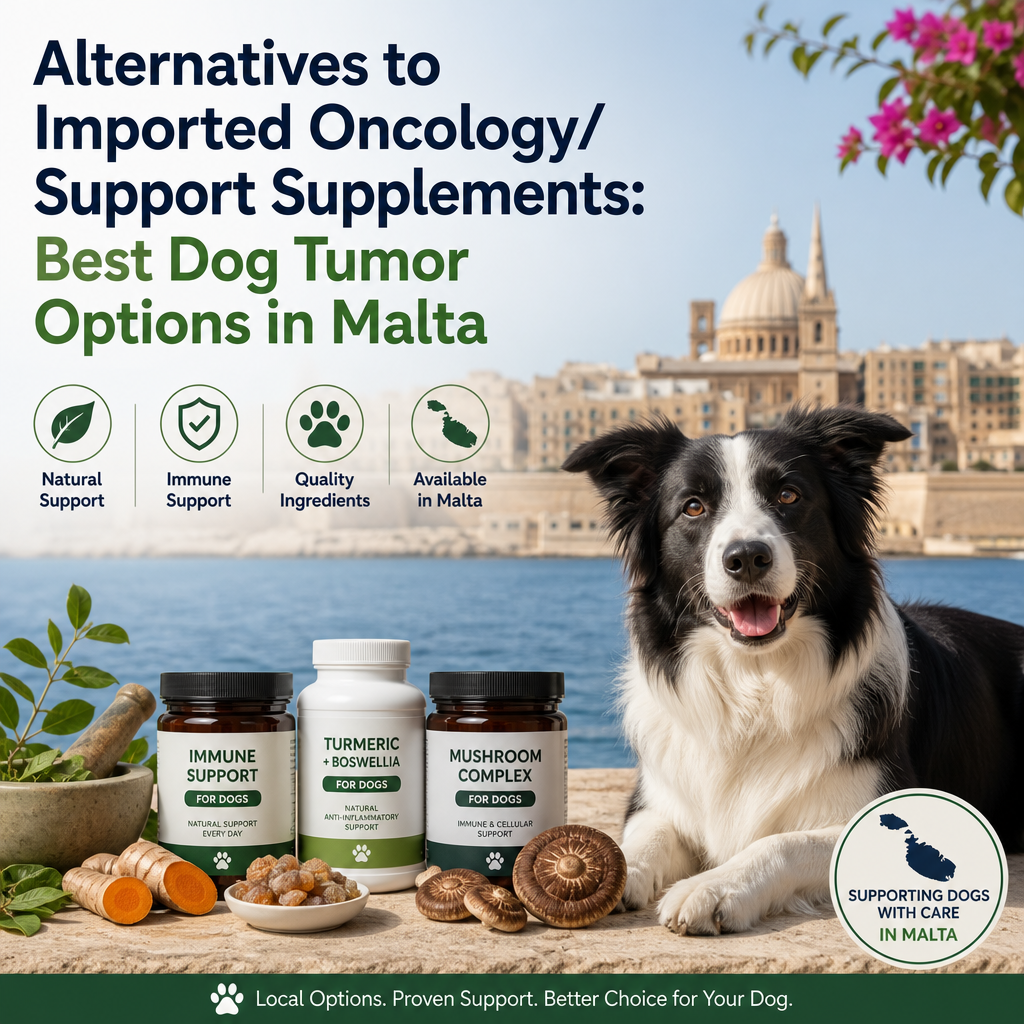
Alternatives to Imported oncology/support supplements are becoming increasingly important for dog owners in Malta who want reliable, practical, and locally accessible ways to support a dog diagnosed with cancer. Imported products can be expensive, difficult to find, or delayed by shipping and supply issues. However, choosing a suitable replacement should never mean replacing veterinary treatment. The safest approach is to combine professional medical care with carefully selected nutritional and supportive options that suit the dog’s diagnosis, medication, appetite, and overall health.
Why dog owners seek supplement alternatives in Malta
Many oncology supplements are manufactured abroad and sold through international websites. Although these products may contain useful ingredients, Maltese dog owners can face several challenges, including high delivery costs, customs delays, limited availability, unclear storage conditions, and changes in product formulation. Some supplements may also be unavailable when they are needed most.
Local alternatives can offer greater convenience and continuity. A veterinarian, veterinary pharmacy, or qualified animal nutrition professional may be able to recommend products that are available in Malta or through established European suppliers. This can make it easier to maintain a consistent routine and obtain advice about dosage, interactions, and suitability.
The most important consideration is not whether a product is imported or locally sourced. It is whether the product is safe, appropriately formulated, quality controlled, and relevant to the individual dog’s needs.
In many cases, owners are not looking for a miracle product. They are looking for a dependable plan that can be repeated every day without stress, delivery delays, or unclear instructions. That practical side matters because consistency is often what makes supportive care feel manageable during a difficult diagnosis. When the routine is easier to follow, it is also easier for the veterinary team to see whether the dog is benefiting from the chosen support.
Owners may also want to avoid products that appear impressive online but do not fit the realities of a cancer patient. A supplement that is hard to source, needs complicated handling, or has vague ingredient information may create more problems than it solves. For this reason, alternatives to Imported oncology/support supplements should always be evaluated with the same level of care as prescription medicines.
Dog tumor supplement alternatives: what should they support?
There is no single supplement that treats every type of canine cancer. Supportive products are generally used to help maintain nutrition, body condition, digestion, mobility, immune function, or quality of life during veterinary treatment.
Common goals may include:
Supporting appetite in dogs that are eating less
Providing extra calories or highly digestible nutrition
Helping maintain muscle mass and body weight
Supporting normal digestion and stool quality
Providing selected omega-3 fatty acids
Supporting joint comfort and mobility
Replacing nutrients lost through vomiting or diarrhea
Helping older or medically fragile dogs maintain daily function
A supplement should be selected according to the dog’s condition rather than based on broad claims about “fighting cancer.” A dog receiving chemotherapy may have different nutritional needs from a dog recovering from surgery, while a dog with kidney disease, liver disease, diabetes, or pancreatitis may need to avoid certain ingredients entirely.
Dog tumor supplement alternatives are most useful when they answer a specific problem. For example, a dog that is losing weight may need a calorie-dense food or a digestible topper more than a capsule advertised as a cancer support aid. A dog with nausea may need a different strategy entirely, such as smaller meals, anti-nausea medication prescribed by a vet, or a bland diet that does not irritate the stomach. Matching the support to the problem keeps care targeted and easier to assess.
This is also why the label matters so much. The same marketing term can be used on products with very different ingredients, strengths, and intended uses. Two supplements may both be described as supportive, but one might be designed for joint health while another focuses on digestive balance. Reading the details carefully helps owners choose dog tumor supplement alternatives that are actually relevant to the treatment plan.
It is worth remembering that supportive care has limits. Even when alternatives to Imported oncology/support supplements are chosen well, they do not replace surgery, chemotherapy, or radiotherapy when those treatments are recommended. Their role is to support the dog through treatment and help preserve comfort, condition, and daily function.
Food-based support and locally available nutrition
One of the simplest alternatives to imported oncology products is a carefully planned nutritional strategy. Many dogs benefit from highly digestible, complete veterinary diets, especially when appetite, digestion, or weight maintenance is a concern. These diets are usually available through veterinary clinics and pet supply providers in Malta.
In some cases, a veterinarian may approve small additions such as cooked lean meat, plain fish, or an appropriate carbohydrate source. These additions should remain balanced and should not displace the complete diet. Homemade diets can become deficient in calcium, vitamins, minerals, or essential fatty acids if they are not formulated professionally.
For dogs with poor appetite, feeding smaller meals several times a day may be more effective than offering one large portion. Warming food slightly can improve aroma, while feeding in a calm location may reduce stress. Hydration is also essential, particularly in Malta’s warm climate. Fresh water should always be available, and a veterinarian should assess any dog that is drinking excessively, vomiting, or showing signs of dehydration.
Practical food support is often easier to maintain than a long list of separate capsules or powders. A balanced diet may provide the foundation, while a targeted supplement is used only if it adds a clear benefit. That approach can reduce cost, simplify daily care, and make it easier to monitor appetite and stool quality. It also helps avoid the confusion that sometimes happens when a dog is given several imported products at once and no one is sure which one is helping.
Some owners also find that feeding schedules matter almost as much as ingredient choice. A dog with cancer may do better with gentle routine changes such as earlier meals, fewer treats that interfere with appetite, or a consistent feeding location. These small adjustments are not dramatic, but they can make a real difference when the dog is already coping with illness, medication, or a reduced interest in food.
Omega-3 fatty acids and digestive support
Omega-3 fatty acids, particularly EPA and DHA, are sometimes included in supportive nutrition plans for dogs with cancer or chronic inflammation. They may also support skin, coat, and general wellness. Fish oil products should be selected carefully, with attention to purity, concentration, oxidation, and the actual amount of EPA and DHA rather than simply the total oil volume.
Digestive support may include veterinary probiotics or specific fiber products. These can be useful for some dogs experiencing changes in stool quality, stress-related digestive upset, or treatment-associated gastrointestinal symptoms. However, not every probiotic is appropriate for every patient, and severe diarrhea, blood in the stool, repeated vomiting, or abdominal pain requires veterinary attention rather than self-treatment.
Omega-3 products are often discussed as alternatives to Imported oncology/support supplements because they are widely available and comparatively easy to source. Even so, not every fish oil is suitable for a cancer patient. Some products are too low in active omega-3 content to be useful, while others may be poorly stored or may upset the stomach if introduced too quickly. A quality product and a sensible dose matter more than the label’s marketing language.
Digestive support deserves the same careful attention. A probiotic may help one dog but be unnecessary for another, and fiber can improve stool consistency in some cases while making diarrhea or reduced appetite worse in others. The best results usually come from a gradual, monitored approach rather than from stacking multiple products at once. For dogs already receiving treatment, any new digestive aid should be discussed with the veterinary team before it is started.
When used appropriately, omega-3s and digestive aids can be practical dog tumor supplement alternatives. They may not be dramatic, but they can contribute to a steadier daily routine. That stability matters when the overall goal is to keep the dog eating, hydrated, and comfortable through ongoing care.
Herbal and “natural” products require caution
Natural products are often marketed as gentle alternatives to imported oncology supplements, but natural does not automatically mean safe. Herbal ingredients can affect blood clotting, liver enzymes, blood pressure, sedation, or the way chemotherapy and other medicines work.
Products containing concentrated turmeric, medicinal mushrooms, milk thistle, cannabidiol, or other botanicals should only be used after consultation with the treating veterinarian. The evidence for many cancer-related claims remains limited, and product quality can vary substantially. Supplements purchased online may contain inaccurate ingredient levels, contaminants, or ingredients that are not clearly declared.
Avoid products that promise to cure tumors, replace chemotherapy, or guarantee rapid results. Responsible supportive care focuses on measurable goals such as maintaining appetite, weight, comfort, energy, and hydration.
This caution is especially important when owners are under pressure to “do something” quickly. Cancer diagnoses can create urgency, and that urgency can make bold claims sound convincing. Still, a product is only useful if it can be used safely alongside the dog’s existing treatment plan. That is why alternatives to Imported oncology/support supplements should be reviewed just as carefully as prescription medications.
If a product contains several herbs, extracts, or proprietary blends, the risk of uncertainty increases. It may be impossible to tell which ingredient is responsible for a side effect or whether the dose is appropriate for a small or medically fragile dog. Clear labeling, dependable sourcing, and professional guidance are far more valuable than vague promises. In supportive cancer care, clarity is a major advantage.
Finding reliable options in Malta
When comparing alternatives in Malta, start with the dog’s veterinary team. Ask whether the proposed product is suitable alongside surgery, chemotherapy, radiation, steroids, pain medication, antibiotics, or other prescriptions. A veterinary clinic may also identify locally stocked products or trusted European suppliers with appropriate quality controls.
Check the label for:
Full ingredient quantities
Manufacturer and batch information
Expiry date and storage instructions
Species and weight guidance
Contact details for the manufacturer
Independent quality or laboratory testing where available
Keep a written record of every supplement, including the brand, dose, and starting date. This helps the veterinarian identify possible side effects or interactions. Introduce only one new product at a time, unless a veterinary professional gives different instructions.
It can also help to ask practical questions before buying. Is the product available consistently from a local supplier? Does it need refrigeration? Is the dose easy to measure? Will it fit into the dog’s daily routine without creating conflict at mealtimes? These details may seem small, but they often determine whether a supplement is actually sustainable over weeks or months.
For dogs whose owners are comparing supportive care options for different breeds, it can be helpful to read broader cancer-awareness resources as well. Breed-specific information often gives a clearer picture of why early monitoring matters and why supplementation should never be viewed in isolation. For example, the article on Irish Setter Cancer Risks: Essential Early Tumor Signs to Know provides useful context for owners who want to understand tumor risk and early detection.
Monitoring the dog’s response
Supportive supplements should be evaluated by their practical effect. Owners can monitor appetite, body weight, stool quality, vomiting, drinking, energy, mobility, sleep, and general comfort. Sudden weight loss, persistent lethargy, difficulty breathing, uncontrolled pain, repeated vomiting, or refusal to eat should be reported promptly.
A product that is tolerated by one dog may cause problems in another. For this reason, dog tumor supplement alternatives should be personalized and reviewed regularly. The goal is to support quality of life without adding unnecessary cost, digestive stress, or treatment complications.
Keeping notes on appetite and weight can be especially useful when using alternatives to Imported oncology/support supplements. Even a simple weekly record can show whether the dog is maintaining condition or slipping slowly over time. If the dog’s response changes, that information helps the veterinary team adjust the plan sooner rather than later.
Owners should also watch for subtle changes that may not seem urgent at first. A dog that is slightly less enthusiastic at mealtimes, sleeping more, or drinking differently may be signaling that the current support plan needs review. That is another reason regular follow-up is valuable: it keeps supportive care aligned with the dog’s real-world needs rather than with assumptions made at the start of treatment.
For dog owners in Malta, locally accessible nutrition, veterinary-approved supplements, careful monitoring, and regular medical follow-up can provide meaningful support when imported products are unavailable. The best plan is not necessarily the most expensive or heavily marketed option; it is the one that is safe, transparent, practical, and appropriate for the dog’s complete medical picture. In many cases, the most effective alternatives to Imported oncology/support supplements are the ones that keep treatment consistent, reduce delays, and fit the dog’s everyday needs.
When comparing alternatives to Imported oncology/support supplements, focus on safety, evidence, and convenience rather than bold promises. The right support plan may include diet adjustments, omega-3s, probiotics, and other veterinary-approved products, but it should always be tailored to the dog’s diagnosis and overall health. With good guidance, alternatives to Imported oncology/support supplements can be a practical part of a wider cancer-care plan in Malta.
Choosing alternatives to Imported oncology/support supplements safely starts with a clear conversation with the veterinary team. Ask which ingredients are most useful for the dog’s current treatment plan, which products are available locally, and which options should be avoided because of drug interactions or medical conditions. This approach is especially helpful when appetite changes, digestive issues, or weight loss are part of the cancer journey.
Before buying anything, compare labels, dosing directions, and the company’s quality information. A product that looks appealing online may not be the best match for your dog’s stage of disease or medication schedule. When in doubt, the most practical alternatives to Imported oncology/support supplements are usually the ones that are transparent, easy to source, and simple to use consistently.
It also helps to keep expectations realistic. Supportive care may improve comfort, energy, and nutritional intake, but it is not a substitute for surgery, chemotherapy, pain control, or follow-up exams. With the right guidance, alternatives to Imported oncology/support supplements can complement treatment without adding unnecessary complications.
What to ask your veterinarian about alternatives to Imported oncology/support supplements
When discussing alternatives to Imported oncology/support supplements, ask whether the product is appropriate for the dog’s diagnosis, current medications, and eating habits. It is also worth asking how long the product should be used, what benefits to watch for, and which warning signs would mean it should be stopped. Clear instructions make it easier to track whether the support plan is actually helping.
If your dog has a sensitive stomach, a history of pancreatitis, or another chronic illness, the same supplement may not be suitable for every case. That is why alternatives to Imported oncology/support supplements should be viewed as part of an individualized plan rather than a one-size-fits-all solution. The right choice is the one that supports daily comfort and fits the dog’s broader medical needs.
For owners who want to stay organized, a simple log of meals, supplements, symptoms, and medication times can be very useful. This makes follow-up appointments more productive and helps the veterinary team refine the plan over time. In many households, alternatives to Imported oncology/support supplements become most effective when they are paired with careful observation and regular check-ins.
Another helpful habit is to review the plan after any change in treatment, appetite, or mobility. A supplement that made sense during recovery from surgery may not be the best fit during chemotherapy or in a later stage of illness. Regular reassessment keeps the support plan responsive and prevents the dog from being stuck with something that no longer serves a clear purpose.
For owners who want broader context on tumor awareness and early detection, the article on Keeshond Cancer Risks: Essential Early Tumor Signs to Know is another useful read. Education, observation, and veterinary follow-up work best together, especially when the goal is to choose practical alternatives to Imported oncology/support supplements that can be maintained safely over time.