by TCMVET | Aug 14, 2026 | Research and News
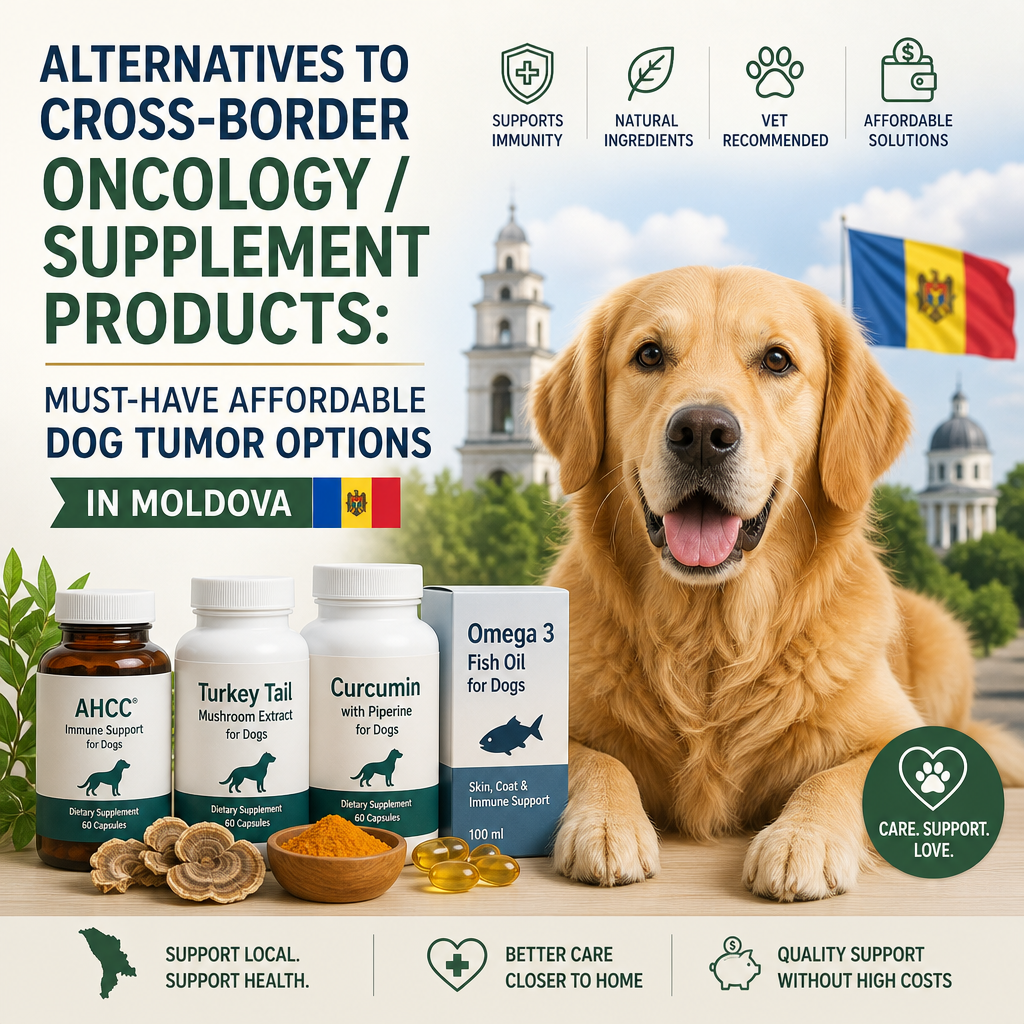
Alternatives to Cross-border oncology / supplement products can help Moldovan dog owners explore practical, affordable ways to support a pet with a tumor. However, no supplement should replace a veterinary diagnosis or proven cancer treatment. The most suitable plan depends on the tumor type, its location, the dog’s age, overall health, and the treatments available locally. With careful guidance, families in Moldova can often find safe support options without relying exclusively on expensive imported products.
Understanding dog tumors before choosing supplements
A “tumor” may be benign or malignant, and different cancers behave very differently. A lump could be a lipoma, mast cell tumor, mammary tumor, soft-tissue sarcoma, or another condition requiring specific care. Appearance alone cannot reliably identify it. A veterinarian may recommend a fine-needle aspiration, biopsy, blood tests, ultrasound, or X-rays before deciding on treatment.
This step is essential because supplements can interact with chemotherapy, anti-inflammatory medicines, anesthesia, or other drugs. Some products may also affect blood clotting, liver enzymes, blood pressure, or kidney function. The safest dog tumor supplement alternatives are therefore those selected after a veterinary review rather than purchased solely because of online claims.
When owners search for alternatives to Cross-border oncology / supplement products, they often want something affordable and easy to obtain. That goal is reasonable, but the first decision should always be diagnostic clarity. Without a clear diagnosis, even a well-intended product can waste money or delay care.
It also helps to recognize that a dog with cancer may look healthy for a while, even when the tumor is changing. Early veterinary assessment can make a real difference, especially when a lump is growing quickly, ulcerating, or causing pain. In many cases, the best alternatives to Cross-border oncology / supplement products begin with information rather than shopping. Knowing what type of tumor is present can prevent unnecessary spending and steer the family toward the most appropriate care.
If the dog has multiple health conditions, the veterinarian may prioritize the most urgent issue first. For example, a pet with a heart murmur, kidney concerns, or a history of digestive disease may need a more cautious plan than a dog with no other medical problems. This is another reason why dog tumor supplement alternatives should be chosen individually, not as one-size-fits-all products.
For owners who want a broader view of breed-related cancer risk and early warning signs, Chest Lumps Dogs: Helpful Tumor Causes Insight can help with early evaluation when a new mass is found.
Dog tumor supplement alternatives available through local care
For households searching for dog tumor supplement alternatives in Moldova, the first priority should be dependable nutrition and symptom control. These options are often more accessible than cross-border oncology products and may provide meaningful support during treatment.
Complete, balanced nutrition for alternatives to Cross-border oncology / supplement products
A dog with cancer needs adequate calories, protein, vitamins, and minerals. A complete commercial veterinary diet may be useful, especially when appetite, digestion, or body weight is changing. Standard high-quality dog food can also be appropriate if the dog is eating well and the veterinarian approves it.
Homemade diets require particular caution. Meat-only meals, excessive liver, raw diets, or unbalanced recipes can cause nutritional deficiencies or worsen digestive problems. If a homemade plan is necessary, it should be formulated by a veterinary nutrition professional. In Moldova, owners can ask local veterinary clinics whether they can provide a balanced recipe or refer them to a specialist.
Food choices are often the most practical of the alternatives to Cross-border oncology / supplement products because they can be adjusted quickly and monitored easily. A dog that keeps eating, maintains weight, and stays hydrated often tolerates treatment better than a dog receiving random supplements with little nutritional value.
In some cases, the veterinarian may suggest feeding smaller, more frequent meals, warming food slightly to improve aroma, or switching textures to make chewing easier. These simple adjustments can be more effective than an expensive supplement. They also fit naturally into a broader plan of alternatives to Cross-border oncology / supplement products because they address real-world problems such as nausea, weak appetite, or mouth discomfort.
Omega-3 fatty acids
Fish oil containing EPA and DHA is commonly discussed as supportive nutrition for dogs with inflammatory conditions and some cancers. It may help maintain skin, coat, and general nutritional status, but it is not a tumor cure. Product quality and dosage matter. Human fish-oil capsules may contain added ingredients or provide unsuitable concentrations, while low-quality oils can become rancid.
A veterinarian should determine whether omega-3 supplementation is appropriate, particularly if the dog has pancreatitis, a bleeding disorder, or is taking anticoagulant medication. The product should be stored carefully and introduced gradually to reduce the risk of diarrhea.
Because omega-3 products are widely available, they are often considered among the most accessible dog tumor supplement alternatives. Still, they are only helpful when they fit the medical plan and the dog’s digestive tolerance. When used correctly, they may complement treatment; when used casually, they can create more problems than they solve.
Digestive and appetite support
Cancer treatment, pain, stress, and illness can reduce appetite or cause nausea. In these cases, a veterinary anti-nausea medicine, appetite stimulant, probiotic, or digestive support product may be more useful than a broad “immune booster.” These treatments are selected according to the specific symptom and are often available through veterinary pharmacies or clinics in Moldova.
Owners should contact a veterinarian if a dog refuses food for more than a short period, vomits repeatedly, develops persistent diarrhea, or loses weight quickly. Early intervention can prevent dehydration and weakness. In many cases, careful symptom control is one of the best dog tumor supplement alternatives because it directly improves comfort and eating behavior.
Owners often want something they can start immediately, and that urgency is understandable. A symptom-based plan can provide fast support while diagnostic work continues. Compared with broad, unverified products, these targeted alternatives to Cross-border oncology / supplement products are easier to monitor and safer to adjust when the dog’s condition changes.
Pain management
Comfort care is one of the most important and affordable forms of support. A dog experiencing pain may hide, pant, limp, sleep poorly, withdraw from family members, or become unusually irritable. Veterinary-prescribed pain relief can improve appetite, movement, and quality of life.
Human painkillers such as ibuprofen, paracetamol, aspirin, and diclofenac can be dangerous or fatal for dogs when used incorrectly. Never substitute household medication for a veterinary prescription. Pain management may include veterinary anti-inflammatory drugs, analgesics, or other therapies depending on the tumor and the dog’s condition.
For many families, pain control is more valuable than buying another unproven product. If funds are limited, a clear discussion with the clinic about pain relief can help identify the most cost-effective path among the alternatives to Cross-border oncology / supplement products.
Pain relief is especially important when the tumor is in the mouth, chest, abdomen, or limbs, because discomfort can affect eating, breathing, walking, and sleep. A practical plan may use a single reliable medicine rather than several overlapping supplements. That simplicity often improves consistency and reduces confusion at home.
Affordable local options in Moldova
When imported products are costly or difficult to obtain, owners can discuss locally accessible alternatives with veterinary professionals. These may include diagnostic services at regional clinics, generic veterinary medicines approved for animals, locally stocked nutritional diets, and basic supportive care.
Moldovan veterinary practices may vary in access to oncology specialists, imaging, surgery, and chemotherapy. A second opinion from a larger clinic in Chișinău or another regional center can help clarify which treatments are realistic. Ask for a written estimate that separates diagnostic costs, surgery, medication, monitoring, and follow-up appointments. This makes it easier to compare options and focus spending on interventions most likely to improve survival or comfort.
Charitable organizations, rescue groups, and veterinary initiatives may occasionally provide assistance for cancer diagnosis or treatment. Availability changes, so owners should verify current programs directly with clinics and animal welfare organizations.
When comparing alternatives to Cross-border oncology / supplement products, it helps to think in terms of value rather than price alone. A basic ultrasound, a biopsy, or a few follow-up visits may deliver more benefit than an expensive supplement with uncertain ingredients.
Pet owners can also ask whether a clinic offers staged care. For example, the veterinarian may first stabilize pain and appetite, then recommend imaging, and only then discuss surgery or chemotherapy. This step-by-step approach often makes treatment more manageable for households on a budget.
Some clinics can also help owners prioritize treatment based on quality of life. If a tumor is advanced and aggressive, it may be more helpful to invest in comfort measures, home monitoring, and simple diagnostics than to chase complicated products online. In that sense, affordable local care is often one of the most realistic alternatives to Cross-border oncology / supplement products.
Reliable information sources
Before buying any product, it is wise to check evidence-based guidance from veterinary organizations. The American College of Veterinary Internal Medicine provides useful educational material on many health conditions and treatment considerations at ACVIM. Reading reputable information can help owners distinguish supportive care from marketing claims and choose safer dog tumor supplement alternatives.
For additional general cancer information, the American Veterinary Medical Association’s cancer in pets guidance is a useful reference for understanding symptoms, treatment discussions, and the importance of veterinary follow-up.
Supplements that require caution
Many online oncology supplements contain herbs, antioxidants, mushrooms, or concentrated plant extracts. “Natural” does not automatically mean safe. Some ingredients may interfere with chemotherapy or surgery, while others may be contaminated, incorrectly labeled, or unsupported by reliable canine research.
High-dose antioxidants deserve special caution during certain cancer treatments because they may theoretically alter treatment effects. Herbal products can also affect liver metabolism and bleeding risk. Avoid products that promise to dissolve tumors, replace surgery, or cure advanced cancer without evidence. Be especially skeptical of dramatic testimonials, secret formulas, and products sold without clear ingredient lists, batch information, or dosing instructions.
These warnings matter because the phrase alternatives to Cross-border oncology / supplement products is often used in marketing. A practical alternative should be transparent, vet-guided, and easy to monitor. If a supplement cannot clearly explain its ingredients, expected benefits, and possible risks, it is usually not a good choice.
It is also worth remembering that more pills do not always mean better care. When a dog is already dealing with cancer, the safest approach is usually the simplest effective one.
Owners should be cautious with any product that claims to support the immune system in a vague or dramatic way. Some of these formulas may duplicate ingredients, interact with prescription medicines, or create digestive upset that makes it harder for the dog to eat. A better approach is to ask the veterinarian whether a product has a clear purpose, such as appetite support, stool quality, or calorie intake.
If a supplement is being considered alongside surgery or chemotherapy, timing matters. A clinic may recommend stopping certain supplements before procedures to reduce the risk of bleeding or anesthesia complications. That is one more reason the best alternatives to Cross-border oncology / supplement products are the ones chosen with a veterinarian, not in isolation.
Creating a practical support plan
A useful plan begins with the veterinarian’s diagnosis and goals of care. These goals may include removing a localized tumor, slowing disease progression, controlling pain, maintaining weight, or preserving normal daily activities. A written plan should cover medication schedules, nutrition, activity, follow-up tests, and warning signs.
At home, monitor appetite, water intake, breathing, bowel movements, mobility, sleep, and interest in family interaction. Keep a simple daily record and note changes in weight or the size of an external mass. Seek urgent veterinary help for severe breathing difficulty, uncontrolled bleeding, repeated vomiting, collapse, inability to urinate, intense pain, or sudden neurological changes.
A practical support plan can combine several of the alternatives to Cross-border oncology / supplement products without becoming complicated. For example, a dog may need a prescription pain reliever, a calorie-dense diet, and a probiotic while diagnostic work continues. That kind of focused support is often safer than buying multiple supplements at once.
If the veterinarian recommends surgery or chemotherapy, ask what can be done locally and what truly requires referral. That conversation may reveal that some services are already available in Moldova, while others can be postponed or replaced with lower-cost supportive care.
Owners can also ask about monitoring frequency. A dog that is stable may only need periodic checkups, while a dog whose tumor is changing may need more frequent reassessment. This follow-up is a key part of cancer support and should be considered alongside any dog tumor supplement alternatives. The goal is not to collect products, but to support the dog’s comfort and quality of life in a measurable way.
Practical planning also includes household readiness. Keep a medication list, clinic phone number, and note of the dog’s normal behavior so changes are easier to spot. Small habits like weighing the dog regularly or photographing an external lump can provide useful evidence for the veterinarian. These simple steps can make alternatives to Cross-border oncology / supplement products more effective because they are guided by real observations rather than assumptions.
For owners comparing local treatment paths, reading about breed-specific tumor patterns can also be helpful. If the patient is a breed with elevated cancer risk, early monitoring becomes even more important, and supportive care decisions may need to happen sooner rather than later.
The best alternatives to Cross-border oncology / supplement products are not necessarily another expensive supplement. In many cases, the greatest value comes from accurate diagnosis, balanced food, appropriate pain control, reliable veterinary medicines, and regular monitoring. Dog tumor supplement alternatives can play a supportive role, but they should be chosen carefully and used as part of a broader medical plan.
For pet owners in Moldova, combining local veterinary expertise with transparent budgeting can make cancer care more manageable. A safe, evidence-aware approach protects the dog from harmful products while ensuring that available resources are directed toward comfort, nutrition, diagnosis, and treatment with the strongest practical benefit.
In short, the most useful alternatives to Cross-border oncology / supplement products are usually the ones that help the dog feel better, eat well, and receive timely veterinary care. That may mean fewer supplements, not more, but it often leads to better results.
When families focus on the dog’s day-to-day comfort, it becomes easier to choose wisely. A thoughtful plan may include locally available medicines, a better diet, targeted symptom relief, and a clear follow-up schedule. Those practical steps often outperform vague promises from imported products and make the overall treatment journey less stressful for both the dog and the owner.
For many households, the most hopeful path is not the most complicated one. It is the path that combines veterinary guidance, realistic budgeting, and careful attention to how the dog actually feels from day to day. That approach gives the best chance of making alternatives to Cross-border oncology / supplement products truly useful rather than merely expensive.

by TCMVET | Aug 14, 2026 | Research and News
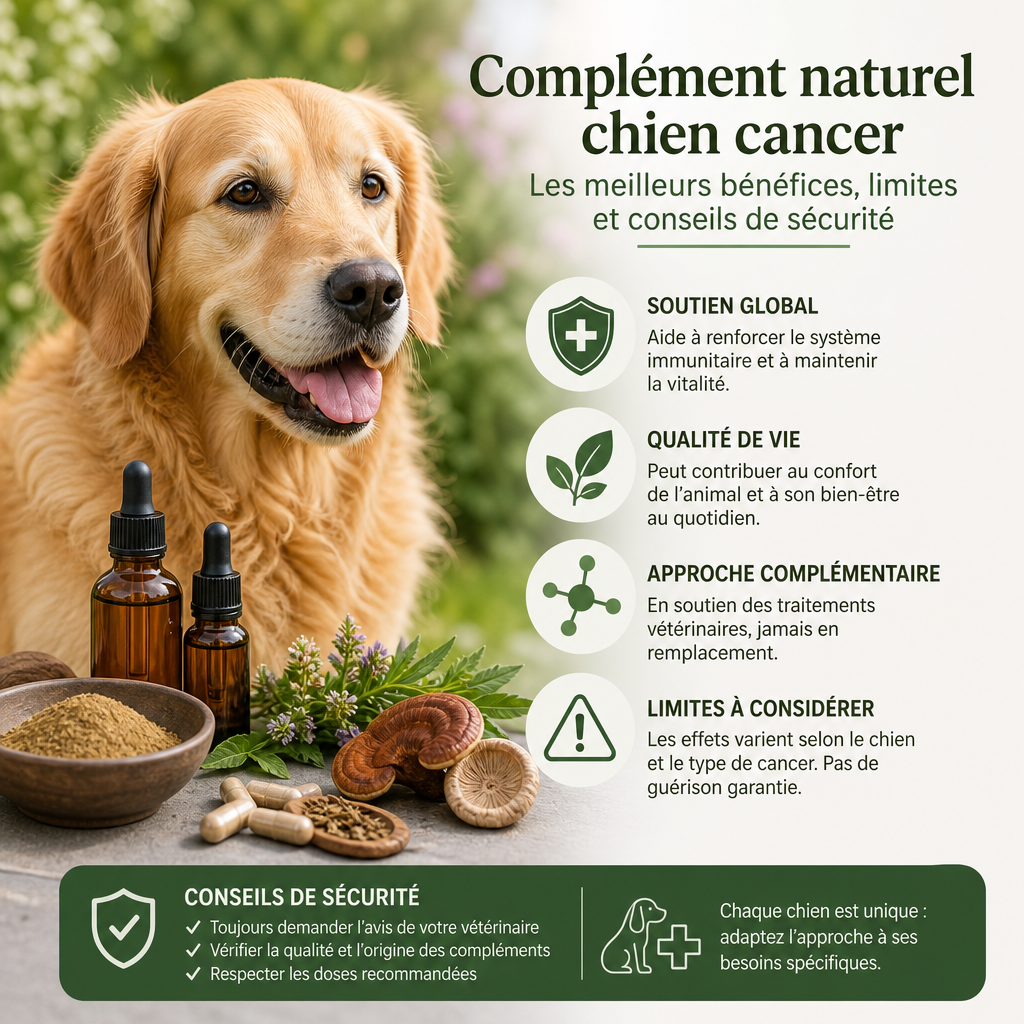
Le complément naturel chien cancer intéresse de nombreux propriétaires qui cherchent à soutenir leur animal pendant la maladie. Certains produits peuvent contribuer au confort, à l’appétit ou au maintien de l’état général, mais ils ne remplacent jamais un diagnostic vétérinaire ni un traitement oncologique adapté. Pour être réellement utile, une supplémentation doit être choisie avec prudence, selon le type de cancer, le protocole suivi et les besoins individuels du chien.
Pour approfondir les bases de l’alimentation et du bien-être, vous pouvez aussi consulter des ressources vétérinaires reconnues comme la page de référence de Cornell sur le cancer chez les animaux.
Pourquoi envisager un complément alimentaire chien cancer ?
Le cancer peut entraîner une perte d’appétit, une fonte musculaire, de la fatigue, des troubles digestifs ou une diminution de la qualité de vie. Les traitements, notamment la chirurgie, la chimiothérapie ou la radiothérapie, peuvent également modifier les besoins nutritionnels et la tolérance digestive. Dans ce contexte, un complément naturel chien cancer peut parfois aider à soutenir le confort général.
Un complément peut avoir plusieurs objectifs :
- soutenir l’apport énergétique lorsque l’alimentation devient difficile ;
- aider au maintien de la masse musculaire ;
- favoriser une bonne digestion ;
- contribuer à la santé de la peau et du pelage ;
- accompagner le confort général et la vitalité ;
- corriger une carence identifiée par le vétérinaire.
Il est toutefois essentiel de distinguer un soutien nutritionnel d’un traitement anticancéreux. Aucun complément naturel ne peut garantir la guérison d’un cancer, empêcher systématiquement sa progression ou remplacer une prise en charge médicale.
Dans les cas où l’appétit baisse nettement, l’aide d’un complément naturel chien cancer peut être utile, mais seulement dans une stratégie globale adaptée à l’animal.
Les principaux ingrédients utilisés en soutien naturel chien cancer
Les formules destinées aux chiens atteints de cancer peuvent contenir différents ingrédients. Leur intérêt dépend de la qualité du produit, de la dose, de la situation clinique et des traitements associés. Le choix d’un complément naturel chien cancer doit donc rester individualisé.
Les acides gras oméga-3
Les oméga-3, principalement l’EPA et le DHA issus d’huiles de poisson, sont souvent étudiés pour leur rôle dans l’inflammation et le métabolisme. Ils peuvent aussi participer au maintien de la peau, du pelage et de certaines fonctions cellulaires.
Chez un chien malade, ils sont parfois proposés pour soutenir l’état général ou aider à préserver la masse musculaire. Cependant, leur dosage doit être adapté au poids de l’animal. Une huile mal conservée ou de mauvaise qualité peut s’oxyder et perdre son intérêt.
Avant d’utiliser ce type d’aide nutritionnelle, il est utile de vérifier si le complément naturel chien cancer choisi précise bien les teneurs en EPA et DHA, et non seulement la quantité totale d’huile.
Les antioxydants
La vitamine E, la vitamine C, le sélénium ou certains extraits végétaux possèdent des propriétés antioxydantes. Ils sont parfois intégrés aux compléments destinés à soutenir les défenses naturelles de l’organisme.
La prudence est indispensable pendant une chimiothérapie ou une radiothérapie. Certains traitements utilisent des mécanismes liés au stress oxydatif, et une supplémentation importante en antioxydants pourrait théoriquement interférer avec leur action. La décision doit donc revenir au vétérinaire oncologue.
Les probiotiques et les fibres
Les probiotiques et certaines fibres peuvent contribuer à l’équilibre du microbiote intestinal. Ils peuvent être envisagés lorsque le chien souffre de selles molles, de diarrhées liées au traitement ou d’une digestion perturbée.
Tous les probiotiques ne se valent pas. Il est préférable de choisir un produit formulé pour les chiens, avec des souches clairement identifiées et des recommandations précises. En cas de diarrhée importante, de sang dans les selles ou de vomissements répétés, une consultation est nécessaire plutôt qu’une simple automédication.
Les plantes et extraits végétaux
Le curcuma, le chardon-Marie, le chanvre ou certaines plantes médicinales sont parfois présentés comme des solutions naturelles. Leur popularité ne signifie pas qu’ils soient automatiquement efficaces ou sans danger.
Les plantes peuvent influencer le foie, les reins, la coagulation ou l’absorption de médicaments. Elles peuvent également provoquer des troubles digestifs ou des réactions indésirables. Un produit naturel reste un produit actif, et son utilisation doit être encadrée.
Dans une démarche de soutien naturel chien cancer, il est donc utile de s’en tenir à des produits documentés et à des usages cohérents avec l’état clinique de l’animal.
Un complément naturel chien cancer ne doit jamais être choisi uniquement pour son image « douce » : la composition, la dose et les interactions comptent davantage que le marketing.
Quand un complément peut aider au quotidien
Dans certaines situations, un complément peut rendre le quotidien plus confortable. Lorsque le chien mange moins, refuse certaines textures ou se fatigue rapidement, une approche nutritionnelle ciblée peut aider à maintenir un meilleur apport global. C’est l’une des raisons pour lesquelles un complément naturel chien cancer est parfois intégré au plan de soutien.
On pense notamment aux cas suivants :
- période de récupération après une chirurgie ;
- baisse d’appétit transitoire pendant un traitement ;
- digestion fragile avec selles irrégulières ;
- amaigrissement progressif malgré les repas ;
- fatigue nécessitant un soutien nutritionnel mieux adapté.
Il est utile de rappeler qu’un complément agit rarement seul. Il fonctionne mieux quand l’alimentation de base reste adaptée, appétente et facile à digérer. Dans ce contexte, un complément naturel chien cancer doit être vu comme un appui ponctuel ou ciblé, non comme une solution globale.
Le propriétaire peut aussi observer certains signaux de confort : un animal qui se remet à manger un peu mieux, qui vomit moins, ou qui retrouve davantage d’entrain. Ces améliorations sont intéressantes, mais elles ne doivent jamais masquer une évolution défavorable de la maladie. Un suivi vétérinaire régulier reste indispensable.
Les limites d’un complément naturel chien cancer
La première limite concerne le manque de preuves solides pour de nombreux produits. Certaines substances ont fait l’objet d’études préliminaires, mais les résultats obtenus en laboratoire ou sur un petit nombre d’animaux ne permettent pas toujours de conclure à une efficacité clinique.
La deuxième limite est la variabilité de la qualité. Les compléments ne sont pas tous soumis aux mêmes contrôles rigoureux. La concentration réelle en principes actifs peut différer de celle annoncée, et certains produits peuvent contenir des contaminants ou des ingrédients non indiqués.
Enfin, un complément naturel chien cancer ne corrige pas une cause majeure de dégradation de l’état général. Une douleur mal contrôlée, une déshydratation, une infection, une obstruction ou une perte de poids importante nécessitent une prise en charge vétérinaire. Retarder les soins en espérant un effet naturel peut aggraver le pronostic.
Il faut aussi rappeler qu’un complément naturel chien cancer peut paraître rassurant parce qu’il est perçu comme « doux », alors qu’il reste capable de provoquer des effets indésirables ou des interactions.
La prudence est d’autant plus importante lorsque le chien reçoit déjà plusieurs médicaments, car même un complément naturel chien cancer bien toléré chez un animal sain peut devenir inadapté en contexte oncologique.
Les risques les plus fréquents à surveiller
Les effets indésirables les plus courants restent souvent digestifs : selles molles, gaz, nausées, baisse d’appétit ou vomissements. D’autres réactions peuvent être plus discrètes, comme une fatigue accrue, une agitation inhabituelle ou une modification de la soif. Dès qu’un changement apparaît après l’introduction d’un complément naturel chien cancer, il faut envisager un lien possible.
Les risques ne sont pas identiques selon les ingrédients. Les huiles riches en oméga-3 peuvent parfois ne pas convenir à certains chiens sensibles. Les extraits végétaux peuvent poser problème si le foie ou les reins sont déjà fragilisés. C’est pourquoi la règle la plus raisonnable reste de ne jamais cumuler plusieurs nouveautés en même temps.
Pourquoi l’automédication peut compliquer la prise en charge
Quand on multiplie les essais, il devient difficile de savoir ce qui aide réellement et ce qui gêne. Un chien atteint de cancer peut déjà recevoir des anti-nauséeux, des antalgiques, des antibiotiques ou des traitements spécifiques. Ajouter sans avis professionnel un complément naturel chien cancer peut compliquer l’équilibre général.
Une démarche simple est souvent la meilleure : un produit à la fois, un objectif clair, une durée d’essai définie et une surveillance attentive. Cette méthode limite les risques et facilite la décision du vétérinaire si un ajustement devient nécessaire.
Conseils de sécurité avant toute supplémentation
Avant d’introduire un soutien naturel chien cancer, il convient de communiquer au vétérinaire la liste complète des produits utilisés. Cette liste doit inclure les médicaments prescrits, les huiles, les plantes, les friandises enrichies et les compléments achetés sans ordonnance.
Le vétérinaire pourra notamment vérifier :
- les interactions possibles avec la chimiothérapie ou les autres médicaments ;
- l’état du foie et des reins ;
- la présence de troubles de la coagulation ;
- le risque de vomissements ou de diarrhée ;
- la pertinence de l’ingrédient selon le type de tumeur ;
- la dose adaptée au poids et à l’état de santé du chien.
Il est préférable d’introduire un seul produit à la fois, à faible dose si le professionnel le recommande, afin d’identifier plus facilement une éventuelle intolérance. Il faut aussi surveiller l’appétit, les selles, les vomissements, la soif, l’énergie et le poids.
Si vous hésitez sur la nécessité d’un complément naturel chien cancer, l’avis du vétérinaire reste la meilleure façon de réduire les risques et d’éviter les produits inutiles.
Pour un cadre de référence fiable sur les signes généraux du cancer et la surveillance médicale, consultez aussi les informations de la American Cancer Society sur les approches complémentaires.
Il est également utile de noter la date de début, le dosage exact et les changements observés. Ce suivi simple aide à savoir si le complément naturel chien cancer apporte un bénéfice réel ou s’il faut l’arrêter. Chez un animal fragile, la sécurité repose souvent sur la constance et sur des décisions progressives, pas sur des essais multiples et confus.
Comment choisir un produit de qualité ?
Un complément alimentaire chien cancer fiable doit présenter une composition détaillée, les quantités précises de chaque ingrédient, les recommandations d’utilisation et les précautions d’emploi. Les promesses de guérison, de destruction des cellules cancéreuses ou de remplacement de la chimiothérapie doivent alerter.
Privilégiez les marques transparentes sur l’origine des matières premières et les contrôles de qualité. Pour les huiles, vérifiez les teneurs en EPA et DHA plutôt que la simple mention « huile de poisson ». Pour les produits à base de plantes, recherchez le nom exact de l’extrait et sa concentration.
L’alimentation quotidienne reste également fondamentale. Une ration complète, appétente et adaptée aux besoins du chien constitue la base du soutien nutritionnel. Dans certains cas, un vétérinaire nutritionniste peut proposer une stratégie personnalisée, notamment en présence d’amaigrissement ou de fonte musculaire.
Pour les propriétaires qui cherchent un complément naturel chien cancer, la qualité du produit compte souvent davantage que la quantité d’ingrédients mis en avant sur l’étiquette.
Un bon repère consiste à vérifier si le fabricant fournit des analyses, une traçabilité claire et des recommandations cohérentes avec l’usage réel du complément naturel chien cancer.
Une marque sérieuse explique aussi clairement à quel type de chien le produit s’adresse, ce qu’il ne peut pas faire et dans quelles situations il faut demander un avis médical. Cette transparence est particulièrement importante lorsqu’on choisit un complément naturel chien cancer.
Questions utiles à poser avant d’acheter
- Le produit est-il formulé pour les chiens et non pour l’humain ?
- Les ingrédients actifs sont-ils indiqués avec leur dose exacte ?
- Existe-t-il une notice claire sur les précautions d’emploi ?
- Le fabricant donne-t-il des recommandations en cas de traitement en cours ?
- Le produit est-il compatible avec l’objectif visé : digestion, appétit, soutien général ?
Ces questions simples aident à faire un choix plus sûr et plus cohérent. Elles évitent aussi de confondre communication commerciale et utilité réelle du complément naturel chien cancer.
Le rôle essentiel du suivi vétérinaire
Le meilleur accompagnement repose sur une combinaison de soins : traitement du cancer, contrôle de la douleur, prévention des nausées, alimentation adaptée, activité modérée et surveillance régulière. Un complément peut s’intégrer à cette approche, mais il doit rester un outil secondaire et personnalisé.
Le suivi permet d’évaluer objectivement les bénéfices. Une amélioration de l’appétit ou du confort peut être positive, tandis qu’une perte de poids persistante, une fatigue extrême ou des troubles digestifs nécessitent une réévaluation rapide. L’objectif principal doit toujours être la qualité de vie du chien, dans le respect de ses besoins et de ses limites.
En résumé, un complément naturel chien cancer peut parfois apporter un soutien intéressant, surtout sur le plan nutritionnel ou digestif. Son efficacité dépend cependant du contexte médical, et sa sécurité repose sur un choix raisonné, une qualité contrôlée et l’avis d’un vétérinaire. Naturel ne signifie ni inoffensif ni curatif : la prudence et le suivi restent les meilleures protections pour accompagner son animal.
Lorsque le produit est bien choisi, le complément naturel chien cancer peut s’inscrire dans une démarche de confort et de qualité de vie, sans jamais remplacer les soins vétérinaires essentiels. C’est cette approche mesurée, réaliste et personnalisée qui offre le meilleur équilibre entre bénéfice potentiel et sécurité.
Pour aller plus loin, gardez en tête qu’un complément naturel chien cancer doit toujours servir l’intérêt du chien, et non l’inverse. La priorité reste de soutenir l’animal avec des choix simples, documentés et validés par un professionnel de santé vétérinaire.
by TCMVET | Aug 14, 2026 | Research and News
Alternatives to Cross-Border Supplements can help dog owners in Kosovo find practical, reliable ways to support a pet diagnosed with a tumor. However, supplements should never replace veterinary diagnosis, surgery, chemotherapy, radiation, pain control, or other recommended treatment. The best approach combines professional veterinary guidance with safe nutrition, symptom management, and carefully selected products that are available through legitimate local or regional sources.
Why owners look for dog tumor supplement alternatives
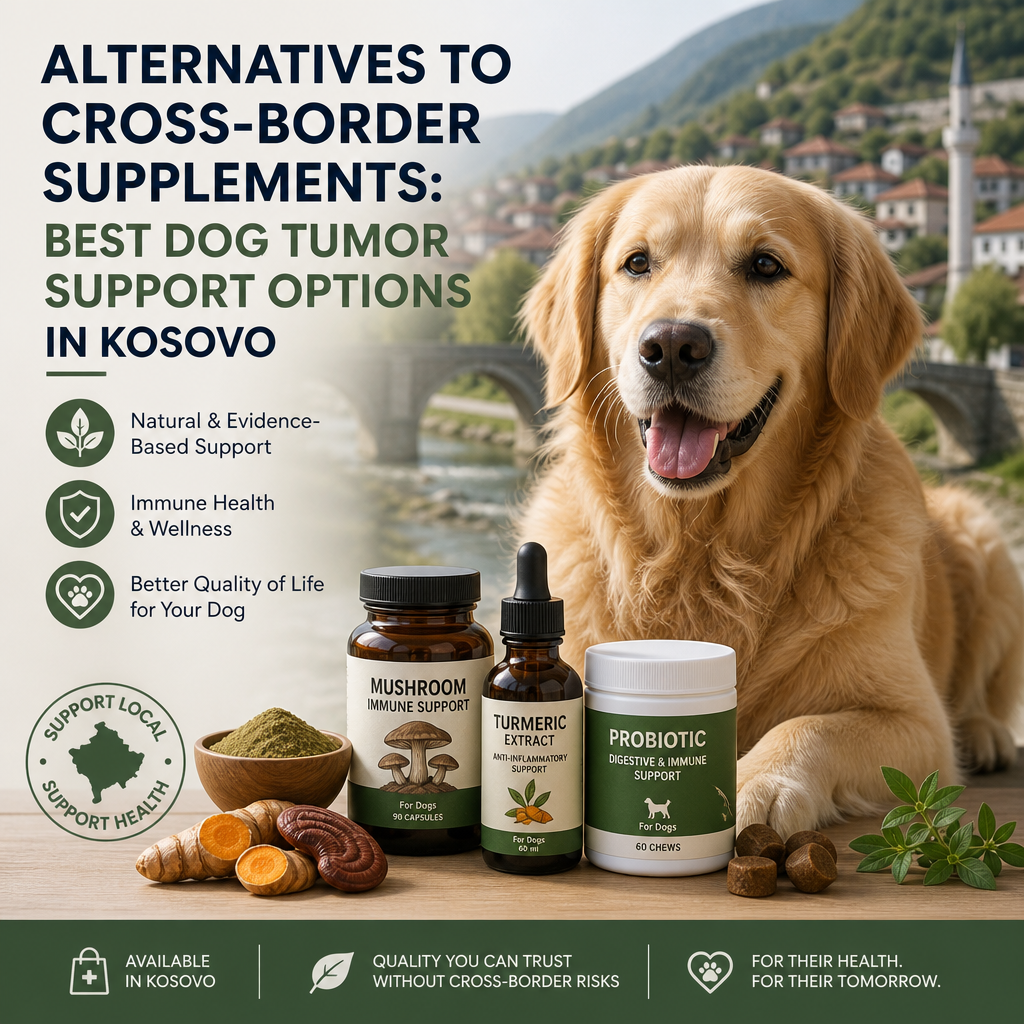
Cross-border supplement purchases can be difficult. International shipping may be expensive, delivery can take weeks, and some products may be delayed at customs or unavailable in Kosovo. There is also a risk of counterfeit products, poor storage conditions, unclear ingredients, or labels that do not meet local requirements.
For these reasons, many owners search for dog tumor supplement alternatives that can be obtained through veterinary clinics, pharmacies, licensed pet retailers, or reputable European distributors. Availability is important, but safety matters more. A product marketed as “natural” is not automatically harmless, especially for a dog receiving medication or preparing for surgery.
A veterinarian should review the dog’s diagnosis, age, weight, liver and kidney function, current medicines, and treatment plan before any supplement is introduced. In many cases, the most useful alternatives to Cross-border supplements are not exotic products at all, but trusted items with transparent labeling and veterinary oversight.
Owners often begin their search after realizing that online shopping is not a dependable long-term solution for a sick dog. When a pet needs support now, waiting for parcels or replacing one unverified product with another can create more uncertainty. The safest alternatives to Cross-border supplements are the ones that can be checked for quality, stored properly, and adjusted if the dog’s condition changes.
Some families also need to think about cost. Imported products may appear attractive at first, but shipping fees, customs delays, and repeat purchases can add up quickly. A veterinarian can help compare options based on actual benefit rather than marketing claims, which makes decision-making far easier during an already stressful time.
Veterinary care remains the foundation
The most effective tumor support begins with an accurate diagnosis. Different cancers behave differently, and a swelling is not always cancer. A veterinarian may recommend a physical examination, blood tests, imaging, fine-needle aspiration, biopsy, or referral to a veterinary oncologist.
Treatment options may include:
- Surgical removal of a localized tumor
- Chemotherapy for certain cancers
- Radiation therapy where available
- Anti-inflammatory or pain-relieving medication
- Antibiotics when infection is present
- Nutritional support during illness or recovery
- Palliative care when curative treatment is not possible
Supplements may support general wellbeing, appetite, or nutritional status, but they have not been proven to eliminate tumors. Delaying evidence-based care while relying on an unverified product can allow disease to progress. If you are comparing alternatives to Cross-border supplements, start by asking what the dog actually needs medically before adding anything else.
For owners who want to read more about breed-related cancer awareness, this guide on chest lumps in dogs and possible tumor causes can help explain why early evaluation matters.
Good care also includes honest expectations. Some dogs may respond well to treatment and supportive nutrition, while others will need symptom relief and comfort-focused planning. In both situations, alternatives to Cross-border supplements should be chosen as part of a broader medical strategy, not as a replacement for it. That approach reduces risk and helps owners stay focused on what is most useful to the dog.
Practical alternatives to Cross-border supplements in daily care
In many homes, the most helpful alternatives to Cross-border supplements are simple, consistent care steps that improve comfort without adding unnecessary risk. A calm feeding routine, dependable medication timing, and a clean resting space can make a real difference for a dog coping with cancer-related weakness or nausea.
Some owners also benefit from keeping a symptom log. Note appetite, water intake, stool quality, vomiting, pain, and energy level each day. This record helps the veterinary team decide whether a supportive product is actually helping or whether the treatment plan needs to change.
Supportive care should always match the dog’s current condition. A dog recovering from surgery may need a different plan than a dog living with advanced cancer. That is why the safest alternatives to Cross-border supplements are chosen case by case rather than copied from a general online list.
Helpful daily routines may include offering smaller meals more often, keeping food at a consistent temperature, and minimizing stress around feeding time. If the dog is sensitive to noise or other pets, a quiet room may improve appetite. These practical steps do not sound dramatic, but they often matter more than a supplement bottle.
Supportive care also includes communication with the clinic. If the dog becomes weaker, starts refusing food, or reacts badly to a new product, the veterinarian should know quickly. That is especially important when families are testing alternatives to Cross-border supplements and need to separate true benefit from coincidence.
Nutrition-based support available in Kosovo
One of the most practical dog tumor supplement alternatives is a complete, balanced diet selected for the dog’s condition. Dogs with cancer may lose weight, experience nausea, or develop reduced appetite. Maintaining adequate calories and protein is often more important than adding a long list of supplements.
Veterinarians may recommend a therapeutic diet, a highly digestible commercial food, or a carefully prepared feeding plan. The exact choice depends on the tumor type and the dog’s overall health. For example, a dog with kidney disease may require dietary restrictions that would not apply to another patient.
Small, frequent meals can be helpful for dogs with poor appetite. Wet food may be easier to eat, while gently warming food can improve its aroma. Fresh water should always be available. Do not force-feed a dog that is vomiting, struggling to swallow, or showing signs of severe discomfort without veterinary advice.
Homemade diets require particular caution. Meat, rice, vegetables, or eggs may be useful as short-term additions in some cases, but they are not automatically nutritionally complete. Long-term homemade feeding should be designed by a veterinarian or qualified veterinary nutrition professional.
In practice, the best alternatives to Cross-border supplements often begin with food consistency, calorie support, and simple feeding routines. These steps can make a noticeable difference in comfort and energy without adding unnecessary risk.
When appetite is poor, even a slight increase in food intake can help maintain strength. A dog that is eating a little more consistently is often better able to tolerate treatment, recover from procedures, and stay hydrated. That is why nutrition-based support deserves as much attention as any supplement search.
If a family is unsure whether a food change is appropriate, the safest move is to introduce only one adjustment at a time. Changing diet, adding supplements, and modifying medications all at once makes it difficult to know what helped and what caused a problem. This is another reason that alternatives to Cross-border supplements should be planned carefully rather than purchased in a hurry.
Common supplement categories to discuss with a veterinarian
Some supplement categories are frequently considered for dogs with tumors, but they should be used only after professional review. When people ask about alternatives to Cross-border supplements, these are often the first options a veterinarian may evaluate for safety and usefulness.
Omega-3 fatty acids
Fish oil provides EPA and DHA, which may support skin health, inflammation management, and general nutritional status. A veterinarian can help select a product with clearly stated concentrations and appropriate purity testing. Human fish-oil products may contain unsuitable ingredients or doses, so a veterinary formulation is usually preferable.
Fish oil can interact with certain medicines and may increase bleeding risk in some situations. It may also cause diarrhea or vomiting if introduced too quickly.
Antioxidant and vitamin support
Vitamins and antioxidants are sometimes included in veterinary diets or recommended during illness. However, high doses can be harmful, and some supplements may interfere with specific cancer treatments. Avoid giving concentrated vitamin products unless the veterinary team has approved them.
A balanced commercial diet generally provides essential nutrients. Additional vitamins are most appropriate when a deficiency or increased need has been identified.
Probiotics and digestive support
Dogs undergoing treatment may develop diarrhea, constipation, nausea, or appetite changes. A veterinary probiotic may support digestive health in selected cases. Product quality varies, so choose supplements with clear strain information, storage instructions, and expiration dates.
Probiotics are not suitable for every dog, particularly those who are severely immunocompromised, unless the veterinarian specifically recommends them.
Joint and mobility support
Some dogs with tumors experience weakness, pain, or reduced mobility. Joint-support ingredients such as glucosamine, chondroitin, or green-lipped mussel may be considered when arthritis is also present. These products do not treat cancer, but they may contribute to comfort in appropriate cases.
Pain, limping, or difficulty standing should never be dismissed as normal aging. These signs require veterinary assessment because they may indicate bone involvement or another urgent problem.
Owners sometimes ask whether a supplement with a long ingredient list is better than a simpler one. In most cases, the answer is no. The safest alternatives to Cross-border supplements usually have fewer ingredients, clearer directions, and a stronger reason for being used. A short list also makes it easier to spot side effects and avoid unnecessary overlap with food or medication.
It is also wise to ask how a product is intended to be used. Some items are meant for short-term support after surgery, while others are intended for digestive balance or calorie assistance. A product that seems helpful for one stage of illness may be unnecessary or unsuitable at another stage, so each option should be reviewed in the context of the dog’s current plan.
Safe sourcing in Kosovo
When comparing alternatives to Cross-border supplements, purchase through sources that can explain where the product came from and how it was stored. Veterinary clinics and established pharmacies are often safer choices than anonymous online sellers or unverified social media listings.
Check the following before purchasing:
- Full ingredient list and amounts per serving
- Manufacturer name and contact information
- Batch number and expiration date
- Storage requirements
- Species and weight guidance
- Evidence of quality control or independent testing
- Clear instructions in a language you understand
Avoid products that promise to “cure” cancer, shrink every tumor, replace chemotherapy, or work without diagnosis. Such claims are warning signs. Also avoid sharing human medicines or supplements with dogs unless a veterinarian has prescribed them. Ingredients such as xylitol, certain essential oils, iron, vitamin D, and some herbal extracts can be dangerous.
For general guidance on pet supplement safety, the American Veterinary Medical Association’s dietary supplement advice for pets is a useful educational reference.
Another practical step is to ask the seller how the product has been stored during transport and whether temperature-sensitive items were kept within the recommended range. A supplement can be damaged by heat or moisture before it ever reaches your home. That is one more reason why alternatives to Cross-border supplements should be sourced from accountable suppliers rather than the cheapest listing available.
Packaging matters too. Poor labels, missing contact details, and unusually vague claims are all red flags. If a product is difficult to understand, it is usually not a good fit for a dog dealing with a tumor. Simple, transparent products are far easier to evaluate and much easier to stop if a problem appears.
Herbal remedies are often promoted as natural dog tumor support, but evidence, purity, and dosing can vary widely. Some herbs affect the liver, kidneys, blood clotting, or the way chemotherapy medicines are processed. A product that is safe for humans may be unsafe for dogs.
Tell the veterinarian about every tea, powder, oil, tincture, or herbal capsule being considered. Essential oils should not be given orally unless specifically prescribed by a veterinary professional. Never apply an unknown substance directly to a tumor or surgical wound.
When evaluating alternatives to Cross-border supplements, remember that “herbal” does not mean “risk-free.” The safest approach is to review every ingredient before purchase and to avoid combining multiple products unless a veterinarian approves the plan.
Herbal products can also interact with pain medication, anti-nausea drugs, sedatives, and chemotherapy. Even when a herb seems gentle, it may change how another medicine works. That is especially important for dogs already coping with fatigue, liver strain, or reduced appetite.
If a family wants to use a plant-based product, the most responsible path is to bring the label to the clinic and ask for a direct review. This simple step can prevent a lot of confusion and keeps alternatives to Cross-border supplements aligned with the dog’s medical needs rather than with internet trends.
When a supplement is not the right answer
There are times when the best decision is not to add anything new. If a dog is vomiting, dehydrated, in pain, or struggling to breathe, the priority is urgent veterinary care. A supplement may be postponed until the dog is stable.
Owners should also avoid starting several products at once. If diarrhea, itching, or lethargy develops, it becomes difficult to identify the cause. This is why alternatives to Cross-border supplements are most useful when they are introduced gradually and under supervision.
In some cases, the dog may not need a supplement at all. Better hydration, a more suitable diet, a pain-management adjustment, or a change in feeding schedule may solve the problem more effectively. The right support is the one that fits the dog’s actual condition, not the one with the strongest marketing message.
Monitoring the dog at home
Good supportive care includes careful observation. Keep a simple record of appetite, water intake, weight, vomiting, stool quality, breathing, pain, activity, and medication administration. Weekly weighing can reveal gradual weight loss that may otherwise go unnoticed.
Contact a veterinarian promptly if the dog has repeated vomiting, refuses food for an extended period, develops breathing difficulty, experiences uncontrolled pain, collapses, bleeds, or shows sudden neurological changes. A rapidly growing mass, infected wound, or severe lethargy also requires timely assessment.
The most dependable alternatives to Cross-border supplements in Kosovo are not necessarily the most heavily advertised. They are products and care strategies chosen with veterinary oversight, transparent labeling, appropriate nutrition, and close monitoring. By prioritizing diagnosis and treatment while using carefully selected supportive options, owners can help protect their dog’s comfort, strength, and quality of life.
If your dog has a breed-associated cancer risk, you may also find it helpful to review Pomeranian cancer risks and early tumor signs for a clearer sense of what to watch for at home.
In the end, the safest path is usually the simplest one: confirm the diagnosis, follow the treatment plan, choose reliable local or regional products, and keep a close eye on how the dog responds. With that approach, alternatives to Cross-border supplements can be used thoughtfully and in a way that genuinely supports care.
by TCMVET | Aug 14, 2026 | Research and News
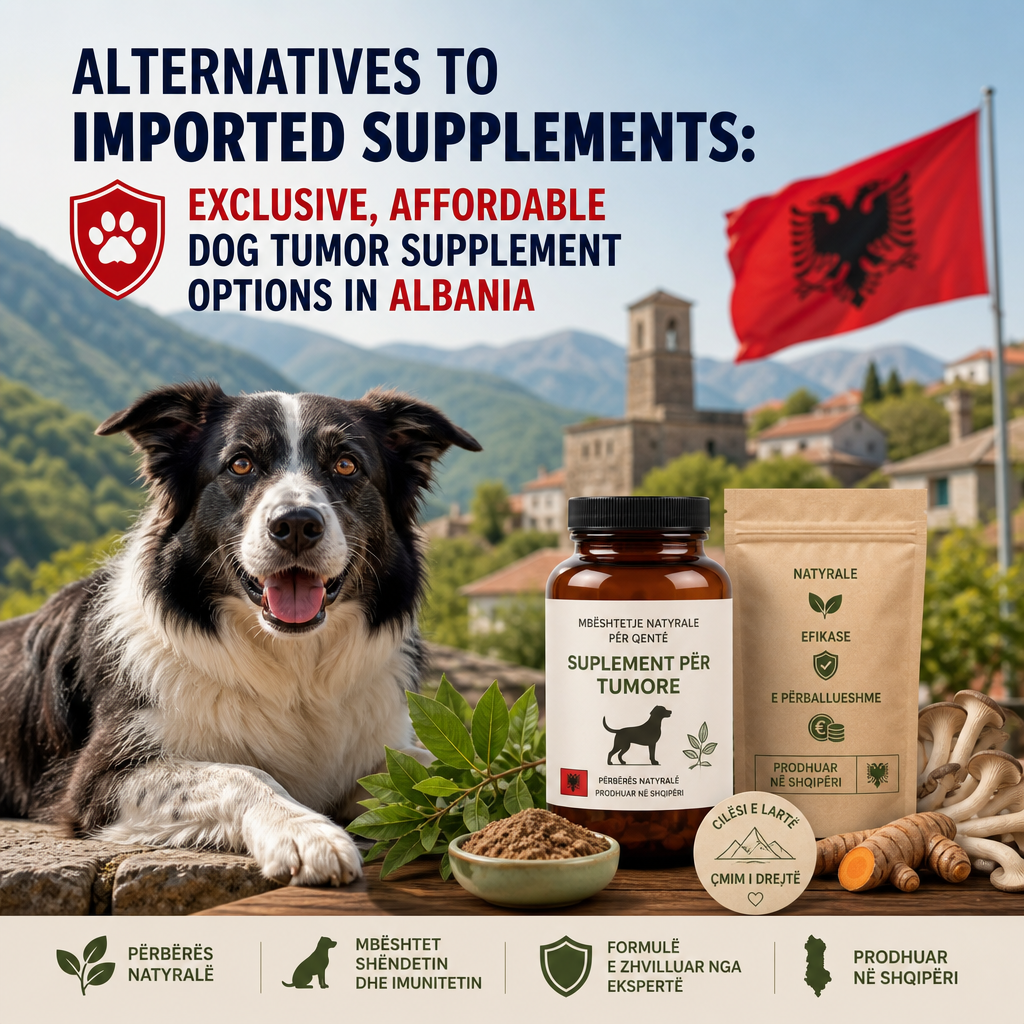
Alternatives to Imported supplements can help Albanian dog owners find practical, affordable support for pets affected by tumors without relying entirely on expensive products from abroad. However, supplements should complement—not replace—veterinary diagnosis and treatment. The best choice depends on the dog’s tumor type, age, general health, medications, appetite, and treatment plan.
In Albania, many families need supportive options that are easier to find, easier to replace, and easier to afford over time. The goal is not to chase the most expensive brand, but to choose safe, useful products that fit the dog’s condition and can be given consistently.
For dogs living with cancer, alternatives to Imported supplements are often most helpful when they support nutrition, comfort, and day-to-day stability rather than promising dramatic results. A careful, simple plan is usually better than a long list of products.
Table of Contents
Why Dog Owners in Albania Seek Supplement Alternatives
Imported veterinary supplements can be costly because of international shipping, customs fees, limited availability, and fluctuating exchange rates. Some products may also be difficult to replace once a local distributor runs out of stock. For families in Albania, these challenges can make long-term nutritional support harder to maintain.
Locally available or regionally sourced products may offer several advantages:
- Lower overall cost
- Easier access and faster replenishment
- The ability to speak directly with a pharmacist, veterinarian, or supplier
- Ingredients adapted to common local purchasing habits
- Less risk of interruption during a prolonged treatment plan
Nevertheless, affordability should never be the only consideration. A supplement must be safe, clearly labeled, appropriately dosed, and suitable for the individual dog.
In many cases, the most useful alternatives to Imported supplements are not flashy or expensive. They are the products that can be used consistently, safely, and with a clear purpose.
When owners compare alternatives to Imported supplements, it helps to focus on what the dog actually needs most: more calories, better digestion, easier mobility, or steadier nutrient intake. That practical approach often saves money and reduces confusion.
Dog Tumor Supplement Alternatives That May Support General Health
There is no single supplement proven to cure cancer in dogs. Instead, supportive products may help maintain appetite, digestion, energy, muscle condition, or immune function during veterinary treatment. Potential dog tumor supplement alternatives include the following categories.
Omega-3 fatty acids
Fish oil containing EPA and DHA is commonly considered for dogs with inflammatory conditions. These fatty acids may support skin health, joint comfort, and overall nutritional balance. They are sometimes included in supportive plans for dogs with tumors, particularly when inflammation or weight loss is a concern.
The product should be made specifically for pets or used under veterinary guidance. Fish oil can interact with certain medications and may increase the risk of bleeding in some situations. Quality also matters, since poorly stored oil can become rancid.
When owners compare alternatives to Imported supplements, omega-3 products are often a practical starting point because they are widely available and easy to dose correctly.
In addition, omega-3s are often easier to maintain over time than premium imported blends, which makes them one of the more realistic alternatives to Imported supplements for families watching their budget.
Digestive and probiotic support
Dogs undergoing stress, medication, surgery, or changes in diet may develop diarrhea, constipation, nausea, or reduced appetite. Veterinary probiotics and digestive-support formulas may help maintain normal intestinal function.
Affordable local options may include single-strain or multi-strain probiotic products available through veterinary clinics and pharmacies in Albania. Owners should check storage instructions carefully, as some probiotics require refrigeration. Human products should not be substituted automatically because they may contain unsuitable sweeteners, additives, or incorrect bacterial strains.
These alternatives to Imported supplements can be especially helpful during periods of gastrointestinal upset, but they should still be selected with a veterinarian’s input.
If a dog’s stomach is sensitive, these supportive products may be more useful than broader “all-in-one” formulas. In that sense, carefully chosen alternatives to Imported supplements can be both simpler and more effective.
High-quality nutritional support
For many dogs with cancer, maintaining body weight and muscle mass is more important than adding a large number of supplements. A complete, balanced diet with adequate protein and calories can support strength and recovery. Depending on the dog’s condition, a veterinarian may recommend a highly digestible commercial diet, a therapeutic formula, or carefully designed home-prepared meals.
Local ingredients such as lean poultry, eggs, fish, rice, and certain vegetables may be used as part of a balanced plan, but homemade diets should be formulated with professional guidance. Feeding only meat, rice, or broth for an extended period can create serious nutritional deficiencies.
For many families, diet improvement is the most effective of all alternatives to Imported supplements because it addresses daily calorie intake, not just a single nutrient.
Good nutrition also makes it easier to notice progress. If appetite, energy, and body weight are steadier, the family can often see that the chosen alternatives to Imported supplements are supporting the dog in a meaningful way.
Antioxidant-containing products
Some veterinary formulas contain nutrients such as vitamins E and C, selenium, or plant-based compounds. These ingredients may support normal cellular protection, but their use during chemotherapy or radiation therapy requires caution. In some cases, high-dose antioxidants may interfere with treatment goals.
This is why owners should avoid combining several multivitamins, herbal products, and fortified foods without consulting the treating veterinarian. More ingredients do not necessarily mean better results.
If a veterinarian recommends them, antioxidant products can be considered among the safer alternatives to Imported supplements, provided the dose and timing fit the treatment plan.
Because cancer care can involve several medications, it is wise to keep the formula simple. Simple alternatives to Imported supplements are often easier to review, safer to monitor, and less likely to conflict with treatment.
Joint and mobility support
Tumors, surgery, age, or reduced activity may contribute to stiffness and discomfort. Products containing glucosamine, chondroitin, green-lipped mussel, or other joint-support ingredients may be appropriate for some dogs. They do not treat the tumor itself, but they may help support mobility and quality of life when selected carefully.
Mobility-focused alternatives to Imported supplements can be especially useful for older dogs or those recovering from procedures, because they may make daily movement and rest more comfortable.
When pain and stiffness are reduced, dogs are often more willing to eat, walk, and rest normally. That makes these alternatives to Imported supplements useful in a broader comfort plan, even if they are not cancer-specific.
Simple food-based support
In some cases, modest food-based support can be more practical than a branded product. Warm, palatable meals, added moisture, and small frequent feedings may help a dog eat more consistently. A veterinarian may also suggest safe toppers or calorie boosters.
This approach does not replace medical therapy, but it can be one of the most affordable alternatives to Imported supplements when appetite is the main concern.
Even small changes, such as serving food at room temperature or splitting meals into smaller portions, may improve intake. These practical steps can complement alternatives to Imported supplements and make the whole plan easier to follow.
How to choose affordable alternatives to Imported supplements in Albania
When comparing alternatives to Imported supplements in Albania, begin with product transparency. The label should identify the active ingredients, amount per serving, recommended animal size, batch information, expiry date, storage conditions, and manufacturer or distributor.
Buy from reputable veterinary clinics, established pet pharmacies, or trusted animal-health suppliers. Avoid products sold without a clear label or those making claims such as “guaranteed cancer cure,” “tumor destruction,” or “works for every dog.” Such claims are warning signs.
Price comparisons should include the cost per daily dose rather than the price of the package alone. A cheaper bottle may contain a lower concentration and last for fewer days. It is also useful to ask whether the product has independent quality testing or veterinary use documentation.
For a reliable reference on how supplements are regulated and what to watch for on labels, owners can review the FDA guidance on veterinary dietary supplements.
Careful comparison helps buyers identify the best alternatives to Imported supplements without sacrificing quality or safety.
It can also help to ask a veterinarian which ingredient matters most, because the best alternatives to Imported supplements are usually chosen for a specific purpose rather than for marketing appeal.
Safety Considerations Before Starting a Supplement
Dogs with tumors may have sensitive organs or complex medical needs. Liver or kidney disease, bleeding disorders, diabetes, digestive problems, and medication interactions can all affect supplement safety.
Never give a dog human painkillers, herbal mixtures, essential oils, or high-dose vitamins without veterinary approval. Ingredients that are harmless for people can be dangerous for dogs. Xylitol, certain concentrated herbs, excessive vitamin D, and some medications are particularly hazardous.
Provide the veterinarian with a complete list of everything the dog receives, including food toppers, treats, vitamins, oils, and traditional remedies. Introducing one product at a time makes it easier to identify side effects such as vomiting, diarrhea, itching, lethargy, or loss of appetite.
Even when the goal is to find alternatives to Imported supplements, safety should remain the top priority. A lower-cost product is only a good choice if it fits the dog’s medical needs.
If a dog is already receiving chemotherapy, radiation, pain medication, or antibiotics, the veterinarian should review all alternatives to Imported supplements before they are started. That extra step can prevent avoidable complications.
Building a Practical Support Plan
A useful plan should focus first on the dog’s medical diagnosis and comfort. The veterinarian may recommend surgery, chemotherapy, radiation, pain control, appetite support, or regular monitoring. Supplements can then be considered as part of nutrition and general care.
Keep a simple record of the dog’s weight, appetite, stool quality, activity level, and supplement doses. This information can help the veterinary team determine whether a product is beneficial or should be stopped. If the dog refuses food, vomits repeatedly, loses weight quickly, has difficulty breathing, or becomes unusually weak, veterinary attention is more important than adding another supplement.
For families seeking dog tumor supplement alternatives, locally available products can be a sensible and economical option when selected responsibly. In Albania, the strongest approach combines reliable veterinary advice, transparent ingredients, realistic expectations, and a consistent nutrition plan. Supportive supplements may improve comfort or nutritional status, but professional cancer care remains the foundation of responsible treatment.
When chosen carefully, alternatives to Imported supplements can help bridge the gap between affordability and ongoing supportive care. The best results usually come from simple, well-tolerated products that fit the dog’s diagnosis and the household budget.
In short, alternatives to Imported supplements work best when they are selected for a clear purpose, used consistently, and reviewed with a veterinarian. That balance offers the most practical long-term support for dogs with tumors in Albania.
by TCMVET | Aug 14, 2026 | Research and News
Natürliche Nahrungsergänzung Hund Krebs kann die tierärztliche Behandlung sinnvoll begleiten, aber niemals ersetzen. Eine Krebsdiagnose ist für Hund und Halter belastend und führt verständlicherweise zu vielen Fragen: Welche Mittel sind verträglich? Was unterstützt den Körper wirklich? Und woran erkennt man Produkte, die mehr versprechen, als sie halten können? Entscheidend ist ein nüchterner, individueller und tierärztlich abgestimmter Umgang mit Nahrungsergänzungsmitteln.
Was natürliche Unterstützung bei Krebs leisten kann
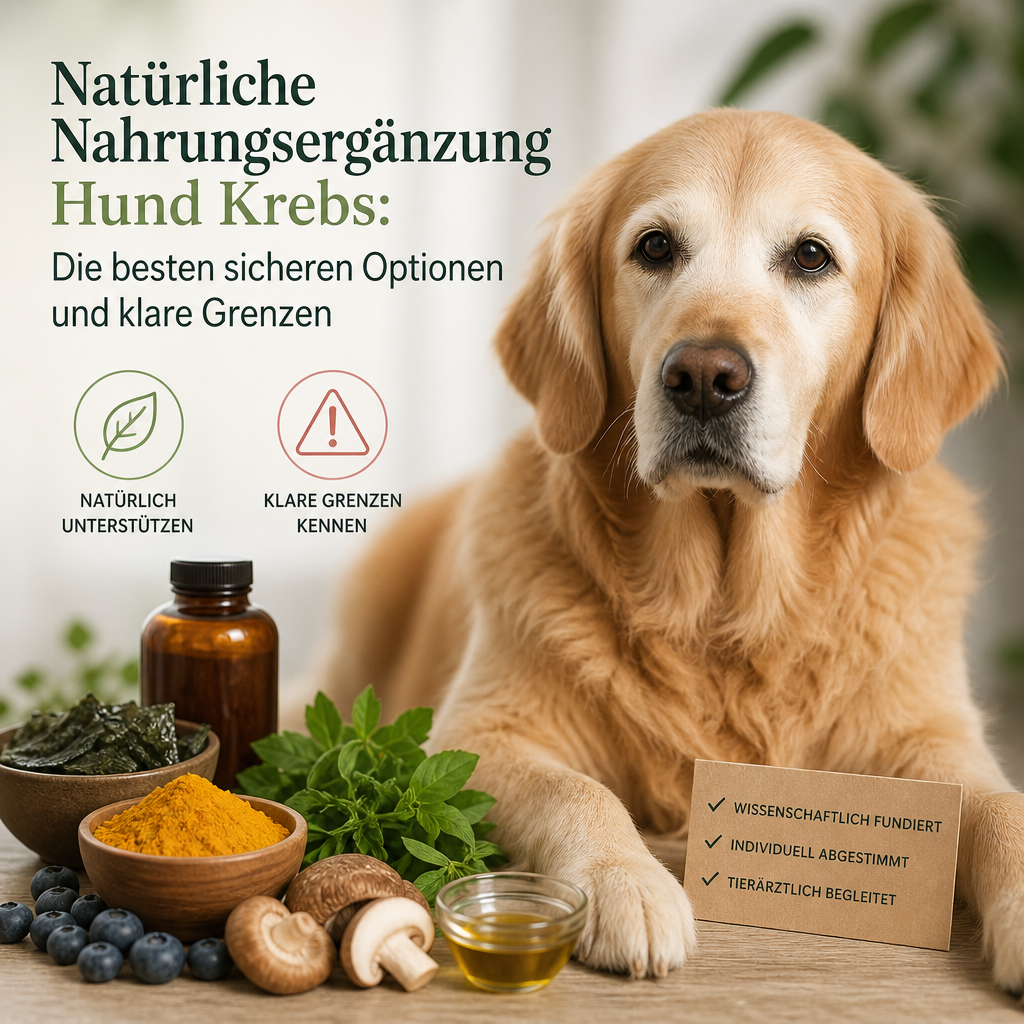
Eine natürliche Unterstützung Hund Krebs sollte vor allem das allgemeine Wohlbefinden fördern. Dazu gehören ein möglichst stabiles Körpergewicht, ausreichende Flüssigkeitsaufnahme, eine gute Nährstoffversorgung und die Unterstützung des Verdauungssystems. Nahrungsergänzungsmittel können in bestimmten Situationen helfen, etwa wenn der Hund schlecht frisst, an Gewicht verliert oder durch eine Therapie stärker belastet wird.
Sie sind jedoch keine eigenständige Krebsbehandlung. Kein Supplement kann einen Tumor zuverlässig auflösen oder eine notwendige Operation, Chemotherapie, Bestrahlung oder Schmerztherapie ersetzen. Auch „natürlich“ bedeutet nicht automatisch harmlos. Pflanzenstoffe können Nebenwirkungen verursachen, Allergien auslösen oder mit Medikamenten wechselwirken.
Vor jeder Ergänzung sollte deshalb geklärt werden:
- Welche Tumorerkrankung liegt vor?
- Welche Medikamente oder Therapien erhält der Hund?
- Wie sind Leber- und Nierenwerte?
- Bestehen Magen-Darm-Probleme oder andere Vorerkrankungen?
- Frisst der Hund ausreichend und hält er sein Gewicht?
Gerade bei einer langfristigen Begleitung ist es sinnvoll, jede neue Maßnahme wie einen kleinen Behandlungsbaustein zu betrachten. Natürliche Nahrungsergänzung Hund Krebs wirkt nur dann sinnvoll, wenn sie zu Diagnose, Zustand und Tagesform passt. Ein Hund mit gutem Appetit braucht etwas anderes als ein Tier mit Übelkeit, Durchfall oder starkem Muskelabbau.
Oft wird der Begriff sehr breit verwendet. Gemeint sein können sowohl einzelne Nährstoffe als auch kombinierte Präparate, die den Organismus unterstützen sollen. Wichtig bleibt dabei stets die Frage, ob ein konkreter Mangel vorliegt oder ob der Hund durch Krankheit, Appetitverlust oder Therapien einfach einen höheren Bedarf hat. Genau an diesem Punkt kann natürliche Nahrungsergänzung Hund Krebs sinnvoll sein, wenn sie gezielt und nicht pauschal eingesetzt wird.
Natürliche Nahrungsergänzung Hund Krebs: Sinnvolle Optionen im Überblick
Wenn Halter nach natürlicher Nahrungsergänzung Hund Krebs suchen, stehen meist gut verträgliche Bausteine im Vordergrund. Wichtig ist dabei nicht die möglichst große Zahl an Produkten, sondern eine gezielte Auswahl mit realistischem Nutzen. Die folgenden Optionen werden in der Praxis häufig erwogen, wenn sie zur Situation des Hundes passen.
Omega-3-Fettsäuren aus Fischöl
Omega-3-Fettsäuren, insbesondere EPA und DHA, zählen zu den am häufigsten eingesetzten Ergänzungen bei chronischen Erkrankungen. Sie können entzündliche Prozesse beeinflussen und möglicherweise dazu beitragen, den Erhalt von Muskelmasse und Körpergewicht zu unterstützen. Gerade bei Hunden mit eingeschränktem Appetit oder erhöhtem Nährstoffbedarf kann eine gezielte Ergänzung interessant sein.
Wichtig sind ein hochwertiges, gereinigtes Produkt und eine Dosierung, die zum Körpergewicht und Gesundheitszustand passt. Fischöl kann unter anderem die Blutgerinnung beeinflussen und sollte bei Blutungsneigung, bevorstehenden Operationen oder bestimmten Medikamenten nur nach tierärztlicher Rücksprache gegeben werden. Produkte müssen außerdem vor Licht und Wärme geschützt gelagert werden, da ranziges Öl den Körper belasten kann. Wer sich näher mit der Zusammensetzung von Fischölprodukten beschäftigen möchte, findet auf einer Übersicht der U.S. Food and Drug Administration zu Fischöl für Hunde hilfreiche Hintergrundinformationen.
Lösliche Ballaststoffe und Präbiotika
Die Darmgesundheit spielt eine wichtige Rolle für das Wohlbefinden. Lösliche Ballaststoffe können die Verdauung regulieren und das Wachstum nützlicher Darmbakterien fördern. Präbiotische Bestandteile wie bestimmte Faserstoffe werden von den Darmbakterien verarbeitet und können das Darmmilieu positiv beeinflussen.
Allerdings reagiert jeder Hund anders. Bei empfindlichen Tieren können neue Ballaststoffe zunächst Blähungen oder Durchfall verursachen. Die Einführung sollte daher langsam erfolgen. Bei starkem Gewichtsverlust darf ein ballaststoffreiches Produkt außerdem nicht dazu führen, dass der Hund noch weniger energiereiche Nahrung aufnimmt.
Probiotische Produkte
Probiotika enthalten ausgewählte lebende Mikroorganismen. Sie können bei manchen Hunden während oder nach einer Antibiotikabehandlung sowie bei bestimmten Verdauungsproblemen hilfreich sein. Bei krebskranken Hunden ist die Auswahl jedoch besonders sorgfältig zu treffen, da der Immunstatus verändert sein kann.
Ein Präparat sollte klare Angaben zu den enthaltenen Stämmen, der Menge und der Lagerung machen. Bei stark immungeschwächten Tieren sollte die Anwendung ausschließlich mit der behandelnden Tierärztin oder dem behandelnden Tierarzt abgestimmt werden.
Hochwertige Vitamin- und Mineralstoffpräparate
Ein Mangel an bestimmten Vitaminen oder Mineralstoffen kann den Allgemeinzustand verschlechtern. Eine pauschale Gabe ist dennoch nicht empfehlenswert. Hochwertiges Alleinfutter deckt den Bedarf vieler gesunder Hunde bereits ab. Werden zusätzlich große Mengen einzelner Vitamine gegeben, kann es zu Überdosierungen kommen.
Besondere Vorsicht gilt bei fettlöslichen Vitaminen wie A, D und E, da sie im Körper gespeichert werden. Auch Mineralstoffe können sich bei falscher Dosierung nachteilig auf Nieren, Leber oder den Stoffwechsel auswirken. Sinnvoller als ein breit angelegtes Präparat ist häufig eine gezielte Ergänzung nach Untersuchung oder Blutwerten.
Weitere natürliche Unterstützung im Alltag
Neben klassischen Ergänzungen kann auch der Alltag angepasst werden. Kleine, gut verdauliche Mahlzeiten, eine ruhige Fütterungsumgebung und eine ausreichende Wasseraufnahme sind oft praktischer als viele einzelne Produkte. Für manche Hunde ist ein schonendes, leicht erwärmtes Futter hilfreicher als jede zusätzliche Kapsel. Natürliche Nahrungsergänzung Hund Krebs sollte daher immer im Kontext der gesamten Versorgung betrachtet werden.
Auch die Beobachtung des Hundes ist wichtig: Frisst er besser oder schlechter? Wird der Kot weicher, fester oder bleibt er unauffällig? Gibt es Veränderungen in Energie, Verhalten oder Gewicht? Solche Informationen helfen der Tierarztpraxis, die Ernährung gezielt anzupassen.
In manchen Fällen geht es weniger um „Krebs bekämpfen“ als um Stabilisierung. Dann stehen Appetit, Verdauung, Flüssigkeitshaushalt und Wohlbefinden im Mittelpunkt. Natürliche Nahrungsergänzung Hund Krebs kann hier ein Teil des Gesamtplans sein, sofern die Auswahl zum individuellen Verlauf passt.
Pflanzliche Stoffe: nicht automatisch sicher
Viele Produkte werben mit Kurkuma, Mariendistel, Grüntee-Extrakten, Heilpilzen oder verschiedenen Kräutermischungen. Einige dieser Stoffe werden wegen möglicher antioxidativer oder entzündungsmodulierender Eigenschaften untersucht. Die wissenschaftliche Datenlage bei Hunden mit Krebs ist jedoch je nach Substanz sehr unterschiedlich und oft begrenzt.
Außerdem können Pflanzenstoffe die Wirkung von Medikamenten verändern. Das betrifft möglicherweise die Blutgerinnung, den Abbau von Arzneimitteln in der Leber oder die Verträglichkeit des Magen-Darm-Traktes. Konzentrierte Extrakte sind nicht mit kleinen Mengen eines Gewürzes in der Nahrung gleichzusetzen.
Besonders riskant sind Produkte mit unklarer Zusammensetzung, fehlenden Mengenangaben oder Heilversprechen. Auch ätherische Öle gehören nicht ohne fachkundige Anleitung in die Ernährung oder auf die Haut eines Hundes. Einige sind für Tiere giftig und können Leber, Nervensystem oder Atemwege schädigen.
Wenn ein Präparat als „reines Naturprodukt“ vermarktet wird, sagt das noch nichts über die Sicherheit aus. Gerade bei der natürlichen Nahrungsergänzung Hund Krebs sollten Halter kritisch prüfen, ob der Nutzen überhaupt belegt ist und ob mögliche Wechselwirkungen mit laufenden Therapien bedacht wurden.
Eine gute Faustregel lautet: Je stärker ein Produkt beworben wird, desto genauer sollte die Zusammensetzung geprüft werden. Seriöse Anbieter benennen Inhaltsstoffe, Konzentrationen und mögliche Risiken offen. So lässt sich besser einschätzen, ob eine natürliche Nahrungsergänzung Hund Krebs wirklich sinnvoll ist oder nur gut klingt.
Ernährung bleibt die wichtigste Grundlage
Die beste natürliche Unterstützung Hund Krebs beginnt meist nicht mit einem Supplement, sondern mit einer passenden Ernährung. Der Hund sollte ausreichend Kalorien und hochwertiges Eiweiß aufnehmen, sofern keine Erkrankung wie eine schwere Niereninsuffizienz dagegenspricht. Bei Appetitlosigkeit können mehrere kleine Mahlzeiten, leicht angewärmtes Futter oder eine tierärztlich entwickelte Ration helfen.
Ein plötzlicher Futterwechsel sollte vermieden werden. Ebenso problematisch sind selbst zusammengestellte Krebsdiäten, die Kohlenhydrate vollständig ausschließen oder ausschließlich auf rohes Fleisch setzen. Solche Konzepte können zu Nährstoffmängeln führen und bei immungeschwächten Tieren ein zusätzliches Infektionsrisiko darstellen.
Bei anhaltendem Gewichtsverlust ist eine Beratung durch eine auf Tierernährung spezialisierte Fachperson sinnvoll. Das Ziel besteht nicht in einer möglichst großen Zahl an Präparaten, sondern in einer bedarfsgerechten Versorgung, die Lebensqualität und Therapieziele berücksichtigt.
Wer sich zur medizinischen Einordnung und zu allgemeinen Informationen über Tumorerkrankungen beim Tier weiter einlesen möchte, findet auf TCM-Vet weiterführende Inhalte rund um die ganzheitliche Begleitung von Hunden und Katzen.
Gerade in belastenden Krankheitsphasen zeigt sich, dass Ernährung oft den größten praktischen Einfluss hat. Eine durchdachte Futterstrategie kann Hunden helfen, besser zu essen, Gewicht zu halten und Therapien insgesamt stabiler zu überstehen. Natürliche Nahrungsergänzung Hund Krebs sollte deshalb nie isoliert betrachtet werden, sondern immer im Zusammenhang mit der täglichen Nährstoffaufnahme.
Klare Grenzen und wichtige Warnzeichen
Ergänzungsmittel Hund Krebs sollten niemals eigenmächtig während einer laufenden Behandlung begonnen werden. Informieren Sie das tierärztliche Team über jedes Produkt, einschließlich Kräutertees, Ölen und frei verkäuflicher Pulver. Nach Beginn einer Ergänzung sollten Appetit, Kot, Erbrechen, Hautveränderungen, Müdigkeit und Gewicht beobachtet werden.
Bei wiederholtem Erbrechen, starkem Durchfall, Atemproblemen, Gelbfärbung der Schleimhäute, Blutungen, ausgeprägter Schwäche oder kompletter Futterverweigerung ist umgehend tierärztliche Hilfe erforderlich. Solche Symptome dürfen nicht mit weiteren Naturmitteln überdeckt werden.
Seriöse Produkte erkennen Sie an einer vollständigen Zutatenliste, nachvollziehbaren Dosierungsangaben, Angaben zu Hersteller und Qualitätssicherung sowie realistischen Aussagen. Versprechen wie „heilt jeden Krebs“, „ersetzt Chemotherapie“ oder „völlig ohne Nebenwirkungen“ sind deutliche Warnsignale.
Wichtig ist auch die richtige Erwartungshaltung: Natürliche Nahrungsergänzung Hund Krebs kann die Versorgung verbessern, aber nicht jede Verschlechterung aufhalten. Wenn ein Hund trotz guter Fütterung stetig abbaut, braucht es medizinische Kontrolle statt weiterer Produkte.
Auch wenn ein Präparat im Einzelfall gut vertragen wird, bedeutet das nicht, dass es dauerhaft sinnvoll bleibt. Veränderungen im Krankheitsverlauf, neue Medikamente oder ein empfindlicher Magen können die Bewertung jederzeit ändern. Deshalb sollte natürliche Nahrungsergänzung Hund Krebs regelmäßig neu überprüft werden.
Praktische Checkliste vor dem Kauf
Bevor Sie ein Ergänzungsprodukt auswählen, lohnt sich eine kurze Prüfung. Die folgende Checkliste hilft dabei, unnötige Risiken zu vermeiden und die natürliche Nahrungsergänzung Hund Krebs sinnvoll einzuordnen.
- Ist der genaue Inhaltsstoff und die Menge pro Portion klar angegeben?
- Passt das Produkt zur aktuellen Therapie?
- Gibt es bekannte Wechselwirkungen mit Medikamenten?
- Ist die Dosierung für das Körpergewicht des Hundes nachvollziehbar?
- Werden realistische Nutzenversprechen gemacht?
- Ist das Produkt frisch, korrekt gelagert und von einem seriösen Hersteller?
Wenn mehrere Punkte unklar bleiben, ist Vorsicht besser als ein Schnellkauf. Gerade bei Hunden mit Krebs sollte die Qualität eines Produkts wichtiger sein als ein möglichst langes Etikett mit vielen Wirkversprechen.
Hilfreich ist außerdem ein kurzes Protokoll. Notieren Sie Startdatum, Produktname, Menge und Beobachtungen zu Appetit, Kot, Aktivität und Gewicht. So lässt sich besser beurteilen, ob die natürliche Nahrungsergänzung Hund Krebs überhaupt einen messbaren Vorteil bringt oder ob sie wieder beendet werden sollte.
Fazit
Natürliche Nahrungsergänzung Hund Krebs kann in ausgewählten Fällen eine unterstützende Rolle spielen, vor allem bei der Versorgung mit Omega-3-Fettsäuren, der Darmgesundheit oder nachgewiesenen Nährstoffdefiziten. Die Auswahl muss jedoch zur Diagnose, zur Therapie und zum individuellen Gesundheitszustand passen. Am sichersten ist ein abgestimmter Plan mit der behandelnden Tierarztpraxis: gezielt ergänzen, Veränderungen beobachten und keine unrealistischen Heilversprechen akzeptieren. So bleibt die Lebensqualität des Hundes im Mittelpunkt.
Wer strukturiert vorgeht, vermeidet Überversorgung und unnötige Risiken. Genau darin liegt der eigentliche Nutzen einer durchdachten natürlichen Nahrungsergänzung Hund Krebs: nicht in der Menge der Produkte, sondern in der passenden, sicheren und nachvollziehbaren Anwendung.
Am Ende zählt vor allem, dass Maßnahmen alltagstauglich, verträglich und medizinisch sinnvoll bleiben. Mit dieser Haltung wird natürliche Nahrungsergänzung Hund Krebs zu einer realistischen Ergänzung der Versorgung statt zu einer falschen Hoffnung.
