by TCMVET | Aug 21, 2026 | Research and News
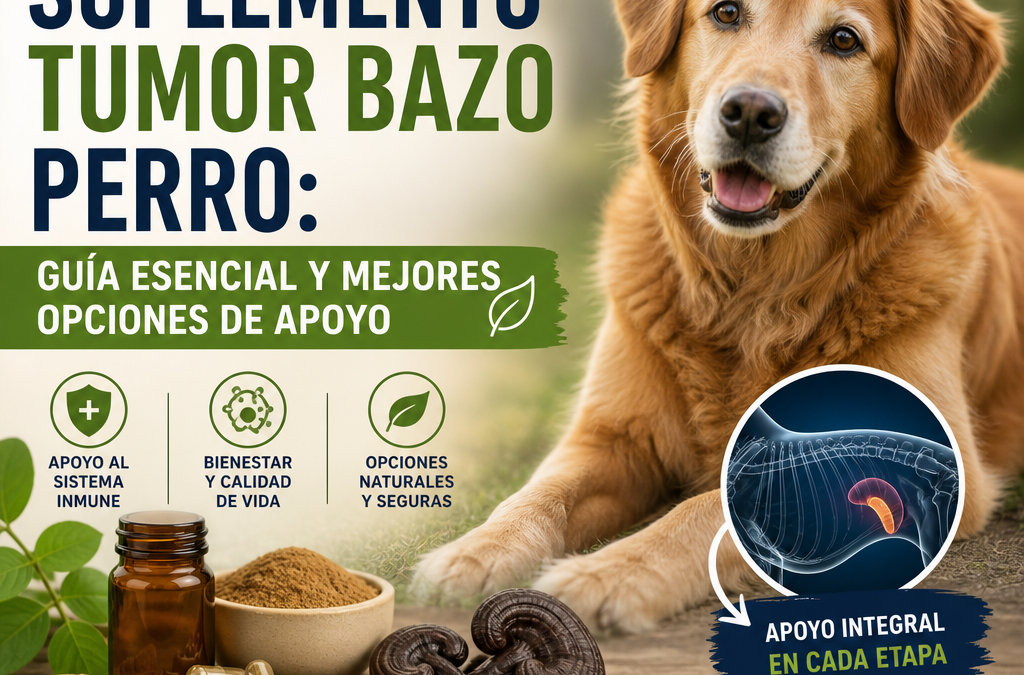
Suplemento tumor bazo perro: encontrar un apoyo adecuado puede ser una preocupación importante cuando un perro recibe un diagnóstico de masa o tumor esplénico. El bazo participa en funciones relacionadas con la sangre y el sistema inmunitario, por lo que cualquier alteración requiere una evaluación veterinaria cuidadosa. Los suplementos pueden complementar el tratamiento indicado, pero no sustituyen la cirugía, la quimioterapia, los controles clínicos ni las decisiones tomadas por un especialista.
Qué significa un tumor en el bazo del perro
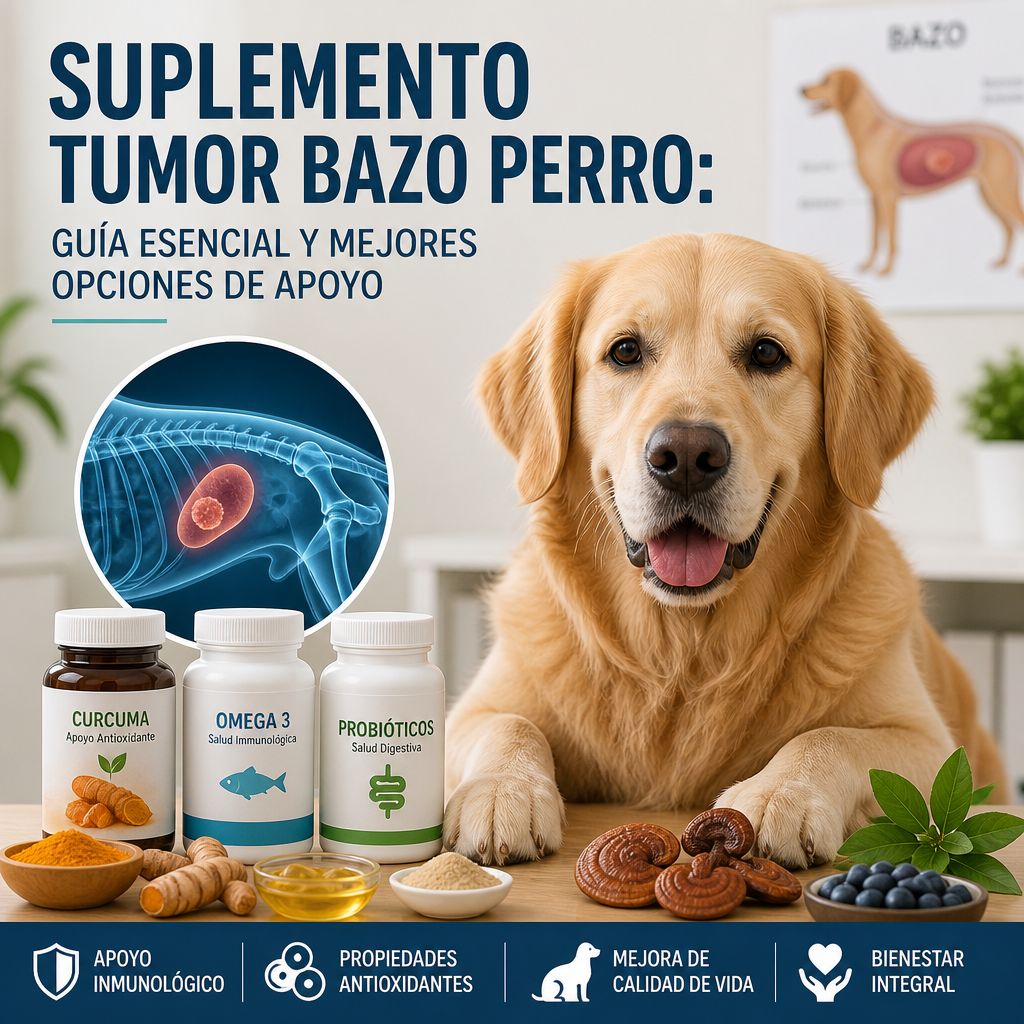
El bazo es un órgano situado cerca del estómago que ayuda a filtrar la sangre, almacenar células sanguíneas y colaborar con las defensas del organismo. En los perros pueden aparecer nódulos, hematomas, lesiones benignas o tumores malignos. Algunas masas no producen signos evidentes y se descubren durante una ecografía; otras pueden provocar debilidad, abdomen distendido, encías pálidas, pérdida de apetito o episodios de colapso.
Entre las neoplasias esplénicas se encuentra el hemangiosarcoma, un cáncer agresivo que puede sangrar internamente. Sin embargo, no toda masa en el bazo es cancerosa. La ecografía y los análisis ofrecen información útil, aunque el diagnóstico definitivo suele requerir el estudio del tejido obtenido mediante cirugía o biopsia.
En esta fase, entender bien el diagnóstico ayuda a decidir si tiene sentido hablar de apoyo nutricional, de manejo del dolor o de un posible suplemento tumor bazo perro. La prioridad siempre es saber qué tipo de lesión existe y si hay riesgo inmediato para la vida del animal.
También conviene recordar que el pronóstico puede variar mucho según el tipo de masa, la edad del perro, la presencia de metástasis y el estado general. Por eso, dos pacientes con un hallazgo parecido pueden requerir decisiones totalmente distintas. Una valoración completa evita retrasos y permite elegir el siguiente paso con más claridad.
Cuando el diagnóstico no está completamente definido, el veterinario puede recomendar pruebas complementarias para afinar la información. Esta etapa es importante porque no todos los tumores del bazo se comportan igual, y el enfoque cambia si la lesión es estable, si sangra o si está asociada a otros hallazgos en abdomen o tórax.
Tumor bazo perro apoyo: prioridades antes de elegir suplementos
Cuando existe un tumor en el bazo, la primera prioridad es determinar si hay riesgo de hemorragia, anemia, metástasis o deterioro general. El veterinario puede recomendar análisis de sangre, pruebas de coagulación, radiografías torácicas, ecografía abdominal y, en algunos casos, una consulta con oncología veterinaria.
La cirugía para retirar el bazo, llamada esplenectomía, puede ser necesaria cuando existe riesgo de ruptura o cuando la masa es operable. Después de la intervención, algunos perros requieren vigilancia estrecha por posibles alteraciones de la coagulación, infecciones o cambios en el recuento sanguíneo. Por eso, ningún suplemento debe administrarse antes o después de la cirugía sin autorización profesional.
También es importante reconocer signos de emergencia: encías muy pálidas, respiración acelerada, abdomen que aumenta de tamaño, debilidad repentina, desmayo, vómitos persistentes o incapacidad para mantenerse en pie. Estos síntomas pueden indicar sangrado interno y requieren atención veterinaria inmediata.
El suplemento tumor bazo perro adecuado no es el que promete más, sino el que encaja con el estado clínico real del animal. Si hay anemia severa, coagulopatía o dolor abdominal, la prioridad ya no es buscar un complemento, sino estabilizar al paciente y seguir el plan del veterinario.
En algunos casos, el perro puede necesitar fluidoterapia, analgesia o incluso hospitalización antes de cualquier decisión sobre nutrición adicional. Ese orden de prioridades protege al animal y reduce el riesgo de complicaciones. Por eso, el apoyo más útil suele comenzar con una revisión del estado general, no con una compra apresurada.
Suplementos perro cáncer: qué objetivos pueden tener
Los suplementos para perros con cáncer se utilizan, en algunos casos, para apoyar la nutrición, preservar la masa muscular, mejorar la tolerancia digestiva o complementar determinados déficits. Su objetivo no es destruir el tumor por sí mismos. La utilidad depende del tipo de cáncer, el estado del hígado y los riñones, el tratamiento recibido y la alimentación habitual.
Entre las opciones que un veterinario puede valorar se encuentran:
- Ácidos grasos omega-3, especialmente EPA y DHA, procedentes de aceite de pescado de calidad. Pueden contribuir al mantenimiento de una respuesta inflamatoria equilibrada y de la condición corporal, aunque deben emplearse con precaución si existen problemas de coagulación.
- Antioxidantes, como vitaminas específicas, solo cuando están indicados y en dosis controladas. Un exceso puede resultar perjudicial y, durante ciertos tratamientos oncológicos, interferir con los objetivos terapéuticos.
- Probióticos, que pueden ayudar a la función intestinal en perros con diarrea o alteraciones digestivas, siempre que el producto sea veterinario y se descarte una enfermedad grave.
- Complementos nutricionales hipercalóricos, útiles en animales con poco apetito o pérdida de peso. Deben ajustarse a las necesidades energéticas y no reemplazar una dieta completa.
- Vitaminas o minerales, únicamente cuando una analítica demuestra una carencia o cuando el veterinario identifica una necesidad concreta.
Los productos comerciales varían mucho en pureza, concentración y controles de fabricación. Conviene elegir fórmulas diseñadas para perros, con etiquetado claro y procedencia fiable. Un buen suplemento tumor bazo perro también debe tener una razón clínica concreta y una duración de uso definida, no solo una etiqueta atractiva.
Antes de empezar cualquier complemento, conviene revisar si el perro está recibiendo comida casera, dieta comercial terapéutica o soporte nutricional asistido. Esa información cambia por completo la elección del producto y la dosis. Si ya existe un plan alimentario, cualquier añadido debe encajar con ese plan para evitar duplicidades o excesos.
También es útil distinguir entre apoyo nutricional real y mensajes de marketing. Un producto puede sonar prometedor, pero si no aclara dosis, composición y objetivo, su valor práctico es limitado. El criterio clínico sigue siendo más importante que las promesas de la etiqueta.
Cómo conversar con tu veterinario sobre un suplemento tumor bazo perro
Una conversación útil con el veterinario puede centrarse en tres preguntas: qué problema concreto se quiere mejorar, qué riesgos existen con el tratamiento actual y cómo se sabrá si el complemento está ayudando. Este enfoque evita comprar productos por impulso y facilita decisiones seguras.
Si el objetivo es mantener el apetito, quizá el profesional valore una estrategia nutricional antes que un producto comercial. Si la preocupación es la inflamación o la pérdida de masa muscular, puede sugerir ajustes en la dieta o en los omega-3. Si existe sangrado, cualquier opción con posible efecto sobre la coagulación debe revisarse con especial cuidado.
En algunos casos, el veterinario puede recomendar controles antes de introducir un nuevo suplemento tumor bazo perro, como hemograma, perfil bioquímico o pruebas de coagulación. Estas pruebas ayudan a personalizar el apoyo y a reducir riesgos evitables.
Para muchas familias, la mejor manera de plantearlo es llevar una lista de todos los productos que el perro toma ya, incluidos snacks funcionales, aceites, vitaminas y fórmulas “naturales”. Así se detectan posibles solapamientos con más facilidad y se evita repetir ingredientes sin necesidad.
Si el caso está siendo seguido por oncología veterinaria, conviene pedir una indicación concreta sobre qué sí y qué no puede usarse durante cada fase. Un mismo complemento puede ser más razonable durante la recuperación que durante un protocolo activo, y esa diferencia importa mucho.
Ingredientes que requieren especial precaución
Los remedios naturales no son automáticamente seguros. Algunos extractos de plantas pueden afectar el hígado, modificar la coagulación o interactuar con medicamentos. Esto resulta especialmente relevante en un perro con un tumor esplénico, ya que puede existir riesgo de sangrado o de alteraciones hematológicas.
La cúrcuma, el ajo, el ginkgo, el ginseng, ciertos hongos medicinales y las dosis elevadas de vitamina E son ejemplos de ingredientes que deben revisarse con un profesional. La seguridad depende de la cantidad, la concentración, la salud del animal y los fármacos administrados. Además, nunca se deben ofrecer medicamentos humanos, analgésicos, multivitamínicos o productos para otras especies sin indicación veterinaria.
Si el perro recibe quimioterapia, corticoides, antiinflamatorios, anticoagulantes o medicamentos para el dolor, es fundamental informar al oncólogo de todos los complementos utilizados, incluso de los que parecen inofensivos.
También es recomendable desconfiar de los productos que prometen efectos curativos rápidos o que aseguran ser “seguros al 100%”. En pacientes con cáncer, la seguridad depende del contexto clínico, no de una afirmación publicitaria. Cuando hay dudas, revisar la ficha técnica y la composición con el veterinario suele ser la opción más prudente.
Para ampliar información sobre elección de productos de apoyo en pacientes oncológicos, puede ser útil revisar esta guía sobre mejores suplementos para perros con cáncer, ya que ofrece criterios prácticos para evaluar seguridad y utilidad.
Como referencia educativa externa sobre el hemangiosarcoma canino, también puede consultarse la información de VCA sobre hemangiosarcoma en perros, que resume de forma clara por qué este tipo de tumor requiere un enfoque clínico cuidadoso.
Señales de que un complemento no conviene
Un suplemento no conviene si provoca vómitos, diarrea, rechazo del alimento, picor, letargo o cambios en el comportamiento. También debe suspenderse y consultarse si aparecen heces negras, encías más pálidas, más debilidad o empeoramiento del apetito. En un perro con enfermedad esplénica, cualquier cambio brusco merece atención.
Otro motivo para detenerlo es la aparición de múltiples productos a la vez. Mezclar varios complementos dificulta saber cuál ayuda y cuál perjudica. Además, aumenta el riesgo de interacciones y de duplicar ingredientes como vitaminas, omega-3 o extractos herbales.
Un suplemento tumor bazo perro solo tiene sentido cuando mejora un objetivo específico y se tolera bien. Si no aporta una ventaja medible, es mejor simplificar el plan. Menos productos, pero mejor elegidos, suelen facilitar el seguimiento y la seguridad.
En la práctica, muchas familias observan que el perro tolera mejor un plan sencillo que una rutina cargada de cápsulas, polvos y aceites. Cuando hay una masa esplénica, la tolerancia digestiva y la estabilidad general pesan más que la cantidad de productos añadidos.
Alimentación y cuidados diarios
La nutrición es una parte esencial del apoyo general. Muchos perros con cáncer conservan una buena calidad de vida cuando reciben una dieta completa, digestible y adaptada a sus necesidades. La cantidad adecuada de proteínas, grasas y calorías debe establecerse según el peso, la edad, la actividad, la función renal y hepática y la presencia de vómitos o diarrea.
Es preferible ofrecer porciones pequeñas varias veces al día si existe inapetencia. También puede ayudar mantener horarios regulares, reducir el estrés y proporcionar agua fresca. No conviene forzar la comida, cambiar bruscamente de dieta ni seguir recomendaciones extremas basadas en eliminar por completo un nutriente sin supervisión.
El control del peso y de la masa muscular permite detectar cambios antes de que sean evidentes. Anotar el apetito, la energía, las deposiciones, los vómitos y cualquier episodio de debilidad facilita que el veterinario ajuste el tratamiento.
Si el perro está en recuperación tras esplenectomía, los cuidados diarios pueden incluir reposo, observación de la herida, control del color de las encías y seguimiento del nivel de actividad. En ese contexto, añadir un suplemento tumor bazo perro sin revisar su compatibilidad con la recuperación no es una buena idea.
Cuando la comida pierde interés, puede ser útil calentar ligeramente la ración, repartirla en más tomas o buscar dietas de alta palatabilidad recomendadas por el veterinario. El objetivo es sostener energía y masa corporal sin irritar el sistema digestivo.
Un paseo corto, tranquilo y bien supervisado puede ser suficiente en algunos perros, mientras que otros necesitan más descanso. La clave es adaptar el entorno para que el animal conserve energía sin perder movilidad ni ánimo. Cada pequeño ajuste ayuda a que el tratamiento sea más llevadero.
Si existe dolor o malestar, el veterinario puede recomendar medidas específicas para mantener el bienestar. Ese control del confort resulta tan importante como la dieta, porque el perro con más comodidad suele comer mejor y recuperarse con más estabilidad.
Relación entre suplementación y tratamiento oncológico
La suplementación no se evalúa de forma aislada. En un perro con tumor esplénico, el plan suele depender de si habrá cirugía, quimioterapia, analgesia o únicamente control paliativo. Cada una de esas opciones cambia el margen de seguridad de los complementos.
Por ejemplo, un producto con alto contenido en grasas puede no ser adecuado si hay pancreatitis o vómitos persistentes. Un antioxidante sin control puede ser inapropiado durante ciertos protocolos. Y un extracto vegetal aparentemente benigno puede alterar la metabolización de fármacos o sumar efectos sobre la coagulación.
Por eso, el valor real de un suplemento tumor bazo perro se entiende mejor dentro del plan completo. No se trata de añadir “algo natural”, sino de apoyar con criterio a un paciente que puede estar vulnerable, dolorido o en recuperación.
La comunicación entre familia y equipo veterinario es especialmente importante cuando el perro recibe varios tratamientos a la vez. Un listado actualizado de medicamentos, suplementos y cambios en la dieta permite tomar decisiones más seguras y ajustar el plan si aparecen efectos secundarios.
Si el especialista considera que un complemento no aporta beneficios claros, aceptar esa recomendación también es parte del buen cuidado. A veces la mejor decisión es retirar lo innecesario y concentrarse en lo que realmente ayuda a mantener la calidad de vida.
Cómo valorar una opción de apoyo
Antes de comprar un suplemento tumor bazo perro, es recomendable revisar cinco aspectos: el diagnóstico confirmado o presuntivo, los medicamentos actuales, el riesgo de sangrado, la función de hígado y riñones y el objetivo concreto del producto. Un complemento bien elegido debe tener una razón clínica clara, una dosis definida y un plan para evaluar si realmente aporta beneficios.
La mejor estrategia suele combinar tratamiento veterinario, alimentación adecuada, controles periódicos y observación atenta en casa. Los suplementos pueden formar parte de ese plan cuando se emplean con prudencia, pero no deben retrasar una cirugía, sustituir una terapia oncológica ni generar falsas expectativas. En un tumor del bazo, la seguridad y la calidad de vida del perro deben guiar cada decisión.
Si el caso cambia, también debe cambiar la estrategia. Un perro estable puede tolerar cierto apoyo nutricional, mientras que otro con sangrado o anemia necesita una atención completamente distinta. La clave está en reevaluar con frecuencia y mantener el diálogo con el equipo veterinario.
Además, conviene fijar una fecha de revisión para valorar si el producto está siendo útil. Si no hay mejoría en apetito, energía, peso o tolerancia digestiva, el veterinario puede sugerir retirarlo o sustituirlo por otra medida más apropiada. Así se evita acumular suplementos que no aportan valor.
En resumen, un suplemento tumor bazo perro puede ser útil como parte de un plan responsable, pero solo cuando se elige con criterio, se supervisa bien y se adapta al momento clínico del animal. La prioridad sigue siendo siempre la misma: proteger su salud y su bienestar con decisiones seguras.
Preguntas frecuentes sobre tumor esplénico y apoyo nutricional
¿Puede un suplemento curar un tumor en el bazo?
No. Los complementos no sustituyen el diagnóstico, la cirugía ni la oncología veterinaria. Su papel es de apoyo, nunca curativo.
¿Es seguro comprar productos naturales sin receta?
No siempre. Natural no significa inocuo, y algunos ingredientes pueden afectar la coagulación o interactuar con medicamentos. La supervisión profesional es esencial.
¿Qué debo vigilar en casa?
Debilidad repentina, encías pálidas, colapso, abdomen distendido, vómitos persistentes, falta de apetito y respiración acelerada requieren atención inmediata.
Para elegir con más criterio, recuerda que el mejor enfoque no es acumular productos, sino seleccionar uno solo cuando exista una necesidad real. Ese principio es especialmente importante si estás valorando un suplemento tumor bazo perro para acompañar el tratamiento o la recuperación.
Antes de tomar cualquier decisión, vuelve al punto más importante: el diagnóstico y el estado general del perro. Si el equipo veterinario confirma que el apoyo nutricional es apropiado, un suplemento tumor bazo perro bien elegido puede formar parte de un cuidado más completo y tranquilo. Si no está indicado, lo más seguro es esperar y centrarse en la terapia principal.
by TCMVET | Aug 21, 2026 | Research and News
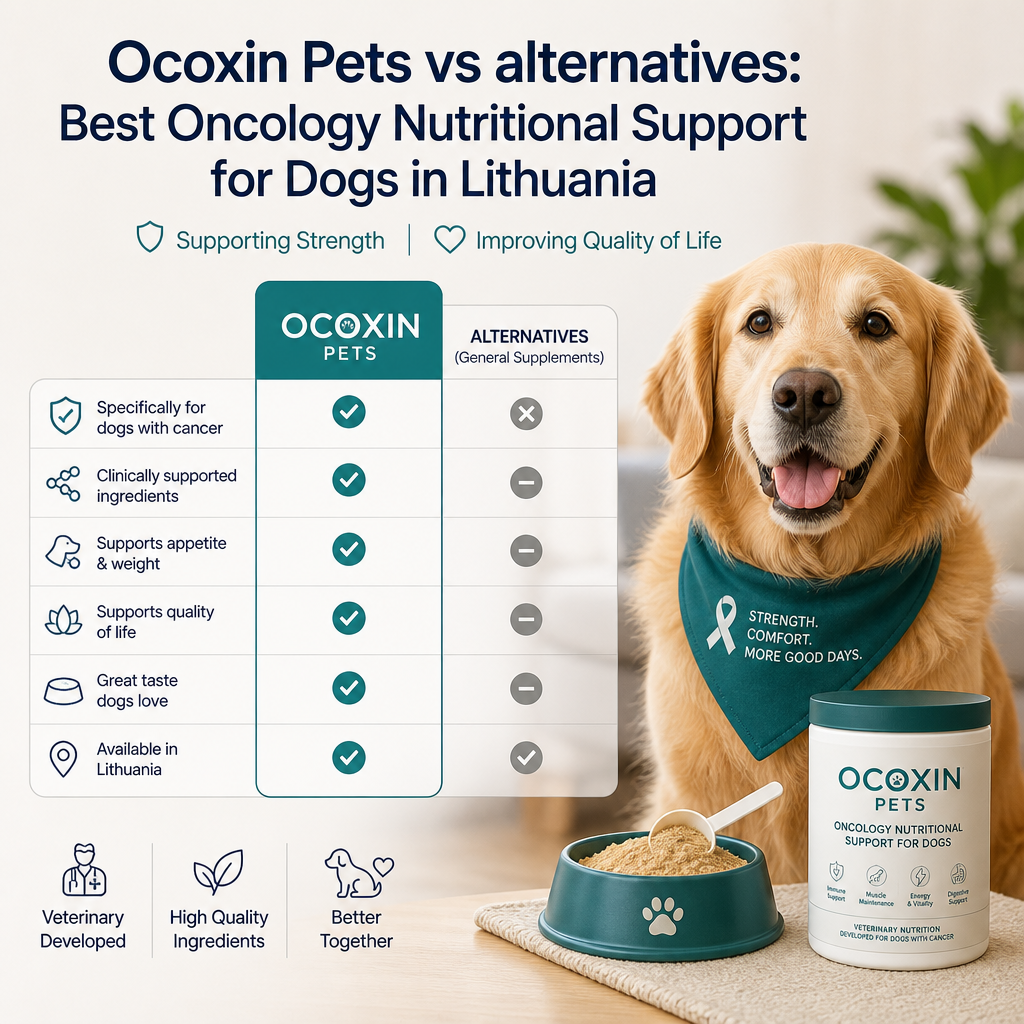
Ocoxin Pets vs alternatives is an important comparison for Lithuanian dog owners looking for supportive care during cancer treatment. Nutritional products cannot replace surgery, chemotherapy, radiation therapy, or veterinary monitoring, but they may help maintain appetite, body condition, hydration, and quality of life when used appropriately. The best choice depends on the dog’s diagnosis, treatment plan, blood results, appetite, digestive health, and the veterinarian’s recommendations.
For owners comparing Ocoxin Pets vs alternatives, the most useful approach is to look at the dog’s real needs first. One dog may need a calorie-dense recovery diet, another may do better with digestive support, and another may need a supplement that is easier to administer during treatment. A product only becomes helpful when it fits the dog’s current condition.
Why oncology nutritional support matters
Cancer can affect a dog’s nutritional status in several ways. Tumors may alter metabolism, increase inflammation, reduce appetite, or make eating uncomfortable. Treatment can add further challenges: chemotherapy may cause nausea or diarrhea, surgery can temporarily increase nutritional needs, and some dogs become selective or tired after repeated clinic visits.
Maintaining a healthy body condition is especially important. Dogs that lose too much muscle may tolerate treatment less effectively and recover more slowly. Nutritional support should therefore focus on practical goals such as:
- Providing adequate calories and high-quality protein
- Supporting hydration and normal digestion
- Preserving muscle mass
- Encouraging food intake when appetite is reduced
- Avoiding unnecessary ingredients that may worsen gastrointestinal signs
- Fitting safely alongside prescribed medicines
A nutritional supplement is not automatically beneficial simply because it is marketed for cancer support. Product quality, dosage, ingredient safety, and suitability for the individual dog all matter. For broader context on feeding strategies, some owners also review best supplements for dogs with cancer alongside their veterinary team’s recommendations.
In many cases, the conversation about Ocoxin Pets vs alternatives starts with appetite. If a dog is eating less, even a good product may be less useful than a feeding plan that restores interest in food. The goal is not to give the most products; it is to choose the support that improves day-to-day function.
Ocoxin Pets: What it is designed to provide
Ocoxin Pets is commonly discussed as a veterinary nutritional supplement intended to support dogs and cats during periods of illness, including oncology care. Its formulation may include a combination of vitamins, minerals, antioxidants, plant-derived compounds, and other nutritional ingredients. The exact composition and administration instructions should always be checked on the current product label, because formulations and availability can vary between markets.
The proposed role of a product such as Ocoxin Pets is supportive rather than curative. It may be considered when a dog needs additional nutritional assistance during cancer treatment, particularly if appetite, energy, or general condition has declined. However, evidence for individual supplements in veterinary oncology is often more limited than advertising language suggests. A veterinarian should evaluate whether the product is appropriate for a specific tumor type and treatment protocol.
Some dogs tolerate supplements well, while others develop vomiting, loose stools, food refusal, or difficulty taking them. Introducing any product gradually and observing the dog’s response is sensible. Owners should also inform the veterinary team about every supplement being given, including herbal products and over-the-counter vitamins.
When comparing Ocoxin Pets vs alternatives, it helps to remember that supportive nutrition is most useful when it matches the dog’s actual symptoms rather than a general promise of “immune support.” A dog that is stable may need only a modest change, while a dog that is losing weight may need a much more structured feeding plan.
Because the label can differ by distributor, it is worth reading the package carefully and confirming the active ingredients before use. That extra step matters when a dog is already taking pain medication, anti-nausea drugs, steroids, or chemotherapy agents. A careful review helps avoid duplicated vitamins, unnecessary additives, or ingredient combinations that may not suit the patient.
Ocoxin Pets vs alternatives: comparing the main options
When considering Ocoxin Pets vs alternatives, it is helpful to compare categories rather than focusing only on brand names. Different products serve different nutritional purposes, and the most suitable option may change throughout treatment.
Complete veterinary recovery diets
Prescription or veterinary therapeutic diets may be more appropriate than a general supplement when a dog is losing weight or struggling to eat. These diets are formulated to provide concentrated calories, digestible nutrients, and consistent amounts of vitamins and minerals. Some are available as dry food, canned food, mousse, or liquid-style nutritional products.
Their main advantage is nutritional completeness. A supplement may add selected ingredients, but a complete diet provides the foundation of daily nutrition. For dogs with poor appetite, wet food can be easier to smell and consume, while energy-dense formulas allow the dog to eat smaller portions.
This is one reason owners often return to Ocoxin Pets vs alternatives after the first few weeks of treatment. If the dog is steadily losing condition, a supportive add-on may not be enough. A more complete diet can help keep the dog’s calorie intake more consistent and reduce the need to force-feed.
High-calorie nutritional gels and pastes
Energy gels can be useful for short-term support when a dog eats very small amounts. They are usually rich in calories and may be easier to administer than a full meal. However, they are not always balanced for long-term feeding. Excessive use can also lead to diarrhea or reduce interest in normal food.
These products are best viewed as temporary assistance under veterinary guidance, especially after surgery or during a brief period of low appetite. If the dog refuses meals for more than a day or two, a gel alone is rarely the complete answer.
In practical terms, Ocoxin Pets vs alternatives may come down to whether the dog needs a general supportive formula or a more direct calorie source. Short-term calorie boosters can be valuable when used carefully, but they should not replace the broader nutritional plan.
Omega-3 fatty acid supplements
Fish oil containing EPA and DHA is frequently considered in canine oncology nutrition. These fatty acids may support normal inflammatory regulation and general health. They also have recognized roles in skin, coat, and joint support.
Quality is important. Products should be sourced from reputable manufacturers, stored correctly, and dosed according to veterinary advice. Fish oil can cause gastrointestinal upset and may affect bleeding risk in some situations, so it should be discussed before surgery or alongside medicines that influence coagulation.
Some dogs do well with omega-3 support, especially if their diet is otherwise stable. In other cases, fish oil is not the first choice because appetite is already poor or the dog has a sensitive stomach. That is why Ocoxin Pets vs alternatives should be judged in context rather than by a single ingredient list.
Probiotic and digestive-support products
Dogs receiving treatment may experience changes in stool quality or gut function. Veterinary probiotics, prebiotic fibers, or easily digestible diets can sometimes support digestive comfort. They are not cancer treatments, and they are not appropriate for every dog, particularly those with severe immune compromise or complex gastrointestinal disease.
A probiotic should be chosen for veterinary use rather than relying on an unverified human product. Persistent diarrhea, vomiting, blood in the stool, or dehydration requires prompt veterinary attention.
Digestive support can be especially helpful when treatment side effects are the main barrier to eating. In that situation, Ocoxin Pets vs alternatives may be less about which product has the most marketing claims and more about which option actually settles the stomach and keeps food moving through the system.
Homemade diets
Homemade feeding can appear attractive when a dog refuses commercial food, but unbalanced recipes may cause protein, mineral, or vitamin deficiencies. This is especially risky during cancer treatment, when nutritional needs can be more demanding.
If a homemade diet is necessary, it should be formulated by a veterinary nutritionist. Ingredients should also be adapted to the dog’s medical condition, kidney and liver function, digestive tolerance, and treatment plan.
In some cases, owners explore supplements first because they are easier to purchase, but Ocoxin Pets vs alternatives should always be judged by how well the product supports daily eating and overall condition. A homemade plan may be appropriate, but only when it is properly balanced and monitored.
Additional support products used alongside therapy
Some dogs benefit from appetite stimulants, anti-nausea medications, or pain control more than from any nutritional supplement alone. These are not substitutes for food, but they can make eating possible again. If nausea, pain, or mouth discomfort is the real problem, the best supplement may not solve it without medical treatment.
That is why Ocoxin Pets vs alternatives should be discussed as part of the whole care plan. In many oncology cases, medication adjustments and feeding changes work together. One product may help, but a combination of approaches often gives the best result.
Evaluating dog tumor support options safely
Dog tumor support options should be assessed according to evidence, safety, and practical benefit. Be cautious of products promising to shrink tumors, replace chemotherapy, or guarantee recovery. Such claims are not reliable and may delay proven treatment.
Before selecting a supplement, consider these questions:
- Is the product nutritionally complete or only an add-on?
- Does the dog have kidney, liver, heart, or gastrointestinal disease?
- Could any ingredient interact with chemotherapy, steroids, pain medication, or anticoagulants?
- Is the dosage clearly stated for the dog’s weight?
- Does the manufacturer provide batch information and quality controls?
- Can the dog tolerate the product without worsening appetite or digestion?
- Does the veterinary oncologist agree that it fits the treatment plan?
Antioxidants deserve particular discussion. Although oxidative stress is involved in disease processes, some cancer therapies may rely partly on oxidative mechanisms. The effect of high-dose antioxidant supplementation alongside treatment is not always clear. Owners should avoid giving large doses of isolated vitamins or concentrated herbal extracts without professional advice.
For readers wanting to understand tumor progression and spread, this overview of metastasis in dogs can be a useful companion resource before deciding which support approach fits the dog’s stage of illness.
It is also sensible to confirm whether the supplement has been manufactured under good quality standards. The European Medicines Agency provides general information on veterinary medicines and product oversight at its veterinary regulatory overview, which can help owners understand why label clarity and responsible use matter.
When comparing Ocoxin Pets vs alternatives, the safest decision is usually the one that causes the fewest side effects and fits the dog’s actual nutritional pattern. A gentle, practical option often works better than a stronger product that the dog will not eat or cannot tolerate.
Practical feeding strategies for dogs with cancer
Good oncology nutritional support is not limited to supplements. Feeding technique often makes a meaningful difference. Offer small, frequent meals rather than one large serving. Warm wet food slightly to increase aroma, but avoid overheating it. Feed in a quiet, comfortable location and keep bowls clean.
Some dogs accept food better when different textures are offered, such as pâté, softened kibble, or a veterinary recovery diet. Avoid constantly changing foods if this causes digestive upset. Treats should remain a small part of the daily intake and should not displace balanced meals.
Track appetite, body weight, stool quality, vomiting, water consumption, and energy. A weekly weight check can identify gradual loss before it becomes severe. Sudden refusal to eat, repeated vomiting, marked lethargy, breathing difficulty, or rapid weight loss should be reported promptly.
If digestive signs become the main problem, the discussion should shift from Ocoxin Pets vs alternatives to what the dog can actually keep down and use well. That may mean a prescription diet, a smaller serving size, or a short-term calorie boost rather than another supplement.
Practical routines also matter. Many dogs eat better when meals are offered at the same time each day, in the same location, with minimal stress. If the dog is nauseous, a quieter feeding environment and a smaller portion can make a noticeable difference. This simple consistency can matter as much as the product choice itself.
If a dog is receiving chemotherapy, feeding schedules may need to be adjusted around clinic visits and medication times. Some dogs prefer food after anti-nausea treatment, while others eat better earlier in the day. Small adjustments can improve overall intake without changing the entire diet.
Owners often ask whether home-cooked additions are acceptable. A little plain cooked chicken, rice, or a veterinarian-approved topper may help encourage eating, but these should be introduced carefully. The aim is to support appetite without creating a diet that is unbalanced or too rich for the digestive system.
Choosing support in Lithuania
In Lithuania, availability may differ between veterinary clinics, pharmacies, and online retailers. Imported products can have different labels, instructions, or formulations depending on the distributor. Choose products with clear Lithuanian or European labeling, reliable storage conditions, an expiry date, and transparent manufacturer information.
The dog’s primary veterinarian or veterinary oncologist should remain the central source of advice. They can help compare Ocoxin Pets vs alternatives based on the diagnosis, current medicines, blood tests, and nutritional goals. In many cases, the best plan combines a complete therapeutic diet with carefully selected supportive products rather than relying on one supplement.
Owners who are unsure about supplement choices may also benefit from discussing broader nutritional support with their vet before buying anything new. That conversation can prevent unnecessary spending and reduce the risk of interactions or digestive upset.
It may also help to keep a simple feeding log. Record what the dog eats, how much is eaten, whether any vomiting or diarrhea occurs, and whether any supplement seems to help or harm appetite. This information makes follow-up appointments more productive and helps the vet decide whether the current support plan is working.
When supply options are limited, ask the clinic whether a comparable veterinary recovery diet, high-calorie supplement, or probiotic would be more suitable. The right choice is not always the most popular one online. In a real-world setting, the best product is usually the one that is available, tolerated, and useful for the individual patient.
Ultimately, effective oncology nutritional support is individualized. The priority is to preserve comfort, appetite, hydration, muscle mass, and quality of life while supporting the main cancer treatment. A well-chosen product can be useful, but it should form part of a broader veterinary care plan—not a substitute for it. When the decision is made carefully, Ocoxin Pets vs alternatives becomes less about brand loyalty and more about what helps the dog eat, maintain strength, and feel better during treatment.
For many families, the safest path is to revisit the decision regularly. As the dog’s condition changes, the answer to Ocoxin Pets vs alternatives may change too. What worked at the start of treatment may need to be replaced later with a more complete diet, a digestive aid, or a simpler feeding strategy.
by TCMVET | Aug 21, 2026 | Research and News
Ocoxin Pets vs alternatives is an important comparison for Latvian dog owners looking for supportive care during cancer treatment. A diagnosis of a tumor can be overwhelming, but nutritional and supportive products may help maintain appetite, body condition, energy, and quality of life alongside veterinary treatment. These products are not substitutes for surgery, chemotherapy, radiation therapy, or other medical care. Instead, they are considered part of a broader plan developed with a veterinarian or veterinary oncologist.
Understanding oncology nutritional support for dogs
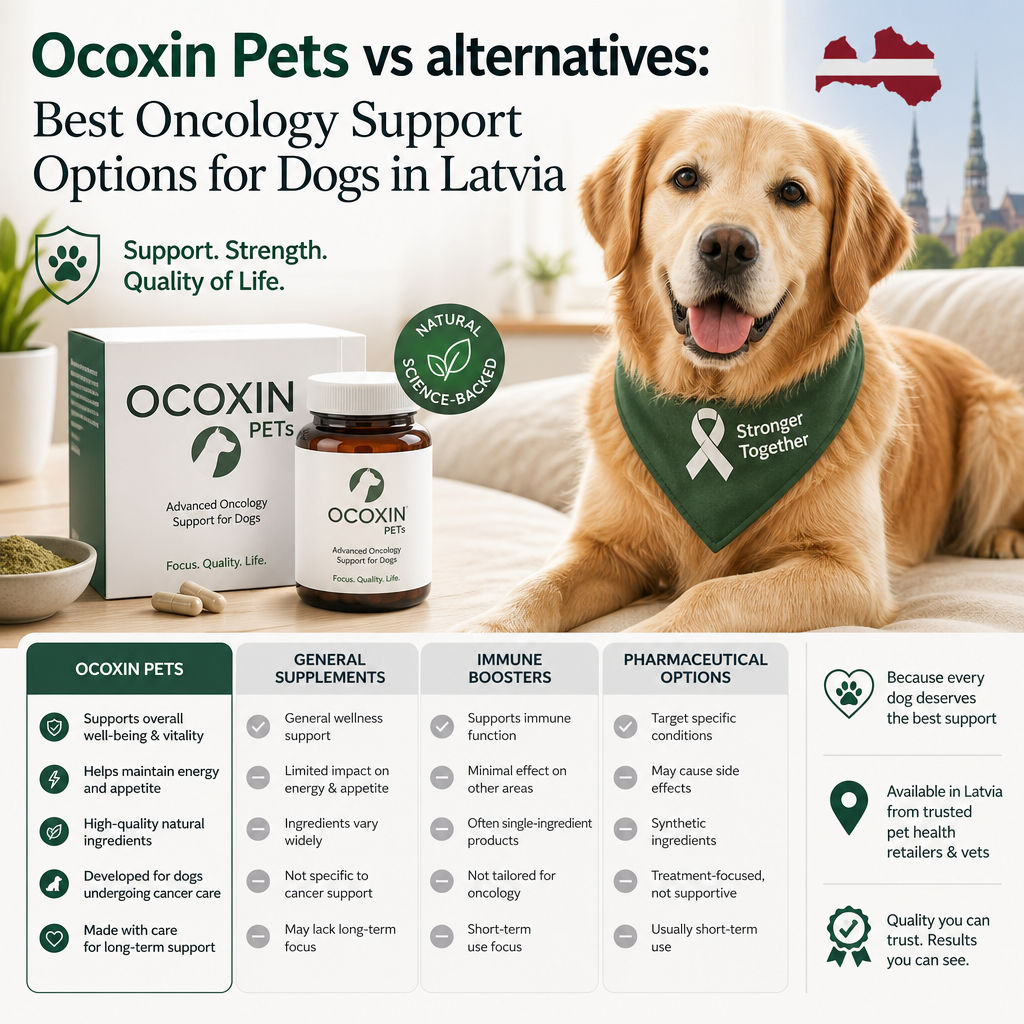
Oncology nutritional support refers to dietary strategies and supplements used to help dogs cope with the effects of cancer and its treatment. Dogs with tumors may experience reduced appetite, weight loss, muscle wasting, nausea, digestive changes, or increased nutritional demands. Some treatments can make these problems more noticeable. In many cases, Ocoxin Pets vs alternatives becomes a practical question of how to support eating, comfort, and recovery during a stressful treatment period.
A suitable nutritional plan usually focuses on several goals:
- Maintaining a healthy body weight
- Preserving muscle mass
- Providing enough calories and highly digestible nutrients
- Supporting normal hydration
- Managing treatment-related digestive problems
- Encouraging the dog to eat consistently
Every dog is different. The appropriate diet depends on the tumor type, treatment plan, age, existing diseases, blood test results, and current body condition. For example, a dog with kidney disease may require different nutritional support from a dog with a healthy digestive system. This is why a supplement should not be selected solely because it is marketed for cancer support. In many cases, Ocoxin Pets vs alternatives becomes a question of safety, tolerability, and overall fit rather than branding alone.
Supportive feeding also needs to match the dog’s current symptoms. If nausea is the main issue, appetite may not improve until that symptom is treated first. If the dog is losing weight, a higher-energy diet may matter more than adding another product. If the mouth is sore, texture and palatability can be decisive. These details make a real difference when comparing Ocoxin Pets vs alternatives in daily practice.
For background on cancer nutrition in veterinary patients, the VCA Hospitals guide to nutrition for dogs with cancer is a useful educational reference.
What is Ocoxin Pets?
Ocoxin Pets is a veterinary nutritional supplement designed to provide supportive nutrients for dogs and other companion animals. Its formulation is commonly associated with plant-derived ingredients, antioxidants, vitamins, minerals, and compounds intended to support general health during periods of illness or treatment.
The product is generally used as an adjunct rather than as a cancer therapy. Its potential role may include supporting appetite, nutritional intake, vitality, and recovery. However, the response can vary considerably between individual dogs. Some animals may accept the product easily, while others may dislike its taste or develop digestive upset.
Before using Ocoxin Pets, owners should review the ingredient list with a veterinarian. This is particularly important when a dog is receiving chemotherapy, corticosteroids, anti-inflammatory drugs, anticoagulants, or medication for liver or kidney disease. Certain nutrients and herbal compounds can affect digestion, blood clotting, metabolism, or the way medicines are processed.
When discussing Ocoxin Pets vs alternatives with a clinic, it is helpful to ask whether the goal is appetite support, calorie support, immune support, or general wellness support, because different products are designed for different needs. A supplement that helps one dog eat more may do little for another dog whose biggest issue is nausea or pain.
Owners should also remember that the label language may sound more promising than the evidence behind a product. Supportive veterinary nutrition is most useful when it is specific, measurable, and tied to the dog’s real needs. In that sense, Ocoxin Pets is best understood as one possible part of a broader supportive plan rather than a stand-alone answer.
What should owners compare?
When evaluating Ocoxin Pets vs alternatives, it is useful to compare more than brand names. The most important factors are safety, purpose, evidence, suitability, and practical use. A dog with cancer may need very different support from a healthy dog, so the “best” product is not always the one with the longest ingredient list or the strongest marketing claims.
1. Ingredient profile
Look for clearly listed ingredients and amounts. A product that contains many ingredients is not automatically better. Some dogs may benefit from a simple, targeted supplement, while others need broader nutritional support. Owners should be cautious with products that use vague proprietary blends or make strong claims without explaining the evidence.
It is also worth checking whether the product overlaps with a prescription diet or another supplement already being used. Too much duplication can lead to unnecessary intake of certain vitamins, minerals, or fats. That is one reason the discussion around Ocoxin Pets vs alternatives should always include the full list of foods, treats, and medications the dog is receiving.
2. Veterinary oversight
Cancer care often involves several medications and dietary changes. A veterinarian can determine whether a supplement is appropriate and whether it should be stopped before surgery or adjusted during chemotherapy. Professional guidance is especially important for dogs with anemia, abnormal liver enzymes, kidney disease, diabetes, pancreatitis, or clotting problems.
Even when a supplement seems harmless, the timing of administration can matter. Some products are best given with food, while others may irritate an empty stomach. A clinic can help decide whether the dog should receive support daily, only during treatment cycles, or not at all. This is another reason Ocoxin Pets vs alternatives is not just a product comparison; it is a medical decision about overall care.
3. Palatability and administration
A nutritionally valuable product is of limited use if a dog refuses it. Powders, liquids, pastes, and capsules may be available, but the best form depends on the animal’s preferences and treatment routine. Introducing a new product gradually can make it easier to identify any adverse reaction.
Palatability becomes even more important when the dog already feels unwell. A supplement with a strong smell may be rejected, while a mild product mixed into a favorite food may be accepted. For some families, the practical answer in the Ocoxin Pets vs alternatives discussion is the product that the dog will actually take consistently.
4. Quality control
Choose products manufactured by reputable companies with transparent labeling and appropriate quality controls. Veterinary products should provide clear dosage instructions based on body weight. Products intended for humans may contain ingredients or concentrations that are unsuitable for dogs.
Owners in Latvia should also confirm that the product can be sourced reliably and stored correctly. Temperature-sensitive supplements or products with short shelf lives can lose quality if they are shipped or stored poorly. Consistency matters because a supportive plan only works if the same product can be used safely over time.
5. Realistic expectations
No nutritional supplement has been proven to eliminate tumors. Supportive products may help with general condition or treatment tolerance, but they should never delay diagnostic testing or replace a recommended treatment plan.
It can be helpful to define success in practical terms. For one dog, the goal may be to eat a full meal daily. For another, it may be to maintain weight during chemotherapy. For a third, it may be to reduce digestive upset. Those goals keep the Ocoxin Pets vs alternatives comparison grounded in real outcomes rather than broad promises.
In practical terms, a careful comparison of Ocoxin Pets vs alternatives should also include how easy the product is to dose, how the dog responds after the first few uses, and whether the ingredients overlap with other supplements already being given.
Dog tumor support options available in Latvia
Dog tumor support options in Latvia can include veterinary therapeutic diets, complete high-energy foods, targeted supplements, and practical home-care measures. Availability may differ between Riga, regional veterinary clinics, pharmacies, and online retailers, so owners should verify that products are officially labeled and suitable for veterinary use.
A veterinary therapeutic diet may be recommended when a dog has poor appetite, digestive problems, or difficulty maintaining weight. These diets are formulated to provide concentrated calories, digestible proteins, and balanced nutrients. In some cases, the priority is not a special “cancer diet” but simply ensuring that the dog eats enough of a complete food.
Some veterinarians may also consider individual nutrients, such as omega-3 fatty acids from marine sources, when appropriate. These may support general nutritional goals, but dosage and product purity matter. Fish oil can cause digestive problems in excessive amounts and may not be suitable for every patient.
Other supportive measures may include anti-nausea medication, appetite stimulants, pain control, fluid therapy, dental care, and treatment of infections. These interventions can sometimes improve food intake more effectively than adding another supplement. A dog that is nauseated or in pain may refuse even a highly palatable meal.
For owners comparing Ocoxin Pets vs alternatives in Latvia, it often helps to think in tiers: first stabilize symptoms, then choose the simplest nutrition plan that the dog can tolerate consistently. That approach keeps care focused and avoids giving too many new products at once.
Other common support approaches
- Therapeutic complete diets for dogs needing easy-to-digest nutrition
- Omega-3-based support when a veterinarian recommends fatty acid supplementation
- Appetite and nausea management when eating is limited by treatment side effects
- High-calorie recovery foods for short periods of reduced intake
- Hydration support for dogs at risk of dehydration
These options are not mutually exclusive. A veterinarian may recommend a food change, then add a supplement only if the dog still needs extra support. That approach is often more effective than introducing several products at once. It can also make it easier to judge whether Ocoxin Pets or one of the alternatives is actually helping.
How a veterinarian may narrow the choices
In a real consultation, a clinician may ask about appetite, stool quality, vomiting, body weight, muscle loss, medication schedule, and recent bloodwork before recommending any support product. The same product can be sensible for one patient and inappropriate for another. That is why Ocoxin Pets vs alternatives should be viewed through the lens of the individual dog’s medical picture, not only the diagnosis of cancer itself.
For some dogs, the best option is a complete diet and symptom control. For others, a small supplement may be enough to improve intake. A few dogs may need a stepwise approach, where appetite management comes first, then a nutritional product is added later once the dog is eating more reliably.
Comparing supplements with complete therapeutic diets
Supplements and therapeutic diets serve different purposes. A supplement adds selected nutrients or compounds to the existing diet, while a complete diet is designed to provide all essential nutrients in appropriate proportions. If a dog is losing weight, replacing a poorly tolerated food with a balanced, energy-dense veterinary diet may be more useful than adding several supplements.
Owners should also avoid giving too many products at once. Multiple supplements can lead to overlapping ingredients, excessive calories, digestive upset, or interactions with prescribed medicines. Introducing one change at a time makes it easier to assess whether the dog is benefiting.
This is why the discussion around Ocoxin Pets vs alternatives should focus on the dog’s current problems. For example, a dog with nausea may need medication first, while a dog eating too little may benefit more from a highly palatable complete diet.
A structured approach may look like this:
- Check whether pain, nausea, constipation, or mouth soreness is limiting appetite.
- Review the current diet and confirm that it is complete and appropriate.
- Decide whether the dog needs calories, protein, or a specific supplement.
- Introduce only one new product at a time so results are easier to track.
- Reassess body weight, appetite, and stool quality after a short trial period.
Some families expect a supplement to do the work of a complete diet, but that usually leads to disappointment. Complete nutrition is the foundation, and supplements may be added to support specific problems. Framing Ocoxin Pets vs alternatives this way makes the decision more practical and less confusing.
It is also reasonable to ask whether the dog needs a temporary intervention or a longer-term plan. A short course of extra nutritional support might be enough during chemotherapy side effects, whereas a dog with ongoing weight loss may need a sustained change in diet. A veterinarian can help distinguish between these situations.
How to monitor a dog receiving nutritional support
Regular monitoring helps determine whether a support plan is working. Owners can record daily appetite, water intake, vomiting, stool quality, activity, and medication use. Weekly body-weight checks may be useful, provided they do not cause stress. A veterinarian can also assess muscle condition, hydration, pain, and blood values.
Contact a veterinary clinic promptly if the dog stops eating, vomits repeatedly, develops severe diarrhea, becomes unusually weak, has difficulty breathing, shows signs of pain, or loses weight rapidly. These symptoms may indicate a complication requiring medical treatment rather than a simple dietary adjustment.
It is also sensible to keep a simple log of any product used in the Ocoxin Pets vs alternatives comparison, including the start date, dose, appetite changes, and any digestive signs. That record can help a veterinarian decide whether the product should be continued.
Tracking progress does not need to be complicated. A few notes each day are usually enough to show trends. For example, a dog that starts finishing meals after a product is added may be benefiting, while a dog that becomes gassy, loose, or reluctant to eat may need a different choice. That makes the Ocoxin Pets vs alternatives decision easier to evaluate objectively.
Simple monitoring checklist
- Meal size and interest in food
- Vomiting or nausea signs
- Stool consistency and frequency
- Body weight or body condition changes
- Energy level and comfort
- Medication timing and tolerance
If a dog is on chemotherapy, the timing of symptoms can also be important. Some side effects appear a few days after treatment, while others happen immediately. Recording when a change starts can help the veterinary team decide whether the issue is linked to treatment, the supplement, or something else entirely.
Ocoxin Pets vs alternatives: the practical takeaway
The best practical way to choose in the Ocoxin Pets vs alternatives discussion is to start with the dog’s main problem. If the dog is not eating, appetite support and symptom relief may matter most. If the dog is losing weight, calorie density and digestibility are likely the priorities. If the dog is already eating well, only minimal support may be needed.
Owners in Latvia may also want to consider cost, access, and ease of reordering. A product that is effective but unavailable after the first bottle can create unnecessary interruption. A simpler plan that can be maintained consistently is often more valuable than a complex plan that is hard to follow.
It is also worth discussing any supplement with the same veterinarian who is managing the cancer treatment. That allows the clinician to compare the product with the dog’s medications, test results, and treatment goals. In many cases, the answer to Ocoxin Pets vs alternatives will change over time as the dog’s condition changes.
Related reading: owners looking for broader support strategies may also find Best Supplements for Dogs with Cancer: 7 Essential UK Support Tips helpful for understanding how supportive nutrition is often approached in practice. If your dog’s cancer has already spread, this guide on Metastasis Dogs: Helpful Cancer Spread & Tumor Growth Guide may also provide useful background.
Overall, Ocoxin Pets vs alternatives should be decided with veterinary guidance, not marketing alone. The most effective option is the one that supports appetite, digestion, and comfort while remaining safe alongside the dog’s cancer treatment. In some homes that may be Ocoxin Pets, while in others it may be a therapeutic diet, a different supplement, or a combination of supportive measures that better matches the dog’s needs.
When cancer care is managed well, supportive feeding and supplement decisions can make daily life easier for both the dog and the family. The right plan is rarely the most complicated one; it is the one that the dog can tolerate and that fits the wider medical treatment plan.
In short, Ocoxin Pets vs alternatives should be chosen with a focus on safety, practicality, and the dog’s current symptoms. With careful monitoring and veterinary advice, owners can build a supportive nutrition plan that is realistic, gentle, and better aligned with treatment goals.
by TCMVET | Aug 21, 2026 | Research and News
Integratore tumore milza cane: quando si affronta una diagnosi di questo tipo, è naturale cercare ogni possibile forma di aiuto per sostenere il proprio animale. Tuttavia, un integratore non può curare il tumore né sostituire la valutazione del veterinario. Può eventualmente svolgere un ruolo di supporto, ma solo all’interno di un piano personalizzato che tenga conto della diagnosi, delle condizioni generali del cane e delle terapie in corso.
Prima di scegliere qualsiasi prodotto, è importante capire che il supporto nutrizionale non ha lo stesso significato per tutti i pazienti. Un cane appena diagnosticato, uno già anemico, un animale operato di recente o un soggetto in terapia oncologica possono avere esigenze molto diverse. Per questo motivo, parlare di integratore tumore milza cane significa parlare di una possibile parte del percorso, non di una soluzione unica valida per tutti.
Tumore della milza nel cane: cosa significa
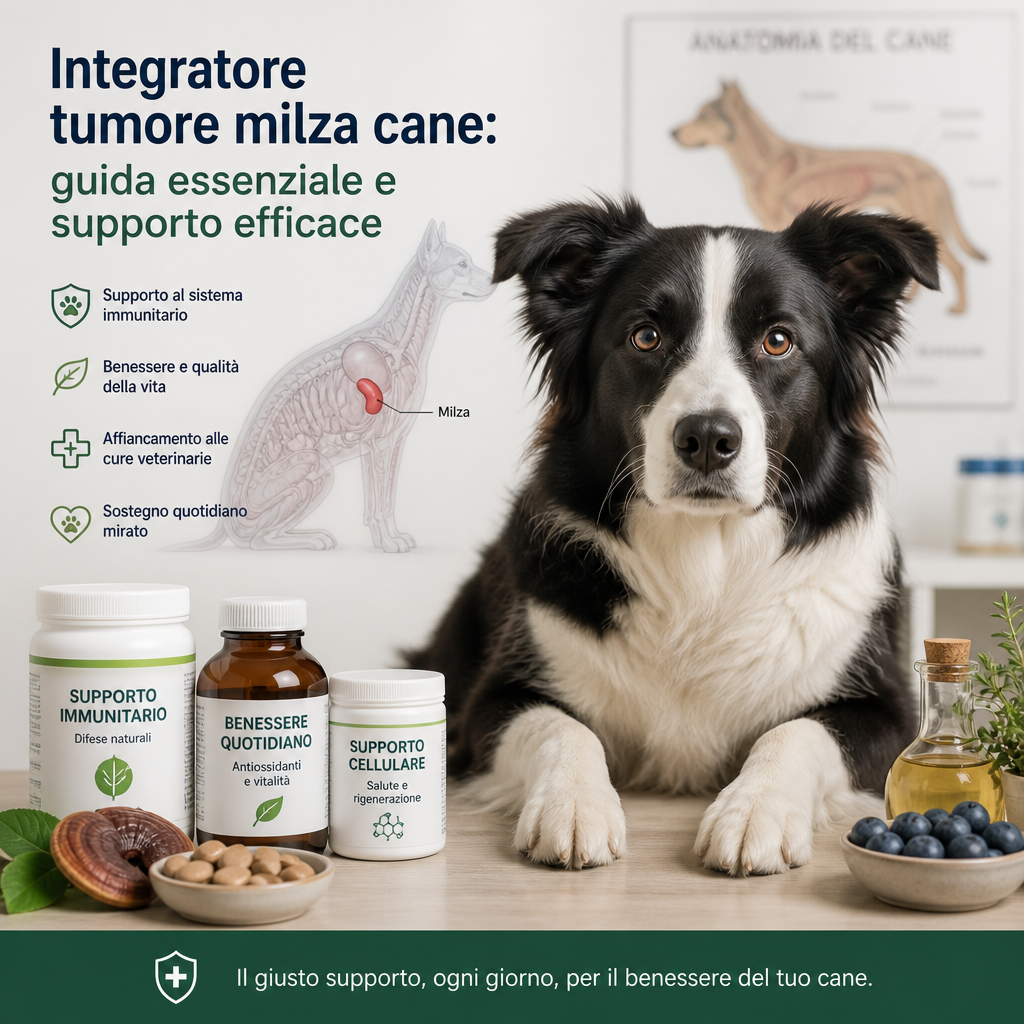
La milza è un organo coinvolto nella risposta immunitaria, nella filtrazione del sangue e nella rimozione delle cellule ematiche danneggiate. Le masse spleniche possono essere benigne oppure maligne e, in alcuni casi, vengono individuate casualmente durante un’ecografia o dopo la comparsa di sintomi.
Tra i segnali possibili rientrano la debolezza improvvisa, le gengive pallide, l’addome gonfio o dolorante, la perdita di appetito e di peso, il vomito, la respirazione accelerata e gli episodi di collasso. In un cane con tumore della milza, questi segni richiedono sempre attenzione immediata, perché la situazione può peggiorare rapidamente.
Una massa nella milza può anche rompersi e provocare un’emorragia interna. Pallore, debolezza improvvisa, addome teso, respirazione difficoltosa o svenimento richiedono un intervento veterinario immediato. In queste circostanze, nessun integratore rappresenta una soluzione d’emergenza.
Per questo motivo, quando si parla di supporto nel tumore della milza nel cane, il punto di partenza non è il prodotto, ma la stabilità clinica dell’animale. Senza una diagnosi precisa e senza una valutazione delle urgenze, qualsiasi scelta rischia di essere tardiva o poco utile.
Va anche ricordato che una massa splenica non coincide sempre con una neoplasia maligna. Alcune lesioni possono essere benigne, altre richiedono accertamenti più approfonditi, e solo l’iter diagnostico permette di chiarire il quadro. In questo senso, la prudenza è più utile dell’ottimismo improvvisato: un sospetto di tumore della milza nel cane va sempre affrontato con metodo, senza affidarsi a soluzioni rapide o non verificate.
Come viene definito il supporto più adatto
Prima di valutare un prodotto è indispensabile capire la natura della massa. Il veterinario può consigliare esami del sangue, ecografia addominale, radiografie, tomografia computerizzata e, quando indicato, splenectomia con successivo esame istologico.
La rimozione della milza può essere proposta sia per ridurre il rischio di rottura sia per ottenere una diagnosi precisa. In caso di tumore maligno, il percorso può includere anche chemioterapia o controlli specialistici. La scelta dipende dal tipo di neoplasia, dallo stadio, dalla presenza di metastasi e dalle condizioni cardiovascolari e renali del cane.
Il concetto di tumore milza cane supporto deve quindi essere interpretato in modo ampio: non riguarda soltanto gli integratori, ma anche alimentazione, controllo del dolore, gestione della nausea, riposo, monitoraggio e qualità della vita. In molti casi, un supporto ben impostato è più utile di una scelta casuale di prodotti.
Se desideri approfondire il tema dei prodotti spesso valutati in questi casi, può essere utile leggere anche Miglior integratore cane tumore: 7 scelte davvero utili da valutare con attenzione, così da comprendere meglio criteri, limiti e possibili impieghi.
In pratica, il veterinario non valuta solo “quale integratore”, ma anche “quando”, “per quanto tempo” e “con quali obiettivi”. Un cane che deve sostenere l’intervento chirurgico, ad esempio, ha necessità diverse da un cane che sta affrontando una fase di controllo. Questo passaggio è fondamentale per evitare di confondere il supporto nutrizionale con la terapia vera e propria.
Integratore tumore milza cane: quale funzione può avere
Un integratore tumore milza cane può essere preso in considerazione per sostenere alcuni aspetti specifici, come l’appetito, il mantenimento della massa muscolare o l’apporto di determinati nutrienti. La sua utilità, però, varia molto da cane a cane e dipende dal quadro clinico generale.
Tra le categorie comunemente discusse con il veterinario ci sono:
- acidi grassi omega-3, potenzialmente utili nel supporto nutrizionale e nella gestione dei processi infiammatori;
- vitamine e minerali, soltanto quando esiste una reale necessità o una carenza documentata;
- sostanze antiossidanti, da valutare con cautela durante i trattamenti oncologici;
- supporti digestivi o probiotici, quando sono presenti disturbi gastrointestinali;
- prodotti destinati al sostegno epatico o renale, se gli esami evidenziano una particolare esigenza.
Il termine “naturale” non equivale automaticamente a “sicuro”. Alcuni estratti vegetali possono interferire con la coagulazione, modificare il metabolismo dei farmaci o aumentare il rischio di effetti indesiderati. In un cane con una massa splenica o reduce da un intervento chirurgico, questo aspetto è particolarmente importante.
Va inoltre ricordato che l’integratore tumore milza cane non è uguale per tutti i pazienti. Un cane con appetito ridotto, ma con parametri ematici stabili, può avere esigenze diverse rispetto a un cane già debilitato, anemico o sottoposto a chirurgia. L’obiettivo resta sempre quello di sostenere senza sovraccaricare.
Quando il cane mostra inappetenza o perdita di peso, il veterinario può considerare anche strategie complementari come pasti più frequenti, consistenze più gradite o un eventuale supporto digestivo. In questo contesto, il prodotto aggiuntivo deve essere solo una parte di una strategia più ampia, pensata per migliorare comfort e tollerabilità senza creare nuovi problemi.
Quando un supporto può avere senso
Un prodotto aggiuntivo può essere discusso se il cane mangia poco, perde peso, mostra nausea lieve o ha bisogno di un supporto nutrizionale mirato. In questi casi, il veterinario può valutare se inserire un supplemento compatibile con la terapia principale. Anche in presenza di tumore della milza nel cane, la priorità rimane la tollerabilità.
Quando è meglio evitare il fai-da-te
Meglio non introdurre da soli più prodotti insieme, soprattutto se il cane assume antidolorifici, farmaci per il cuore, anticoagulanti o cure oncologiche. Un integratore tumore milza cane scelto senza supervisione può sembrare innocuo, ma in realtà può complicare la gestione clinica o alterare esami e terapie.
È altrettanto importante evitare l’idea che più supplementi significhino automaticamente più protezione. In molti casi, il vero valore sta nella selezione essenziale: pochi elementi, ben scelti, ben tollerati e verificati nel tempo. Questa logica riduce il rischio di confusione e aiuta a capire se il cane trae davvero beneficio dal supporto proposto.
Integratori per cani con cancro: attenzione alle interazioni
Gli integratori cane cancro vengono spesso acquistati nella speranza di rafforzare le difese immunitarie o rallentare la malattia. Le prove scientifiche disponibili, però, non dimostrano che un prodotto da banco possa eliminare un tumore o sostituire la chemioterapia, la chirurgia o le cure palliative.
Inoltre, alcuni composti possono interferire con:
- farmaci chemioterapici;
- medicinali antinfiammatori o antidolorifici;
- anticoagulanti e antiaggreganti;
- anestetici utilizzati durante gli interventi;
- terapie per cuore, fegato o reni.
Per questo è necessario comunicare al veterinario ogni prodotto somministrato, compresi oli, tisane, preparati erboristici e alimenti funzionali. Anche il dosaggio deve essere stabilito in base al peso, all’età, alla funzionalità degli organi e agli esami clinici.
Quando si parla di integratore tumore milza cane, il rischio maggiore non è solo l’inefficacia, ma anche l’interazione con trattamenti già complessi. Una scelta prudente evita di aggiungere variabili difficili da controllare durante un percorso oncologico.
Per capire come vengono valutati i prodotti per il supporto generale del cane, può essere utile consultare fonti veterinarie e linee guida affidabili. Un riferimento informativo di base è il materiale informativo dell’American Veterinary Medical Association sul cancro nei cani, utile per inquadrare meglio il tema con un approccio scientifico.
In più, è bene considerare che un cane oncologico può essere più sensibile agli effetti collaterali rispetto a un animale sano. Anche piccoli cambiamenti nella dieta, nell’idratazione o nella routine quotidiana possono incidere sulla sua risposta complessiva. Per questo l’uso di prodotti complementari va sempre inserito in una valutazione clinica aggiornata, non in una scelta standardizzata.
Alimentazione e gestione quotidiana
Una dieta completa e altamente digeribile è spesso più importante di molti prodotti aggiuntivi. Il cane dovrebbe ricevere alimenti adeguati alla sua condizione, con un apporto sufficiente di proteine ed energia, salvo controindicazioni specifiche.
Se l’appetito diminuisce, possono essere utili piccoli pasti frequenti, cibo umido o una formulazione consigliata dal veterinario. Non è opportuno modificare radicalmente la dieta o proporre regimi estremamente restrittivi senza supervisione: un animale malato ha bisogno di mantenere il peso e la massa muscolare.
Anche l’ambiente influisce sul benessere. Sono consigliabili riposo, attività moderata compatibile con le condizioni fisiche, riduzione dello stress e osservazione quotidiana di appetito, sete, feci, vomito, respirazione e livello di energia.
In pratica, un buon supporto nel tumore della milza nel cane parte da abitudini concrete: pasti ben tollerati, acqua sempre disponibile, routine prevedibile e controllo dei sintomi. Se il cane mostra nausea o rifiuto del cibo, il veterinario può suggerire un approccio mirato prima ancora di pensare a nuovi integratori.
Obiettivi realistici dell’alimentazione
Gli obiettivi principali sono mantenere l’idratazione, limitare la perdita di peso, preservare la forza muscolare e ridurre il disagio digestivo. Non si tratta di “nutrire il tumore”, ma di sostenere il cane nel modo più equilibrato possibile durante la malattia.
Errore da evitare
Un errore frequente è cambiare più volte dieta e supplementi nel tentativo di ottenere risultati rapidi. Questo rende più difficile capire cosa aiuta davvero e cosa invece provoca disturbi. Anche un integratore tumore milza cane va introdotto con criterio, uno alla volta, solo se ritenuto opportuno dal veterinario.
Se il cane è stato operato o è in fase di recupero, il monitoraggio nutrizionale diventa ancora più importante. In questa fase, la priorità è sostenere energia, appetito e recupero senza sovraccaricare il sistema digestivo. Un approccio graduale, coerente e controllato è in genere più efficace di interventi troppo aggressivi o improvvisati.
Segnali da monitorare dopo la diagnosi
Un diario può aiutare a individuare rapidamente cambiamenti importanti. È utile annotare peso, quantità di cibo assunta, farmaci, episodi di vomito o diarrea, mobilità e comportamento.
Contattare tempestivamente il veterinario in presenza di:
- gengive molto pallide o biancastre;
- addome improvvisamente aumentato di volume;
- collasso o debolezza marcata;
- dolore evidente;
- difficoltà respiratoria;
- rifiuto persistente del cibo;
- vomito ripetuto;
- feci nere o presenza di sangue.
Questi sintomi possono indicare complicazioni della malattia o effetti collaterali delle terapie e non devono essere gestiti autonomamente con un integratore.
In presenza di questi segnali, il percorso più corretto è sempre quello di contattare il veterinario prima possibile. Nessun integratore tumore milza cane dovrebbe essere usato per ritardare una visita o per mascherare un peggioramento clinico.
È utile ricordare anche che alcuni segni possono comparire in modo graduale. Una lieve riduzione dell’appetito, un aumento della stanchezza o un cambiamento nella respirazione possono sembrare poco specifici, ma nel contesto di un tumore della milza nel cane meritano comunque attenzione. Riconoscerli presto permette spesso di intervenire in modo più efficace e meno invasivo.
Domande frequenti sull’integratore e sulla milza
L’integratore può sostituire la chirurgia?
No. Se il veterinario ritiene necessaria la rimozione della milza o un altro trattamento, il prodotto complementare non può sostituirlo. Un integratore tumore milza cane può al massimo affiancare il percorso, non prenderne il posto.
Meglio iniziare subito con più prodotti?
In genere no. È preferibile introdurre un solo prodotto alla volta, così da capire se è davvero utile e ben tollerato. Aggiungere troppe sostanze insieme rende difficile valutare benefici ed eventuali effetti indesiderati.
Gli integratori naturali sono sempre sicuri?
Neppure i prodotti naturali sono automaticamente sicuri. Alcuni possono influenzare la coagulazione, l’anestesia o altri farmaci. Per questo ogni scelta va condivisa con il veterinario, soprattutto se il cane ha un tumore della milza nel cane o sta seguendo terapie specifiche.
Se il cane mangia poco, basta cambiare integratore?
Non necessariamente. L’inappetenza può dipendere dal dolore, dalla nausea, dall’anemia o dal peggioramento della malattia. In questi casi serve prima una valutazione clinica, poi eventualmente un supporto nutrizionale mirato.
Quando è utile chiedere una seconda opinione?
Una seconda opinione può essere utile se la diagnosi non è chiara, se i sintomi evolvono rapidamente o se si devono prendere decisioni importanti come chirurgia, chemioterapia o gestione palliativa. Nel frattempo, l’uso di un integratore tumore milza cane dovrebbe restare prudente e condiviso.
Un approccio realistico e personalizzato
Cercare un integratore tumore milza cane può nascere dal desiderio di fare il possibile, ma il supporto più efficace parte da una diagnosi accurata e da un confronto costante con il veterinario. Un prodotto può avere un ruolo complementare soltanto quando è appropriato, ben tollerato e compatibile con il trattamento principale.
L’obiettivo non è inseguire promesse miracolose, ma proteggere la qualità della vita del cane: controllare dolore e nausea, favorire l’alimentazione, prevenire complicazioni e valutare regolarmente la risposta alle cure. Un piano prudente, basato su evidenze e adattato alle esigenze individuali, offre maggiori garanzie rispetto all’uso casuale di più integratori contemporaneamente.
In sintesi, il miglior supporto per il tumore della milza nel cane nasce da un equilibrio tra diagnosi, terapia, alimentazione e monitoraggio. L’integratore tumore milza cane può essere solo una parte di questo percorso, mai la parte principale. Se usato con attenzione, può accompagnare il cane; se usato senza controllo, può creare più problemi che benefici.
Quando il contesto clinico è complesso, la scelta più saggia è sempre quella più semplice e più controllata: valutare i sintomi, seguire le indicazioni veterinarie e usare il supporto nutrizionale solo come complemento realmente utile. In questo modo, il cane riceve un aiuto concreto, realistico e coerente con le sue necessità.
by TCMVET | Aug 21, 2026 | Research and News
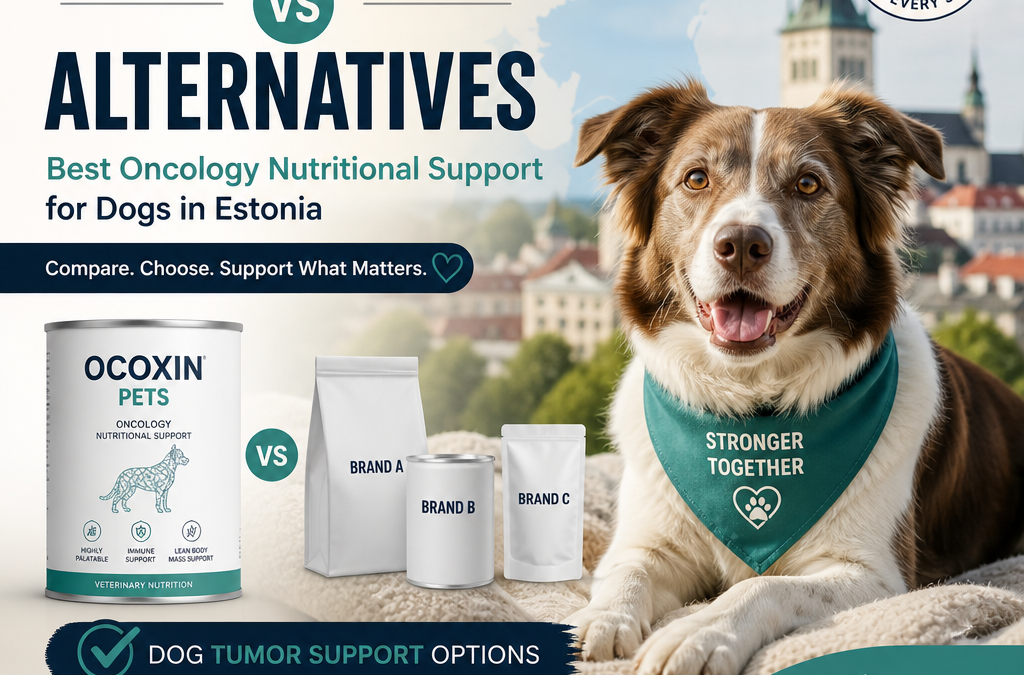
Ocoxin Pets vs alternatives is an important comparison for Estonian dog owners looking for supportive care during cancer treatment. A diagnosis of cancer can be overwhelming, but nutrition and carefully selected supplements may help maintain appetite, body condition, energy, and quality of life. These products should complement—not replace—veterinary diagnosis and treatment. The best choice depends on the dog’s tumor type, treatment plan, blood results, digestive health, and individual nutritional needs.
For many families, Ocoxin Pets vs alternatives becomes a practical question: should you choose a broad supportive formula, a therapeutic diet, or a more targeted supplement? The answer depends on the dog’s symptoms, current medications, and how well the dog is eating day to day. It also depends on whether the main goal is to support recovery, reduce treatment-related strain, or simply keep the dog comfortable and eating as normally as possible.
Why oncology nutritional support matters for dogs
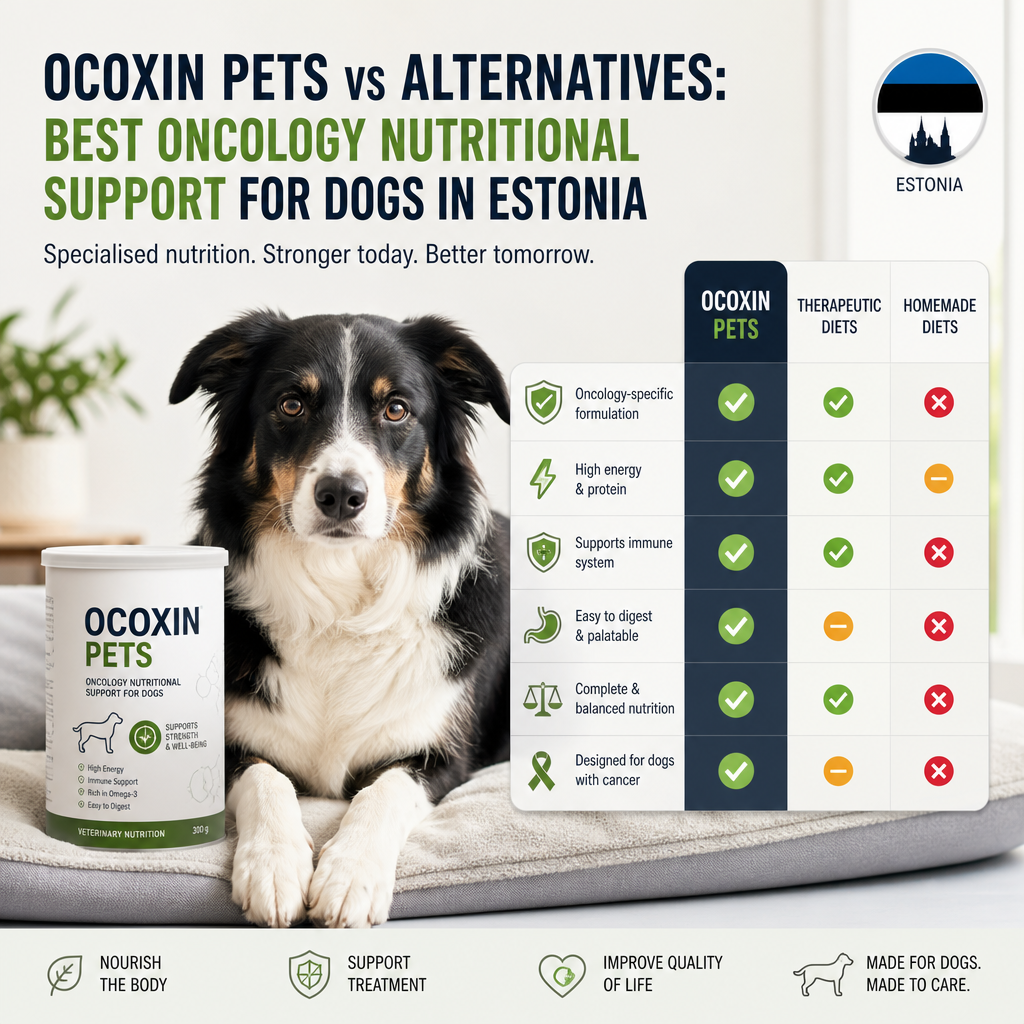
Cancer can affect a dog’s body in several ways. Tumors may increase energy demands, alter metabolism, reduce appetite, or cause inflammation. Surgery, chemotherapy, and radiation therapy can also lead to nausea, fatigue, mouth discomfort, diarrhea, or temporary changes in eating habits. In some dogs, the first signs that something is wrong are subtle changes such as leaving food behind, drinking less, or losing muscle over the back and hips.
Maintaining adequate nutrition is therefore a central part of supportive oncology care. A dog that eats well and preserves muscle mass may tolerate treatment more effectively and recover better after procedures. Nutritional support can include a complete diet, appetite management, hydration, calorie-dense foods, omega-3 fatty acids, digestive support, and selected veterinary supplements. When appetite is poor, even a small improvement in calorie intake can make a meaningful difference over time.
However, supplements are not automatically harmless. Some ingredients can interfere with medications, affect blood clotting, influence liver enzymes, or place additional demands on the kidneys. Veterinary supervision is especially important when a dog is receiving chemotherapy, corticosteroids, pain medication, or anticoagulants. That is one reason Ocoxin Pets vs alternatives should always be reviewed in the context of the dog’s full medical plan.
For this reason, Ocoxin Pets vs alternatives should always be evaluated alongside the dog’s medical history, not as a quick product comparison alone. In some cases, the best support is simply making sure the dog eats enough of the right food. In others, a carefully chosen supplement can help bridge a gap while the veterinarian manages the disease and its side effects.
Ocoxin Pets: what it is designed to provide
Ocoxin Pets is a veterinary nutritional supplement commonly used as supportive care for dogs and cats with serious illnesses, including cancer. Its formulation is intended to provide a combination of nutritional and antioxidant ingredients that may support appetite, general condition, immune function, and recovery. The product is usually considered part of a broader care plan rather than a stand-alone solution.
The product is often considered when a dog is losing weight, eating poorly, or experiencing reduced vitality during treatment. Its liquid format may be useful for some animals that struggle to swallow tablets. Nevertheless, acceptance varies between dogs, and the appropriate amount should be determined according to the product instructions and veterinary advice. Some dogs take liquids more easily when mixed with a small amount of food, while others prefer a separate dose to avoid changing the smell or taste of the meal.
The main advantage of a combined formula is convenience. Instead of giving several separate products, owners may be able to provide one supplement containing multiple supportive ingredients. The limitation is that a combination product may not be ideal for every patient. A dog with kidney disease, diabetes, gastrointestinal sensitivity, or a specific medication plan may require a more targeted approach. In those cases, Ocoxin Pets vs alternatives may come down to whether the dog needs a broad supportive product or a more precise intervention.
That is why Ocoxin Pets vs alternatives should not be framed as a simple “better or worse” choice. A broader formula may help one patient, while another may do better with a prescription diet or a single nutrient chosen for a specific need. The most appropriate option is usually the one that fits the dog’s clinical picture, the owner’s ability to administer it consistently, and the veterinarian’s overall treatment strategy.
Ocoxin Pets vs alternatives: key differences
When comparing Ocoxin Pets vs alternatives, it is useful to evaluate products according to their purpose rather than focusing only on brand names or ingredient counts. No supplement has been proven to cure cancer, and nutritional support should not be presented as an alternative to surgery, chemotherapy, radiation, or other evidence-based veterinary treatment. Supportive care is valuable because it helps the dog cope better with the illness and treatment, not because it replaces them.
The most helpful comparison usually comes down to three questions: does the dog need complete nutritional support, symptom relief, or targeted supplementation? Once that is clear, choosing between Ocoxin Pets vs alternatives becomes much easier. The answer may also change over time. A dog that needs appetite support during chemotherapy might later need a more calorie-dense diet during recovery, or a simpler plan if digestion becomes sensitive.
Complete veterinary cancer diets
A therapeutic veterinary diet is often the foundation of oncology nutritional support. These diets are formulated to provide balanced protein, energy, vitamins, and minerals while taking into account the nutritional demands of illness. Some are highly palatable and calorie-dense, which can help dogs that eat only small portions. They may also be easier to use consistently because the nutrient profile is already balanced for long-term feeding.
A complete diet may be more important than an additional supplement if the dog is underweight or eating an unbalanced homemade meal plan. The veterinarian may recommend a specific food based on the tumor type, digestive tolerance, kidney function, and treatment goals. For example, a dog with a poor appetite may need a food that is richer and easier to chew, while a dog with digestive issues may need a simpler formula with high digestibility.
In discussions about Ocoxin Pets vs alternatives, diet often matters more than the supplement itself. If the dog will not eat enough calories, even a good product cannot fully compensate for the deficit. A supportive diet can be the most practical first step, especially when the goal is to preserve muscle and prevent further weight loss.
Omega-3 fatty acid supplements
Fish oil containing EPA and DHA is another commonly discussed option. These fatty acids may support normal inflammatory responses and help maintain skin, coat, and general health. They also add calories, which can be useful for some underweight dogs. Many veterinary teams consider omega-3s because they are familiar, widely available, and easy to integrate into a larger care plan.
Quality and dosage matter. Products should be purified, stored correctly, and selected for veterinary use. Excessive amounts may cause digestive upset or increase bleeding risk, particularly before surgery or when combined with certain medicines. The VCA Hospitals guide to omega-3 fatty acids for pets is a useful overview for owners who want to understand how these supplements are commonly used.
For some dogs, omega-3s may be a more targeted choice than a broad product. For others, Ocoxin Pets vs alternatives is not an either-or decision at all, because the veterinarian may recommend both a therapeutic diet and a carefully dosed fatty acid supplement. The key is to avoid assuming that “more supplements” automatically means better support.
Appetite and digestive support
Some dogs need help with nausea, reflux, constipation, diarrhea, or appetite loss rather than a broad nutritional supplement. In these cases, veterinary anti-nausea medication, appetite stimulants, probiotics, or a temporary change in diet may provide more practical benefit. When the stomach is unsettled, a dog may reject food simply because eating causes discomfort, so symptom control can be the first priority.
Digestive support should be individualized. A probiotic that suits one dog may worsen gas or diarrhea in another, and a high-fat product may be inappropriate for dogs with pancreatitis or gastrointestinal disease. This is where Ocoxin Pets vs alternatives must be judged carefully, because a product that seems supportive on paper may be less useful than a medicine that addresses the real problem.
Owners sometimes focus on supplements when the real issue is pain, nausea, or a treatment side effect that requires veterinary management. Addressing those issues can restore appetite more effectively than changing supplements alone.
Single-ingredient supplements
Single-ingredient products, such as specific vitamins, minerals, amino acids, or medicinal mushrooms, may appear attractive because they allow more precise dosing. However, targeted supplementation is safest when a deficiency or clear clinical need has been identified. Adding multiple products without coordination can result in excessive intake or interactions. This is especially important when the dog already receives a prescription diet that contains complete nutrition.
In practical terms, Ocoxin Pets vs alternatives may also mean choosing fewer products overall. A focused plan often works better than stacking several supplements without a clear goal. If the dog is already eating a good diet and only needs mild support, the simplest option is often the easiest to maintain and monitor.
Supportive care goals in real life
In real-world oncology care, the best option is usually the one that the dog accepts and the owner can give consistently. Ocoxin Pets vs alternatives should therefore be viewed through the lens of daily use: does the dog like the taste, does the formula fit the schedule, and does it complement the prescribed treatment plan? A theoretically ideal supplement has little value if the dog refuses it or if it complicates feeding.
It is also helpful to distinguish between “nutritional support” and “treatment support.” Some products are designed to help maintain body condition, while others are intended to ease symptoms or support digestion. Both can matter, but they are not interchangeable. Understanding that difference makes Ocoxin Pets vs alternatives much easier to navigate.
Dog tumor support options available in Estonia
Dog tumor support options in Estonia include veterinary oncology consultations, nutritional assessment, prescription diets, symptom-control medicines, and carefully selected supplements. Owners can seek guidance from their regular veterinarian or a veterinary clinic with experience in oncology. Estonia’s pet pharmacies and veterinary practices may stock several supportive products, but availability can change, and imported supplements may have different labeling or dosage recommendations.
When buying a product, check that it is intended for dogs, has clear ingredient and dosing information, and comes from a reliable supplier. Avoid products marketed with promises to destroy tumors, replace chemotherapy, or guarantee remission. Such claims are not a substitute for clinical evidence and may delay effective treatment. A cautious, evidence-based approach is especially important when the dog is already weakened by illness.
For readers comparing options across Europe, the internal resource Ocoxin Pets Alternative: 7 Best Affordable Dog Tumor Supplements in the UK offers another practical look at supportive choices and how owners can assess them. This can be especially helpful if you are comparing ingredient profiles and delivery formats.
Estonian owners may also find it helpful to discuss product sourcing with their veterinary clinic. Imported supplements can vary in concentration and serving size, and the same name does not always mean the same formula in every country. That detail matters when comparing Ocoxin Pets vs alternatives because the real question is often how the product performs in the dog’s actual care routine.
How to choose the right nutritional support
The first step is to establish the dog’s current nutritional status. The veterinarian may assess body weight, muscle condition, appetite, hydration, blood work, and gastrointestinal signs. A dog can have a normal body weight while still losing muscle, so monitoring body condition alone is not always enough. Over time, changes in muscle can affect strength, recovery, and overall resilience.
Owners should also record how much the dog eats, any vomiting or diarrhea, changes in drinking, stool quality, and daily energy. This information helps the veterinary team determine whether the issue is insufficient calories, treatment side effects, pain, nausea, or disease progression. Even a simple feeding diary can make the Ocoxin Pets vs alternatives decision more informed and less guesswork-based.
Introduce only one new supplement at a time whenever possible. This makes it easier to identify both benefits and adverse reactions. Stop and contact the veterinarian if the dog develops persistent vomiting, severe diarrhea, unusual bruising, marked lethargy, or a sudden refusal to eat. Those signs may indicate a product mismatch or a separate medical concern that needs prompt attention.
If the dog is already receiving oncology care, ask whether the current plan needs more calories, a different protein level, or simpler digestibility rather than another supplement. In many cases, that small adjustment matters more than switching from one branded product to another, including Ocoxin Pets vs alternatives. A dog that eats a little more of the right food may improve faster than a dog given several products that do not fit its needs.
It is also worth asking whether the dog’s diet is already complete. If the answer is yes, an extra supplement should have a clear purpose. If the answer is no, then fixing the diet may be more important than adding a supportive product. This step alone can change the direction of the whole nutrition plan.
Practical decision points for owners
When comparing Ocoxin Pets vs alternatives, it can help to think in practical terms: can the dog eat enough on its own, does it need help managing symptoms, and is the chosen product easy to give every day? The most effective plan is usually the one that combines clinical logic with everyday realism. A good recommendation that cannot be followed consistently is less useful than a simpler plan that the dog tolerates well.
Owners should also consider budget and availability. If a product is difficult to find in Estonia or too expensive to maintain long term, it may not be the best choice even if its ingredients look appealing. Consistency matters more than novelty in most supportive care plans.
Questions to discuss with the veterinarian
Before starting Ocoxin Pets or an alternative, ask whether the product is suitable for the dog’s tumor type and current medications. It is also worth discussing whether the dog needs additional calories, a prescription diet, omega-3 supplementation, digestive support, or treatment for nausea and pain. These questions help prevent unnecessary product overlap and reduce the risk of interactions.
Ask how success will be measured. Useful goals may include stable body weight, improved appetite, better stool quality, or maintaining normal activity—not simply the expectation that a supplement will shrink a tumor. Regular reassessment is essential because nutritional needs can change during surgery, chemotherapy, recovery, or palliative care. A product that works early in treatment may need to be adjusted later as symptoms shift.
It may also help to ask whether the dog should avoid specific ingredients because of bleeding risk, kidney concerns, or digestive sensitivity. That conversation can make Ocoxin Pets vs alternatives a safer and more personalized decision. If you are uncertain, ask the veterinarian to rank the options in order of importance so the plan stays simple and manageable.
Owners can also ask whether the dog’s medications affect appetite or digestion. Sometimes the best supportive care is not a new supplement but a small change in timing, feeding frequency, or medication scheduling. Those details can improve comfort more than switching products.
A balanced approach to supportive care
The most effective oncology nutritional support is usually part of a broader plan. A complete and palatable diet, adequate hydration, symptom control, regular veterinary monitoring, and emotional comfort all contribute to a dog’s quality of life. Ocoxin Pets may be a reasonable option for some patients, while others may benefit more from a therapeutic diet, a specific nutrient, or medical treatment for an underlying problem. In many cases, the best result comes from combining a few well-chosen measures rather than relying on one product alone.
Comparing Ocoxin Pets vs alternatives should therefore focus on safety, clinical suitability, nutritional completeness, product quality, and the dog’s response over time. With individualized veterinary guidance, owners in Estonia can make informed decisions and provide supportive care that complements—not competes with—their dog’s cancer treatment. Monitoring the dog’s appetite, stool quality, weight, and comfort will tell you far more than a label ever can.
In the end, the best choice is the one that supports eating, comfort, and stability while fitting the dog’s diagnosis and treatment plan. That is the most practical way to decide between Ocoxin Pets vs alternatives for a dog with tumors in Estonia. When the plan is guided by the veterinarian and adjusted as the dog changes, supportive care becomes more effective, more predictable, and easier for the family to follow.
If you want a simple final rule, it is this: choose the option that helps the dog eat, keeps the plan realistic, and fits the medical picture. For many families, that is the heart of Ocoxin Pets vs alternatives and the key to making supportive care truly useful.
