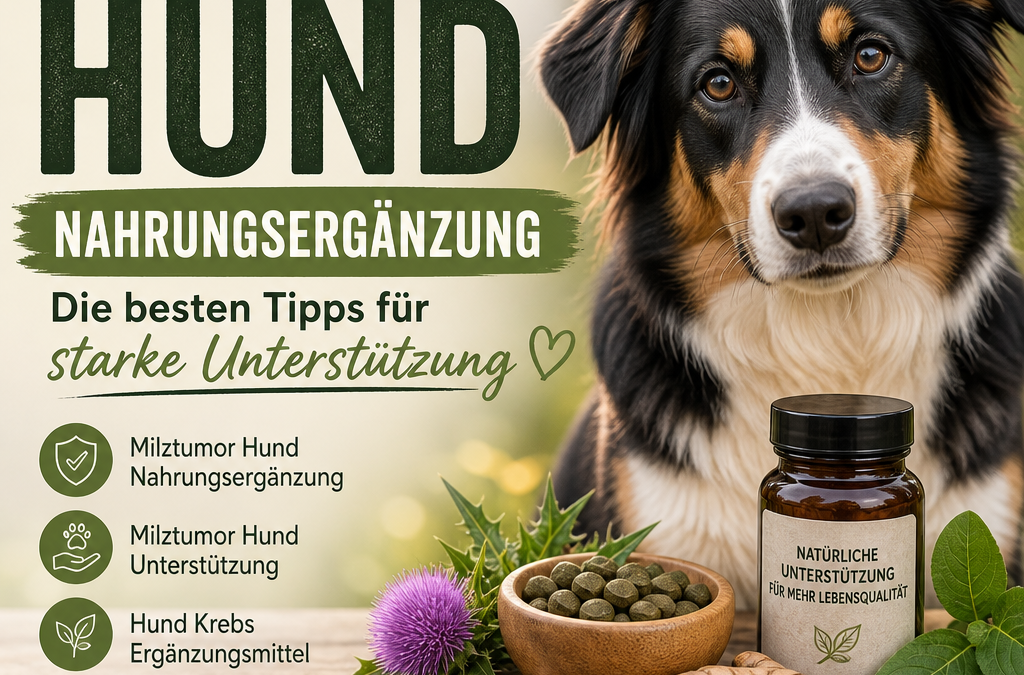
by TCMVET | Aug 21, 2026 | Research and News
Milztumor Hund Nahrungsergänzung kann die tierärztliche Behandlung sinnvoll begleiten, aber niemals ersetzen. Wird bei einem Hund ein Tumor an der Milz festgestellt, stehen Halter vor vielen Fragen: Welche Ernährung ist geeignet? Können bestimmte Nährstoffe den Körper unterstützen? Und woran erkennt man seriöse Produkte? Eine sorgfältige Auswahl, regelmäßige Kontrollen und eine enge Abstimmung mit der Tierarztpraxis sind entscheidend, damit zusätzliche Präparate nicht mehr schaden als nutzen.
Milztumor beim Hund: Warum Unterstützung wichtig ist

Die Milz übernimmt wichtige Aufgaben im Immunsystem, bei der Blutbildung und beim Abbau alter Blutzellen. Ein Tumor kann diese Funktionen beeinträchtigen und unter Umständen unbemerkt wachsen. Besonders problematisch ist, dass Veränderungen an der Milz lange ohne eindeutige Symptome bleiben können. Schwäche, blasse Schleimhäute, zunehmender Bauchumfang, Appetitlosigkeit, Gewichtsverlust oder plötzliches Zusammenbrechen können auf eine Blutung oder eine fortgeschrittene Erkrankung hindeuten.
Eine mögliche Milzblutung ist ein Notfall. Bei blassen Schleimhäuten, schneller Atmung, starkem Schwächegefühl, einem aufgeblähten Bauch oder Kollaps sollte der Hund sofort in eine Tierklinik gebracht werden. Nahrungsergänzungsmittel sind in solchen Situationen nicht geeignet und dürfen notwendige Diagnostik oder eine Operation nicht verzögern.
Die Behandlung hängt unter anderem von Tumorart, Größe, Ausbreitung und Allgemeinzustand des Hundes ab. Häufig wird eine operative Entfernung der Milz empfohlen. Je nach Befund können weitere Untersuchungen oder eine onkologische Behandlung notwendig sein. Milztumor Hund Nahrungsergänzung kann allenfalls unterstützend eingesetzt werden, etwa zur Versorgung in Phasen reduzierten Appetits oder zur Begleitung der Rekonvaleszenz.
Gerade in dieser Phase wünschen sich viele Halter eine Milztumor Hund Nahrungsergänzung, die alltagstauglich, verständlich dosiert und gut verträglich ist. Genau deshalb lohnt sich ein nüchterner Blick auf Nutzen, Risiken und den tatsächlichen Bedarf des einzelnen Hundes.
Milztumor Hund Unterstützung: Die wichtigsten Grundlagen
Eine gute Milztumor Hund Unterstützung beginnt nicht mit einem möglichst umfangreichen Ergänzungsprogramm, sondern mit einer stabilen Basis. Dazu gehören ein vollständiger Futterplan, ausreichend Flüssigkeit, möglichst wenig Stress und eine realistische Einschätzung der Belastbarkeit. Gerade bei einem Hund mit Milzproblemen zählt eine ruhige, planvolle Versorgung mehr als jedes Werbeversprechen.
Hochwertige Ernährung
Hunde mit einer Tumorerkrankung benötigen in der Regel ein gut verträgliches, energiereiches und ausgewogenes Futter. Besonders wichtig ist eine ausreichende Eiweißversorgung, da Muskeln und Gewebe bei chronischer Erkrankung schneller abgebaut werden können. Das Futter sollte jedoch zur Nieren- und Leberfunktion sowie zu möglichen Begleiterkrankungen passen. Wenn die Milztumor Hund Nahrungsergänzung später sinnvoll ergänzt werden soll, muss die Basisernährung zuerst stimmen.
Bei Appetitlosigkeit können mehrere kleine Mahlzeiten besser funktionieren als eine große Portion. Manche Hunde nehmen leicht angewärmtes Futter, weiche Konsistenzen oder besonders aromatische, tierärztlich geeignete Kost besser an. Eine dauerhafte Umstellung sollte nicht ohne fachliche Beratung erfolgen, da selbst zusammengestellte Rationen schnell zu Mangel- oder Überversorgung führen.
Flüssigkeit und Erholung
Ausreichendes Trinken unterstützt den Kreislauf und die allgemeine Stabilität. Nach einer Operation oder während einer medikamentösen Therapie sollte die Wasseraufnahme beobachtet werden. Ruhe ist ebenfalls wichtig, allerdings bedeutet das nicht vollständige Bewegungslosigkeit. Kurze, entspannte Spaziergänge können je nach Zustand sinnvoll sein. Toben, Springen und heftige Belastungen sollten insbesondere bei einer vergrößerten oder gefährdeten Milz vermieden werden.
Hilfreich ist außerdem ein fester Tagesrhythmus. Fütterungszeiten, Medikamentengaben und Ruhephasen sollten möglichst gleichbleibend sein. Das senkt Stress und erleichtert es, Veränderungen früh zu bemerken. Gerade bei einer laufenden Milztumor Hund Nahrungsergänzung ist diese Struktur nützlich, weil Reaktionen auf Präparate besser zugeordnet werden können.
Auch kleine Anpassungen im Alltag können einen spürbaren Unterschied machen. Ein rutschfester Liegeplatz, kurze Wege zu Wasser und Futter sowie eine ruhige Umgebung unterstützen viele geschwächte Hunde spürbar. Diese Maßnahmen ersetzen keine Therapie, machen aber die Versorgung oft deutlich angenehmer.
Milztumor Hund Nahrungsergänzung und häufig diskutierte Inhaltsstoffe
Der Begriff Hund Krebs Ergänzungsmittel umfasst sehr unterschiedliche Produkte. Manche enthalten einzelne Vitamine oder Mineralstoffe, andere kombinieren Pflanzenstoffe, Fettsäuren und Pilzextrakte. Die wissenschaftliche Datenlage ist je nach Wirkstoff sehr unterschiedlich. Außerdem können natürliche Substanzen die Blutgerinnung, den Stoffwechsel oder die Wirkung von Medikamenten beeinflussen.
Wer sich mit Milztumor Hund Nahrungsergänzung beschäftigt, sollte deshalb nicht nach Trends, sondern nach Verträglichkeit, Zweck und möglicher Wechselwirkung entscheiden. Ein Präparat ist nur dann sinnvoll, wenn es zum individuellen Hund, zur Diagnose und zur laufenden Behandlung passt.
Omega-3-Fettsäuren
Omega-3-Fettsäuren aus Fischöl werden häufig eingesetzt, weil sie an Entzündungsprozessen beteiligt sind und die Ernährung ergänzen können. Wichtig sind ein geprüftes Produkt, eine passende Dosierung und eine gute Lagerung. Bei Blutgerinnungsstörungen, bevorstehenden Operationen oder bestimmten Medikamenten muss die Anwendung unbedingt mit dem Tierarzt abgestimmt werden.
In der Praxis geht es dabei selten um einen schnellen Effekt, sondern eher um eine langfristige, behutsame Begleitung. Wer eine Milztumor Hund Nahrungsergänzung mit Omega-3 prüft, sollte deshalb auf Qualität, Frische und eine realistische Erwartung achten. Ein gutes Produkt macht keine Wunder, kann aber Teil eines stimmigen Gesamtkonzepts sein.
Antioxidative Vitamine und Mineralstoffe
Vitamin E, Vitamin C, Selen und andere antioxidative Nährstoffe werden oft als Unterstützung des Zellschutzes beworben. Eine gezielte Ergänzung kann in bestimmten Fällen sinnvoll sein, sollte aber nicht pauschal erfolgen. Überdosierungen sind möglich, und ein hoher Gehalt einzelner Stoffe kann den ausgewogenen Futterplan stören. Besonders bei Leber- oder Nierenerkrankungen ist Zurückhaltung angebracht.
Wichtig ist hier vor allem die Einordnung in das Gesamtbild. Eine Milztumor Hund Nahrungsergänzung mit Antioxidantien ist nicht automatisch besser, nur weil sie viele Mikronährstoffe enthält. Sinnvoll ist sie nur dann, wenn ein echter Bedarf besteht oder die Ration gezielt ergänzt werden soll.
Pflanzliche Präparate und Pilzextrakte
Mariendistel, bestimmte Heilpilze oder andere Pflanzenstoffe werden in der komplementären Tiermedizin diskutiert. Ihre Wirkung bei Milztumoren ist jedoch nicht allgemein bewiesen. Einige Präparate können außerdem mit Schmerzmitteln, Kortison, Chemotherapeutika oder Blutverdünnern interagieren. Auch Produkte mit der Bezeichnung „rein natürlich“ sind daher nicht automatisch harmlos.
Wenn Sie Milztumor Hund Nahrungsergänzung in Form pflanzlicher oder pilzbasierter Produkte erwägen, ist eine besonders genaue Prüfung wichtig. Natürlich bedeutet nicht automatisch sicher, und gerade bei älteren oder geschwächten Hunden können auch milde Substanzen unerwünschte Effekte haben.
Das gilt besonders dann, wenn mehrere Präparate gleichzeitig geplant sind. Kombinationsprodukte wirken auf den ersten Blick praktisch, erschweren aber oft die Beurteilung von Verträglichkeit und Nutzen. Für viele Hunde ist daher eine einfache, klar dosierte Lösung die bessere Wahl.
Ernährung und Alltag bei Milztumor
Im Alltag zählt nicht nur, was im Napf landet, sondern auch, wie der Hund es verträgt. Viele Hunde profitieren von leicht verdaulichen Rationen mit guter Energiedichte. Das kann helfen, den Gewichtsverlust zu begrenzen und die Kräfte zu erhalten. Gleichzeitig sollte die Nahrung nicht unnötig schwer sein oder Magen und Darm belasten.
Einige Halter fragen sich, ob selbst gekochte Rationen eine gute Lösung sind. Das kann in Einzelfällen funktionieren, sollte aber immer mit einer fachkundigen Ernährungsberatung geplant werden. Nur so lässt sich sicherstellen, dass die Versorgung mit Eiweiß, Fett, Kohlenhydraten, Spurenelementen und Vitaminen tatsächlich ausgewogen bleibt. Gerade wenn zusätzlich Milztumor Hund Nahrungsergänzung eingesetzt wird, ist die Gesamtration entscheidend.
Auch der Umgang mit Futter spielt eine Rolle. Manche Hunde fressen besser in ruhiger Umgebung ohne Störungen. Andere bevorzugen leicht erwärmtes Futter oder eine weichere Konsistenz. Wichtig ist, dass keine abrupten Veränderungen vorgenommen werden, wenn der Hund ohnehin geschwächt ist. Neue Futtermittel oder neue Ergänzungsprodukte sollten immer nacheinander eingeführt werden, damit Verträglichkeit und Wirkung beurteilt werden können.
Praktisch bewährt hat sich ein schrittweises Vorgehen: zuerst die Hauptmahlzeit stabilisieren, dann bei Bedarf ein einzelnes Ergänzungsprodukt ergänzen und anschließend einige Tage beobachten. So lässt sich besser einschätzen, ob die gewählte Milztumor Hund Nahrungsergänzung tatsächlich passt oder ob eine andere Lösung sinnvoller ist.
Praktischer Grundsatz: Erst die Basis stabilisieren, dann Ergänzungen prüfen und nur das einsetzen, was tatsächlich einen klaren Nutzen hat.
Wer nach verlässlichen Informationen zu ergänzenden Maßnahmen bei Krebserkrankungen sucht, findet auch im Ratgeber zu Nahrungsergänzung Hund Krebs: 7 sichere Optionen mit wichtigen, positiven Tipps weitere Einordnungen zu sinnvollen und vorsichtigen Vorgehensweisen.
Zusätzlich kann ein gutes Körpergewicht helfen, Kraftreserven zu bewahren. Zu rascher Gewichtsverlust sollte immer ärztlich abgeklärt werden. Ein Hund, der plötzlich weniger frisst, trinkt oder sich zurückzieht, braucht nicht nur Futteranpassungen, sondern oft auch eine erneute Untersuchung. Gerade in solchen Phasen darf Milztumor Hund Nahrungsergänzung nie als Ersatz für die eigentliche Diagnostik verstanden werden.
In manchen Fällen ist auch die Frage wichtig, ob ein bestimmter Wirkstoff überhaupt zur aktuellen Therapie passt. Vor allem bei Blutgerinnungsstörungen, Medikamenten gegen Schmerzen oder geplanter Operation sollte jede Ergänzung einzeln besprochen werden. So bleibt die Versorgung übersichtlich und sicher.
Worauf Halter bei Nahrungsergänzung achten sollten
Bei der Auswahl einer Milztumor Hund Nahrungsergänzung sind Transparenz und Qualität wichtiger als große Versprechen. Empfehlenswert sind Produkte mit klarer Deklaration aller Inhaltsstoffe, nachvollziehbaren Mengenangaben und einer Chargen- oder Qualitätskontrolle. Misstrauisch sollten Halter bei Aussagen werden, wonach ein Präparat einen Tumor heilen, eine Operation ersetzen oder das Krebswachstum sicher stoppen könne.
Vor der Gabe sollte eine vollständige Liste aller Medikamente und Ergänzungsmittel erstellt und der Tierarztpraxis vorgelegt werden. Das gilt auch für Produkte, die bereits länger verwendet werden. Nach einer Milzentfernung oder vor einem chirurgischen Eingriff können manche Wirkstoffe besondere Risiken darstellen. Zudem sollten Ergänzungsmittel niemals eigenmächtig anstelle einer verordneten Therapie eingesetzt werden.
Ein weiterer Punkt ist die Dosierung. Mehr ist bei Ergänzungsmitteln nicht automatisch besser. Gerade Fettlösliches, Mineralstoffe oder konzentrierte Pflanzenextrakte können sich im Organismus anreichern oder unerwünschte Reaktionen auslösen. Deshalb sollte jede neue Milztumor Hund Nahrungsergänzung in einer passenden Menge begonnen und beobachtet werden.
Hilfreich ist es, Produkte nach dem gleichen Schema zu prüfen: Welche Substanz ist enthalten? Wofür soll sie eingesetzt werden? Gibt es bekannte Risiken? Passt sie zu den aktuellen Laborwerten? Erst wenn diese Fragen positiv beantwortet werden können, ist eine Anwendung überhaupt sinnvoll.
Wenn Unsicherheit besteht, ist Zurückhaltung meist die vernünftigere Entscheidung. Ein sorgfältig ausgewähltes Präparat mit klar erkennbarem Zweck ist oft besser als mehrere Mittel gleichzeitig. So bleibt die Versorgung übersichtlich, und mögliche Nebenwirkungen lassen sich leichter zuordnen.
Auch die Herkunft von Produkten kann helfen, die Qualität besser einzuschätzen. Hersteller mit vollständigen Analysen, klaren Angaben zu Rohstoffen und einer verständlichen Dosierungsanleitung sind meist die bessere Wahl. So lässt sich eine Milztumor Hund Nahrungsergänzung deutlich sicherer in den Alltag einbauen.
Beobachtung im Alltag und tierärztliche Kontrollen
Eine strukturierte Beobachtung hilft, Veränderungen früh zu erkennen. Sinnvoll ist ein tägliches Protokoll über Appetit, Trinkmenge, Gewicht, Aktivität, Atmung, Kotabsatz und mögliche Schmerzen. Auch die Farbe der Schleimhäute kann Hinweise geben, ersetzt aber keine Untersuchung. Plötzliche Verschlechterungen, ungewöhnliche Müdigkeit, Erbrechen, Atemnot oder ein gespannter Bauch müssen sofort abgeklärt werden.
Regelmäßige Blutuntersuchungen und bildgebende Kontrollen ermöglichen es, die Therapie und jede Ergänzung an den aktuellen Zustand anzupassen. Bei Gewichtsverlust oder anhaltender Futterverweigerung kann eine tierärztliche Ernährungsberatung besonders hilfreich sein. Sie berücksichtigt Energiebedarf, Verträglichkeit, Organwerte und die jeweilige Behandlung.
Das gilt auch nach einer Operation. In der Erholungsphase sollte beobachtet werden, wie belastbar der Hund ist, ob die Wunde gut heilt und ob das Futter angenommen wird. Eine gut geplante Milztumor Hund Nahrungsergänzung kann in dieser Zeit manchmal den Appetit oder die Nährstoffversorgung unterstützen, aber nur, wenn der Heilungsverlauf unauffällig ist und die Tierarztpraxis zustimmt.
Für medizinische Hintergrundinformationen zu Milztumoren bei Hunden ist die Seite der VCA Hospitals zu Milzmassen beim Hund eine hilfreiche allgemeinverständliche Quelle in englischer Sprache.
Auch kleine Protokolle im Alltag können wertvoll sein: Uhrzeit der Fütterung, Futtermenge, neue Präparate, besondere Reaktionen und das allgemeine Verhalten geben schnell einen guten Überblick. Dadurch wird deutlicher, welche Milztumor Hund Nahrungsergänzung vertragen wird und welche eher Probleme verursacht.
Im Zweifel ist es besser, einen Schritt zurückzugehen und die Situation erneut zu bewerten. So lassen sich unnötige Belastungen vermeiden und die Versorgung bleibt anpassungsfähig. Gerade bei einer fortlaufenden Milztumor Hund Nahrungsergänzung ist dieses Vorgehen besonders wertvoll.
Zusätzliche Fragen zur Unterstützung bei Tumorerkrankungen
Wann sollte eine Ergänzung pausiert werden?
Wenn der Hund erbricht, Durchfall bekommt, auffallend matt wirkt oder neue Schmerzen zeigt, sollte jede neu begonnene Ergänzung zunächst pausiert und tierärztlich besprochen werden. Das gilt besonders vor Operationen oder bei unklaren Blutwerten. Sicherheit geht hier immer vor dem Wunsch, „noch etwas zu tun“.
Wie erkennt man eine gute Verträglichkeit?
Eine gute Verträglichkeit zeigt sich meist daran, dass Appetit, Kotabsatz, Aktivität und allgemeines Verhalten stabil bleiben. Verändert sich etwas deutlich, sollte geprüft werden, ob das mit Futter, Medikamenten oder der neuen Ergänzung zusammenhängt. Eine Milztumor Hund Nahrungsergänzung ist nur dann sinnvoll, wenn sie den Alltag nicht zusätzlich belastet.
Sind natürliche Produkte immer besser?
Nein. Natürlich ist kein Qualitäts- oder Sicherheitsversprechen. Manche Pflanzenstoffe wirken stark, andere sind unzureichend geprüft. Entscheidend sind immer Zusammensetzung, Dosierung, Reinheit und die Frage, ob das Präparat überhaupt zum Hund passt.
Wer langfristig planen möchte, sollte in Ruhe mit der Tierarztpraxis besprechen, welche Ziele realistisch sind: Schmerzen lindern, Nährstoffversorgung stabilisieren, Appetit fördern oder die Erholung unterstützen. So bleibt die Milztumor Hund Nahrungsergänzung Teil eines klaren, nachvollziehbaren Plans.
In vielen Fällen hilft ein schriftlicher Plan mit festen Kontrollterminen. Das schafft Orientierung und erleichtert es, Nutzen und mögliche Nebenwirkungen besser einzuschätzen. So bleibt die ergänzende Versorgung verständlich und sicher.
Fazit: Ergänzung mit Augenmaß
Milztumor Hund Nahrungsergänzung kann in einzelnen Situationen eine unterstützende Rolle spielen, etwa bei der bedarfsgerechten Versorgung oder während der Erholung. Entscheidend ist jedoch ein ganzheitlicher Plan aus tierärztlicher Diagnostik, geeigneter Behandlung, hochwertiger Ernährung, Ruhe und aufmerksamer Beobachtung. Eine gute Milztumor Hund Unterstützung orientiert sich immer am individuellen Hund und nicht an pauschalen Heilversprechen. Wer Hund Krebs Ergänzungsmittel einsetzen möchte, sollte dies deshalb transparent mit der behandelnden Tierarztpraxis besprechen und Qualität, Dosierung sowie mögliche Wechselwirkungen sorgfältig prüfen.
Wenn die Milztumor Hund Nahrungsergänzung sinnvoll eingebettet wird, kann sie den Alltag erleichtern. Sie bleibt aber immer ein Baustein unter mehreren und niemals der Ersatz für Diagnostik, Therapie und regelmäßige Kontrolle. So entsteht eine sichere, ruhige und möglichst gut verträgliche Begleitung für den Hund.
Mit einer klaren Priorisierung, ruhiger Beobachtung und fachlicher Begleitung lässt sich die Versorgung gut strukturieren. Gerade dann kann eine Milztumor Hund Nahrungsergänzung als ergänzender Baustein ihren Platz finden, ohne den Blick für das Wesentliche zu verlieren.
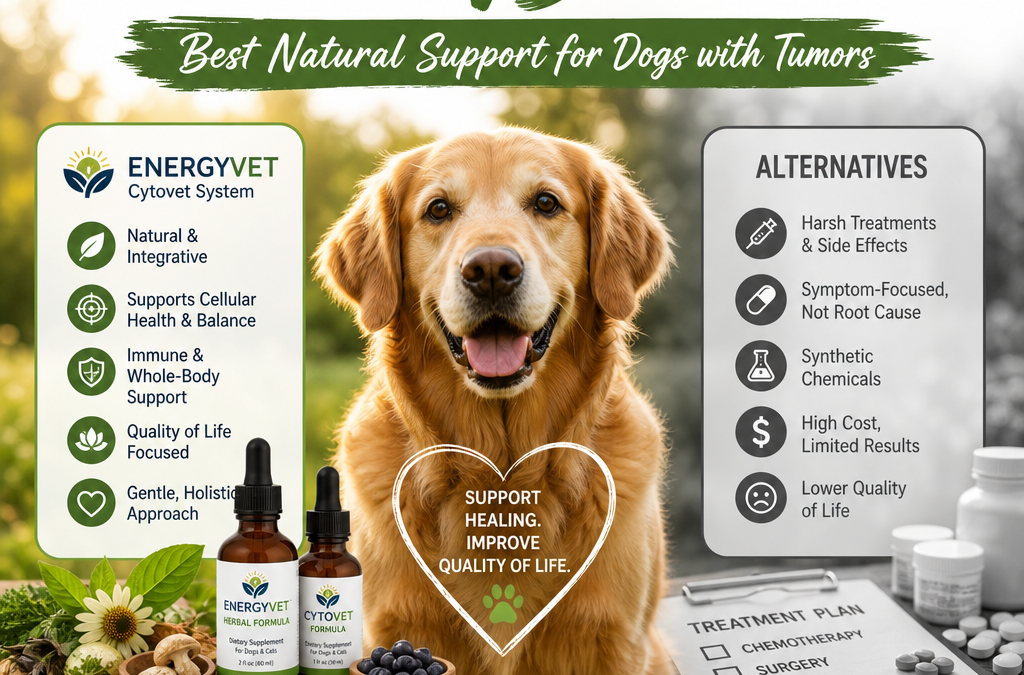
by TCMVET | Aug 21, 2026 | Research and News
Energyvet / Cytovet system vs alternatives is an important comparison for dog owners exploring natural or integrative support during a cancer diagnosis in Slovakia and beyond. These products are often discussed alongside nutrition, medicinal mushrooms, antioxidants, acupuncture, and other complementary approaches. However, no supplement should replace veterinary diagnosis or proven cancer treatment. The safest plan combines professional medical guidance with carefully selected supportive options tailored to the dog’s tumor type, overall health, medications, and quality of life.
Understanding dog tumor support options
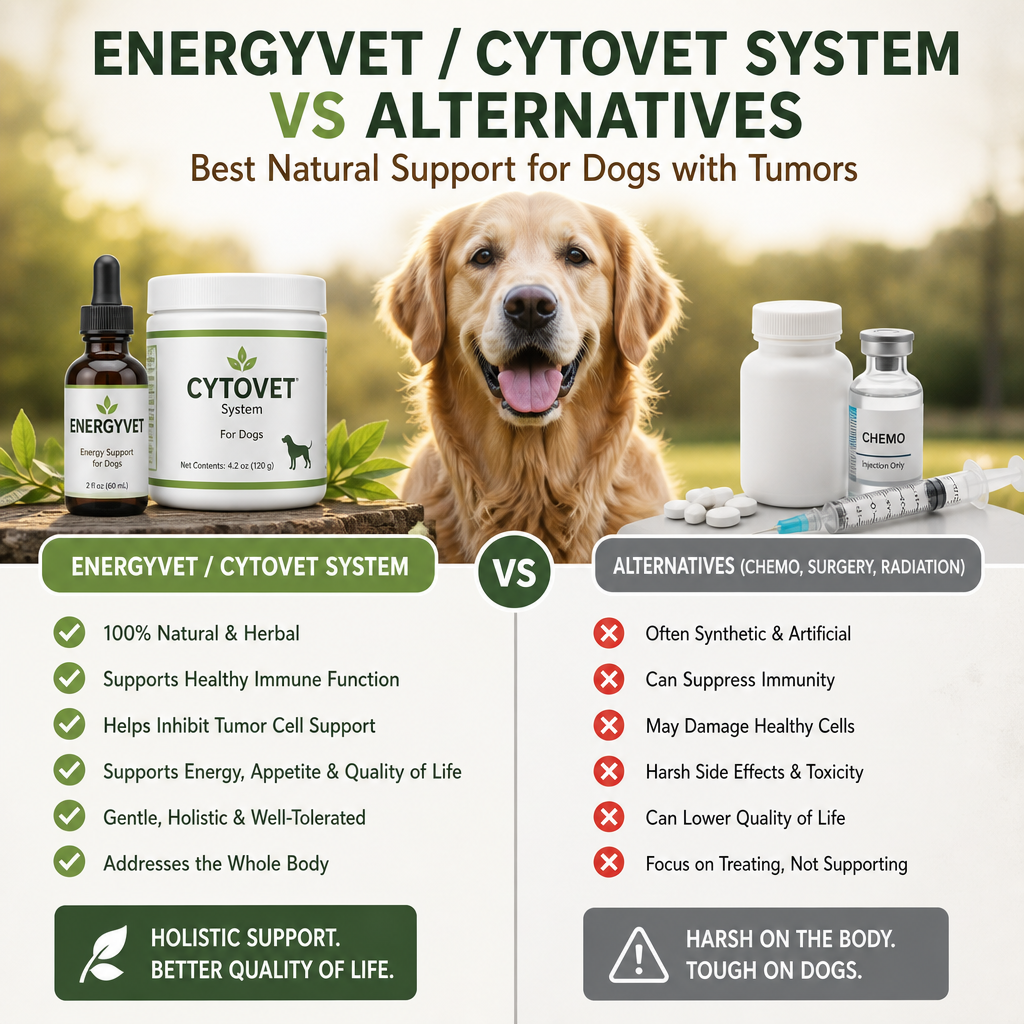
“Support” can mean several different things. Some approaches aim to help maintain appetite, digestion, hydration, mobility, or immune function. Others are marketed as having direct anticancer effects, although evidence may be limited or based mainly on laboratory, animal, or anecdotal data.
Before choosing any product, owners should clarify the goal. Is the priority reducing nausea after chemotherapy, supporting weight maintenance, improving comfort, managing inflammation, or addressing anxiety? A clearly defined goal makes it easier to evaluate whether an intervention is useful and whether it is safe alongside conventional treatment.
A veterinarian may recommend surgery, chemotherapy, radiation, immunotherapy, targeted medication, pain control, or palliative care depending on the diagnosis. Natural or integrative measures can sometimes complement these treatments, but they should be coordinated with the veterinary team.
In practical terms, the most useful plan is the one that supports the dog day to day. A small improvement in appetite, energy, comfort, or hydration can make a meaningful difference in quality of life even when the tumor itself is still being treated. That is why many families compare the Energyvet / Cytovet system vs alternatives not only by claims, but also by safety, cost, simplicity, and fit with the dog’s current care plan.
It also helps to keep expectations realistic. Natural support may ease side effects, improve comfort, or help the dog tolerate a treatment plan, but it is not a substitute for a full diagnostic workup. A dog’s response depends on the tumor’s biology, where the tumor is located, whether the disease has spread, and whether the dog is already dealing with kidney, liver, or gastrointestinal disease.
Because of that, the same product can be a reasonable choice for one patient and a poor choice for another. The best comparisons are specific, not generic. Instead of asking whether a supplement is “good,” ask whether it is suitable for this dog, at this stage, with these medications, and for this exact goal.
What is the Energyvet / Cytovet system?
The Energyvet / Cytovet system is commonly discussed in holistic pet-care circles as a natural support approach for dogs with serious illness. Cytovet is generally presented as a supplement intended to support cellular and immune function, while Energyvet products may be used within a broader complementary-care system.
Product formulations, recommended uses, and availability can vary by country and supplier. For that reason, owners should examine the current label, ingredient list, dosing instructions, and quality controls rather than relying only on promotional descriptions or online testimonials.
The most important consideration is not whether a product is labeled “natural,” but whether its ingredients are appropriate for an individual dog. A dog with kidney disease, liver dysfunction, gastrointestinal ulcers, bleeding risk, or a history of adverse reactions may require a very different plan from an otherwise healthy dog.
When people research Energyvet / Cytovet system vs alternatives, they often want to know whether the product is meant for general wellness or for a more specific support goal. That distinction matters. A supplement that supports the body broadly may still be reasonable for some dogs, but it should not be mistaken for a therapy with proven tumor-control effects.
Owners sometimes hope a supplement will “strengthen” a dog enough to face treatment better. In some cases, supportive care can indeed help maintain appetite or comfort. Still, the timing matters. What is appropriate before surgery may not be appropriate during chemotherapy, and what works during remission may not be the right choice during active disease. A sensible plan is built around the actual medical stage rather than around product marketing.
Potential advantages and limitations
Some owners consider the Energyvet / Cytovet system because it may fit a broader integrative-care philosophy and can be incorporated into a daily routine. Supporters may value its focus on general wellness, cellular health, and immune-related support.
At the same time, evidence for many supplement systems marketed for canine tumors remains incomplete. A product may have plausible ingredients without having strong clinical studies showing that it shrinks tumors, extends survival, or improves treatment response in dogs. Testimonials can be encouraging, but they cannot establish effectiveness because individual outcomes are influenced by tumor biology, staging, genetics, treatment, and overall care.
Another limitation is the possibility of interactions. Supplements with antioxidant or immune-modulating effects may theoretically affect chemotherapy or radiation, although the significance depends on the specific substance and treatment protocol. Giving multiple products at once can also make it difficult to determine what is helping or causing side effects.
For this reason, Energyvet / Cytovet system vs alternatives should be judged with the same standard: what is the evidence, what is the risk, and what measurable benefit should the dog’s family expect? If the answer is unclear, the best next step is a conversation with the dog’s veterinarian or oncology team.
There are also practical limitations. Some products are difficult to source consistently, may not have clear batch testing, or may require a dosing schedule that is hard for a family to maintain. If a supportive option is too expensive, too complicated, or too hard to administer, it may not be a realistic fit even if the concept sounds appealing. Simplicity matters in long-term care.
Another important point is that a supportive product should not delay a decisive treatment plan. If imaging, biopsy results, or clinical signs suggest an aggressive tumor, the window for effective intervention may be short. In those situations, integrative support should run alongside evidence-based care, not instead of it.
Natural/integrative support: common alternatives
Natural/integrative support often includes several carefully selected strategies rather than one “miracle” product. Nutritional therapy is one of the most practical options. A complete, balanced diet that maintains body weight and muscle mass is essential. Some dogs benefit from calorie-dense meals, appetite support, or customized nutrition plans prepared with a veterinary nutritionist.
Medicinal mushrooms, such as turkey tail, are also frequently discussed. Certain mushroom compounds have shown immune-related activity in research, and some preliminary veterinary studies are of interest. However, product quality varies widely, and dosing should be reviewed with a veterinarian, especially when a dog is receiving chemotherapy or other medications.
Omega-3 fatty acids may support skin, joint, and inflammatory health in selected patients. They can also create risks at inappropriate doses, particularly in dogs with pancreatitis, clotting problems, or gastrointestinal sensitivity. Antioxidant supplements, herbs, and concentrated oils require similar caution.
Acupuncture, massage, physical rehabilitation, and gentle exercise may help with mobility, pain, stress, and recovery. These approaches do not directly eliminate tumors, but they can contribute meaningfully to comfort and daily function. Palliative-care planning may include prescription pain relief, anti-nausea medication, appetite stimulants, and other evidence-based therapies alongside complementary care.
Many owners in Slovakia also look for practical support that can be coordinated locally with their veterinarian. That may include checking access to diagnostic follow-up, asking about pharmacy availability, and discussing whether a supplement plan is realistic to maintain over time. In that setting, Energyvet / Cytovet system vs alternatives becomes less about marketing and more about sustainable care.
Some families also ask whether a natural option should be used only after conventional treatment, or whether it can be used from the start. The answer depends on the dog’s condition and the specific treatment plan. For example, a dog waiting for surgery may need a different strategy than a dog in palliative care. That is why a broad comparison of Energyvet / Cytovet system vs alternatives should include timing, not just ingredients.
Nutrition as the foundation
Nutrition deserves special attention because it affects strength, healing, and tolerance of treatment. Dogs with tumors often lose weight because of reduced appetite, nausea, pain, or increased metabolic demand. Even when a dog is still eating, subtle weight loss can happen quickly. Owners should monitor body condition, muscle condition, stool quality, and meal interest.
Some dogs do better with smaller, more frequent meals. Others need stronger palatability, warmed food, or prescription appetite support. A veterinary nutritionist can help build a plan that matches the dog’s diagnosis and treatment stage. In many cases, this practical support does more for daily comfort than a supplement alone.
When nutrition is stabilized, it becomes easier to judge other interventions fairly. If the dog’s appetite improves after switching foods, adding a supplement at the same time may be confusing. For that reason, changes should be introduced carefully and documented. This approach helps distinguish true benefit from normal day-to-day variation.
Medicinal mushrooms and immune support
Interest in medicinal mushrooms has grown because certain compounds may influence immune activity. That said, not all products are created equal. Concentration, extraction method, contamination control, and labeling accuracy can vary widely. A reputable product should clearly identify the species, ingredients, and dosing information.
As with the Energyvet / Cytovet system vs alternatives comparison, the key question is whether the product has been evaluated in a way that is meaningful for dogs. If a mushroom supplement is being considered, it should be discussed before starting, especially if the dog is taking steroids, undergoing radiation, or receiving chemotherapy.
Owners should also remember that “immune support” is not always the same as “tumor support.” A product that seems to support general immune balance may still be inappropriate if the dog has an immune-mediated condition, is taking immunosuppressive medication, or has a cancer type where immune stimulation is not desirable. That is another reason why veterinary input matters.
Movement, comfort, and rehabilitation
Comfort-focused therapies are often overlooked, yet they can make a major difference. Dogs with cancer may become stiff, tired, or reluctant to move. Gentle rehabilitation, short walks, massage, and acupuncture can support mobility and reduce stress. These approaches are especially valuable when the goal is not cure but maintaining a good quality of life for as long as possible.
In many real-world cases, integrative care works best when it supports the dog’s ability to eat, sleep, move, and interact normally. That practical lens is more useful than any claim that one supplement system is universally superior.
For some dogs, the most meaningful gains come from multiple small improvements rather than from a single dramatic change. Better sleep, less nausea, fewer painful steps, and improved interest in food can all add up. That is why a thoughtful care plan can include rehabilitation, pain control, and symptom management even when the family is still exploring natural products.
Comparing alternatives safely
When comparing the Energyvet / Cytovet system vs alternatives, consider five practical questions:
1. What evidence supports the product or therapy? Look for veterinary clinical research rather than laboratory claims alone.
2. Is the ingredient list transparent? Avoid products that do not clearly identify ingredients, amounts, batch information, and manufacturer details.
3. Could it interact with treatment? Provide the full supplement list to the oncologist or primary veterinarian.
4. How will success be measured? Track appetite, weight, stool quality, energy, pain, and veterinary imaging when appropriate.
5. What is the risk if it does not work? Delaying effective treatment can allow an aggressive tumor to progress.
A useful comparison is not simply “natural versus pharmaceutical.” It is “well-supported and monitored versus uncertain and unmanaged.” Some natural products may be reasonable adjuncts, while others may be expensive, poorly standardized, or potentially harmful.
It also helps to separate short-term symptom relief from long-term disease management. A supplement that helps a dog feel better for a week is not automatically a cancer treatment. Likewise, a therapy that supports recovery but does not claim to treat the tumor can still be valuable. Clear goals make decisions easier and reduce the chance of disappointment.
When speaking with a veterinarian, bring the actual product label, a list of ingredients, and the current medication plan. If a supplement is being used alongside prescriptions, the whole team should know. This kind of coordination is especially important if the dog has already started cancer treatment or has had surgery, since recovery periods can change what is appropriate.
Reliable external information can also help owners evaluate claims. The American Veterinary Medical Association’s cancer guidance for pets explains common treatment options and highlights why veterinary supervision matters.
Another safety habit is to check whether a product has a clear return policy, contact information, and lot tracking. These details do not prove that something works, but they do reflect basic product accountability. In a field where owners are making emotional decisions under stress, that level of transparency can be useful.
Common questions owners ask about Energyvet / Cytovet system vs alternatives
Many families want to know whether choosing a natural support plan means rejecting conventional care. It does not. In most cases, the most responsible approach combines medical diagnosis, evidence-based treatment, and carefully selected supportive care. The goal is not to pick a side; it is to help the dog live as well as possible.
Another frequent question is whether the best choice is the most expensive option. Price does not always reflect quality. Some costly supplements have minimal data, while some lower-cost measures, such as diet adjustment or nausea control, may have a much greater effect on day-to-day comfort. A thoughtful comparison should always look at the expected benefit, not just the price tag.
Owners also ask whether one product can be continued throughout the whole cancer journey. Sometimes yes, sometimes no. A product that is well tolerated during stable disease may need to be paused around surgery or changed when medications are adjusted. Monitoring is more important than the label itself.
If a dog is receiving more than one supportive therapy, the number of changes should stay manageable. Adding many products at once increases the chance of confusion, side effects, and cost without proving any one option is actually helping. Small, measured steps are usually the safest path.
Building a veterinarian-guided plan
Start with a confirmed diagnosis and staging whenever possible. The tumor’s type, location, grade, spread, and expected behavior should guide decisions. Ask the veterinary team whether a supplement is compatible with surgery, chemotherapy, radiation, steroids, pain medications, or targeted drugs.
Introduce only one new product at a time. This makes it easier to identify side effects such as vomiting, diarrhea, lethargy, appetite changes, itching, or abnormal bleeding. Keep a written record of the product name, dose, start date, and observed changes.
Finally, judge every dog tumor support option by its impact on quality of life. A supportive therapy should ideally help the dog eat, rest, move, interact, and enjoy daily activities without adding unnecessary risk. Natural care can be a valuable part of an integrative plan, but the strongest approach is individualized, transparent, and supervised by qualified veterinary professionals.
If you are reviewing Energyvet / Cytovet system vs alternatives, ask whether the same money and effort might better support a nutrition plan, pain control, nausea management, or rehabilitation session. Those basics are not glamorous, but they often provide the most dependable benefit.
It can also be helpful to set a review date. After two to four weeks, assess whether the dog is eating better, moving more comfortably, or tolerating treatment more easily. If there is no measurable improvement, the plan should be reconsidered rather than continued automatically. Supportive care should earn its place by helping the dog, not by habit alone.
When to seek urgent veterinary help
Some signs should never be managed at home alone. Contact a veterinarian promptly if the dog stops eating for more than a day, has repeated vomiting or diarrhea, seems weak or collapsed, has trouble breathing, shows bleeding, develops severe pain, or becomes suddenly disoriented. Rapid changes can signal treatment complications, infection, dehydration, internal bleeding, or tumor progression.
Do not wait for a supplement to “kick in” if the dog is declining. Supportive care works best when it is layered onto prompt medical attention. If a product seems to worsen symptoms, stop it and ask the veterinarian whether it should be avoided in the future.
In the end, the best decision is usually not the most dramatic one. It is the most informed one. The Energyvet / Cytovet system vs alternatives comparison should help owners choose a plan that is realistic, safe, and centered on the dog’s comfort and medical needs. With careful coordination, natural and integrative support can play a constructive role without replacing the essential care that a dog with cancer still needs.
For many dogs, success means fewer bad days, steadier appetite, and better comfort rather than a single dramatic change. That is a sensible way to evaluate Energyvet / Cytovet system vs alternatives and every other supportive option. If the plan helps the dog feel and function better while staying compatible with medical care, it has real value.
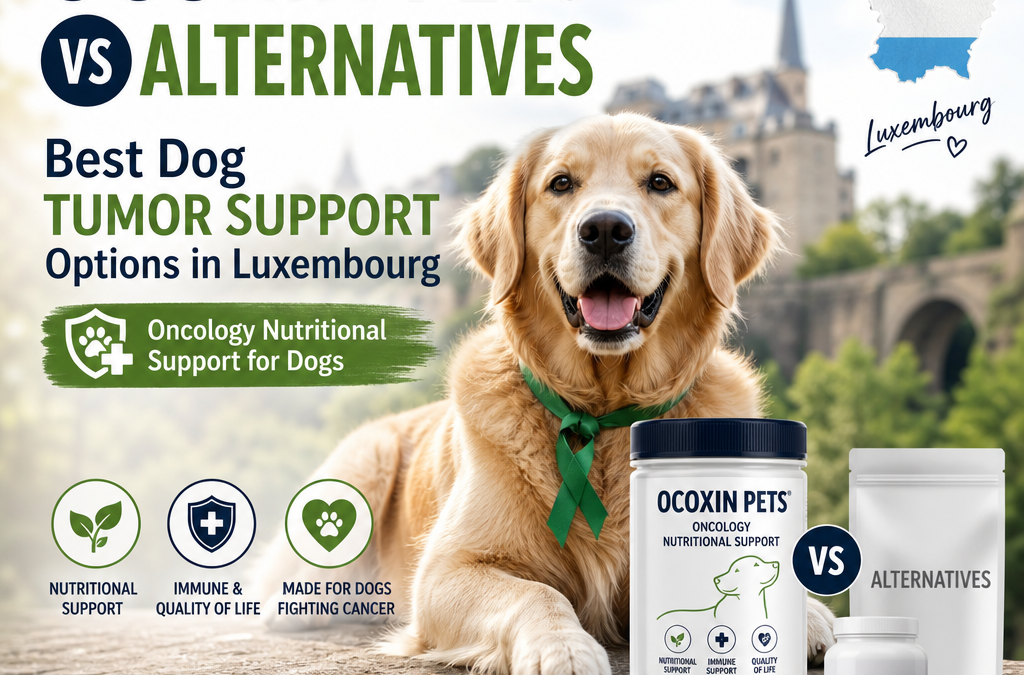
by TCMVET | Aug 21, 2026 | Research and News
Ocoxin Pets vs alternatives is an important comparison for Luxembourg dog owners looking for supportive care during a cancer diagnosis. Nutritional products may help maintain appetite, weight, energy, and general wellbeing, but they should never replace veterinary oncology treatment. The best choice depends on the dog’s diagnosis, current therapy, eating habits, medical history, and the advice of a qualified veterinarian.
Understanding oncology nutritional support
Oncology nutritional support refers to food strategies and supplementary products designed to help dogs cope with the effects of cancer and its treatment. Tumors can alter metabolism, while surgery, chemotherapy, radiation therapy, pain, nausea, and stress may reduce appetite or make eating difficult. As a result, some dogs lose muscle and body condition even when they appear to eat normally.
A useful nutritional plan generally aims to provide:
– Adequate calories to help maintain body weight
– High-quality, digestible protein to support muscle
– Sufficient hydration
– Essential fatty acids and other appropriate nutrients
– A palatable diet the dog will actually eat
– Support for treatment-related digestive problems when needed
There is no universal “cancer diet” suitable for every dog. Some animals may benefit from a carefully balanced commercial veterinary diet, while others need an individualized feeding plan. Supplements can be considered, but their ingredients and doses should be reviewed by the veterinary team. For a broader overview of supportive feeding approaches, see supporting your dog with tumors naturally.
What is Ocoxin Pets?
Ocoxin Pets is a veterinary nutritional supplement marketed for dogs and cats requiring additional nutritional support, including animals affected by serious illness. Its formulation may include a combination of vitamins, minerals, amino acids, antioxidants, and plant-derived ingredients. The intended role is supportive rather than curative.
Some owners consider products such as Ocoxin Pets because cancer treatment can be physically demanding. A supplement may be useful when a dog has reduced appetite, loses condition, or needs additional nutritional support during recovery. However, the expected benefits should be realistic. A supplement cannot shrink a tumor, replace surgery, or take the place of chemotherapy, radiation, targeted treatment, or pain management.
Before using it, owners should ask their veterinarian to review the full ingredient list. This is particularly important when a dog is receiving chemotherapy, corticosteroids, anticoagulants, liver medication, or other treatments. Certain antioxidants, herbs, or concentrated nutrients may not be suitable in every clinical situation.
Ocoxin Pets vs alternatives: key comparison factors
When comparing Ocoxin Pets vs alternatives, the product name matters less than the dog’s specific nutritional needs and the quality of veterinary oversight. Several factors can guide the decision. In practice, Ocoxin Pets vs alternatives should be judged by how well each option supports daily eating, weight maintenance, and tolerance during treatment.
1. Complete veterinary diets
Prescription diets formulated for recovery, gastrointestinal disease, or specific nutritional needs are often the most reliable foundation. They are designed to provide balanced nutrition and consistent calorie content. Some are especially palatable or energy-dense, which may help dogs that eat only small portions.
A complete veterinary diet may be preferable to a general supplement when the primary problem is weight loss, poor digestion, or inadequate calorie intake. It can also reduce the risk of unbalanced home-prepared meals. In Ocoxin Pets vs alternatives comparisons, this option often wins when a dog needs dependable everyday nutrition first.
2. High-calorie nutritional pastes and liquids
Energy-dense pastes, gels, and liquid supplements may help dogs that cannot consume large meals. These products can be useful during short periods of poor appetite or recovery, but they should not automatically replace a complete diet. Some contain substantial amounts of fat or sugar and may be unsuitable for dogs with pancreatitis, diabetes, or digestive sensitivity.
Veterinary guidance is especially important if the dog is vomiting, has diarrhea, or has gone without food for an extended period. In Ocoxin Pets vs alternatives discussions, these products may be the better short-term choice when immediate calorie intake is the priority.
3. Omega-3 fatty acids
Fish oil containing EPA and DHA is frequently discussed in canine oncology nutrition. These fatty acids may support general health and help maintain skin, coat, and inflammatory balance. However, quality, purity, dose, and tolerance matter. Fish oil can cause gastrointestinal upset and may affect bleeding risk in certain circumstances.
Owners should use a veterinary-approved product and avoid assuming that a human supplement is automatically safe for dogs. Ocoxin Pets vs alternatives should also be considered alongside diet fat content so the overall plan stays balanced.
4. Individual nutrients and antioxidant products
Products containing vitamins, minerals, amino acids, or antioxidants may appear attractive, but more is not always better. Excessive supplementation can create nutrient imbalances or interfere with treatment plans. In some cancer cases, the timing and dose of antioxidants require particular caution.
A targeted supplement is most appropriate when there is a clear nutritional reason for using it, rather than simply adding several overlapping products. If the dog’s plan already includes a complete diet, Ocoxin Pets vs alternatives may come down to whether a single focused product is easier and safer than multiple add-ons.
5. Home-prepared diets
Home-prepared food can improve appetite for some dogs, especially when nausea or treatment changes normal food preferences. Nevertheless, recipes should be formulated by a veterinary nutrition professional. Meat, rice, vegetables, or broth alone do not provide complete nutrition over time.
Unbalanced diets can worsen muscle loss and create deficiencies precisely when the dog needs nutritional consistency most. Ocoxin Pets vs alternatives should not be used to justify an unbalanced homemade approach unless the recipe is professionally designed.
6. Supportive mushrooms and herbal options
Some owners ask whether mushroom-based products or herbal supplements may complement standard care. The evidence and product quality vary widely, so these options should be discussed with a veterinarian before use. One example is turkey tail mushroom support for dogs, which some owners explore alongside conventional oncology care.
When comparing Ocoxin Pets vs alternatives, the key question is not whether a product sounds natural, but whether it is safe, consistent, and appropriate for the specific dog’s treatment plan.
Choosing dog tumor support options in Luxembourg
Dog tumor support options in Luxembourg include veterinary oncology clinics, general veterinary practices, veterinary pharmacies, specialized pet retailers, and reputable online suppliers. Availability can vary, so owners should check whether a product is officially intended for veterinary use, how it should be stored, and whether the supplier provides clear dosage instructions.
A practical approach is to begin with a veterinary assessment covering body weight, muscle condition, appetite, digestion, hydration, and the planned cancer treatment. The veterinarian may recommend a complete diet, a supplement such as Ocoxin Pets, a different product, or no supplement at all. In some households, Ocoxin Pets vs alternatives becomes easier to judge once the dog’s daily intake and body condition are measured consistently.
Owners should also keep a simple daily record of food intake, water consumption, vomiting, stool quality, energy, weight, and medication. This information helps the veterinary team determine whether the chosen nutritional strategy is working.
For general information on canine cancer care and professional guidance, the American Veterinary Medical Association’s cancer in dogs resource is a useful educational reference.
If you are researching Ocoxin Pets vs alternatives during an active treatment plan, ask the clinic to compare ingredients, intended use, dose, palatability, and any medication interactions before making a purchase.
Safety considerations
Nutritional support must be individualized. Contact a veterinarian promptly if a dog refuses food, repeatedly vomits, develops severe diarrhea, loses weight quickly, shows marked weakness, or has difficulty breathing. These signs may indicate a treatment complication or progression of disease rather than a simple nutritional deficiency.
Avoid combining several supplements without professional guidance. Duplicate ingredients can lead to excessive intake, and some products may interact with medication. Human supplements are especially risky because they may contain ingredients such as xylitol, concentrated herbs, or inappropriate doses.
The most effective plan is usually simple: provide a balanced and palatable diet, maintain hydration, manage nausea and pain, monitor body condition, and use supplements only when their purpose is clear. Ocoxin Pets may be a reasonable supportive option for some dogs, but alternatives can be equally or more appropriate depending on the diagnosis and treatment plan. In Luxembourg, a coordinated discussion with the attending veterinarian is the safest way to choose oncology nutritional support that fits the individual dog. When owners compare Ocoxin Pets vs alternatives carefully, they can focus on comfort, safety, and practical daily feeding success.
In short, Ocoxin Pets vs alternatives should always be evaluated in the context of the whole treatment plan, not as a stand-alone solution. The right choice is the one that helps the dog eat well, maintain strength, and stay as comfortable as possible.
by TCMVET | Aug 21, 2026 | Research and News
Spleen Tumour Dog Supplements may provide supportive nutrition for some dogs, but they should never replace veterinary diagnosis, surgery, chemotherapy, pain relief, or emergency care. Splenic tumours can grow silently and may rupture without warning, causing life-threatening internal bleeding. The safest approach is to use supplements only as part of a personalised treatment plan created with your veterinarian or veterinary oncologist.
Understanding splenic tumours in dogs
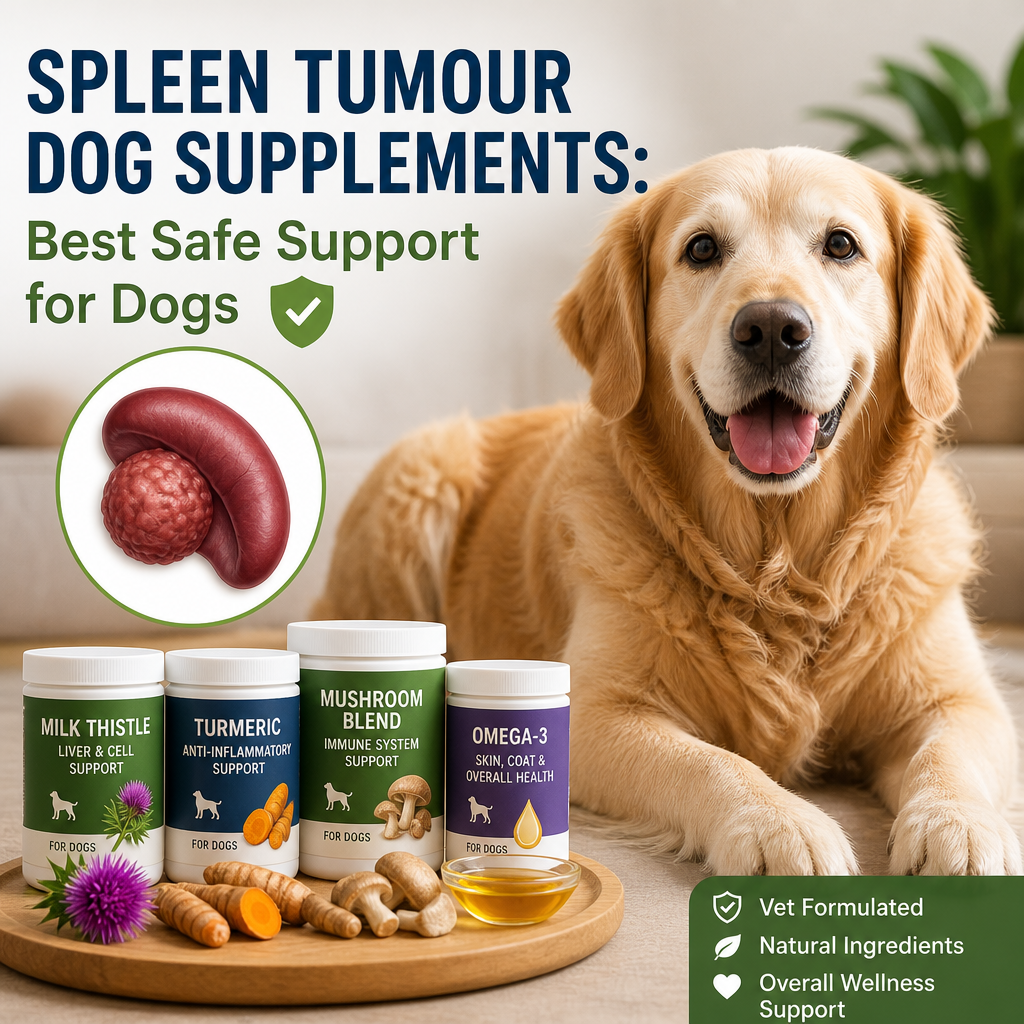
The spleen helps filter blood, remove aging blood cells, and support immune function. A tumour in this organ may be benign, such as a haemangioma, or malignant, such as hemangiosarcoma. Unfortunately, dogs may show few obvious signs until a tumour becomes large or begins bleeding.
Possible symptoms include weakness, pale gums, reduced appetite, weight loss, abdominal enlargement, collapse, rapid breathing, vomiting, or unusual tiredness. These signs can have several causes, but they require prompt veterinary assessment. Diagnostic tests may include blood work, abdominal ultrasound, X-rays, and sometimes surgery to remove and examine the spleen.
Surgery is commonly recommended when a splenic mass is considered at risk of rupture or malignancy. In other cases, the veterinary team may recommend monitoring, oncology treatment, or palliative care. Supplements can sometimes support appetite, digestion, recovery, or general wellbeing, but they cannot dissolve a tumour or reliably prevent progression.
For readers comparing wider care options, this guide on best supplements for dogs with cancer can help you understand how supportive nutrition is usually discussed in veterinary oncology.
It is also helpful to remember that the exact diagnosis matters. A dog with a benign splenic mass may have a very different outlook from a dog with hemangiosarcoma, and the role of Spleen Tumour Dog Supplements will change accordingly. In every case, the safest choices are the ones made after imaging, lab work, and a clear treatment discussion.
What they can and cannot do
The phrase “spleen tumour dog supplements” covers a wide range of products, including vitamins, fish oils, mushroom extracts, herbal blends, digestive products, and calorie-dense nutritional formulas. Their potential role is supportive rather than curative.
A suitable supplement may help a dog maintain body condition, tolerate treatment, or receive nutrients when appetite is poor. However, products marketed as “tumour cures,” “natural cancer killers,” or replacements for surgery should be treated with caution. Dogs with splenic disease may have anaemia, abnormal clotting, liver stress, or other complications that make certain ingredients unsafe.
Before using any product, discuss the full ingredient list and dosage with your veterinarian. This is especially important if your dog is taking anti-inflammatory medicine, steroids, chemotherapy, anticoagulants, seizure medication, or other prescription drugs.
When people search for spleen tumour dog supplements, they are often really looking for practical ways to keep their dog stable and comfortable. That goal is reasonable, but it should remain grounded in medical advice and realistic expectations.
It is worth asking a simple question before buying anything: what problem is this product supposed to solve? If the answer is appetite, weight loss, poor digestion, or recovery support, then Spleen Tumour Dog Supplements may have a limited role. If the promise is tumour shrinkage or a cure, the claim is not realistic and should be discussed carefully with your vet.
A good rule is to judge each product by its evidence, ingredients, and safety profile rather than by marketing language. This is particularly important for dogs that may need surgery, because even natural products can affect bleeding risk, anaesthesia, or healing.
Nutritional support during treatment
Good nutrition is one of the most practical forms of splenic tumour dog support. A complete and balanced veterinary diet can help maintain muscle, energy, and immune function. Some dogs do well with their usual food, while others need a more palatable, energy-dense diet during recovery.
If appetite is reduced, offering small meals several times a day may be easier than providing one large portion. Gently warming wet food can improve its aroma. Avoid sudden diet changes, raw foods, or unbalanced homemade diets unless they have been formulated by a veterinary nutritionist.
A high-quality diet should provide adequate protein and calories, but the correct plan depends on the dog’s age, weight, kidney and liver function, treatment plan, and digestive tolerance. There is no universal “cancer diet” that is appropriate for every dog.
In many cases, spleen tumour dog supplements are only useful when they support feeding, hydration, or calorie intake in a way that fits the dog’s diagnosis and treatment stage. Extra calories can be helpful after surgery, but they should be introduced with care if nausea or reduced appetite is present.
Practical feeding support can also include using the dog’s most tolerated textures and flavours. Some dogs accept canned food better than kibble, while others prefer lightly warmed meals or small frequent snacks. If your veterinarian recommends a specific recovery diet, consistency is usually more important than variety.
Hydration matters as much as calories. Dehydration can make a weak dog feel worse and may complicate recovery. Fresh water should always be available, and your veterinarian may advise broth, water-rich foods, or other strategies if your dog is reluctant to drink. In this setting, Spleen Tumour Dog Supplements should be seen as one small part of a broader nutritional plan rather than the main therapy.
If your dog is losing weight quickly, refusing food, or vomiting after meals, do not keep trying to push supplements without guidance. Those signs may indicate nausea, pain, anaemia, or disease progression that needs medical attention.
Fish oil and omega-3 fatty acids
Veterinary fish oil products containing EPA and DHA are sometimes used as part of a dog cancer support supplement plan. These fatty acids may support skin, joints, and general inflammatory balance. Some veterinary oncology diets also include omega-3 fatty acids.
Fish oil is not suitable for every dog, however. Potential problems include diarrhoea, pancreatitis risk in susceptible dogs, excessive calorie intake, and possible effects on platelet function or bleeding. Because a splenic tumour may rupture and cause internal haemorrhage, dosage and timing are particularly important.
Use a product designed for pets or one approved by your veterinarian, and check the actual EPA and DHA content rather than relying only on the total amount of “fish oil” listed on the label.
For general background on omega-3 safety and dosing, the VCA Hospitals overview of fish oil for dogs and cats is a useful educational reference. Your veterinarian can help you decide whether that type of support fits your dog’s condition.
If your dog is scheduled for surgery, ask whether fish oil should be paused beforehand. That decision depends on the product, the dose, the dog’s clotting status, and the surgeon’s preference. It is another example of why Spleen Tumour Dog Supplements should never be selected in isolation from the rest of the treatment plan.
Medicinal mushrooms and herbal products
Products containing compounds from medicinal mushrooms, turmeric, milk thistle, or other herbs are frequently promoted for canine cancer support. Some ingredients have shown interesting effects in laboratory or preliminary studies, but evidence in dogs with splenic tumours is limited. Laboratory findings do not prove that a supplement will shrink a tumour or extend a dog’s life.
Herbal products can also interact with anaesthetic drugs, chemotherapy, steroids, or medicines that affect the liver and blood clotting. Quality varies considerably between brands, and contamination or inaccurate labelling may occur.
If your veterinarian approves an herbal or mushroom product, select one with transparent dosing, independent quality testing, and clear batch information. Do not combine several immune-stimulating products without professional guidance.
Many owners ask whether spleen tumour dog supplements should include herbs or mushrooms at all. The safest answer is that these products should be considered optional, not essential, and only used when the ingredient profile is well understood.
Some families also want to know whether these products can be continued long term. The answer depends on the dog’s response, blood results, and treatment stage. For some dogs, a short course may be reasonable; for others, the added complexity and potential interaction risk outweigh any possible benefit. That is why Spleen Tumour Dog Supplements should be reviewed regularly rather than assumed to be harmless once started.
If a product contains many ingredients, it becomes harder to track what is helping and what may be causing side effects. Simpler formulas are often easier to monitor, especially when the dog is already receiving prescription medicine.
Digestive and recovery support
After surgery or during cancer treatment, some dogs experience nausea, constipation, diarrhoea, or reduced appetite. A veterinarian may recommend a probiotic, fibre supplement, anti-nausea medication, appetite stimulant, or recovery diet. These options should be chosen according to the specific problem rather than added routinely.
Probiotics may help some dogs with digestive upset, but they are not appropriate for every patient, particularly those who are severely immunocompromised. Fibre can be helpful for constipation but may worsen discomfort or reduce calorie intake in a dog that is already losing weight.
Supplements should never delay treatment for repeated vomiting, black stools, severe diarrhoea, abdominal pain, or refusal to eat.
In recovery, the most helpful spleen tumour dog supplements are often the simplest ones: products that improve comfort, appetite, or digestion without adding unnecessary complexity to the treatment plan.
After splenectomy, some dogs need time to regain strength. A recovery plan may include pain control, rest, follow-up checks, and careful meal planning. If your veterinarian recommends a probiotic or digestive aid, monitor stool quality and appetite closely, because the right product can be helpful while the wrong one can worsen gas, cramping, or loose stools.
It is also sensible to keep supplements separate from medications when possible, especially if you are giving several items in a day. Clear timing helps you know what the dog tolerated and makes it easier to identify any reaction. This practical approach keeps Spleen Tumour Dog Supplements focused on support rather than experimentation.
Safety precautions for splenic tumour dog support
The most important safety rule is to avoid products that may increase bleeding risk unless your veterinarian specifically recommends them. Garlic, concentrated herbal extracts, high-dose vitamin E, certain plant products, and some fish oil preparations may be inappropriate in a dog with a bleeding-prone abdominal mass.
High doses of vitamins and minerals can also cause harm. Vitamin D, calcium, iron, selenium, and vitamin A are examples of nutrients that may become toxic when given incorrectly. Iron supplements should not be used simply because a dog appears pale or anaemic; the cause of anaemia must be identified first.
Keep a written list of every medication, supplement, treat, and food additive your dog receives. This allows the veterinary team to identify potential interactions and adjust the plan before surgery or other treatment.
If you are unsure whether a product belongs in your dog’s plan, bring the label to your vet. That simple step can prevent many problems when reviewing spleen tumour dog supplements alongside medicines, anaesthesia, or post-operative care.
Another useful habit is to check for changes after any new product is introduced. Watch for vomiting, diarrhoea, agitation, drowsiness, loss of appetite, or bruising. If a dog with a splenic mass becomes suddenly weaker or more uncomfortable, stop the new product and contact your veterinarian promptly. Safety should always come before supplement routine when Spleen Tumour Dog Supplements are being considered.
Owners sometimes assume that “natural” means gentle, but that is not always true. Natural ingredients can still be pharmacologically active. For a dog facing a potentially unstable abdominal tumour, that matters a great deal.
Recognising an emergency
A dog with a known or suspected splenic tumour may experience sudden internal bleeding. Seek emergency veterinary care immediately if your dog collapses, becomes extremely weak, develops pale or white gums, breathes rapidly, has a swollen abdomen, appears distressed, or cannot stand normally.
Do not give food, supplements, or human pain medication while travelling to the clinic unless a veterinarian instructs you to do so. Keep your dog quiet, minimise movement, and transport them carefully. Emergency stabilisation may involve intravenous fluids, blood products, imaging, and urgent surgery.
No supplement should be expected to stop this kind of emergency. Fast veterinary treatment is the only safe response when bleeding is suspected.
If you have time before reaching the clinic, call ahead so the team can prepare. A dog that is pale, collapsed, or struggling to breathe may need immediate triage. In these moments, Spleen Tumour Dog Supplements are irrelevant compared with rapid stabilisation and surgical decision-making.
After an emergency visit, your veterinarian may ask you to hold certain products until the dog is stable. Follow those instructions carefully, even if the supplement seemed helpful before the crisis.
Creating a responsible supplement plan
The best dog cancer support supplement is not necessarily the most expensive or most heavily advertised product. A responsible plan begins with an accurate diagnosis and considers the tumour type, planned treatment, blood results, appetite, weight, organ function, and quality of life.
Ask your veterinarian what benefit a proposed supplement is expected to provide, how long it should be used, what side effects to watch for, and when it should be stopped. Monitor appetite, weight, energy, bowel movements, gum colour, and breathing at home, and report changes promptly.
Ultimately, supplements may have a limited but useful role in comfort and nutritional care. The safest splenic tumour dog support combines veterinary treatment, appropriate nutrition, careful monitoring, and rapid action when warning signs appear.
For many families, the goal is not to find a miracle product but to make informed, steady choices. That is why spleen tumour dog supplements should always be discussed in context, with your veterinary team guiding each decision.
If you want a broader overview of how nutrition support is commonly approached, you may also find this related guide on dog cancer supplements useful when comparing product types and safety considerations. Use it as background reading, then tailor every decision to your dog’s diagnosis.
In the end, Spleen Tumour Dog Supplements can be part of compassionate care when they are chosen carefully, used sparingly, and reviewed often. The most valuable support is still the combination of prompt diagnosis, honest veterinary advice, and close observation at home.
When used with veterinary oversight, spleen tumour dog supplements may help support comfort, appetite, and recovery, but they should always remain secondary to diagnosis and treatment. The safest plan is the one that matches your dog’s test results, surgery timeline, and day-to-day needs.
If your dog’s condition changes, revisit the plan quickly. A supplement that seemed reasonable one week may no longer fit if appetite drops, clotting changes, or a new medication is added. That is why Spleen Tumour Dog Supplements work best as part of a living care plan, not a fixed routine.
Ask your vet to help you prioritise. In many cases, one carefully chosen product is better than several overlapping ones, especially when the goal is steady support rather than aggressive intervention. With clear guidance, you can keep Spleen Tumour Dog Supplements practical, safe, and genuinely useful.
Ultimately, the most important decision is not which label looks best, but which support strategy is safest for your dog right now. Honest monitoring, prompt reassessment, and evidence-based care give your dog the best chance of comfort and stability.
by TCMVET | Aug 20, 2026 | Research and News
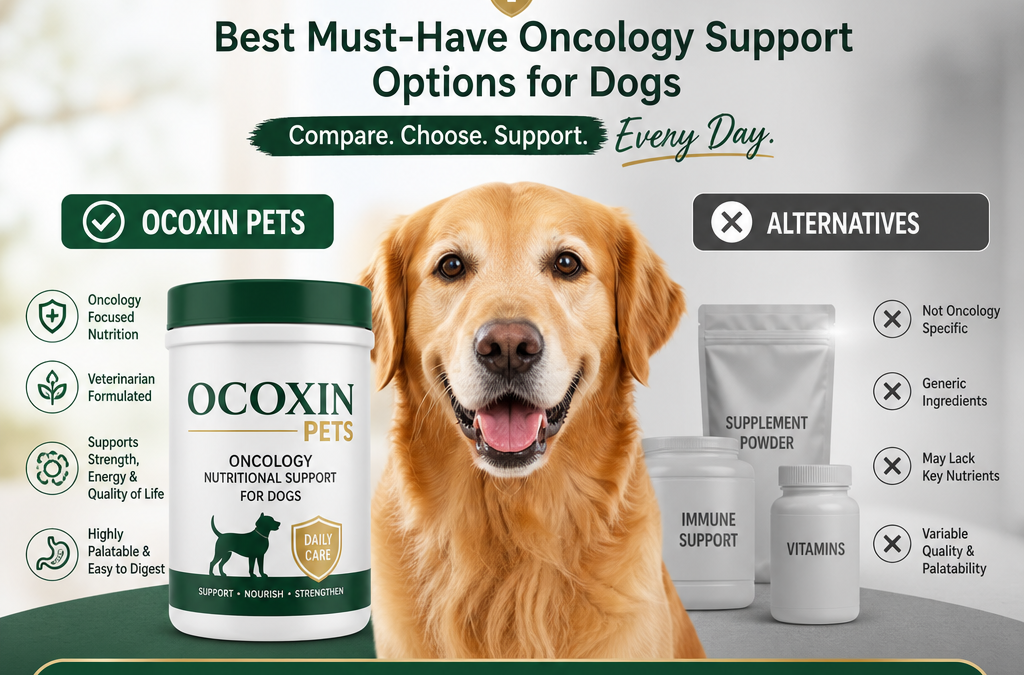
Ocoxin Pets vs alternatives is an important comparison for dog owners seeking supportive care during cancer treatment. While no nutritional product can replace veterinary oncology, carefully selected supplements may help maintain appetite, body condition, hydration, and quality of life. The best choice depends on the dog’s diagnosis, treatment plan, current medications, bloodwork, and ability to tolerate certain ingredients.
For many families, the search starts when a dog begins eating less, losing weight, or seeming less energetic during treatment. At that point, Ocoxin Pets vs alternatives becomes less about brand preference and more about finding a practical support approach that fits the dog’s needs, the veterinarian’s recommendations, and the realities of daily care at home.
Understanding oncology nutritional support for dogs
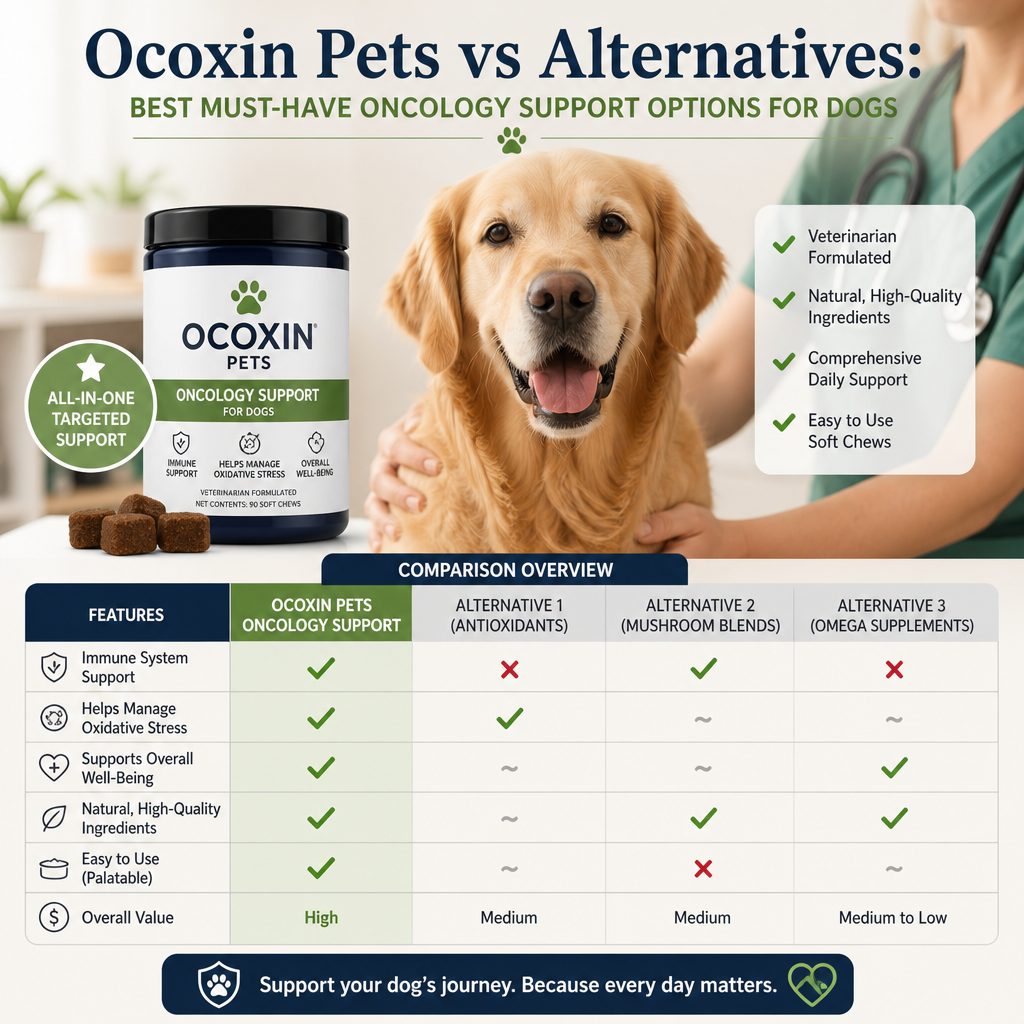
Cancer can affect a dog’s nutritional needs in several ways. Tumors may alter metabolism, increase inflammation, reduce appetite, or contribute to muscle loss. Chemotherapy, radiation therapy, surgery, and pain medications can also cause nausea, fatigue, diarrhea, or changes in taste and eating behavior.
Oncology nutritional support is designed to complement—not replace—standard veterinary treatment. Its goals may include helping a dog maintain adequate calorie intake, supporting lean muscle, providing essential nutrients, and improving overall resilience during a demanding treatment period.
A useful support plan usually includes:
- A complete and balanced diet appropriate for the dog’s condition
- Sufficient calories and high-quality protein
- Veterinary-approved supplements when indicated
- Strategies to manage nausea, pain, constipation, or diarrhea
- Regular monitoring of weight, muscle condition, appetite, and laboratory results
Because cancer is not one single disease, a supplement that suits one dog may be unsuitable for another. Dogs with kidney disease, liver dysfunction, pancreatitis, bleeding disorders, or drug-sensitive tumors require especially careful evaluation. For a broader overview of support choices, see this guide to best supplements for dogs with cancer.
Pet owners often ask whether supportive nutrition can make treatment easier to tolerate. In many cases, it can help a dog stay steadier through therapy, especially when appetite loss and weight loss are the main concerns. The most useful plan is usually practical, simple, and easy to monitor at home.
When a dog is under active treatment, even small changes in diet or supplements can affect comfort. That is why the best oncology nutritional support plans focus on consistency. A dog that eats a modest amount reliably every day often does better than a dog that eats a large amount one day and refuses food the next.
Owners should also remember that cancer care is dynamic. What worked early in treatment may no longer work later, especially if nausea, pain, or digestive sensitivity increases. That makes regular review an important part of supportive nutrition.
Ocoxin Pets: What it may offer
Ocoxin Pets is marketed as a veterinary nutritional supplement intended to provide supportive nutrients for dogs and cats affected by serious illness, including cancer. Products in this category commonly combine vitamins, minerals, antioxidants, amino acids, and plant-derived ingredients.
Potential reasons veterinarians or owners may consider Ocoxin Pets include its convenient formulation and its focus on broad nutritional support. A combination product can be easier to administer than several separate supplements, especially when a dog is already receiving multiple medications.
However, the product should not be viewed as an anticancer drug. Evidence for nutritional supplements in veterinary oncology is often limited, and results can vary according to tumor type, stage, treatment protocol, and the dog’s overall health. Some ingredients may also interact with chemotherapy, corticosteroids, anti-inflammatory drugs, anesthetics, or anticoagulants.
Before using Ocoxin Pets, owners should review the full ingredient list with the treating veterinarian. It is also important to follow the recommended dosage rather than assuming that more will provide greater benefit. If a dog is already receiving a complex treatment plan, a short review of all products can reduce the risk of overlap or ingredient duplication.
In practical terms, this kind of support is most useful when it fits the dog’s daily routine. If a supplement is difficult to give, causes stomach upset, or creates stress at mealtimes, the long-term value may be limited even if the formula looks appealing on paper.
For dogs that are already sensitive to medications or supplements, the safest approach is usually gradual. A small initial trial, close observation, and veterinary follow-up can reveal whether the product is being tolerated. That process matters as much as the product itself when discussing Ocoxin Pets vs alternatives.
Ocoxin Pets vs alternatives: Key comparison factors
When considering Ocoxin Pets vs alternatives, the most important question is not simply which product has the longest ingredient list. Instead, assess whether the product addresses the dog’s specific needs and can be used safely alongside the prescribed treatment.
1. Nutritional purpose
Some supplements focus on general wellness, while others are intended to provide calories, omega-3 fatty acids, digestive support, or targeted vitamins and minerals. A dog losing weight may need a calorie-dense nutritional plan more urgently than a broad antioxidant supplement. That is why Ocoxin Pets vs alternatives should be judged by the problem being treated, not by marketing claims alone.
2. Ingredient transparency
Choose products that clearly identify active ingredients and amounts. Proprietary blends can make it difficult to determine whether a dog is receiving an effective, excessive, or potentially interacting dose. Clear labeling also helps the vet compare the formula with other products already in use.
3. Evidence and veterinary oversight
Look for products manufactured under quality-control standards and supported by credible veterinary guidance. Testimonials may be encouraging, but they do not establish that a supplement treats cancer or improves survival. Trusted background sources, such as the American Veterinary Medical Association, can help owners understand the difference between supportive care and proven cancer treatment.
4. Administration and tolerance
A theoretically useful product is not practical if a dog refuses it or develops vomiting and diarrhea. Powders, liquids, capsules, and chewable products each have advantages. Palatability is particularly important when appetite is already poor.
5. Compatibility with treatment
Some antioxidants and herbal ingredients may affect drug metabolism or the intended effects of radiation and chemotherapy. The veterinarian should know about every supplement the dog receives, including products purchased online or from health-food stores. This is especially important in the middle of active treatment, when small changes can influence comfort and safety.
For dogs with tumor spread or suspected progression, supportive care should also account for disease stage and changing goals. A useful reference for owners is this article on metastasis in dogs, which explains why support needs may shift as cancer advances.
When comparing Ocoxin Pets vs alternatives, it may help to think about the dog’s current stage of illness. A dog in recovery after surgery may have different needs from a dog receiving chemotherapy or palliative care. The same formula is not always the best answer across every phase of treatment.
Cost can also matter, but cost should be weighed against safety and usefulness. A lower-priced product is not a good deal if it cannot be used consistently or does not fit the dog’s treatment plan. Likewise, a premium product is not automatically superior if its ingredients duplicate what the dog already receives.
Dog tumor support options worth discussing
There are several dog tumor support options that may be considered as part of a comprehensive care plan. These should be selected according to the dog’s diagnosis and veterinary recommendations. When comparing Ocoxin Pets vs alternatives, it helps to think in terms of support categories rather than only brand names.
Therapeutic nutrition
A complete veterinary diet can help provide consistent calories and nutrients. In some cases, a highly digestible or energy-dense food is useful. Dogs with reduced appetite may benefit from warmed food, smaller frequent meals, or carefully selected toppers. Any homemade diet should be formulated by a veterinary nutritionist to avoid deficiencies.
Therapeutic nutrition is often the foundation of oncology support because it addresses the day-to-day issue of maintaining intake. Even the most promising supplement will not help much if the dog cannot or will not eat enough. That is why food strategy is often discussed before adding more products.
Omega-3 fatty acids
Fish oil provides EPA and DHA, which may support normal inflammatory processes and help maintain skin, coat, and general health. It must be used at an appropriate dose because excessive amounts can cause gastrointestinal upset or affect platelet function. Product quality also matters, particularly with regard to freshness and contamination testing.
Omega-3 fatty acids are frequently discussed in oncology nutritional support because they can be incorporated into an existing meal plan more easily than some other supplements. Still, a veterinary team should decide whether they are appropriate for the individual dog, especially if surgery or bleeding risk is part of the picture.
Digestive and appetite support
Probiotics, fiber, prescription anti-nausea medication, appetite stimulants, and gastrointestinal diets may be appropriate for dogs experiencing treatment-related digestive problems. These options should be matched to the underlying issue rather than used automatically. If your dog’s eating pattern changes suddenly, the vet may want to reassess the full plan before adding anything new.
Digestive support is especially useful when nausea or loose stool is the main barrier to maintaining body weight. In some dogs, improving gut comfort can have a bigger effect on daily quality of life than changing to a completely different supplement brand.
Amino acids and muscle preservation
Maintaining lean body mass is a major goal in canine cancer care. Adequate protein, appropriate exercise, pain control, and treatment of nausea can all help. Certain amino acid supplements may be considered, but they should not substitute for adequate calories or a complete diet.
Muscle preservation matters because dogs with cancer may lose strength before they lose a large amount of body weight. In those situations, the veterinary team may focus on preserving condition rather than simply adding calories. That is a subtle but important distinction in supportive care.
Medicinal mushrooms and herbal products
Mushroom extracts and botanical supplements are sometimes promoted for immune or oncology support. Quality, concentration, and safety vary widely. Some herbs can affect liver enzymes, clotting, blood pressure, or medication absorption, so veterinary review is essential. If you are comparing branded formulas, the same caution applies to Ocoxin Pets alternative options sold in other markets, because ingredient quality and formulation can differ.
Herbal products often sound appealing because they are presented as “natural,” but natural does not automatically mean safe or suitable for every dog. That is particularly true when a dog is receiving multiple medications or already has reduced appetite and digestive sensitivity.
Patient-specific support for certain breeds and tumor types
Some dogs have a higher cancer risk or a different pattern of tumor behavior, which can affect support choices. Owners of predisposed breeds may find it helpful to read about Shar Pei cancer risks and early tumor signs so they can spot problems earlier and discuss changes with their veterinarian.
Breed, age, tumor location, and stage all influence the support plan. A young dog with an isolated tumor does not necessarily need the same nutritional support as an older dog with multiple chronic conditions. Tailoring the plan to the patient is one of the most important principles in oncology care.
Some owners also look for support when eye tumors, skin masses, or other localized cancers interfere with eating, comfort, or behavior. In those cases, the support strategy may shift toward symptom relief, appetite maintenance, and protecting quality of life rather than using a broad supplement approach alone.
How to choose the most suitable product
Start by identifying the primary problem. Is the dog losing weight, refusing food, having diarrhea, struggling with treatment side effects, or maintaining normal eating and activity? A targeted plan is generally more useful than adding several products at once.
Keep a simple record of body weight, appetite, stool quality, vomiting, energy, and supplement doses. This helps the veterinary team determine whether a product is tolerated and whether it appears to be contributing to the dog’s comfort.
Avoid making multiple changes simultaneously. Introducing one product at a time makes it easier to identify adverse reactions. Stop the supplement and contact the veterinarian if the dog develops persistent vomiting, diarrhea, weakness, unusual bruising, worsening appetite, or other concerning symptoms.
It can also help to define a clear goal before starting any supplement. For example, the objective may be better calorie intake, less nausea, improved stool quality, or steadier body weight. Once that goal is established, the veterinarian can judge whether Ocoxin Pets vs alternatives is the better fit.
Owners sometimes compare several products at once and focus only on the label. A better approach is to ask five simple questions: Will the dog eat it? Is the formula safe with current drugs? Does it match the main symptom? Can it be given consistently? Is there a realistic way to track results over the next few weeks?
If a supplement is expensive but impossible to give, it is unlikely to help much in real life. Convenience matters because supportive care works best when it can be repeated every day without stress. That is true for short-term recovery as well as long-term cancer management.
One practical method is to trial the support plan during a period when the dog’s routine is stable. That makes it easier to know whether any improvement or side effect is linked to the supplement. If the dog is already vomiting, underweight, or in pain, the veterinarian may recommend addressing those symptoms first before making a supplement decision.
Many owners also benefit from a written plan that lists the supplement, dose, timing, and desired outcome. Simple records reduce confusion and help everyone on the care team stay aligned. They also make it easier to notice whether Ocoxin Pets vs alternatives is supporting appetite, body condition, and comfort in a measurable way.
The role of the veterinary oncology team
Supplements can be part of supportive care, but they should never delay diagnosis or proven treatment. Surgery, chemotherapy, radiation, targeted therapy, pain management, and palliative care remain the central options for managing canine cancer.
A veterinary oncologist can evaluate the tumor type, treatment goals, expected side effects, and nutritional risks. The primary veterinarian can also help monitor blood counts, liver and kidney function, hydration, and body condition over time.
Ultimately, the best choice among Ocoxin Pets vs alternatives is the option that is safe, clearly formulated, realistically administered, and appropriate for the individual dog. Thoughtful oncology nutritional support can help preserve comfort and strength, but it works best as one part of a personalized veterinary care plan.
When the case is complex, a second opinion can be valuable. That does not mean abandoning the current plan; it means checking whether a different feeding strategy, appetite support approach, or supplement choice may better match the dog’s stage of illness. For some families, the right answer is a single product; for others, it is a combination of diet changes, medication support, and careful monitoring.
In summary, Ocoxin Pets vs alternatives should be judged by safety, practical use, and how well each option supports the dog’s comfort during treatment. With veterinary guidance, many dogs can benefit from a tailored nutritional plan that focuses on maintaining strength, minimizing side effects, and protecting quality of life.
For anyone still deciding between Ocoxin Pets vs alternatives, the main goal should remain steady and realistic: support the dog’s appetite, weight, hydration, and daily comfort while respecting the oncology plan already in place. The right choice is usually the one that can be used consistently, monitored easily, and adjusted when the dog’s needs change.
