by TCMVET | Aug 16, 2026 | Research and News
Baituxiao vs Ocoxin Pets is a comparison many Luxembourg dog owners may consider when looking for supportive care during a dog’s cancer journey. Both products are marketed as complementary supplements rather than replacements for veterinary treatment, but they differ in formulation, intended use, and practical considerations. Understanding these differences can help owners ask better questions and make safer, more informed decisions alongside their veterinarian.
Why supportive care matters for dogs with tumors
A tumor diagnosis can be overwhelming, especially when treatment involves surgery, chemotherapy, radiation, or long-term monitoring. Veterinary cancer care focuses on controlling disease, reducing discomfort, and preserving quality of life. Supportive products may be used to complement this plan by helping maintain appetite, energy, digestion, or general wellbeing.
However, no supplement should be viewed as a cure for cancer. Products sold for tumor support may have limited clinical evidence in dogs, and their ingredients can interact with prescription medicines or affect anesthesia, blood clotting, liver function, or kidney health. A veterinarian should review the complete ingredient list before a dog begins any supplement.
In Luxembourg, owners should also pay attention to where a product is purchased, whether labeling is clear, and whether the product is legally marketed for animals. Imported supplements can differ in dosage instructions, language, quality controls, and storage conditions.
For broader veterinary guidance on canine cancer care, the Merck Veterinary Manual offers a respected reference point for pet owners and clinicians.
That broader context matters because supportive care is rarely a simple yes-or-no decision. It usually depends on the stage of disease, the dog’s age, the presence of other health conditions, and the treatment goals agreed on with the veterinary team. In practice, Baituxiao vs Ocoxin Pets is not just a brand comparison; it is part of a wider conversation about safety, comfort, and daily management during a difficult period.
Some owners begin this research after noticing weight loss, fatigue, appetite changes, or a new diagnosis that changes their dog’s routine. Others are trying to prepare in advance so they can make a calm decision later. In both cases, the best outcome comes from combining product research with practical veterinary advice, not from relying on social media testimonials or product claims alone.
It can also help to remember that supportive care often works best when several small measures are combined. A supplement may be paired with better hydration, pain control, dietary adjustments, or anti-nausea medication. When viewed this way, the Baituxiao vs Ocoxin Pets question becomes one piece of a larger plan, not the entire plan itself.
Owners who approach the topic carefully are usually trying to do the right thing: protect their dog, avoid unnecessary risk, and feel confident that they are not overlooking a useful option. That is a reasonable goal, and it is exactly why a clear comparison is valuable.
The most important part of any Baituxiao vs Ocoxin Pets comparison is understanding what each formula is designed to provide. Baituxiao is generally presented as a traditional herbal-based supportive product, with a blend of botanical ingredients commonly associated with immune and general wellness support. Its appeal often lies in its multi-herbal approach and its use as part of a broader holistic care plan.
Ocoxin Pets is commonly described as a veterinary-oriented nutritional supplement containing a combination of vitamins, minerals, antioxidants, and other supportive nutrients. It is often positioned as a product intended to help maintain overall condition during serious illness or demanding treatment periods.
Because formulations can vary by market and may change over time, owners should not rely solely on product names or online descriptions. The current package label, manufacturer information, and veterinary guidance are more reliable. Check the active ingredients, inactive ingredients, recommended serving size, storage instructions, and any warnings relating to pregnancy, chronic disease, or concurrent medication.
Some Luxembourg owners also compare Baituxiao vs Ocoxin Pets with a third option in mind: whether a different supportive plan may be safer or more effective for a specific dog. That broader perspective can prevent unnecessary purchases and reduce the risk of using the wrong supplement at the wrong time.
Another useful way to think about the comparison is by looking at intent. A herbal support product may appeal to owners who value a traditional or plant-based approach, while a nutrient-focused formula may be preferred by those who want a more standardized supplement profile. Neither approach is automatically superior. What matters is whether the product aligns with the dog’s diagnosis, current medications, and ability to tolerate the supplement.
For example, a dog with a sensitive digestive system may do better with one formulation than another simply because the ingredients, flavoring, or delivery method are easier on the stomach. Another dog may need a product that can be given consistently with food and that does not complicate a complex treatment schedule. In this sense, Baituxiao vs Ocoxin Pets is partly a medical question and partly a day-to-day care question.
It is also worth being cautious about online descriptions that overpromise results. Supplement language can sound persuasive, especially when a pet owner feels anxious or hopes for a quick improvement. But supportive products should be assessed by their label, not by dramatic marketing claims. Ask what the product contains, how it is meant to be used, and what safety information is available for dogs like yours.
Key differences dog owners should consider
A useful dog tumor support comparison should look beyond marketing claims. Several practical factors can distinguish one product from another.
Ingredient profile
Baituxiao may appeal to owners seeking a botanical formula, while Ocoxin Pets may be more suitable for those looking for a nutritional and antioxidant-based supplement. Herbal blends can contain biologically active compounds, so “natural” does not automatically mean risk-free. Nutritional formulas also require caution, particularly when they contain concentrated vitamins or minerals.
Ingredient profile matters because dogs with cancer are often already taking other medications. A supplement that seems simple at first glance may still have ingredients that affect the body in meaningful ways. For that reason, owners comparing Baituxiao vs Ocoxin Pets should read every component carefully, including additives, flavorings, and excipients. Even inactive ingredients can matter if a dog has sensitivities or if the product is hard to digest.
The most reliable approach is to focus on the label rather than assumptions about the product category. A herbal blend is not automatically gentler, and a vitamin-based formula is not automatically safer. In clinical use, the relevant question is whether the ingredients fit the dog’s condition and treatment stage.
Evidence and transparency
Ask whether there are published studies involving the exact product, the same formulation, and dogs with comparable conditions. Evidence from laboratory studies or human use cannot automatically be applied to a canine patient. Transparent labeling and manufacturer quality information are important indicators, although they do not replace independent clinical evidence.
Transparency also includes how clearly the manufacturer explains dosage, manufacturing standards, and batch tracking. When a company provides that information in a straightforward way, owners can make a better decision and veterinarians can review the product more confidently. If information is vague or inconsistent, that is a reason to pause.
In a Baituxiao vs Ocoxin Pets review, the best evidence is not a promotional claim that one product is “stronger” or “better.” The useful evidence is whether the manufacturer gives enough detail for a veterinarian to assess the product responsibly. That includes label consistency, country of origin, storage advice, and any safety notes that are relevant to sick or recovering dogs.
Compatibility with treatment
Some ingredients may influence drug metabolism, immune activity, blood pressure, or clotting. This is especially relevant before surgery or when a dog is receiving chemotherapy, corticosteroids, nonsteroidal anti-inflammatory drugs, or anticoagulant medication. A veterinarian may recommend stopping a supplement temporarily or avoiding it altogether.
This point is especially important because many dogs with tumors move through changing treatment phases. A product that seems acceptable during a monitoring period may become inappropriate before surgery, after a dose change, or during a treatment cycle. That is why the question of Baituxiao vs Ocoxin Pets should always be revisited if the treatment plan changes.
Owners should also remember that tolerance can change over time. A supplement that was previously well tolerated may not remain so if appetite drops or if another medication is added. For that reason, monitoring matters just as much as choosing the product itself.
Administration and tolerance
Dogs with cancer may already experience nausea, reduced appetite, diarrhea, constipation, or difficulty swallowing. A supplement that is hard to administer or causes gastrointestinal upset may reduce quality of life rather than improve it. Consider whether the product comes as a capsule, powder, liquid, or chewable form, and whether it can be given with food.
Practical use often decides whether a supplement is helpful. Even a well-formulated product may fail if the dog refuses it, spits it out, or becomes stressed every time it is given. That is why palatability and dosing convenience should be part of the Baituxiao vs Ocoxin Pets comparison. A supplement that fits easily into the daily routine is more likely to be used correctly and consistently.
It is also useful to think about who will administer the product. If several family members share care duties, the easier product may be the better option simply because it reduces mistakes. Consistency matters for any supportive plan.
Cost and availability in Luxembourg
Long-term supportive care can become expensive. Compare the cost per day rather than the price of the container, and account for delivery charges, import fees, and availability from reputable suppliers. A cheaper product is not necessarily better if its labeling is incomplete or its storage history is uncertain.
Availability also affects continuity. A product that cannot be reliably restocked may create interruptions that are inconvenient for both the owner and the dog. When comparing Baituxiao vs Ocoxin Pets, owners should think about whether they can source the product consistently from a trustworthy seller.
In practical terms, the Baituxiao vs Ocoxin Pets decision often comes down to three questions: which ingredient profile fits the dog, which product is easier to use, and which option is less likely to interfere with treatment.
When owners repeat the Baituxiao vs Ocoxin Pets comparison carefully, they are usually trying to balance convenience, safety, and support for a dog that is already under stress. That is a reasonable goal, but it should never replace medical advice from a veterinary professional who knows the dog’s full history.
One more difference worth considering is the overall simplicity of the formula. If a dog has several health issues, a shorter ingredient list can sometimes be easier to assess than a complex blend. That does not automatically make the product better, but it can make it easier for a veterinarian to identify potential problems. Simpler can be useful when the goal is to minimize uncertainty.
Owners may also want to compare how each product fits into the family’s expectations. Some people prefer a supplement they can explain easily, while others are comfortable with a more specialized formula. Either way, the right choice should be one that everyone involved in the dog’s care can follow without confusion.
What to ask before buying any dog tumor supplement
Before choosing between Baituxiao vs Ocoxin Pets, ask the seller or manufacturer for the complete label, batch information, expiry date, and storage instructions. If the packaging does not clearly identify the active ingredients, avoid the product until you can confirm the details with a veterinarian.
You should also ask whether the supplement has been tested for quality consistency, heavy metals, contamination, or microbial safety. These points matter because dogs undergoing cancer treatment may be more vulnerable to digestive upset and complications from poor-quality products.
It also helps to ask how the supplement should be given with meals, whether the dose changes by body weight, and whether there are warnings for dogs with liver disease, kidney disease, seizures, or bleeding concerns. These questions can reveal whether a product is truly suitable or simply marketed as supportive care.
If a seller cannot answer basic questions clearly, that is a warning sign. A good product should come with understandable instructions and honest limitations, not vague promises. Owners considering Baituxiao vs Ocoxin Pets should treat clarity as a safety feature, not an optional extra.
Other practical questions can be just as important. For example, is the product intended for daily long-term use or only short-term support? Is there guidance about what to do if a dose is missed? Is there a specific reason one dog might not be a good candidate? These are the kinds of details that help separate thoughtful product support from generic sales language.
Owners should also consider whether the product can be purchased from a source they trust. In veterinary care, the reputation of the supplier matters because storage and handling affect quality. A product that has been exposed to heat, moisture, or long shipping delays may not perform as expected, even if the label looks acceptable.
If you are not sure how to interpret the label, take a photo and ask the clinic to review it before buying. That small step can save time and reduce the chance of purchasing something inappropriate. It also keeps the comparison practical rather than theoretical.
How to discuss supplements with a veterinarian
Bring the label, the website description, or a product photo to the appointment. This makes it easier for the veterinarian to review ingredients and compare them with the dog’s diagnosis, current medication list, and treatment goals.
Be specific about what you want the supplement to do. For example, are you hoping to improve appetite, reduce nausea, support energy, or simply feel that you are doing something extra? Clear goals help the veterinarian judge whether the supplement is likely to be useful or whether another supportive measure would be better.
If your dog is already receiving treatment, ask whether the supplement should be started, paused, or avoided during certain phases. Surgery, chemotherapy cycles, and radiation appointments often change what is considered safe. A product that seems harmless at one point in the treatment plan may be inappropriate at another.
It is also wise to monitor for changes after starting any supplement. Keep notes on appetite, stool quality, energy, vomiting, itching, or behavioral changes. If symptoms worsen, stop the supplement and contact the veterinary clinic. That careful approach is especially important when comparing Baituxiao vs Ocoxin Pets, because both products are meant to support the dog, not create new problems.
A good discussion with the veterinarian should also include timing. Ask whether the supplement should be separated from other medicines, whether it should be given with food, and whether it should be withheld before anesthesia or procedures. These details can make a real difference in how the dog responds.
It can help to bring a short written summary of what you have observed at home. Dogs may act differently in the clinic than they do in their usual environment, and small changes in appetite or energy may be easy to miss during a busy appointment. When the veterinarian sees the full picture, the advice is usually more useful.
If the clinic advises against a product, ask for the reason. Sometimes the concern is about a specific ingredient, and sometimes it is about the dog’s current health status. Understanding the reason makes it easier to choose a safer alternative or to wait until the timing is better.
Choosing between the two approaches
In many cases, the choice is less about which brand is “better” and more about which option fits the dog’s needs, your veterinarian’s plan, and your ability to use the product correctly. A botanical formula may appeal to owners who prefer plant-based ingredients, while a nutrient-focused supplement may feel more familiar to those looking for a clinical supportive-care product.
If your dog has a sensitive stomach, is taking several prescriptions, or has a history of allergies, a simpler formula may be easier to manage. If the dog is already weak or losing weight, the product with better palatability, clearer dosing, and more transparent labeling may be the more practical choice. These are not abstract differences; they affect daily care.
Owners should also remember that supportive supplements do not replace the basics of cancer care: accurate diagnosis, ongoing veterinary follow-up, pain management, proper nutrition, and honest conversations about prognosis. The best decision is often the one that fits into the full treatment picture without adding risk.
For dogs whose needs are changing quickly, it may be worth asking whether another supportive option is more appropriate. In some situations, a veterinarian may recommend a product similar to those discussed in Ocoxin Pets Alternative: 7 Best Affordable Dog Tumor Supplements in the UK, especially if cost, access, or ingredient concerns make a different approach more practical.
When choosing between Baituxiao vs Ocoxin Pets, think about what the dog actually needs today. If appetite support is the priority, a product that is easier to administer and less likely to upset the stomach may be preferable. If the goal is broader nutritional support during treatment, another formula may make more sense. The answer is rarely about brand loyalty; it is about matching the product to the moment.
It is also helpful to stay flexible. If one product does not suit the dog, that does not mean supportive care has failed. It may simply mean the first choice was not the right fit. In veterinary care, adjustment is normal, and it is often the safest path forward.
A responsible path for Luxembourg pet owners
For Luxembourg dog owners, the safest way to approach Baituxiao vs Ocoxin Pets is to combine careful product review with veterinary guidance. Focus on ingredient transparency, quality control, compatibility with current treatment, and the dog’s daily comfort. That balanced method can reduce stress and help you choose a supplement only when it genuinely serves your pet’s needs.
If you are still deciding, compare the exact label details rather than relying on general product claims. A thoughtful review today can prevent avoidable problems later, especially when a dog is already dealing with cancer treatment or recovery.
Most importantly, keep your veterinarian informed about every supplement you use. When owners and clinicians work together, supportive care becomes more effective, safer, and far easier to manage. In that setting, the Baituxiao vs Ocoxin Pets decision is no longer just about buying a product; it becomes part of a responsible plan for your dog’s wellbeing.
That approach also gives owners more confidence. Instead of feeling pressured by urgency or marketing language, you can make a decision based on real needs and real constraints. In a situation as emotional as canine cancer care, that sense of clarity is valuable.
Whether you eventually choose one supplement, another supportive option, or no supplement at all, the key is to keep the dog’s comfort and safety at the center of the decision. The right choice is the one that can be explained clearly, used consistently, and supported by the veterinarian overseeing care.
In short, Baituxiao vs Ocoxin Pets should be compared carefully, calmly, and with the full treatment plan in mind. That is the most responsible path for Luxembourg pet owners who want to support their dogs without taking unnecessary risks.
by TCMVET | Aug 15, 2026 | Research and News
Baituxiao vs Ocoxin Pets is a comparison many dog owners explore after learning that their pet may have a tumor or another serious health condition. Both products are marketed as supportive supplements rather than conventional cancer treatments, but they differ in formulation, positioning, availability, and cost. Understanding these differences can help owners have a more informed discussion with a veterinarian and choose a support plan based on their dog’s diagnosis, treatment schedule, and overall needs.
A tumor diagnosis is emotionally difficult, and supplements should never replace veterinary care. Surgery, chemotherapy, radiation, pain management, nutritional support, and regular monitoring may all be part of a dog’s treatment plan. Products intended to support canine health can sometimes be used alongside medical care, but only when a veterinarian has reviewed the ingredients and confirmed that they are appropriate.
For owners trying to make a calm, practical choice, the Baituxiao vs Ocoxin Pets discussion usually comes down to safety, ease of use, and whether the product matches the dog’s current stage of care. A supplement can only be helpful if it is realistic to give every day and does not complicate treatment.
What Are Baituxiao and Ocoxin Pets?
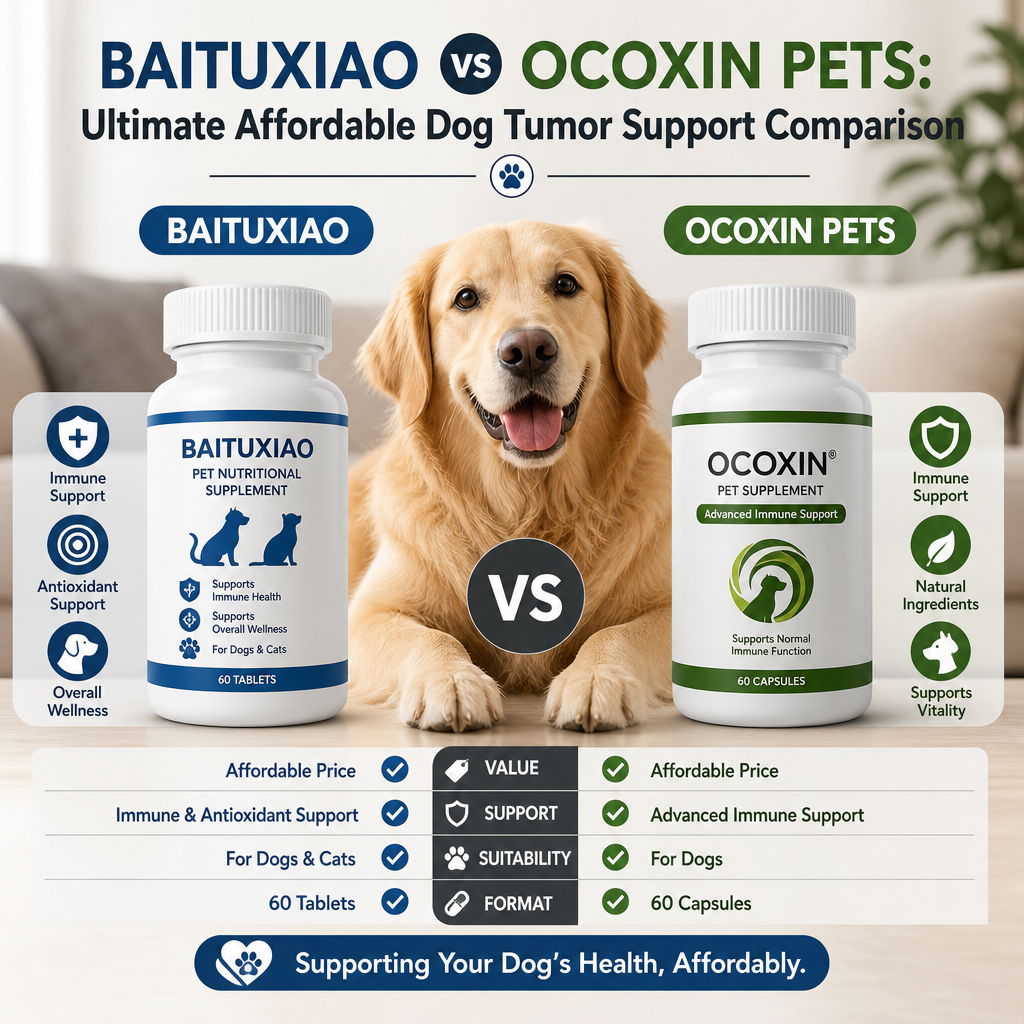
Baituxiao is generally described as a traditional herbal supplement intended to support dogs with masses, lumps, or tumor-related health concerns. Its formula may contain a blend of botanical ingredients selected for immune, circulation, inflammation, or general wellness support. Because products can vary by manufacturer, region, and formula revision, owners should read the current label carefully instead of relying solely on online descriptions.
Ocoxin Pets is a veterinary-oriented nutritional supplement based on the Ocoxin concept. It is commonly presented as a liquid or powder containing a combination of vitamins, minerals, antioxidants, amino acids, and plant-derived compounds. The product is often positioned as supportive care for animals experiencing illness, reduced appetite, weakness, or the effects of intensive treatment.
Neither product should be described as a proven cure for cancer. A supplement may help support appetite, energy, hydration, or nutritional status, but these effects are not the same as shrinking a tumor or eliminating cancer cells. The most important factor in any treatment decision is an accurate diagnosis and a veterinary plan tailored to the individual dog. For owners researching broader supportive options, the Ocoxin Pets alternative guide may also help compare related choices.
It is also useful to remember that support products can change from one market to another. A label in Belgium may not match a label sold elsewhere, and ingredient lists can shift over time. That is why the exact package in hand matters more than product summaries on a website.
Baituxiao vs Ocoxin Pets: Key Differences
The central difference in this dog tumor support comparison is the way each product is positioned. Baituxiao is typically marketed more specifically toward lumps, masses, and tumor-related support, while Ocoxin Pets is often framed as a broader supportive formula for dogs with serious illness or those undergoing demanding treatment.
Baituxiao may appeal to owners looking for a botanical product with a focused traditional-use profile. Ocoxin Pets may appeal to owners seeking a more comprehensive nutritional supplement containing multiple categories of nutrients and antioxidants. However, marketing language does not establish clinical effectiveness. Owners should evaluate evidence, product quality, ingredient safety, and veterinary compatibility rather than assuming that a tumor-focused label means superior results.
Another difference may involve administration. Ocoxin Pets products are often provided in a liquid or easy-to-mix format, which can be useful for dogs with poor appetite or difficulty swallowing tablets. Baituxiao may be available in capsules, tablets, or other forms depending on the supplier. The most convenient option is usually the one a dog can take consistently without significant stress.
For many families, the practical question is not which product sounds stronger, but which one fits the dog’s routine without creating extra stress. A calm dosing schedule can matter just as much as ingredient claims when a pet is already coping with illness. That is why a careful Baituxiao vs Ocoxin Pets review should always include taste, dosage form, and how easily the supplement can be given with food or medication.
Price is also part of the comparison. Some owners start by comparing product labels, then discover that shipping, package size, and daily serving recommendations change the real cost significantly. A supplement that looks affordable at first glance may become expensive if the dog needs it for several months.
Ingredient and Formula Considerations
An Ocoxin Pets comparison should begin with the complete ingredient panel. A broad formula may include antioxidant nutrients, vitamins, minerals, amino acids, and plant compounds. These ingredients can be relevant to general nutritional support, especially when a dog is eating poorly or recovering from illness. However, high concentrations of certain nutrients may be inappropriate for dogs with kidney disease, liver disease, diabetes, or other medical conditions.
Baituxiao’s botanical ingredients deserve the same careful review. Herbs can have pharmacological effects, even when they are described as natural. Some may affect blood clotting, blood pressure, liver enzymes, sedation, or immune activity. These effects could matter before surgery or during chemotherapy and radiation treatment. The exact dose, extraction method, purity, and source also influence safety.
Owners should avoid combining several supplements simply because they appear to work in different ways. Overlapping ingredients can lead to excessive intake, while multiple herbs may increase the risk of interactions. A veterinarian may recommend stopping supplements temporarily before a procedure or changing the schedule around prescribed medication.
When uncertainty remains, it is wise to review ingredient safety with a primary-care veterinarian or a board-certified oncology specialist. The U.S. National Cancer Institute’s information on complementary and alternative medicine is a useful starting point for understanding how supportive products fit into cancer care.
It also helps to compare labels side by side and look for the details that owners sometimes miss. A transparent supplement will clearly list active ingredients, serving size, and storage guidance. If a product description is vague, inconsistent, or unavailable in your region, that should be treated as a caution sign rather than a convenience issue. In a Baituxiao vs Ocoxin Pets decision, clarity is often more valuable than bold marketing.
Owners should also ask whether the product contains ingredients that may be difficult to combine with a dog’s current diet. A formula that looks helpful on paper may still be a poor match if it adds unnecessary calories, creates digestive upset, or conflicts with a prescription diet. In cancer care, small practical issues can quickly affect consistency, so ingredient review should include both safety and daily tolerance.
Affordability and Value
Affordability is an important part of any dog tumor support comparison because cancer care can involve repeated consultations, diagnostic imaging, laboratory tests, medication, surgery, and follow-up appointments. The cheapest container is not always the least expensive option overall. Cost should be calculated according to the daily serving, the dog’s weight, shipping charges, and the expected duration of use.
Ocoxin Pets may offer value for owners who want a liquid nutritional formula that can be divided among meals or adjusted according to veterinary guidance. Baituxiao may be more appealing when a smaller serving size or a particular herbal formulation fits the dog’s routine. Prices can differ substantially between suppliers, so owners should verify the product’s authenticity and avoid unusually discounted listings with unclear manufacturing information.
A quality product should have clear labeling, batch information, expiration dates, storage instructions, and contact details for the manufacturer. Supplements purchased through unreliable marketplaces may be expired, improperly stored, or counterfeit. Veterinary clinics and established pet-health retailers may provide more dependable sourcing.
When comparing overall value, it is also worth considering how long the product can be used safely. A supplement that is inexpensive upfront may become costly if it requires multiple purchases, shipping fees, or wasted servings because the dog refuses it. In contrast, a slightly higher-priced product may be the better choice if it is easier to administer, more consistent in quality, and more likely to be used as directed. That practical lens can make the Baituxiao vs Ocoxin Pets comparison much more realistic.
For some families, affordability also includes emotional cost. If a supplement causes conflict at dosing time, it can add stress for both the dog and the caregiver. A reasonable plan is one that fits the budget and does not make daily care harder than it already is.
Safety During Cancer Treatment
The safety question is more important than the marketing claim. Dogs receiving chemotherapy, radiation, corticosteroids, nonsteroidal anti-inflammatory drugs, anticoagulants, or other medications may be more vulnerable to interactions. Some supplements can influence liver metabolism or immune responses, potentially changing how a prescribed drug works.
Before starting Baituxiao or Ocoxin Pets, provide the veterinarian with the full label, including inactive ingredients. Mention every medication, supplement, and dietary product the dog is receiving. A veterinarian may also consider bloodwork, organ function, tumor type, and the planned treatment schedule before approving a supplement.
Stop the product and seek veterinary advice if the dog develops vomiting, diarrhea, unusual bleeding, severe lethargy, facial swelling, breathing difficulty, worsening appetite, or a sudden change in behavior. These symptoms may reflect the underlying disease, a medication reaction, or supplement intolerance.
This is especially important for dogs already receiving tumor-support nutrition or other adjunct products, because stacking multiple items can make it harder to identify what is helping and what is causing side effects. In some cases, keeping the plan simple is the safest choice.
Owners sometimes assume that a natural product is automatically gentle, but that assumption can be risky. Natural ingredients may still be powerful enough to change clotting, blood pressure, or how the liver handles medication. For a dog already dealing with cancer care, those changes may matter. A cautious Baituxiao vs Ocoxin Pets approach means asking whether the supplement fits the medical plan, not whether it sounds more holistic.
Good safety planning also includes timing. Some dogs tolerate a supplement better when it is given with food, while others do better if it is separated from prescription drugs. If a veterinarian recommends a trial period, keep notes on appetite, stool quality, energy, and vomiting so changes can be reviewed accurately.
Which Option May Be More Suitable?
There is no universal winner in the Baituxiao vs Ocoxin Pets comparison. A dog with poor appetite and nutritional deficits may benefit more from a palatable, broad-support formula, while another dog may be considered for a botanical product if the veterinarian believes its ingredients are suitable. The diagnosis also matters. A supplement appropriate for a stable dog with a benign mass may not be appropriate for a dog with metastatic cancer, liver impairment, or an upcoming operation.
The best choice should be based on four questions: Is the formula safe with the dog’s current treatment? Can the dog tolerate and take it consistently? Is the manufacturer transparent and reputable? Does the cost fit the long-term care plan? If the answer to any of these questions is uncertain, professional guidance is essential.
Owners comparing different supportive supplements may also want to review breed-related risk factors and early warning signs. For example, the Alaskan Malamute cancer risks and early tumor signs article can help some families understand why early veterinary attention matters.
It is also reasonable to ask whether the supplement supports the dog’s current stage of care. A pet recovering from surgery may need appetite support and simple nutrition, while a dog in active treatment may need a product that is easier to dose and less likely to interfere with prescribed therapy. In that sense, the right answer is rarely about the product name alone. It is about timing, diagnosis, and daily usability.
Some owners prefer to think of supplement choice as part of a larger care plan rather than a single decision. That mindset makes the comparison less stressful and more useful, because it shifts attention toward what improves the dog’s day-to-day comfort. In a careful Baituxiao vs Ocoxin Pets review, the best product is often the one the veterinarian can support and the caregiver can use consistently.
Making a Responsible Decision
Supplements should be viewed as one part of supportive care, alongside appropriate medical treatment, balanced nutrition, pain control, stress reduction, and regular monitoring. Keep a record of the product name, dose, start date, appetite, energy level, digestive changes, and any laboratory results. This information can help the veterinarian determine whether continuing the supplement makes sense.
Ultimately, Baituxiao and Ocoxin Pets serve different purposes in the marketplace, and neither should be treated as a substitute for evidence-based veterinary oncology. A careful Ocoxin Pets comparison should focus on ingredients, safety, quality, administration, and total cost rather than promises of a cure. With accurate information and veterinary supervision, owners can make a more responsible decision about supportive care while keeping their dog’s comfort and well-being at the center of treatment.
If a dog has a newly found lump, it is worth learning the basics of when masses need attention. Helpful background is available in our guide to dog belly lumps and abdominal tumors, which explains why not every mass should be managed the same way.
In short, the Baituxiao vs Ocoxin Pets decision should be individualized, cautious, and veterinarian-led. The right product is the one that fits the dog’s condition, treatment plan, and daily routine while keeping safety first.
For dog owners in Belgium, the most helpful next step is to bring the label, price, and dosing schedule to the veterinarian and compare them against the dog’s diagnosis and current medications. That practical review often makes the choice much clearer than online product claims alone.
When viewed this way, Baituxiao vs Ocoxin Pets becomes less about which supplement sounds more promising and more about which one can be used safely, consistently, and realistically within a complete care plan.
Before making a final decision, many owners also benefit from checking whether the product can be sourced reliably in their region and whether the dosage instructions are clear enough for long-term use. A straightforward plan reduces mistakes and helps ensure that any supportive supplement is used as intended.
For a fuller cancer-care perspective, it can also be helpful to compare the supplement with the dog’s symptom pattern, appetite level, and treatment goals over time. If the dog’s condition changes, the supplement plan may need to change too. That flexibility is often more valuable than choosing one product and sticking with it no matter what.
In the end, the most responsible choice is the one that supports the dog without creating new problems. That is the real takeaway from Baituxiao vs Ocoxin Pets: practical, cautious, and always guided by veterinary advice.
by TCMVET | Aug 15, 2026 | Research and News
Integratori cane anziano tumore: scegliere un supporto nutrizionale per un animale senior con una diagnosi oncologica richiede attenzione, realismo e soprattutto il coinvolgimento del veterinario. Gli integratori non curano il cancro e non possono sostituire chirurgia, chemioterapia, radioterapia, farmaci o una dieta formulata professionalmente. Possono però contribuire, quando indicati, a sostenere appetito, peso corporeo, energia, funzionalità intestinale e qualità della vita.
In questa guida vediamo come orientarsi in modo pratico e prudente, con un approccio centrato sul benessere del cane e sulle esigenze cliniche del momento. L’obiettivo non è aggiungere prodotti a caso, ma costruire un supporto davvero utile, soprattutto quando il paziente è anziano e può avere più fragilità contemporaneamente.
Perché un cane anziano con tumore può avere esigenze diverse
L’età avanzata comporta spesso una riduzione della massa muscolare, una digestione più delicata e una maggiore probabilità di malattie concomitanti, come insufficienza renale, problemi epatici, artrosi o disturbi cardiaci. La presenza di un tumore può aumentare ulteriormente il fabbisogno di alcuni nutrienti e alterare il metabolismo.
Dolore, nausea, stress, effetti dei trattamenti e crescita della massa tumorale possono provocare inappetenza e perdita di peso. In particolare, la riduzione della massa muscolare è un aspetto da monitorare con attenzione: non conta soltanto il peso indicato dalla bilancia, ma anche la condizione corporea e la forza dell’animale.
Un programma di supporto efficace deve quindi partire dalla situazione individuale. Il veterinario può valutare esami del sangue, funzionalità degli organi, tipo e stadio del tumore, terapie in corso, appetito e capacità di mantenere un peso stabile. In questo contesto, gli integratori cane anziano tumore vanno considerati come strumenti complementari, non come soluzioni autonome.
Quando il cane è molto anziano, la tolleranza ai cambiamenti può essere minore. Anche una modifica apparentemente semplice, come una nuova polvere nel pasto o un olio diverso, può influire su digestione, feci o appetito. Per questo ogni scelta deve essere graduale e monitorata con attenzione, soprattutto se il cane sta già seguendo una terapia complessa.
Un altro aspetto importante è la presenza di dolore cronico o limitazione nei movimenti. Se il cane si muove meno, può mangiare con meno entusiasmo, perdere massa magra più facilmente e mostrarsi più stanco. In questi casi il supporto non deve essere pensato solo per il tumore, ma per l’intero quadro clinico, includendo comfort, idratazione, ambiente tranquillo e routine quotidiana prevedibile.
Quali categorie vengono considerate
Non esiste un unico prodotto adatto a tutti i cani oncologici. Le categorie più frequentemente discusse con il veterinario includono:
Omega-3 da olio di pesce
EPA e DHA, acidi grassi omega-3 presenti soprattutto nell’olio di pesce, possono essere utili come parte di un piano nutrizionale mirato. In alcuni casi contribuiscono a sostenere la risposta infiammatoria equilibrata e il mantenimento della massa corporea.
Il dosaggio deve essere calcolato in base al peso, alla dieta e alle condizioni cliniche. Sono importanti la qualità dell’olio, la sua conservazione e l’assenza di contaminanti. Gli omega-3 possono non essere indicati in presenza di alcuni disturbi della coagulazione, pancreatite o terapie specifiche.
In pratica, gli omega-3 vengono spesso considerati perché possono inserirsi bene in un piano alimentare più ampio. Tuttavia, il loro uso non deve essere casuale: anche un prodotto apparentemente semplice può dare nausea, feci molli o rifiuto del pasto se scelto male o introdotto troppo rapidamente.
Antiossidanti e vitamine
Vitamine E e C, selenio e altri antiossidanti vengono talvolta utilizzati per sostenere le difese cellulari. Tuttavia, “più” non significa necessariamente “meglio”. Dosi eccessive possono risultare inutili o interferire con alcune terapie.
Durante radioterapia o chemioterapia, l’uso di antiossidanti deve essere sempre concordato con l’oncologo veterinario. La decisione dipende dal trattamento, dal momento della somministrazione e dalle condizioni generali del cane.
In molti casi il punto non è scegliere il prodotto più ricco in assoluto, ma quello più coerente con l’obiettivo clinico. Se il cane ha già una dieta completa e bilanciata, una supplementazione indiscriminata può portare più confusione che vantaggi. Per questo la valutazione professionale resta centrale.
Probiotici e supporto intestinale
Stress, cambiamenti alimentari e farmaci possono alterare la funzionalità intestinale. Un probiotico veterinario selezionato può aiutare alcuni animali a gestire feci irregolari o una digestione sensibile, ma non è una soluzione universale.
È preferibile scegliere prodotti studiati per il cane, con ceppi e quantità dichiarati chiaramente. In caso di diarrea persistente, sangue nelle feci, vomito o disidratazione, l’integratore non deve ritardare una visita.
Il supporto intestinale è particolarmente rilevante nei soggetti anziani, perché un intestino irritato peggiora rapidamente appetito e idratazione. Nei cani più fragili, anche piccole variazioni della consistenza delle feci possono essere un segnale da non sottovalutare, soprattutto se coincidono con l’inizio di una nuova terapia o con un cambiamento di dieta.
Supporti per articolazioni e mobilità
Un cane anziano affetto da tumore può avere anche artrosi o rigidità. Glucosamina, condroitina, acido ialuronico e altri ingredienti vengono impiegati in alcuni prodotti per la mobilità, con risultati variabili.
Il loro scopo non è intervenire sul tumore, ma migliorare eventualmente il comfort e la capacità di muoversi. La scelta deve tenere conto di dolore, peso, stato renale ed epatico e farmaci analgesici già prescritti.
Quando il movimento è più libero, spesso migliorano anche l’umore e l’orientamento alla routine. Un cane che riesce ad alzarsi, uscire, bere e tornare a riposare con meno fatica può affrontare meglio anche il percorso oncologico. Per questo i prodotti per la mobilità hanno senso soltanto se integrati in un piano più ampio di gestione del dolore.
Supporti per l’appetito e la tolleranza alimentare
In alcuni cani, il problema principale non è soltanto il tumore, ma la difficoltà a mantenere un apporto calorico adeguato. In questi casi il veterinario può valutare prodotti o strategie utili a rendere il pasto più appetibile, sempre con attenzione alla tollerabilità digestiva.
Se il cane associa il cibo a nausea o disgusto, anche gli integratori più utili diventano inefficaci. Per questo la gestione del pasto, l’orario di somministrazione e la consistenza dell’alimento contano quanto la scelta del prodotto.
Un supporto efficace spesso comincia da dettagli pratici: porzioni più piccole, odori più gradevoli, una temperatura del cibo leggermente più alta e un ambiente tranquillo. In molti casi queste semplici attenzioni fanno la differenza più di un prodotto aggiuntivo.
Altri supporti selezionati caso per caso
In base al quadro clinico, il veterinario può valutare altri ingredienti o formulazioni specifiche, ad esempio per sostenere il recupero, la funzionalità epatica o il benessere generale. Non esiste però una lista universale valida per tutti: ciò che è utile per un cane può essere inutile o persino inadatto per un altro.
Per questo è prudente distinguere tra integrazione mirata e sovraccarico di prodotti. Più elementi non significano più efficacia. Spesso, al contrario, aumentano il rischio di interazioni, spesa inutile e difficoltà nel capire cosa sta davvero aiutando il cane.
La nutrizione viene prima dell’integratore
Prima di aggiungere capsule o polveri, è essenziale verificare che il cane assuma abbastanza calorie e proteine. Una dieta completa e bilanciata, appetibile e compatibile con le malattie presenti è spesso il principale strumento di supporto.
In alcuni casi il veterinario può consigliare alimenti umidi ad alta densità energetica, pasti più piccoli e frequenti o una dieta terapeutica. Riscaldare leggermente il cibo può intensificarne l’aroma, mentre aggiunte casalinghe non bilanciate possono creare carenze o eccessi.
È importante non forzare il cane a mangiare e non cambiare alimentazione bruscamente. Se l’appetito diminuisce, il veterinario può valutare farmaci contro nausea e dolore oppure stimolanti dell’appetito, quando appropriati.
Per chi vuole approfondire il rapporto tra alimentazione e benessere del paziente oncologico, può essere utile consultare anche la sezione dedicata alla nutrizione veterinaria oncologica, utile per comprendere come impostare un supporto davvero coerente con le terapie in corso.
Una dieta ben costruita ha il vantaggio di fornire già molte delle sostanze necessarie in forma bilanciata. Gli integratori, in questo scenario, servono soprattutto a colmare un bisogno specifico o a rispondere a un obiettivo definito, come migliorare la tollerabilità digestiva o sostenere la massa magra.
Se il cane è difficile da alimentare, conviene prima risolvere gli ostacoli pratici: dolore, nausea, stanchezza, ambiente rumoroso, ciotola scomoda, cibo poco gradito o eccessiva distanza tra i pasti. Solo dopo ha senso aggiungere un supporto nutrizionale mirato, perché senza una buona base gli integratori cane anziano tumore rischiano di avere un effetto limitato.
Come scegliere un integratore senior cane cancro
La qualità del prodotto è fondamentale. L’etichetta dovrebbe riportare ingredienti, quantità per dose, specie di destinazione, modalità di conservazione e produttore. È meglio diffidare dei prodotti che promettono di “sciogliere” il tumore, sostituire le cure oncologiche o garantire risultati miracolosi.
Un integratore senior cane cancro dovrebbe essere scelto in funzione di un obiettivo concreto: sostenere l’apporto di omega-3, favorire la regolarità intestinale, aiutare la mobilità o correggere una carenza documentata. Utilizzare molti prodotti contemporaneamente rende più difficile capire benefici ed eventuali effetti indesiderati.
Anche i prodotti naturali possono avere attività farmacologica. Erbe, funghi medicinali, curcumina e altri composti possono interagire con anticoagulanti, antinfiammatori, chemioterapici o farmaci per il cuore. Per questo è necessario comunicare al veterinario tutto ciò che viene somministrato, compresi prodotti acquistati online.
Una risorsa affidabile per comprendere i segnali clinici e i controlli richiesti in oncologia veterinaria è la pagina informativa del National Cancer Institute sui trattamenti oncologici, utile come riferimento generale per capire perché il supporto va sempre personalizzato.
Un altro criterio utile è la trasparenza del produttore. Una formulazione chiara, con componenti dichiarati in modo preciso e dosaggi comprensibili, è di solito preferibile a un prodotto generico con molte promesse e poche informazioni. Se l’etichetta è vaga, il rischio di fare una scelta poco adeguata aumenta.
Infine, è bene considerare il carattere del cane. Alcuni animali accettano facilmente capsule, altri rifiutano qualsiasi aggiunta nel cibo. In questi casi può essere più sensato scegliere una formulazione diversa o rinunciare a un prodotto difficile da somministrare, perché la regolarità d’uso è essenziale per ottenere un vero beneficio.
Integratori cane anziano tumore: come usarli senza errori
Quando si parla di integratori cane anziano tumore, la tentazione è quella di provare più prodotti insieme sperando in un effetto rapido. In realtà, un approccio prudente è quasi sempre più efficace. Meglio introdurre un solo prodotto alla volta, osservare la risposta per alcuni giorni o settimane e valutare con il veterinario se proseguire, modificare o sospendere.
Questo metodo è utile anche perché i cani anziani possono reagire in modo diverso rispetto a soggetti giovani e sani. Un leggero aumento della qualità delle feci, una migliore vivacità o una minore rigidità possono essere segnali positivi, ma solo se accompagnati da assenza di effetti collaterali. In caso contrario, il prodotto va rivalutato.
La costanza è importante: molti integratori richiedono tempo per mostrare un beneficio percepibile. Tuttavia, la costanza non deve trasformarsi in ostinazione. Se dopo un periodo ragionevole non si osserva alcun vantaggio, ha senso riconsiderare la scelta insieme al veterinario, invece di continuare per abitudine.
Un errore frequente è associare troppi prodotti con finalità simili. Per esempio, sommare più fonti di omega-3 o più formulazioni intestinali può rendere più difficile capire quale elemento sia davvero utile. Una strategia semplice, ordinata e documentata permette invece di monitorare meglio il percorso del cane.
Un altro aspetto è il momento della somministrazione. Alcuni supporti funzionano meglio con il pasto, altri lontano dai pasti, altri ancora richiedono distribuzione in più dosi. Seguire le istruzioni del veterinario o del produttore, senza improvvisare, aiuta a migliorare tollerabilità e aderenza.
Un esempio di percorso ragionato
Immaginiamo un cane anziano con tumore, appetito altalenante e lieve rigidità articolare. In una situazione del genere, il veterinario potrebbe iniziare dalla valutazione della dieta, poi discutere l’eventuale uso di omega-3, un supporto per la mobilità e, se necessario, un prodotto per l’intestino. Non tutto insieme, ma step progressivi e controllati.
Questo approccio consente di capire cosa migliora davvero il benessere. Se il cane mangia un po’ meglio, si muove con meno fatica e mantiene feci più regolari, il percorso sta probabilmente andando nella direzione giusta. Se invece compare nausea, disinteresse per il cibo o peggioramento delle feci, bisogna rivedere il piano.
È utile anche stabilire obiettivi concreti e realistici: mantenere il peso, ridurre il disagio, conservare un buon rapporto con il cibo, sostenere la mobilità e limitare gli effetti collaterali. In oncologia veterinaria, piccoli miglioramenti possono avere un impatto importante sulla qualità della vita.
Segnali da monitorare durante il supporto
Dopo l’introduzione di un integratore, è utile osservare appetito, vomito, feci, sete, peso, vivacità e mobilità. Un diario semplice può aiutare a individuare cambiamenti e riferirli con precisione al veterinario.
Occorre richiedere assistenza rapidamente in caso di rifiuto prolungato del cibo, vomito ripetuto, diarrea intensa, difficoltà respiratoria, dolore evidente, estrema debolezza, gengive pallide o improvviso peggioramento. Nei cani oncologici, intervenire tempestivamente può fare una differenza importante sul comfort.
Se il cane assume già farmaci prescritti, ogni nuovo integratore cane anziano tumore deve essere valutato anche in funzione delle possibili interazioni. Questo vale in particolare per prodotti acquistati senza supervisione, etichettati come “completi”, “naturali” o “rinforzanti”, ma privi di indicazioni chiare su dosi e controindicazioni.
Tra i segnali utili da annotare ci sono anche il tempo necessario per finire il pasto, la voglia di alzarsi al mattino, la facilità nel salire e scendere, il numero di uscite in giardino e l’interesse per le attività abituali. Sono indicatori pratici che spesso raccontano più della sola bilancia.
Se un prodotto sembra utile ma solo per un breve periodo, vale la pena chiedersi se il beneficio è reale o casuale. La registrazione dei cambiamenti nel tempo aiuta a prendere decisioni più lucide e a non attribuire meriti o colpe in modo affrettato.
Quando parlare subito con il veterinario
Ci sono situazioni in cui è meglio non aspettare. Una visita o un contatto rapido sono consigliabili se il cane smette di mangiare per più di un giorno, perde peso in modo evidente, mostra dolore non controllato o presenta un peggioramento improvviso dell’energia. Anche i cambiamenti del comportamento, come isolamento, irrequietezza o difficoltà a riposare, meritano attenzione.
Se il cane è già seguito da un oncologo veterinario, il confronto con il team curante è particolarmente utile prima di iniziare nuovi prodotti. In questo modo si evita di sovrapporre strategie non coordinate e si mantiene una visione completa della terapia.
Quando il quadro clinico è complesso, il veterinario può suggerire controlli periodici per valutare peso, esami ematici, funzionalità degli organi e risposta al piano nutrizionale. Questo rende più semplice capire se gli integratori cane anziano tumore stanno davvero offrendo un vantaggio concreto.
È importante ricordare che un peggioramento rapido non va mai attribuito automaticamente alla malattia di base. A volte la causa è un effetto collaterale, un’interazione tra prodotti, un dolore non sufficientemente controllato o una difficoltà digestiva transitoria. Un controllo tempestivo permette di intervenire meglio e più in fretta.
Riferimenti utili e fonti autorevoli
Per approfondire in modo generale il tema della diagnosi e del trattamento oncologico, è possibile consultare anche la documentazione di riferimento dell’National Cancer Institute. Si tratta di una fonte utile per comprendere l’importanza di un percorso guidato da professionisti e di scelte terapeutiche personalizzate.
Le fonti istituzionali non sostituiscono il parere del veterinario, ma aiutano a leggere con più consapevolezza le informazioni reperite online. In tema di salute animale, la prudenza è sempre un valore aggiunto, soprattutto quando si parla di cani anziani e di terapie complesse.
Domande frequenti
Gli integratori possono curare il tumore?
No. Possono soltanto supportare alcuni aspetti del benessere, come appetito, intestino, mobilità o stato generale, ma non sostituiscono le terapie oncologiche.
È meglio scegliere prodotti multipli o uno alla volta?
Di solito uno alla volta. Così è più semplice capire cosa funziona e cosa invece crea disturbi o non apporta benefici.
Un cane anziano può assumere omega-3 tutti i giorni?
Dipende dal quadro clinico, dalla dieta e dai farmaci in corso. Gli omega-3 possono essere molto utili, ma il dosaggio va sempre definito dal veterinario.
Gli integratori naturali sono sempre sicuri?
No. “Naturale” non significa automaticamente innocuo. Anche ingredienti di origine vegetale o fungina possono interagire con i trattamenti.
Ha senso continuare un integratore se il cane non migliora subito?
A volte sì, perché alcuni prodotti richiedono tempo. Ma se non compare alcun vantaggio entro un periodo ragionevole, è corretto rivalutare la scelta con il veterinario.
Posso cambiare da solo la dieta insieme agli integratori?
Meglio di no, soprattutto nei cani anziani con tumore. Cambiare troppe cose insieme rende difficile capire cosa sta aiutando e cosa, invece, peggiora la tolleranza alimentare.
Conclusione
L’obiettivo finale non è aggiungere il maggior numero possibile di integratori, ma costruire un piano sicuro e personalizzato. Per un cane anziano con tumore, controllo del dolore, alimentazione adeguata, idratazione, riposo, movimento compatibile e monitoraggio veterinario restano i pilastri del benessere. Gli integratori possono rappresentare un aiuto complementare, ma soltanto quando scelti con criterio e inseriti in una strategia clinica completa.
In sintesi, gli integratori cane anziano tumore hanno senso solo se rispondono a un bisogno reale, sono tollerati bene e vengono integrati in un percorso seguito dal veterinario. Con una scelta attenta, il supporto può diventare più efficace, più sicuro e più utile per la qualità della vita del cane.
Se usati con metodo, gli integratori cane anziano tumore possono aiutare a sostenere il comfort quotidiano senza creare aspettative irrealistiche. La differenza la fanno sempre la personalizzazione, il monitoraggio e la collaborazione con il veterinario.
by TCMVET | Aug 15, 2026 | Research and News
Medicinal mushrooms / veterinary mycotherapy are gaining attention among Swiss dog owners seeking complementary support for dogs diagnosed with tumors. While no mushroom product can replace surgery, chemotherapy, radiation, or other veterinary treatment, carefully selected medicinal mushroom extracts may support overall wellbeing when used under professional guidance. Choosing appropriate dog cancer supplements in Switzerland requires attention to product quality, dosage, diagnosis, and possible interactions with conventional medicines.
Understanding veterinary mycotherapy for dogs
Veterinary mycotherapy is the therapeutic use of medicinal mushrooms or their extracts as part of an integrative veterinary care plan. Mushrooms such as turkey tail, reishi, shiitake, maitake, and cordyceps contain naturally occurring compounds, including beta-glucans, triterpenes, polysaccharides, and other bioactive substances.
These compounds are being studied for their potential effects on immune regulation, inflammation, antioxidant activity, and general resilience. In dogs with cancer, the purpose is usually not to “cure” a tumor. Instead, mycotherapy may be considered to support quality of life, appetite, recovery, immune balance, and the body’s ability to cope with illness and treatment.
The scientific evidence is still developing. Some mushrooms have been investigated in laboratory studies, animal research, or small clinical studies, but results cannot automatically be applied to every dog or every cancer type. A responsible approach combines promising evidence with realistic expectations and close veterinary supervision. For a broader overview of complementary support options, see Best Supplements for Dogs with Cancer: 7 Essential UK Support Tips.
For owners comparing options, medicinal mushrooms / veterinary mycotherapy are best viewed as part of a support strategy rather than a stand-alone solution. That perspective helps set expectations and keeps treatment decisions focused on the dog’s comfort and long-term wellbeing.
What dog owners should know before starting
Before starting medicinal mushrooms / veterinary mycotherapy, it helps to confirm the cancer diagnosis, the stage of disease, and the current treatment plan. A supplement that seems gentle may still affect the timing or tolerance of medications. That is why the treating veterinarian should always know exactly what is being added.
It is also important to review the dog’s appetite, stool quality, liver and kidney values, and any history of allergies or digestive sensitivity. A dog with an upset stomach, for example, may need a slower introduction or a different product altogether. This is one reason why medicinal mushrooms / veterinary mycotherapy should be personalized rather than selected only by popularity.
Medicinal mushrooms / veterinary mycotherapy and dog cancer care
The most widely discussed mushroom for canine cancer support is turkey tail, also known as Trametes versicolor. It contains polysaccharide compounds that have attracted research interest because of their possible influence on immune responses. Some veterinary discussions focus on turkey tail as an adjunct for dogs with certain tumors, particularly when maintaining quality of life is a priority.
Reishi, or Ganoderma lucidum, is traditionally used for immune modulation and general vitality. It may also have anti-inflammatory and calming properties, although individual dogs can respond differently. Shiitake and maitake are valued for their beta-glucan content and are sometimes included in broader wellness formulas.
Cordyceps is often used in products designed to support energy and stamina. However, dogs with specific medical conditions may not be suitable candidates for every mushroom, and products containing several ingredients can make it more difficult to identify the cause of a side effect.
The ideal choice depends on the dog’s diagnosis, age, weight, liver and kidney function, medications, appetite, and treatment plan. A supplement appropriate for one dog may be unsuitable for another.
When owners compare medicinal mushrooms / veterinary mycotherapy options, it helps to focus on the reason the product is being used. Some formulas are designed for immune support, while others emphasize vitality, digestion, or recovery. That distinction matters because the most suitable product for a dog receiving chemotherapy may differ from one used in long-term palliative care.
In practice, clinicians often use medicinal mushrooms / veterinary mycotherapy to complement conventional oncology. That may include supporting appetite during treatment, helping the dog stay comfortable, and keeping energy levels as stable as possible while the primary cancer plan continues.
For owners who want to understand broader evidence-based complementary care, the National Cancer Institute overview of complementary and alternative medicine is a useful educational reference for discussing integrative care with a professional.
Why a single formula may not fit every tumor
Different tumor types can create different priorities. A dog with a slow-growing mass and stable appetite may need a different support plan than a dog with rapidly progressing disease, weight loss, or treatment-related nausea. Medicinal mushrooms / veterinary mycotherapy can be part of both scenarios, but the goals are not the same.
That distinction matters for communication with the veterinary team. If the aim is appetite support, the monitoring plan may focus on food intake and digestion. If the goal is broader resilience, then energy, sleep, stool quality, and overall comfort become equally important. Clear goals make medicinal mushrooms / veterinary mycotherapy easier to evaluate and safer to use.
Choosing dog cancer supplements in Switzerland
When comparing dog cancer supplements Switzerland, look beyond attractive packaging and broad claims. Quality and transparency are especially important because supplements are not always subject to the same evidence and manufacturing requirements as approved veterinary medicines.
Look for products that clearly state:
- The exact mushroom species and scientific name
- Whether the product contains fruiting body, mycelium, or both
- The extraction method used
- The amount of active compounds or beta-glucans
- Batch testing for contaminants
- Recommended canine dosage
- Storage instructions and expiration date
- Manufacturer contact details and traceability
Organic certification can be useful, but it does not by itself prove clinical effectiveness. A product should also be tested for heavy metals, pesticides, bacteria, mold, and other contaminants. Avoid formulas that rely on vague “mushroom complex” wording without identifying the quantities of individual ingredients.
Swiss dog owners may find products through veterinary practices, specialized animal-health providers, pharmacies, or reputable online retailers. However, availability does not guarantee suitability. It is wise to discuss any imported product with a veterinarian, particularly when labeling, dosage instructions, or quality-control information is unclear. If the owner wants to understand how a mushroom formula fits into a treatment plan, the National Cancer Institute overview of complementary and alternative medicine is a useful educational reference for discussing integrative care with a professional.
Before buying, it also helps to compare whether the label explains how the extract is standardized and whether the dose is appropriate for the dog’s body weight. Clear labeling makes it easier to compare dog cancer supplements Switzerland on something more meaningful than packaging or price alone.
Questions to ask before you buy
A practical way to narrow the options is to ask a few simple questions. Is the species identified by its full Latin name? Is there evidence of third-party testing? Does the company explain how the extract is made? Can the product be dosed accurately for a medium or large dog? These questions reduce guesswork and help owners compare medicinal mushrooms / veterinary mycotherapy products more objectively.
It also helps to ask whether the company offers clear veterinary guidance. A manufacturer that understands dog cancer supplements Switzerland should be able to explain how the product is intended to be used, what the expected range of doses looks like, and what signs suggest the formula may not be tolerated well. That kind of transparency matters more than claims about being “natural.”
Dog tumor support Switzerland: taking an individualized approach
Dog tumor support Switzerland should be based on the whole patient rather than the tumor alone. A supportive plan may include pain management, appropriate nutrition, hydration, dental care, mobility support, stress reduction, and monitoring of appetite and body weight. Medicinal mushrooms may be one component of this plan, but they should not distract from essential veterinary care.
Before starting a supplement, the veterinarian should know the dog’s complete medication list. Potential concerns may arise with drugs that affect blood clotting, immune activity, blood pressure, blood sugar, or liver metabolism. Some mushroom extracts may also be inappropriate before surgery or during certain chemotherapy protocols. The timing of administration can matter as well.
A practical monitoring plan may include recording appetite, stool quality, energy, sleep, pain signals, weight, and any changes around treatment days. If vomiting, diarrhea, unusual bruising, marked lethargy, facial swelling, breathing difficulty, or worsening pain occurs, stop the product and contact the veterinary team promptly.
Families looking at medicinal mushrooms / veterinary mycotherapy should also ask whether their veterinarian wants the supplement paused before procedures or during medication changes. This simple step can reduce avoidable complications and makes it easier to identify whether a new product is truly helping.
For many owners, the best dog tumor support Switzerland plan is the one that can be adjusted over time. As the dog’s condition changes, the supplement choice, dose, and monitoring goals may need to change too.
Owners who want more practical support ideas may also find it useful to read How to Manage Chemotherapy Side Effects in Dogs? Nutritional Support & Care Tips, especially if the dog is already in active treatment.
Integrating mushrooms with the wider care plan
Medicinal mushrooms / veterinary mycotherapy tend to work best when they are woven into a broader plan instead of being treated as the main event. That broader plan may include pain relief, anti-nausea medication, calorie support, routine blood work, and scheduled rechecks. In many cases, the supplement becomes one small part of a coordinated strategy rather than an isolated intervention.
This integrated approach is especially helpful when the dog has multiple needs at once. For example, a dog may need support for appetite, inflammation, and stamina all at the same time. In those cases, the veterinary team can decide whether medicinal mushrooms / veterinary mycotherapy are appropriate alongside other treatments or whether a different priority should come first.
Extract quality and dosage matter
Not all mushroom supplements are equivalent. Powders made from whole mushrooms may contain less concentrated active material than standardized extracts, while alcohol and hot-water extraction can produce different profiles of compounds. A trustworthy manufacturer should explain how the product is made and provide clear dosing information for dogs.
Dosage should be calculated according to the dog’s body weight and medical situation, not copied from a human product label. Starting with a low amount and increasing gradually may help identify tolerance, but this should follow veterinary advice. More is not necessarily better, and high doses can increase the risk of digestive upset or interactions.
Products containing sweeteners, artificial flavorings, excess fillers, or ingredients toxic to dogs should be avoided. In particular, owners should check for xylitol, which can cause life-threatening low blood sugar and liver injury in dogs.
When a clinician recommends medicinal mushrooms / veterinary mycotherapy, the intended extract strength should be clear. If a label does not specify the species, extraction method, or active-compound standardization, it is difficult to compare products fairly. In that situation, choosing a more transparent option is usually safer than selecting the cheapest bottle.
Quality control matters because the same mushroom species can vary widely from one product to another. A well-made extract can be easier to evaluate, easier to dose, and more consistent for dogs that are already dealing with cancer treatment.
What to watch for after starting a new product
After introducing medicinal mushrooms / veterinary mycotherapy, owners should pay attention to subtle changes. A mild improvement in appetite or energy may be encouraging, but so can a mild change in stool quality or thirst. Tracking small details helps the veterinary team decide whether the product is worth continuing.
If the dog becomes more uncomfortable, refuses food, vomits, or develops unusual behavior after a new supplement is started, the product should be reviewed promptly. Not every reaction means the mushroom itself is the problem, but close observation helps separate coincidence from true intolerance.
Realistic expectations for families
A cancer diagnosis can create understandable urgency, especially when owners encounter claims that a natural product can shrink tumors or replace conventional treatment. Such promises are unreliable and may delay therapies that offer the best chance of controlling disease.
A more realistic goal is supportive care: helping the dog remain comfortable, maintain normal activities where possible, eat adequately, and tolerate treatment. The success of an integrative plan should be assessed through veterinary examinations and meaningful quality-of-life measures rather than online testimonials alone.
Veterinary mycotherapy may have a role for selected dogs, but it works best when the product is high quality, the dosage is individualized, and the primary veterinarian or veterinary oncologist is involved. In Switzerland, owners can also ask whether the practice has experience with integrative veterinary medicine or can refer them to a qualified professional.
Medicinal mushrooms may offer promising complementary options for canine tumor support, but careful selection and medical oversight are essential. The safest path combines evidence-informed supplements with timely diagnosis, conventional cancer treatment when indicated, regular monitoring, and compassionate attention to the dog’s comfort and daily wellbeing. When used this way, medicinal mushrooms / veterinary mycotherapy can be part of a thoughtful support plan rather than a replacement for oncology care.
For dogs recovering from treatment or dealing with side effects, owners may also find helpful guidance in How to Manage Chemotherapy Side Effects in Dogs? Nutritional Support & Care Tips.
In short, medicinal mushrooms / veterinary mycotherapy can be worth discussing with a veterinarian when the goal is safe, realistic, and individualized support. Used carefully, they may fit into a broader plan for dog tumor support Switzerland without overstating what supplements can do.
Families comparing options should remember that the best results usually come from consistency, careful monitoring, and honest expectations. Medicinal mushrooms / veterinary mycotherapy are not miracle cures, but in a well-managed plan they may contribute to comfort, resilience, and a better day-to-day experience for some dogs.
That is why the final decision should be guided by the dog’s diagnosis, the oncology plan, and the quality of the supplement itself. When those pieces align, medicinal mushrooms / veterinary mycotherapy can become a practical part of supportive care rather than a confusing extra.
by TCMVET | Aug 15, 2026 | Research and News
Medicinal mushrooms / mycotherapy can provide valuable complementary support for dogs affected by tumors, especially when used alongside veterinary diagnosis and treatment. In Austria, more dog owners are exploring evidence-informed natural options to help maintain quality of life, support normal immune function, and promote strength during demanding cancer therapies. However, supplements should never replace surgery, chemotherapy, radiation, pain management, or other treatments recommended by a veterinarian.
Understanding medicinal mushrooms / mycotherapy for dogs
Mycotherapy is the therapeutic use of selected mushrooms or mushroom extracts. Several medicinal mushrooms contain naturally occurring compounds such as beta-glucans, triterpenes, polysaccharides, and other bioactive substances. These compounds are being studied for their potential effects on immune regulation, antioxidant activity, inflammation, and general vitality.
For dogs with cancer, the goal of mycotherapy is usually supportive rather than curative. A carefully selected product may help a dog cope with reduced appetite, fatigue, stress, or the physical demands of conventional treatment. The response can vary considerably depending on the tumor type, stage of disease, age, breed, medications, and overall health. That is why medicinal mushrooms / mycotherapy should be viewed as a tailored support tool, not a one-size-fits-all solution.
The most commonly discussed mushrooms in veterinary complementary care include Reishi, Turkey Tail, Shiitake, Maitake, and Cordyceps. Each has a different nutritional and biochemical profile, which is why a personalized plan is more appropriate than using a single mushroom without professional guidance. For a broader overview of mushroom-based support, see The Benefits of Medicinal Mushrooms for Dogs: Boosting Immune Health Naturally.
Many owners first encounter medicinal mushrooms / mycotherapy through online articles, social media recommendations, or word of mouth from other pet parents. While that can be a useful starting point, the best next step is to compare product quality, dosage guidance, and the dog’s current medical needs. In cancer care, small details matter, and the right choice can depend on whether the dog is newly diagnosed, recovering from surgery, receiving chemotherapy, or already in a palliative stage.
It also helps to understand that “mushroom supplement” can mean many different things. Some products are simple dried powders, while others are hot-water extracts, dual extracts, capsules, liquids, or blended formulas. Because the extraction method influences what compounds are available to the body, medicinal mushrooms / mycotherapy products should be evaluated on more than label design or marketing language.
Potential benefits of dog tumor support Austria
Dog tumor support Austria includes a range of complementary measures intended to improve comfort and wellbeing while a dog receives appropriate medical care. Medicinal mushroom extracts may be considered as one component of that support plan.
Potential areas of interest include:
- Supporting normal immune-system activity
- Helping maintain energy and stamina
- Supporting appetite and digestive resilience
- Providing antioxidant compounds
- Promoting recovery during periods of physical stress
- Helping preserve quality of life
These potential benefits should be discussed realistically. A supplement cannot guarantee tumor shrinkage, prevent metastasis, or replace an individualized oncology plan. The strongest reason to consider mycotherapy is often its role in comprehensive care: nutrition, symptom control, emotional wellbeing, and veterinary treatment work together to support the dog as a whole.
Turkey Tail, for example, is widely researched for compounds known as polysaccharide-K and polysaccharide-peptide. Reishi is traditionally valued for its immune-modulating and calming properties. Shiitake and Maitake contain beta-glucans and other compounds that may support normal immune function. Cordyceps is often selected for dogs experiencing reduced vitality, although its suitability depends on the individual animal. In practical terms, medicinal mushrooms / mycotherapy may be used to support comfort and resilience, not to promise a cure.
Supportive care becomes especially important when a dog’s daily routine is disrupted by treatment side effects or tumor burden. Appetite changes, reduced enthusiasm for walks, nausea, or quiet withdrawal can all indicate that the dog needs more than a single supplement. In those cases, mycotherapy is best considered alongside pain management, nutritional support, and veterinarian-guided symptom relief.
For owners comparing broader supportive strategies, an oncology-focused resource such as the American Veterinary Medical Association’s cancer in pets guide can help set realistic expectations about treatment and supportive care.
Choosing dog cancer supplements Austria responsibly
When searching for dog cancer supplements Austria, product quality and veterinary oversight are essential. Not every mushroom powder or human supplement is appropriate for dogs. Products may differ significantly in extraction method, concentration, purity, and labeling accuracy.
A high-quality supplement should ideally provide:
- Clearly identified mushroom species
- Information about the part of the mushroom used
- Details about extraction and standardization
- Batch testing for contaminants
- Guidance based on the dog’s body weight
- Transparent ingredient and additive information
- Appropriate storage and expiration details
Extracts are often preferred over simple raw powders because extraction can make certain compounds more available. However, the best form depends on the mushroom, the dog’s health status, and the intended purpose. A veterinarian or qualified animal-health professional can help determine whether a powder, liquid, capsule, or combination formula is suitable.
It is also important to distinguish between a product designed specifically for animals and a general human supplement. Human products may contain alcohol, sweeteners, herbs, high concentrations, or other ingredients that are unsuitable for dogs. Xylitol, in particular, is highly toxic to dogs and must be avoided.
Another useful comparison point is whether the manufacturer provides evidence for safety testing and clear usage instructions. Even when a label looks professional, the ingredient list may not reveal enough about the quality of the extract or the consistency of the batch. Responsible dog cancer supplements Austria shoppers should ask whether the product is made under good manufacturing practices, whether it has been tested for heavy metals and microbial contamination, and whether the company can explain how the extract is standardized.
Owners often ask whether a “stronger” product is automatically better. The answer is no. With medicinal mushrooms / mycotherapy, a balanced formula that fits the dog’s size, condition, and medication plan is more useful than an aggressive dose or a crowded blend of unnecessary ingredients. In many cases, simplicity is safer and easier to monitor.
When comparing options, it may also help to think about palatability. If a dog refuses a capsule, powder, or liquid, the supplement will not be helpful no matter how good the ingredients look on paper. Taste, smell, and ease of administration matter in daily life, especially for dogs already coping with illness or reduced appetite.
Safety, dosage, and veterinary supervision
Natural does not automatically mean risk-free. Medicinal mushrooms can cause digestive upset, changes in stool, reduced appetite, or allergic reactions in some animals. More importantly, supplements may interact with medications or affect blood clotting, immune activity, blood pressure, or liver metabolism.
Veterinary consultation is particularly important when a dog is receiving chemotherapy, corticosteroids, immunosuppressants, anticoagulants, or medication for chronic conditions. Supplements may need to be paused before surgery or adjusted during periods of low blood counts and infection risk.
Dosage should never be estimated solely from a human label. Dogs differ in body size, metabolism, age, and disease status. A small senior dog with kidney impairment may require a very different approach from a healthy adult dog of the same weight. Introducing one product at a time and monitoring the dog closely can make it easier to identify both benefits and adverse effects.
Owners should contact their veterinarian promptly if they notice persistent vomiting, diarrhea, facial swelling, breathing difficulty, unusual bruising, severe lethargy, refusal to eat, or sudden changes in behavior.
In some cases, the oncology team may adjust support based on bloodwork, treatment cycles, or concurrent medications. That kind of supervision is especially important when medicinal mushrooms / mycotherapy are added to a protocol already designed for cancer care. If a dog is already taking medications for pain, nausea, infections, or appetite support, the supplement plan should be reviewed as carefully as any prescription medicine.
It is also wise to keep a simple symptom log. Record the date the supplement started, the product name, the dose, appetite, stool quality, energy level, and any changes in sleep, grooming, or activity. This practical record can help the veterinarian judge whether medicinal mushrooms / mycotherapy are actually helping or whether the dog’s needs have changed.
Because adverse reactions can be subtle at first, owners should not wait for a major problem to appear. Even mild diarrhea or slight lethargy may be enough reason to pause the supplement and speak with the clinical team. This cautious approach is especially useful in older dogs, dogs with concurrent illness, and dogs that are already taking several medications.
What to compare before buying
Before choosing a product, compare the mushroom species, extraction method, and testing standards rather than relying on marketing claims. A thoughtful comparison also includes the dog’s diagnosis, current medications, and daily routine. A product that looks impressive on a label may not be the safest or most useful option for a particular patient.
Owners can also compare whether a formula is intended for general wellness or for oncology support. Products made for dogs with cancer are usually better aligned with the goals of comfort, appetite support, and immune balance than broad “immune booster” blends that contain many untested ingredients. If you are evaluating other adjunct options, this article on Best Supplements for Dogs with Cancer: 7 Essential UK Support Tips offers another useful framework for comparison.
Finally, ask whether the manufacturer provides clear contact information, lot numbers, and quality-control documentation. These details matter when you want consistency from one order to the next and need to track how your dog responds over time.
It is also helpful to compare practical fit. Will the product be easy to give twice a day? Does it need refrigeration? Can it be mixed with food? Does it contain unnecessary flavorings or sweeteners? These questions may sound simple, but they matter when a dog is stressed, nauseous, or finicky. In real life, the best medicinal mushrooms / mycotherapy product is often the one that can be used consistently and safely.
Some owners try to compare products by mushroom name alone. That is not enough. Two turkey tail products, for example, may differ greatly in extraction type, amount of active compounds, and purity. The same is true for Reishi, Maitake, Shiitake, and Cordyceps. Always compare the full formulation, not just the headline ingredient.
Mycotherapy as part of a complete care plan
The most effective dog tumor support Austria offers is not based on a single supplement. A complete plan may include oncology consultation, imaging, blood tests, appropriate tumor treatment, pain relief, nutritional support, physiotherapy, dental care, and regular quality-of-life assessments.
Nutrition is especially important. Dogs with cancer may experience appetite changes, nausea, muscle loss, or altered energy needs. A balanced diet selected with veterinary guidance can help maintain body condition. Some dogs may benefit from adjusted protein, energy, or omega-3 fatty acid intake, but dietary changes should account for the tumor type and any liver, kidney, or gastrointestinal disease.
Regular monitoring is equally valuable. Keep records of appetite, body weight, activity, sleep, bowel movements, pain signs, and enjoyment of normal activities. These observations help the veterinarian evaluate whether a supportive protocol is helping or needs to be changed.
When signs of discomfort become more prominent, families may also want practical guidance on palliative support. This detailed resource on What Can Be Done for Dogs in the Late Stages of Cancer? How to Relieve Their Pain? can help owners think through comfort-focused care.
In some dogs, mycotherapy may also be paired with other complementary supports such as herbal formulas, probiotics, or targeted nutritional products. Even so, each addition should be reviewed for possible overlap, unnecessary duplication, or interaction risk. More is not always better. A focused plan that is easy to monitor usually gives the veterinary team a clearer picture of what is truly helping.
Owners should also think in terms of goals. The goal may be to improve appetite for several weeks, help a dog tolerate treatment, or make day-to-day life more comfortable. Clear goals make it easier to decide whether medicinal mushrooms / mycotherapy are worthwhile for that individual dog. If the dog’s comfort improves and side effects remain minimal, the support may be a good fit. If not, the plan can be adjusted without losing sight of the bigger treatment picture.
Mycotherapy and the bigger picture of veterinary oncology
Medicinal mushrooms / mycotherapy should be viewed as one element in a wider oncology strategy. That bigger picture includes accurate diagnosis, staging, treatment choices, symptom control, and honest conversations about goals of care. For some dogs, the goal is extending survival time. For others, it is preserving appetite, activity, and dignity during treatment.
Because every cancer behaves differently, there is no universal formula. The best support plan is tailored to the tumor type, the dog’s age and size, and the current treatment phase. In practice, that often means one approach during chemotherapy, another after surgery, and another during palliative care. A good plan is flexible enough to change as the dog changes.
That is why medicinal mushrooms / mycotherapy are most useful when they complement—not compete with—standard veterinary care. When they are selected carefully and monitored closely, they can fit into a thoughtful support plan without overwhelming the rest of the routine.
It is also useful to recognize the emotional side of cancer care. Owners often want to feel that they are doing something meaningful beyond prescriptions and procedures. A well-chosen supportive supplement can provide that sense of action, but it should remain grounded in evidence, veterinary guidance, and the dog’s actual response. In other words, the value of medicinal mushrooms / mycotherapy comes from thoughtful use, not from wishful thinking.
Dog owners in Austria can seek advice from their regular veterinarian, a veterinary oncology service, or a professional experienced in complementary veterinary medicine. A trustworthy provider should welcome questions about ingredients, testing, contraindications, and compatibility with conventional treatment.
Be cautious of products marketed with absolute promises, secret formulas, or claims that they can cure every type of cancer. Responsible mycotherapy focuses on support, transparency, and realistic expectations. The best approach is individualized, medically informed, and centered on the dog’s comfort and quality of life.
Medicinal mushrooms / mycotherapy may become a useful part of supportive care for selected dogs, but they work best when integrated into a broader veterinary plan. With careful product selection, appropriate supervision, and regular monitoring, mycotherapy can offer a thoughtful complementary option for families seeking additional support during a challenging diagnosis.
For readers comparing complementary care options, the key question is not whether medicinal mushrooms / mycotherapy can replace treatment, but whether they can safely support the dog’s overall care plan. In the right case, the answer may be yes.
For owners in Austria who want to make a calm, evidence-based decision, the most practical path is to speak with the veterinary team first, compare products carefully, and start only when the dog’s treatment plan and health status are clear. That approach keeps medicinal mushrooms / mycotherapy in the right role: supportive, measured, and aligned with the dog’s needs.
In summary, medicinal mushrooms / mycotherapy can be a meaningful part of integrated cancer support when the product is high quality, the dosage is appropriate, and the veterinary plan is already in place. The goal is not to replace medicine, but to help a dog feel better, cope better, and live as comfortably as possible.
by TCMVET | Aug 15, 2026 | Research and News
Le choix d’un complément chien âgé cancer doit toujours rester prudent et personnalisé. Bien sélectionné, il peut contribuer au confort, à la vitalité et à la qualité de vie d’un animal vieillissant. Il ne remplace cependant jamais le diagnostic ni le traitement prescrits par le vétérinaire. Chez le chien senior atteint d’une tumeur, l’objectif reste de soutenir l’organisme sans aggraver les effets indésirables possibles des soins.
Comprendre les besoins d’un chien âgé atteint de cancer
Le cancer modifie souvent les besoins nutritionnels du chien. Selon la maladie et son évolution, l’animal peut perdre l’appétit, du poids et de la masse musculaire. Les traitements, comme la chirurgie, la chimiothérapie ou la radiothérapie, peuvent aussi provoquer de la fatigue, des nausées ou des troubles digestifs. Dans ce contexte, un complément chien âgé cancer ne doit jamais être choisi au hasard : il doit répondre à un objectif précis et mesurable.
Un chien âgé présente déjà un métabolisme plus lent et peut souffrir de problèmes associés, notamment une insuffisance rénale, une maladie cardiaque, de l’arthrose ou un diabète. La complémentation doit donc tenir compte de son état général, de ses médicaments et du type de cancer. Un produit adapté à un chien jeune ne convient pas forcément à un animal senior fragilisé.
Avant d’introduire un complément chien âgé cancer, il est essentiel de demander l’avis du vétérinaire. Certains ingrédients peuvent interagir avec un traitement ou modifier la coagulation, la tension artérielle ou le fonctionnement du foie. Cette étape est encore plus importante si le chien reçoit déjà plusieurs médicaments ou s’il a un appétit irrégulier.
Il faut aussi garder en tête que la priorité n’est pas seulement de « soutenir » l’organisme, mais de préserver la qualité de vie. Cela signifie surveiller l’énergie, le confort digestif, la mobilité, le sommeil et la capacité à manger avec plaisir. Le meilleur choix est souvent celui qui simplifie la prise en charge plutôt que celui qui ajoute des produits inutiles.
Quel complément chien âgé cancer choisir ?
Il n’existe pas de complément universel contre le cancer. Le choix dépend de l’appétit, du poids, des analyses sanguines, du protocole médical et des symptômes observés. Les catégories suivantes sont parfois envisagées avec l’accord du vétérinaire. Pour un complément chien âgé cancer, la logique doit toujours être la même : un besoin clair, une composition lisible et une surveillance régulière.
Les oméga-3
Les acides gras oméga-3, notamment l’EPA et le DHA issus d’huiles de poisson purifiées, sont souvent utilisés dans l’alimentation des chiens atteints de maladies chroniques. Ils peuvent participer au maintien de la masse musculaire et aider à soutenir une réponse inflammatoire équilibrée.
La qualité de l’huile est importante. Elle doit être destinée aux animaux, correctement conservée et exempte de contaminants. Le dosage doit être calculé en fonction du poids du chien et de son alimentation globale. Une quantité excessive peut entraîner des diarrhées ou augmenter le risque de saignement chez certains animaux. Dans une approche de complément chien âgé cancer, les oméga-3 sont donc parmi les options les plus fréquemment discutées.
Un vétérinaire peut aussi vérifier si la ration quotidienne apporte déjà une quantité suffisante d’acides gras. Inutile d’accumuler plusieurs sources si l’objectif est seulement de soutenir l’état général. Dans certains cas, ajuster l’alimentation suffit, surtout lorsque le chien tolère mal les gélules ou les huiles concentrées.
Les antioxydants
Les vitamines E et C, le sélénium ou certains composés végétaux possèdent des propriétés antioxydantes. Toutefois, leur emploi chez un chien traité contre le cancer doit être raisonné. À forte dose, certains antioxydants pourraient interférer avec des mécanismes recherchés par certaines thérapies.
Il est donc déconseillé d’administrer plusieurs produits simultanément sans vérifier leur composition. Les aliments complets destinés aux chiens seniors contiennent déjà parfois des vitamines et minéraux en quantité suffisante. Un complément chien âgé cancer n’est utile que s’il répond à un besoin précis et qu’il ne double pas inutilement les apports déjà présents dans l’alimentation.
Si l’animal suit une chimiothérapie ou un autre protocole sensible, le vétérinaire peut recommander de limiter les ajouts non essentiels. Cette prudence évite les interactions potentielles et permet de mieux identifier l’origine d’un effet secondaire éventuel.
Les probiotiques et le soutien digestif
Les probiotiques peuvent être utiles lorsque le chien souffre de selles molles, de diarrhées ou d’un déséquilibre intestinal, notamment après certains médicaments. Ils ne traitent pas la tumeur, mais peuvent contribuer au confort digestif et au maintien de l’appétit.
Un complément digestif doit contenir des souches clairement identifiées et être introduit progressivement. En cas de vomissements répétés, de sang dans les selles ou de déshydratation, une consultation vétérinaire est prioritaire. Là encore, le bon complément chien âgé cancer est celui qui améliore réellement le quotidien sans créer de nouveaux problèmes.
Chez certains chiens, soutenir le système digestif aide aussi à maintenir le poids et à limiter la fonte musculaire. Cela peut faire une vraie différence quand l’animal mange moins bien ou qu’il alterne entre périodes d’appétit correct et jours plus difficiles.
Les compléments pour les articulations
L’arthrose est fréquente chez les chiens âgés et peut être aggravée par la fatigue ou la perte de muscles liée au cancer. Des produits à base de glucosamine, chondroïtine, collagène ou moule verte sont parfois proposés pour soutenir la mobilité.
Ils ne doivent toutefois pas être considérés comme un traitement de la douleur. Un chien qui se déplace difficilement peut nécessiter une prise en charge spécifique, prescrite par le vétérinaire, afin de préserver son confort. Un complément chien âgé cancer peut accompagner cette démarche, mais pas la remplacer.
Dans la pratique, le plus utile est souvent d’associer plusieurs mesures simples : couchage confortable, sol non glissant, sorties courtes et adaptation du rythme quotidien. Le complément articulaire devient alors un appui parmi d’autres, et non une solution isolée.
Les produits de soutien de l’appétit et de l’état général
Certains chiens âgés atteints de cancer mangent moins, même quand ils apprécient leur nourriture habituelle. Dans ce cas, le vétérinaire peut recommander des solutions nutritionnelles plus énergétiques, des textures plus faciles à mâcher ou des compléments ciblant le confort digestif. L’objectif n’est pas de forcer l’animal, mais de l’aider à reprendre une alimentation suffisante.
Un complément chien âgé cancer bien choisi peut soutenir l’animal si son appétit baisse sans provoquer d’effet secondaire. Mais si le refus alimentaire persiste, il faut rechercher la cause : douleur, nausée, constipation, inflammation, stress ou progression de la maladie.
Vieux chien cancer soutien : les priorités au quotidien
Le vieux chien cancer soutien repose autant sur les soins quotidiens que sur les compléments. Une alimentation appétente, digestible et suffisamment énergétique est fondamentale. Le vétérinaire peut recommander une nourriture thérapeutique ou une ration adaptée aux besoins du chien. Pour mieux comprendre l’influence de la maladie sur la progression tumorale, vous pouvez aussi consulter cet article sur les métastases chez le chien.
Fractionner les repas en petites portions peut aider un animal qui mange peu. Servir la nourriture légèrement tiédie renforce parfois son odeur et stimule l’envie de manger. Il faut éviter les changements alimentaires brutaux, les restes de table trop gras et les aliments potentiellement toxiques comme le chocolat, l’oignon, l’ail ou le raisin.
L’hydratation doit également être surveillée. Plusieurs bols d’eau fraîche, une alimentation humide ou l’ajout d’un peu d’eau à la ration peuvent favoriser la consommation. Une baisse marquée de la prise d’eau, des urines très abondantes ou l’absence d’urines doivent être signalées rapidement.
Le confort physique est tout aussi important. Un couchage moelleux, une température stable, des promenades courtes et régulières ainsi qu’un environnement peu stressant peuvent améliorer les journées du chien. Il est utile de noter son appétit, son poids, sa mobilité, ses selles et son niveau de fatigue afin de transmettre des informations précises au vétérinaire.
Le suivi du poids est particulièrement utile. Une perte progressive peut révéler une fonte musculaire ou une aggravation de l’état général, même si le chien semble encore relativement stable. Dans cette situation, le vétérinaire peut ajuster la ration, modifier le traitement symptomatique ou recommander un autre complément chien âgé cancer plus adapté.
Les sorties doivent rester douces et régulières. Chez un chien senior atteint de cancer, l’activité physique ne doit pas viser la performance, mais la circulation, la souplesse et le bien-être mental. Quelques minutes plusieurs fois par jour valent mieux qu’une seule longue promenade fatigante.
Enfin, le confort émotionnel compte. Certains chiens mangent mieux lorsqu’ils sont près de leur famille, dans un environnement calme, avec des repères stables. Une routine simple aide souvent à réduire le stress et à mieux accepter les soins quotidiens. Dans ce cadre, un complément chien âgé cancer s’inscrit dans une approche globale du bien-être.
Complément alimentaire senior chien cancer : précautions essentielles
L’expression complément alimentaire senior chien cancer peut désigner des produits très différents : vitamines, huiles, plantes, minéraux ou mélanges destinés à l’immunité. Leur origine naturelle ne garantit pas leur innocuité. Certaines plantes ont une action pharmacologique et peuvent interagir avec les médicaments.
Il faut éviter les produits dont la composition ou le dosage n’est pas clairement indiqué. Les compléments humains sont particulièrement déconseillés, car ils peuvent contenir du xylitol, du fer, de la vitamine D ou d’autres substances dangereuses pour le chien.
Un seul nouveau produit devrait être introduit à la fois, à la dose recommandée par le professionnel. Cette méthode permet de repérer plus facilement une réaction indésirable : diarrhée, vomissements, démangeaisons, somnolence ou perte d’appétit. En cas de symptôme inhabituel, le complément doit être suspendu et le vétérinaire contacté.
Il est aussi important de vérifier les interactions possibles avec les traitements en cours. Par exemple, certains compléments pouvant influencer la coagulation ou l’inflammation ne doivent pas être ajoutés sans précaution chez un chien qui reçoit déjà un protocole complexe. Un complément chien âgé cancer bien toléré chez un animal peut être inadapté chez un autre.
Il convient également de surveiller la forme galénique. Une poudre appétente peut être plus facile à administrer qu’une gélule, mais elle n’est utile que si le chien l’accepte réellement. Le meilleur produit est celui que l’on peut donner régulièrement, sans stress ni lutte quotidienne.
Pour des repères fiables sur les compléments et les doses, les recommandations de références vétérinaires ou nutritionnelles sont préférables aux conseils généraux trouvés en ligne. Une source utile pour mieux comprendre le rôle des nutriments chez le chien est l’article éducatif de VCA sur les acides gras oméga-3 chez les animaux.
Comment évaluer si le soutien est vraiment adapté ?
Le bon produit ne se juge pas seulement à sa promesse commerciale. Il doit apporter un bénéfice observable : meilleur appétit, selles plus stables, mobilité légèrement améliorée, fatigue mieux tolérée ou poids plus régulier. Si rien ne change après une période raisonnable, le complément chien âgé cancer peut ne pas être utile.
Le vétérinaire peut aider à faire le tri entre ce qui relève de la nutrition, du confort digestif, de la mobilité ou de la douleur. Cette étape évite d’empiler des produits qui se chevauchent sans réellement améliorer l’état de l’animal.
Dans certains cas, le plus utile n’est pas d’ajouter un produit, mais de simplifier la ration, d’adapter la texture des repas ou de traiter un symptôme précis. Un chien âgé atteint de cancer a souvent besoin d’un soutien global, pas d’une accumulation de capsules et de poudres.
Il peut être intéressant de tenir un petit carnet de suivi. Notez la quantité mangée, le niveau d’énergie, les selles, les épisodes de vomissements, le poids et les médicaments administrés. Ces observations aident à savoir si le complément chien âgé cancer choisi soutient réellement la qualité de vie.
Une amélioration discrète mais régulière vaut souvent mieux qu’un effet spectaculaire au début puis une mauvaise tolérance. Le suivi doit donc être simple, concret et réajusté avec le temps. C’est particulièrement vrai lorsqu’on cherche un complément chien âgé cancer destiné à accompagner un traitement déjà complexe.
Bonnes pratiques pour l’introduire progressivement
Pour limiter les troubles digestifs, il est souvent préférable de commencer par une petite quantité puis d’augmenter progressivement selon les recommandations du vétérinaire ou du fabricant. Cette prudence est utile avec un complément chien âgé cancer, car les chiens fragiles réagissent parfois plus vite aux changements.
La régularité compte davantage qu’une prise irrégulière à forte dose. Mieux vaut un produit donné correctement chaque jour qu’un dosage approximatif. Si l’animal refuse le complément, il peut être nécessaire de changer de forme, de saveur ou de stratégie d’administration.
Les propriétaires peuvent aussi observer à quel moment de la journée le chien tolère le mieux son complément : avec le repas, après une promenade, ou en petite quantité répartie dans la ration. Cette approche pratique améliore souvent l’acceptation, sans modifier l’objectif de départ.
Quand consulter rapidement ?
Certains signes nécessitent une intervention rapide : refus total de s’alimenter pendant une journée, vomissements répétés, difficultés respiratoires, douleur importante, saignements, ventre gonflé, grande faiblesse ou incapacité à se lever. Une perte de poids continue doit également être évaluée, même si le chien mange encore.
Le suivi vétérinaire permet d’adapter le traitement, de contrôler les analyses et d’évaluer la qualité de vie. Cette dernière ne se résume pas à la durée de survie : elle inclut la capacité à manger, dormir, se déplacer, interagir et connaître davantage de bons jours que de jours difficiles.
En définitive, un complément chien âgé cancer peut accompagner la prise en charge d’un chien âgé atteint de cancer, à condition d’être choisi avec discernement. La priorité reste une alimentation adaptée, un traitement médical suivi, une surveillance attentive et des soins destinés à préserver le confort de l’animal.
Si vous hésitez entre plusieurs options, demandez au vétérinaire laquelle est la plus cohérente avec le diagnostic, les traitements en cours et l’état général de votre compagnon. Un choix prudent aujourd’hui peut faire une vraie différence demain pour son bien-être, surtout lorsque le complément chien âgé cancer s’intègre dans une prise en charge globale et réaliste.
Lorsque l’état général évolue, le complément chien âgé cancer doit aussi être réévalué. Un besoin qui semblait pertinent au départ peut devenir secondaire si les symptômes changent, si l’appétit s’améliore ou si un autre traitement prend le relais. Cette réévaluation régulière évite de maintenir un produit devenu inutile.
Le bon accompagnement repose souvent sur une combinaison simple : nutrition adaptée, confort quotidien, surveillance vétérinaire et choix mesuré des compléments. Dans cette logique, le complément chien âgé cancer n’est pas une solution miracle, mais un appui parmi d’autres pour préserver au mieux le bien-être du chien senior.
