
Herbal Supplements for Dogs With Cancer may offer supportive benefits, but they should never replace veterinary diagnosis, surgery, chemotherapy, radiation, or other recommended treatments. Some plants and botanical compounds may help maintain appetite, digestion, comfort, or general wellbeing, while others can interfere with medications or create serious health risks. The safest approach is to view herbal care as complementary support guided by a veterinarian familiar with your dog’s complete medical history.
Understanding Herbal Dog Tumour Support
Cancer affects dogs in many different ways. A tumour may be benign or malignant, localized or widespread, slow-growing or aggressive. Treatment depends on the type, stage, location, and overall health of the dog. Because of this variation, there is no single dog tumour supplement that works for every patient.
Herbal Supplements for Dogs With Cancer are often used to support areas such as appetite, digestion, and comfort during treatment. Some owners also look for help with normal inflammatory balance, liver function, stress, relaxation, energy, and overall quality of life.
These goals are supportive rather than curative. Claims that an herb can dissolve tumours, replace cancer treatment, or guarantee remission should be treated with caution. A product being labelled “natural” does not automatically mean it is safe, effective, or appropriate for a dog receiving conventional medication.
For a broader overview of tumour types and warning signs in dogs, see a veterinary guide to anal sac cancer in dogs.
Common Herbs Used in Supportive Care
Several botanical ingredients are frequently discussed in canine cancer support. Their suitability depends on the dog, the cancer type, current treatments, and product quality. That is why herbal supplements for dogs with cancer should be chosen carefully rather than added at random.
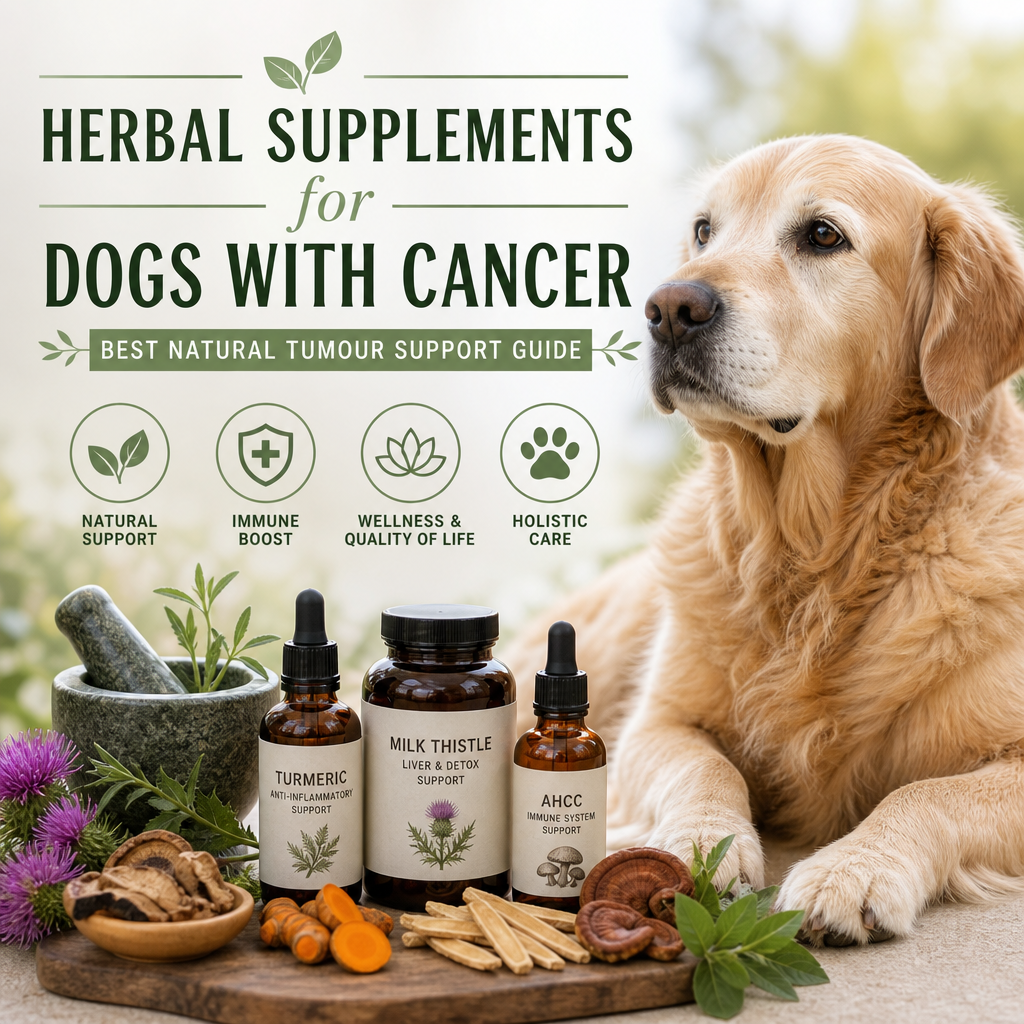
Turmeric and curcumin
Curcumin is a compound found in turmeric and is studied for its antioxidant and inflammation-modulating properties. It is commonly included in supplements designed to support mobility and normal inflammatory responses. However, curcumin may affect blood clotting and can interact with certain drugs. Absorption is also inconsistent, so formulations vary considerably in quality.
In practical use, herbal supplements for dogs with cancer are most useful when they are part of a targeted plan rather than a guess based on trends. Even a well-known ingredient can be unsuitable if the dog is already receiving medication that raises bleeding risk.
Milk thistle
Milk thistle contains silymarin, a compound often used to support normal liver function. It may be considered when a dog’s liver is under stress, although it should not be used automatically or assumed to protect against every medication-related complication. Veterinary monitoring and blood tests remain important.
Ginger
Small amounts of ginger may help some dogs with nausea or digestive discomfort. It can also affect clotting and may not be suitable before surgery or alongside particular medications. Dogs with sensitive stomachs may react poorly to concentrated products.
Medicinal mushrooms
Mushrooms such as turkey tail, reishi, shiitake, and maitake are often marketed for immune support. Research into mushroom-derived compounds is ongoing, and some evidence is promising, but products differ widely in purity, extraction method, and concentration. Immune-active supplements may not be appropriate for every tumour or for dogs taking immunosuppressive medication.
Hemp-derived products
Veterinary hemp products are sometimes used for discomfort, anxiety, or restlessness. They are not a cure for cancer, and quality control is essential. Products may contain inaccurate amounts of active compounds or contaminants. Dogs can experience sedation, digestive upset, or changes in liver enzymes, so veterinary supervision is strongly recommended.
Before buying any hemp product, it helps to review the source information offered by the American Veterinary Medical Association and then confirm whether the formula fits your dog’s current treatment plan.
Safety Comes Before Supplementation
Before adding herbal supplements for dogs with cancer, provide your veterinarian with a complete list of everything your dog receives. This includes prescription medication, over-the-counter products, vitamins, treats, and herbal blends. Interactions can occur even when each individual ingredient appears harmless.
Potential concerns include:
- Increased bleeding risk
- Excessive sedation
- Changes in blood pressure
- Liver or kidney strain
- Altered drug absorption
- Reduced effectiveness of chemotherapy
- Worsening of vomiting or diarrhoea
- Allergic reactions
- Complications during surgery
Avoid essential oils by mouth unless specifically prescribed by a veterinary professional. Many essential oils are toxic to dogs, particularly in concentrated form. Human supplements should also be avoided unless a veterinarian has confirmed the ingredients and dose are appropriate. Some products contain xylitol, high levels of vitamin D, iron, or other substances that can be dangerous.
Choosing a Dog Tumour Supplement
A responsible purchasing process is just as important as selecting the ingredient. Look for products made by companies that provide clear labels, batch information, storage instructions, and independent testing. The label should identify the exact ingredients and amounts rather than relying on vague terms such as “proprietary blend.”
Consider the following questions:
- Has the product been tested for heavy metals, pesticides, bacteria, and other contaminants?
- Does the manufacturer provide a certificate of analysis?
- Is the product intended specifically for dogs?
- Are serving instructions based on body weight?
- Does the company make unrealistic claims about curing cancer?
- Can your veterinarian review the full ingredient list?
Introduce only one new product at a time. This makes it easier to identify side effects and determine whether the supplement is helping. Keep a simple record of appetite, stool quality, vomiting, energy, pain, sleep, and any unusual behaviour.
Herbal Supplements for Dogs With Cancer should also be considered alongside the dog’s breed risk, age, and medical history. Owners of high-risk breeds often look for early guidance, such as the resources on common cancers in this breed and Cavalier cancer risks, because prevention and early monitoring matter as much as product selection.
Nutrition and Comfort Remain Central
Herbal support cannot compensate for inadequate nutrition, uncontrolled pain, or untreated nausea. Dogs with cancer may benefit from a complete, highly digestible diet tailored to their condition. Some need calorie-dense meals, while others require adjustments for kidney, liver, gastrointestinal, or pancreatic disease.
Your veterinarian may recommend nutritional counselling, appetite support, anti-nausea medication, pain relief, or hydration strategies. These measures often have a more immediate and measurable effect on quality of life than an untested supplement.
Gentle exercise, a quiet resting area, regular routines, and positive interaction can also help preserve wellbeing. Monitoring changes early allows the veterinary team to adjust treatment before discomfort becomes severe.
Supportive daily care can be easier to maintain when owners build a routine that includes medication timing, meal tracking, and symptom notes. A practical example is the wellness routine for dogs, which can help families keep care consistent during treatment.
Integrating herbal supplements for dogs with cancer into daily care
The best results usually come from pairing herbal supplements for dogs with cancer with a stable daily routine. That means giving products at the same time each day, watching for appetite or stool changes, and checking whether the dog seems more comfortable or more tired after starting a new formula. Small observations can help your veterinary team decide whether the supplement is worth continuing.
It also helps to think about the whole treatment plan. If your dog is receiving medication for pain, nausea, or inflammation, a supplement that seems harmless may still change how those drugs work. In that case, herbal supplements for dogs with cancer should be treated as part of the medical plan, not a separate wellness trend.
When owners keep the plan simple, they can spot patterns more easily. For example, if a dog eats better after starting a gentle supplement but begins to vomit after a dose increase, the change is easier to identify and discuss with the veterinarian. That kind of careful tracking supports safer decisions and better comfort.
Signs That Require Veterinary Attention
Stop a supplement and contact a veterinarian if your dog develops repeated vomiting, severe diarrhoea, facial swelling, breathing difficulty, collapse, marked weakness, yellowing of the eyes or gums, unusual bruising, or a sudden change in thirst or urination. These signs may indicate an adverse reaction or progression of disease.
Regular examinations and laboratory testing are particularly important for dogs receiving cancer treatment. Bloodwork can help assess liver and kidney function, detect anaemia, and identify changes that may not yet be visible at home.
If your dog has a breed-related tumour risk, early monitoring can be especially valuable. For example, owners can learn more about early warning signs in Airedale Terrier cancer risks, which reinforces why prompt veterinary checks matter.
A Balanced Approach to Natural Support
The best herbal dog tumour support plan is individualized, transparent, and evidence-aware. Herbs may have a place in a broader care programme, especially when the goal is to maintain comfort and daily function. However, supplements should be selected according to the dog’s diagnosis and treatment plan rather than based solely on testimonials or internet claims.
Work with a veterinarian before starting any herbal product, choose tested formulations, introduce changes gradually, and continue appropriate cancer care. With careful monitoring and realistic expectations, supportive supplements may complement treatment while keeping safety and quality of life at the centre of every decision.
When owners compare options carefully, herbal supplements for dogs with cancer can be part of a thoughtful support plan, not a replacement for proven veterinary treatment. The most useful results usually come from combining medical care, nutrition, monitoring, and realistic goals.