
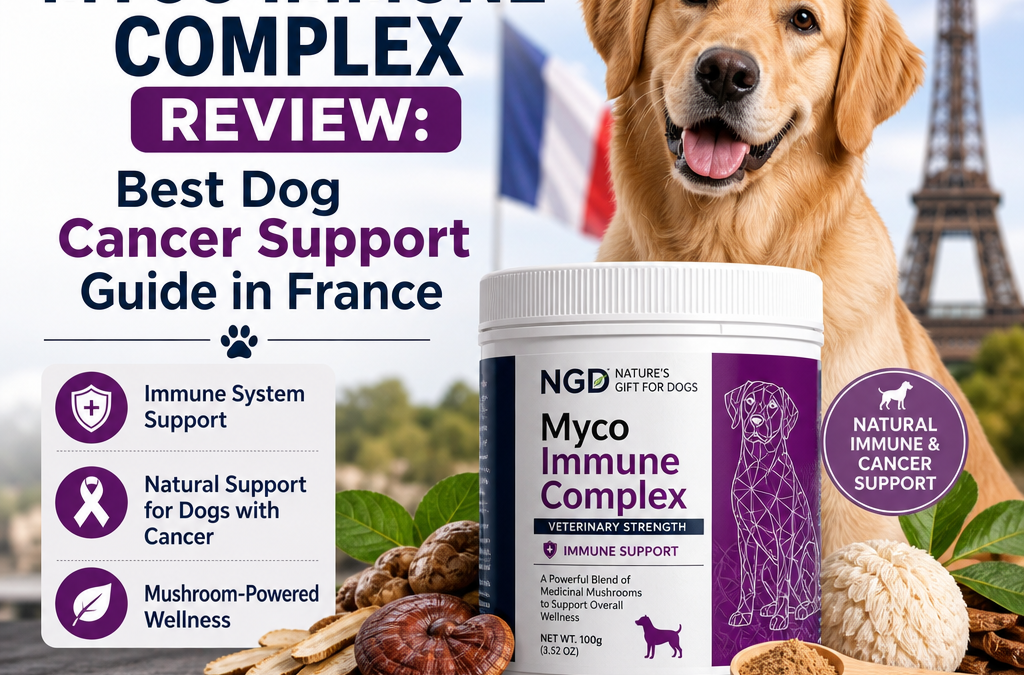
NGD Myco Immune Complex is attracting attention among French dog owners looking for nutritional support during a difficult cancer journey. This supplement is generally discussed as a mushroom-based formula intended to complement veterinary care, not replace it. Because canine cancer varies widely by type, stage, and treatment response, evaluating any product requires a careful look at its ingredients, intended use, safety considerations, and the quality of evidence behind its claims.
Table of Contents
- What Is NGD Myco Immune Complex?
- NGD Myco Immune Complex Dog Cancer Support: What Owners Should Know
- Ingredients and Potential Benefits
- Reviewing the Evidence
- Safety and Possible Side Effects
- NGD Myco Immune Complex France: Buying Considerations
- How to Use It Responsibly
- Practical Guidance for French Owners
- Final Assessment
What Is NGD Myco Immune Complex?
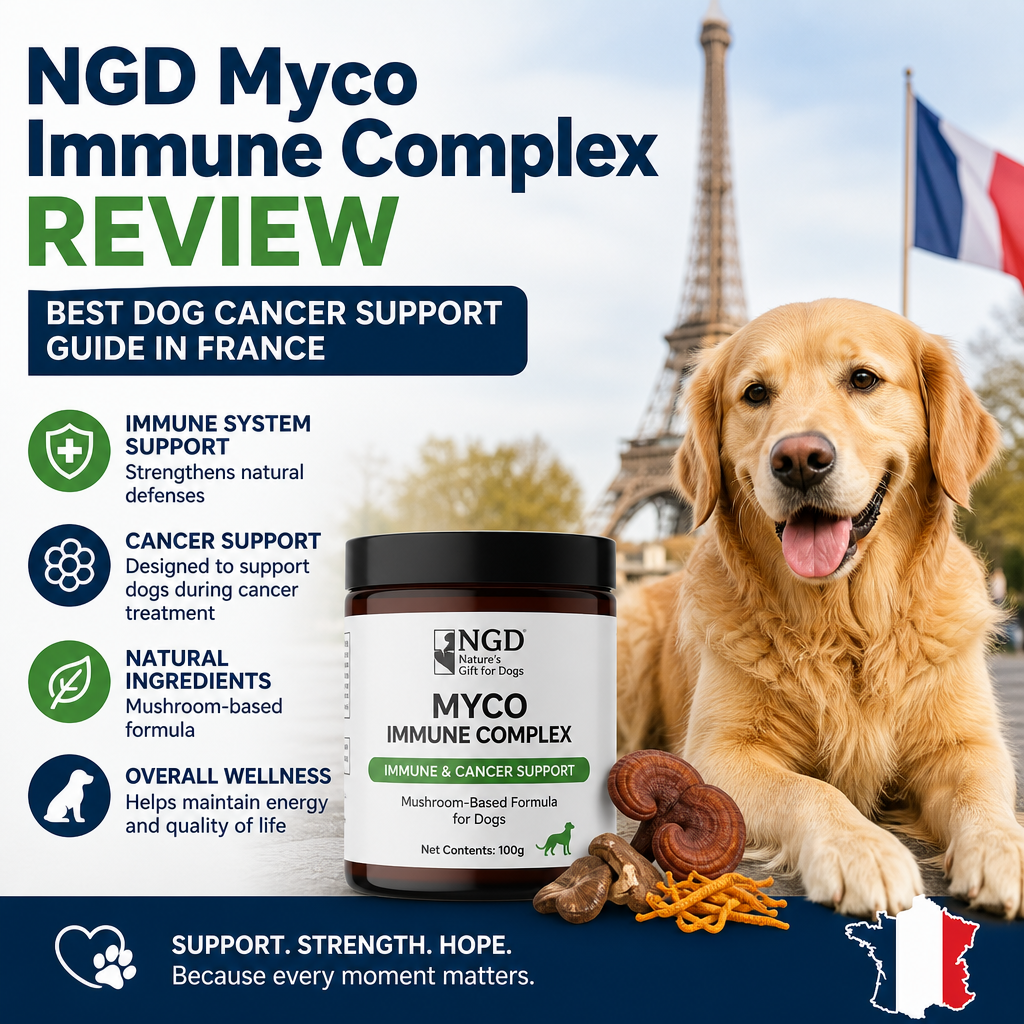
NGD Myco Immune Complex is marketed as an immune-support supplement for dogs. Its name suggests a formula based on medicinal mushrooms, which have traditionally been studied for compounds such as beta-glucans, polysaccharides, and triterpenes. These substances may influence immune signaling and antioxidant activity, although their effects can differ significantly depending on the mushroom species, extraction method, concentration, and overall formulation.
In the context of canine cancer, the product is typically considered supportive rather than curative. A supplement cannot reliably eliminate a tumor, replace surgery, or substitute for chemotherapy, radiotherapy, pain management, or other treatments prescribed by a veterinary oncology team. Its possible role is to provide nutritional support while the dog undergoes appropriate medical evaluation and treatment.
Before choosing NGD Myco Immune Complex, owners in France should also remember that complementary care works best when it fits the dog’s overall plan. That means the product should be evaluated alongside diet, medication timing, and the dog’s current condition, not as an isolated solution.
For many families, the challenge is not finding information, but sorting useful information from marketing language. A balanced NGD Myco Immune Complex review should therefore focus on what the product is, what it may do, and what it cannot do for a dog with cancer.
It can help to think of NGD Myco Immune Complex as one possible piece of supportive care rather than the centerpiece. That perspective makes it easier to ask practical questions and avoid unrealistic expectations.
NGD Myco Immune Complex Dog Cancer Support: What Owners Should Know
The phrase “NGD Myco Immune Complex dog cancer support” refers to the product’s potential use alongside a broader care plan. Owners may consider immune support when their dog is experiencing reduced appetite, fatigue, treatment-related stress, or general weakness. However, immune stimulation is not automatically beneficial in every situation. The immune system is complex, and dogs with cancer may have different needs depending on their diagnosis and medication schedule.
A veterinarian should assess the dog before any supplement is introduced. Important factors include:
- The type and location of the cancer
- Current chemotherapy, immunotherapy, or radiation treatment
- Liver and kidney function
- Existing digestive problems
- Allergies or sensitivities
- Other supplements and prescription medicines
- The dog’s age, weight, and general condition
This assessment helps reduce the risk of interactions and ensures that supportive care remains appropriate for the individual animal.
For families comparing options, a helpful first step is to ask whether the supplement supports the current treatment plan or merely sounds promising. A product can be well known and still be unsuitable for a specific dog if it conflicts with medication schedules or worsens digestive sensitivity.
In practice, a good conversation with your veterinarian should cover timing, expected benefits, and what to monitor at home. That approach is especially useful when the dog is already coping with pain medication, appetite changes, or a newly confirmed diagnosis.
Some owners also find it reassuring to compare any supplement with a broader support plan. Nutrition, hydration, symptom control, and regular check-ins often matter as much as the product itself.
Ingredients and Potential Benefits
A meaningful NGD Myco Immune Complex review should focus on the actual ingredient label rather than broad marketing language. Mushroom-based supplements may contain species such as reishi, shiitake, maitake, turkey tail, or cordyceps, but formulas differ. Some products use fruiting bodies, while others rely on mycelium or mixed extracts. The amount of active compounds and the extraction process can affect the product’s nutritional profile.
Potential reasons owners explore these formulas include:
- Supporting normal immune function
- Providing antioxidant compounds
- Complementing a balanced diet
- Helping maintain general vitality during illness
- Supporting appetite and wellbeing indirectly
These potential benefits should be described cautiously. Evidence from laboratory studies, human research, and veterinary research cannot always be applied directly to a household dog. Even when a mushroom species has shown promising results in preliminary research, that does not prove that every supplement containing it will produce the same outcome.
It also helps to look beyond a single ingredient. A quality supplement depends on sourcing, extraction, dosage accuracy, and how the final formula is manufactured. If those details are missing, it becomes harder to judge whether the product is truly aligned with the dog’s needs.
For owners trying to interpret a product page, the most useful questions are simple: What is actually inside? How much of each component is present? Is there evidence of testing? If a label does not answer those questions clearly, the product becomes harder to trust.
Some mushroom compounds are discussed because they may help the body respond to stress in a more balanced way. That does not mean the supplement will change the course of disease, but it can explain why some pet owners and veterinarians remain interested in mushroom-based support. The key is to keep expectations realistic and evidence-based.
In a balanced NGD Myco Immune Complex review, ingredient transparency matters as much as the brand story. Without clear details, owners cannot confidently compare one formula with another.
Reviewing the Evidence
A responsible NGD Myco Immune Complex review should distinguish between scientific evidence and testimonials. Personal stories can be meaningful to families, but they do not establish whether a supplement caused an improvement. Cancer can naturally fluctuate, and dogs often receive several treatments at the same time, making it difficult to identify the effect of one product.
Owners should look for transparent information about:
- Full ingredient quantities
- Manufacturing standards
- Batch testing
- Contaminant screening
- Recommended serving guidance
- Contraindications and warnings
- Contact details for the manufacturer
- Evidence relevant to dogs, rather than only general mushroom research
Products that provide clear labeling and quality-control information are easier to evaluate. A veterinarian may also help determine whether the formulation is suitable for a dog receiving conventional cancer treatment.
If you want a broader clinical reference point, the Cornell Richard P. Riney Canine Health Center offers educational resources on canine health topics that can help owners frame questions for their veterinary team.
That kind of source does not replace individualized advice, but it can help owners understand the bigger picture. When evaluating NGD Myco Immune Complex, a grounded approach is always better than relying on isolated testimonials or vague claims about immune boosting.
Readers often search for an NGD Myco Immune Complex review because they want clarity, not hype. The best evidence-based perspective is to ask what is proven, what is plausible, and what still remains uncertain.
Safety and Possible Side Effects
Natural does not always mean risk-free. Mushroom extracts and other concentrated ingredients may cause digestive upset, including loose stools, vomiting, gas, or reduced appetite. Some dogs may be sensitive to particular ingredients. In rare cases, supplements can contribute to allergic reactions or place additional demands on the liver and kidneys.
Extra caution is needed when a dog is taking medications that affect the immune system, blood clotting, blood pressure, or liver metabolism. Supplements may also be inappropriate before surgery or during periods of severe illness. For this reason, owners should provide the veterinarian with a complete list of everything the dog receives, including vitamins, oils, herbal products, and treats.
Stop using a supplement and contact a veterinary professional if the dog develops facial swelling, breathing difficulty, repeated vomiting, severe diarrhea, collapse, or a sudden decline in condition. A supplement should never delay urgent medical attention.
When there is any uncertainty, the safest choice is to pause and ask the veterinary oncology team. That is especially true if the dog is already dealing with nausea, dehydration, or reduced food intake, since even mild digestive irritation can quickly affect quality of life.
It is also wise to consider the dog’s current stage of care. A supplement that might be tolerable during a stable period may not be appropriate during a flare-up, a medication change, or a time of poor appetite. Safety is not only about the product itself; it is also about timing.
If the dog has recently had surgery, bloodwork abnormalities, or significant weakness, veterinarians may prefer to delay any new supplement until the treatment picture is clearer. This caution helps avoid confusion if symptoms worsen shortly after starting something new.
Owners should remember that a positive online review does not replace observation at home. If the dog becomes less comfortable after starting the supplement, that practical signal deserves attention right away.
NGD Myco Immune Complex France: Buying Considerations
For owners searching for NGD Myco Immune Complex France, availability and purchasing standards deserve attention. Products sold online may come from different distributors, and shipping conditions can vary. Check whether the seller provides a valid product label, clear dosage instructions, expiration information, and reliable customer support.
French consumers should also verify whether the product is legally marketed as a complementary feed or another permitted category for animals. Avoid products making guaranteed claims such as curing cancer, shrinking every tumor, or replacing veterinary treatment. Such promises are a warning sign, particularly when they are not supported by transparent documentation.
It is wise to purchase only from an established retailer or an official distribution channel. Check the packaging when it arrives, and do not use a container that appears damaged, tampered with, poorly labeled, or past its expiration date. Storage instructions should be followed carefully because heat, humidity, and light can affect certain extracts.
In practical terms, owners in France should also keep records of where the product was purchased, the batch number, and the date opened. Those details can be useful if a veterinarian later needs to compare symptoms with product use or report a quality concern.
When evaluating NGD Myco Immune Complex France options, owners should also pay attention to customer service and return policies. A reputable seller should be able to provide clear documentation and answer basic questions about the formula without making exaggerated medical promises.
If a seller cannot explain ingredients or sourcing, that is a strong signal to slow down. For a dog already facing a serious illness, confidence in the supply chain is part of responsible care.
How to Use It Responsibly
If a veterinarian approves the product, introduce it according to the label or the professional’s instructions. Do not assume that a higher dose will provide greater support. Record the starting date, serving amount, appetite, stool quality, energy level, and any changes in symptoms. This information can help the veterinary team determine whether the supplement appears tolerable.
The foundation of cancer support remains comprehensive care. Dogs may benefit from a complete diet, adequate hydration, appropriate pain control, regular monitoring, gentle activity when tolerated, and a calm routine. Emotional support also matters: familiar surroundings, comfortable bedding, and close observation can improve a dog’s daily quality of life.
Owners sometimes ask whether they should start immediately after diagnosis. The answer depends on the dog’s stability, the treatment plan, and the veterinarian’s judgment. In some cases, waiting until nausea is controlled or medications are adjusted may be the wiser choice.
When used carefully, NGD Myco Immune Complex may fit into a larger supportive routine. The goal is not to replace veterinary medicine, but to complement it in a way that respects the dog’s condition and comfort.
Keep the routine simple at first. Introducing one new product at a time makes it easier to tell whether changes are due to the supplement or to the underlying illness. If several products are added at once, it becomes much harder to track what is helping and what is not.
Daily observation matters more than many owners realize. A small change in appetite, stool consistency, thirst, or activity can provide early clues that the dog is not tolerating a new supplement well. That is why an at-home journal can be genuinely useful during supportive cancer care.
If the product is tolerated well, that still does not prove it is driving improvement. It simply suggests the formula may be compatible with the dog’s current routine, which is an important but limited finding.
Practical Guidance for French Owners
French dog owners often want a clear framework for deciding whether a supportive product is worth trying. The easiest way to stay objective is to compare the supplement against a few practical standards.
- Does the dog have a confirmed diagnosis? Supportive supplements make more sense once a veterinarian has identified the condition and treatment goals.
- Is the product label complete? A clear label is easier to review and safer to discuss with the veterinary team.
- Are there known medication conflicts? Cancer patients may take multiple drugs, so interaction checks matter.
- Can the dog tolerate new foods or supplements? Dogs with sensitive digestion may need extra caution.
- Will the owner monitor results? Good records help determine whether the supplement deserves a place in the care plan.
Another practical point is communication. If a dog sees more than one professional, everyone involved should know what the animal is receiving. Clear communication reduces the risk of duplicate ingredients, accidental overdosing, or conflicting advice.
It is also worth remembering that supportive care can be valuable even when a supplement is not used. Nutrition, comfort, hydration, rest, and symptom control often make the greatest difference in day-to-day wellbeing. A supplement should be judged against those needs, not against a promise of cure.
For some families, the best decision may be to wait, monitor, or choose another supportive strategy altogether. That is not a failure; it is a sign of responsible decision-making based on the dog’s real needs.
When people discuss NGD Myco Immune Complex with their veterinarian, the most useful goal is often not approval or rejection, but a clear risk-benefit conversation tailored to the dog.
Questions to Discuss With Your Vet
Before adding any supplement, it can help to bring a short checklist to your appointment. Useful questions include:
- Is this product appropriate for my dog’s cancer type?
- Could it interfere with current medication or treatment?
- What side effects should I watch for at home?
- Should I pause it before surgery or procedures?
- How will we know whether it is helping or causing problems?
These questions keep the conversation focused on safety and practical monitoring. They also make it easier to compare the supplement with other supportive measures that may offer clearer benefit.
Many veterinarians appreciate when owners arrive with specific questions rather than vague hopes. That makes it easier to give guidance that fits the dog’s diagnosis, the treatment schedule, and the animal’s tolerance for new products.
Bringing notes about diet, medications, and recent symptoms can also make the appointment more productive. The more complete the picture, the more useful the advice will be.
Final Assessment
NGD Myco Immune Complex may be considered as a complementary nutritional product for some dogs, but it should not be presented as a standalone cancer treatment. The most important factors are veterinary supervision, transparent ingredients, realistic expectations, and careful monitoring. For families in France, confirming the source and labeling is especially important when purchasing online.
A thoughtful decision focuses less on promises and more on the individual dog’s diagnosis, treatment plan, and quality of life. Used cautiously and with professional guidance, a supplement may have a place in supportive care, but it should always work alongside—not instead of—evidence-based veterinary medicine. For many owners, that balanced approach is the most responsible way to evaluate NGD Myco Immune Complex and decide whether it belongs in their dog’s care plan.
In the end, the best outcome is not simply choosing a product, but choosing wisely. If NGD Myco Immune Complex fits the dog’s needs, it should do so as part of a careful, vet-guided strategy that prioritizes comfort, safety, and honest expectations.
With that approach, NGD Myco Immune Complex becomes one option among many in a much larger care conversation—one that should always center on the dog’s wellbeing.