

Ocoxin Pets is a complementary nutritional product designed to support dogs during serious illness, including cases in which tumors or cancer have been diagnosed. For pet owners in Greece, choosing a supplement can be confusing, especially when products make broad claims about immunity, appetite, or recovery. A careful Ocoxin Pets review should therefore focus on its intended role, ingredients, practical use, safety considerations, and the importance of veterinary supervision rather than presenting it as a cure.
When a dog is dealing with a tumor, everyday decisions can feel urgent. Owners often want something that may help the dog eat better, maintain strength, and feel more comfortable while treatment is being planned or already underway. That is understandable, but it is also why the details matter. The best supplement is not necessarily the one with the boldest marketing. It is the one that fits the dog’s diagnosis, treatment plan, and overall condition.
This article keeps the focus on realistic support. It does not assume that a nutritional product can replace surgery, chemotherapy, radiation therapy, pain relief, or ongoing monitoring. Instead, it looks at how Ocoxin Pets may be used as part of a broader plan, what owners in Greece should check before buying, and how to judge whether the product is helping in a meaningful way.
- What is Ocoxin Pets?
- Ocoxin Pets dog cancer support: What can owners realistically expect?
- Ingredients and evidence: What should a review examine?
- How Ocoxin Pets may be used in Greece
- Practical ways owners can support a dog with tumors
- Safety, side effects, and veterinary supervision
- Is Ocoxin Pets worth considering?
What is Ocoxin Pets?
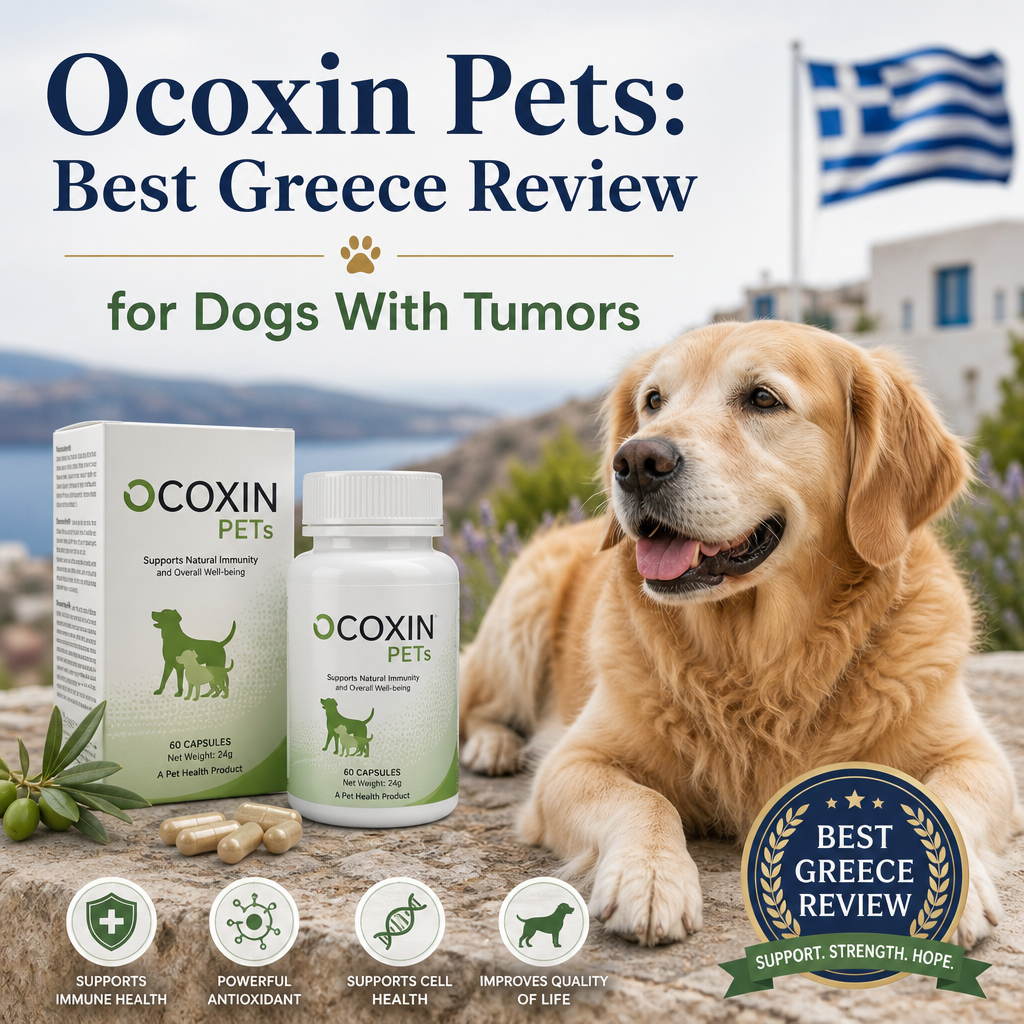
Ocoxin Pets is generally described as a veterinary-support supplement formulated for companion animals. Products in this category may contain combinations of plant extracts, vitamins, minerals, antioxidants, amino acids, or other nutritional compounds intended to help maintain a dog’s condition during periods of physical stress.
Dogs with tumors may experience reduced appetite, weight loss, fatigue, digestive changes, inflammation, or treatment-related side effects. A supportive supplement may be considered to help maintain nutritional status and overall wellbeing. However, the exact formulation, recommended dosage, and method of administration should always be confirmed from the current product packaging or official veterinary information, since formulas and instructions can differ between markets.
That point matters for pet owners in Greece because imported products, local distributors, and online sellers may not always present identical labeling or instructions. Even if the product name is the same, the available format, concentration, or usage guidance may differ. A careful review should therefore begin with the actual label in hand, not with assumptions based on a generic description.
The most important point is that Ocoxin Pets should not be viewed as a substitute for surgery, chemotherapy, radiation therapy, pain management, or other treatments recommended by a veterinarian. Its potential role is supportive, not curative. In other words, it may be one tool in a larger care plan, not the plan itself.
For owners comparing options, it can also help to review other affordable dog tumor supplement options before making a final decision. Comparing products side by side often makes it easier to see which ingredients are clearly explained, which claims are realistic, and which products are simply marketed well.
Ocoxin Pets dog cancer support: What can owners realistically expect?
The phrase “Ocoxin Pets dog cancer support” is often used to describe the product’s possible role alongside conventional veterinary care. In practical terms, support may involve helping a dog maintain appetite, energy, hydration, body weight, and general resilience. These factors can be important because dogs undergoing cancer treatment may be vulnerable to malnutrition and loss of muscle mass.
Supportive care is not only about one supplement. It is about making sure the dog can continue to eat, drink, move, rest, and tolerate treatment as well as possible. A supplement may be one part of that effort, especially if it is easy to give and the dog accepts it well. However, the response is individual. Some dogs may tolerate a product well, while others may refuse it, develop digestive upset, or show no noticeable change.
Owners should evaluate the dog’s condition using observable measures such as eating habits, water intake, body weight, activity, stool quality, comfort, and sleep. Those observations are often more useful than vague impressions. If a dog seems brighter after starting a supplement, it still helps to ask why. Was it the product, a change in pain control, improved nausea management, a better feeding routine, or simply a good day? Careful observation gives a clearer answer.
It is also essential to distinguish supportive care from claims that a supplement can shrink tumors or eliminate cancer. There is no responsible basis for promising that any nutritional product will cure every type of canine tumor. Cancer is not one single disease; different tumors behave differently and require different diagnostic and treatment approaches. A mast cell tumor, a lymphoma, an osteosarcoma, and a benign mass do not all require the same strategy, and a single supplement cannot solve every case.
Veterinarians often recommend focusing on measurable goals such as maintaining body condition and preserving appetite, rather than expecting dramatic short-term changes. That approach keeps decisions practical and reduces the chance of disappointment or unnecessary product switching. It also helps owners in Greece stay grounded when online advice becomes overwhelming or contradictory.
In many cases, the best expectation is modest but meaningful: steadier appetite, easier administration of daily care, better tolerance during difficult periods, and a clearer sense that the dog is being supported holistically. Those outcomes may sound smaller than dramatic marketing promises, but they are usually more useful in real life.
Ingredients and evidence: What should a review examine?
A reliable Ocoxin Pets review should look beyond promotional language. Start by checking the complete ingredient list and the amount of each active ingredient. Broad descriptions such as “immune support” or “natural antioxidants” are less useful than transparent labeling that identifies specific compounds and quantities.
The evidence should also be assessed carefully. Research performed in laboratory cell cultures or in humans may not demonstrate the same effects in dogs. Likewise, positive experiences shared by individual owners are not equivalent to controlled clinical evidence. A veterinarian can help interpret whether the ingredients are appropriate for a particular dog, especially if the animal has liver disease, kidney problems, diabetes, gastrointestinal sensitivity, or another medical condition.
Antioxidant products deserve particular attention during cancer treatment. Some chemotherapy and radiation protocols may involve oxidative mechanisms, and the effect of adding concentrated antioxidants can depend on the treatment plan, dose, timing, and individual patient. This does not mean that antioxidants are automatically unsafe, but it does mean that owners should not introduce them without discussing the decision with the treating veterinary team.
When evaluating any supplement, it is also useful to ask whether the product has clear quality controls, batch consistency, and storage guidance. These practical details matter because dogs with cancer may already be medically fragile, and inconsistent products can make it harder to understand what is helping. A supplement that is difficult to store, hard to measure, or poorly labeled can create avoidable confusion.
Owners should also think about palatability. A product can look promising on paper, but if the dog refuses it, the real-world benefit becomes limited. Flavor, texture, smell, and ease of administration all matter. Some dogs take liquids more easily than tablets; others accept a small amount mixed with food. A product that is theoretically strong but practically impossible to use is rarely the best choice.
Another useful question is whether the product is being introduced at the right time. In a dog already coping with nausea, diarrhea, or reduced appetite, adding multiple new items at once can make it difficult to know what is helping and what is causing trouble. A more measured approach is usually better: one change at a time, with careful monitoring.
For owners who want a structured way to judge supplements, the following checklist can help.
Questions to ask before buying
- What is the exact purpose of the supplement in my dog’s care plan?
- What ingredients are included, and in what amounts?
- Could it interact with current medications or treatments?
- How long should we trial it before judging the result?
- What changes should I monitor at home?
- Is the product easy for my dog to take consistently?
- Does the label clearly explain storage, dosage, and expiry information?
If the answers are unclear, that is usually a sign to pause and ask a veterinarian for guidance before buying. The more fragile the dog’s condition, the more valuable a careful, evidence-based decision becomes.
How Ocoxin Pets may be used in Greece
For families searching for Ocoxin Pets Greece, availability may depend on veterinary clinics, pharmacies, specialist distributors, or online retailers. Before purchasing, check that the product is authentic, properly sealed, within its expiry date, and stored according to the manufacturer’s instructions.
Greek pet owners should also make sure that the label provides clear information in a language they can understand or obtain accurate guidance from a veterinarian or qualified pharmacist. Buying from an unknown online source can create risks involving counterfeit products, poor storage conditions, incorrect dosage information, or outdated stock.
The supplement should be administered exactly as directed. Never assume that a human formulation, a product intended for another animal, or a different concentration can be substituted safely. Dosage may depend on body weight, age, diagnosis, appetite, concurrent medication, and the dog’s ability to swallow or digest the product. A dog that is smaller, older, or medically unstable may need a different level of caution than a healthy adult dog.
Owners should also think about where the product fits in the daily routine. If the dog receives medication twice a day, a supplement that must be taken on an empty stomach may be inconvenient or counterproductive. If the dog already struggles with nausea, the timing of administration may matter just as much as the ingredient list.
For broader educational context on cancer in pets, the American Veterinary Medical Association overview of cancer in pets is a helpful reference for understanding why veterinary diagnosis and monitoring remain essential.
If owners in Greece are comparing regional alternatives, a useful related read is Ocoxin Pets alternative options for dogs with tumors in the Netherlands, which shows how supportive products can differ by market. Looking at different regional articles can help owners understand whether a product is genuinely specialized or simply presented differently depending on the country.
Because online shopping can be unpredictable, it is also wise to verify seller reputation, return policies, and storage conditions during shipping. Heat exposure during transport can affect some nutritional products, and a low price is not helpful if the item arrives damaged or compromised. Greek pet owners should be especially attentive when ordering during warm months or from sellers with long delivery times.
Practical ways owners can support a dog with tumors
Supportive care works best when it is part of a larger routine. Even when a supplement is used, many dogs still need thoughtful day-to-day management to stay comfortable and maintain strength. That may include offering smaller, more frequent meals, ensuring fresh water is always available, keeping the environment calm, and following a veterinarian’s instructions on medication timing.
Regular weight checks can be especially useful. A slow loss of body mass may be easier to detect on a scale than by sight alone. Some owners also keep a simple log of appetite, energy level, stool consistency, and any signs of nausea. These notes can make follow-up veterinary visits more productive.
Exercise should generally remain gentle and adapted to the dog’s condition. Short, low-stress walks may help preserve mobility and mood, but strenuous activity is not always appropriate. The best plan depends on the tumor type, the dog’s strength, and any treatment side effects.
Comfort at home can also make a noticeable difference. Soft bedding, easy access to food and water, reduced stair use, and a predictable routine may all help a dog feel more secure. If the dog is painful, restless, or withdrawn, supportive care should never rely on nutrition alone. Pain control and medical reassessment may be needed instead.
Many owners find it helpful to separate “daily living” goals from “medical treatment” goals. Daily living goals might include eating a little more consistently, resting comfortably, or walking to the garden without distress. Medical goals might include completing a treatment cycle, maintaining lab values, or reducing tumor-related symptoms. A supplement should serve those goals, not distract from them.
If the dog is picky or has a reduced appetite, owners can ask the veterinarian whether warming the food slightly, changing the meal schedule, or using a different feeding method may help. Sometimes the small practical adjustments matter more than any single product purchase.
Simple home monitoring list
- How much did the dog eat today?
- Did the dog drink normally?
- Is weight stable, rising, or falling?
- How is energy compared with last week?
- Any vomiting, diarrhea, or constipation?
- Any signs of pain, stiffness, or restlessness?
- Did the dog accept the supplement easily?
This kind of monitoring is not complicated, but it can be very valuable. It helps owners respond early when something changes and gives the veterinary team better information for decision-making.
Safety, side effects, and veterinary supervision
Even products marketed as natural or nutritional can cause adverse reactions. Possible problems may include vomiting, diarrhea, excessive salivation, refusal of food, itching, lethargy, or changes in behavior. If these signs appear after administration, stop and contact the veterinarian for advice, particularly if symptoms are severe or persistent.
Dogs with cancer frequently take several medications at once. Painkillers, anti-inflammatory drugs, steroids, chemotherapy medicines, antibiotics, and appetite stimulants may all interact with supplements or affect how the dog tolerates them. A complete list of everything the dog receives—including supplements, treats, and herbal products—should be shared with the veterinarian.
Urgent veterinary attention is needed if a dog has difficulty breathing, repeated vomiting, collapse, uncontrolled pain, severe weakness, pale gums, blood in vomit or stool, or refuses food and water for an extended period. A supplement should never delay assessment of these signs.
In many cases, the safest approach is to introduce one change at a time. That makes it easier to identify whether a supplement is useful or whether a new symptom is related to something else in the treatment plan. It also reduces confusion when multiple products are being discussed by different family members or different clinics.
Veterinary supervision becomes even more important if the dog is elderly, underweight, or living with another illness. Kidney disease, liver disease, endocrine disease, and gastrointestinal disorders can all influence whether a supplement is appropriate. What looks harmless in one dog may be unsuitable in another.
Owners should also be careful not to interpret “natural” as the same thing as “safe for every dog.” Many natural substances are biologically active. That is why professional advice matters. The goal is not to avoid all supplements. The goal is to choose wisely, use them correctly, and stop them promptly if they cause problems or do not provide a clear benefit.
Is Ocoxin Pets worth considering?
Ocoxin Pets may be worth discussing as part of a broader supportive-care plan, particularly when the goal is to maintain nutrition and quality of life. Its value should be judged by the dog’s individual response and by objective veterinary monitoring rather than by dramatic promises.
Before starting it, ask the veterinarian what benefit is expected, how long a trial should last, which signs should be monitored, and whether it could interfere with current treatment. Keep a simple record of appetite, weight, activity, digestion, and comfort. This makes it easier to determine whether the product is helping, causing problems, or having no meaningful effect.
It can also help to set a review date. For example, if the supplement is started today, decide in advance when to assess it again. That makes the process less emotional and more practical. If the dog’s appetite improves, the weight stabilizes, or digestion remains steady, that may support continuing the product. If nothing changes after a fair trial, the veterinarian may suggest stopping it or trying a different approach.
Ultimately, the best care plan combines an accurate diagnosis, appropriate cancer treatment, pain control, nutritional support, and regular communication with the veterinary team. Ocoxin Pets may have a place within that plan, but informed decisions and professional supervision should remain the foundation of care for every dog with a tumor.
Owners who want to compare options before buying can also review other affordable Ocoxin Pets alternative support products for dogs in Spain to better understand how similar supplements are positioned in neighboring markets.
For dog owners in Greece, the key takeaway is simple: use supplements as support, not as a replacement for veterinary medicine. If Ocoxin Pets is chosen, it should be chosen for a clear reason, monitored carefully, and reviewed honestly. That approach gives the dog the best chance of receiving useful help without unnecessary risk.
In a difficult cancer journey, the most valuable tools are often the ones that improve comfort, preserve strength, and help the family stay organized. If Ocoxin Pets contributes to that goal, it may be worth considering. If it does not, there are always other supportive strategies to discuss with the veterinary team.