Best Supplements for Dogs with Cancer: 7 Essential UK Support Tips
Best Supplements for Dogs with Cancer should be chosen carefully, alongside veterinary treatment rather than as a replacement for it. A diagnosis of cancer can be overwhelming, but appropriate nutritional and supportive care may help some dogs maintain appetite, muscle condition, energy and quality of life. The right approach depends on the cancer type, treatment plan, existing health problems and the medicines your dog is receiving.
Table of Contents
Can supplements help dogs with cancer?
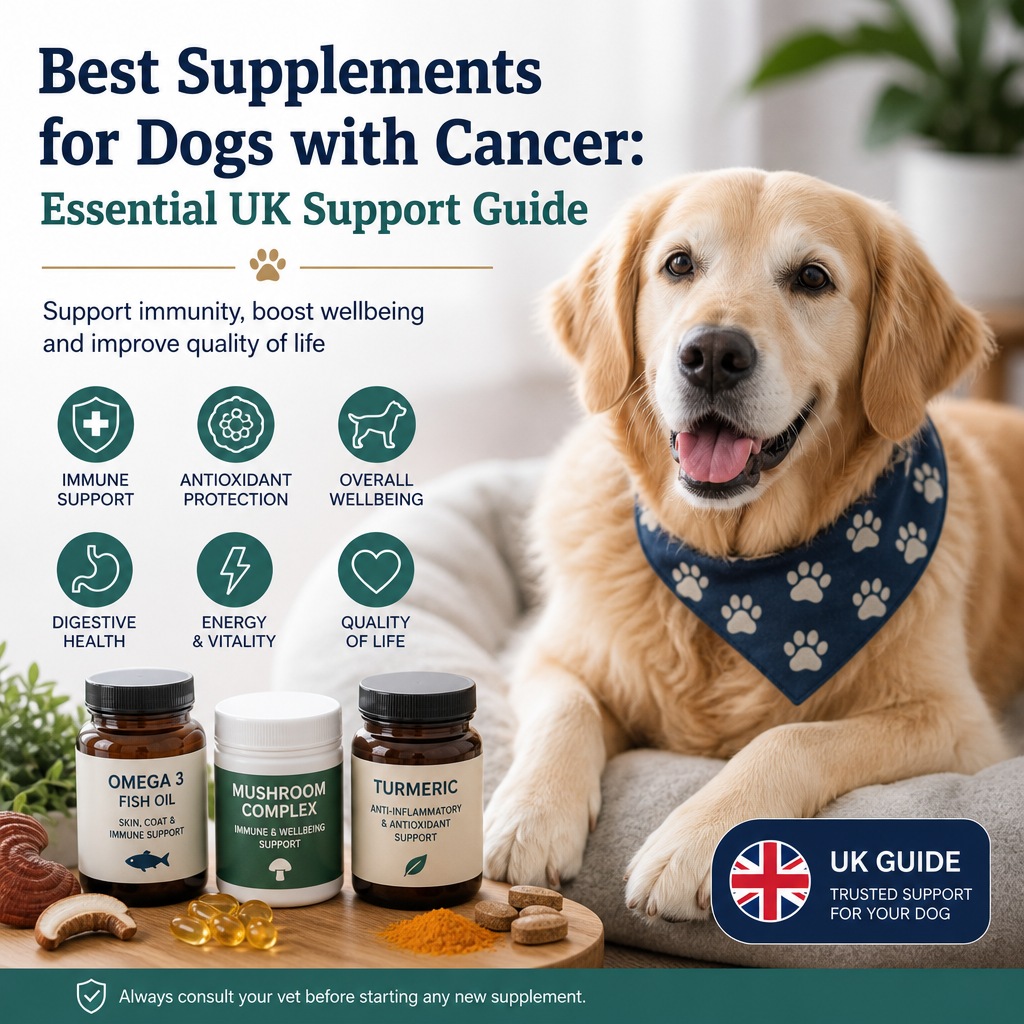
Supplements may provide nutritional support, but they cannot cure cancer. Their potential benefits include helping manage inflammation, supporting normal immune function, maintaining healthy skin and coat, and improving overall nutritional intake. However, evidence varies considerably between products, and a supplement that is suitable for one dog may be unsuitable for another.
Cancer treatment can include surgery, chemotherapy, radiotherapy, immunotherapy or palliative care. Each option may affect digestion, appetite, liver function, kidney function and medication requirements. For this reason, every supplement should be discussed with your vet before it is introduced.
The most important foundations remain a complete, balanced diet, adequate hydration, effective pain control and regular monitoring. Supplements are most useful when they address a specific need identified by a veterinary professional. In other words, the best supplements for dogs with cancer are the ones that fit the individual dog rather than a generic checklist.
It also helps to think of supplements as part of a wider care plan. A dog that is eating well, maintaining weight and coping with treatment may only need modest support, while a dog with nausea, poor appetite or muscle loss may benefit from more targeted nutritional help. That is why the best supplements for dogs with cancer should always be chosen with the bigger picture in mind.
Owners in the UK often search for quick solutions, but cancer care is rarely about one single product. The most useful decisions usually come from combining veterinary guidance, diet adjustments and careful observation at home. When that happens, the best supplements for dogs with cancer can play a supportive role without overwhelming the treatment plan.
Best Supplements for Dogs with Cancer
When owners ask about the best supplements for dogs with cancer, the most useful products are usually the ones that support a clear need rather than trying to do everything at once. The best supplements for dogs with cancer should be matched to the dog’s diagnosis, appetite, treatment plan and current bloodwork whenever possible.
It is also important to keep expectations realistic. Supplements may help with comfort, nutrition and day-to-day wellbeing, but they do not replace the effects of surgery, chemotherapy or other prescribed treatment. Used well, the best supplements for dogs with cancer can help your dog cope better with the demands of illness and treatment.
Omega-3 fatty acids
Omega-3 fatty acids, particularly EPA and DHA from sustainably sourced fish oil, are among the most commonly considered supplements for dogs with cancer. They may help support a healthy inflammatory response and can contribute to skin, coat, joint and general health.
Some veterinary nutrition plans use omega-3 fatty acids to support dogs experiencing weight loss or reduced appetite. They may also be useful for maintaining comfort in dogs with chronic inflammation. Quality and dosage are important, since excessive amounts can cause diarrhoea, provide too many calories or affect blood clotting.
Choose a veterinary-quality product with clearly stated EPA and DHA amounts rather than relying only on the total quantity of fish oil. Your vet should determine the appropriate dose, especially if your dog has pancreatitis, a bleeding disorder or is taking anticoagulant medication. If you are comparing the best supplements for dogs with cancer, omega-3 products are often near the top of the list because they are well studied and easy to tailor.
Some owners worry that adding oil will upset a sensitive stomach. That can happen, particularly if the dose is increased too quickly. A cautious introduction and a clear dosing plan are more helpful than simply buying a strong product and hoping for the best. With the right guidance, the best supplements for dogs with cancer may include omega-3 support without creating digestive problems.
Antioxidants
Antioxidants such as vitamins E and C, selenium and certain plant compounds help protect cells from oxidative stress. They are sometimes included in canine cancer support plans, although the evidence for their impact on cancer outcomes is mixed.
High-dose antioxidant supplementation requires particular caution during chemotherapy or radiotherapy. Some cancer treatments work partly by creating oxidative stress within abnormal cells, so large amounts of antioxidants could theoretically interfere with treatment. This does not mean that antioxidants must always be avoided, but dosing and timing should be guided by the veterinary oncology team.
A balanced commercial diet may already provide adequate levels of several antioxidants. Adding multiple products can create unnecessary overlap or excessive intake. For many dogs, the best supplements for dogs with cancer are the ones that fill a clearly identified gap rather than adding more of a nutrient the diet already provides.
If your vet does recommend antioxidant support, ask whether it should be used continuously or only at certain stages of care. That question matters because the best supplements for dogs with cancer are not always the same during surgery recovery, active treatment and palliative support.
Probiotics and digestive support
Probiotics may help support the gut microbiome, particularly when a dog experiences diarrhoea, stress-related digestive upset or changes in appetite. Some dogs receiving cancer treatment develop gastrointestinal side effects, although probiotics are not appropriate in every situation.
A veterinary probiotic should contain clearly identified strains and storage instructions. Products intended for humans may contain unsuitable ingredients or doses. Dogs with severely compromised immune systems may require extra caution, and probiotics should not be given without veterinary approval if the dog is critically ill or has a serious intestinal condition.
Digestive enzymes, fibre supplements and prebiotics may also be recommended in specific cases, but they should be selected according to the underlying problem rather than added routinely. The best supplements for dogs with cancer often work best when they are targeted at a symptom such as loose stool, poor digestion or reduced food tolerance.
Owners often notice that gut health and appetite are linked. When digestion is unsettled, a dog may avoid food, and when appetite drops, the gut may become more sensitive. That is one reason why careful digestive support can be so valuable in a broader plan of care.
Medicinal mushrooms
Mushroom-derived compounds, including products made from turkey tail, reishi or maitake mushrooms, are marketed as canine cancer supplements UK owners may consider. Research into medicinal mushrooms is ongoing, and some early findings are promising, but these products are not proven cures.
The quality of mushroom supplements varies widely. Concentration, extraction method, contamination testing and ingredient transparency all matter. Some mushrooms may interact with chemotherapy, steroids, immune-modulating medicines or drugs affecting blood clotting. Veterinary supervision is therefore essential.
For owners who want to learn more about nutritional planning alongside supplements, see our guide to diet and supplements for dogs with cancer.
It is sensible to view mushroom products as part of a conversation, not a shortcut. The best supplements for dogs with cancer should be supported by evidence where possible, and they should never create confusion about what the main treatment is. If a product claims to be a cure, that is a warning sign rather than a benefit.
Joint and mobility supplements
Dogs with cancer may become less active because of pain, weakness, surgery or age-related arthritis. Glucosamine, chondroitin and green-lipped mussel products are often used to support joint comfort and mobility. These supplements do not treat cancer, but they may help some dogs remain comfortable and engaged in normal activities.
Green-lipped mussel products can contain omega-3 fatty acids, so the total intake should be considered when combining them with fish oil. Dogs with shellfish sensitivities may also need an alternative.
Mobility support can make a real difference to quality of life. A dog that can get up more easily, walk to the garden more comfortably or settle better after activity may cope better overall. For that reason, some of the best supplements for dogs with cancer are not “cancer supplements” in the narrow sense, but comfort-focused products that help preserve normal routines.
Small improvements matter. Better mobility can support appetite, reduce frustration and help a dog stay involved with the family. When combined with pain control and sensible exercise, joint support can be a practical part of care.
Calorie-dense nutritional supplements
Some dogs need extra calories because cancer or treatment is making weight maintenance difficult. In these cases, highly palatable nutritional supplements or recovery diets may be more useful than a long list of separate capsules. These products can help support energy intake when normal meals are no longer enough.
They should still be chosen carefully. A product that is helpful for one dog may be too rich for another, especially if vomiting, pancreatitis or intestinal disease is present. If the dog is already eating a veterinary cancer diet, your vet may recommend whether additional calories should come from that diet or from a separate supplement.
For many dogs, a practical feeding plan is the real secret behind the best supplements for dogs with cancer. Appetite support, palatability, consistency and timing often matter as much as the supplement itself.
What to look for in a safe supplement
When comparing the best supplements for dogs with cancer, look for transparent labelling, batch testing and clear information about active ingredients. Veterinary-formulated products are generally preferable because they are designed with canine safety and dosing in mind. Avoid supplements that promise to shrink tumours, replace chemotherapy or provide guaranteed results.
In the UK, supplements are not regulated in exactly the same way as licensed medicines. Marketing claims may therefore sound stronger than the available evidence. Reputable manufacturers should be willing to provide certificates of analysis, manufacturing standards and guidance for use alongside prescribed treatment.
Do not use human supplements without professional advice. Xylitol, certain sweeteners, concentrated herbs, excessive vitamin D and iron can be dangerous to dogs. Combination products may also contain ingredients that are unsuitable for dogs with liver, kidney or gastrointestinal disease.
For general safety advice on supplements and medicines, the UK government website is a useful starting point for public health and consumer guidance.
It is also sensible to keep an eye on the full ingredient list, not just the front label. Some products contain flavourings, fillers or botanicals that may not be obvious at first glance. The best supplements for dogs with cancer should be simple enough that you can understand what each ingredient is doing and why it is included.
If a product seems to offer everything in one capsule, pause and check whether that is actually a strength. Multi-ingredient blends can be harder to assess for safety, and they may make it difficult to identify the cause if your dog develops vomiting or loose stools. Often, the best supplements for dogs with cancer are the ones with the shortest, clearest label.
It can help to ask three practical questions: What is this supplement meant to do? Is there evidence it is safe for my dog? Could it interfere with treatment or medication? If the answers are unclear, the product may not be a good fit.
Choosing dog cancer supplements UK owners can trust
When looking for dog cancer supplements UK owners can trust, it helps to focus on products that are easy to verify rather than those with the boldest claims. Ask your veterinary team whether the ingredient has a clear purpose, whether the product has quality control testing and whether it fits your dog’s treatment plan.
Veterinary oncologists may recommend supplements at different stages of care. For example, a dog receiving chemotherapy may need a different approach from a dog on long-term palliative care. The best supplements for dogs with cancer are not always the same throughout treatment, so the plan may change over time.
Before starting anything new, check for interactions with prescribed medicines, especially steroids, anti-nausea drugs, pain relief or blood-thinning treatment. A supplement that seems harmless can still affect absorption, clotting or digestion. This is one reason why dog cancer supplements UK owners find online should never be started without advice from the vet who knows the medical history.
It may also be useful to keep a simple supplement log. Write down the product name, the start date, the dose and any changes you notice in appetite, stools, energy or comfort. That record can help your vet decide whether the supplement is helping or whether it should be stopped.
Another sensible step is to review the overall budget. Cancer care can become expensive, and it is easy to spend money on products that add complexity without adding real benefit. Fewer, better-chosen supplements are usually preferable to a crowded cupboard. In many cases, the best supplements for dogs with cancer are selected because they are practical, affordable and easy to monitor.
Questions to ask your vet before buying
- What problem is this supplement meant to address?
- Does it fit with my dog’s current medications?
- Could it affect chemotherapy, radiotherapy or surgery recovery?
- What dose should I use, and for how long?
- What signs should I watch for if it does not suit my dog?
These questions are useful because they keep the focus on safety and function rather than promises. The best supplements for dogs with cancer usually earn their place through a clear purpose and a sensible plan for monitoring.
Nutrition is the foundation of canine cancer support
Maintaining body weight and muscle mass is often more important than adding numerous supplements. Cancer can alter metabolism and may cause appetite loss, nausea, changes in taste and muscle wasting. A vet or veterinary nutritionist can recommend a complete diet with suitable calories, protein and fat for the individual dog.
Some dogs benefit from smaller, more frequent meals, gently warmed food or highly palatable veterinary diets. Never force-feed a dog without professional guidance, especially if there is vomiting, swallowing difficulty or a risk of aspiration.
Keep a simple record of food intake, water consumption, weight, bowel movements, vomiting, energy and changes in behaviour. This information helps the veterinary team identify side effects and adjust treatment promptly.
These practical steps can make the best supplements for dogs with cancer more effective because they are used in the context of consistent, balanced nutrition.
Hydration matters too. Dogs that are drinking less may become weaker, less interested in food and more prone to constipation or nausea. Fresh water, moisture-rich meals and veterinary advice about hydration support can all be useful. Sometimes a very simple adjustment makes the biggest difference.
Feeding routines also matter. Many dogs with cancer do better when meals are predictable and calm. Avoid abrupt diet changes unless your vet has advised them, because sudden switches can upset the stomach and make it harder to judge whether a supplement is helping. A stable routine helps the best supplements for dogs with cancer work in a more controlled way.
When supplements are not enough
If a dog is losing weight quickly, refusing food or struggling with repeated vomiting, supplements alone are not enough. The vet may need to adjust pain relief, prescribe an anti-nausea medication, change the diet texture or investigate whether the cancer or treatment is causing a new complication. The best supplements for dogs with cancer only work well when the dog is stable enough to benefit from them.
Owners sometimes hope a supplement can restore energy on its own, but fatigue often has several causes. Anaemia, dehydration, pain, poor sleep and medication effects can all play a role. A practical plan usually combines diet, medication review and targeted nutritional support rather than relying on a single product.
If your dog suddenly refuses food for more than a day, seems painful, or looks much weaker than usual, that should be reported promptly. Waiting to see whether a supplement works can delay care that is actually needed. The best supplements for dogs with cancer are helpful only when the underlying medical picture is also being managed carefully.
This is especially important in dogs already receiving treatment. A change in appetite or bowel habits can be a normal side effect, but it can also signal a more serious problem. Good communication with the veterinary team makes it easier to decide whether to continue, adjust or stop a supplement.
Practical ways to introduce a supplement
Introduce only one new supplement at a time, using the recommended dose. Monitor for vomiting, diarrhoea, itching, lethargy, bruising, appetite changes or worsening pain. Stop the product and contact your vet if a concerning reaction occurs.
A slow introduction is often safer than starting everything at once. That approach makes it easier to tell whether a supplement is helping and reduces the chance of confusing side effects. If you are trying to identify the best supplements for dogs with cancer, careful step-by-step changes are far more useful than introducing several products together.
It can also help to give supplements at the same time each day, unless your vet advises otherwise. Regular timing supports consistency and makes it easier to remember what has been given. If your dog becomes reluctant to take a product, do not keep forcing it without checking with the vet first.
Some supplements are easier to give with food, while others are better on an empty stomach. That detail can affect tolerance, so follow the product instructions and your veterinary advice closely. Small practical adjustments often make a supplement more successful in daily life.
Safety precautions and when to contact the vet
Seek urgent veterinary advice if your dog has repeated vomiting, severe diarrhoea, difficulty breathing, collapse, uncontrolled bleeding, marked weakness or refuses food and water. Supplements should never delay assessment of new or worsening symptoms.
It is also sensible to contact your vet if your dog develops a rash, swelling, restlessness, signs of abdominal pain or unusual bruising after starting a new product. Even when a reaction is mild, it may mean the supplement is not right for that dog.
If your dog is due for surgery, chemotherapy or a new medication, ask whether any supplements should be paused beforehand. Timing matters, especially for products that could influence clotting, digestion or the way the body handles medicines.
The most effective canine cancer support combines evidence-based treatment, good nutrition, pain management, emotional reassurance and careful monitoring. With guidance from your veterinary team, selected supplements may have a useful supporting role while keeping your dog’s comfort and quality of life at the centre of every decision.
If you are comparing the best supplements for dogs with cancer, start with your vet’s advice, then review product quality, the stage of treatment and your dog’s specific needs. That approach gives the safest path to practical, supportive care.
In many homes, the most successful plan is also the simplest one: a balanced diet, one or two carefully chosen supplements, close observation and regular vet checks. That is usually the most reliable way to use the best supplements for dogs with cancer without adding unnecessary complexity.