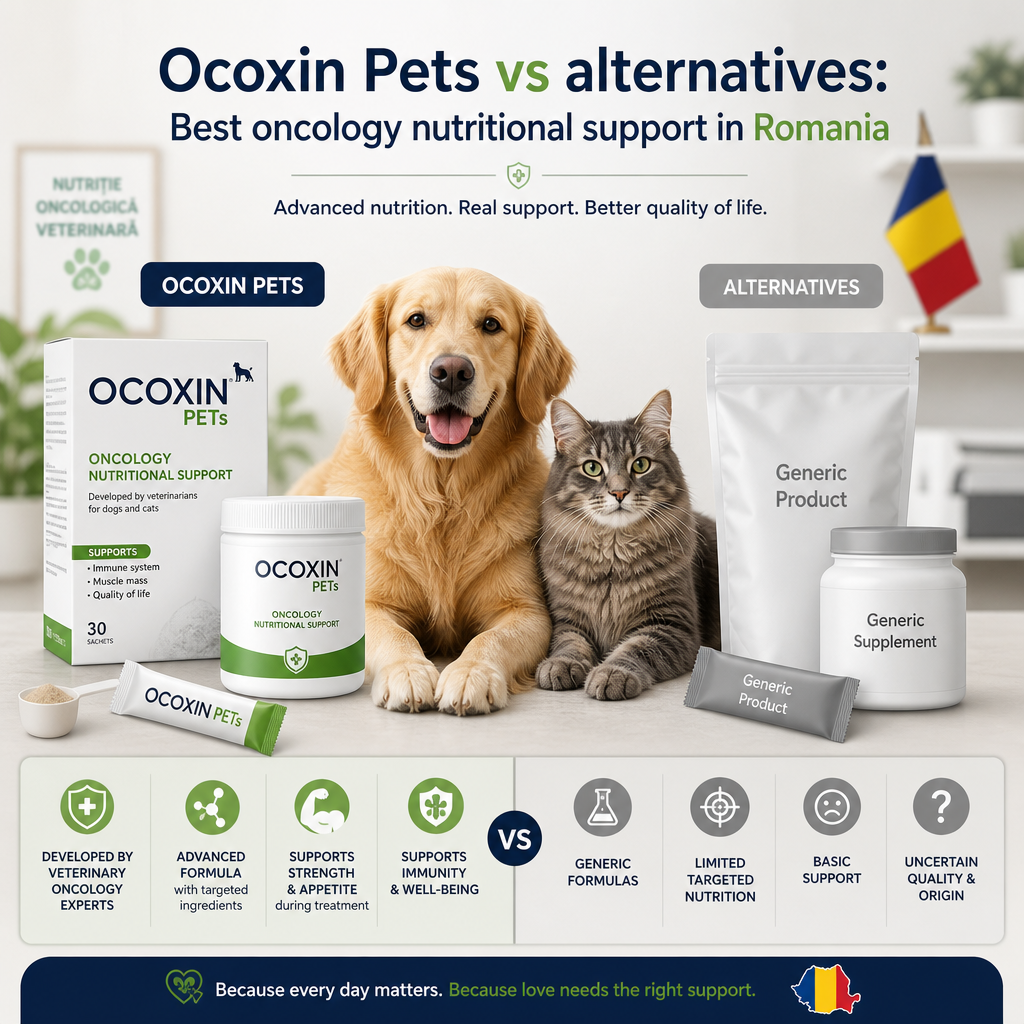
Ocoxin Pets vs alternatives: 7 Best oncology nutritional support options in Romania
Ocoxin Pets vs alternatives is an important comparison for Romanian pet owners whose dogs or cats are undergoing cancer treatment. Nutrition cannot cure a tumor, replace surgery, chemotherapy, radiation therapy, or veterinary monitoring, but appropriate nutritional support may help maintain appetite, body condition, hydration, and quality of life. The right product depends on the animal’s diagnosis, treatment plan, age, weight, appetite, and other health conditions.
Table of Contents
Why oncology nutritional support matters
Cancer can affect an animal’s nutritional status in several ways. Tumors may alter metabolism, while pain, nausea, stress, inflammation, or medication side effects can reduce food intake. Some animals lose weight and muscle rapidly; others experience digestive problems or become unusually selective with food. Maintaining lean body mass is especially important because muscle loss can weaken mobility, immune function, and tolerance to treatment.
Oncology nutritional support generally aims to help with:
- Maintaining adequate calorie and protein intake
- Supporting appetite during periods of reduced food interest
- Providing nutrients involved in antioxidant and metabolic processes
- Supporting recovery after surgery or other procedures
- Improving hydration and digestive tolerance
- Preserving comfort and daily activity
A supplement should therefore be viewed as one part of a broader care plan. Before starting any product, the veterinarian should evaluate weight trends, blood tests, kidney and liver function, current medication, and the type and stage of cancer.
For a broader overview of pet cancer support products, readers can also compare options in this Romania-focused guide to dog tumor supplement alternatives.
Many owners search for Ocoxin Pets vs alternatives because they want a supportive option that fits their pet’s daily needs. In practice, the best choice is usually the one that matches appetite, disease stage, and treatment tolerance rather than the brand name alone. That is why Ocoxin Pets vs alternatives should be reviewed alongside diet, medication, and the pet’s real daily response.
Ocoxin Pets: what it is intended to provide
Ocoxin Pets is a veterinary nutritional supplement commonly considered for animals that need additional support during oncology care or recovery. Its formulation is designed to provide a combination of nutritional and bioactive ingredients rather than serving as a complete diet. Depending on the product version and market, the formulation may include compounds such as amino acids, vitamins, minerals, plant-derived ingredients, and other nutrients associated with immune or metabolic support.
The main potential advantages of Ocoxin Pets are convenience and a multi-ingredient approach. A single product may be easier for owners to administer than several separate supplements. It is also marketed specifically for pets, which is preferable to adapting a human product without veterinary guidance.
However, it is essential to keep expectations realistic. Evidence for cancer-related supplements in companion animals is often more limited than evidence for standard cancer treatments. A supplement may support general nutritional status, but it should not be described as a tumor treatment unless robust clinical evidence and veterinary recommendations support that claim.
When comparing Ocoxin Pets vs alternatives, it helps to remember that support products are intended to assist care, not replace the veterinary oncology plan. That distinction is especially important for pets with poor appetite, weight loss, or concurrent medical issues. In many cases, Ocoxin Pets vs alternatives is really a decision between broad support and more targeted nutritional help.
Ocoxin Pets vs alternatives: key comparison points
When evaluating Ocoxin Pets vs alternatives, owners should compare more than brand names or advertising claims. The most useful criteria include nutritional purpose, ingredient transparency, safety, palatability, cost, and compatibility with the animal’s treatment.
It also helps to ask a practical question: what problem needs to be solved right now? If the answer is poor appetite, a calorie-focused product may be better. If the answer is muscle loss, the priority may be digestible protein and complete nutrition. If the answer is digestive upset, a gut-focused product may be more suitable. Ocoxin Pets vs alternatives should be judged against the pet’s most urgent need.
1. Complete therapeutic diets
Veterinary therapeutic diets may be the most important alternative when the animal is losing weight or has poor appetite. These diets are formulated to provide balanced calories, digestible protein, essential fatty acids, and appropriate vitamins and minerals. Some are designed for recovery, gastrointestinal sensitivity, or high energy needs.
A complete diet has a major advantage over a supplement: it can supply a substantial portion of the animal’s daily nutritional requirements. Ocoxin Pets or another supplement may be added when the veterinarian considers it appropriate, but it cannot compensate for a severely inadequate diet.
For dogs and cats with cancer, diet quality matters because appetite can fluctuate from day to day. In that setting, a complete therapeutic food may provide more dependable nutritional support than Ocoxin Pets vs alternatives that only add a small number of nutrients.
Owners in Romania sometimes focus on a branded supplement first, but a food-first approach is often more effective. If the pet is unwilling to eat enough, even the best supplement has limited value. That is why Ocoxin Pets vs alternatives should be considered only after checking whether the base diet already meets the pet’s needs.
2. Omega-3 fatty acid products
Fish oil and veterinary omega-3 supplements are frequently discussed in dog tumor support options. EPA and DHA may help support normal inflammatory responses and are often included in nutrition plans for animals with chronic disease. Product quality varies considerably, so the label should clearly state the amount of EPA and DHA rather than only listing total fish oil.
Omega-3 supplements can cause digestive upset in some animals and may not be suitable for every patient, particularly those with specific pancreatic, bleeding, or gastrointestinal concerns. Dosage should be determined by a veterinarian.
If a pet already receives a balanced diet and needs a focused fatty-acid product, omega-3s may be more practical than Ocoxin Pets vs alternatives that are designed as broader multi-ingredient blends. In other words, Ocoxin Pets vs alternatives may not be the best comparison when a single nutrient target is the real goal.
3. High-calorie nutritional gels and recovery formulas
For animals eating too little, calorie-dense gels, liquid diets, and recovery formulas may be more immediately useful than a general supplement. They can help provide energy in a small volume and may be easier to administer during short periods of poor appetite.
These products are not interchangeable with a normal balanced diet. Some are intended only for temporary use, and feeding by syringe should be performed carefully to reduce the risk of aspiration. Animals that refuse food persistently may need medical treatment for nausea, pain, dehydration, or other underlying problems.
In practical terms, Ocoxin Pets vs alternatives often comes down to whether the pet needs broader nutritional support or a more urgent calorie boost. A recovery formula may be the better fit when intake drops sharply. If the animal is stable but needs maintenance support, Ocoxin Pets vs alternatives may lean toward a gentler daily product rather than a high-energy formula.
4. Probiotics and digestive support
Probiotics may be considered when cancer treatment or medication causes diarrhea or intestinal imbalance. Their effectiveness depends on the specific strain, dose, and health status of the animal. Digestive support products should be selected carefully, especially in immunocompromised patients.
If the main problem is stool quality rather than appetite, probiotics may be a stronger match than Ocoxin Pets vs alternatives focused on general oncology nutrition. The right product should address the most pressing symptom first.
For some pets, digestive comfort is the step that makes eating possible again. Once the stomach and intestines are calmer, the owner can reassess Ocoxin Pets vs alternatives and decide whether a broader support product is still needed. This step-by-step approach is often safer than introducing multiple items at once.
5. Human supplements and homemade mixtures
Human supplements are among the riskiest dog tumor support options because they may contain inappropriate doses, sweeteners such as xylitol, herbs that interact with medication, or ingredients that are unsafe for pets. Homemade diets can also become deficient in essential nutrients unless formulated by a veterinary nutrition specialist.
Natural does not automatically mean safe. Certain concentrated plant extracts may affect liver enzymes, blood clotting, blood pressure, or the metabolism of chemotherapy drugs. If you need an evidence-based primer on cancer-related nutrition, the Tufts veterinary nutrition guide to dogs with cancer is a useful educational reference.
That caution applies equally when owners compare Ocoxin Pets vs alternatives and are tempted by internet advice. Veterinary approval matters more than marketing language or anecdotal claims. A well-meaning but poorly chosen supplement can make care harder instead of easier.
6. Appetite support and feeding strategies
Sometimes the most helpful alternative is not another supplement at all, but a better feeding strategy. Small meals given more often may be better tolerated than large meals. Warming food slightly can improve aroma. Offering familiar foods in a quiet area can reduce stress. These simple changes may improve intake even before any new product is added.
If appetite remains low, the veterinarian may look for nausea, constipation, oral pain, or medication side effects. In that case, the discussion about Ocoxin Pets vs alternatives should pause until the underlying barrier to eating is addressed. Support products work best when the pet is able to eat them consistently.
7. Monitoring response over time
The best oncology support plan is one that is monitored and adjusted. A useful product should show a practical benefit such as better eating, stable weight, improved stool quality, or better day-to-day energy. If there is no improvement after an appropriate trial period, the plan may need to change.
That monitoring step is often overlooked in the Ocoxin Pets vs alternatives conversation. Owners may compare labels, but what matters most is whether the animal looks, eats, and feels better over time. If not, the selected product may not be the right fit.
When reviewing Ocoxin Pets vs alternatives, a simple record of appetite, weight, and stool quality can be more useful than assumptions. Even a short note each day can help the veterinarian identify what is helping and what is not.
How to choose oncology nutritional support in Romania
In Romania, pet owners can find supplements through veterinary clinics, pharmacies, specialized pet stores, and online retailers. Purchase from a reliable source and check the product label, batch information, expiry date, storage instructions, and recommended animal species. Avoid products that make absolute claims such as “eliminates cancer” or “replaces chemotherapy.”
Ask the veterinarian the following practical questions:
- Is the animal losing weight or muscle?
- Is the current food complete and appropriate?
- Does the product interact with chemotherapy, steroids, painkillers, or other medication?
- Are the kidneys and liver functioning normally?
- Is the animal’s appetite problem caused by nausea, pain, or another treatable issue?
- What dosage and duration are appropriate?
- Which signs require immediate veterinary attention?
The answer may be Ocoxin Pets, a different supplement, a therapeutic diet, or no additional product at all. A targeted plan is generally safer and more effective than combining several products without supervision.
When owners compare Ocoxin Pets vs alternatives, they should also think about long-term practicality. If a product is too expensive, poorly tolerated, or difficult to give every day, it is less likely to help. The best choice is the one that the pet will actually accept and that fits the veterinary plan.
Owners should also consider how quickly support is needed. A pet with steady weight and a decent appetite may do well with conservative nutritional support, while a pet with muscle loss or declining food intake may need a more intensive plan. In either case, Ocoxin Pets vs alternatives should be judged by real-world response over time.
Another useful point is consistency. A supplement that is taken irregularly is unlikely to provide meaningful help. If the pet dislikes the taste, a different format may be better. In that sense, Ocoxin Pets vs alternatives includes practical issues like flavor, dosing simplicity, and how easily the product fits into the daily routine.
Supporting a pet beyond supplements
Nutritional support works best alongside a comfortable feeding routine. Offer small, frequent meals and keep food bowls in a quiet, familiar location. Warmed food may have a stronger aroma and appeal to an animal with a reduced sense of smell. Always provide fresh water, and monitor eating, drinking, vomiting, diarrhea, energy, and body weight.
A rapid decline in appetite, repeated vomiting, breathing difficulty, severe weakness, dehydration, or uncontrolled pain requires prompt veterinary attention. These signs should not be managed with supplements alone.
Owners often search for Ocoxin Pets vs alternatives because they want a practical way to help a pet through cancer care. The most useful takeaway is that support should match the patient, not the marketing message. In some cases Ocoxin Pets may be appropriate; in others, a therapeutic diet, omega-3 product, or recovery formula may be more useful. The best oncology nutritional support in Romania is the option that protects comfort, strength, and quality of life while staying aligned with veterinary guidance.
For readers comparing the broader category of pet cancer support products, a helpful next step is reviewing local veterinary recommendations and monitoring whether the chosen supplement improves appetite, weight maintenance, and daily comfort over time. That practical follow-up matters more than any label claim, and it is the most reliable way to compare Ocoxin Pets vs alternatives in real life.
In short, Ocoxin Pets vs alternatives should be evaluated through a veterinary lens: what the pet needs now, what it can tolerate, and what best supports daily nutrition during treatment. That approach helps Romanian owners make a calmer, more informed choice. If you are still weighing Ocoxin Pets vs alternatives, focus on the option that improves intake, maintains muscle, and supports the pet’s comfort throughout care.
When used well, oncology nutritional support can make a meaningful difference in a pet’s day-to-day stability. It may not change the diagnosis, but it can improve energy, resilience, and the ability to keep eating. For many families, that is the most important part of choosing between Ocoxin Pets vs alternatives.