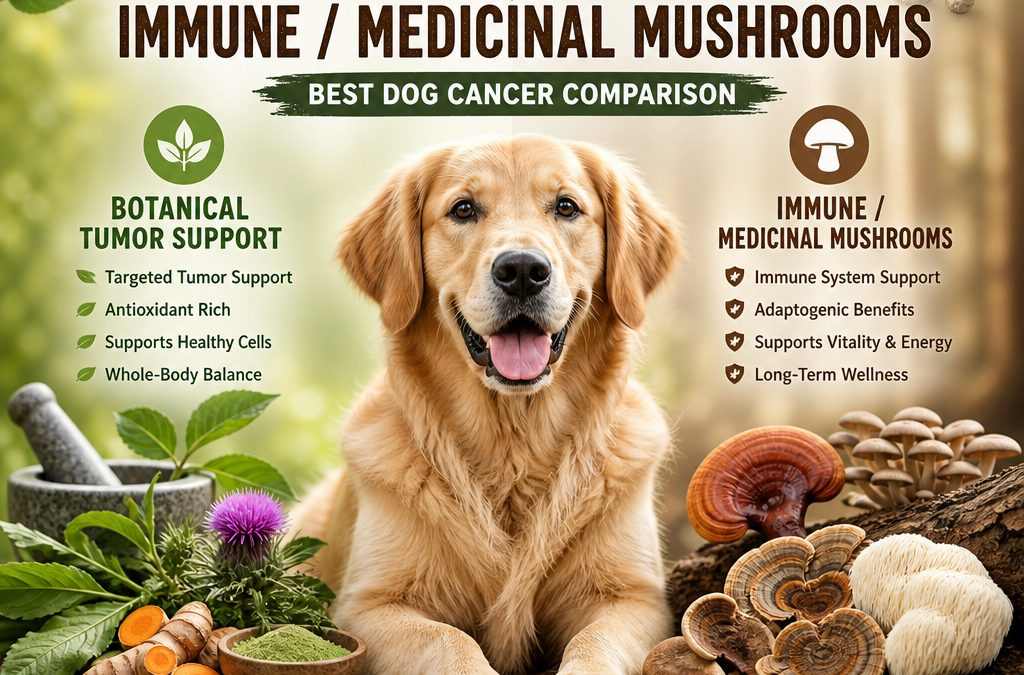
Botanical Tumor Support vs Immune / Medicinal Mushrooms: 5 Powerful Key Differences for Dog Owners
Botanical tumor support vs Immune / medicinal mushrooms is an important comparison for dog owners exploring supportive care after a cancer diagnosis. Both approaches may be used alongside veterinary treatment, but they are not interchangeable. Botanical formulas often focus on plant-derived compounds that support inflammation balance, antioxidant defenses, digestion, or cellular health. Medicinal mushroom products generally emphasize immune-system modulation through compounds such as beta-glucans. Understanding these differences can help owners ask better questions and choose supplements more responsibly.
Table of Contents
- Why supplement choice matters in canine cancer care
- Botanical tumor support: What does it mean?
- Immune and medicinal mushrooms explained
- Botanical tumor support vs Immune / medicinal mushrooms: Key differences
- Five practical differences dog owners should understand
- Comparing evidence and expectations
- Safety, drug interactions, and treatment timing
- How to evaluate a product responsibly
- Making the best choice for an individual dog
- Choosing with confidence
Why supplement choice matters in canine cancer care
Cancer care for dogs may involve surgery, chemotherapy, radiation, immunotherapy, targeted medications, or palliative treatment. Supplements should never replace these therapies or delay diagnosis. Instead, they may be considered as part of a broader supportive plan designed to maintain appetite, energy, digestion, immune resilience, and quality of life. When owners compare botanical tumor support vs Immune / medicinal mushrooms, the goal should be to understand how each option fits into that broader plan.
Dogs with cancer can respond differently to the same product. A supplement that is appropriate for one dog may be unsuitable for another because of tumor type, liver or kidney function, current medications, or treatment schedule. For this reason, a veterinarian—ideally one experienced in oncology or integrative medicine—should review any supplement before use. That advice applies whether the product is a botanical blend, a mushroom extract, or a combination formula.
Some owners begin researching supplements because they want something gentle and natural, while others are looking for options to support a dog that is already in treatment. Either way, it helps to separate marketing language from actual ingredients. Botanical tumor support vs Immune / medicinal mushrooms is not simply a choice between “plant-based” and “fungal.” It is a comparison of different biological targets, different evidence levels, and different safety considerations.
If you are also reviewing broader natural options, this overview of the benefits of medicinal mushrooms for dogs can help you understand how immune-focused products are commonly discussed in supportive care.
Botanical tumor support: What does it mean?
Botanical tumor support typically refers to formulas made from medicinal plants, herbs, roots, leaves, or plant extracts. These products may contain several ingredients selected for complementary purposes. Depending on the formula, botanical support may aim to help maintain normal inflammatory pathways, provide antioxidant compounds, support liver function, promote healthy digestion, or assist general cellular defenses. In practical terms, botanical tumor support often tries to support the dog’s body in a broad, whole-system way rather than focusing on one immune marker alone.
Common botanical ingredients found in cancer-support products may include turmeric or curcumin, milk thistle, green tea extracts, medicinal herbs, and other standardized plant compounds. However, “natural” does not automatically mean safe, effective, or appropriate for every dog. Plant extracts can be highly concentrated, and some may affect blood clotting, liver enzymes, blood pressure, or the absorption and metabolism of prescription drugs. This is one reason botanical tumor support vs Immune / medicinal mushrooms should be reviewed carefully instead of chosen based on trend or popularity.
The quality of a botanical product depends heavily on extraction methods, standardization, ingredient identity, and manufacturing controls. A product made from a clearly identified extract with batch testing is generally easier to evaluate than a blend that lists only a proprietary mixture without amounts. When the label is vague, it becomes much harder to know whether the product is likely to help, whether the dose is meaningful, or whether the formula is even appropriate for the dog’s current condition.
Owners should also remember that botanical formulas may differ in purpose. Some are designed primarily for antioxidant support, while others are marketed for liver support, digestion, circulation, or general vitality. Those differences matter because a supplement that is helpful during recovery after surgery may not be the best fit during an active chemotherapy protocol. When considering botanical tumor support vs Immune / medicinal mushrooms, the product’s actual purpose should guide the decision more than the category name.
In addition, botanical products can be especially sensitive to sourcing quality. Plants absorb soil conditions, growing environment, harvest timing, and processing methods. Two products that list the same herb may not have the same concentration or purity. That is why transparency and third-party testing are so important for dog owners trying to make a responsible choice.
Immune and medicinal mushrooms explained
Medicinal mushrooms are fungi used in traditional health practices and modern supplement products. Examples include turkey tail, reishi, shiitake, maitake, and cordyceps. Their most discussed compounds are polysaccharides, particularly beta-glucans, which may interact with receptors involved in immune-system signaling. In dog cancer support discussions, these products are usually positioned as immune-focused supplements rather than direct tumor treatments.
Medicinal mushroom supplements are often marketed for immune support rather than as direct cancer treatments. Some research, including studies involving canine cancer patients, has examined mushroom-derived compounds as part of supportive care. The evidence varies by mushroom species, extract type, dose, and cancer context. Results from laboratory or human studies should not automatically be assumed to apply to dogs. That caution is especially important when comparing botanical tumor support vs Immune / medicinal mushrooms, because the research base is often different for each category.
Mushroom products also differ substantially. A powder made from the whole mushroom may have a different chemical profile from an extract concentrated for beta-glucans. The label should identify the mushroom species, whether the product uses fruiting bodies or mycelium, extraction details, and the amount of active compounds when available. Without that information, dog owners cannot confidently compare one product against another or understand what makes one mushroom supplement more suitable than another.
Many owners are drawn to medicinal mushrooms because they sound simple and natural, but the details matter. A mushroom product may include multiple species, fillers, flavoring agents, or low-potency powders that do not resemble the studied extracts used in research. A high-quality product should make it clear what part of the mushroom is used, how it is processed, and what the intended goal is. That transparency is just as important as the mushroom name itself.
For owners who want to understand the broader role of these products, the article on the benefits of medicinal mushrooms for dogs provides useful background on how immune-support supplements are commonly framed in veterinary care.
Botanical tumor support vs Immune / medicinal mushrooms: Key differences
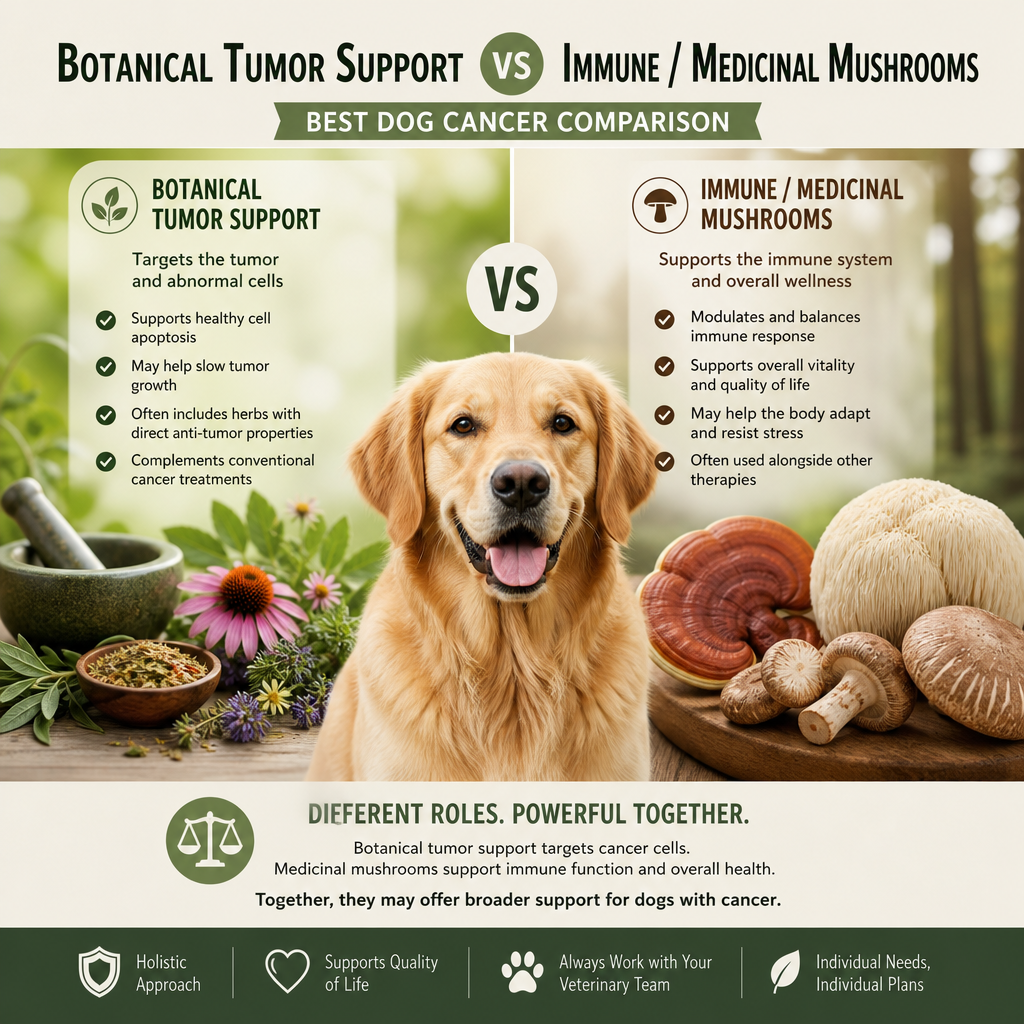
In a dog cancer supplement comparison, the main difference is usually the intended biological emphasis. Botanical formulas may be built around plant compounds that support inflammation balance, antioxidant activity, digestion, or liver function. Medicinal mushroom products are usually designed around immune communication and polysaccharide content. Both can be part of supportive care, but they approach the problem from different angles.
Botanical formulas may focus on:
- Inflammation and oxidative stress balance
- Digestive and liver support
- General cellular and metabolic support
- Multiple plant compounds working together
- Condition-specific herbal strategies
Medicinal mushroom formulas may focus on:
- Immune-system communication
- Support for normal immune surveillance
- Beta-glucans and other fungal polysaccharides
- Broader immune resilience
- Fewer, more concentrated mushroom extracts
This distinction is not absolute. Some botanical products may influence immune pathways, while medicinal mushrooms may also have antioxidant or inflammation-related effects. The product’s actual ingredients and concentrations matter more than the marketing category. A dog owner comparing botanical tumor support vs Immune / medicinal mushrooms should therefore ask what the formula is designed to do, not just what it claims to be.
Another important difference is complexity. Botanical formulas often combine several ingredients, which can be useful when a dog needs broad support but can also make it harder to identify which component is helping or causing side effects. Medicinal mushroom products may be more focused, but they can still vary significantly in species, extraction quality, and active-compound concentration. Both options require careful label reading.
It is also worth noting that some products blend both categories. A supplement may contain a mushroom extract plus selected herbs or vitamins. In those cases, the line between botanical tumor support vs Immune / medicinal mushrooms becomes even less obvious. Mixed formulas can be useful, but they can also increase uncertainty if the ingredient amounts are not clearly disclosed.
Five practical differences dog owners should understand
When comparing botanical tumor support vs Immune / medicinal mushrooms, dog owners often benefit from looking at five practical questions rather than broad marketing claims. These questions can help make the decision more grounded in the dog’s actual needs and less dependent on packaging language.
1. What is the primary goal?
Some products are designed mainly for inflammation balance, digestion, or liver support. Others are positioned more clearly around immune signaling. That difference matters because the best product is usually the one that matches the dog’s current needs. A dog with nausea and poor appetite may need a different type of support than a dog whose treatment team is specifically trying to support immune function.
2. How transparent is the label?
Clear ingredient lists, exact amounts, and extraction details make it easier to judge quality. If a label uses vague wording or hides the formula inside a proprietary blend, it becomes harder to know what your dog is actually taking. Transparent labeling is one of the best ways to compare botanical tumor support vs Immune / medicinal mushrooms without guessing.
3. What evidence exists for the exact ingredient?
Not every turmeric product, mushroom extract, or herbal blend has the same level of research. A study on one extract does not prove the same results for another product that uses a different method, dose, or raw material. Owners should look for research that matches the ingredient as closely as possible, especially when the supplement is intended for a dog with a serious diagnosis.
4. What else is the dog taking?
A supplement may interact with chemotherapy, surgery, anti-inflammatory drugs, sedatives, or blood-thinning medications. This is one reason veterinary review is essential before starting any new supportive product. Even when a product is marketed as gentle, it can still affect the body in ways that matter during treatment.
5. Can the product be monitored over time?
The safest supplements are those that can be reassessed through appetite, stool quality, energy, bloodwork, and treatment tolerance. If a product cannot be monitored or adjusted, it may be less suitable for long-term use. Good monitoring helps ensure that a helpful supplement stays helpful and that a poorly tolerated one is stopped promptly.
These five questions are useful because they turn a broad category decision into a practical care decision. Instead of asking only whether botanical tumor support vs Immune / medicinal mushrooms sounds more appealing, owners can ask which product is easier to understand, safer to use, and more closely aligned with the dog’s needs.
Comparing evidence and expectations
The strongest supplement decisions are based on realistic expectations. Neither botanical products nor medicinal mushrooms should be presented as guaranteed cancer cures. Scientific evidence may support potential benefits in specific settings, but evidence quality can range from laboratory research to small clinical studies and anecdotal reports. That means a promising ingredient is not the same thing as a proven treatment.
Owners should ask whether a product has been studied in dogs, whether the research involved the same ingredient and extract, and whether the dosage used in the study matches the product being considered. It is also important to distinguish between improving a dog’s comfort or appetite and shrinking a tumor. Supportive benefits can be meaningful even when a supplement has no proven ability to eliminate cancer.
In practice, this means that expectations should stay modest but not dismissive. A supplement may help maintain energy, support digestion, or make treatment easier to tolerate. Those outcomes can matter a great deal in a dog’s daily life. At the same time, owners should be cautious about claims that a product will stop cancer progression on its own. The comparison of botanical tumor support vs Immune / medicinal mushrooms works best when both options are evaluated as supportive tools, not miracle solutions.
For dog owners who want a deeper look at study quality, a credible scientific reference such as peer-reviewed biomedical research in PubMed Central is a useful starting point for checking how evidence is reported and whether the research design is strong enough to trust.
It can also help to think in terms of goals rather than categories. For example, if the main priority is digestive comfort during treatment, a botanical formula may be selected for that purpose. If the priority is immune-related support, a mushroom extract may be more appropriate. The correct answer depends on the dog’s diagnosis, current medications, and overall plan of care.
Safety, drug interactions, and treatment timing
Safety is one of the most important parts of any dog cancer supplement comparison. Some herbs and mushrooms may influence platelet activity or blood clotting, which can be significant before surgery or during treatment with medications that affect bleeding. Others may alter liver enzyme activity and change how chemotherapy or other drugs are processed. That is why botanical tumor support vs Immune / medicinal mushrooms should never be treated as a casual over-the-counter choice.
Potential concerns include vomiting, diarrhea, reduced appetite, allergic reactions, sedation, liver irritation, and changes in blood-cell counts. Dogs with kidney disease, liver disease, autoimmune conditions, or bleeding disorders may require additional caution. A supplement may also need to be paused around surgery or certain chemotherapy protocols. In some cases, even a supplement that is generally well tolerated can become problematic when combined with a complex treatment plan.
Keep a complete list of every product your dog receives, including supplements, treats, prescription medications, and topical products. Share the list with the veterinary team before starting anything new. Monitoring may include bloodwork, appetite tracking, weight checks, stool observation, and assessment of energy or pain. A supplement should ideally be introduced one at a time so that any reaction can be traced more easily.
Timing matters as much as ingredient choice. A product may be appropriate in one phase of care but not another. For example, a veterinarian may want to avoid starting a new botanical extract immediately before a procedure, even if that same product might be reconsidered later during recovery. Similarly, a mushroom supplement may be held if there are concerns about interactions or if the dog is already dealing with nausea or reduced appetite.
When owners discuss botanical tumor support vs Immune / medicinal mushrooms with their veterinarian, it helps to bring the exact product label, dose, and timing plan. The more specific the information, the easier it is for the veterinary team to assess risk and offer practical guidance.
How to evaluate a product responsibly
Look for transparent labels that provide the exact ingredients and amounts per serving. Favor companies that conduct independent testing for contaminants, heavy metals, pesticides, microbes, and undeclared pharmaceutical ingredients. Products designed specifically for dogs should provide clear dosing guidance, but veterinary confirmation is still necessary.
Avoid products that promise to cure cancer, replace chemotherapy, or work for every tumor type. Be cautious with dramatic testimonials, vague proprietary blends, and claims that rely only on human or laboratory studies. A trustworthy product should explain its intended use without overstating the evidence. This is especially important when comparing botanical tumor support vs Immune / medicinal mushrooms, because both categories are often marketed in broad, emotionally persuasive ways.
If you want a more structured path when comparing products, this kind of veterinary mycotherapy alternative guide can be helpful for understanding how supplement options are framed for dogs with tumors.
It is also wise to compare more than the front label. Check whether the manufacturer identifies the source of the raw materials, explains how the product is extracted or standardized, and provides a way to confirm batch quality. A well-made supplement should inspire confidence not only because of its ingredients, but because of the company’s willingness to be transparent.
If the product has customer reviews, read them carefully but skeptically. Look for feedback about tolerance, dosing, and consistency rather than dramatic cure stories. Individual experiences can be useful, but they do not replace veterinary advice or scientific evidence.
Making the best choice for an individual dog
The best option depends on the dog’s diagnosis, treatment plan, symptoms, and goals. A dog undergoing chemotherapy may need a different approach from one recovering from surgery or receiving hospice care. If digestive upset is a major concern, a carefully selected botanical formula may be considered for general gastrointestinal or liver support. If the primary goal is immune modulation, a well-characterized medicinal mushroom extract may be discussed.
In some cases, a veterinarian may recommend no supplement at all, particularly when a dog is unstable, taking complex medications, or experiencing significant side effects. Simplicity can be safer than combining several products with overlapping ingredients. The safest plan is often the one that changes the fewest variables while still supporting comfort and quality of life.
Owners should also consider how easy a product is to administer. Flavor, capsule size, powder texture, and dosing frequency can all affect whether the dog will actually take the supplement consistently. Even a good formula can fail in practice if it causes resistance at mealtime or makes daily care more stressful.
When owners compare botanical tumor support vs Immune / medicinal mushrooms, the most useful question is not which category sounds more natural, but which option fits the dog’s current treatment plan. Botanical tumor support vs Immune / medicinal mushrooms should always be assessed in context, because each approach may have different benefits, risks, and levels of evidence. A thoughtful discussion with a veterinarian can help determine whether botanical tumor support vs Immune / medicinal mushrooms is appropriate now, or whether the safest choice is to wait.
That context also includes the dog’s age, activity level, body condition, and appetite. A senior dog with multiple chronic issues may need a simpler formula than a younger dog with a more straightforward cancer diagnosis. In other words, the “best” supplement is not the most aggressive one; it is the one that best matches the dog’s real-world needs.
Choosing with confidence
Botanical tumor support vs Immune / medicinal mushrooms is not a contest with one universal winner. Botanical formulas offer broad plant-based support, while medicinal mushrooms are commonly selected for their immune-related polysaccharides. Both categories vary widely in quality, evidence, formulation, and safety.
The most responsible strategy is to match the product to the dog rather than choosing based on marketing language. Veterinary guidance, transparent manufacturing, realistic expectations, and careful monitoring are essential. Used thoughtfully, supplements may contribute to comfort and overall wellbeing, but they should remain part of an integrated cancer-care plan—not a substitute for professional diagnosis and treatment.
For many dog owners, the final decision comes down to balance. Botanical tumor support vs Immune / medicinal mushrooms each has strengths, and each may be useful in different situations. If you keep the comparison focused on the dog’s needs, the current treatment plan, and the product’s actual quality, you are far more likely to make a choice that is safe, sensible, and supportive.