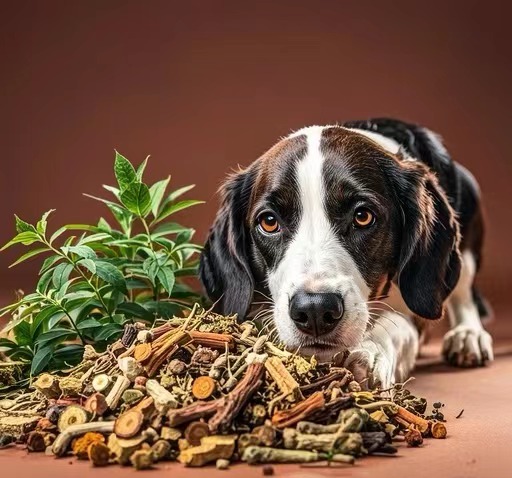
by TCMVET | Mar 18, 2024 | pet Chinese herbal medicine
The field of veterinary medicine has undergone a remarkable evolution, especially in the treatment of canine oral cancer. From the ancient herbal remedies to the latest advancements in veterinary oncology, the journey reflects a deepening understanding of disease and the development of more effective treatments. This article explores this evolution, highlighting how traditional approaches and modern medicine have come together to offer hope and healing for our canine companions.
The Ancient Beginnings
Traditional Chinese Medicine (TCM), rooted in ancient practices, has long utilized natural herbs for healing. Shen Nong, a legendary figure in Chinese history, is credited with identifying and cataloging numerous medicinal plants, laying the groundwork for herbal medicine. These early practices emphasized a holistic approach to health, considering the balance and harmony of the entire body.
The Rise of Canine Oral Cancer
In modern times, canine oral cancer has emerged as a significant health issue for dogs. This category of cancer, which includes conditions like melanoma, squamous cell carcinoma, and fibrosarcoma, is known for its aggressive nature and challenging treatment. As pet owners and veterinarians seek effective therapies, the integration of traditional and modern medicine becomes increasingly relevant.
Integrating Traditional Herbal Medicine
In the quest for more holistic treatments, veterinary medicine has begun to embrace the principles of TCM. Herbal remedies are being explored for their potential to support conventional cancer treatments. Herbs like Huang Qin (Scutellaria baicalensis) and Bai Hua She She Cao (Hedyotis diffusa) are being studied for their anti-cancer properties, which may include reducing inflammation and enhancing the immune response.
Advancements in Modern Veterinary Oncology
Concurrently, significant advancements in veterinary oncology have led to more sophisticated treatments for canine oral cancer. Techniques such as targeted chemotherapy, radiation therapy, and advanced surgical methods have improved survival rates and quality of life for affected dogs. The use of diagnostic imaging, like CT scans and MRIs, allows for earlier detection and more precise treatment planning.
The Role of Integrative Veterinary Care
Integrative veterinary care, which combines elements of both traditional and modern medicine, is becoming a cornerstone of treating canine oral cancer. This approach not only aims to fight the cancer but also focuses on the overall well-being of the animal, considering factors like diet, lifestyle, and mental health.
The Future of Canine Cancer Treatment
As research continues, the future of canine oral cancer treatment looks promising. The integration of herbal medicine with advanced oncological therapies is opening new avenues for treatment. Additionally, ongoing studies in areas like immunotherapy and gene therapy offer the potential for even more effective and personalized care.
From herbal roots to healing paws, the evolution of medicine in treating dog mouth cancer embodies the synergy between ancient wisdom and modern science. This integrative approach not only enriches our understanding of veterinary medicine but also enhances the care we provide to our beloved canine friends.

by TCMVET | Mar 18, 2024 | pet Chinese herbal medicine
The journey of medicine from the ancient wisdom of Shen Nong to the innovative treatments of modern veterinary oncology is a testament to the relentless pursuit of healing. This evolution is particularly significant in the realm of canine cancer treatments, where integrating traditional knowledge with contemporary science has opened new avenues for holistic care.
The Legacy of Shen Nong
Shen Nong, a mythical emperor in Chinese folklore, is celebrated for his contributions to herbal medicine. Known as the Divine Farmer, he is said to have tasted hundreds of herbs to understand their medicinal properties, a feat documented in the ancient text “Shen Nong Ben Cao Jing.” This pharmacopeia laid the foundation for Traditional Chinese Medicine (TCM), influencing generations of healing practices.
The Rise of Canine Cancer
In today’s world, cancer is a leading cause of death in dogs, with oral cancer being particularly aggressive. Factors like genetics, environment, and lifestyle contribute to the prevalence of this disease. Modern veterinary medicine has made significant strides in diagnosing and treating canine cancer, yet there remains a need for more holistic approaches.
Integrating Traditional Wisdom with Modern Science
The integration of Shen Nong’s herbal legacy with modern cancer treatments represents a fusion of ancient wisdom and contemporary science. TCM emphasizes the balance of the body’s energy, or Qi, and views disease as a manifestation of imbalance. By incorporating TCM practices like herbal therapy and acupuncture into canine cancer treatment, veterinarians can provide a more rounded approach to care.
Herbal Remedies for Canine Cancer
Herbs used in TCM, such as Huang Qin (Scutellaria) and Ling Zhi (Reishi mushrooms), have shown promise in supporting cancer treatment. They may help in alleviating symptoms, boosting immunity, and potentially reducing tumor growth. However, these remedies should be used under the guidance of a professional knowledgeable in both TCM and veterinary medicine to ensure safety and efficacy.
The Role of Acupuncture
Acupuncture, another facet of TCM, has been adapted for canine patients to help manage pain and improve quality of life. Acupuncture points are carefully selected to target areas affected by cancer, promoting healing and energy balance.
The Importance of a Multifaceted Approach
Embracing both traditional and modern treatments allows for a more personalized approach to canine cancer care. This includes conventional methods like surgery, chemotherapy, and radiation, alongside TCM practices. Such an integrative approach aims not only to treat the disease but also to enhance the overall well-being of the dog.
Educating Pet Owners
Education plays a crucial role in this integrative approach. Pet owners should be informed about the benefits and limitations of both traditional and modern treatments. This knowledge empowers them to make informed decisions about their pets’ health care.
The legacy of Shen Nong lives on in the realm of canine cancer treatments, bridging eras and ideologies. By integrating his herbal wisdom with modern veterinary practices, we offer our canine companions a chance at not just survival, but a better quality of life. This blend of ancient and modern not only honors our past but also paves the way for a more holistic future in veterinary medicine.

by TCMVET | Mar 18, 2024 | Dog Cancer & Tumors
In an era where the fusion of traditional knowledge and modern science creates groundbreaking healthcare solutions, the role of Traditional Chinese Medicine (TCM) in treating contemporary ailments, such as canine oral cancer, has gained significant attention. This article explores how the ancient wisdom of TCM, rooted in centuries of empirical knowledge and holistic practices, is being adapted to complement modern veterinary oncology, particularly in treating oral cancer in dogs.
The Legacy of Traditional Chinese Medicine: TCM, with its history spanning thousands of years, is not merely a medical practice but a complex system of theories, diagnostics, and treatments. Its foundation lies in the belief of maintaining harmony between the body, mind, and environment. Key elements of TCM, such as herbal medicine, acupuncture, and dietary therapy, have been integral in human healthcare and are now finding relevance in veterinary practices.
Canine Oral Cancer: A Growing Concern: Oral cancer in dogs, including conditions like squamous cell carcinoma, melanoma, and fibrosarcoma, represents a significant challenge in veterinary medicine. Standard treatments typically involve surgery, chemotherapy, and radiation therapy. However, these treatments can often be invasive, expensive, and accompanied by side effects.
Integrating TCM in Canine Oral Cancer Care: In the quest for more holistic and less invasive treatment options, veterinarians and pet owners are turning to TCM. Here’s how various TCM practices are being integrated:
- Herbal Remedies: Many TCM herbs have anti-inflammatory, analgesic, and immune-boosting properties. Herbal formulations are being explored to reduce tumor size, alleviate pain, and enhance the overall quality of life for dogs with oral cancer.
- Acupuncture: This ancient practice is known to stimulate the nervous system and can help in managing pain and improving immune response in canine cancer patients.
- Dietary Adjustments: TCM emphasizes the role of diet in health. Nutritional therapy, involving a balanced diet with specific food items known to possess anti-cancer properties, is being tailored for dogs with oral cancer.
The Science Behind the Integration: Recent studies have shown promising results in the use of TCM in conjunction with conventional treatments. The synergistic effect of combining TCM practices with Western medicine can lead to improved outcomes, fewer side effects, and enhanced recovery rates.
Challenges and Considerations: While the integration of TCM in veterinary oncology is promising, it’s essential to approach it with careful consideration. It is vital to consult with qualified veterinarians who specialize in both TCM and conventional medicine. Ensuring the quality and safety of herbal products and acupuncture treatments is paramount.
The integration of Traditional Chinese Medicine in treating canine oral cancer represents a fusion of ancient wisdom and modern scientific advances. This holistic approach not only opens new avenues for effective cancer treatment but also underscores the importance of integrating diverse medical traditions for the betterment of animal health. As we continue to explore and validate these practices, the potential for more effective, less invasive cancer treatments becomes a hopeful reality.

by TCMVET | Mar 4, 2024 | Cat Cancer & Tumors
In recent years, the fusion of Traditional Chinese Medicine (TCM) with modern veterinary techniques has emerged as a promising approach to managing feline tumors. This integrative treatment strategy combines the holistic benefits of TCM with the precision of contemporary medical practices, offering a comprehensive approach to improving the health and quality of life of cats diagnosed with tumors. This article explores how this synergy can benefit our feline companions, highlighting the potential for a more effective and balanced treatment regimen.
- Understanding Feline Tumors:
- Offer an overview of common types of tumors in cats, including symptoms and typical treatments.
- Discuss the challenges in treating feline tumors and the need for innovative approaches.
- Principles of Traditional Chinese Medicine in Feline Care:
- Introduce the basics of TCM and its philosophy in treating illnesses.
- Explain how TCM approaches disease by focusing on restoring balance and enhancing the body’s natural healing capabilities.
- TCM Techniques for Tumor Management:
- Delve into specific TCM techniques used in feline tumor management, such as herbal medicine, acupuncture, and dietary therapy.
- Highlight herbs and practices that are known to be beneficial for cats with tumors.
- Integrating TCM with Modern Veterinary Practices:
- Discuss how TCM can complement modern treatments like chemotherapy, radiation, or surgery.
- Provide insights into how veterinarians integrate these approaches to create a personalized treatment plan for each cat.
- Case Studies: Successes in Integrated Treatment Approaches:
- Share real-life examples or case studies where the integration of TCM and modern techniques has led to positive outcomes in feline tumor management.
- Navigating the Challenges and Considerations:
- Address potential challenges and considerations in combining TCM with modern treatments, such as ensuring compatibility and avoiding interactions between different therapies.
- Future Directions in Feline Tumor Management:
- Explore ongoing research and future prospects in the field of integrative veterinary medicine.
The combination of Traditional Chinese Medicine with modern techniques represents a forward-thinking approach in the management of feline tumors. This integrative method not only treats the symptoms but also aims to enhance the overall well-being of the cat, promising a more holistic and effective treatment journey. As with any treatment plan, it’s crucial to work with a knowledgeable veterinarian to ensure the best outcome for your feline friend.

by TCMVET | Mar 1, 2024 | Dog Cancer & Tumors
In the realm of canine oncology, exploring diverse treatment modalities is crucial for enhancing the quality of life and prognosis for dogs diagnosed with cancer. Among these modalities, Traditional Chinese Medicine (TCM) has emerged as a complementary approach, gaining attention for its holistic and natural methods. This article aims to shed light on the effectiveness of Chinese medicine in treating canine cancers, offering insights into its principles, applications, and benefits.
The Prevalence of Cancer in Dogs:
Cancer remains one of the leading causes of death in dogs, especially as they age. Common types include lymphoma, osteosarcoma, and mast cell tumors. Early detection and a comprehensive treatment plan are pivotal in managing these conditions effectively.
TCM in Canine Oncology: An Overview:
TCM, with its thousands of years of history, approaches health and disease differently from Western medicine. It views the body as a balance of energy (Qi) and focuses on restoring harmony through various techniques, including herbal medicine, acupuncture, and dietary adjustments.
Principles of Chinese Medicine in Treating Cancer:
TCM treats cancer by addressing the underlying imbalances in the body that contribute to disease. This involves strategies to strengthen the immune system, improve Qi flow, detoxify the body, and harmonize the Yin and Yang energies.
Key Chinese Herbs for Canine Cancer:
- Astragalus (Huang Qi): Boosts immunity and has anti-tumor properties.
- Dang Gui (Angelica Sinensis): Known for its blood-nourishing qualities.
- Ginseng (Ren Shen): Enhances overall vitality and strength.
- Turmeric (Jiang Huang): Offers anti-inflammatory and antioxidant benefits.
- Poria (Fu Ling): Helps in draining dampness and strengthens the spleen.
Acupuncture in Canine Cancer Care:
Acupuncture, another facet of TCM, is utilized for pain relief, improving energy flow, and enhancing overall well-being, which is particularly beneficial for cancer-suffering dogs.
Integrating TCM with Conventional Oncology:
While Chinese medicine can be effective, it is most beneficial when used in conjunction with conventional cancer treatments like chemotherapy or radiation therapy. This integrative approach can help manage side effects, improve quality of life, and potentially enhance the efficacy of conventional treatments.
Research and Evidence on Effectiveness:
Although research on TCM in canine oncology is still evolving, numerous studies and anecdotal evidence suggest its potential in improving the quality of life and even extending the lifespan of dogs with cancer.
Consulting with Professionals:
Before incorporating TCM into a dog’s cancer treatment, it is essential to consult with a veterinarian skilled in both conventional and alternative medicine. This ensures a safe and tailored approach to each individual dog’s needs.
Understanding the effectiveness of Chinese Medicine in canine oncology opens up new avenues for treating and managing cancer in dogs. By adopting a holistic approach that combines the best of both worlds, pet owners can offer their furry companions a chance at a better quality of life during their cancer journey.
