
Turkey Tail / medicinal mushrooms are becoming increasingly popular among Icelandic dog owners looking for supportive care during a cancer diagnosis. While no supplement can replace veterinary treatment, carefully selected medicinal mushrooms may complement a broader care plan by supporting immune function, appetite, energy, and overall quality of life. For families searching for dog cancer supplements in Iceland, understanding the evidence, safety considerations, and practical buying factors is essential.
Why medicinal mushrooms are considered for dogs with cancer
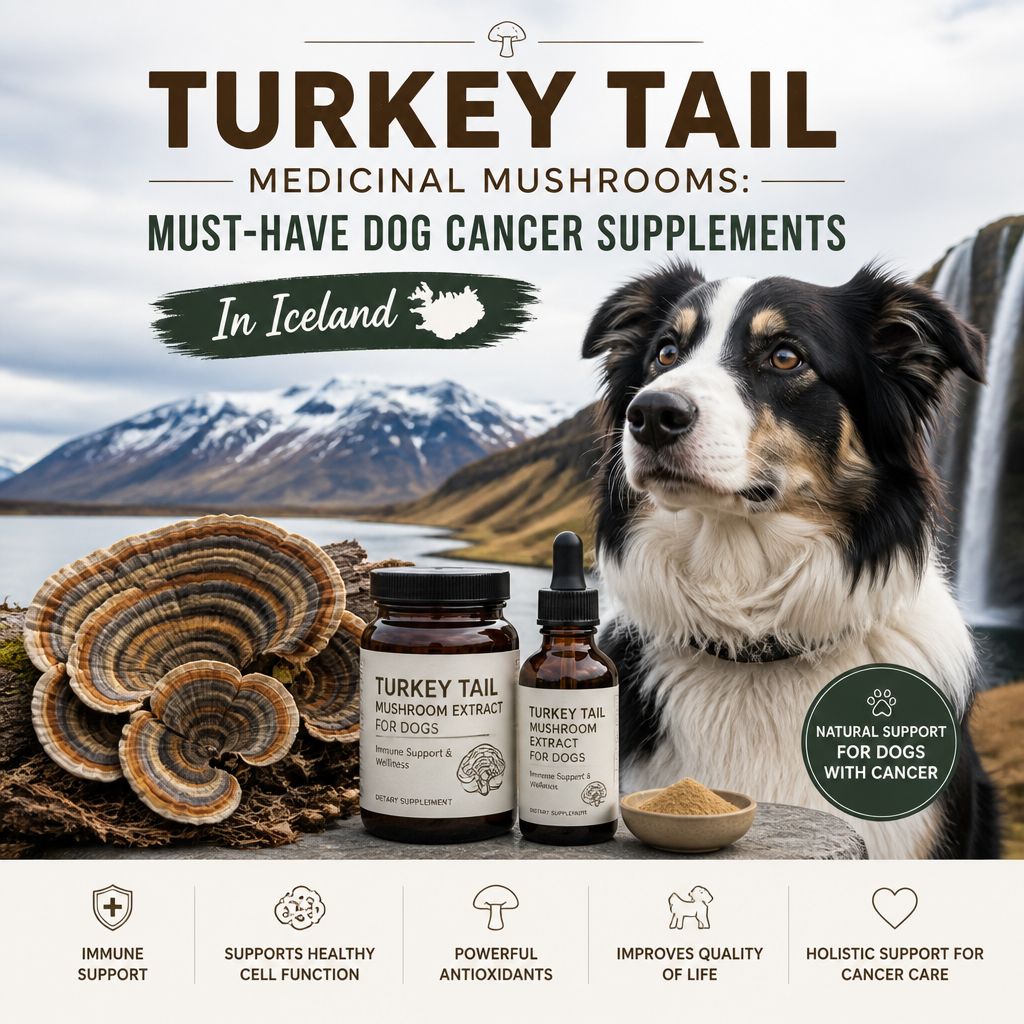
Cancer affects every dog differently. Some dogs undergo surgery, chemotherapy, radiation, or palliative treatment, while others may receive a combination of conventional and supportive therapies. Throughout this process, owners often look for gentle ways to help their dog maintain strength and comfort. Turkey Tail / medicinal mushrooms are one option many families consider when they want extra support without replacing veterinary care.
Medicinal mushrooms contain naturally occurring compounds such as beta-glucans, polysaccharides, triterpenes, and antioxidants. These compounds have attracted scientific interest because they may influence immune activity and help the body respond to stress. Turkey Tail, in particular, is known for compounds called polysaccharide-K and polysaccharopeptide, often abbreviated as PSK and PSP. Because of that, Turkey Tail / medicinal mushrooms are often discussed in relation to immune health and supportive cancer care.
Research involving Turkey Tail has included laboratory studies, animal research, and limited clinical work. Although the results are promising, evidence in dogs remains developing. Mushroom supplements should therefore be viewed as supportive products rather than cancer cures. Even so, Turkey Tail / medicinal mushrooms can be a meaningful part of a well-planned supportive routine when used thoughtfully.
For readers who want a broader overview of supportive nutrition, Best Supplements for Dogs with Cancer: 7 Essential UK Support Tips offers a useful starting point. It can help owners compare options before adding any supplement to a treatment plan.
Turkey Tail / medicinal mushrooms for canine immune support
Turkey Tail, scientifically known as Trametes versicolor or Coriolus versicolor, is one of the most widely discussed mushrooms in veterinary supportive care. It contains beta-glucans that may interact with immune cells in the digestive tract and throughout the body. For that reason, Turkey Tail / medicinal mushrooms are frequently included in formulas designed for dogs that need extra immune support.
This immune-supporting potential is especially relevant for dogs dealing with illness, recovery, or treatment-related stress. A healthy immune system supports normal defense mechanisms, tissue repair, and resilience. However, immune stimulation is not automatically beneficial in every situation. Dogs with autoimmune disease, severe allergies, or certain medical conditions may need a different approach, so Turkey Tail / medicinal mushrooms should always be discussed with a veterinarian first.
Other mushrooms sometimes included in canine formulas include Reishi, Shiitake, Maitake, and Agaricus blazei. Each mushroom has a different nutrient and compound profile. A blended supplement may provide broader support, but more ingredients also mean more opportunities for intolerance or interactions. High-quality products should clearly list the mushroom species, extraction method, active compounds, and serving guidance.
In practice, many owners want to know what these mushrooms are meant to do beyond general wellness. The most common goals are to support normal immune function, help preserve appetite during stressful periods, and provide an additional layer of nutritional support when a dog is coping with a serious diagnosis. That is one reason Turkey Tail / medicinal mushrooms are often compared with other supportive therapies rather than used as stand-alone products.
It is also important to remember that not every product labeled “mushroom supplement” is the same. Some formulas use the fruiting body, some use mycelium, and others combine multiple parts of the fungus with added ingredients. These choices can change the concentration of compounds in the final supplement. Owners comparing options should look for clear ingredient transparency, because Turkey Tail / medicinal mushrooms can only be evaluated properly when the label is specific.
If you are comparing mushroom products, it can also help to read about Miracle Mushrooms: Unlocking the Power of Fungi for Dogs Battling Cancer, which explains why some formulas combine multiple fungi for more complete support. That background can make Turkey Tail / medicinal mushrooms easier to evaluate.
Veterinary teams may also consider how a supplement fits into the broader stage of disease. A dog that is active, eating, and responding well to treatment may tolerate a different product than a dog that is already struggling with weight loss or digestive sensitivity. In other words, the best option is not always the most complex formula. Sometimes a single, well-made extract is easier to introduce and monitor than a long list of blended ingredients.
Another helpful point is consistency. Supportive care products work best when they are given regularly and watched closely over time. If an owner changes brands too often, it becomes difficult to know whether a product is useful, neutral, or poorly tolerated. For dogs already under stress, predictability can matter just as much as ingredient choice.
Choosing dog cancer supplements in Iceland
When comparing dog cancer supplements Iceland owners can purchase, product quality should be a primary concern. Supplements may be available through veterinary clinics, specialist pet retailers, health stores, or online suppliers. Products imported into Iceland may vary considerably in manufacturing standards, labeling, storage conditions, and ingredient transparency.
Look for supplements that provide:
- The scientific name of each mushroom
- The mushroom part used, preferably fruiting body or a clearly identified extract
- Information about beta-glucan or polysaccharide content
- Batch testing for contaminants
- Clear instructions based on dog size and weight
- Minimal unnecessary fillers, sweeteners, or flavorings
- A full list of ingredients and potential allergens
Avoid products that promise to eliminate tumors, replace chemotherapy, or guarantee a cure. Such claims are not reliable and may encourage dangerous delays in veterinary care. A trustworthy supplement company should describe its product as supportive and encourage consultation with a veterinarian. Turkey Tail / medicinal mushrooms should fit into a realistic care plan, not stand in for treatment.
Iceland’s climate and shipping conditions also deserve attention. Moisture, temperature changes, and long transport periods can affect some natural products. Choose sealed packaging, check the expiration date, and store the supplement according to the manufacturer’s instructions.
Label reading matters as much as brand reputation. A clean label that states the species, extraction ratio, and recommended use is usually more helpful than a marketing-heavy package with vague language. If the supplement contains multiple mushrooms, the label should identify each one clearly so owners and veterinarians can judge whether the formula is appropriate for the individual dog.
Owners should also think about palatability. Dogs that are nauseated, picky, or already losing interest in food may refuse strong-tasting powders or capsules. In those cases, a product that can be mixed into a small portion of food or a soft treat may be easier to use consistently. If the dog stops accepting the supplement, the practical value drops quickly, even if the ingredient profile looks impressive on paper.
For dogs with a long treatment course, storage and freshness become more important. Keep products tightly closed and away from humidity, especially if they are shipped from abroad. If a supplement changes smell, clumps unusually, or looks discolored, it is safer to replace it than to continue using it. Small details like these can make a meaningful difference when choosing dog cancer supplements in Iceland.
For additional practical context on choosing quality products, see the National Center for Complementary and Integrative Health’s overview of mushroom supplements and safety at the NCCIH guide to mushrooms in complementary health approaches. It is a helpful reference when reviewing labels and claims.
Dog tumor support Iceland: creating a complete care plan
Searching for dog tumor support Iceland pet owners can trust should involve more than choosing a single supplement. The most effective supportive plan usually combines veterinary monitoring with nutrition, symptom control, rest, and emotional care. In many homes, Turkey Tail / medicinal mushrooms become just one part of that larger strategy.
A veterinarian may recommend blood tests, imaging, tissue sampling, or follow-up examinations to understand how the tumor is behaving. Regular monitoring is important because a dog’s condition can change quickly. Supplements should be discussed before use, particularly when the dog is receiving chemotherapy, corticosteroids, anti-inflammatory medicines, anticoagulants, or other prescription treatments.
Supportive care may also include:
- Maintaining a balanced, complete diet
- Preventing unwanted weight loss
- Managing nausea, pain, diarrhea, or constipation
- Encouraging gentle movement when appropriate
- Providing a quiet, warm resting area
- Monitoring drinking, urination, appetite, and energy
- Keeping a daily record of symptoms and treatment responses
Turkey Tail / medicinal mushrooms may be useful as one part of this plan, but it cannot compensate for untreated pain, dehydration, infection, or nutritional decline. In many cases, the most helpful results come from pairing supportive nutrition with close veterinary follow-up and realistic expectations.
Some families also benefit from discussing goals of care early. That means deciding whether the main priority is to extend survival, manage side effects, preserve appetite, reduce pain, or simply keep daily life comfortable for as long as possible. Once those goals are clear, it becomes easier to judge whether a supplement is doing something useful. If the dog is calmer, eating better, or handling treatment more smoothly, that may matter more than any theoretical mechanism.
It can also help to keep the care plan simple enough to follow. A complicated routine is harder to maintain and easier to misread. For example, if a dog is starting chemotherapy, changing food, and adding several supplements all at once, it becomes difficult to know what caused a new symptom. A more structured approach lets the veterinary team adjust one thing at a time and gives owners better information.
Owners who are also evaluating other supportive options may find it useful to compare formulas with How to Manage Chemotherapy Side Effects in Dogs? Nutritional Support & Care Tips. That resource can help you understand how supplements fit into a wider care routine.
Practical dog tumor support Iceland often includes home comfort as much as product selection. Soft bedding, easy access to water, reduced stair use, and shorter walks can all improve day-to-day wellbeing. For dogs with limited stamina, even small environmental changes can make a big difference. Supportive products should ideally complement these basics rather than distract from them.
Communication with the veterinary team should stay open and specific. If the supplement seems to improve appetite, owners can share that observation. If the dog becomes gassy, tired, or refuses meals after starting it, that information is equally important. Supportive care works best when everyone involved is looking at the same set of observations instead of relying on guesswork.
Safety, dosage, and possible side effects
Natural does not always mean risk-free. Mushroom products can cause digestive upset, loose stools, vomiting, reduced appetite, or allergic reactions. Some products may also be contaminated or inaccurately labeled, especially when purchased from unverified sources. This is why Turkey Tail / medicinal mushrooms should be introduced carefully.
Dosage should be based on the specific product and the dog’s health status. Extracts can vary significantly in concentration, so comparing products by scoop size alone is misleading. A veterinarian familiar with the dog’s diagnosis should help determine whether a supplement is appropriate and how it should be introduced.
Begin only one new product at a time, unless a veterinarian gives different instructions. This makes it easier to identify side effects. Stop the supplement and contact a veterinary professional if the dog develops facial swelling, breathing difficulty, repeated vomiting, severe diarrhea, unusual bruising, or a sudden decline in energy.
Dogs with liver or kidney disease, pregnant dogs, puppies, and dogs taking multiple medications may require additional caution. Some supplements can affect drug metabolism, blood clotting, or immune activity, so timing and ingredient selection matter. With Turkey Tail / medicinal mushrooms, safety should always come before enthusiasm.
It is also wise to consider the dog’s current treatment stage. A dog beginning a new therapy may already be vulnerable to gastrointestinal changes, while a dog in remission or long-term monitoring may have different needs. The same supplement can be tolerated differently depending on appetite, hydration, pain level, and concurrent medications. That is why dosage guidance should never be copied from another dog, even when the diagnosis sounds similar.
Owners sometimes assume that if a little is good, more must be better. That is rarely true with supportive care products. Too much of a supplement can trigger side effects without adding benefit, and some concentrated extracts are stronger than they appear. Consistent use at an appropriate dose is usually safer than aggressive dosing.
Any new symptom should be taken seriously, especially if it appears shortly after starting a product. Mild digestive changes may resolve after stopping the supplement, but persistent vomiting, lethargy, or refusal to eat should be discussed with a veterinarian promptly. This kind of observation is especially important when Turkey Tail / medicinal mushrooms are used alongside other therapies.
When symptoms are advanced, owners may need additional palliative guidance. The article What Can Be Done for Dogs in the Late Stages of Cancer? How to Relieve Their Pain? can be helpful for deciding when comfort care should become the priority.
Helping your dog maintain quality of life
Cancer care is ultimately focused on the individual dog. Appetite, comfort, mobility, interest in family activities, and the ability to rest are often more meaningful than any single supplement. Owners can help by offering small, appealing meals, maintaining predictable routines, and observing subtle behavior changes. For some families, Turkey Tail / medicinal mushrooms may support that routine, but the dog’s day-to-day comfort remains the real goal.
A simple quality-of-life journal can track appetite, sleep, pain signs, mobility, bowel movements, and enjoyment of normal activities. This information helps the veterinary team make informed decisions and can reveal whether a supplement appears helpful, ineffective, or poorly tolerated.
One of the most useful habits is to watch for small improvements or declines over several days rather than judging a product after a single meal. A dog may still be ill and yet show better interest in food, more stable energy, or calmer recovery after rest. Those changes can matter a great deal. Likewise, if the dog seems increasingly withdrawn or uncomfortable, the supplement may not be the right fit, even if it is technically well formulated.
Daily comfort also depends on practical care. Keeping water bowls within easy reach, avoiding unnecessary stress, and choosing exercise that matches the dog’s current strength can support overall wellbeing. Some dogs do better with several short interactions each day instead of one long outing. Others need more quiet and less stimulation. These are the kinds of individualized adjustments that make supportive care truly supportive.
If you want to compare another mushroom-based option that is often discussed in canine supportive care, Turkey Tail Mushroom: A Natural Supplement for Supporting Breast Tumor Treatment in Dogs offers a useful companion read. It adds more context on how Turkey Tail / medicinal mushrooms are being used in real-world care planning.
It can also help to remember that quality of life includes the family experience. A calm, organized plan reduces confusion and stress for owners, making it easier to stay consistent with veterinary advice. That consistency benefits the dog as well. When the care routine is stable, changes are easier to notice and decisions are easier to make.
Turkey Tail / medicinal mushrooms and other medicinal mushrooms may offer valuable supportive potential, but they work best when selected carefully and used alongside professional veterinary care. For owners seeking dog cancer supplements in Iceland or dog tumor support Iceland options, the safest path is to prioritize transparent products, realistic expectations, and a complete plan centered on the dog’s comfort and well-being. If your dog is already in treatment, Turkey Tail / medicinal mushrooms should be introduced only with veterinary guidance and monitored closely over time.
Owners who take a careful, measured approach are usually in the best position to judge whether a supplement is helping. That means choosing a reputable product, keeping notes, staying in contact with the veterinary team, and focusing on the dog’s lived experience rather than on marketing claims. With those pieces in place, supportive care can become a meaningful part of the journey.