Energyvet / Cytovet system is often discussed by Slovak dog owners looking for complementary support during a pet’s cancer treatment. The system is associated with Cytovet, a veterinary supplement based on natural ingredients, and with the wider Energyvet approach, which focuses on supporting the animal’s overall balance. Although interest in holistic care is growing, supplements should never replace veterinary diagnosis, surgery, chemotherapy, radiation, pain management, or other evidence-based treatment.
The Energyvet / Cytovet system generally refers to a complementary protocol built around Cytovet and, in some cases, other Energyvet products selected according to the dog’s condition. Cytovet is commonly presented as a product containing natural substances intended to support detoxification, digestion, immunity, and the body’s ability to cope with physiological stress.
The exact composition, recommended dosage, and length of use may depend on the product version and the dog’s size and health status. For this reason, owners should read the current Slovak product information and consult a veterinarian before beginning supplementation. A protocol suitable for a healthy adult dog may be inappropriate for a puppy, senior dog, pregnant animal, or patient with kidney, liver, or gastrointestinal disease.
It is also important to remember that supportive products work best when they are used with a clear clinical plan. A dog with a tumor needs a diagnosis, staging, and monitoring, not just a supplement. That means the first step should always be a proper veterinary examination, ideally with a treatment plan tailored to the tumor type and the dog’s overall condition.
Energyvet / Cytovet system review: what can owners reasonably expect?
A balanced Energyvet / Cytovet system review should distinguish between supportive care and cancer treatment. Cytovet is not a proven cure for tumors, and there is no reliable basis for claiming that it can eliminate cancer independently. Its potential role is more limited: it may be considered as an adjunct intended to support appetite, digestion, general condition, or recovery, depending on the individual dog.
Owners frequently report subjective improvements such as better energy, more stable digestion, or improved willingness to eat. These observations can be meaningful, but they do not prove that a tumor has shrunk or stopped progressing. Dogs may feel better temporarily even when cancer remains active. Objective monitoring through physical examinations, blood tests, ultrasound, radiographs, CT scans, or other appropriate methods is essential.
A responsible review should also consider safety. Natural products can cause adverse reactions, interact with medicines, or place additional demands on the liver and kidneys. A dog receiving chemotherapy, corticosteroids, nonsteroidal anti-inflammatory drugs, antibiotics, or seizure medication may require particular caution. The veterinarian should know about every supplement the dog receives.
When owners are trying to separate hope from evidence, the most helpful question is simple: does the product improve the dog’s comfort and daily function without creating new risks? That standard is more realistic than expecting a supplement to replace oncology care. It also helps families make decisions that are consistent with the dog’s long-term welfare.
Another practical point is timing. Some owners begin adding supplements right after hearing a diagnosis, when emotions are high and the information load is heavy. In that moment, it can be tempting to buy the first product that sounds natural and gentle. But a pause for review is usually wiser. A veterinarian can help determine whether the dog has appetite loss, nausea, pain, organ dysfunction, or another problem that needs direct treatment first.
Energyvet / Cytovet system dog cancer support
Energyvet / Cytovet system dog cancer support is best understood as part of a broader supportive-care plan. The primary goals should be maintaining comfort, preserving muscle mass, supporting hydration, managing pain, and protecting quality of life. Depending on the diagnosis, a veterinary oncologist may recommend surgery, chemotherapy, radiation therapy, immunotherapy, palliative medication, or careful monitoring.
Supportive nutrition is often especially important. Dogs with cancer may lose weight, develop nausea, or become selective with food. A veterinarian can help choose a diet that provides adequate calories and protein while taking account of kidney function, pancreatitis risk, allergies, and treatment-related side effects. Supplements should complement this plan rather than distract from it.
Owners should also keep a simple health record. Useful observations include appetite, water intake, vomiting, stool quality, activity, breathing, pain signs, body weight, and changes in the size or appearance of a mass. This information helps the veterinary team determine whether a product is beneficial, ineffective, or causing problems.
For many families, the emotional challenge is just as significant as the medical one. When a dog has a tumor, every change in behavior can feel urgent. A structured care routine can reduce that stress. Feeding at predictable times, noting daily activity, and checking weight on a regular schedule can make subtle changes easier to spot. This is especially valuable when owners are trying a complementary product alongside standard treatment.
In clinical practice, supportive care may also involve pain relief, anti-nausea medication, digestive support, or gentle adjustments to exercise. These measures often have a much clearer effect on quality of life than any supplement alone. For this reason, any dog tumor support plan should be built around what the dog actually needs rather than around a single product name.
Possible benefits and limitations
The main attraction of the Energyvet / Cytovet system is its focus on gentle, complementary support. Some owners appreciate products that are easy to administer and that fit into a wider wellness routine. In certain cases, a supplement may support digestion or general condition, particularly when used alongside appropriate nutrition and veterinary care.
However, several limitations should be clear:
It should not be described as a standalone cancer cure.
A supplement cannot determine the tumor type, stage, or prognosis.
Delaying conventional treatment may allow a potentially treatable tumor to progress.
Individual dogs can respond differently, including developing intolerance or allergic reactions.
Product quality, storage, and dosage accuracy matter.
Claims involving “detoxification,” “balancing,” or immune enhancement should be interpreted carefully. The body’s liver, kidneys, lungs, and digestive system already perform complex metabolic functions, and cancer biology is highly variable. Clear communication with a veterinarian is more valuable than relying on broad marketing promises.
It can also help to set expectations before the first dose is given. Owners may decide to try a supplement for a defined period, then reassess whether the dog is eating better, maintaining weight, or showing fewer digestive problems. If there is no clear benefit, continuing indefinitely makes little sense. If the dog seems worse, the product should be stopped and the veterinarian contacted.
One practical concern is product authenticity. Supplements sold through unclear channels may not match the label, may be stored incorrectly, or may have expired. Because dogs with cancer are often already medically fragile, even a small quality-control problem can matter. Choosing reputable sourcing is a simple but important part of risk reduction.
Owners should also be cautious about mixing multiple supplements at once. It becomes difficult to tell what is helping, what is unnecessary, and what is causing side effects. When possible, add only one new product at a time and document any changes. That approach makes it much easier for the veterinarian to evaluate results.
Energyvet / Cytovet system Slovakia: choosing and using it responsibly
For owners searching for the Energyvet / Cytovet system Slovakia, the safest approach is to purchase through a reputable veterinary or authorized distribution channel. Check the label, batch information, expiration date, storage requirements, and instructions in Slovak or another language you understand. Avoid products from unofficial sellers with damaged packaging, unclear ingredients, or exaggerated medical claims.
Before use, prepare the dog’s medical history, current medication list, diagnosis, laboratory results, and details about any previous reactions to supplements. Ask the veterinarian whether the product is appropriate, how it should be administered, and what warning signs require immediate discontinuation. Never assume that a dosage recommended for one dog applies to another.
Veterinary attention is particularly urgent if the dog has difficulty breathing, uncontrolled pain, repeated vomiting, collapse, severe weakness, bloody stools, inability to eat or drink, rapid abdominal enlargement, or sudden neurological changes. These signs require prompt assessment and should not be managed solely with supplements.
If the dog is already receiving oncology care, the veterinarian may also want to know the exact treatment schedule. A supplement may be inappropriate around certain chemotherapy sessions or during periods of reduced organ function. This is one reason why self-directed supplementation can be risky: timing matters as much as the ingredient list.
When owners in Slovakia compare options, it is smart to use primary product information and reputable medical sources instead of social media testimonials. For general cancer information, the National Cancer Institute’s overview of cancer treatment types offers a clear explanation of surgery, chemotherapy, radiation therapy, and other approaches. While this resource is written for human cancer care, it helps illustrate the difference between supportive products and evidence-based treatment.
How to talk to your veterinarian
If you are considering a complementary product, the best conversation with your veterinarian is specific and practical. Bring the package or a photo of the label, plus the exact diagnosis if you have it. Ask whether the product fits your dog’s current treatment plan, whether there are any known interaction concerns, and what symptoms would mean it should be stopped.
Helpful questions include:
Is this supplement safe with my dog’s current medications?
Does my dog’s tumor type or health status change the risk?
Could it affect liver, kidney, or digestive function?
What changes should I watch for at home?
How long should we trial it before deciding whether it helps?
These questions keep the discussion focused on the dog’s needs rather than on marketing language. They also make it easier for the veterinarian to give a clear recommendation. In some cases, the answer will be yes, with monitoring. In others, the answer may be no, especially if the dog is medically unstable or taking medications that make supplementation riskier.
It can help to remember that veterinary guidance is not a rejection of complementary care. Instead, it is the safest way to make sure any added product fits into the whole treatment picture. A good plan balances possible benefit against the real possibility of side effects, wasted time, or delayed intervention.
Practical signs that a supplement may be worth reassessing
Even when a product appears harmless, it is worth reviewing the plan if the dog develops new symptoms. Reassessment is especially sensible when there is:
reduced appetite lasting more than a day or two
vomiting, diarrhea, or marked changes in stool
unusual lethargy or restlessness
new pain signs such as panting or hiding
changes in urination or drinking habits
yellow gums, pale gums, or abdominal swelling
These signs do not always mean the supplement is the cause, but they do mean the situation should be reviewed quickly. If the dog is receiving cancer treatment, the oncology team may need to adjust medications or run tests. A supplement should never delay that response.
Why monitoring matters more than testimonials
Testimonials can be emotionally persuasive because they come from real owners who love their dogs and want to share hope. But individual stories are not enough to establish whether a product works across dogs, tumor types, or treatment stages. A dog may look better because of pain control, a diet change, surgery, or simply a temporary fluctuation in the disease.
That is why monitoring is so important. Weighing the dog regularly, tracking appetite, and recording energy levels can reveal patterns that are easy to miss from day to day. If the supplement is genuinely helping, the evidence should appear in practical outcomes: better eating, steadier weight, improved comfort, or easier recovery. If those changes do not happen, continuing the product may not be worthwhile.
Responsible owners often find that the best results come from combining realism with compassion. They support the dog with all available appropriate tools, but they do not let hope turn into delay. That mindset protects both quality of life and treatment options.
Final assessment
The Energyvet / Cytovet system may have a place as a complementary wellness measure for some dogs, but expectations should remain realistic. The strongest cancer-support plan combines an accurate diagnosis, an individualized veterinary treatment strategy, suitable nutrition, pain control, regular monitoring, and compassionate daily care. Cytovet may be considered within that framework when the attending veterinarian agrees that its potential benefits outweigh its risks.
For Slovak dog owners, the most reliable decision is not based on testimonials alone. It should be guided by transparent product information, careful observation, and ongoing communication with a qualified veterinarian. Complementary support can be valuable, but it works best when it strengthens—not replaces—the medical care a dog with cancer needs.
If you are evaluating the Energyvet / Cytovet system, the safest question is not whether it sounds natural, but whether it fits the dog’s diagnosis, current treatment, and overall condition. That perspective keeps the focus where it belongs: on comfort, safety, and the best possible quality of life.
Ocoxin Pets is a nutritional supplement designed to support dogs during serious illness, including cancer treatment. For pet owners in Luxembourg, choosing any product for a dog with cancer requires careful consideration, because supplements should complement—not replace—veterinary diagnosis and treatment. This review explains what Ocoxin Pets is, how it may fit into supportive care, what owners should know about safety, and how to approach purchasing and using it responsibly.
Ocoxin Pets is formulated as a veterinary nutritional supplement for companion animals. Products in this category typically contain a combination of vitamins, minerals, antioxidants, plant-derived ingredients, and other nutrients intended to help maintain general condition during periods of physical stress.
Cancer and its treatment can affect a dog’s appetite, energy, weight, digestion, and immune function. Surgery, chemotherapy, radiation therapy, and long-term medication may also place additional demands on the body. A supportive supplement may therefore be considered as part of a broader care plan, particularly when a dog is struggling to maintain normal nutrition.
However, the exact composition and recommended dosage should always be checked on the product packaging or official veterinary documentation. Formulations may differ by market, and the appropriate amount can depend on a dog’s size, age, diagnosis, medications, and overall health.
For many owners, the first step is simply understanding where Ocoxin Pets fits in supportive care. It is best viewed as one part of a wider nutritional strategy rather than a stand-alone answer. That perspective helps keep expectations realistic and keeps attention on the dog’s changing needs.
Ocoxin Pets dog cancer support: What Can It Do?
The phrase “Ocoxin Pets dog cancer support” should be understood in a supportive nutritional context. Ocoxin Pets is not a cure for cancer, and there is no responsible supplement that can replace evidence-based veterinary oncology care. Its potential role is to help support a dog’s nutritional status and quality of life while the primary disease is being managed.
Possible goals of supportive supplementation may include:
Helping maintain appetite and body condition
Providing selected vitamins and nutrients
Supporting normal energy metabolism
Assisting nutritional recovery after illness or treatment
Complementing a balanced diet recommended by a veterinarian
The benefits will not be identical for every dog. Some pets may tolerate treatment well and require little nutritional support, while others may experience nausea, reduced appetite, weight loss, or fatigue. A supplement may be more relevant in the latter situation, but only after the veterinary team has assessed the underlying cause.
Cancer-related weight loss can also result from pain, infection, gastrointestinal problems, medication side effects, or disease progression. Giving a supplement without investigating these issues could delay appropriate treatment. For that reason, nutritional support works best when it is integrated into regular veterinary monitoring.
In practical terms, Ocoxin Pets dog cancer support may be most useful when a dog is eating less than usual or needs an extra nutritional boost during a difficult phase of treatment. Even then, the product should be evaluated by how well it fits the dog’s specific plan, not by broad marketing claims.
Ocoxin Pets review: Potential Benefits and Limitations
A balanced Ocoxin Pets review should consider both its possible advantages and its limitations. One potential advantage is convenience: a prepared veterinary supplement may offer a consistent combination of nutrients in a form intended for animals. This can be useful when a dog’s appetite is inconsistent or when owners want additional nutritional support during a demanding treatment period.
Another possible benefit is that the product can form part of a structured care routine. Giving a supplement under veterinary guidance may encourage owners to monitor appetite, weight, stool quality, hydration, and energy levels more closely. These observations are valuable because changes can help veterinarians adjust treatment.
There are also important limitations. Scientific evidence for supplements varies considerably, and research involving one ingredient does not automatically prove that a particular commercial product improves cancer outcomes. Nutritional support may help a dog cope with illness, but it should not be presented as an anticancer medication.
Taste and tolerance are additional concerns. A dog experiencing nausea may refuse a product that it previously accepted. Some ingredients can cause digestive upset, especially if introduced too quickly. Owners should follow the recommended serving instructions and report vomiting, diarrhea, worsening appetite, itching, or unusual behavior to a veterinarian.
It can also help to think about the goal of supplementation in practical terms. For some dogs, the main priority is supporting appetite and hydration during treatment. For others, the focus may be maintaining weight or helping recovery after surgery. A supplement that seems useful in one situation may offer little benefit in another, which is why individual assessment matters more than general product claims.
Owners should be cautious with marketing language that sounds promising but does not reflect clinical evidence. Phrases such as “immune support” or “wellness support” can be useful descriptions, but they do not guarantee a measurable medical effect. The most responsible approach is to treat the product as one possible tool within a wider care plan that already includes diagnosis, follow-up, and symptom management.
In everyday use, results may be subtle rather than dramatic. A dog may seem a little more interested in food, have steadier energy, or maintain condition slightly better than before. Those changes can matter, but they are not the same as curing disease. Setting realistic expectations helps owners evaluate whether the supplement is worth continuing.
A second Ocoxin Pets review point worth noting is that the product’s usefulness may change over time. A dog that needs extra support during chemotherapy may later need less, while another dog may require ongoing nutritional help if the disease progresses. Regular re-evaluation keeps the supplement aligned with the dog’s current condition.
Safety Considerations for Dogs With Cancer
Safety is especially important when a dog is receiving chemotherapy, corticosteroids, pain medication, antibiotics, or other prescription treatments. Certain nutrients and botanical ingredients may interact with medicines or affect how the body processes them. Antioxidant products also require individualized discussion, because the effect of high-dose antioxidants during certain cancer treatments may not be appropriate for every patient.
Before using Ocoxin Pets, provide the veterinarian with a complete list of everything the dog receives, including:
Prescription medicines
Pain relievers
Flea and tick products
Other supplements
Homemade diets or herbal preparations
Treats used frequently
The veterinarian may recommend starting gradually, adjusting the dose, or avoiding the product altogether. Dogs with kidney disease, liver disease, diabetes, gastrointestinal disorders, or food sensitivities may need particular caution.
Owners should also avoid using human supplements as substitutes. Human products may contain unsuitable doses, sweeteners, flavorings, or ingredients that are toxic to dogs. A veterinary-specific formulation is generally a safer starting point, but it still requires professional guidance.
In addition to medication interactions, owners should watch for simple tolerance issues after starting any new supplement. Mild stomach upset can sometimes appear in the first few days, especially if the dog is already sensitive or the product is introduced too quickly. If there is any worsening of vomiting, diarrhea, abdominal discomfort, or refusal to eat, the supplement should be discussed with the veterinary team promptly rather than continued automatically.
If a dog is already on a carefully planned cancer diet, adding another product without guidance can make feeding more complicated. Some dogs do better with fewer ingredients and a consistent routine, while others may need targeted support for appetite or digestion. That is another reason why a veterinarian’s advice should come before convenience or online recommendations.
When owners ask whether Ocoxin Pets dog cancer support is appropriate, the safest answer is always the same: check with the veterinary team first, especially if the dog has another medical condition or is already taking multiple medicines.
Buying Ocoxin Pets Luxembourg
For people searching for “Ocoxin Pets Luxembourg,” product availability can depend on veterinary clinics, animal pharmacies, specialist retailers, and authorized online sellers. Buyers should verify that the product comes from a reputable source and is supplied in sealed, properly labeled packaging.
Before purchasing, check:
The product name and intended animal species
The ingredient list and serving instructions
The expiry date and batch information
Storage requirements
Seller contact details and return policy
Whether the label is clear about veterinary use
A Luxembourg veterinarian can also advise whether the product is suitable and whether a comparable alternative is more readily available locally. When ordering from another country, owners should consider shipping conditions, language information, regulatory requirements, and the possibility of counterfeit or improperly stored products.
It is also worth confirming whether the seller provides complete dosage information and a visible manufacturer address. Clear product information makes it easier to check authenticity and reduces the risk of accidental misuse. If a listing seems vague, missing batch numbers, or unusually discounted compared with other sources, that can be a warning sign to pause before buying.
When a dog is actively under treatment, timing matters as well. Owners may prefer to purchase from a source that can deliver quickly and reliably so the product does not sit in transit for too long. Stable storage and proper handling are especially important for supplements that may be sensitive to heat or moisture. A local professional can often help compare the convenience and safety of different purchasing routes.
In some cases, owners in Luxembourg may also compare prices and sourcing options with neighboring markets before making a decision. The key is not simply finding the cheapest listing, but finding a dependable source that matches the dog’s treatment timeline and the veterinarian’s advice.
How to Use a Supplement Responsibly
Introduce any new supplement according to professional instructions. Keep a simple record of the amount given and monitor the dog’s response. Useful signs to track include appetite, water intake, body weight, bowel movements, vomiting, activity, sleep, and signs of discomfort.
Never increase the dose because a dog appears unwell, and do not combine several similar products without veterinary approval. More nutrients are not always better, and excessive intake of certain vitamins or minerals can be harmful.
Most importantly, contact the veterinary team promptly if the dog stops eating, vomits repeatedly, has persistent diarrhea, becomes severely lethargic, experiences breathing difficulty, or shows signs of pain. These symptoms require medical assessment rather than reliance on a supplement.
A useful routine is to introduce one change at a time. That makes it easier to tell whether the supplement is helping, causing side effects, or simply having no noticeable effect. If several diet or medication changes happen at once, it becomes much harder to judge what the dog is responding to. Simple tracking notes can be enough to support better follow-up at the clinic.
Owners should also remember that supportive care is broader than one product. Fresh water, a suitable diet, comfortable resting space, regular medication schedules, and careful observation all contribute to a dog’s well-being. A supplement can fit into that routine, but it should not distract from the basics that keep a sick dog stable day by day.
If a veterinarian recommends continuing Ocoxin Pets, the best results usually come from consistency. Give it the same way each day, watch for changes, and bring those observations to the next appointment so the treatment plan can be refined if needed.
Affordable Support Options to Discuss With Your Vet
These comparisons should not replace veterinary advice. The best option depends on the dog’s cancer type, current medications, appetite, and digestive health. In some cases, a simple diet adjustment or symptom control plan may be more helpful than adding another supplement.
Supportive care choices can also differ depending on the owner’s priorities. Some people want the simplest possible routine. Others are looking for a product that is easy to give, affordable to reorder, or familiar enough to use consistently. A veterinary professional can help narrow the choices to something practical rather than overwhelming. That can save time and reduce the chance of trying products that are unlikely to suit the dog.
When comparing options, focus on quality control, ingredient transparency, and suitability for the dog’s current treatment plan. A lower price is not helpful if the product is hard to tolerate or does not fit with the prescribed care approach. The best affordable option is usually the one that is both safe and realistic to use over time.
For some families, the decision ends up being less about one named product and more about choosing the most sustainable support plan. That might mean a supplement, a diet change, or a combination of both. The right answer is the one that helps the dog stay comfortable while staying within veterinary guidance.
Final Assessment
Ocoxin Pets may be considered as part of individualized nutritional support for dogs affected by cancer or other serious conditions. Its value is likely to depend on the dog’s diagnosis, treatment plan, appetite, nutritional status, and tolerance. A careful Ocoxin Pets review should therefore recognize its possible supportive role while avoiding claims that it can cure cancer or replace veterinary medicine.
For dog owners in Luxembourg, the safest approach is to discuss the product with a veterinarian, purchase it through a trustworthy channel, and monitor the dog closely after introduction. Used responsibly, a suitable nutritional supplement may complement comprehensive care, but the central priorities remain accurate diagnosis, appropriate treatment, pain control, hydration, nutrition, and quality of life.
In short, the most helpful decision is the one that supports the dog’s comfort and overall care plan without creating unnecessary risk. If Ocoxin Pets fits that role, it may be worth considering under veterinary supervision. If not, there are other supportive options to discuss that may suit the dog better.
For Luxembourg owners comparing options, the most important takeaway is that Ocoxin Pets dog cancer support should be judged by safety, fit, and veterinary oversight rather than by promises alone.
Complément ostéosarcome chien : lorsqu’un chien reçoit ce diagnostic, chaque décision concernant son alimentation, son confort et son accompagnement mérite une attention particulière. Les compléments alimentaires peuvent parfois contribuer au soutien général de l’organisme, mais ils ne remplacent jamais les traitements vétérinaires ni un suivi médical adapté. L’objectif est de mieux comprendre leur rôle, leurs limites et les précautions indispensables avant toute utilisation.
Dans un contexte de cancer osseux, la priorité reste de préserver la qualité de vie du chien, de limiter la douleur et de soutenir l’appétit. Un complément ostéosarcome chien peut alors s’inscrire dans une stratégie globale, toujours validée par le vétérinaire et ajustée selon l’évolution clinique.
L’ostéosarcome est une tumeur osseuse agressive qui touche principalement les chiens de grande taille ou de format géant. Il se développe souvent au niveau des membres, mais peut également concerner d’autres os. Les signes les plus fréquents sont une boiterie persistante, une douleur, un gonflement localisé ou une diminution progressive de l’activité.
La prise en charge dépend de plusieurs facteurs : localisation de la tumeur, état général du chien, éventuelle propagation et projet de vie défini avec le vétérinaire. La chirurgie, la chimiothérapie, les traitements antalgiques et les soins palliatifs peuvent être envisagés selon la situation. Dans tous les cas, un complément alimentaire doit être considéré comme un soutien et non comme un traitement anticancéreux.
Pour mieux comprendre l’évolution possible de la maladie et l’importance d’une surveillance attentive, il peut être utile de consulter une ressource vétérinaire sur la propagation tumorale, comme cet article de référence sur la présentation clinique de l’ostéosarcome chez le chien.
Quel peut être le rôle d’un complément ostéosarcome chien ?
Un complément ostéosarcome chien peut être proposé pour accompagner certains besoins associés à la maladie ou à ses traitements. Selon sa composition, il peut viser le maintien de l’appétit, le soutien nutritionnel, la protection des articulations, la préservation de la masse musculaire ou l’aide au fonctionnement normal du système immunitaire.
Cependant, les bénéfices dépendent fortement de l’état du chien. Un animal qui mange correctement, conserve un poids stable et tolère bien ses traitements n’aura pas forcément les mêmes besoins qu’un chien présentant une perte d’appétit, une fonte musculaire ou des troubles digestifs.
Le complément doit donc répondre à un objectif précis. Une formule très riche en certains nutriments n’est pas nécessairement adaptée à tous les chiens, et l’accumulation de plusieurs produits peut entraîner des déséquilibres ou des interactions.
Dans certains cas, le vétérinaire peut aussi recommander une alimentation plus dense en énergie, plus appétente ou plus facile à digérer. L’idée est d’améliorer l’apport global sans surcharger inutilement l’organisme.
Avant d’acheter le moindre produit, il reste utile de vérifier si le besoin principal concerne l’énergie, l’appétit, la mobilité ou le confort digestif. Cette étape évite d’utiliser un complément ostéosarcome chien trop généraliste alors qu’un soutien plus ciblé serait plus pertinent.
Il faut aussi rappeler qu’un complément ostéosarcome chien peut seulement compléter une stratégie médicale cohérente. Lorsqu’il est intégré dans un suivi vétérinaire structuré, il peut aider à mieux traverser certaines périodes plus difficiles, notamment si l’animal mange moins ou se fatigue rapidement.
En pratique, le rôle du complément est souvent de soutenir le quotidien, pas de bouleverser le pronostic. Cette nuance est importante, car elle permet de garder des attentes réalistes et d’éviter les déceptions liées à des promesses trop ambitieuses.
Les nutriments à examiner avec prudence
Certains ingrédients sont régulièrement présents dans les compléments destinés aux chiens fragilisés. Les acides gras oméga-3, notamment issus d’huiles de poisson, peuvent participer au maintien d’une réponse inflammatoire équilibrée et soutenir la santé générale. Leur utilisation doit toutefois être validée par le vétérinaire, surtout en cas de traitement médicamenteux ou de troubles de la coagulation.
Les protéines de qualité sont essentielles pour préserver la masse musculaire. Dans le cadre d’un cancer os chien complément, il est souvent plus pertinent de vérifier l’ensemble de la ration et l’apport énergétique plutôt que de choisir un produit isolé. Un aliment médicalisé ou une alimentation adaptée peut parfois être plus utile qu’un complément en poudre ou en comprimés.
Les antioxydants, vitamines et minéraux doivent également être utilisés avec discernement. Certains traitements peuvent être influencés par des doses élevées de nutriments particuliers. Il est donc déconseillé de donner de fortes quantités de vitamines ou de mélanger plusieurs formules sans avis professionnel.
Les probiotiques peuvent parfois être envisagés lorsque l’appétit est fluctuant ou que la digestion est fragile, mais ils ne conviennent pas à toutes les situations. Le plus important reste de cibler le besoin réel, plutôt que d’empiler les solutions.
Il est aussi recommandé de vérifier la tolérance digestive du chien avant d’introduire un nouveau produit. Un complément ostéosarcome chien peut sembler intéressant sur le papier, mais devenir inutile s’il provoque des nausées, des selles molles ou un refus alimentaire.
Certains propriétaires s’intéressent aussi aux nutriments utilisés pour soutenir les chiens atteints de tumeurs à distance, car l’évolution d’un cancer osseux peut susciter beaucoup de questions. Pour approfondir ce point, un article utile est disponible sur la métastase chez le chien et la compréhension de la propagation tumorale, ce qui peut aider à mieux saisir les enjeux d’un accompagnement global.
Il ne faut pas non plus oublier que certains compléments naturels contiennent des mélanges complexes. Plus la formule est longue, plus le risque d’interaction ou de mauvaise tolérance augmente. Une approche simple est souvent préférable, surtout lorsqu’un chien suit déjà plusieurs traitements.
Soutien ostéosarcome chien : les priorités au quotidien
Le soutien ostéosarcome chien ne repose pas uniquement sur les compléments alimentaires. Le confort et la qualité de vie doivent rester les priorités. La gestion de la douleur est fondamentale : un chien douloureux peut moins manger, dormir difficilement, perdre du muscle et se désintéresser de son environnement.
L’aménagement de la maison peut également faire une grande différence. Des tapis antidérapants, un couchage épais, une rampe pour éviter les escaliers et des sorties courtes adaptées à ses capacités peuvent limiter les efforts inutiles. Il est important de respecter son rythme sans l’encourager à des activités qui aggraveraient la douleur ou la fatigue.
La surveillance régulière du poids, de l’appétit, de la mobilité, du sommeil et du comportement permet de détecter rapidement une dégradation ou, au contraire, d’évaluer l’efficacité des mesures mises en place.
Un bon suivi aide aussi à savoir si le complément ostéosarcome chien choisi est réellement utile ou s’il faut réajuster la stratégie. Ce point est souvent plus important que le produit lui-même.
Dans cette logique, le soutien doit rester concret : offrir des repas plus faciles à manger, fractionner les portions, favoriser un environnement calme et conserver des repères familiers peut apporter un réconfort immédiat au chien. L’ensemble forme un accompagnement rassurant, beaucoup plus efficace qu’une accumulation de produits.
Lorsque la mobilité diminue, il peut aussi être utile de réduire les déplacements inutiles et de sécuriser les zones de passage. Un chien à l’aise dépense moins d’énergie, ce qui laisse davantage de place à l’appétit et au repos.
Le soutien ostéosarcome chien passe aussi par la régularité. Des routines stables, des heures de repas proches d’un jour à l’autre et un environnement prévisible peuvent réduire le stress. Chez certains chiens, cet apaisement se traduit par une meilleure prise alimentaire et une attitude plus calme.
Il est également utile de surveiller les petits changements : un chien qui hésite à se lever, qui refuse une friandise appréciée ou qui change de posture pour se coucher peut exprimer une gêne avant même qu’elle ne devienne évidente. Repérer ces signaux tôt permet d’ajuster plus vite le confort ou le traitement.
Comment choisir un complément adapté ?
Avant d’acheter un complément, plusieurs éléments doivent être vérifiés. La composition doit être clairement indiquée, avec les quantités précises de chaque ingrédient. Il est préférable de privilégier les produits fabriqués par un laboratoire sérieux, bénéficiant de contrôles qualité et conçus spécifiquement pour les chiens.
La forme du produit compte aussi. Un chien nauséeux ou ayant des difficultés à avaler supportera peut-être mieux une poudre appétente qu’un comprimé. Il faut également tenir compte des excipients, de la présence éventuelle d’allergènes et de la facilité d’administration.
Le vétérinaire doit connaître tous les produits utilisés, y compris les compléments naturels, les plantes et les préparations achetées en ligne. Naturel ne signifie pas automatiquement sans danger. Certaines plantes peuvent modifier le métabolisme de médicaments ou provoquer des effets indésirables digestifs, hépatiques ou rénaux.
Lorsqu’un produit est présenté comme “complet” ou “révolutionnaire”, mieux vaut rester vigilant. Pour un chien atteint d’un cancer osseux, la prudence est généralement plus utile que les promesses trop optimistes.
Un autre critère important est la facilité d’acceptation par le chien. Même un produit de bonne qualité devient peu utile s’il est systématiquement refusé. Il vaut donc mieux choisir une forme adaptée au tempérament, aux préférences alimentaires et à l’état digestif de l’animal.
Il peut aussi être pertinent de demander au vétérinaire si le complément doit être donné en continu ou par périodes. Dans certains cas, une utilisation ponctuelle suffit, alors que d’autres situations demandent un soutien plus régulier, toujours sous surveillance.
Les erreurs à éviter
La première erreur consiste à croire qu’un complément peut ralentir ou guérir l’ostéosarcome. Aucune formule nutritionnelle ne doit se substituer à une consultation, à une chirurgie ou à un traitement prescrit.
Il faut également éviter les changements alimentaires brusques. Une transition progressive limite les diarrhées et les vomissements, qui peuvent être particulièrement éprouvants pour un chien malade. Donner plusieurs compléments simultanément complique par ailleurs l’identification d’une éventuelle réaction indésirable.
Enfin, il ne faut pas se fier uniquement à la publicité ou aux témoignages. Les promesses de guérison, de réduction garantie de la tumeur ou de remplacement des soins conventionnels doivent être considérées avec prudence. La meilleure décision est celle qui s’appuie sur le dossier médical du chien et sur un dialogue régulier avec l’équipe vétérinaire.
Pour les familles qui souhaitent comparer les options de soutien nutritionnel de manière structurée, une ressource complémentaire peut aider à mieux comprendre les critères de choix d’un meilleur complément alimentaire chien cancer.
Une autre erreur fréquente consiste à modifier trop de choses à la fois. Si l’alimentation, l’horaire des repas et le complément changent simultanément, il devient difficile de savoir ce qui aide réellement le chien ou ce qui, au contraire, le dérange.
Il faut aussi éviter de sous-estimer la douleur. Un chien qui mange moins n’a pas toujours un simple “petit creux” : il peut souffrir, être nauséeux ou fatigué. Dans ce cas, un complément ostéosarcome chien n’aura pas l’effet espéré si le problème principal n’est pas pris en charge.
Une approche personnalisée et réaliste
Chaque chien atteint d’ostéosarcome évolue différemment. L’âge, le poids, la localisation de la tumeur, les traitements reçus et les maladies associées influencent directement les besoins nutritionnels et le choix d’un éventuel complément.
Un accompagnement pertinent peut inclure un bilan sanguin, une évaluation nutritionnelle et un suivi de la douleur. Le vétérinaire pourra alors déterminer si une supplémentation est réellement nécessaire, recommander un produit précis et fixer une dose adaptée.
L’essentiel est de conserver une approche réaliste : soutenir l’organisme, préserver l’appétit, limiter l’inconfort et maintenir autant que possible les habitudes appréciées par le chien. Un complément ostéosarcome chien peut avoir sa place dans cette stratégie, à condition d’être intégré à un plan global, personnalisé et médicalement encadré.
Avec des choix prudents et un suivi régulier, il est souvent possible d’améliorer le quotidien sans multiplier les produits. C’est généralement cette approche simple, cohérente et rassurante qui apporte le plus de bénéfices au chien et à sa famille.
En pratique, il faut surtout retenir qu’un complément ostéosarcome chien sert à accompagner, pas à remplacer. Lorsqu’il est choisi avec méthode, il peut soutenir l’alimentation, aider au confort et s’inscrire dans une prise en charge plus sereine.
Le meilleur résultat vient presque toujours d’une combinaison de mesures : alimentation adaptée, surveillance vétérinaire, gestion de la douleur, environnement apaisant et supplémentation raisonnée. Cette stratégie reste la plus fiable pour offrir au chien un quotidien plus stable et plus confortable.
Dans les périodes plus délicates, il peut être utile de revoir les objectifs à court terme avec le vétérinaire : mieux manger, moins souffrir, mieux récupérer après une visite clinique ou simplement rester à l’aise à la maison. Cette vision progressive rend l’accompagnement plus concret et moins anxiogène.
Au final, un complément ostéosarcome chien n’a de sens que s’il s’intègre dans une décision personnalisée, régulière et facile à suivre. C’est cette cohérence qui aide le plus le chien, jour après jour.
Ocoxin Pets is a nutritional supplement designed to support dogs during demanding periods, including illness, recovery, and veterinary cancer treatment. For Belgian dog owners, products in this category can raise practical questions: What is the supplement intended to do? How should it be used alongside veterinary care? Is it suitable for every dog? This review explains the potential role of Ocoxin Pets, its limitations, and the key points owners should discuss with a veterinarian before use.
What is Ocoxin Pets?
Ocoxin Pets is generally presented as a complementary nutritional product for companion animals. Its formulation is intended to provide supportive nutrients and plant-derived ingredients that may help maintain general wellbeing, appetite, vitality, and resilience. It is not a replacement for a diagnosis, surgery, chemotherapy, radiotherapy, pain control, or other treatment prescribed by a veterinary professional.
The term “support” is important. A supplement may contribute to a dog’s overall nutritional care, but it should not be described as a cure for cancer. Canine cancer includes many different diseases, from lymphoma and mast cell tumours to bone cancer and internal organ tumours. Each condition behaves differently and requires an individual treatment plan.
For this reason, the suitability of any supplement depends on the dog’s age, weight, diagnosis, medication, blood test results, appetite, kidney and liver function, and general condition.
Ocoxin Pets dog cancer support: what can it realistically offer?
Ocoxin Pets dog cancer support is best understood as part of a broader supportive-care plan rather than a standalone cancer therapy. Dogs with cancer may experience reduced appetite, weight loss, tiredness, digestive upset, dehydration, or reduced activity. Nutritional support can sometimes help owners maintain routines and encourage adequate intake during treatment, although results vary considerably between animals.
Potential objectives may include:
Supporting normal nutritional intake
Helping maintain energy during recovery
Providing additional vitamins, minerals, or other nutrients
Supporting appetite when illness affects eating habits
Complementing a carefully planned veterinary treatment programme
However, no supplement can guarantee improved survival, tumour reduction, or prevention of treatment side effects. Evidence for supplements in veterinary oncology is often limited, and products may differ in composition, quality, and research support. Owners should therefore avoid replacing proven treatments with complementary products or delaying veterinary assessment.
A dog that stops eating, vomits repeatedly, develops severe diarrhoea, becomes unusually weak, has difficulty breathing, or appears to be in pain needs prompt veterinary attention, regardless of whether a supplement is being used.
Ingredients and formulation considerations
When reading an Ocoxin Pets review, it is useful to look beyond marketing claims and examine the product information carefully. Owners should check the full ingredient list, recommended serving, storage instructions, batch details, and manufacturer information. It is also helpful to determine whether the formulation is intended for dogs only or for several animal species.
Some ingredients commonly included in supportive supplements may affect digestion, appetite, or the way the body processes medication. Even natural ingredients can be unsuitable for a particular dog. A supplement may also contain substances that are inappropriate for dogs with specific dietary restrictions, allergies, kidney disease, liver disease, or gastrointestinal disorders.
The product label should never be treated as a substitute for professional advice. The veterinarian may recommend avoiding certain ingredients during chemotherapy, surgery, or treatment with anticoagulants, steroids, anti-inflammatory medicines, or other drugs. Timing can also matter, since some supplements may need to be separated from prescription medication or given with food.
Before introducing Ocoxin Pets, provide the veterinarian with the product packaging or a complete ingredient list. This allows the clinical team to consider possible interactions and decide whether the product fits the dog’s treatment plan.
Veterinary cancer care commonly involves several elements:
Accurate diagnosis: Imaging, cytology, biopsy, or laboratory testing may be needed to identify the tumour.
Treatment planning: Options can include surgery, chemotherapy, radiation, immunotherapy, medication, or palliative care.
Symptom management: Pain, nausea, inflammation, anxiety, and digestive problems should be addressed directly.
Nutritional monitoring: Body weight, muscle condition, hydration, appetite, and stool quality are important indicators.
Regular reassessment: The plan may need to change as the dog responds or develops new symptoms.
A supplement should fit within this framework. Keep a simple record of when it is given and note changes in appetite, energy, stool, vomiting, itching, or behaviour. If a new symptom appears soon after starting the product, contact the veterinary practice rather than assuming it is unrelated.
Ocoxin Pets Belgium: practical considerations for local owners
For those searching for Ocoxin Pets Belgium, availability and purchasing arrangements may vary. Belgian owners should verify whether the product is supplied through a veterinary clinic, an authorised distributor, a pharmacy, or an online retailer. Buying from a reliable source helps reduce the risk of counterfeit, expired, damaged, or incorrectly stored products.
Before ordering, check:
Whether delivery is available to your region in Belgium
The product’s expiry date and batch number
Storage requirements during transport
The language and clarity of the label
The seller’s contact details and return policy
Whether the product is legally marketed for use in animals
Whether customs or import requirements apply when ordering from abroad
Belgium’s official languages and regional differences can also make label interpretation important. If instructions are unclear in French, Dutch, or German, ask a veterinarian or pharmacist for clarification instead of estimating the dosage.
Most importantly, online availability should not determine medical suitability. A product being easy to purchase does not mean it is appropriate for a dog receiving cancer treatment.
Follow the manufacturer’s instructions unless the veterinarian gives different directions. Never increase the dose because a dog appears unwell, and do not assume that a human supplement has the same safety profile for animals. Doses may depend on body weight, age, diagnosis, and concurrent medication.
Some dogs accept a supplement mixed with food, while others may need a different administration method. If the dog is nauseated or refusing food, forcing a product can worsen stress and may create an aversion to meals. The veterinary team can suggest safer ways to manage administration and appetite.
Monitor the dog regularly, paying attention to:
Food and water intake
Body weight and muscle condition
Vomiting or diarrhoea
Urination and stool changes
Activity and sleep
Pain, restlessness, or hiding
Breathing and gum colour
Overall quality of life
These observations are more useful than relying on a single apparent improvement. Cancer treatment can cause natural fluctuations, and changes may result from medication, disease progression, infection, diet, or unrelated problems.
Other supportive options Belgian owners may compare
When comparing products, focus on the same core questions each time:
Is the formulation suitable for dogs with cancer?
Does it fit the dog’s current medications and diagnosis?
Is the ingredient list clear and complete?
Is the seller trustworthy and the product properly stored?
Has the veterinarian approved the plan?
That approach is usually more helpful than choosing a product based on popularity alone.
Balanced conclusion
A careful Ocoxin Pets review should recognise both potential value and clear limits. Ocoxin Pets may be considered as complementary nutritional support for some dogs, including dogs undergoing cancer care, but it is not a cure and should never replace veterinary treatment. The safest approach is to review the formulation with a veterinarian, confirm that it is compatible with current medication, follow the recommended administration guidance, and monitor the dog closely.
For Belgian owners, purchasing from a trustworthy source and checking clear local product information are equally important. Above all, the dog’s comfort, nutrition, medical needs, and quality of life should remain central to every decision.
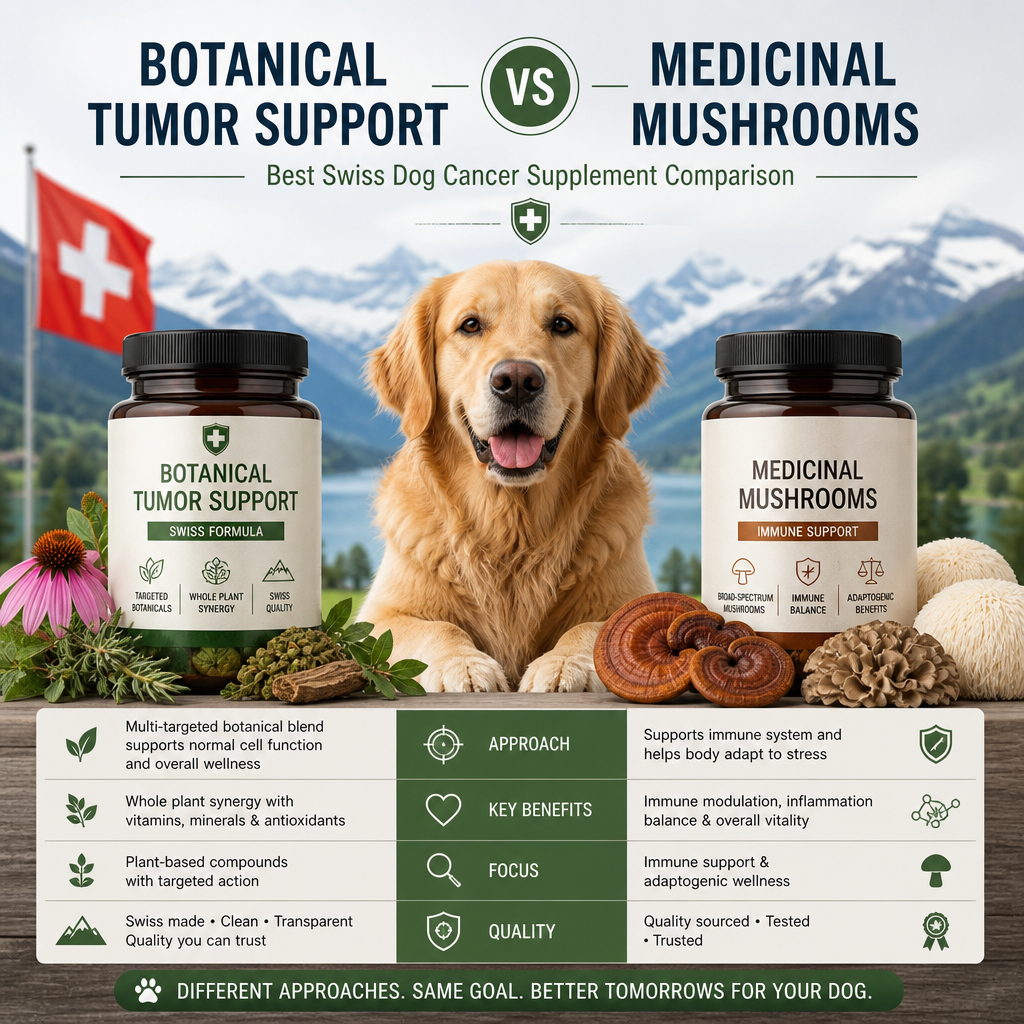
Botanical tumor support vs Medicinal mushrooms / veterinary mycotherapy is an important comparison for dog owners exploring complementary care during a cancer diagnosis. Both approaches may provide supportive compounds, but they are not interchangeable, and neither should replace veterinary oncology treatment. The right dog cancer supplement depends on the type of cancer, current medications, liver and kidney function, appetite, digestive health, and the overall goals of care.
Botanical tumor support generally refers to formulas containing plant-derived ingredients selected for antioxidant, anti-inflammatory, immune-modulating, or cellular-support properties. Common examples may include turmeric extracts, green tea compounds, milk thistle, medicinal herbs, or standardized plant polyphenols.
Medicinal mushrooms, by contrast, are fungi used for their polysaccharides, beta-glucans, triterpenes, and other bioactive compounds. Veterinary mycotherapy is the clinical use of medicinal mushrooms or mushroom-derived extracts as part of an integrative veterinary plan. Frequently discussed species include turkey tail, reishi, maitake, shiitake, and cordyceps.
The most useful distinction is not that one category is automatically better. Rather, botanical and mushroom supplements offer different chemistry, research backgrounds, manufacturing challenges, and potential interactions.
For readers who want a broader overview of mushroom-based support, the article on the benefits of medicinal mushrooms for dogs provides helpful background on how these products are commonly used in integrative care.
Botanical Tumor Support vs Medicinal Mushrooms: Key Differences
When comparing botanical tumor support vs medicinal mushrooms, it helps to examine several practical factors instead of focusing only on marketing claims.
Active compounds
Botanical formulas may contain flavonoids, terpenes, alkaloids, phenolic compounds, and other plant chemicals. Their effects can vary considerably depending on the plant species, extraction method, and concentration.
Mushroom products are often standardized around beta-glucans or polysaccharides. However, “mushroom powder” and “mushroom extract” are not necessarily equivalent. A basic powder may contain substantial fiber and less concentrated active material, while a hot-water or dual extract may be designed to increase the availability of specific compounds.
Research depth
Some mushroom species, particularly turkey tail, have attracted interest in canine cancer research. Early and limited studies have examined immune response and survival-related outcomes in dogs with certain cancers. These findings are promising but should not be interpreted as proof that every mushroom product treats cancer.
Botanical ingredients also have varying levels of evidence. Certain compounds have been studied in laboratory models, while others have traditional use but limited controlled research in dogs. Evidence from human studies or cell cultures cannot automatically be applied to a canine patient.
Intended role
Botanical supplements are often chosen for broad supportive goals, such as helping maintain normal inflammatory balance, supporting liver function, or improving nutritional resilience.
Medicinal mushrooms are more commonly selected for immune modulation. This does not mean they “boost immunity” in a simple or universally beneficial way. Cancer involves a complex interaction between abnormal cells, inflammation, immune surveillance, and treatment effects. Immune-modulating supplements should therefore be selected with professional guidance.
For dogs with tumor-related immune concerns, you may also find it useful to read about dog cancer biology and helpful immune imbalance factors, since understanding the disease process can make supplement decisions clearer.
Veterinary Mycotherapy and Canine Cancer Care
Veterinary mycotherapy can be considered an adjunct to surgery, chemotherapy, radiation, targeted therapy, or palliative care. Its purpose may include supporting quality of life, appetite, energy, immune function, or recovery. The specific mushroom matters, and so do the product’s extraction process and laboratory testing.
Turkey tail is one of the most frequently discussed mushrooms in canine oncology because of interest in its polysaccharide compounds. Reishi is often used in wellness formulas for immune and inflammatory support, while maitake and cordyceps may appear in broader mushroom blends. Yet combining several mushrooms does not automatically create a stronger product. Blends can make it harder to determine which ingredient is responsible for an effect or adverse reaction.
A veterinarian may also consider whether a mushroom supplement could affect blood clotting, blood pressure, blood sugar, liver enzymes, or immune activity. These issues are especially important before surgery or when a dog is receiving chemotherapy, corticosteroids, nonsteroidal anti-inflammatory drugs, or anticoagulant medication.
If you are comparing mushroom-based support options across different regions, product selection articles such as Ocoxin Pets alternative 5 Powerful Ways to Support Dogs in Spain can be useful for understanding how integrative formulas are positioned in practice.
Dog Cancer Supplement Comparison: What to Evaluate
A meaningful dog cancer supplement comparison should focus on quality and suitability rather than the number of ingredients listed on the label.
1. Product identity and standardization
Look for clearly identified species, extract type, serving size, and measurable active compounds. A label that simply states “proprietary blend” provides limited information. For mushrooms, beta-glucan content may be more useful than total polysaccharide content, because not all polysaccharides have the same biological relevance.
For botanical products, standardized levels of key constituents can help improve consistency. The source of the ingredient and the extraction method should also be disclosed.
2. Independent testing
Choose products supported by testing for heavy metals, pesticides, microbes, mold, and unwanted contaminants. This is particularly important with mushrooms because fungi can accumulate substances from their growing environment.
Quality assurance does not prove that a product treats cancer, but it reduces the risk of contamination and inaccurate labeling.
3. Veterinary compatibility
A supplement should be reviewed against the dog’s complete medical profile. A product that is reasonable for a healthy dog may be inappropriate for a dog with liver disease, kidney impairment, gastrointestinal ulcers, clotting problems, or an upcoming operation.
The oncology team should know about every supplement, including powders, chews, oils, teas, and concentrated liquid extracts.
4. Dosing transparency
Avoid products that provide vague instructions or encourage rapid dose increases. Dosing may depend on body weight, extract concentration, the dog’s health status, and the intended use. More is not necessarily better, particularly with concentrated extracts.
Potential Benefits and Limitations
Both botanical and mushroom supplements may support general wellness, but expectations should remain realistic. Possible benefits may include improved appetite, digestive support, maintenance of normal inflammatory balance, or assistance with recovery from demanding treatments. Some dogs may show no noticeable response, while others may experience digestive upset or other adverse effects.
Supplements cannot reliably shrink tumors, eliminate cancer, or guarantee longer survival. They also should not delay diagnostic testing or evidence-based treatment. The strongest approach is usually integrative: use proven veterinary care as the foundation and consider carefully selected supplements as an additional layer of support.
Owners seeking wider clinical perspective can also review peer-reviewed biomedical research on NCBI to better understand how veterinary nutrition and oncology studies are reported.
Safety Considerations for Dog Owners
Introduce only one new supplement at a time so that changes can be monitored. Watch for vomiting, diarrhea, reduced appetite, itching, lethargy, unusual bruising, or changes in urination. Stop the product and contact a veterinarian if concerning symptoms appear.
Extra caution is warranted before surgery, during chemotherapy, and when a dog takes medication that affects immunity, clotting, blood pressure, blood sugar, or liver metabolism. Antioxidant-heavy products may also require discussion during radiation or certain chemotherapy protocols, since treatment mechanisms can vary.
Keep a record of the product name, lot number, dose, start date, and any observed changes. This information helps the veterinary team make safer decisions.
Making the Best Choice
The choice between botanical tumor support and medicinal mushrooms should be individualized rather than based on a universal ranking. A mushroom extract may be considered when immune-focused support is a priority and the product has reliable standardization. A botanical formula may be more suitable when the goal involves digestive, liver, inflammatory, or general nutritional support. In some cases, a veterinarian may recommend neither, at least temporarily, because treatment interactions or organ function make supplementation unsuitable.
The most responsible dog cancer supplement comparison considers evidence, product quality, safety, and the dog’s specific diagnosis. Veterinary mycotherapy and botanical support can have a place in compassionate, integrative care, but they work best when selected transparently and monitored alongside conventional treatment.
For dogs with age-related concerns that overlap with cancer care, the article on senior dog cancer and important tumor risks may also help owners think through the bigger picture of long-term support.