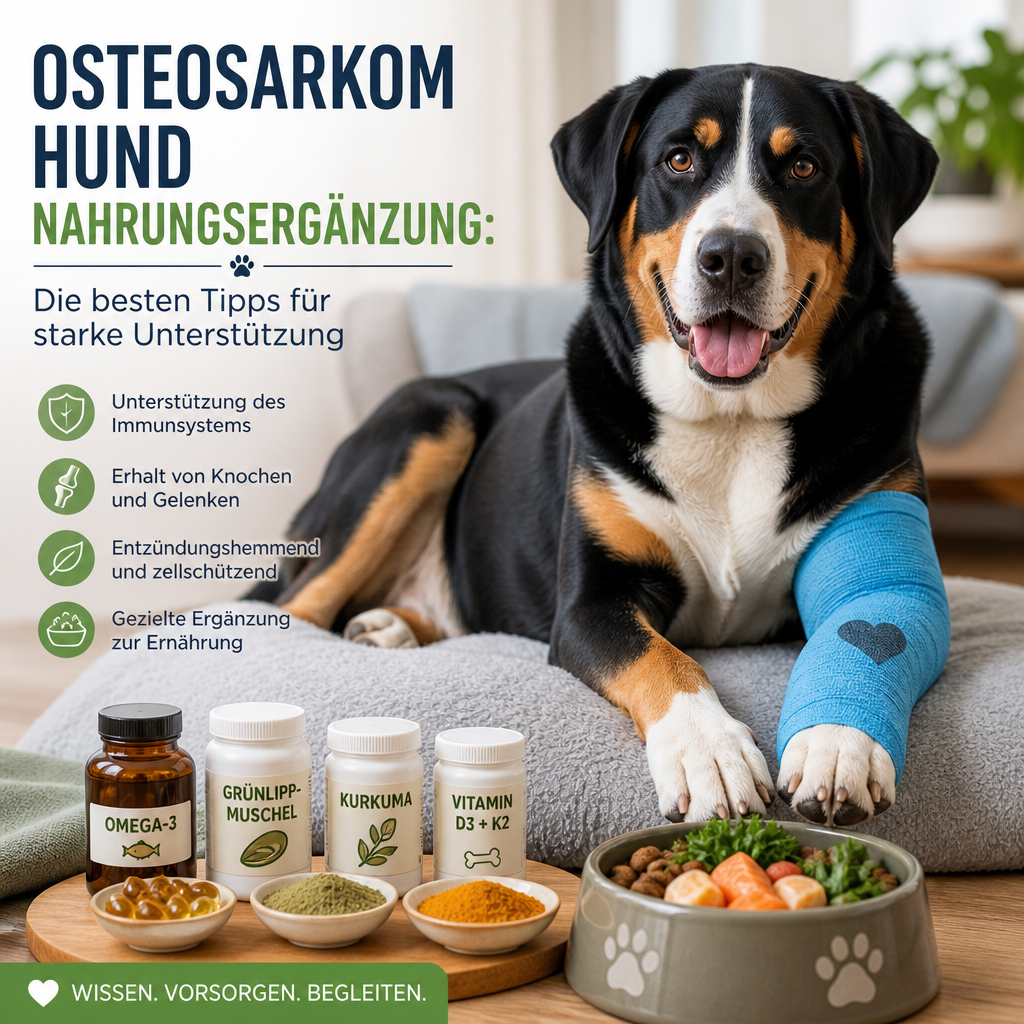
Osteosarkom Hund Nahrungsergänzung kann eine sinnvolle ergänzende Maßnahme sein, wenn sie sorgfältig ausgewählt und mit der behandelnden Tierärztin oder dem behandelnden Tierarzt abgestimmt wird. Ein Osteosarkom ist eine aggressive Knochenerkrankung, die meist eine umfassende Therapie erfordert. Nahrungsergänzungsmittel können dabei nicht die eigentliche Behandlung ersetzen, aber sie können den Organismus unterstützen, die Nährstoffversorgung verbessern und zum allgemeinen Wohlbefinden beitragen.
Gerade bei einer so belastenden Diagnose wünschen sich viele Halterinnen und Halter zusätzliche Möglichkeiten, um ihrem Hund den Alltag zu erleichtern. Genau hier setzt Osteosarkom Hund Nahrungsergänzung an: nicht als Heilversprechen, sondern als durchdachte Unterstützung für Ernährung, Energiehaushalt und Lebensqualität. Entscheidend ist dabei immer, dass jedes Präparat zur individuellen Situation des Hundes passt.
Das Osteosarkom ist der häufigste bösartige Knochentumor beim Hund. Besonders häufig sind große und ältere Hunde betroffen, allerdings kann die Erkrankung grundsätzlich bei Tieren verschiedener Rassen und Altersgruppen auftreten. Typische Anzeichen sind anhaltende Lahmheit, Schmerzen, Schwellungen an einem Gliedmaßengelenk oder eine zunehmende Bewegungsunlust.
Die Diagnose erfolgt meist durch bildgebende Verfahren wie Röntgen oder Computertomografie und gegebenenfalls durch eine Gewebeuntersuchung. Die Therapie kann je nach Lage und Ausbreitung des Tumors eine Operation, eine Amputation, eine Chemotherapie oder eine palliative Schmerzbehandlung umfassen. Ergänzungsmittel sollten immer als Bestandteil eines individuellen Gesamtkonzepts betrachtet werden.
Für viele Halterinnen und Halter ist die Diagnose ein Schock, weil der Verlauf oft schnell und belastend sein kann. Genau deshalb wird Osteosarkom Hund Nahrungsergänzung so häufig gesucht: Der Wunsch nach zusätzlicher Unterstützung ist verständlich, sollte aber immer realistisch bleiben. Sinnvoll ist alles, was den Hund im Alltag stabiler, fitter und besser versorgt macht, ohne die medizinische Behandlung zu gefährden.
Ein wichtiges Ziel ist außerdem, die Belastung im Alltag verständlich einzuordnen. Nicht jede Veränderung bedeutet sofort eine Verschlechterung, aber anhaltende Schmerzen, Schonhaltungen oder Appetitverlust sollten ernst genommen werden. Eine gute Begleitung beginnt deshalb immer mit genauer Beobachtung und ehrlicher Rücksprache mit der Praxis.
Welche Nahrungsergänzung kann sinnvoll sein?
Bei der Auswahl von Nahrungsergänzungen geht es nicht darum, den Tumor eigenständig zu behandeln. Im Mittelpunkt stehen vielmehr die Unterstützung des Stoffwechsels, der Erhalt von Muskelmasse, eine gute Verdauung und die Förderung der Lebensqualität.
Osteosarkom Hund Nahrungsergänzung sollte deshalb immer als Teil einer Gesamtstrategie verstanden werden. Dazu gehören je nach Situation Schmerzmanagement, angepasste Bewegung, eine passende Fütterung und regelmäßige tierärztliche Kontrollen. Einzelne Präparate können hilfreich sein, wenn sie zum Bedarf des Hundes passen und gut vertragen werden.
Wichtig ist außerdem, keine pauschalen Versprechen zu glauben. Ein Produkt kann unter Umständen das Wohlbefinden verbessern, aber es kann weder eine Operation ersetzen noch sicher das Wachstum eines Osteosarkoms stoppen. Eine gute Ergänzung ist unterstützend, nicht ersetzend.
Wer sich mit Osteosarkom Hund Nahrungsergänzung beschäftigt, sollte die Ziele daher klar definieren: weniger Belastung im Alltag, bessere Verträglichkeit von Futter und Medikamenten, stabile Energie und möglichst wenig unnötige Zusatzstoffe. So wird aus einer bloßen Produktsuche ein sinnvoller Behandlungsbaustein.
Auch die Situation rund um die Hauptbehandlung sollte bedacht werden. Vor Operationen, während einer Chemotherapie oder in einer Phase mit starkem Gewichtsverlust gelten oft andere Prioritäten. Deshalb ist es sinnvoll, einzelne Produkte nicht isoliert, sondern immer im Zusammenhang mit dem gesamten Therapieverlauf zu beurteilen.
Omega-3-Fettsäuren
Omega-3-Fettsäuren aus Fischöl, insbesondere EPA und DHA, werden häufig zur Unterstützung von Hunden mit chronischen Entzündungsprozessen und Gelenkbeschwerden eingesetzt. Sie können bei manchen Tieren dazu beitragen, entzündliche Prozesse zu regulieren und die Beweglichkeit zu unterstützen.
Wichtig ist die Qualität des Produkts. Fischöl sollte möglichst auf Schadstoffe geprüft sein und einen klar angegebenen Gehalt an EPA und DHA aufweisen. Die Dosierung sollte sich am Körpergewicht und am Gesundheitszustand des Hundes orientieren. Bei Blutgerinnungsstörungen, bevorstehenden Operationen oder bestimmten Medikamenten ist besondere Vorsicht erforderlich.
In der Praxis werden Omega-3-Produkte oft als ein Baustein in der begleitenden Ernährung eingesetzt. Gerade bei Osteosarkom Hund Nahrungsergänzung werden sie häufig genannt, weil sie sich gut mit einer insgesamt entzündungsarmen Fütterung kombinieren lassen. Dennoch gilt auch hier: Die individuelle Verträglichkeit ist entscheidend.
Besonders bei empfindlichem Magen sollte die Einführung langsam erfolgen. Manche Hunde reagieren zunächst mit weicherem Kot oder Übelkeit. Dann ist es sinnvoll, die Menge zu prüfen oder das Präparat mit der Tierärztin oder dem Tierarzt zu besprechen.
Wenn ein Hund bereits Medikamente erhält, sollte zudem auf mögliche Wechselwirkungen geachtet werden. Das gilt besonders dann, wenn mehrere Ergänzungen parallel geplant sind oder die Fütterung ohnehin schon umgestellt wurde. Eine kleine, gut begründete Auswahl ist oft sinnvoller als zu viele neue Produkte auf einmal.
Antioxidantien
Antioxidantien wie Vitamin E, Vitamin C oder bestimmte Pflanzenstoffe werden häufig als Bestandteil einer unterstützenden Ernährung diskutiert. Sie helfen dem Körper, oxidativem Stress entgegenzuwirken. Allerdings ist eine unkontrollierte Hochdosierung nicht empfehlenswert, vor allem dann nicht, wenn der Hund eine Chemotherapie erhält.
Einige Tierärztinnen und Tierärzte empfehlen während einer onkologischen Behandlung eine gezielte, aber zurückhaltende Ergänzung. Andere raten dazu, einzelne Präparate zeitweise wegzulassen. Diese Entscheidung sollte immer individuell getroffen werden, da die Verträglichkeit und die jeweilige Therapie eine wichtige Rolle spielen.
Osteosarkom Hund Nahrungsergänzung wird oft mit Antioxidantien in Verbindung gebracht, doch mehr ist nicht automatisch besser. Eine gut abgestimmte Ernährung mit ausreichend natürlichen Nährstoffen ist häufig der solidere Ansatz als ein Mix aus hochdosierten Einzelpräparaten. Gerade wenn mehrere Medikamente gegeben werden, sollte jede Ergänzung überprüft werden.
Praktisch hilfreich kann sein, vor dem Einsatz eines Produkts zu klären, welche Inhaltsstoffe enthalten sind, ob weitere Zusätze wie Aromastoffe oder Zucker eingesetzt werden und ob die Zusammensetzung wirklich zum Gesundheitszustand des Hundes passt. Eine seriöse Einordnung der allgemeinen Sicherheit von Nahrungsergänzungen bietet auch die Übersichtsseite der American Veterinary Medical Association zu Nahrungsergänzungsmitteln für Hunde.
Gerade bei einer Behandlung, die auf einen empfindlichen Körper trifft, sind klare Entscheidungen oft hilfreicher als viele Einzelmaßnahmen. Wer zu schnell zu viel ergänzen möchte, erschwert die Beurteilung von Wirkung und Verträglichkeit. Deshalb ist ein schrittweises Vorgehen besonders sinnvoll.
Gelenk- und Knorpelunterstützung
Glucosamin, Chondroitin, Hyaluronsäure oder bestimmte Muschelextrakte werden häufig bei Gelenkproblemen eingesetzt. Bei einem Osteosarkom können sie die Grunderkrankung nicht heilen. Sie können jedoch unter Umständen die allgemeine Gelenkfunktion unterstützen, insbesondere wenn zusätzlich altersbedingte Arthrose oder eine eingeschränkte Beweglichkeit besteht.
Bei deutlichen Schmerzen reicht ein Gelenkpräparat nicht aus. Eine wirksame tierärztliche Schmerztherapie bleibt entscheidend. Ergänzungen sind hier eher als Unterstützung für den Alltag gedacht, nicht als Ersatz für Medikamente.
Wenn der Hund nach einer Operation oder bei einer bereits bestehenden Lahmheit vorsichtig bewegt wird, kann eine gut ausgewählte Kombination aus Ernährung und ergänzenden Präparaten die Belastbarkeit positiv beeinflussen. Auch in diesem Bereich ist Osteosarkom Hund Nahrungsergänzung nur dann sinnvoll, wenn sie konkret zum Symptomprofil passt.
Gerade bei älteren Hunden kann die Kombination aus moderater Bewegung, sauberer Gewichtsführung und passenden Ergänzungen helfen, den Bewegungsapparat insgesamt zu entlasten. Das Ziel ist nicht Leistung, sondern mehr Komfort im Alltag.
Zusätzlich lohnt sich ein Blick auf die Tagesform. Manche Hunde profitieren von einem ruhigen Rhythmus mit kurzen Belastungsphasen, während andere bei zu viel Schonung schneller versteifen. Eine abgestimmte Begleitung hilft, den richtigen Mittelweg zu finden.
Knochenkrebs Hund Ergänzungsmittel sollten nicht allein nach Werbeversprechen ausgewählt werden. Begriffe wie „entgiftend“, „tumorauflösend“ oder „heilend“ sind kritisch zu betrachten. Kein frei verkäufliches Nahrungsergänzungsmittel kann eine onkologische Therapie ersetzen oder zuverlässig das Wachstum eines Osteosarkoms stoppen.
Bei der Auswahl sind mehrere Kriterien wichtig:
– nachvollziehbare Inhaltsstoffangaben
– klare Dosierungsempfehlungen
– geprüfte Qualität und gute Verträglichkeit
– möglichst wenige unnötige Zusatzstoffe
– Anpassung an Gewicht, Alter und Begleiterkrankungen
– Abstimmung mit der tierärztlichen Behandlung
Besonders wichtig ist, nicht mehrere Präparate gleichzeitig zu beginnen. Werden verschiedene Produkte parallel gegeben, lässt sich bei Nebenwirkungen kaum feststellen, welches Mittel dafür verantwortlich ist.
Wenn Sie die Produkte vergleichen, lohnt sich ein Blick auf die genaue Deklaration. Seriöse Hersteller benennen die Wirkstoffe klar und machen keine überzogenen Heilversprechen. Zusätzliche Orientierung bietet auch das Tiernahrungs- und Supplement-Informationsangebot der AVMA, das grundlegende Hinweise zur sicheren Verwendung von Ergänzungsmitteln gibt.
Osteosarkom Hund Nahrungsergänzung sollte außerdem immer zur laufenden Therapie passen. Was vor einer Operation sinnvoll sein kann, ist während einer Chemotherapie möglicherweise nicht ideal. Deshalb ist eine regelmäßige Rücksprache mit der Praxis so wichtig.
Auch die Form des Präparats kann eine Rolle spielen. Manche Hunde akzeptieren Kapseln besser, andere bevorzugen Pulver oder flüssige Zusätze. Ein Produkt ist nur dann hilfreich, wenn es tatsächlich verabreicht werden kann und im Alltag nicht zusätzlichen Stress erzeugt.
Bei empfindlichen Hunden ist es oft klug, mit einer kleinen Menge zu starten und die Verträglichkeit über einige Tage zu beobachten. Hautveränderungen, Durchfall, Erbrechen oder auffällige Müdigkeit können Hinweise darauf sein, dass ein Präparat nicht passt.
Wer sicher starten möchte, sollte außerdem die aktuelle Fütterung dokumentieren. So lässt sich später besser erkennen, ob ein neues Mittel wirklich geholfen hat oder ob eine andere Änderung für die Verbesserung verantwortlich war.
Ernährung als Grundlage der Unterstützung
Eine hochwertige, gut verträgliche Ernährung ist oft wichtiger als eine große Anzahl einzelner Ergänzungsmittel. Der Hund sollte ausreichend Energie und hochwertiges Protein erhalten, sofern keine Erkrankung wie eine schwere Nieren- oder Leberfunktionsstörung dagegenspricht. Gerade während einer Krebstherapie kann der Erhalt von Muskelmasse eine wichtige Rolle spielen.
Viele Hunde mit Osteosarkom haben Schmerzen, Übelkeit oder weniger Appetit. Kleine, regelmäßige Mahlzeiten können besser akzeptiert werden als große Portionen. Nassfutter, leicht angewärmtes Futter oder eine individuell abgestimmte tierärztliche Diät können hilfreich sein. Bei anhaltender Futterverweigerung sollte zeitnah eine Praxis kontaktiert werden.
Auch eine ausreichende Flüssigkeitsaufnahme ist wichtig. Bei Erbrechen, Durchfall oder deutlicher Schwäche besteht das Risiko einer Austrocknung, die insbesondere während einer Chemotherapie ernst genommen werden muss.
In vielen Fällen ist die Ernährung der eigentliche Schlüssel zur Stabilisierung. Osteosarkom Hund Nahrungsergänzung kann dann auf dieser Basis aufbauen, statt vergeblich gegen eine unpassende Fütterung anzugehen. Eine gute Rationsgestaltung berücksichtigt Energiebedarf, Proteinqualität, Fettverträglichkeit und die Akzeptanz des Hundes.
Falls der Hund stark abnimmt, sollte nicht nur an Ergänzungsmittel gedacht werden. Dann ist zu prüfen, ob Schmerzen, Übelkeit oder ein veränderter Stoffwechsel die Ursache sind. Je früher dies erkannt wird, desto besser lässt sich gegensteuern.
Auch die Fütterung nach einer Operation verdient Aufmerksamkeit. Ein Hund, der sich schonen muss, benötigt häufig eine etwas andere Alltagsroutine als ein gesundes Tier. Ruhige Fütterungsplätze, feste Zeiten und gut verdauliche Mahlzeiten können helfen, den Genesungsprozess angenehm zu begleiten.
Wer sich bei Osteosarkom Hund Nahrungsergänzung auf die Ernährung konzentriert, sollte außerdem darauf achten, keine extremen Diäten ohne medizinischen Grund zu wählen. Radikale Fütterungskonzepte klingen oft überzeugend, sind aber für kranke Hunde häufig nicht geeignet.
Eine stabile Fütterung ist außerdem oft die beste Grundlage, um einzelne Präparate überhaupt sinnvoll beurteilen zu können. Wenn die Basis nicht stimmt, bleiben auch gut ausgewählte Zusätze hinter ihrem Potenzial zurück. Deshalb sollte zuerst die tägliche Ration sinnvoll aufgebaut werden.
Osteosarkom Hund Unterstützung im Alltag
Osteosarkom Hund Unterstützung umfasst mehr als Nahrungsergänzung. Ein angepasstes Umfeld kann den Alltag erheblich erleichtern. Rutschfeste Teppiche, Rampen, gut gepolsterte Liegeflächen und kurze, kontrollierte Spaziergänge helfen dabei, Stürze und Überlastung zu vermeiden.
Sprünge, wildes Toben und lange Belastungen sollten bei instabilen Knochen vermieden werden. Gleichzeitig ist völlige Bewegungslosigkeit nicht immer sinnvoll. Welche Aktivität möglich ist, hängt von der betroffenen Knochenregion, dem Schmerzlevel und der Stabilität des Knochens ab.
Eine regelmäßige Gewichtskontrolle ist ebenfalls hilfreich. Übergewicht belastet Gelenke und Knochen zusätzlich, während Untergewicht und Muskelabbau auf eine unzureichende Nährstoffaufnahme oder eine fortschreitende Erkrankung hinweisen können.
Im Alltag kann auch der Tagesrhythmus helfen. Feste Fütterungszeiten, kurze ruhige Spaziergänge und ein gut erreichbarer Liegeplatz reduzieren Stress. Wenn der Hund nach Bewegung deutlich schlechter läuft, war die Belastung wahrscheinlich zu hoch. Dann sollte das Programm angepasst werden.
Osteosarkom Hund Nahrungsergänzung kann in solchen Situationen eine ergänzende Rolle spielen, weil sie den Organismus im Hintergrund unterstützt. Entscheidend bleibt aber immer, was der Hund im Alltag tatsächlich toleriert und was ihm spürbar guttut.
Auch die Beobachtung zu Hause ist wertvoll. Notieren Sie Appetit, Aktivitätslevel, Schmerzverhalten und mögliche Nebenwirkungen neuer Produkte. Solche Informationen helfen der Tierärztin oder dem Tierarzt, die Therapie noch besser anzupassen.
Wenn der Hund an einzelnen Tagen deutlich fitter wirkt, sollte das nicht automatisch als Entwarnung gesehen werden. Gerade bei Tumorerkrankungen sind Schwankungen normal. Kontinuität und sorgfältige Beobachtung sind daher wichtiger als einzelne gute Tage.
Wer diese Alltagsfaktoren ernst nimmt, verbessert nicht nur die Sicherheit, sondern oft auch die Stimmung des Hundes. Mehr Ruhe, klare Abläufe und kleine Komfortmaßnahmen können viel dazu beitragen, dass ein kranker Hund sich zu Hause besser orientieren und entspannen kann.
Praktische Alltagstipps für mehr Sicherheit
Ein paar einfache Maßnahmen können den Alltag zusätzlich erleichtern:
Futter und Wasser leicht erreichbar platzieren
Treppen möglichst vermeiden oder absichern
Spaziergänge lieber kurz und häufig gestalten
schmerzhafte Bewegungen konsequent reduzieren
bei Bedarf Hilfsmittel wie Tragegurte nutzen
Diese Maßnahmen ersetzen keine Behandlung, können aber den Stress senken und die Bewegungsqualität verbessern. In Kombination mit einer sinnvollen Ernährung entsteht so ein alltagstaugliches Unterstützungskonzept.
Hilfreich ist auch eine ruhige Schlafumgebung ohne Zugluft und ohne ständiges Aufstehen müssen. Je weniger unnötige Belastung entsteht, desto leichter lässt sich die verbleibende Energie für wichtige Dinge wie Fressen, Trinken und Erholen nutzen.
Wann ist besondere Vorsicht erforderlich?
Nahrungsergänzungsmittel können Nebenwirkungen und Wechselwirkungen verursachen. Vorsicht ist besonders wichtig bei Hunden mit Nieren- oder Lebererkrankungen, Blutgerinnungsproblemen, Magen-Darm-Beschwerden oder bei gleichzeitiger Einnahme von Schmerzmitteln, Kortison oder Chemotherapeutika.
Auch pflanzliche Präparate sind nicht automatisch harmlos. Manche Kräuter und Extrakte können die Wirkung von Medikamenten beeinflussen oder die Leber belasten. Deshalb sollte jedes neue Produkt vor der Anwendung mit der tierärztlichen Fachperson besprochen werden.
Warnzeichen wie starke Schmerzen, plötzlich zunehmende Lahmheit, Atemnot, anhaltendes Erbrechen, blasse Schleimhäute oder vollständige Futterverweigerung erfordern eine schnelle medizinische Abklärung.
Wenn Sie unsicher sind, ob ein Produkt geeignet ist, ist Zurückhaltung besser als Experimentieren. Das gilt besonders dann, wenn bereits Medikamente gegeben werden oder die Operation noch bevorsteht. Auch gut gemeinte Osteosarkom Hund Nahrungsergänzung sollte nie spontan und ohne Plan gestartet werden.
Zusätzlich ist es sinnvoll, vor jeder neuen Ergänzung die aktuelle Medikation schriftlich festzuhalten. So lassen sich mögliche Wechselwirkungen leichter prüfen. Gerade bei älteren Hunden sind mehrere Wirkstoffe oft gleichzeitig im Einsatz.
Wer Osteosarkom Hund Nahrungsergänzung verantwortungsvoll einsetzen möchte, sollte außerdem auf die Dauer der Anwendung achten. Nicht jedes Präparat muss dauerhaft gegeben werden; manchmal reicht eine gezielte Phase, in der ein bestimmter Bedarf besteht.
Im Zweifel gilt: Erst klären, dann ergänzen. Dieser einfache Grundsatz schützt vor unnötigen Risiken und hilft, die Behandlung übersichtlich zu halten. Gerade in einer belastenden Situation gibt eine klare Struktur oft auch den Halterinnen und Haltern mehr Sicherheit.
Häufige Fragen zur Begleitung bei Knochenkrebserkrankungen
Viele Besitzerinnen und Besitzer fragen sich, ob Ergänzungsmittel überhaupt einen spürbaren Unterschied machen. Die Antwort ist: Manchmal ja, aber nur dann, wenn sie sinnvoll gewählt und passend eingesetzt werden. Ein einzelnes Präparat kann die Lebensqualität verbessern, etwa wenn es den Appetit unterstützt oder die Beweglichkeit erleichtert.
Ebenso häufig ist die Sorge, zu viel zu tun. Diese Sorge ist berechtigt, denn nicht jede zusätzliche Kapsel ist hilfreich. Gerade bei einem empfindlichen Hund ist weniger oft mehr, solange die wichtigen Bedürfnisse des Körpers abgedeckt sind. Deshalb sollte Osteosarkom Hund Nahrungsergänzung immer gezielt und nicht nach dem Zufallsprinzip eingesetzt werden.
Auch die Frage nach der Reihenfolge ist wichtig. In vielen Fällen sollte zuerst die Basis stimmen: Schmerztherapie, Futterakzeptanz, Flüssigkeitsaufnahme und Alltagssicherheit. Erst danach ist es sinnvoll, gezielt über Ergänzungen nachzudenken. So lassen sich Erfolge besser einordnen und unnötige Kosten vermeiden.
Wenn eine Ergänzung eingeführt wird, ist Geduld wichtig. Manche Produkte brauchen Zeit, bis sich ein Effekt zeigt. Andere sind nur dann sinnvoll, wenn sie dauerhaft oder phasenweise eingesetzt werden. Eine gute Dokumentation hilft dabei, die Wirkung realistisch zu bewerten.
So bleibt die Begleitung übersichtlich, individuell und tiergerecht. Das ist meist hilfreicher als große Versprechen oder schnell wechselnde Produkte.
Fazit
Osteosarkom Hund Nahrungsergänzung kann eine unterstützende Rolle spielen, wenn sie gezielt, hochwertig und individuell eingesetzt wird. Omega-3-Fettsäuren, ausgewählte Gelenkpräparate oder bestimmte Vitamine können je nach Situation sinnvoll sein. Sie ersetzen jedoch weder die Diagnose noch die Operation, Schmerztherapie oder onkologische Behandlung.
Die beste Unterstützung entsteht durch das Zusammenspiel aus tierärztlicher Betreuung, angepasster Ernährung, guter Schmerztherapie, kontrollierter Bewegung und einem stressarmen Alltag. Jedes Ergänzungsmittel sollte deshalb auf den Gesundheitszustand des Hundes abgestimmt und regelmäßig überprüft werden.
Wer sich an diesen Grundsatz hält, kann die Lebensqualität des Hundes oft spürbar verbessern, ohne unnötige Risiken einzugehen. Genau darin liegt der praktische Nutzen einer gut geplanten, verantwortungsvollen Unterstützung.
Am Ende zählt nicht die Anzahl der Produkte, sondern ihre Passgenauigkeit. Wenn Osteosarkom Hund Nahrungsergänzung klug eingesetzt wird, kann sie Teil eines ruhigen, sicheren und möglichst angenehmen Alltags für den betroffenen Hund sein.
Besonders wertvoll ist dabei ein ruhiger, langfristiger Blick: kleine Verbesserungen im Appetit, in der Bewegung oder im Wohlbefinden sind oft schon ein gutes Zeichen. Wer konsequent beobachtet und eng mit der Praxis zusammenarbeitet, schafft die beste Grundlage für eine stabile und positive Begleitung.
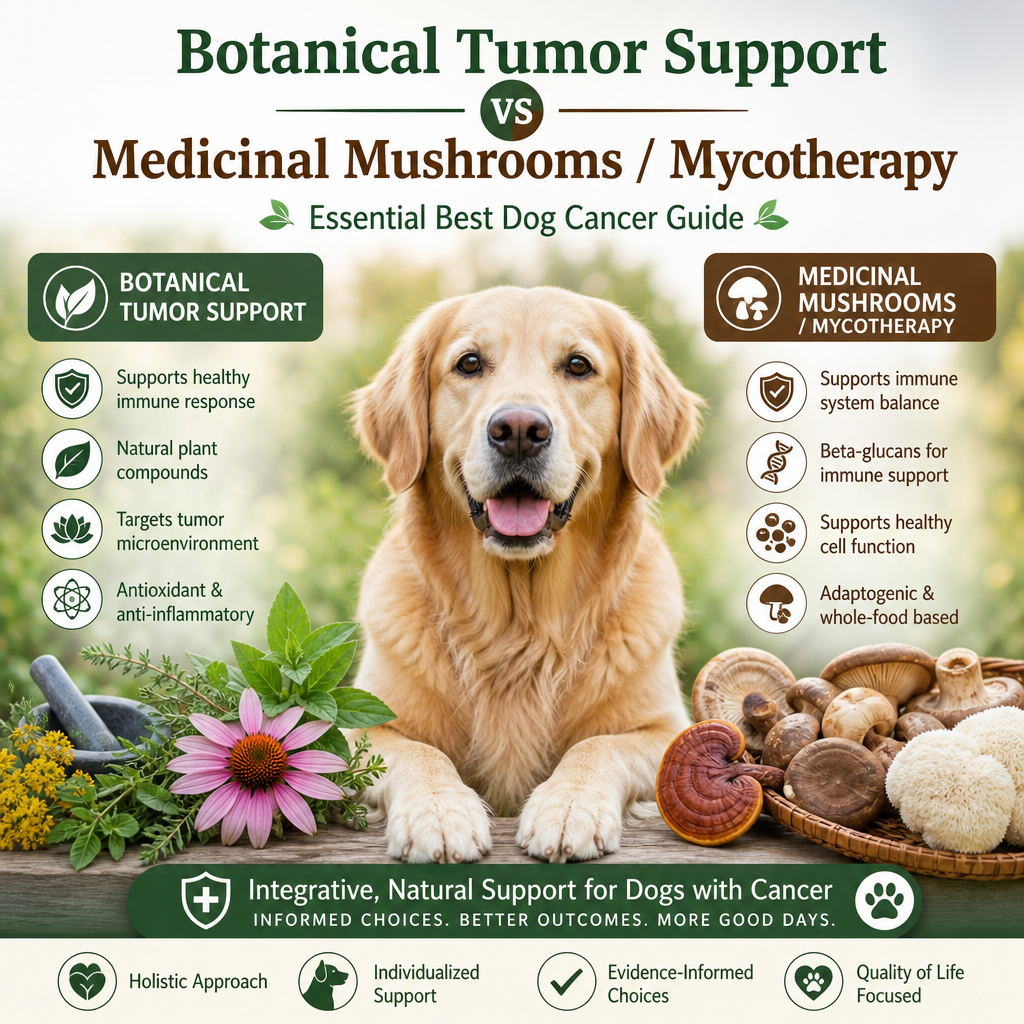
Botanical tumor support vs Medicinal mushrooms / mycotherapy is an important distinction for dog guardians exploring complementary options during cancer care. Both approaches may be used alongside veterinary treatment, but they are not interchangeable. Botanical formulas generally rely on plant compounds selected for antioxidant, anti-inflammatory, immune-modulating, or tissue-supportive effects. Medicinal mushrooms, often called mycotherapy, use fungi or mushroom extracts that contain compounds such as beta-glucans and triterpenes. Understanding how these categories differ can help owners make safer, more informed decisions.
When people compare botanical tumor support vs Medicinal mushrooms / mycotherapy, the most useful question is not which one is “stronger,” but which one matches the dog’s needs, diagnosis, and treatment plan. In cancer care, the right supplement is the one that can be used responsibly, at the right time, with clear goals and veterinary oversight.
Botanical tumor support refers to the use of herbs, plant extracts, and other botanical ingredients as part of a broader wellness plan for a dog with cancer. These products may be designed to support appetite, digestion, immune function, inflammation balance, liver health, or general resilience during conventional treatment.
Common botanical ingredients may include turmeric-derived curcuminoids, milk thistle, green tea compounds, ginger, astragalus, or other traditional herbs. Each plant has a different chemical profile and potential purpose. For example, milk thistle is often included for liver support, while ginger may be selected for digestive comfort. However, the presence of a familiar herb does not automatically make a product appropriate for every dog.
Botanical supplements can be complex because one plant may contain dozens of active compounds. The effects may vary according to extraction method, concentration, processing, and the dog’s health status. A product made from a standardized extract is not necessarily equivalent to a powdered whole herb, even when both use the same plant name.
In practice, botanical tumor support works best when the goal is specific and realistic. Some formulas are chosen to help maintain appetite, others to support the liver, and others to assist with inflammation balance. That variety is useful, but it also means the ingredients must be checked carefully before use. A formula that seems gentle may still be unsuitable if a dog has kidney disease, liver compromise, or a medication schedule that could be affected by plant compounds. This is why veterinary guidance matters before starting any supplement.
It also helps to think about botanical support in the same practical way as any other part of cancer care: by asking what problem it is meant to address. If the goal is digestive comfort, the product should be selected for that purpose. If the goal is liver support, the label and dosing should reflect that aim. That approach keeps botanical tumor support grounded in real-world needs rather than marketing language.
Some dog owners also appreciate that botanical products can be blended into a broader routine that includes diet, hydration, symptom control, and stress reduction. Even so, more ingredients do not automatically mean better results. A short, well-chosen formula is often easier to monitor than a complicated blend with multiple overlapping actions. In many cases, simplicity improves safety.
What is medicinal mushroom therapy?
Medicinal mushrooms, or mycotherapy, involve the use of mushrooms and mushroom extracts for supportive health purposes. Common examples include turkey tail, reishi, maitake, shiitake, cordyceps, and agaricus species. These fungi contain polysaccharides, beta-glucans, sterols, triterpenes, and other compounds that may influence immune signaling and inflammatory pathways.
Turkey tail is one of the most discussed mushrooms in veterinary cancer support because of research into its polysaccharide compounds. Some studies have explored its use in dogs with certain cancers, but evidence remains limited compared with standard veterinary oncology treatments. Reishi and maitake are also frequently used in integrative protocols, although their benefits can depend heavily on product quality, extraction technique, and dose.
Mycotherapy is not a cure for cancer. Its most reasonable role is usually supportive: helping maintain quality of life, supporting immune balance, and complementing a veterinarian-supervised treatment plan. Research in dogs is still developing, and findings from laboratory studies or human research cannot automatically be applied to canine patients.
Product type also matters. Some supplements use only the fruiting body, while others rely on mycelium or a blend of both. Extraction methods can change the final composition, including the concentration of beta-glucans and other compounds. When evaluating medicinal mushrooms, dog owners should ask what part of the mushroom is used, how it is extracted, and whether contaminant testing has been performed. Those details often separate a dependable formula from a marketing claim.
In many conversations about canine cancer support, medicinal mushrooms are discussed because they offer a well-defined category of compounds rather than a broad botanical mix. That can make them easier to evaluate in a dog cancer supplement comparison, provided the label is transparent and the company can explain its sourcing and testing methods.
Botanical tumor support vs Medicinal mushrooms / mycotherapy
When comparing these categories, the primary difference is their source and chemical composition. Botanical products come from plants, while medicinal mushroom products come from fungi. Their biological actions may overlap, but they are not identical.
Botanical formulas are often broader and may target several areas at once, such as digestion, inflammation, antioxidant defenses, and organ support. Mushroom products are commonly chosen for their immune-modulating compounds, especially beta-glucans. In some cases, a veterinarian may recommend one category; in others, a carefully designed protocol may include both.
Another difference is standardization. Mushroom quality can vary significantly depending on whether a product uses the fruiting body, mycelium, or a combination. It also matters whether the extract is water-based, alcohol-based, or dual-extracted. Botanical products face similar challenges, including variation in plant species, growing conditions, harvesting, and concentration.
Neither category should be judged only by its ingredient list. A high-quality product should identify the exact species, extraction method, active-compound content when relevant, lot testing, and contaminant screening.
In a real-world cancer plan, the decision is rarely about one being universally better than the other. Instead, the question is whether a botanical or mushroom product matches the dog’s medical needs, current medications, and ability to tolerate the supplement. That is why the comparison should be framed as a support strategy rather than a competition. Some dogs may benefit more from a plant-based formula aimed at digestive comfort, while others may be better suited to a mushroom extract chosen for immune support. The right answer depends on context.
How the two approaches differ in practice
Botanical products are often used for targeted support such as calming inflammation, assisting the liver, or easing digestive upset. Medicinal mushroom therapy is more often discussed in relation to immune balance and general resilience. Both can be part of a thoughtful plan, but neither should be added casually. The safest approach is to define the purpose first and then choose the product second.
One reason owners search for botanical tumor support vs Medicinal mushrooms / mycotherapy is that both options are commonly described as “natural,” yet the practical risks and benefits are not the same. A botanical formula may be chosen for a dog with poor appetite or digestive sensitivity, while a mushroom extract may be considered when immune support is the main goal. That difference matters when multiple drugs or therapies are already part of the treatment plan.
It is also important to note that natural does not mean automatically safer. A mushroom supplement can still cause stomach upset, and a botanical product can still affect metabolism or clotting. In other words, the category alone does not determine safety. Product quality, dosing, and the dog’s condition are often more important than the label category.
Dog cancer supplement comparison: what matters most
A useful dog cancer supplement comparison should consider more than whether a product is labeled “natural.” Important evaluation points include:
Veterinary oversight: The supplement should be reviewed by the dog’s veterinarian, ideally with input from a veterinary oncologist or integrative veterinary professional.
Quality control: Look for independent testing for heavy metals, pesticides, microbes, and inaccurate ingredient claims.
Medical compatibility: The product must be assessed alongside chemotherapy, radiation, surgery, steroids, pain medication, antibiotics, and other treatments.
The dog’s individual condition: Kidney disease, liver disease, clotting problems, gastrointestinal sensitivity, and immune disorders can affect supplement safety.
Clear treatment goals: A supplement should have a specific purpose, such as supporting appetite or digestive comfort, rather than being added without a defined reason.
A dog receiving chemotherapy may need a different supplement plan from a dog undergoing palliative care. The timing of administration may also matter. Some compounds can affect drug metabolism, platelet activity, blood pressure, or immune signaling.
When possible, compare products by evidence, not by promotional language. A transparent label, published ingredient standards, and a sensible dosing plan are more useful than broad claims about “supporting everything.” If a product cannot clearly explain what it is meant to do, it may not be the right fit for a dog with cancer.
For owners who want to understand why health conditions can change supplement needs, it may help to review a related topic such as Dog Cancer Biology Helpful Immune Imbalance & Tumor Factors. A better understanding of tumor behavior, immune imbalance, and treatment context often leads to better supplement decisions.
When comparing botanical tumor support vs Medicinal mushrooms / mycotherapy, it is also wise to ask whether the product is meant for short-term symptom relief or longer-term supportive use. A formula used for nausea or digestive upset may be relevant only during a certain phase of treatment, while an immune-support formula may be used in a more ongoing way. That distinction can prevent unnecessary overlap and reduce the chance of mixing too many compounds at once.
Potential risks and interactions
Natural products can cause side effects and drug interactions. Herbs with blood-thinning properties may be inappropriate before surgery or for dogs with low platelet counts. Certain concentrated extracts can irritate the stomach or place additional demands on the liver. Mushroom products may occasionally cause digestive upset, allergic reactions, or changes in immune activity.
Antioxidant supplements require particular care. Although antioxidants are often promoted as universally beneficial, high doses may not be appropriate during some cancer treatments. The relationship between oxidative stress and chemotherapy is complex, and the effect can depend on the specific drug, dose, timing, and cancer type.
Owners should also avoid substituting supplements for proven treatment. Delaying surgery, chemotherapy, radiation, or other recommended care can allow disease to progress. Supportive products should be viewed as additions to a veterinary plan, not replacements for diagnosis and treatment.
The safest practical rule is simple: if a supplement might change how a drug behaves, it deserves a professional review. That includes possible effects on metabolism, clotting, blood pressure, or immune response. Even when a product seems gentle, the combination of cancer, medications, and underlying organ stress can make reactions less predictable.
Another practical risk is duplication. Some formulas combine mushrooms with botanicals, while others overlap with diet supplements or prescription support products. If multiple items include similar ingredients, the total dose may become higher than intended. Keeping a written list of every supplement makes it easier to spot overlap and discuss the full plan with the veterinarian.
Owners should also be cautious with online recommendations that are not tailored to the dog’s situation. A product that helped one dog may not be suitable for another dog with a different diagnosis, different lab values, or a different medication schedule. Cancer care is individualized, and supplement selection should be individualized too.
How to choose a responsible supportive plan
Start with an accurate diagnosis and a clear understanding of the treatment goals. Ask the veterinary team whether the proposed botanical or mushroom product could affect clotting, liver enzymes, kidney function, immune activity, or medication levels. Provide the exact product label rather than relying on a brand name alone.
Introduce only one new supplement at a time when possible. This makes it easier to identify side effects or benefits. Monitor appetite, vomiting, diarrhea, energy, thirst, urination, skin changes, and any signs of discomfort. Stop the product and contact the veterinarian if a concerning reaction occurs.
Regular bloodwork may be appropriate, especially when a dog has cancer or is receiving medications that affect the liver, kidneys, or bone marrow. Documentation also helps the veterinary team understand how the dog responds over time.
If you are comparing formulas at home, write down the active ingredients, dosage instructions, and the intended purpose of each product. That simple habit can prevent duplication and reduce the chance of using overlapping ingredients. It also makes follow-up conversations with the veterinary team more productive.
A careful plan often starts with a short list of priorities: symptom control, organ support, appetite support, or immune support. Once the priority is clear, it becomes easier to decide whether a botanical product, a mushroom extract, or a different supportive option makes sense. In this way, botanical tumor support vs Medicinal mushrooms / mycotherapy becomes a practical decision rather than a general debate.
Does the dog have a confirmed diagnosis and a current treatment plan?
Is the supplement intended to support a specific need?
Are the ingredients, extraction method, and dose clearly labeled?
Could the product interact with surgery, chemotherapy, or other medications?
Has the veterinary team reviewed the plan before use?
The role of evidence in decision-making
Evidence for canine cancer supplements varies widely. Some ingredients have laboratory or early clinical research behind them, while others are supported mainly by traditional use, anecdotal reports, or studies in humans. A promising mechanism does not guarantee a meaningful benefit in a living dog.
The strongest approach combines available research with professional judgment and careful monitoring. The goal is not to find the most aggressive supplement regimen, but to support comfort, function, and quality of life without interfering with essential treatment.
Botanical tumor support and medicinal mushrooms may each have a place in integrative canine cancer care. Their value depends on the diagnosis, the dog’s overall health, product quality, and coordination with veterinary treatment. A thoughtful dog cancer supplement comparison should always prioritize safety, transparency, realistic expectations, and the individual needs of the patient. When used well, botanical tumor support vs Medicinal mushrooms / mycotherapy can be part of a careful plan; when used poorly, it can create confusion or risk. The best choice is the one that fits the dog, the diagnosis, and the treatment team’s guidance.
In summary, the most responsible path is to use evidence where it exists, stay alert to interactions, and choose only products with clear labeling and realistic goals. That approach supports better decisions for dogs facing cancer and helps owners avoid unnecessary trial and error.
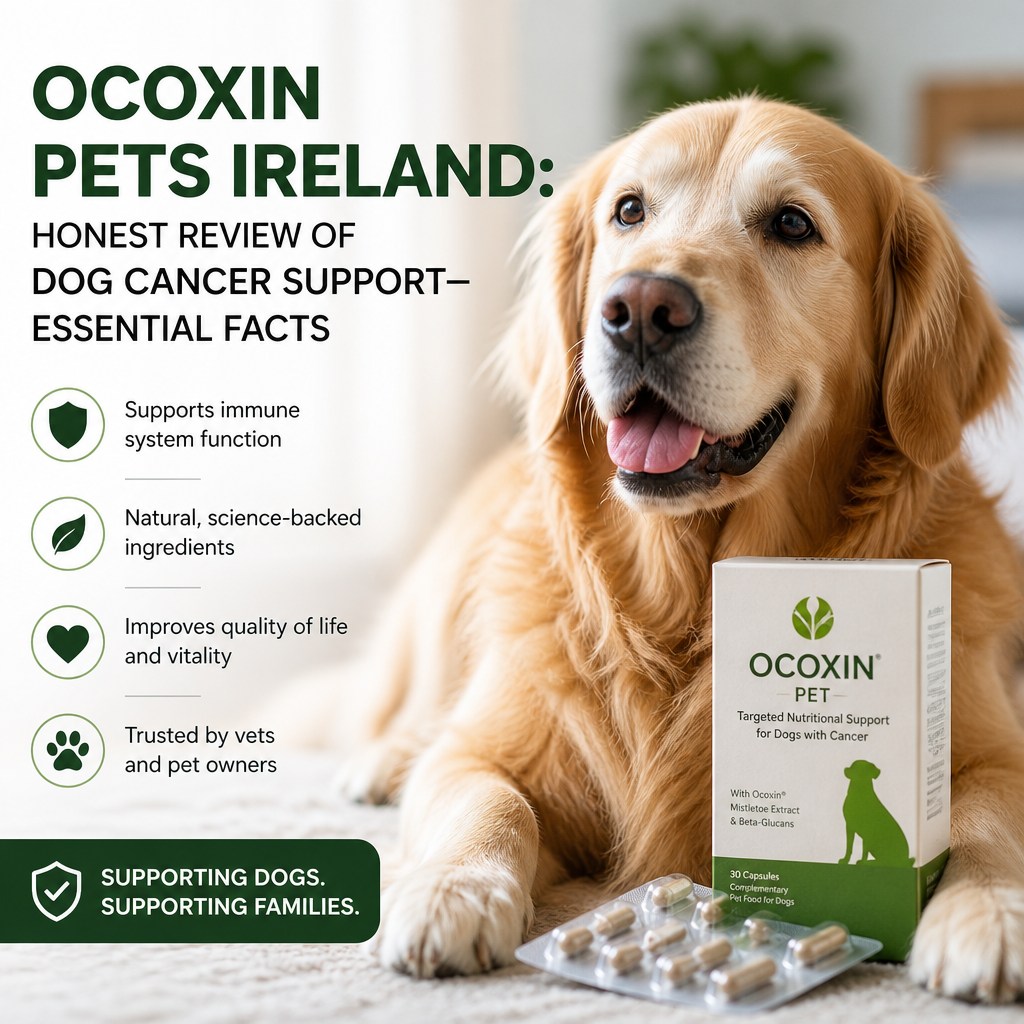
Ocoxin Pets is a veterinary nutritional supplement designed to provide supportive care for dogs and other companion animals, including pets being treated for cancer. Interest in Ocoxin Pets Ireland has grown as owners look for additional ways to support appetite, energy, immune function, and general wellbeing. However, it is important to understand what this product can and cannot do before adding it to a dog’s treatment plan.
What is Ocoxin Pets?
Ocoxin Pets is a liquid supplement developed for use in companion animals. It contains a blend of vitamins, minerals, antioxidants, and plant-based ingredients intended to support the body during periods of illness or recovery. The formula is commonly discussed in connection with dogs diagnosed with cancer, although it may also be considered for pets experiencing reduced appetite, weight loss, fatigue, or the effects of intensive veterinary treatment.
The product is generally positioned as supportive nutrition rather than a medicine. That distinction matters. A supplement may help a dog maintain nutritional status or cope with the demands of illness, but it should not be presented as a cure for cancer or as a replacement for surgery, chemotherapy, radiotherapy, pain relief, or other veterinary treatments.
For many owners, the appeal of Ocoxin Pets Ireland is practical as much as anything else. A liquid supplement can sometimes be easier to give than tablets, especially to dogs that are nauseous, weak, or fussy about food. Even so, convenience should never be the only reason to choose a product. The dog’s diagnosis, current medications, appetite, and organ function all need to be considered first.
What does Ocoxin Pets aim to do?
Cancer can affect dogs in several ways. The disease itself may cause inflammation, tiredness, nausea, reduced appetite, and weight loss. Treatments can also produce side effects that make eating and maintaining normal activity more difficult. For these reasons, nutritional support is often an important part of a broader care plan.
Ocoxin Pets dog cancer support is generally intended to help provide:
Additional nutritional support during illness
Antioxidant compounds that may help protect cells from oxidative stress
Support for appetite and overall condition
Assistance during recovery from surgery or other treatment
A convenient liquid format for dogs that struggle with tablets
The practical value of any supplement depends on the individual dog. A product that is tolerated well by one animal may not suit another, particularly if the dog has kidney disease, liver problems, digestive sensitivities, or difficulty swallowing.
It can also help to think about the day-to-day goals of supportive care. In some dogs, the most realistic aim is to keep food intake stable, reduce the strain of treatment, and preserve comfort rather than expecting visible changes in the tumour itself. Those smaller gains may still be meaningful to both the dog and the family.
Owners sometimes ask whether a supplement should be started as soon as cancer is diagnosed or only after treatment begins. There is no universal answer. Some veterinary teams may consider support early if appetite is already declining, while others may prefer to wait until a full treatment plan is in place. The safest approach is to let the veterinarian coordinate timing, especially when surgery or chemotherapy is planned.
Ingredients and how they may be relevant
The formula includes a combination of nutritional and botanical ingredients. Depending on the specific product version and market, the label may include substances such as vitamins, minerals, amino acids, antioxidants, and plant extracts. These ingredients are selected because they may contribute to normal immune function, energy metabolism, or protection from cellular damage.
Antioxidants are often discussed in relation to cancer care, but their role can be complex. Oxidative stress is involved in many disease processes, yet antioxidant supplementation is not automatically beneficial in every situation. Some cancer treatments may rely partly on oxidative mechanisms, so the timing and combination of supplements should always be reviewed by the treating veterinary team.
This is one of the most important points in any Ocoxin Pets review: a long ingredient list does not prove that the product will improve survival or shrink tumours. The scientific evidence for individual ingredients may not directly demonstrate the effectiveness of the complete product in dogs with cancer.
It is also worth remembering that labels can vary by region. Ingredients, dosage instructions, and formulation details may differ slightly between suppliers, so owners in Ireland should not assume that a product sold elsewhere is identical. Always check the package carefully and compare it with the guidance provided by the manufacturer or veterinary professional.
Some ingredients may be associated with normal immune support, while others may be intended to assist energy balance or recovery from illness. That does not mean they are interchangeable, and it certainly does not mean that “more” is better. In cancer care, the benefit of any support product depends on the overall treatment plan, the dog’s current health status, and the absence of harmful interactions.
A balanced Ocoxin Pets review should look beyond positive testimonials. Pet owners often report that their dogs seem brighter, eat more readily, or recover better while using a supplement. These experiences can be meaningful, but they do not establish that the supplement treated the cancer. Changes may also result from pain control, improved diet, treatment of infection, reduced nausea, or natural fluctuations in the disease.
Evidence is another important consideration. Ask whether studies have been conducted in dogs, whether they involved a suitable number of animals, and whether the results measured meaningful outcomes such as quality of life, treatment tolerance, or survival. Laboratory findings and research on individual ingredients cannot automatically be applied to the finished product.
A trustworthy assessment should also consider palatability, ease of administration, possible adverse effects, cost, availability, and whether the product fits the dog’s existing treatment plan.
When reading product claims, it helps to separate supportive language from clinical proof. Words such as “maintains,” “supports,” and “helps” are common in supplement marketing, but they are not the same as evidence that a product changes the course of disease. Pet owners deserve clear information so they can make informed decisions instead of feeling pressured by hopeful promises.
Another useful question is whether the supplement fits the practical realities of cancer care at home. Some dogs have reduced appetite, some need multiple medications at different times of day, and some are already difficult to medicate. A good supportive product should be simple enough to use consistently without creating extra stress for the dog or family.
For a broader explanation of cancer support products and how they are evaluated, the American College of Veterinary Internal Medicine’s cancer resources can be a helpful starting point: ACVIM veterinary oncology information.
It may also help to discuss the supplement in the context of quality-of-life goals. If a dog is comfortable, eating well, and coping with treatment, the supplement may be adding value. If the dog is still losing weight or becoming more lethargic, then the product may not be enough on its own. In that case, the vet may need to adjust medication, nutrition, or the overall treatment plan.
Safety, side effects, and veterinary advice
Many dogs tolerate nutritional supplements without major problems, but “natural” does not mean risk-free. Possible issues may include digestive upset, loose stools, vomiting, refusal to take the product, or allergic reactions. A dog with a sensitive stomach may need a gradual introduction, but this should be discussed with a veterinarian.
Extra caution is needed when a dog is receiving chemotherapy, corticosteroids, non-steroidal anti-inflammatory drugs, anticoagulants, seizure medication, or other prescription treatments. Supplements can sometimes affect drug absorption, metabolism, blood clotting, blood pressure, or liver function. Dogs with kidney or liver disease may also require a carefully controlled intake of certain nutrients.
Before using Ocoxin Pets, provide the veterinarian with the full ingredient list and the dog’s current medication details. The vet may recommend monitoring weight, appetite, hydration, blood tests, or liver and kidney values. Stop the supplement and seek veterinary advice if the dog develops persistent vomiting, diarrhoea, facial swelling, breathing difficulty, marked lethargy, or a sudden deterioration.
It is also sensible to watch for smaller changes that can be easy to miss at first. A dog that becomes less interested in food, seems nauseous after dosing, or begins to avoid meals may be signalling that the supplement is not a good fit. Early feedback allows the veterinarian to make changes before the problem becomes more serious.
Owners should be especially careful when their dog has multiple health issues. Cancer patients are often older, and older dogs may already have arthritis, heart disease, dental problems, or digestive conditions. In such cases, a product that seems harmless on paper may still be unsuitable because of the dog’s complete medical picture.
Never combine supplements casually just because each one seems supportive on its own. A well-intentioned stack of products can become confusing, expensive, and potentially risky. Clear dosing instructions and one coordinated plan are usually better than trying several remedies at once.
If your veterinarian is not familiar with the brand, bring the product label to the appointment. A clear ingredient list, dose guidance, and any available clinical information will make the discussion more productive. Good communication often matters as much as the supplement itself.
Buying Ocoxin Pets Ireland
When searching for Ocoxin Pets Ireland, purchase through a reputable veterinary practice, established animal-health supplier, or authorised distributor. Product availability, packaging, dosage instructions, and import arrangements can differ between countries. Check the expiry date, batch information, storage instructions, and whether the seal is intact.
It is also wise to compare the label supplied by the seller with information from the manufacturer or veterinary distributor. Avoid relying solely on online reviews, especially when claims promise dramatic cancer cures or guaranteed results. Such claims are not consistent with responsible veterinary care.
Pricing may vary depending on bottle size, shipping, and whether the product is purchased as part of a wider treatment plan. The most suitable supplement is not necessarily the one with the longest list of ingredients; it is the one that is appropriate for the dog’s diagnosis, condition, medication, and nutritional needs.
When comparing suppliers, ask practical questions. Is the item in stock? Can the seller confirm the exact formulation? Are return policies clear? Is advice available if the dog refuses the taste? These simple checks can reduce the chance of buying something that is difficult to use or unsuitable for your pet.
For readers in Ireland, shipping and product access can affect timing. If a dog is starting a new treatment cycle, avoid waiting until the last minute to source a supplement. Delays can cause unnecessary stress, and in cancer care, consistency is usually more valuable than rushing to try a product without preparation.
How to use a supplement responsibly
Use the recommended amount rather than assuming that a larger dose will provide greater benefits. Introduce the product according to professional guidance and observe how the dog responds. Keep a simple record of appetite, weight, bowel movements, energy, pain signs, and any treatment side effects. This information can help the veterinary team decide whether continuing the supplement is worthwhile.
Most importantly, nutritional support should complement—not replace—evidence-based cancer care. A dog’s quality of life should remain the central priority. Regular veterinary reviews can help determine whether treatment is controlling symptoms, whether adjustments are needed, and whether the dog is comfortable.
A responsible routine might include giving the supplement at the same time each day, noting whether it is taken with food, and watching for patterns in the dog’s response over one to two weeks. Consistency makes it easier to tell whether a change in appetite or energy is truly linked to the product or simply part of the condition.
Owners should also keep an eye on hydration and overall nutrition. A supplement is not a substitute for adequate calories, and dogs with cancer often need tailored feeding plans. Small, frequent meals may be more helpful than one large meal, especially if nausea or early satiety is present.
If the dog is undergoing chemotherapy or other hospital-based treatment, ask the vet whether the supplement should be paused before or after certain medications. Timing can matter, and a short pause may be preferable to a risk of interaction or stomach upset.
Some dogs may benefit from a trial period, where the product is used for a set number of days and then reviewed. That approach can help owners make a practical decision based on real-world results instead of hopeful assumptions. If nothing changes, it may be better to redirect effort toward diet adjustments, pain control, or other supportive measures.
Remember that emotional wellbeing matters too. Dogs with cancer often thrive on routine, calm handling, and close monitoring. A supplement can only do so much if the dog is stressed, in pain, or struggling with an untreated side effect. Supportive care works best when it is part of a wider, compassionate plan.
What to expect from supportive care
Supportive supplements can be most helpful when expectations are realistic. In many cases, the goal is not dramatic change but small, practical improvements that make daily life easier for a dog and more manageable for an owner. Better appetite, steadier energy, fewer struggles with eating, or improved comfort during treatment can all matter, even if they do not change the underlying diagnosis.
That said, it is important to watch for signs that the supplement is not helping. If a dog continues to lose weight, refuses food, becomes more withdrawn, or shows a decline in comfort, the veterinary team may need to adjust the overall care plan. A supplement should be assessed as part of the whole picture, not in isolation.
Owners can also support treatment outcomes with simple day-to-day routines. Offering palatable meals, keeping fresh water available, minimizing stress, and maintaining consistent medication schedules can all contribute to better care. These basic steps often make a bigger difference than a single product alone.
In practical terms, support products are best judged over time. One good meal or one energetic afternoon does not prove a supplement is working, just as one off day does not mean it has failed. The most useful measure is whether the dog’s overall trend is stable or improving over several days or weeks.
It can also be helpful to review goals with the vet at each stage of the illness. In early treatment, the focus may be on maintaining body condition and tolerance of therapy. Later, the aim may shift toward comfort and ease of feeding. A supplement that once felt useful may not remain the best choice if priorities change.
If the dog’s cancer is advanced, the conversation may become more about maintaining dignity and comfort than about prolonging life at any cost. In that setting, a supplement can still have value if it helps the dog eat, settle, or feel a little better, but it should never delay more important decisions about pain control or palliative care.
For owners comparing support products across countries, product names and claims can sound impressive, but the core questions remain the same everywhere: Is there evidence? Is it safe? Does the dog tolerate it? Does it help the dog’s daily life? Those are the questions that matter most.
Final assessment
Ocoxin Pets may have a place as supportive nutrition for some dogs, particularly those struggling with appetite, weight maintenance, or recovery during cancer care. Nevertheless, the available claims should be interpreted carefully. It should not be regarded as a proven cancer cure, and its suitability depends on the dog’s health status and treatment regimen.
A sensible approach to Ocoxin Pets dog cancer support is to discuss the product openly with a veterinarian, verify the ingredients, monitor the dog closely, and judge its value by practical outcomes such as comfort, appetite, and wellbeing. For owners considering Ocoxin Pets Ireland, professional guidance and realistic expectations are more important than promotional claims or isolated testimonials.
When used thoughtfully, a supplement can be one part of a broader care plan. The best decisions usually come from combining careful observation, veterinary advice, and a clear understanding of what the product can realistically offer.
If you are still weighing options, it may help to compare similar products and supportive approaches before making a final choice. That broader view can make it easier to identify what is genuinely useful for your dog rather than what simply sounds promising. A steady, evidence-aware approach is usually the safest route.
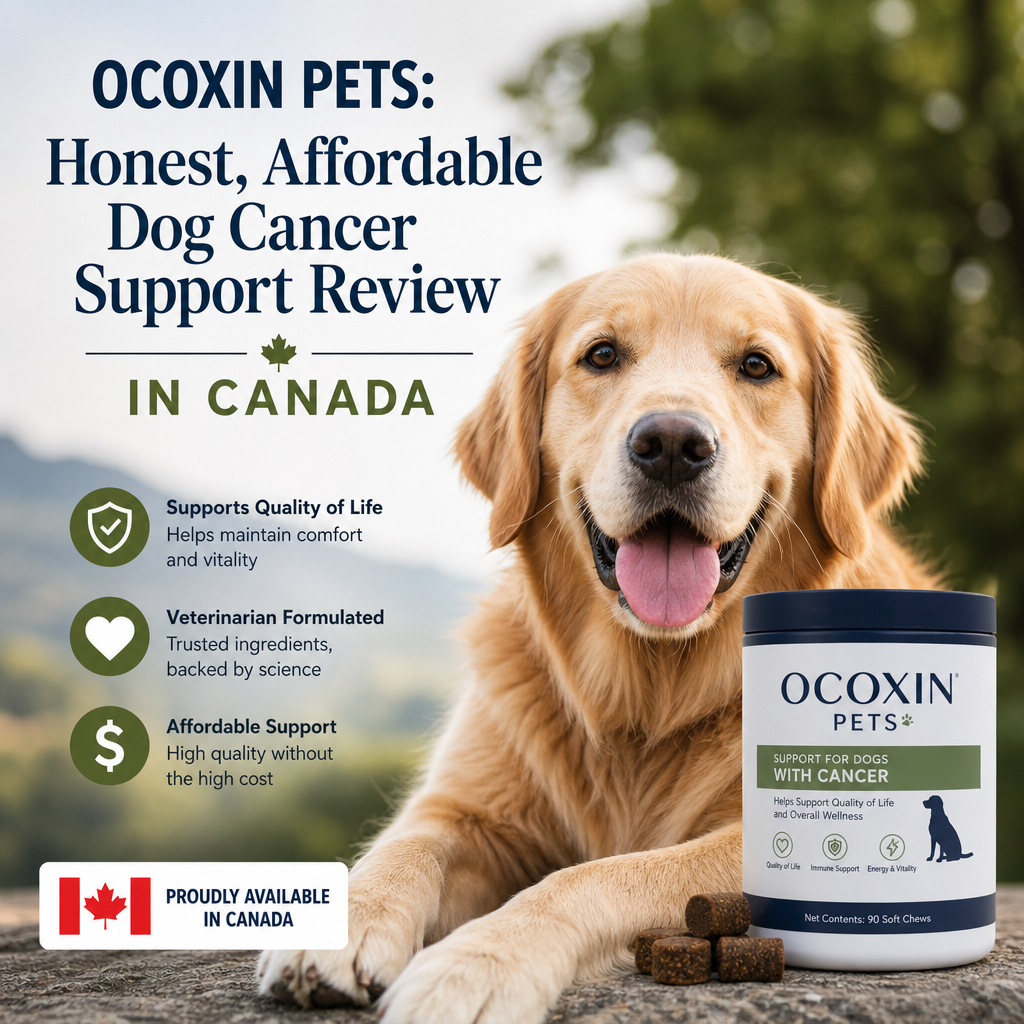
Ocoxin Pets is a nutritional supplement designed to provide supportive care for dogs facing serious health challenges, including cancer. For Canadian pet owners, finding an affordable product that may complement veterinary treatment is important, but it is equally essential to understand what the supplement can—and cannot—do. This Ocoxin Pets review examines its ingredients, possible benefits, limitations, safety considerations, and practical value for families seeking dog cancer support.
Ocoxin Pets is marketed as a complementary nutritional product for dogs and cats. Its formulation is generally associated with ingredients such as green tea extract, medicinal mushroom compounds, vitamins, minerals, and other nutrients intended to support immune function, antioxidant activity, appetite, and overall vitality.
The product is not a conventional cancer treatment. It does not replace surgery, chemotherapy, radiation, prescription medication, or the recommendations of a veterinarian or veterinary oncologist. Instead, it is positioned as supportive care that may help a dog maintain strength and quality of life during an illness or treatment period.
That distinction matters. Cancer affects every dog differently, and the appropriate care plan depends on the type of cancer, its stage, the dog’s age, existing medical conditions, and current medications.
For families also comparing broader support options, the article on wellness routine dog Effective Helpful Cancer Care offers additional context on building a daily care plan around treatment and comfort.
Ocoxin Pets dog cancer support: What can it realistically do?
The main appeal of Ocoxin Pets dog cancer support is that it may provide nutritional assistance while a dog is coping with disease or treatment. Dogs with cancer may experience reduced appetite, weight loss, fatigue, digestive upset, inflammation, or general weakness. A supplement containing concentrated nutrients and antioxidant compounds may help support normal body functions during this stressful period.
Potential goals of supplementation can include:
Supporting appetite and nutritional intake
Helping maintain normal energy levels
Providing antioxidant compounds
Supporting immune-system function
Complementing a veterinarian-approved cancer-care plan
Helping owners provide additional daily care at home
However, evidence for supplements in veterinary oncology is often limited compared with evidence for established cancer treatments. A product may have promising ingredients or anecdotal reports, but that does not prove it can shrink tumors, stop cancer progression, or extend survival. Responsible use requires realistic expectations.
The most meaningful benefit may be supportive rather than curative. If a dog eats better, maintains body condition, tolerates treatment more comfortably, or remains active for longer, that can be valuable. Even so, those outcomes should be monitored with professional veterinary guidance.
Ingredients and potential benefits
A closer look at the formulation is important before adding any supplement to a dog’s routine. Ocoxin Pets products may contain botanical extracts, mushroom-derived ingredients, vitamins, minerals, and other compounds selected for their antioxidant or immune-supportive properties.
Green tea-derived compounds, for example, are commonly studied for antioxidant activity. Medicinal mushrooms are also frequently included in complementary pet products because of their potential effects on immune signaling. Vitamins and minerals can help address nutritional needs, particularly when illness affects eating habits.
The presence of an ingredient does not automatically guarantee a clinical benefit. Dosage, concentration, product quality, the dog’s health status, and interactions with other medications all influence the outcome. Some substances that appear harmless in general wellness products may be unsuitable for dogs with liver disease, kidney problems, clotting disorders, or gastrointestinal sensitivity.
Pet owners should read the complete label, check the recommended serving instructions, and confirm that the product is intended for the dog’s size and species. Avoid assuming that a human supplement with similar ingredients is an acceptable substitute.
Many pet supplements sound impressive on paper, yet the real-world effect depends on how the ingredients work together and whether the dose is meaningful. A dog that is already eating a balanced diet may not need extra micronutrients, while a dog with poor appetite could benefit from targeted support if a veterinarian agrees it is appropriate.
Some products emphasize antioxidant support. That can be useful in theory, but dogs with cancer do not respond to antioxidants in exactly the same way as healthy dogs. In some cases, high-dose supplements can complicate treatment decisions. This is one reason veterinary oversight matters so much.
If your dog is already taking prescription medication, ask whether the supplement might affect absorption, liver metabolism, or bleeding risk. Even a product that is considered gentle may not be the right choice for every patient.
How supportive care fits into a cancer plan
A supplement cannot do the work of a complete treatment plan, but it may fit into one. Supportive care often focuses on maintaining comfort, reducing stress, preserving appetite, and helping the dog stay as stable as possible during medical treatment.
That may include prescription medication, diet adjustments, pain control, hydration support, gentle exercise, and monitoring at home. When used correctly, Ocoxin Pets may serve as one small part of a broader approach rather than a stand-alone answer.
An honest Ocoxin Pets review: Strengths and limitations
One strength often considered by Canadian pet owners is affordability. Cancer care can become expensive, especially when diagnostic testing, specialist consultations, medication, surgery, or repeated laboratory work are involved. A supplement may be easier to budget for than many other forms of supportive care.
Convenience is another potential advantage. A product that can be administered at home may fit into a daily care routine, particularly when a dog is already taking several prescribed medications.
Still, an honest Ocoxin Pets review must acknowledge important limitations. There may not be extensive independent clinical research proving that the product treats cancer or improves survival. Customer experiences can be encouraging, but testimonials are not a substitute for controlled veterinary studies. Dogs can also respond differently, meaning one pet’s improvement cannot predict another’s results.
Possible drawbacks include digestive upset, reluctance to take the product, allergic reactions, or interactions with prescription drugs. Some dogs may see no noticeable change. The cost, while potentially modest compared with cancer treatment, can still become significant when used for months.
The product should therefore be viewed as an optional complement—not as a guaranteed solution.
Who may consider it, and who should be cautious
Dogs that are already under veterinary supervision, have stable bloodwork, and are not taking medications with known interaction risks may be more likely to use a supplement safely. Even then, response should be monitored closely.
Extra caution is wise for senior dogs, very small dogs, dogs with liver or kidney disease, and dogs with sensitive digestion. If the pet has recently started chemotherapy or another new medication, the best approach is usually to wait for veterinary advice rather than guessing.
Owners should also be careful not to interpret short-term enthusiasm as proof of long-term benefit. Some dogs feel better for reasons unrelated to a supplement, such as pain relief, diet changes, or a good day during treatment. Careful observation helps separate coincidence from genuine improvement.
Safety and veterinary supervision
Before giving Ocoxin Pets to a dog with cancer, consult the veterinarian managing the case. This is especially important if the dog is receiving chemotherapy, corticosteroids, nonsteroidal anti-inflammatory drugs, antibiotics, anticoagulants, or medications for liver, kidney, or heart disease.
A veterinarian can help assess:
Whether the ingredients are appropriate
Whether the product could interact with current medication
Whether the dog’s liver and kidneys can process it safely
The correct serving based on weight and health status
Whether symptoms are caused by cancer, treatment, or another problem
Stop using the product and contact a veterinary professional if the dog develops vomiting, diarrhea, facial swelling, breathing difficulty, severe lethargy, loss of appetite, or any sudden change in condition. Never delay urgent treatment because a supplement is being used.
It is also wise to purchase from a reputable Canadian or authorized source. Check the expiry date, packaging integrity, storage instructions, and product information. Counterfeit or improperly stored supplements may not have the expected quality or potency.
Before you purchase, ask whether the label clearly lists the active ingredients, whether the serving instructions are easy to follow, and whether the company provides batch or quality information. It is also useful to ask how the product should be stored and whether it has any age or weight restrictions.
These practical questions do not replace veterinary advice, but they can help you avoid low-quality or confusing products. The more transparent the manufacturer is, the easier it becomes to make a cautious and informed decision.
Ocoxin Pets Canada: Practical considerations for buyers
When researching Ocoxin Pets Canada, buyers should look beyond the advertised price. Shipping fees, currency conversion, taxes, delivery time, and return policies can affect the final cost. Availability may vary depending on the supplier, and some products may be sold through international websites rather than local veterinary channels.
Canadian owners should also confirm that the label provides clear information about ingredients, dosage, manufacturer, and intended animal use. A transparent product page and accessible customer-service information are positive signs, although they do not independently verify medical effectiveness.
Keeping a simple health journal can make supplementation more useful. Record appetite, weight, activity, stool quality, vomiting, medication changes, and notable symptoms. This information can help the veterinarian determine whether the dog is benefiting, experiencing side effects, or changing because of another aspect of treatment.
For many families, value matters as much as the price tag. A supplement is only worthwhile if it arrives on time, is easy to give, and fits the dog’s care routine without creating unnecessary stress. If shipping delays or customs issues make the product hard to maintain, a locally available option may be more practical.
It is also sensible to compare the supplement’s monthly cost with its possible benefits. If the dog dislikes the taste, refuses the dose, or shows no improvement, continuing may not make sense. In that case, the veterinarian may suggest a different supportive strategy.
Owners often do best when they view cost in the context of the entire treatment plan. A cheaper supplement is not automatically better, and a more expensive one is not automatically superior. Consistency, safety, and veterinary fit matter more than marketing claims.
Final assessment
Ocoxin Pets may be a reasonable supportive supplement for some dogs when used under veterinary supervision. Its potential value lies in nutritional and quality-of-life support, not in replacing proven cancer therapies. The formulation may appeal to owners seeking an affordable addition to a broader care plan, but expectations should remain measured.
For Canadian pet families, the best decision involves reviewing the ingredient list, confirming safety with a veterinarian, purchasing from a reliable source, and monitoring the dog carefully. Used responsibly, Ocoxin Pets may have a place in compassionate supportive care. It should always remain one part of a comprehensive veterinary strategy focused on comfort, nutrition, treatment, and the dog’s overall quality of life.
In short, Ocoxin Pets can be considered a supportive tool, not a cure. When paired with expert veterinary guidance, careful observation, and a realistic understanding of its role, it may help some dogs feel a little better during a difficult time.
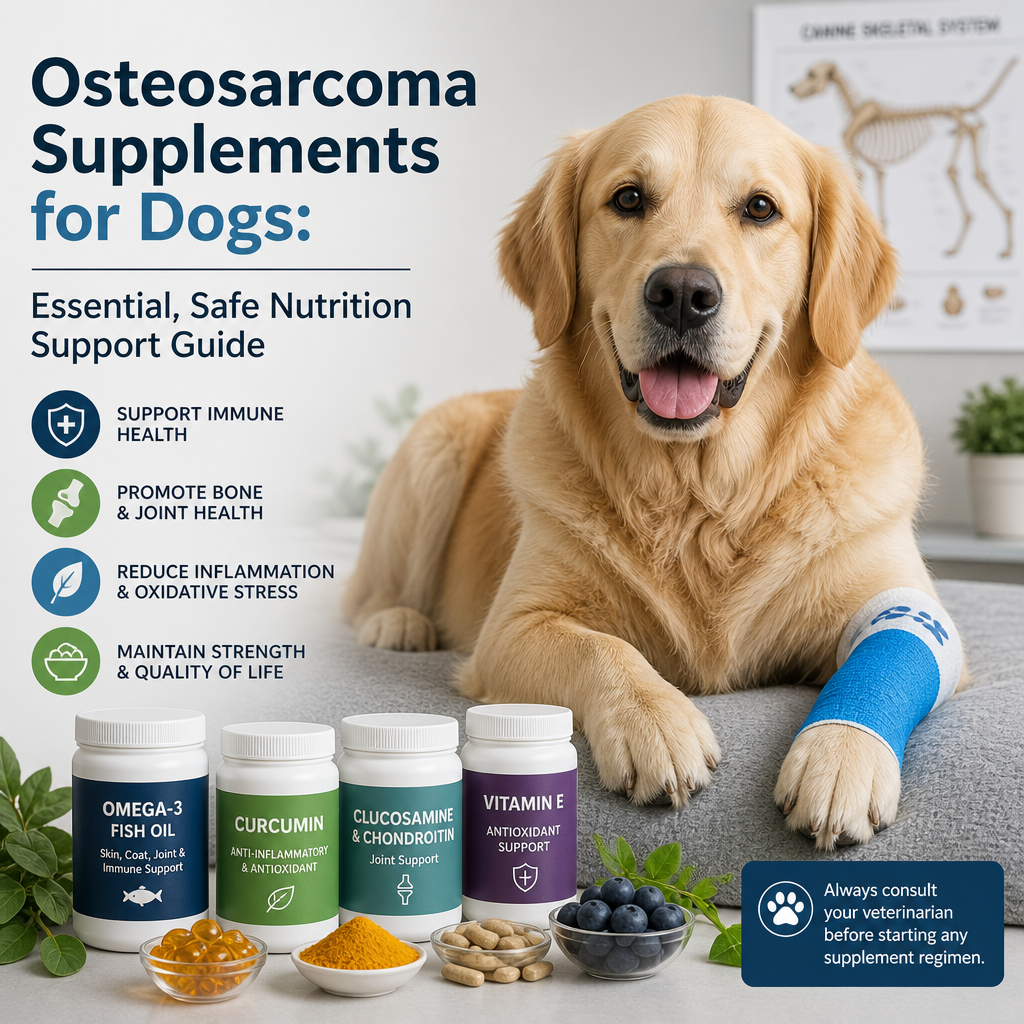
Osteosarcoma Supplements for Dogs may provide helpful nutritional support during cancer treatment, but they are not a cure and should never replace surgery, chemotherapy, pain control, or veterinary guidance. Canine osteosarcoma is an aggressive bone cancer that often causes pain, swelling, lameness, and reduced activity. Because treatment plans differ according to a dog’s age, overall health, tumor location, and cancer stage, every supplement should be reviewed with a veterinarian before use.
Osteosarcoma is the most common primary bone tumor in dogs. It frequently affects the limbs, although it can also develop in the skull, spine, ribs, or other bones. Large and giant breeds, including Rottweilers, Great Danes, Irish Wolfhounds, and Greyhounds, are at increased risk, but any dog can develop the disease.
Treatment commonly includes amputation or limb-sparing surgery, chemotherapy, radiation in selected cases, and comprehensive pain management. Nutrition has an important supportive role throughout this process. A balanced diet can help maintain body weight, preserve muscle, support normal immune function, and improve quality of life.
No supplement can selectively eliminate cancer cells. Products marketed as replacements for conventional treatment may delay effective care or interfere with medications. The safest approach is to view osteosarcoma supplements for dogs as carefully chosen additions to a veterinary treatment plan.
For broader context on cancer spread and staging, some owners also find it helpful to review this guide to metastasis in dogs and how tumors spread alongside their veterinarian’s recommendations.
Potential Benefits of Bone Cancer Dog Supplements
Bone cancer dog supplements are generally intended to support one or more areas of health rather than treat the tumor itself. Common goals include:
Supporting appetite and healthy body weight
Helping maintain lean muscle
Promoting normal inflammatory balance
Supporting joint comfort and mobility
Providing nutrients that may be limited by poor appetite
Supporting general wellness during chemotherapy or recovery
The most appropriate product depends on the dog’s diet, bloodwork, medications, kidney and liver function, and treatment schedule. A supplement that is reasonable for one patient may be inappropriate for another.
Owners of large-breed dogs often ask similar questions about cancer support and early warning signs. If you have another at-risk breed at home, you may also want to read about osteosarcoma dogs and helpful large-breed guidance.
What osteosarcoma supplements for dogs can and cannot do
Osteosarcoma Supplements for Dogs may help fill nutritional gaps, support comfort, and make it easier for some dogs to maintain strength during treatment. They cannot shrink a tumor on their own, and they do not replace diagnosis, staging, or follow-up imaging. The best results usually come when the supplement plan is simple and tied to a specific clinical goal.
In practical terms, osteosarcoma supplements for dogs are most useful when they solve a real problem such as poor appetite, mobility strain, or recovery support after a procedure. If there is no clear goal, adding more products can create confusion without improving care.
Omega-3 Fatty Acids
Fish oil containing EPA and DHA is among the most commonly discussed supplements for dogs with cancer. These marine omega-3 fatty acids support skin, cardiovascular, and neurologic health and may help maintain a healthy inflammatory response. They can also be useful for dogs experiencing joint stress or reduced mobility.
Quality and dosage matter. Choose a veterinary-approved product that has been tested for purity and accurately lists the amount of EPA and DHA rather than simply stating the total amount of fish oil. Too much fish oil may cause diarrhea, weight gain, delayed wound healing, or an increased risk of bleeding, particularly when combined with certain medications.
Fish oil should be used cautiously in dogs with pancreatitis, clotting disorders, or upcoming surgery. Always disclose its use to the veterinary team. Among osteosarcoma supplements for dogs, omega-3s are often discussed because they are familiar, easy to dose, and sometimes well tolerated when added carefully.
When tolerated, omega-3s can be a practical part of osteosarcoma supplements for dogs because they are not overly complicated and may complement a broader comfort plan. They are still best viewed as supportive nutrition rather than an anti-cancer treatment.
Antioxidants and Cancer Treatment
Antioxidants such as vitamins C and E, selenium, and plant compounds are often included in dog osteosarcoma support products. However, antioxidant supplementation requires special care during chemotherapy and radiation.
Some cancer treatments work partly by generating oxidative damage in cancer cells. High-dose antioxidant products could theoretically reduce the effectiveness of certain therapies, although the evidence varies by nutrient, treatment, and dose. This does not mean that antioxidants are always harmful, but it does mean that concentrated products should not be started without veterinary approval.
A complete, balanced commercial diet usually provides appropriate baseline levels of essential vitamins and minerals. High-dose human multivitamins are especially risky because they may contain excessive amounts of vitamin D, iron, or other ingredients toxic to dogs.
If a veterinarian specifically recommends a nutrient, it should be chosen with the treatment plan in mind. In many cases, the safest version of osteosarcoma supplements for dogs is the one with the fewest ingredients and the clearest reason for use.
Joint and Mobility Support
Dogs with osteosarcoma often experience significant pain and mobility changes. Supplements containing glucosamine, chondroitin, green-lipped mussel, or undenatured type II collagen may support joint function in some dogs, particularly when arthritis affects other limbs or the spine.
These products do not treat the bone tumor or replace prescription pain medication. Their effects may also take several weeks to become noticeable. Since maintaining mobility can be important for emotional well-being and muscle preservation, joint supplements may be considered as one part of a broader comfort plan.
Veterinarians may also recommend physical rehabilitation, padded bedding, ramps, controlled activity, and nonslip flooring. These practical measures can be just as important as nutritional products.
For many owners, osteosarcoma supplements for dogs make the most sense when they are paired with movement support, since pain relief and mobility often influence appetite, mood, and daily function.
Mobility support can become especially valuable after surgery or during chemotherapy recovery. In those periods, osteosarcoma supplements for dogs are usually most helpful when they are introduced gradually and monitored for stomach upset or changes in comfort.
Digestive and Appetite Support
Chemotherapy, pain, stress, and reduced activity can affect appetite and digestion. Veterinary probiotics may help support normal intestinal function, although they should be selected carefully for dogs receiving intensive treatment or those with weakened immune systems.
When appetite is poor, feeding a highly palatable, complete diet in small, frequent meals may be more useful than adding multiple supplements. Warming food slightly, offering different textures, and feeding in a quiet area can also encourage eating. Persistent appetite loss, vomiting, diarrhea, or weight loss should be reported promptly because these signs may require medical treatment rather than nutritional supplementation alone.
In practice, osteosarcoma supplements for dogs should never distract from basic feeding success. If a dog is not eating reliably, the first priority is usually to address nausea, pain, constipation, stress, or medication side effects.
Some dogs may benefit from appetite support products only temporarily, while others need a longer period of dietary adjustment. The best approach is usually to simplify the feeding plan before layering on more osteosarcoma supplements for dogs.
Safe Use of Dog Osteosarcoma Support Products
Before introducing dog osteosarcoma support products, review the label with a veterinarian. Important considerations include:
Ingredient quality: Use products from reputable manufacturers with clear dosing and quality-control information.
Medication interactions: Supplements may affect bleeding, blood pressure, sedation, liver metabolism, or chemotherapy.
Surgery timing: Some products should be stopped before surgery because of potential effects on clotting or anesthesia.
Organ function: Kidney or liver disease can change how nutrients and medications are processed.
Total nutritional intake: Multiple products may unintentionally provide excessive amounts of the same vitamin or mineral.
Adverse reactions: Stop the product and contact the veterinarian if new vomiting, diarrhea, itching, weakness, bruising, or appetite loss develops.
Avoid products containing garlic, onion, xylitol, concentrated essential oils, unknown herbal blends, or ingredients intended for humans unless a veterinarian specifically approves them. “Natural” does not automatically mean safe, and herbal products can be pharmacologically active.
Some dogs are also being monitored for breed-related tumor risks at home, so staying informed matters. For example, this resource on Australian Cattle Dog cancer risks and early tumor signs can help owners recognize when veterinary attention is needed sooner.
Common mistakes to avoid with osteosarcoma supplements for dogs
One of the most common mistakes is adding several products at once, which makes it hard to tell what is helping and what is causing side effects. Another is using human supplements without checking the active ingredients, flavorings, or dosing. When osteosarcoma supplements for dogs are introduced slowly and tracked carefully, it becomes easier to judge whether they are worthwhile.
Another problem is chasing trends instead of focusing on measurable goals. If a product does not improve appetite, comfort, mobility, or recovery in a realistic timeframe, it may not deserve a permanent place in the plan. A careful review with the veterinary team keeps osteosarcoma supplements for dogs practical and safe.
Diet, Weight, and Quality of Life
The foundation of osteosarcoma nutrition is a complete and balanced diet that the dog will consistently eat. Maintaining body condition and muscle mass is often more important than pursuing an elaborate supplement plan. Regular weight checks, appetite monitoring, and periodic bloodwork can help the veterinary team identify problems early.
A veterinary nutritionist may recommend adjustments to calorie density, protein, fat, or meal frequency. There is no single cancer diet that works for every dog. Claims that one restrictive diet or ingredient can cure osteosarcoma are not supported by reliable evidence and may lead to nutritional deficiencies.
Dog osteosarcoma support should also include pain assessment, rest, safe exercise, emotional comfort, and regular veterinary follow-up. Changes in breathing, sudden weakness, uncontrolled pain, severe lethargy, or rapid swelling require immediate veterinary attention.
For many families, osteosarcoma supplements for dogs fit best into a larger plan that emphasizes eating well, staying comfortable, and preserving as much normal routine as possible.
Helpful feeding habits can make a real difference. Keep water accessible, offer food at the same time each day when possible, and track what is eaten rather than guessing. If a dog suddenly stops enjoying food that was previously accepted, that change should be discussed quickly because appetite shifts are common with cancer pain and treatment side effects.
A Thoughtful Supplement Strategy
The safest supplement plan is simple, targeted, and monitored. Start with the dog’s medical priorities: pain control, appetite, hydration, mobility, and treatment tolerance. Add only products with a clear purpose, introduce one product at a time, and keep a record of the dose and any changes observed.
Used responsibly, osteosarcoma supplements for dogs may complement conventional care by supporting general nutrition, mobility, and quality of life. Their value is greatest when they are selected with professional guidance and integrated into a complete treatment plan rather than treated as a standalone cancer therapy.
With the right veterinary plan, osteosarcoma supplements for dogs can fit into a broader strategy that supports comfort, appetite, and daily function without replacing proven treatment. That balanced approach gives dogs the best chance for meaningful support during a difficult diagnosis.
In the end, the goal is not to add as many products as possible. It is to choose the few osteosarcoma supplements for dogs that genuinely support the individual patient, then reassess often so the plan stays useful as needs change.
Bottom line: osteosarcoma supplements for dogs should be selected carefully, used consistently, and adjusted with veterinary input. When the choices are thoughtful, they can support comfort and nutrition without interfering with essential cancer care.