by TCMVET | Aug 24, 2026 | Research and News
Apocaps CX Alternative options can help dog owners explore more affordable ways to support their pets during cancer care. Supplements may provide nutritional and antioxidant support, but they are not cures for tumors and should never replace veterinary diagnosis or treatment. The best choice depends on the dog’s tumor type, current medications, appetite, age, and overall health.
When comparing an Apocaps CX alternative, it helps to focus on practical details: ingredient transparency, dosing clarity, product quality, and how well the formula fits the dog’s daily routine. Some dogs do better with mushroom-based support, while others need omega-3s, digestive support, or a simpler antioxidant blend. The goal is to find a supplement that is useful, safe, and realistic to give consistently.
Understanding Apocaps CX and Its Purpose
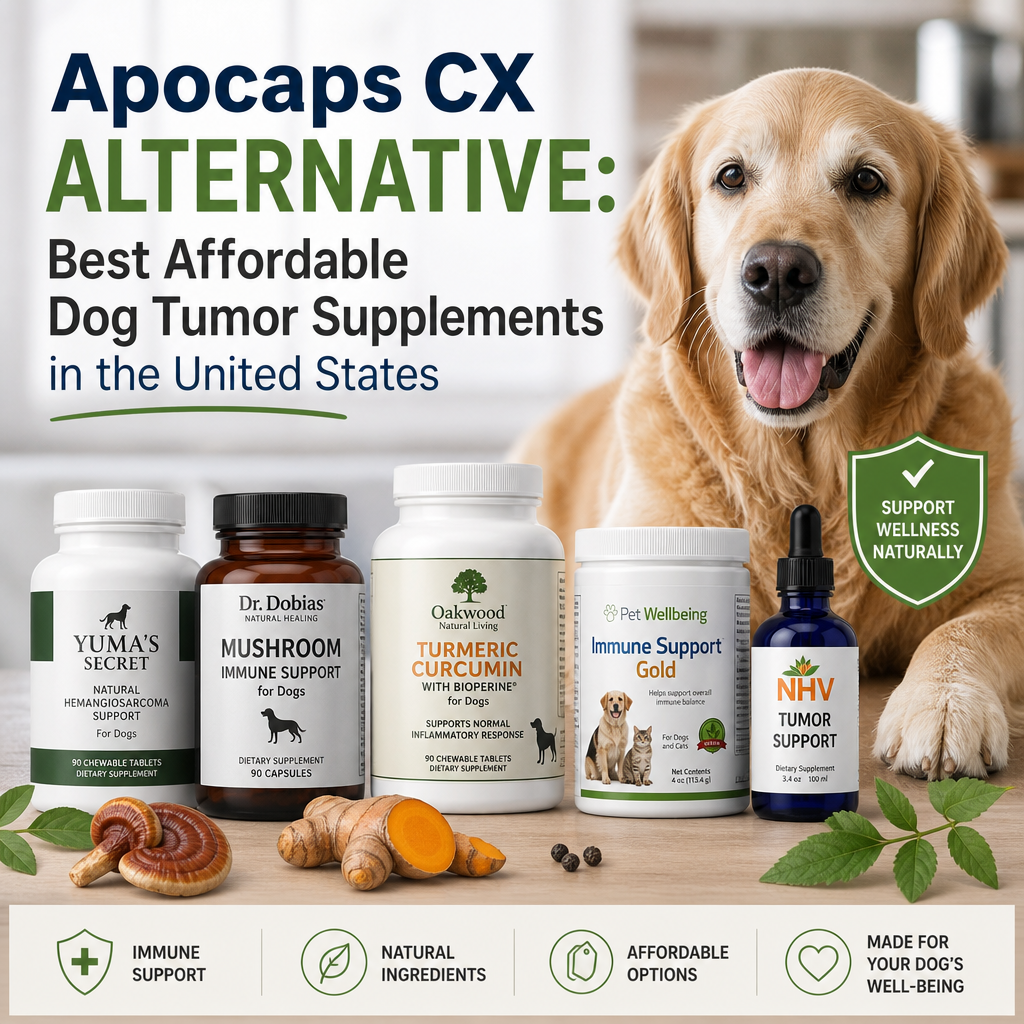
Apocaps CX is marketed as a canine supplement designed to support dogs with cancer through a blend of botanical ingredients and nutritional compounds. Products in this category commonly focus on antioxidant activity, immune support, inflammation management, and overall wellness.
However, supplement formulas can vary considerably. Some contain concentrated herbs, while others emphasize medicinal mushrooms, omega-3 fatty acids, vitamins, minerals, or digestive support. Because dogs metabolize many substances differently from humans, a product that appears natural is not automatically safe for every dog.
Before choosing an Apocaps CX alternative, pet owners should review the ingredient list carefully and discuss it with a veterinarian. This is particularly important if a dog is receiving chemotherapy, radiation, surgery, corticosteroids, nonsteroidal anti-inflammatory drugs, or prescription pain medication.
For general guidance on veterinary nutrition and safe feeding practices, the American Veterinary Medical Association’s pet care guidance is a useful reference.
Why Owners Look for Alternatives to Apocaps CX
There are several reasons dog owners search for alternatives to Apocaps CX. Cost is often the main factor, especially when a dog requires long-term supplementation alongside veterinary treatment. Availability can also be an issue, as some specialty products may have limited distribution or shipping restrictions.
Other owners may be looking for a formula with fewer ingredients, a specific nutrient profile, or better suitability for a dog’s allergies and digestive sensitivities. Some dogs refuse capsules or have difficulty swallowing tablets, making powders, soft chews, and liquid supplements more practical.
A more affordable supplement can be useful, but price should not be the only consideration. Quality control, transparent labeling, third-party testing, dosing instructions, and veterinary compatibility are equally important.
When comparing an Apocaps CX alternative, the goal is not to find a miracle product. It is to find a practical supplement that fits the dog’s care plan, budget, and tolerance.
What to Look for in Dog Tumor Supplements United States Buyers Can Trust
When comparing dog tumor supplements United States pet owners should examine several quality indicators.
Transparent ingredient labeling
The label should list the amount of each active ingredient rather than relying on vague proprietary blends. Clear labeling makes it easier for a veterinarian to identify possible interactions and determine whether the product duplicates nutrients found in another supplement.
Appropriate canine dosing
Human supplements are not automatically appropriate for dogs. A reliable canine product should provide weight-based directions and identify the intended species. Dosing should be confirmed with a veterinarian, especially for small dogs, seniors, and pets with liver or kidney disease.
Manufacturing standards
Look for supplements made in facilities that follow recognized quality and manufacturing standards. Third-party testing can provide additional reassurance about identity, purity, and contamination. Products should ideally include lot numbers, expiration dates, and contact information for the manufacturer.
Practical formulation
The best supplement is one a dog will consistently take. Powders mixed with food may work well for some pets, while soft chews or liquids may be easier for others. Avoid products that contain excessive fillers, artificial sweeteners, or ingredients known to be harmful to dogs.
In many cases, a good Apocaps CX alternative is not the most complicated formula. It is the one that has clear labeling, sensible dosing, and a format your dog will actually accept.
It can also help to compare the supplement with the dog’s treatment schedule. A product that conflicts with medication timing or upsets the stomach may create more stress than benefit.
Common Supplement Categories to Consider
There is no single universal replacement for Apocaps CX. Instead, owners can compare several supplement categories based on their dog’s individual needs.
Medicinal mushroom products
Mushrooms such as turkey tail are frequently discussed in veterinary oncology research because of their naturally occurring beta-glucans and polysaccharides. Some early studies have examined turkey tail extracts in dogs with cancer, but results do not mean every mushroom product will provide the same effects.
A reputable mushroom supplement should identify the mushroom species, extraction method, and active compounds. Products containing mixed mushroom powders without meaningful dosage information may be difficult to evaluate.
Omega-3 fatty acids
Fish oil providing EPA and DHA may support normal inflammatory balance, skin health, and nutritional wellness. Omega-3 supplements are often considered as part of a broader cancer-support plan, although they should be used carefully in dogs with clotting disorders, pancreatitis risk, or certain surgical schedules.
Choose a product that states the actual EPA and DHA amounts rather than listing only the total amount of fish oil. Freshness also matters, since oxidized oils may be less beneficial and can upset the stomach.
Antioxidant and nutritional formulas
Some canine supplements contain vitamins, minerals, or plant compounds intended to support general health. These may be helpful when a dog has a restricted appetite or nutritional deficiencies, but excessive supplementation can be harmful. High doses of certain vitamins or minerals may interfere with treatment or place stress on the liver and kidneys.
Digestive and appetite support
Dogs undergoing cancer treatment may experience nausea, reduced appetite, diarrhea, or constipation. Digestive supplements, probiotics, and appetite-support strategies may improve comfort and food intake. These products do not target tumors directly, but maintaining hydration, nutrition, and body weight can be an important part of supportive care.
Some pet owners compare an Apocaps CX alternative with other veterinary wellness products when they want a gentler formula or a simpler ingredient profile. In many cases, the right choice is the one the dog can tolerate consistently.
Best Alternatives to Apocaps CX for Dogs with Tumors
Many owners searching for an Apocaps CX alternative are hoping for a balance of affordability, safety, and convenience. The best alternatives are usually not one-size-fits-all. Instead, they fall into a few practical groups: mushroom-based formulas, omega-3 supplements, targeted antioxidant blends, and digestive support products. The right option depends on the dog’s current treatment plan and the veterinarian’s guidance.
If your veterinarian is helping you compare an Apocaps CX alternative, ask which ingredients matter most for your dog’s condition. That question can narrow the choices quickly and prevent paying for unnecessary extras.
It is also useful to compare the delivery method. A powder may work better for dogs with a strong appetite, while liquids or soft chews may be easier for dogs that are nauseous or selective eaters.
Turkey tail and mushroom-based support
Mushroom formulas are often among the first supplements considered in canine oncology because they are widely discussed in supportive care. Turkey tail is especially common in these blends. Owners should still read labels carefully, because some products use low-potency powders while others use extracts with clearer standardization.
Not every mushroom product is equal. A thoughtful Apocaps CX alternative should state what is included, how much is included, and how the product is intended to be used.
When a mushroom product is being considered, consistency matters. The benefit of any supplement is reduced if it is difficult to administer or if the dog refuses it after a few days.
Omega-3 options for daily support
Fish oil supplements can be useful when a dog needs nutritional support alongside treatment. They may also be easier to source than specialized cancer blends. The main points to review are EPA and DHA content, freshness, and whether the product is made for pets rather than humans.
Because some dogs are sensitive to richer oils, start slowly and monitor stool quality and appetite. If digestive upset occurs, your veterinarian may recommend adjusting the dose or changing the formula.
An Apocaps CX alternative in this category may be especially practical for dogs that also need skin, coat, or joint support, since omega-3s can address more than one concern at once.
Simple antioxidant blends
Some dogs do better with a straightforward formula that avoids many herbs and concentrates. A simplified product may reduce the chance of confusion, improve tolerability, and make it easier to identify whether a supplement is helping.
That simplicity is one reason an Apocaps CX alternative can sometimes be more practical than the original product. A shorter label is not automatically better, but it can be easier to manage in a treatment plan.
For owners who are sensitive to ingredient overload, a modest formula can be a smarter long-term choice than a large blend with many overlapping claims.
Support for picky eaters
Dogs in cancer care may lose interest in food, making appetite support just as important as any supplement formula. Powders, liquids, and soft chews can improve compliance, especially for dogs that resist capsules. When a product is easy to give, owners are more likely to keep using it consistently.
In practice, an Apocaps CX alternative that fits into mealtime routines often performs better than a more advanced formula that nobody can administer reliably.
Some dogs also benefit from pairing a supplement with food-warming tricks, schedule changes, or flavor enhancers approved by the veterinary team. Small adjustments can make a large difference in consistency.
How to narrow the shortlist
A simple way to narrow options is to compare three questions: What problem is the supplement supposed to address, what is the active ingredient amount, and can your dog actually take it every day? If the answer to any of these is unclear, the product may not be the best fit.
That approach makes an Apocaps CX alternative easier to judge because it shifts the focus from marketing language to real-world use.
Below are the most common decision points owners should consider before buying:
- Does the product list exact ingredient amounts?
- Is it designed for dogs rather than humans?
- Can the dosage be matched to your dog’s weight?
- Will it fit with current medications and meals?
- Is the price reasonable for daily use?
How to choose the best Apocaps CX alternative for your dog
Choosing the best Apocaps CX alternative starts with your dog’s real needs, not the marketing on the label. If your dog is already eating well and tolerating treatment, a supplement that supports general wellness may be enough. If appetite is the main problem, a product that is easy to mix with food may make more sense than a capsule-based formula.
One helpful approach is to rank the most important priorities before buying. For example, some owners care most about price, while others care most about ingredient simplicity or product quality. When those priorities are clear, it becomes easier to compare options without getting distracted by large claims on the front of the package.
It is also wise to match the supplement to your dog’s personality. A finicky dog may never accept a powder with a strong smell, even if the formula is otherwise excellent. A cooperative dog may do fine with capsules or chewables, which can broaden the choices significantly.
Another factor is long-term practicality. An Apocaps CX alternative may look appealing for a week or two, but the real test is whether it still works after a month. Consistent use usually matters more than a more complicated formula that is hard to maintain.
Questions to ask before buying
Before choosing a supplement, ask these questions:
- Does my veterinarian see any risk with this formula?
- Can I give it with my dog’s current medication schedule?
- Does the product clearly state the active amount per serving?
- Will my dog accept the taste or texture?
- Is the cost sustainable if I use it every day?
If the answer to several of those questions is no, the product may not be the right fit even if it is advertised as an Apocaps CX alternative. That is especially true when a supplement seems attractive because it is cheap but offers little usable information on the label.
Owners should also avoid assuming that a more expensive product is automatically stronger or safer. Better value often comes from a well-made formula that is easy to dose, easy to store, and easy to give consistently.
Why consistency matters
In supportive care, consistency can matter as much as ingredient choice. A supplement that is taken regularly is more likely to fit into the overall care plan than one that is skipped because the dog refuses it. That is why the best Apocaps CX alternative is often the one that looks simple, dependable, and realistic.
If you are unsure where to begin, ask your veterinarian which category makes the most sense first. Starting with one useful product is usually better than buying several supplements at once and creating confusion about what is helping.
Safety Considerations Before Starting a Supplement
A veterinarian should review any supplement before it is added to a cancer patient’s routine. Some herbs can affect blood clotting, blood pressure, liver enzymes, or the way medications are absorbed. Antioxidants may also require careful timing during certain forms of chemotherapy or radiation, depending on the treatment plan.
Pet owners should introduce only one new product at a time. Start with the veterinarian-approved dose, monitor the dog closely, and record changes in appetite, stool, energy, vomiting, itching, or discomfort. Stop the supplement and contact the veterinary team if concerning symptoms develop.
It is also wise to avoid products that promise to shrink tumors, replace chemotherapy, or guarantee a cure. Such claims are not a substitute for evidence-based veterinary care and may encourage dangerous delays in treatment.
When in doubt, ask whether the supplement has been used in dogs before and whether there are any reasons it should not be combined with your pet’s current medications. That conversation can prevent avoidable problems.
A good Apocaps CX alternative should support the care plan, not complicate it. If the product creates uncertainty, the veterinarian should be the final guide.
How to Compare Affordability and Value
The lowest sticker price is not always the best value. Compare the cost per day based on the dog’s weight, active ingredient amounts, shipping fees, and serving size. A larger container may be cheaper initially but wasteful if the dog refuses the product or develops side effects.
Owners should also consider whether the supplement supports a clearly identified need. A targeted product with a simple formula may be more practical than a costly blend containing many poorly quantified ingredients.
Ultimately, a sensible Apocaps CX alternative should be safe, transparent, affordable, and compatible with the dog’s veterinary care. Supplements can play a supportive role, but the foundation remains professional diagnosis, an appropriate treatment plan, balanced nutrition, pain control, and regular monitoring.
For many households, the best result comes from combining veterinary oversight with a supplement that is easy to use and financially sustainable. That is why a carefully chosen Apocaps CX alternative can be more helpful than a product that looks impressive on the label but is difficult to give consistently.
If you are evaluating an Apocaps CX alternative for your dog, focus on the ingredient list, the brand’s quality controls, and how well the product fits your veterinarian’s recommendations. The right supplement should support care, not complicate it.
When comparing several choices side by side, keep the decision grounded in safety, evidence, and practicality. The best Apocaps CX alternative is the one that can be used consistently, fits the dog’s needs, and supports veterinary-directed care without adding unnecessary expense or risk.
If you need more background on supplement safety and labeling, the National Institutes of Health Office of Dietary Supplements guide is a helpful educational resource for understanding how supplement claims and ingredient lists should be read carefully.
For many owners, the real advantage of an Apocaps CX alternative is not just lower cost. It is finding a formula that can be given every day without upsetting the dog, interrupting the treatment plan, or creating extra stress for the household. That practical balance is often the best measure of value.
In the end, a well-chosen Apocaps CX alternative should do three things: fit your dog’s needs, work with your veterinarian’s advice, and remain realistic for long-term use. When those three pieces line up, the supplement is far more likely to be useful in everyday care.
Final checks before you buy
Before ordering, confirm the product name, serving size, ingredient amounts, and return policy. A little extra review can prevent mistakes and save money over time. If anything about the label is unclear, ask the manufacturer or your veterinary team before starting the supplement.
That last step is especially important for any Apocaps CX alternative because cancer patients often have more complicated care plans than healthy dogs. A cautious, well-informed choice is usually the safest path forward.

by TCMVET | Aug 24, 2026 | Research and News
Vieux chien cancer que faire : face à l’annonce d’un cancer chez un compagnon âgé, il est normal de se sentir démuni. Pourtant, des décisions adaptées peuvent améliorer son confort et préserver sa qualité de vie. Le diagnostic ne signifie pas nécessairement qu’il faut renoncer à tout traitement : chaque situation dépend du type de tumeur, de son évolution, de l’état général du chien et des objectifs de sa famille. L’essentiel consiste à avancer avec le vétérinaire, en privilégiant une approche à la fois médicale, réaliste et profondément bienveillante.
Vieux chien cancer que faire dès l’annonce du diagnostic ?
La première étape consiste à obtenir des informations précises. Demandez au vétérinaire quel est le type de cancer suspecté ou confirmé, où il se situe, s’il s’est propagé et quelles analyses sont nécessaires. Une biopsie, une radiographie, une échographie ou un scanner peuvent parfois être proposés afin de mieux évaluer la situation.
Il est également utile de demander :
– Quelle est l’évolution probable de la maladie ?
– Le chien souffre-t-il actuellement ?
– Quels traitements sont possibles ?
– Quels bénéfices peut-on espérer ?
– Quels effets secondaires sont envisageables ?
– Quel sera le coût et le rythme des soins ?
– Que peut-on faire si la maladie progresse ?
Ces questions permettent de prendre une décision éclairée, sans se laisser guider uniquement par la peur. Chez un chien âgé, l’objectif n’est pas toujours de prolonger la vie à tout prix. Il peut être préférable de rechercher un équilibre entre durée et qualité de vie.
Dans cette phase, il est aussi important de noter les petits changements du quotidien. Un chien qui dort davantage, hésite à monter dans la voiture, mange plus lentement ou se montre moins joueur peut déjà exprimer un inconfort. Ces détails, parfois discrets, aident à mieux comprendre l’évolution de la maladie et à ajuster l’accompagnement.
Évaluer la qualité de vie de son chien âgé
La qualité de vie est un indicateur essentiel pour savoir comment accompagner un chien atteint de cancer. Certains animaux continuent à profiter de leurs promenades, de leurs repas et des moments passés en famille malgré la maladie. D’autres présentent rapidement une fatigue importante ou des douleurs difficiles à contrôler.
Observez régulièrement plusieurs éléments :
– L’appétit et la capacité à boire normalement ;
– Le poids et l’état musculaire ;
– La mobilité et la facilité à se lever ;
– La respiration ;
– Le sommeil et le repos ;
– L’intérêt pour les interactions et les activités habituelles ;
– La présence de douleurs, de nausées ou d’inconfort ;
– La fréquence des journées difficiles par rapport aux journées agréables.
Tenir un petit carnet peut être très utile. Notez les repas, les médicaments, les symptômes et l’humeur générale. Cette observation concrète aide le vétérinaire à ajuster le traitement et permet de repérer une dégradation parfois progressive.
Pour rendre cette évaluation plus simple, certains propriétaires utilisent une échelle maison très pratique. Par exemple, ils attribuent une note de 1 à 5 à l’appétit, à la mobilité, au confort au repos et à l’envie de contact. Cette méthode ne remplace pas l’avis médical, mais elle permet de suivre l’évolution avec plus de clarté et de prendre de meilleures décisions au bon moment.
Un chien peut avoir de bons jours et des jours plus difficiles. Ce qui compte, c’est la tendance générale. Si les mauvaises journées deviennent plus nombreuses, si l’animal se retire, ne profite plus des stimulations simples ou semble constamment inconfortable, il faut en parler rapidement au vétérinaire. C’est souvent à ce stade que la discussion sur les objectifs de soins devient essentielle.
Chien âgé cancer soutien : soulager sans s’acharner
Le soutien d’un chien âgé atteint de cancer repose souvent sur les soins palliatifs. Ceux-ci ne signifient pas abandonner l’animal. Ils visent à réduire la douleur, les nausées, l’anxiété, les difficultés respiratoires ou tout autre symptôme pénible.
Le vétérinaire peut prescrire des antalgiques, des anti-inflammatoires adaptés, des médicaments contre les vomissements ou des traitements destinés à stimuler l’appétit. Ne donnez jamais d’aspirine, d’ibuprofène, de paracétamol ou tout autre médicament humain sans avis vétérinaire : certains sont toxiques pour les chiens, même à faible dose.
À la maison, quelques aménagements simples peuvent améliorer son quotidien :
– Installer un couchage épais, chaud et facilement accessible ;
– Utiliser des tapis antidérapants sur les sols glissants ;
– Placer les gamelles à une hauteur confortable ;
– Limiter les escaliers et les déplacements inutiles ;
– Maintenir une routine calme et prévisible ;
– Proposer plusieurs petites sorties plutôt qu’une longue promenade ;
– Respecter ses périodes de repos.
La présence humaine reste également un soutien majeur. Une voix douce, des caresses si elles sont appréciées et un environnement familier peuvent réduire son stress.
Il ne faut pas sous-estimer l’impact du confort thermique non plus. Un chien âgé et malade peut vite être gêné par le froid, surtout s’il dort plus longtemps ou perd de la masse musculaire. Une couverture adaptée, un panier placé loin des courants d’air et un lieu de repos calme améliorent souvent son bien-être de façon très concrète.
Le repos est parfois confondu avec l’abandon des activités. Ce n’est pas le cas. Un animal malade peut encore bénéficier de moments brefs mais agréables : quelques minutes dehors, une odeur intéressante, une friandise adaptée, un contact rassurant. Ces instants comptent, car ils soutiennent le moral autant que le corps.
Alimentation et complément chien âgé cancer
L’alimentation doit être adaptée à l’état du chien et à ses éventuels symptômes. Certains animaux perdent l’appétit, tandis que d’autres maigrissent malgré une alimentation correcte. Le vétérinaire peut recommander une nourriture plus énergétique, plus appétente ou formulée pour accompagner certaines fonctions de l’organisme.
Proposez des repas en petites quantités, plusieurs fois par jour, dans un endroit tranquille. Réchauffée légèrement, la nourriture peut dégager davantage d’arômes et devenir plus attirante. Toutefois, évitez les changements brusques qui pourraient provoquer des troubles digestifs.
La question du complément pour chien âgé atteint de cancer revient fréquemment. Des produits contenant des oméga-3, des antioxydants ou certains nutriments peuvent parfois être envisagés, mais leur intérêt dépend du cancer, du traitement et de l’état des reins ou du foie. Un complément n’est jamais anodin : il peut interagir avec une chimiothérapie, modifier la coagulation ou surcharger un organisme déjà fragile.
Avant d’utiliser un complément, vérifiez avec le vétérinaire :
– La composition exacte et le dosage ;
– La compatibilité avec les médicaments prescrits ;
– L’état rénal et hépatique du chien ;
– La présence éventuelle d’allergies ou de troubles digestifs ;
– L’objectif réel du produit.
Un complément n’est jamais anodin, même lorsqu’il semble naturel, et il ne remplace ni un traitement vétérinaire ni une alimentation équilibrée. Si vous cherchez des repères plus précis, consultez aussi ce guide pratique sur le complément alimentaire chien cancer : 7 conseils puissants pour un soutien efficace et positif.
Méfiez-vous des promesses de guérison rapide ou des produits présentés comme capables de remplacer les soins conventionnels. Pour des conseils généraux fiables sur la nutrition et la santé animale, vous pouvez également vous référer aux recommandations de l’American Animal Hospital Association.
Si votre chien maigrit, fractionner davantage les repas peut aider. Certains chiens tolèrent mieux trois ou quatre petites portions qu’un seul repas copieux. D’autres acceptent mieux une alimentation légèrement tiédie ou une texture plus souple. Ces ajustements simples peuvent faire une réelle différence quand l’appétit fluctue.
Les traitements possibles chez le chien âgé
Selon le diagnostic, plusieurs options peuvent être proposées : chirurgie, chimiothérapie, radiothérapie, traitement ciblé ou simple surveillance. L’âge seul ne suffit pas à exclure un traitement. Un chien âgé mais en bonne forme peut parfois le supporter correctement, tandis qu’un animal plus jeune et très affaibli peut être un mauvais candidat.
La chimiothérapie vétérinaire est généralement pensée pour préserver la qualité de vie plutôt que provoquer des effets secondaires sévères. Néanmoins, chaque protocole comporte des contraintes et des risques. La chirurgie peut être pertinente lorsque la tumeur est localisée et que l’intervention offre un bénéfice réel. Dans d’autres cas, une prise en charge palliative sera plus douce et plus adaptée.
Le choix doit tenir compte du tempérament du chien, de sa capacité à supporter les déplacements, de ses antécédents et des possibilités de la famille. Il n’existe pas une solution universelle : la meilleure décision est celle qui respecte à la fois ses besoins et ses limites.
Le vétérinaire peut aussi proposer un suivi en plusieurs étapes. Parfois, on commence par stabiliser la douleur et l’état général, puis on réévalue l’intérêt d’un traitement plus lourd. Cette approche graduelle aide à éviter des décisions précipitées et permet d’observer comment le chien réagit aux premières mesures.
Avant d’accepter un protocole, demandez clairement ce qui est attendu : prolonger la survie, réduire la taille de la tumeur, diminuer la douleur ou simplement améliorer le confort. Un objectif précis rend la décision plus lisible et aide à mesurer si le traitement reste pertinent avec le temps.
Pour comparer les approches de soutien nutritionnel selon les situations, il peut aussi être utile de lire le dossier meilleur complément alimentaire chien cancer : 7 choix efficaces et rassurants.
Adapter les soins quotidiens à un chien malade
Quand un cancer touche un chien âgé, les gestes du quotidien deviennent souvent plus importants que de grands changements. L’objectif est de rendre chaque journée plus simple, plus paisible et plus prévisible.
Voici quelques habitudes utiles :
– Préparer un coin repos toujours identique ;
– Éviter les manipulations brusques ;
– Surveiller l’hydratation ;
– Nettoyer délicatement les yeux, la bouche ou la peau si nécessaire ;
– Aider le chien à se lever si cela est recommandé par le vétérinaire ;
– Réduire les stimulations trop intenses ;
– Prévoir des sorties courtes mais fréquentes.
Le toilettage peut aussi devenir un moment de soin et de connexion. Un brossage doux, sans insister sur une zone douloureuse, permet parfois de maintenir un contact agréable tout en surveillant la peau, les masses visibles ou les changements de texture du pelage. Il ne s’agit pas d’un détail : repérer tôt une plaie, une rougeur ou une grosseur qui change d’aspect peut orienter rapidement la suite de la prise en charge.
Si le chien a du mal à se déplacer, installez des passages dégagés entre ses lieux de repos, l’eau et l’extérieur. Moins il doit fournir d’efforts inutiles, plus il conserve d’énergie pour ce qui lui fait du bien.
La présence de la famille compte aussi beaucoup. Les chiens âgés atteints d’un cancer restent sensibles à la cohérence du quotidien. Des horaires stables, un ton rassurant et une atmosphère paisible diminuent souvent l’anxiété et facilitent le repos.
Reconnaître une urgence
Certains signes nécessitent de contacter rapidement un vétérinaire ou un service d’urgence :
– Difficultés importantes à respirer ;
– Douleur intense ou persistante ;
– Effondrement, faiblesse extrême ou perte de connaissance ;
– Saignement abondant ;
– Vomissements répétés ou incapacité à garder l’eau ;
– Abdomen soudainement gonflé ;
– Convulsions ;
– Refus total de boire et de manger accompagné d’un état très abattu.
N’attendez pas plusieurs jours lorsque l’état général se dégrade brutalement. Une intervention rapide peut parfois soulager efficacement, même lorsque la guérison n’est pas possible.
Pour des repères fiables sur les signes d’alerte en oncologie vétérinaire, vous pouvez aussi consulter les informations de référence de l’Merck Veterinary Manual.
Si vous hésitez entre observer encore un peu et consulter tout de suite, mieux vaut appeler. Une simple discussion téléphonique avec la clinique peut déjà aider à distinguer une évolution attendue d’un vrai signal d’alarme. Quand un animal souffre, chaque heure compte davantage qu’on ne l’imagine.
Accompagner la fin de vie avec douceur
Lorsque les journées difficiles deviennent plus nombreuses que les journées agréables, il est important de parler ouvertement avec le vétérinaire. La décision d’une euthanasie peut être l’une des plus douloureuses, mais elle peut aussi éviter des souffrances inutiles. Elle doit être envisagée comme un acte de protection lorsque la douleur, l’angoisse ou l’incapacité à vivre dignement ne peuvent plus être contrôlées.
Prenez le temps de discuter du moment, du déroulement et des possibilités à domicile ou en clinique. Entourer son chien de calme, de présence et de familiarité peut rendre cette étape plus paisible. Le chagrin qui suit est normal et mérite d’être accueilli : perdre un compagnon âgé après l’avoir accompagné avec attention représente une épreuve profonde, mais aussi le témoignage d’un lien construit au fil des années.
Quand le diagnostic est confirmé, se demander vieux chien cancer que faire revient surtout à choisir ce qui protège le mieux son confort, sa dignité et sa sérénité. Dans bien des cas, la bonne réponse n’est pas de tout faire, mais de faire juste, au bon moment.
Pour aller plus loin, gardez en tête qu’un accompagnement réussi repose sur trois repères simples : observer, ajuster et communiquer. Observer les signes du quotidien, ajuster les soins avec le vétérinaire et communiquer tôt quand quelque chose change permet souvent de mieux vivre chaque étape. Dans cette logique, vieux chien cancer que faire devient moins une question de panique qu’une démarche de soutien attentive, régulière et apaisante.
Un dernier point important concerne le moral du chien. Même âgé, même malade, il peut encore apprécier des gestes simples, un panier confortable, une promenade courte au soleil ou une friandise adaptée. Préserver ces petits plaisirs aide souvent à maintenir une dynamique positive. Lorsqu’on se demande vieux chien cancer que faire, il est donc utile de penser autant au soulagement physique qu’aux repères émotionnels qui rassurent l’animal au quotidien.
Enfin, n’hésitez jamais à demander une réévaluation si vous sentez que la situation évolue. Les besoins d’un chien âgé peuvent changer vite, et une prise en charge efficace est souvent celle qui s’adapte au bon moment. Avec un suivi attentif, des gestes simples et des décisions partagées, vieux chien cancer que faire trouve une réponse plus humaine, plus claire et plus sereine.

by TCMVET | Aug 24, 2026 | Research and News
MycoBio Turkey Tail for Dogs alternative options are becoming increasingly important for New Zealand dog owners seeking mushroom-based support for canine immune health. While turkey tail products are widely discussed for their beta-glucans and other bioactive compounds, availability, shipping costs, product formulation, and veterinary suitability can vary. Choosing a safe and practical supplement requires more than selecting the first product labelled “turkey tail.”
If you are comparing MycoBio Turkey Tail for Dogs alternative choices, the goal is to find a product that fits your dog’s needs, your budget, and your veterinarian’s treatment plan. For some owners, that means a single-mushroom extract; for others, it means a broader formula with several medicinal mushrooms or a locally available product with clearer dosing guidance.
For New Zealand families managing a dog’s health concerns, the decision can feel urgent and emotional. That is understandable. A thoughtful supplement choice can make day-to-day care easier, but it should still be grounded in ingredient quality, safety, and realistic expectations. A well-selected MycoBio Turkey Tail for Dogs alternative should support, not complicate, your dog’s care plan.
Why Consider a MycoBio Turkey Tail for Dogs Alternative?
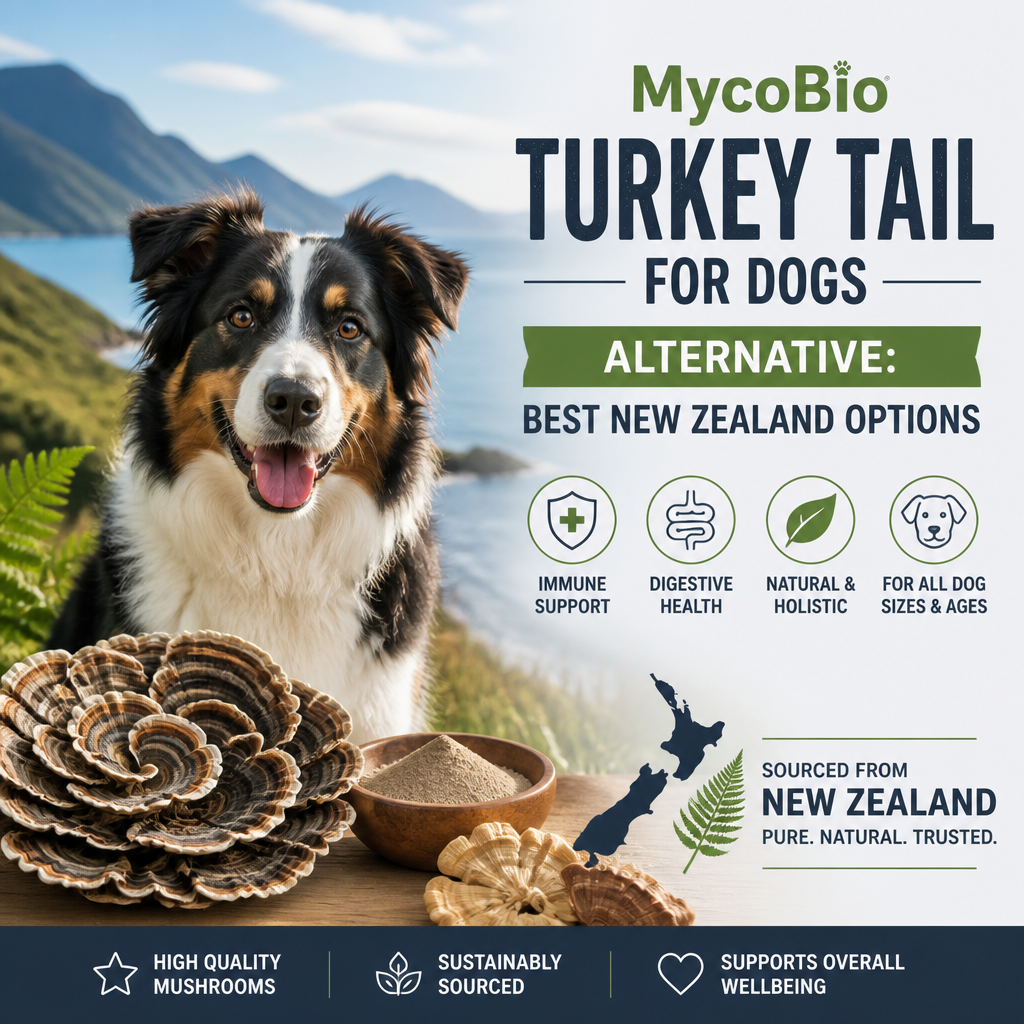
MycoBio Turkey Tail for Dogs may not be the easiest option for every New Zealand household. Some owners may face international shipping delays, limited stock, higher prices, or uncertainty about whether the product is appropriate for a dog’s individual condition. Others may prefer a New Zealand-made supplement, a product containing multiple medicinal mushrooms, or a formula supported by clearer dosage guidance.
There is also an important distinction between a supplement designed specifically for dogs and a human mushroom extract. Dogs process ingredients differently from people, and products intended for human use may contain unsuitable additives, excessive concentrations, alcohol-based extracts, or ingredients that have not been assessed for canine use.
The best alternative should therefore be selected according to the dog’s size, health status, medications, diet, and veterinary treatment plan. In practice, the best MycoBio Turkey Tail for Dogs alternative is the one that is safe, consistently available, and easy to use correctly.
It also helps to think about long-term practicality. If a supplement is difficult to source every month, or if the label is confusing, owners are less likely to use it consistently. A dependable MycoBio Turkey Tail for Dogs alternative should fit smoothly into a routine without causing extra stress for the household or the dog.
What Makes Turkey Tail Popular for Dogs?
Turkey tail, scientifically known as Trametes versicolor, is a fungus recognised for its naturally occurring polysaccharides, including beta-glucans. These compounds are often studied for their relationship with immune function. Turkey tail products are commonly used as complementary supplements for dogs needing general immune support or additional nutritional care during periods of illness.
However, supplements are not cancer treatments, and they should not replace veterinary diagnosis, surgery, chemotherapy, radiation, pain management, or other recommended care. Evidence involving medicinal mushrooms in dogs is still developing, and results can depend on the extract type, concentration, quality, and the individual animal.
A reputable product should clearly identify the mushroom species, extraction method, active compounds, serving size, batch information, and testing standards. This is especially important when comparing a MycoBio Turkey Tail for Dogs alternative with more than one mushroom ingredient.
For additional background on mushroom supplement selection, see The Healthy Hound Pure Turkey Tail Alternative: 7 Powerful Tumor Supplements NZ.
In simple terms, turkey tail is popular because it has become one of the best-known medicinal mushrooms in pet care discussions. That popularity does not replace the need to compare products carefully, especially when evaluating any MycoBio Turkey Tail for Dogs alternative for a dog with complex health needs.
Alternatives to MycoBio Turkey Tail for Dogs
There are several categories of alternatives to MycoBio Turkey Tail for Dogs. Each has potential advantages, but none should be viewed as automatically superior.
New Zealand-made canine mushroom supplements
New Zealand-made products may offer simpler purchasing, faster delivery, and customer support in the local time zone. Some formulas are specifically developed for dogs and may include turkey tail alongside reishi, maitake, shiitake, or cordyceps.
The main benefit is convenience and local availability. However, “made in New Zealand” does not automatically guarantee therapeutic quality. Owners should still check whether the ingredients are extracted rather than simply powdered, whether the product is tested for contaminants, and whether the company provides clear guidance for different dog weights.
When comparing a MycoBio Turkey Tail for Dogs alternative, a locally made product can be a sensible choice if the label is transparent and the manufacturer explains how the supplement is intended to support canine health.
Single-mushroom turkey tail products
A single-mushroom formula can be useful when owners want to introduce one ingredient at a time. This makes it easier to monitor tolerance and identify whether digestive changes occur after supplementation.
Single-ingredient products may also be easier for veterinarians to assess alongside existing medications. Look for products that specify the amount of extract per serving rather than listing only a proprietary blend.
For dogs with delicate digestion, a single-mushroom MycoBio Turkey Tail for Dogs alternative may be easier to trial than a broad multi-ingredient formula.
Multi-mushroom formulas
Some alternatives combine several medicinal mushrooms. These may appeal to owners seeking broad nutritional and immune support, but combination products can make it more difficult to determine which ingredient is responsible for benefits or side effects.
A multi-mushroom formula should provide a full ingredient list and avoid vague labels such as “mushroom complex” without individual quantities. It is also wise to introduce combination supplements gradually, particularly when a dog has a sensitive stomach.
Many owners choose a MycoBio Turkey Tail for Dogs alternative in this category because they want a more comprehensive mushroom blend rather than turkey tail alone.
Veterinary-recommended supplements
A veterinary clinic may recommend a particular supplement based on the dog’s diagnosis, medications, blood results, and treatment goals. This is especially relevant for dogs with cancer, autoimmune conditions, liver or kidney disease, or a history of gastrointestinal problems.
Veterinary guidance can also help prevent interactions. Mushroom extracts may not be suitable for every dog, particularly those taking immune-modulating medication or medication that affects blood clotting.
If your vet suggests a different brand, that recommendation may still function as the most appropriate MycoBio Turkey Tail for Dogs alternative for your pet’s situation.
Choosing between mushroom powders and extracts
Not all mushroom supplements are made the same way. Powders may contain ground mushroom material, while extracts are typically processed to concentrate certain compounds. This difference matters because the body may not use plain powder in the same way as an extracted product.
When reviewing a MycoBio Turkey Tail for Dogs alternative, check whether the company explains the extraction process, the solvent used, and the part of the mushroom included. Clear product information often suggests better quality control.
It is also worth checking whether the product has a clear shelf-life and storage instruction. Mushroom supplements that are not stored properly can lose quality over time. A reliable MycoBio Turkey Tail for Dogs alternative should make storage, serving, and use straightforward for owners.
Other practical options to discuss with your veterinarian
Some dogs do better with a supplement that combines mushroom support with other targeted nutrients. Depending on the case, a veterinarian may suggest formulas that also include antioxidants, omega-3 fatty acids, or digestive support ingredients. These are not direct replacements for turkey tail, but they may fit better into a broader care plan.
Owners sometimes overlook the importance of palatability. A product can have excellent ingredients and still fail in real life if the dog refuses to eat it. If your pet is picky, choose a format that can be mixed into food without altering taste too much. A practical MycoBio Turkey Tail for Dogs alternative is one that your dog will actually take consistently.
Another useful consideration is consistency from batch to batch. Supplements with variable potency can make it hard to know whether your dog is benefiting. Look for brands that describe manufacturing controls, batch testing, and ingredient sourcing in plain language. Those details are especially valuable when selecting a MycoBio Turkey Tail for Dogs alternative for long-term use.
Dog Tumor Supplements New Zealand Owners Should Evaluate Carefully
Searches for dog tumor supplements New Zealand often lead owners to products marketed with strong claims. It is important to approach these claims critically. A supplement cannot be assumed to shrink a tumour, prevent metastasis, or extend life simply because it contains a medicinal mushroom.
When evaluating a product, consider the following:
- Ingredient transparency: The label should identify the mushroom species and the amount provided.
- Extraction method: Extracts may concentrate compounds more effectively than ordinary mushroom powder, but the method should be explained.
- Independent testing: Look for testing for heavy metals, pesticides, microbes, and other contaminants.
- Canine-specific instructions: Serving recommendations should be based on dog size or weight.
- No unnecessary additives: Avoid products containing ingredients known to be unsuitable for dogs, such as xylitol.
- Manufacturing standards: The company should provide clear information about manufacturing and quality control.
- Professional oversight: The supplement should fit within the dog’s broader veterinary care plan.
Marketing language such as “miracle cure,” “guaranteed tumour reduction,” or “replaces chemotherapy” is a major warning sign. Responsible brands describe their products as complementary support rather than medical treatment.
For readers researching evidence-based background information, the National Center for Complementary and Integrative Health overview of mushrooms and cancer is a useful educational reference.
When owners compare dog tumor supplements New Zealand wide, they should think beyond the front label and ask what the product actually contains, how it is made, and whether it has been designed for long-term canine use. Those questions matter just as much as the search for the right MycoBio Turkey Tail for Dogs alternative.
How to compare value, not just price
The cheapest product is not always the best value. A low-cost supplement may contain less extract per serving, require a larger daily amount, or lack clear quality assurance. In contrast, a slightly more expensive product may provide better concentration and easier dosing, which can make it more economical over time.
To compare value fairly, look at cost per serving, not just the bottle price. Also consider shipping charges, storage life, and whether the supplier is reliable enough to keep the product in stock when you need a refill. These practical concerns often decide whether a MycoBio Turkey Tail for Dogs alternative is sustainable for a household.
If you are still unsure, ask your veterinarian whether the product fits your dog’s current health status and treatment goals. That quick step may save both time and money while helping you choose a safer MycoBio Turkey Tail for Dogs alternative.
How to Read a Mushroom Supplement Label
Understanding the label can help you avoid weak products and misleading claims. The most useful labels usually answer a few practical questions right away:
- Which mushroom species are included?
- Is the product a powder, extract, or blend?
- How much is in each serving?
- Does the manufacturer explain the extraction ratio or process?
- Are the serving instructions based on body weight?
- Is there a lot number, batch code, or quality assurance statement?
If a label is vague, it becomes harder to compare one MycoBio Turkey Tail for Dogs alternative with another. Transparent labels help owners and veterinarians make better decisions, especially when a dog already has a diagnosed condition.
Also pay attention to the form of the product. Capsules may be easier for some owners, powders may be mixed into food, and liquids may be simpler for dogs that resist tablets. The best format is the one your dog will accept consistently without unnecessary stress.
When possible, choose a product that includes straightforward instructions rather than complicated serving charts with unclear measurements. A practical MycoBio Turkey Tail for Dogs alternative is one you can administer accurately every time.
It can also help to look for third-party certification or published quality controls if the manufacturer provides them. While not every good supplement will have every possible certification, more transparency usually indicates a stronger commitment to product quality. That matters when you are choosing a MycoBio Turkey Tail for Dogs alternative for an animal with special health needs.
Safety Considerations Before Starting a Supplement
Even natural products can cause side effects. Possible reactions may include loose stools, vomiting, reduced appetite, itching, or changes in energy. A dog with a history of allergies may be more sensitive to fungal ingredients or other components in the formula.
Introduce only one new supplement at a time and follow the manufacturer’s recommended serving rather than assuming that a larger amount will produce better results. Keep a record of the product, dose, start date, appetite, stool quality, and any changes in symptoms.
Speak with a veterinarian before using mushroom supplements if the dog is pregnant, elderly, undergoing cancer treatment, preparing for surgery, taking immunosuppressive drugs, or being treated for liver, kidney, or bleeding disorders.
These precautions are especially relevant when a MycoBio Turkey Tail for Dogs alternative is being added to an existing treatment plan. The safest supplement is the one that supports the dog without creating avoidable risk.
If your dog has a sensitive stomach, consider introducing the supplement gradually over several days. That approach may make it easier to identify whether the product is well tolerated. It also gives you time to compare one MycoBio Turkey Tail for Dogs alternative against another before committing to a full routine.
Owners should also keep supplements out of reach of children and other pets. Mushroom products are generally intended to be dosed carefully, and accidental overconsumption can lead to unnecessary digestive upset. Safe storage is a small detail, but it is part of using any MycoBio Turkey Tail for Dogs alternative responsibly.
If your dog is already on prescription medication, ask your veterinarian to review the supplement list before you start. That is especially important for dogs with cancer or immune-related conditions, where small changes can matter more than owners expect. A cautious review can help ensure the MycoBio Turkey Tail for Dogs alternative you choose supports the broader treatment plan rather than interfering with it.
Choosing the Best New Zealand Option
The best MycoBio Turkey Tail for Dogs alternative is not necessarily the most expensive or the one with the longest ingredient list. It should be a trustworthy product that matches the dog’s specific needs, is available consistently in New Zealand, and can be used safely alongside veterinary care.
Prioritise transparent labelling, independent quality testing, canine-appropriate dosing, and realistic health claims. Most importantly, treat mushroom supplements as supportive nutrition rather than a replacement for professional diagnosis or treatment. With careful product evaluation and veterinary guidance, New Zealand dog owners can make a more informed decision about adding turkey tail or another medicinal mushroom supplement to their companion’s care plan.
In short, a well-chosen MycoBio Turkey Tail for Dogs alternative should make sense for your dog’s condition, your vet’s recommendations, and the practical realities of sourcing supplements in New Zealand.
Before you buy, compare availability, dosage clarity, and ingredient quality side by side. That final check can help you choose a safer MycoBio Turkey Tail for Dogs alternative and avoid products that look impressive but offer little real value.
For many owners, the ideal option is simply the one that is easy to source, easy to give, and easy to trust. That practical approach is often the best way to evaluate any MycoBio Turkey Tail for Dogs alternative for dogs with tumors.
When in doubt, focus on the basics: a clean formula, a reliable supplier, and advice from a veterinarian who knows your dog’s history. Those fundamentals matter more than promotional claims, and they are often what separates a truly useful MycoBio Turkey Tail for Dogs alternative from a product that only looks good online.
by TCMVET | Aug 24, 2026 | Research and News
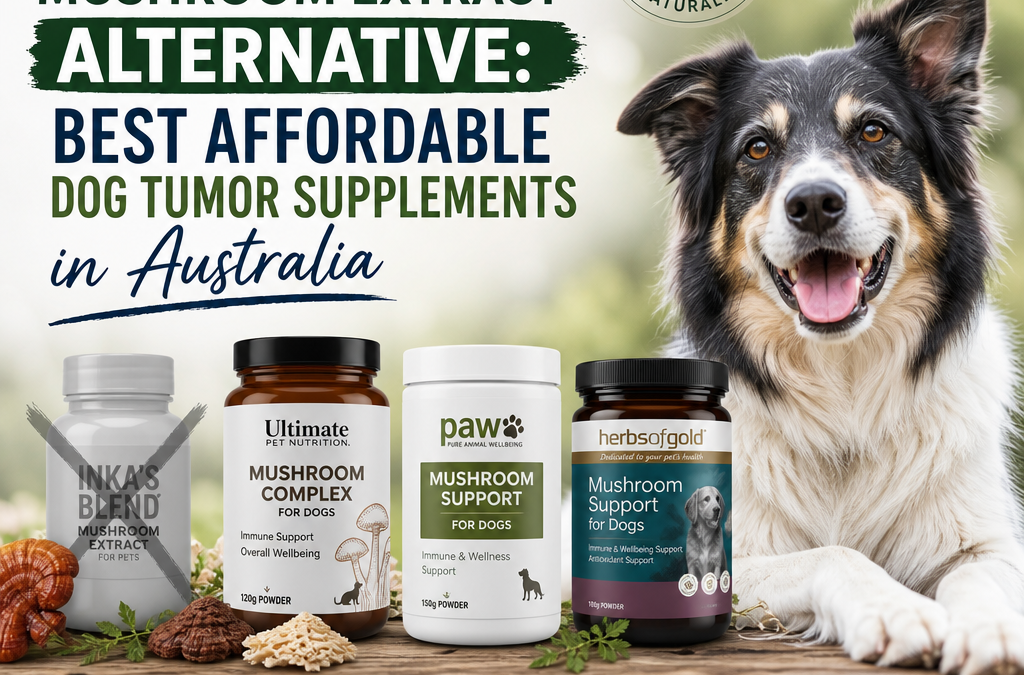
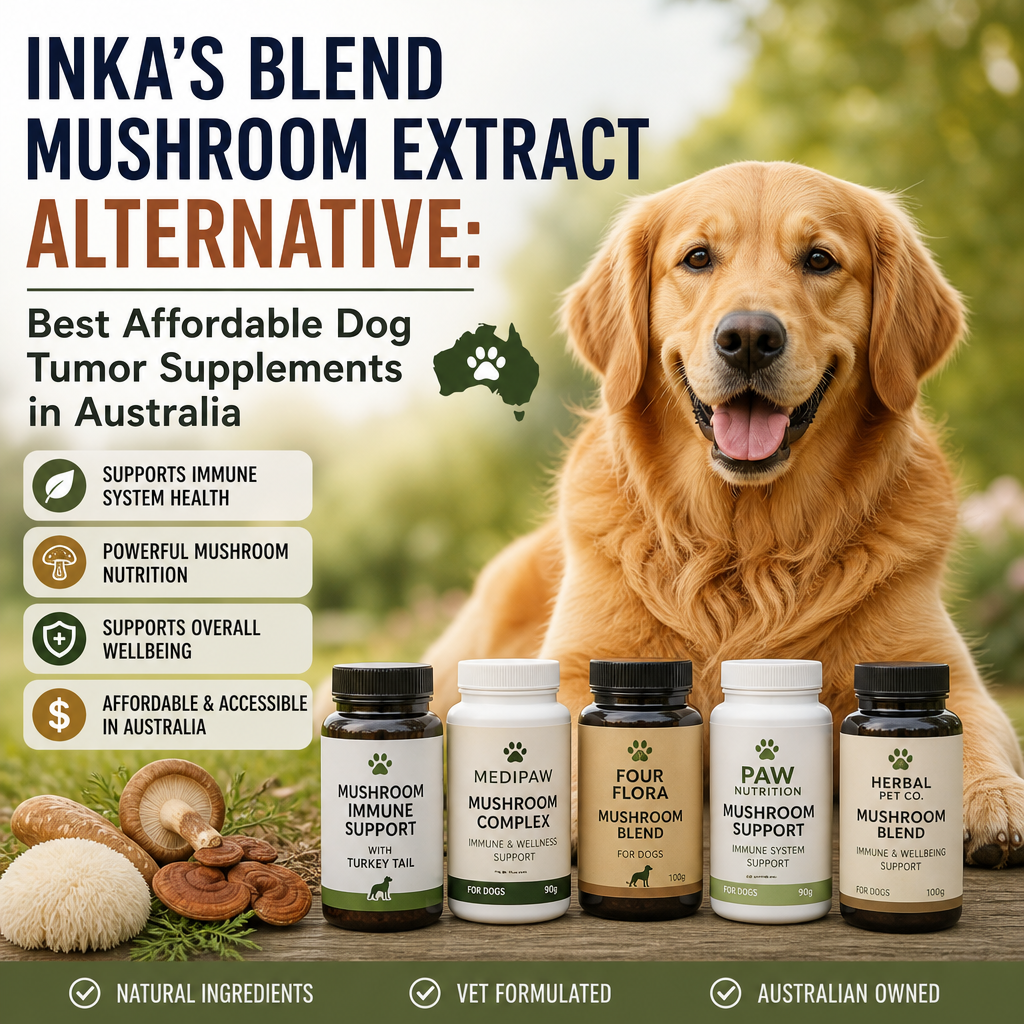
Australian dog owners searching for an Inka’s Blend Mushroom Extract alternative often want a supportive option that fits a tight budget without compromising quality. While no supplement can replace veterinary diagnosis or cancer treatment, carefully chosen mushroom extracts, medicinal herbs, omega-3 oils, and nutritional formulas may help support general wellbeing when used responsibly. The most important step is choosing a product with transparent ingredients, appropriate dosing information, and evidence-based guidance.
Why dog tumor supplements require careful consideration
A tumor can be benign or malignant, and its location, size, growth rate, and effect on surrounding tissues all influence treatment decisions. Before introducing any supplement, a veterinarian should examine the dog and, where appropriate, recommend tests such as blood work, imaging, cytology, or biopsy.
Supplements may support appetite, immune function, digestion, energy, or overall nutritional status, but they do not directly eliminate tumors. Some ingredients can also interact with chemotherapy, surgery, steroids, anti-inflammatory medicines, or other treatments. For example, products with blood-thinning properties may need to be stopped before surgery. Always provide your veterinarian with the complete ingredient list and the dog’s current medication details.
For more background on responsible pet cancer care, the VCA Hospitals guide to cancer in dogs is a helpful starting point.
When people search for an Inka’s Blend Mushroom Extract alternative, they are usually trying to balance hope, safety, and cost. That balance matters because supplements are only one part of a larger care plan. A sensible product can support a dog’s routine, but it should never distract from timely veterinary care or delay medical decisions.
The best outcomes usually come from a plan that combines professional monitoring, appropriate nutrition, and realistic expectations. If a supplement promises dramatic results, it is worth treating those claims with caution. In most cases, steady support and careful observation matter more than bold marketing language.
When comparing alternatives to Inka’s Blend Mushroom Extract, focus on quality rather than attractive marketing claims. A suitable product should clearly identify the mushroom species used, the part of the mushroom included, and the extraction method.
Common medicinal mushrooms found in canine supplements include:
- Turkey tail: Often selected for its beta-glucan content and immune-supporting properties.
- Reishi: Traditionally used for immune and general wellness support.
- Shiitake: Contains naturally occurring compounds that may contribute to healthy immune function.
- Maitake: Used in some veterinary wellness formulas for nutritional and immune support.
- Cordyceps: Sometimes included in products intended to support energy and vitality.
A full-spectrum extract may contain a wider range of naturally occurring compounds, while a beta-glucan-focused product may provide a more consistent measurement of a key active component. Look for independent testing, batch information, expiry dates, and clear serving instructions based on body weight.
It also helps to read the label for fillers, flavorings, and storage instructions. A well-made Inka’s Blend Mushroom Extract alternative should make it easy to understand what is inside the container and how the product should be used. If the ingredient list is vague, the formula may be harder to compare and less consistent from batch to batch.
For dogs with a sensitive stomach, simpler formulas are often easier to introduce. A product with fewer additives may reduce the chance of digestive upset, especially when the dog is already coping with illness or medication. In practical terms, the cleanest option is not always the most expensive one.
Affordable dog tumor supplements Australia: practical options
The cost of long-term care can be significant, particularly when a dog needs repeated consultations, medication, imaging, or surgery. For this reason, many owners search for affordable dog tumor supplements Australia products that can complement professional care without creating unnecessary financial pressure.
Several supplement categories may be worth discussing with a veterinarian:
Mushroom complexes
A mushroom blend can be a convenient alternative when owners want several species in one product. However, blends vary considerably. Some contain only a small quantity of each mushroom, while others provide detailed beta-glucan levels and concentrated extracts. Compare the cost per dose rather than the cost per container, since a cheaper bottle may require a much larger daily amount.
When a blend is clearly labeled, it becomes easier to judge whether it is a practical Inka’s Blend Mushroom Extract alternative or simply a marketing-heavy product. In many cases, the best value comes from a formula that is simple, well documented, and easy to administer every day.
Turkey tail extract
Turkey tail is one of the more commonly discussed medicinal mushrooms in canine wellness. Products may be sold as powder, capsules, liquid extracts, or treats. Powder can be economical for larger dogs, while capsules may offer simpler dosing. Choose a formulation that states the amount provided per serving and avoid products that rely solely on vague proprietary blends.
Turkey tail is often a leading choice when owners want a focused Inka’s Blend Mushroom Extract alternative because it is widely used in supportive care conversations and is easy to compare across brands. As with any mushroom product, transparency and dosing clarity are more important than buzzwords on the front label.
Omega-3 fatty acids
Fish oil containing EPA and DHA may support normal inflammatory balance, skin health, mobility, and general nutrition. The important measurement is the combined EPA and DHA content, not simply the total volume of fish oil. Choose a product designed for pets or one approved by a veterinarian, and store it correctly to reduce oxidation.
While omega-3s are not a direct replacement for mushroom formulas, they can be a useful companion product for dogs whose general condition needs nutritional support. Some owners consider them alongside an Inka’s Blend Mushroom Extract alternative because they are easy to source in Australia and can fit into a broader care routine.
Nutritional support powders
Dogs with tumors may experience reduced appetite, weight loss, digestive upset, or increased nutritional needs. A veterinary nutritional powder may help provide calories, protein, vitamins, or digestive support. These products should be selected according to the dog’s condition, especially if kidney, liver, or gastrointestinal disease is also present.
When weight loss is a concern, nutritional support can sometimes be more immediately useful than a more complex supplement stack. In that situation, an Inka’s Blend Mushroom Extract alternative may still be helpful, but it should be considered part of a wider nutrition-first strategy.
Probiotic supplements
Digestive changes can occur because of stress, altered food intake, antibiotics, or cancer treatment. A canine probiotic with clearly identified strains and storage instructions may support intestinal balance. Probiotics are not tumor treatments, but they may be useful when digestive health is part of the broader care plan.
If a dog has loose stools, poor appetite, or changes in stool quality, a probiotic can make day-to-day care more manageable. Some owners pair digestive support with an Inka’s Blend Mushroom Extract alternative, but it is still important to introduce products one at a time so any reaction can be tracked clearly.
One common Inka’s Blend Mushroom Extract alternative is a simple turkey tail formula with transparent dosing, while another is a broader mushroom blend that combines several species for general support. In both cases, the label should make it easy to compare value, potency, and suitability for your dog’s size.
A useful comparison should include more than brand name and price. Review the following factors:
- Ingredient transparency: Species, extract ratios, active compounds, and serving size should be listed.
- Testing standards: Look for quality control, contamination screening, and batch consistency.
- Australian availability: Local suppliers may provide faster delivery and clearer consumer protections.
- Dose suitability: The product should offer practical instructions for the dog’s weight.
- Palatability: A supplement is unlikely to help if the dog refuses it.
- Veterinary compatibility: Check for potential interactions with current treatments.
- Total daily cost: Calculate the real monthly expense based on the required dose.
In Australia, many owners compare an Inka’s Blend Mushroom Extract alternative with local pet supplements, imported mushroom products, and mixed wellness formulas. The best choice is usually the one that provides the clearest label, sensible serving guidance, and the most reliable manufacturing standards for the price.
Avoid products promising to “cure” cancer, dissolve tumors, replace chemotherapy, or guarantee results. Such claims are medically unreliable and may encourage delays in appropriate treatment.
Another good rule is to compare the product against the dog’s actual needs rather than against the broadest possible list of benefits. A supplement may claim to support immunity, digestion, skin health, and energy, but that does not automatically make it the best Inka’s Blend Mushroom Extract alternative for a particular dog. Match the formula to the situation.
If you are trying to choose between two similar products, the one with clearer documentation usually wins. A manufacturer that explains sourcing, extraction, and batch testing is generally easier to trust than one relying on vague “premium blend” language. Those details can make a real difference when buying repeated monthly supplies.
Affordable buying tips for Australian owners
To keep costs under control, compare price per daily dose rather than package price, and check whether the supplier offers bulk purchasing or subscription savings. Also consider shipping charges, temperature sensitivity, and return policies. A slightly more expensive product can become the better value if it lasts longer or is easier to administer.
Some owners also prefer products that are manufactured closer to home because local availability can simplify replacement orders and reduce delays. When a dog is already on a stable routine, consistency matters as much as the formulation itself. That is why many people re-order the same Inka’s Blend Mushroom Extract alternative once they find one that fits well.
How to introduce a supplement safely
Introduce only one new supplement at a time. Begin with the lowest reasonable dose recommended by the manufacturer or veterinarian, then monitor appetite, stools, energy, skin reactions, vomiting, and any changes in existing symptoms. Keep a simple record of the product, dose, start date, and observed effects.
Stop the supplement and contact a veterinarian if the dog develops repeated vomiting, diarrhea, facial swelling, breathing difficulty, unusual bruising, severe lethargy, or a sudden loss of appetite. Liquid products may contain alcohol, sweeteners, or unnecessary additives, so read the label carefully. Xylitol is particularly dangerous to dogs and should never be included.
If your dog is already taking prescriptions, ask your veterinary team whether the Inka’s Blend Mushroom Extract alternative you are considering should be paused before surgery or adjusted during chemotherapy. That extra check can prevent avoidable complications.
Introducing a supplement gradually is especially helpful for dogs that are older, anxious, or already dealing with stomach sensitivity. A slow start can reveal whether the product suits the dog before you commit to a longer routine. If the supplement is well tolerated, only then should you consider moving to a full dose.
It is also wise to keep the supplement schedule simple. Too many products at once can make it difficult to know what is helping and what is causing a side effect. With any Inka’s Blend Mushroom Extract alternative, a measured and methodical approach is usually safer than an aggressive one.
Building a complete supportive care plan
The best approach combines veterinary treatment with practical daily support. Follow the prescribed medical plan, attend reassessment appointments, and monitor changes in the tumor or the dog’s quality of life. Provide fresh water, a nutritionally complete diet, gentle exercise when appropriate, comfortable rest, and low-stress routines.
Supplements should be viewed as one part of supportive care—not as a substitute for diagnosis, surgery, radiation, chemotherapy, pain relief, or palliative care. By comparing transparent products, calculating true costs, and seeking veterinary guidance, Australian dog owners can make more informed decisions when considering an Inka’s Blend Mushroom Extract alternative.
For additional evidence-based reading on medicinal mushrooms and canine health, the PubMed Central research library is a useful place to look for peer-reviewed studies and reviews.
In summary, the right Inka’s Blend Mushroom Extract alternative is not necessarily the cheapest bottle or the most heavily marketed one. It is the product that fits your dog’s condition, provides clear ingredient disclosure, and supports the treatment plan your veterinarian recommends.
When you are comparing labels, make sure the serving size, mushroom species, and extraction details are easy to verify. A well-made Inka’s Blend Mushroom Extract alternative should also fit your dog’s routine without causing stress at mealtimes.
It can help to write down the exact supplement name, batch number, and dose before you start. If you later discuss an Inka’s Blend Mushroom Extract alternative with your veterinarian, those details make it easier to assess compatibility with any existing medication plan.
Australian buyers should also consider shipping times, return policies, and storage requirements. Some mushroom powders remain stable at room temperature, while others may need tighter protection from heat and moisture. If a product loses potency in transit, the savings may not be worth it.
Another practical point is dog size. A small dog may need only a tiny daily amount, while a larger dog can use a container faster. That is why the best Inka’s Blend Mushroom Extract alternative is not always the cheapest on the shelf; it is often the one with the lowest genuine cost per day.
If your dog is picky, try a product that can be mixed into wet food or a familiar treat. Palatability matters because even a well-formulated Inka’s Blend Mushroom Extract alternative will not help if the dog refuses it consistently.
For dogs with reduced appetite, a veterinarian may suggest a broader nutritional strategy before adding anything else. In some cases, an Inka’s Blend Mushroom Extract alternative is best used alongside a calorie-dense diet rather than as the main focus of support.
Some owners prefer single-ingredient products because they are easier to evaluate. Others choose combination formulas because they want a simpler routine. Either way, the key is to avoid vague blends that do not explain how much of each active component is included.
It is also wise to revisit the plan regularly. A dog’s condition can change quickly, and a supplement that made sense at diagnosis may no longer be appropriate after surgery, medication changes, or a shift toward palliative care. Your veterinarian can help decide whether the Inka’s Blend Mushroom Extract alternative still suits the current stage of treatment.
Ultimately, the best choice is the one that is transparent, practical, and medically sensible. With careful comparison and veterinary input, an Inka’s Blend Mushroom Extract alternative can be selected in a way that supports comfort without replacing proper care.
by TCMVET | Aug 24, 2026 | Research and News
Alter Hund Krebs was tun – diese Frage stellt sich für viele Menschen plötzlich und mit großer Sorge, wenn der eigene Vierbeiner eine Krebsdiagnose erhält. Besonders bei einem Seniorhund ist die Situation emotional belastend, denn neben der Erkrankung spielen auch Alter, Vorerkrankungen und die allgemeine Belastbarkeit eine wichtige Rolle. Mit einem klaren Plan, enger tierärztlicher Begleitung und viel Aufmerksamkeit für die Lebensqualität kann die verbleibende Zeit jedoch möglichst angenehm und würdevoll gestaltet werden.
Gerade wenn ein alter Hund Krebs was tun als erste Suchfrage im Kopf kreist, hilft es, die nächsten Schritte ruhig und strukturiert anzugehen. Je besser Sie informiert sind, desto leichter lassen sich Therapie, Pflege und Alltag sinnvoll miteinander verbinden.
Alter Hund Krebs: Was jetzt zuerst wichtig ist
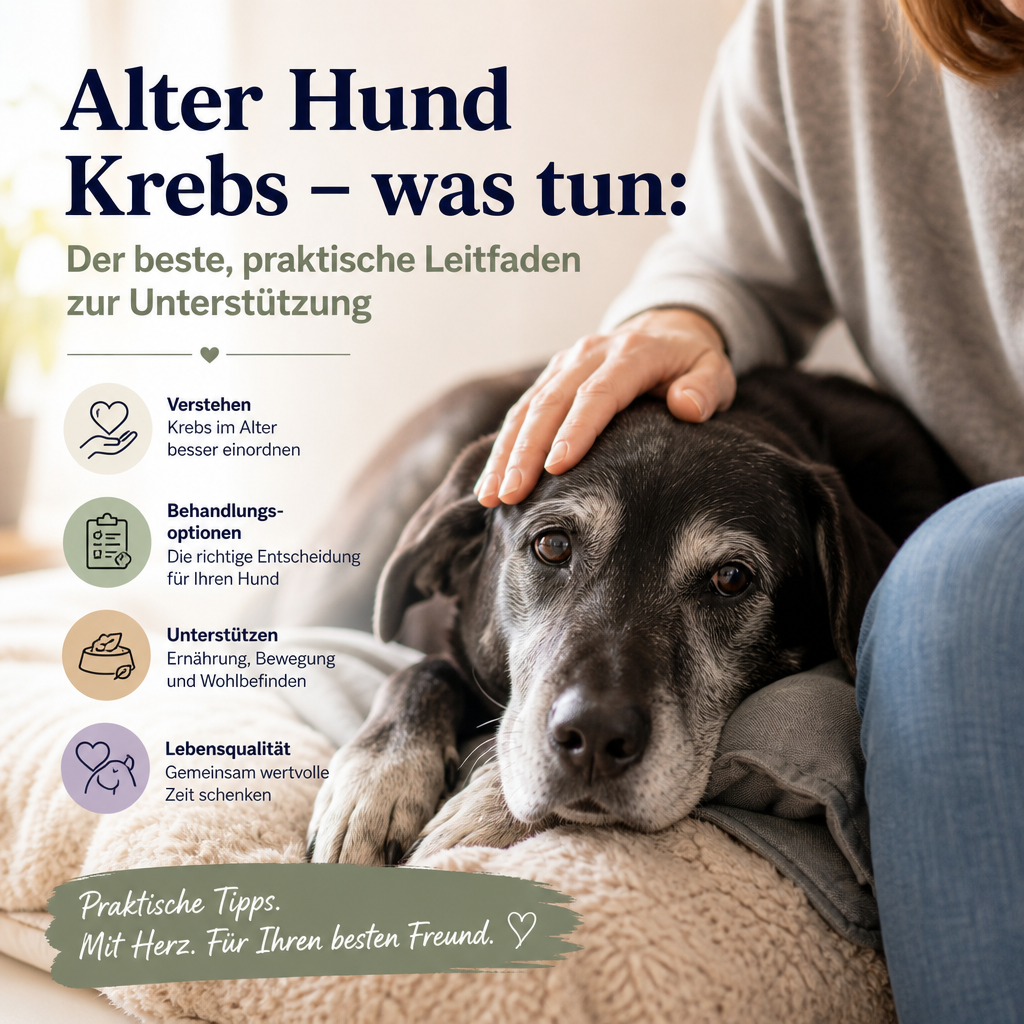
Nach einer Diagnose sollten Sie sich zunächst einen genauen Überblick verschaffen. Bitten Sie die Tierärztin oder den Tierarzt, die Erkrankung verständlich zu erklären. Wichtige Fragen sind:
- Um welche Krebsart handelt es sich?
- Wo liegt der Tumor und hat er gestreut?
- Welche Untersuchungen sind noch erforderlich?
- Welche Behandlungsmöglichkeiten gibt es?
- Welche Nebenwirkungen sind zu erwarten?
- Wie realistisch ist eine Heilung oder eine längere Krankheitskontrolle?
- Wie kann die Lebensqualität erhalten werden?
Je nach Tumor kommen Operation, Chemotherapie, Bestrahlung, Medikamente oder eine palliative Behandlung infrage. Bei einem alten Hund ist nicht automatisch jede intensive Therapie sinnvoll. Entscheidend ist, ob der Hund von der Behandlung voraussichtlich profitiert und die Belastung vertretbar bleibt. Eine zweite tierärztliche Meinung kann helfen, wenn Unsicherheit besteht.
Gerade in den ersten Tagen ist es hilfreich, Informationen geordnet zu sammeln. Notieren Sie Diagnosen, Befunde, Medikamente und offene Fragen. So wird aus dem anfänglichen Chaos ein Plan, und Sie können die nächsten Schritte ruhiger entscheiden. Auch bei einer schwierigen Krebsdiagnose beim Hund hilft ein sachlicher Überblick oft sehr.
Lebensqualität beim Senior Hund mit Krebs beurteilen
Bei älteren Hunden steht häufig nicht die maximale Lebensverlängerung, sondern eine gute Lebensqualität im Mittelpunkt. Beobachten Sie Ihren Hund täglich und führen Sie möglichst ein einfaches Tagebuch. Notieren Sie beispielsweise:
- frisst und trinkt er normal?
- wirkt er interessiert und ansprechbar?
- hat er Schmerzen oder Atemprobleme?
- kann er selbstständig aufstehen und laufen?
- schläft er entspannt?
- ist er sauber und kann sich lösen?
- genießt er Streicheleinheiten, Spaziergänge oder seine Lieblingsbeschäftigungen?
Gute und schlechte Tage lassen sich dadurch besser vergleichen. Wenn Schmerzen, Übelkeit, Atemnot oder starke Schwäche zunehmen, sollte sofort die Tierarztpraxis kontaktiert werden. Hunde zeigen Beschwerden oft lange nicht eindeutig. Veränderungen wie Rückzug, Hecheln in Ruhe, häufiges Positionswechseln, Winseln oder Appetitverlust können wichtige Hinweise sein.
Eine ehrliche Beobachtung hilft auch dabei, emotionale Entscheidungen nicht allein aus Angst zu treffen. Der Blick auf Alltag, Freude, Komfort und Belastbarkeit ist oft aussagekräftiger als einzelne gute Momente. Genau hier setzt eine verlässliche Begleitung beim Thema alter Hund Krebs was tun an: nicht nur behandeln, sondern auch genau hinsehen.
Wenn Sie die Lage besser einschätzen möchten, kann es hilfreich sein, zusätzlich auf den Unterschied zwischen Krankheitssymptomen und altersbedingten Veränderungen zu achten. So lassen sich Warnsignale früher erkennen und gezielter mit der Praxis besprechen.
Alltag unterstützen und entlasten
Die Unterstützung im Alltag sollte sich an den Kräften des Hundes orientieren. Viele kurze, ruhige Spaziergänge sind oft besser als eine lange Runde. Lassen Sie den Hund selbst bestimmen, wie weit er gehen möchte. Bei unsicherem Gang können rutschfeste Teppiche, Rampen oder ein gut sitzendes Hebegeschirr helfen.
Ein warmer, weicher und leicht zugänglicher Liegeplatz entlastet alte Gelenke. Zugluft und feuchte Kälte sollten vermieden werden. Gleichzeitig ist frische Luft wichtig, sofern der Hund sich damit wohlfühlt. Überfordern Sie ihn nicht durch Besuch, lange Autofahrten oder ungewohnte Aktivitäten.
Auch die emotionale Nähe ist wertvoll. Ruhiges Streicheln, gemeinsames Sitzen und vertraute Routinen geben Sicherheit. Hunde profitieren meist davon, wenn Fütterungszeiten, Schlafplätze und Tagesabläufe möglichst konstant bleiben.
Wenn Sie unsicher sind, welche Hilfen sinnvoll sind, kann ein Blick auf weiterführende Informationen nützlich sein, etwa zu Nahrungsergänzung Hund Krebs: sichere Optionen und wichtige Tipps. Dort werden unterstützende Möglichkeiten ergänzend eingeordnet, ohne die tierärztliche Behandlung zu ersetzen.
Auch kleine Anpassungen machen oft einen großen Unterschied. Ein niedriger Futternapf, kurze Wege zum Garten und ein ruhiger Schlafplatz in Ihrer Nähe können den Alltag spürbar erleichtern. Für viele Familien ist genau diese praktische Unterstützung ein zentraler Teil der Frage alter Hund Krebs was tun.
Ernährung und Nahrungsergänzung
Die Ernährung sollte mit der Tierarztpraxis abgestimmt werden, insbesondere wenn der Hund abnimmt, an Übelkeit leidet oder eine Organerkrankung vorliegt. Grundsätzlich ist es wichtig, dass er ausreichend Kalorien und Flüssigkeit aufnimmt. Kleine, häufige Mahlzeiten können besser verträglich sein als wenige große Portionen.
Manche Hunde fressen während einer Erkrankung besser, wenn das Futter leicht angewärmt wird und dadurch intensiver riecht. Hochwertige, gut verdauliche Nahrung kann sinnvoll sein, ist aber nicht automatisch für jeden Hund gleich geeignet. Bei Nieren-, Leber- oder Magenproblemen gelten möglicherweise besondere Anforderungen.
Verweigert der Hund länger als einen Tag das Futter, erbricht er wiederholt oder trinkt er auffällig viel beziehungsweise wenig, sollte die Ursache tiermedizinisch abgeklärt werden. Zwingen Sie ihn nicht zum Fressen und geben Sie keine menschlichen Medikamente.
Beim Thema Nahrungsergänzung alter Hund Krebs ist Vorsicht geboten. Präparate können eine tierärztliche Behandlung nicht ersetzen und sind nicht grundsätzlich harmlos. Einige Produkte können die Wirkung von Medikamenten beeinflussen oder bei bestimmten Tumoren und Organerkrankungen ungeeignet sein.
Besprechen Sie Nahrungsergänzungsmittel deshalb immer mit der behandelnden Praxis. Je nach Situation können beispielsweise bestimmte Omega-3-Fettsäuren, Vitamine oder unterstützende Präparate in Betracht gezogen werden. Ob sie tatsächlich sinnvoll sind, hängt von Blutwerten, Ernährung, Tumorart und Begleiterkrankungen ab.
Besonders riskant ist es, mehrere Produkte gleichzeitig zu kombinieren. Achten Sie auf transparente Inhaltsstoffe, eine klare Dosierung und seriöse Hersteller. Von angeblichen „Heilmitteln“ oder Versprechen einer vollständigen Tumorheilung sollten Sie Abstand nehmen. Auch pflanzliche Produkte können Nebenwirkungen verursachen und mit einer Krebstherapie wechselwirken.
Mehr Hintergrund zu ergänzenden Produkten finden Sie auch in diesem Beitrag über Nahrungsergänzungsmittel Hund Krebs: sichere Kauf-Tipps für eine gute Entscheidung. Solche Informationen können helfen, Angebote besser einzuordnen und unnötige Risiken zu vermeiden.
Schmerzen und Beschwerden früh behandeln
Eine gute Schmerztherapie ist ein zentraler Bestandteil der Krebsbegleitung. Schmerzen können durch den Tumor selbst, Entzündungen, Druck auf Organe oder Begleiterkrankungen entstehen. Tierärztlich verordnete Schmerzmittel sollten exakt nach Anleitung gegeben werden. Setzen Sie Medikamente nicht eigenständig ab und erhöhen Sie die Dosis nicht selbst.
Zusätzlich können angepasste Bewegung, Wärme bei bestimmten Beschwerden und eine ruhige Umgebung helfen. Wärme darf jedoch nicht auf entzündete oder unklare Schwellungen gelegt werden. Bei Atemnot, starken Blutungen, Krampfanfällen, kollapsartiger Schwäche oder unstillbarem Erbrechen handelt es sich um einen Notfall.
Auch Übelkeit, Verstopfung, Durchfall oder Appetitlosigkeit sollten ernst genommen werden. Oft lassen sich solche Beschwerden mit gezielter tierärztlicher Unterstützung gut lindern. Je früher Probleme behandelt werden, desto eher bleibt dem Hund Kraft für schöne Momente. Gerade deshalb ist die Frage alter Hund Krebs was tun eng mit einer guten Symptomkontrolle verbunden.
Wenn Ihr Hund Medikamente bekommt, legen Sie am besten einen einfachen Plan an: Was wird wann gegeben, was soll beobachtet werden und wann muss die Praxis informiert werden? Solche Routinen reduzieren Fehler und geben Sicherheit im Alltag.
Warnzeichen im Alltag ernst nehmen
Zu den wichtigsten Warnzeichen gehören rascher Gewichtsverlust, anhaltende Schwäche, neue Schmerzen, deutliche Unruhe in der Nacht oder der Verlust von Interesse an vertrauten Dingen. Wenn solche Veränderungen häufiger auftreten, ist eine zeitnahe Rücksprache mit der Praxis sinnvoll, auch wenn der nächste Termin noch nicht ansteht.
Die schwere Entscheidung gut begleiten
Bei fortschreitender Erkrankung kann die Frage entstehen, wann weitere Behandlung nicht mehr im besten Interesse des Hundes liegt. Diese Entscheidung ist schmerzhaft, aber sie kann ein letzter Ausdruck von Fürsorge sein. Sprechen Sie frühzeitig mit der Tierarztpraxis über Warnzeichen und einen möglichen Abschiedsplan.
Hilfreich ist eine ehrliche Bewertung: Gibt es noch mehr gute als schlechte Tage? Kann der Hund ohne starke Beschwerden fressen, schlafen, atmen und sich bewegen? Nimmt er seine Umgebung noch wahr und erlebt er Freude? Wenn wesentliche Bedürfnisse dauerhaft nicht mehr erfüllt werden können, sollte die palliative Begleitung neu bewertet werden.
Für manche Familien ist es beruhigend, sich rechtzeitig mit seriösen medizinischen Informationen auseinanderzusetzen. Eine gute Orientierung bietet zum Beispiel die amerikanische Fachseite des American Veterinary Medical Association zu Krebs bei Haustieren, die grundlegende Hinweise zu Behandlung, Pflege und Lebensqualität zusammenfasst.
Wichtig ist, dass Sie sich nicht allein von einzelnen guten Stunden leiten lassen, sondern das Gesamtbild betrachten. Ein Hund kann trotz Krankheit noch Freude zeigen, und gleichzeitig kann die Belastung bereits hoch sein. Dieser Spannungsbereich ist oft der schwierigste Teil bei alter Hund Krebs was tun.
Wenn Sie gemeinsam mit der Praxis über Palliativpflege sprechen, kann das sehr entlastend sein. Es geht dann nicht mehr um jede mögliche Maßnahme, sondern um das, was dem Hund im Alltag am meisten Ruhe und Würde gibt.
Was Hundebesitzer jetzt konkret tun können
Erstellen Sie einen schriftlichen Plan mit Medikamenten, Fütterung, wichtigen Telefonnummern und Notfallkontakten. Wiegen Sie den Hund regelmäßig, sofern dies ohne Stress möglich ist, und achten Sie auf Veränderungen an Appetit, Gewicht, Verhalten und Beweglichkeit. Halten Sie Rücksprache mit der Tierarztpraxis, bevor Sie die Ernährung, Bewegung oder Medikamente verändern.
Vor allem braucht ein alter Hund mit Krebs Sicherheit, Ruhe und verlässliche Nähe. Nicht jede Maßnahme muss auf Heilung ausgerichtet sein. Oft besteht die wertvollste Unterstützung darin, Beschwerden zu lindern, vertraute Momente zu bewahren und den Hund aufmerksam durch jeden Tag zu begleiten.
Wenn Sie die Situation Schritt für Schritt angehen, wirkt sie meist weniger überwältigend. Ein klarer Tagesablauf, gute Beobachtung und eine offene Kommunikation mit der Tierarztpraxis sind die wichtigsten Grundlagen. So wird aus der schwierigen Frage alter Hund Krebs was tun ein praktikabler Plan, der Ihrem Hund im Alltag wirklich hilft.
Am Ende zählt vor allem, dass Ihr Hund möglichst wenig leiden muss und weiterhin Geborgenheit spürt. Genau darin liegt oft die beste und liebevollste Unterstützung.
Gerade bei einem älteren Hund ist es hilfreich, Entscheidungen nicht zu beschleunigen, sondern sie mit Ruhe und Mitgefühl zu treffen. So bleiben Fürsorge, Orientierung und Nähe auch in einer schwierigen Krankheitsphase erhalten.
by TCMVET | Aug 24, 2026 | Research and News
Medicinal mushrooms / immune support is becoming an increasingly discussed topic among Finnish dog owners whose pets are living with tumors. While no supplement can replace veterinary diagnosis, surgery, chemotherapy, radiation, or prescribed medication, carefully selected mushroom extracts may offer supportive nutritional value as part of a broader care plan. Understanding what these products can and cannot do is essential when searching for dog cancer supplements in Finland.
A dog with cancer may experience changes in appetite, energy, digestion, immune function, and overall resilience. Supportive care aims to maintain quality of life, help the dog tolerate treatment, and provide comfort during recovery. Medicinal mushrooms are often considered because they contain naturally occurring compounds such as beta-glucans, triterpenes, antioxidants, and other polysaccharides. However, product quality, dosage, safety, and veterinary supervision matter greatly.
In practice, the best results usually come from thoughtful comparisons rather than impulse purchases. Finnish owners often want something simple, trustworthy, and easy to fit into a daily routine. That is where a careful review of ingredients, extraction methods, and testing can make a meaningful difference. The goal is not to find a miracle product, but to choose support that is genuinely appropriate for the dog’s situation.
Medicinal mushrooms / immune support for dogs with tumors
Several mushroom species are commonly used in veterinary supplement products. Reishi, turkey tail, maitake, shiitake, and cordyceps are among the most widely discussed. Their potential benefits are generally linked to compounds that may help regulate immune activity and support normal inflammatory balance.
Turkey tail, also known as Trametes versicolor, has received particular attention in canine cancer research. Some studies have explored turkey tail extracts in dogs with certain tumors, especially in relation to immune response and quality of life. The results are promising but should not be interpreted as proof that the mushroom cures cancer. Research remains limited, and outcomes may depend on the tumor type, extract quality, dose, and the dog’s overall health.
Reishi is traditionally valued for immune modulation and general vitality. Maitake and shiitake contain beta-glucans that may support normal immune function, while cordyceps is often included in formulas intended to promote energy and stamina. These mushrooms are not interchangeable, and a product containing several species is not automatically better than a focused, clinically appropriate extract.
For many owners, medicinal mushrooms / immune products are most useful when they are matched to the dog’s diagnosis, current medications, and digestive tolerance. That is why a veterinarian familiar with oncology should help interpret the label, evaluate the dose, and decide whether the product fits the broader treatment plan.
In practical terms, the phrase medicinal mushrooms / immune support covers several different supplement styles. Some products are standardized extracts, while others are simple powders. The exact form matters because the same mushroom name can refer to very different concentrations, processing methods, and levels of active compounds. A careful comparison helps owners avoid paying for marketing rather than meaningful support.
When a clinic discusses supportive care, medicinal mushrooms / immune options may be considered alongside diet changes and symptom management. That wider perspective is important because a supplement by itself is rarely the deciding factor in a dog’s comfort. Instead, it can be one of several small pieces that help create a more stable routine.
For owners who want to understand how mushroom-based products compare with other approaches, it helps to look at the full support picture. Nutritional support, medication timing, and symptom monitoring often matter as much as the supplement itself. This is why medicinal mushrooms / immune support should be viewed as one practical tool within a broader plan.
How mushroom supplements may support a dog’s care
The immune system is complex. It must respond effectively to threats while avoiding excessive or inappropriate inflammation. Mushroom-derived beta-glucans may interact with immune cells, potentially helping to support normal immune surveillance. Antioxidant compounds may also help protect cells from oxidative stress, although antioxidants can interact with some medical treatments.
For dogs with tumors, the main goal of supplementation is usually supportive rather than curative. A veterinarian may consider a mushroom product as one element of a plan that also includes a complete diet, pain control, nausea management, hydration, regular monitoring, and conventional cancer treatment where appropriate.
Potential reasons a veterinary professional might consider a supplement include:
- Supporting normal immune function
- Helping maintain appetite and daily energy
- Providing nutritional support during recovery
- Supporting general wellbeing in older dogs
- Complementing, but not replacing, prescribed cancer care
The dog’s response should be monitored closely. Improvements in appetite or energy may indicate better comfort, but they do not necessarily mean that a tumor is shrinking. Tumor progression must be assessed through veterinary examinations and, when appropriate, imaging or laboratory testing.
When owners compare support options, medicinal mushrooms / immune formulas should be judged by evidence, not by marketing language. Products that clearly explain the extraction ratio, species used, and quality testing are usually easier to evaluate than vague blends with attractive packaging.
One reason these products remain popular is that owners want practical ways to support a dog without adding unnecessary complexity. A well-chosen product can be simple to use, but it still needs to fit the dog’s condition, existing prescriptions, and feeding routine. In other words, the best option is not simply the strongest one; it is the one that makes sense for the individual dog.
If a product seems impressive but offers little information, that is a red flag. Reliable companies usually explain where the mushrooms come from, how they are extracted, and whether the final product has been tested for contamination. That level of transparency is especially important when the goal is long-term supportive care rather than short-term experimentation.
Some owners prefer to start with a single mushroom ingredient before trying more complex blends. That can make it easier to watch for digestive changes and see how the dog responds. A gradual approach is often safer and easier to manage than adding several products at once.
Choosing dog cancer supplements in Finland
When comparing dog cancer supplements Finland owners can purchase, it is important to look beyond attractive packaging and broad claims. The label should clearly identify the mushroom species, the extraction method, the amount of active extract, and the recommended serving for dogs. Products made from fruiting bodies are often preferred because they may provide a more complete range of naturally occurring mushroom compounds, although the most important factor is verified composition and quality control.
Look for companies that provide:
- Clear ingredient and dosage information
- Batch testing or certificates of analysis
- Statements about heavy metals, pesticides, and microbial contamination
- Manufacturing information and traceability
- Veterinary or scientific documentation
- Instructions specifically intended for dogs
Powders, capsules, liquid extracts, and soft chews may all be available in Finland. The best format depends on the dog’s size, appetite, swallowing ability, and tolerance. A powder may be convenient for mixing into food, while a liquid can be useful for dogs that refuse tablets. Products designed for humans may contain unsuitable ingredients, excessive doses, alcohol, xylitol, or other substances that are unsafe for pets.
Affordable products should not be judged by price alone. A low-cost supplement may contain very little active extract, making the apparent saving misleading. Comparing the amount of standardized extract per serving is more useful than comparing package prices. At the same time, expensive branding does not guarantee effectiveness. Transparent testing and sensible formulation are stronger indicators of value.
Some owners also look at how easy a supplement is to combine with meals. That can matter more than the style of the label or the number of mushrooms listed on the front. If the dog will not accept the product, even a promising formula becomes impractical. Palatability, routine, and consistency are part of real-world effectiveness.
It also helps to compare products against your dog’s current treatment stage. A dog that is stable and eating well may tolerate one format, while a dog with nausea or reduced appetite may need a gentler option. This is one reason dog cancer supplements Finland shoppers should think about everyday usability, not just the ingredient panel.
If you want to compare a broader range of supportive options, the guide to alternatives to medicinal mushrooms / mycotherapy can help put mushroom-based products into context.
For readers who want a more general overview of the research, the National Cancer Institute’s summary on medicinal mushrooms and cancer is a useful educational reference.
It is also worth remembering that Finland-based shoppers may need to compare products sold through different channels. That can make label reading even more important. A practical checklist is often the fastest way to compare options: species, extract type, dosage, testing, and suitability for dogs.
Owners may also want to ask whether the product has been formulated for long-term use. A supplement that looks acceptable for short periods may not be ideal for repeated use if it lacks quality controls or contains unnecessary fillers. In many cases, the simplest formula with the clearest documentation is the most trustworthy choice.
Dog tumor support Finland: safety and veterinary guidance
Dog tumor support Finland should always be approached in partnership with a veterinarian, particularly when the dog is receiving chemotherapy, corticosteroids, anti-inflammatory drugs, anticoagulants, or immune-modifying medication. Some supplements may affect blood clotting, liver enzymes, blood sugar, or immune activity. These effects can be important during surgery or cancer treatment.
Extra caution is needed for dogs with liver or kidney disease, bleeding disorders, diabetes, autoimmune conditions, or sensitive digestion. Possible side effects may include loose stools, vomiting, reduced appetite, itching, or lethargy. Any new or worsening symptom should be reported to a veterinary clinic.
Introduce one product at a time, beginning only with the dose recommended by a qualified professional or the manufacturer. This makes it easier to identify intolerance and prevents confusion if the dog’s condition changes. Keep a simple record of appetite, stool quality, energy, medication, and noticeable symptoms. Such information can help the veterinarian decide whether the supplement should be continued.
Careful observation matters because even a well-tolerated product may not suit every dog. In some cases, a different formula or a lower dose may be more appropriate than stopping support entirely. If the dog is already on an oncology protocol, any new supplement should be checked against that plan before it is started.
Owners sometimes assume that natural means harmless, but that is not the case. Natural products can still be inappropriate for a dog with a specific diagnosis or medication schedule. A short conversation with the veterinary team can prevent avoidable problems and make support more consistent over time.
When a supplement is added thoughtfully, the focus remains on the dog’s comfort and safety. This is especially important when appetite is unpredictable or when treatment already places stress on digestion. In those situations, even small changes can matter.
If you are unsure how a product fits into your dog’s medical plan, ask the clinic whether it should be introduced before or after meals, whether it should be paused around surgery, and whether any monitoring is needed. Those small questions can prevent larger problems later.
That cautious approach is especially relevant for dogs already taking several medications. A product that seems gentle may still be unsuitable if it affects clotting, digestion, or liver metabolism. Good dog tumor support Finland decisions are based on the whole medical picture, not on the supplement alone.
A balanced approach to supportive nutrition
Mushroom extracts are only one part of supportive care. Dogs with cancer need adequate calories, high-quality protein where medically appropriate, access to fresh water, and a diet they will reliably eat. Sudden dietary changes can cause digestive upset, so new foods and supplements should be introduced gradually.
Quality of life should remain the central consideration. A useful care plan addresses pain, mobility, sleep, nausea, anxiety, and enjoyment of normal activities. Regular veterinary assessments are especially important because dogs often hide discomfort until a condition has become advanced.
Owners may also find it helpful to compare options based on practical needs such as palatability, ingredient transparency, and whether the product can be used alongside current medications. In that sense, medicinal mushrooms / immune support works best as part of a consistent, low-stress routine rather than as a one-time intervention.
Mushroom extracts can be especially helpful when the goal is to maintain day-to-day comfort rather than chase dramatic promises. That realistic mindset is important when reading product labels, comparing brands, or discussing expectations with a clinic.
Supportive nutrition should also be flexible. A dog’s needs can change quickly during treatment, and a product that works well one month may become less suitable later. Rechecking body condition, appetite, and bowel function helps owners keep the plan aligned with the dog’s current condition.
It is equally important to separate marketing language from actual utility. Terms such as “advanced,” “extra strength,” or “premium blend” do not automatically mean a better result. The more useful questions are simple: Is the mushroom extract clearly identified? Is the dose appropriate for dogs? Is the product tested? Does the dog tolerate it?
Medicinal mushrooms / immune support may offer a practical and affordable supportive option for some dogs with tumors in Finland, especially when selected for quality and used responsibly. They should never be presented as a guaranteed cure or a substitute for proven cancer treatment. With transparent products, realistic expectations, and veterinary oversight, mushroom-based immune support can be considered as part of a thoughtful, individualized plan for maintaining a dog’s comfort and wellbeing.
For many owners, the best outcome is not a dramatic claim but a steadier daily routine: better acceptance of food, fewer digestive surprises, and more confidence that the supplement is working alongside veterinary care rather than against it. That is often the most realistic and most valuable goal.
