by TCMVET | Aug 25, 2026 | Research and News
Immune / medicinal mushrooms are increasingly discussed by Bulgarian dog owners looking for complementary support when a pet has a tumor. These products may contain compounds associated with immune regulation and antioxidant activity, but they are not replacements for veterinary diagnosis, surgery, chemotherapy, radiation, or other evidence-based cancer care. The safest approach is to view them as potential adjuncts, selected with a veterinarian who understands the dog’s diagnosis, medications, and overall health.
For many owners, the appeal of immune / medicinal mushrooms is simple: they seem natural, familiar, and easy to add to a care plan. But natural does not automatically mean appropriate, and a product that sounds supportive on paper may not be the best choice for a specific dog. In practice, the most useful question is not whether mushrooms are popular, but whether a specific formula is transparent, well-made, and suitable for the dog’s condition. That is the standard this guide uses throughout.
Why medicinal mushrooms are considered for dogs with tumors
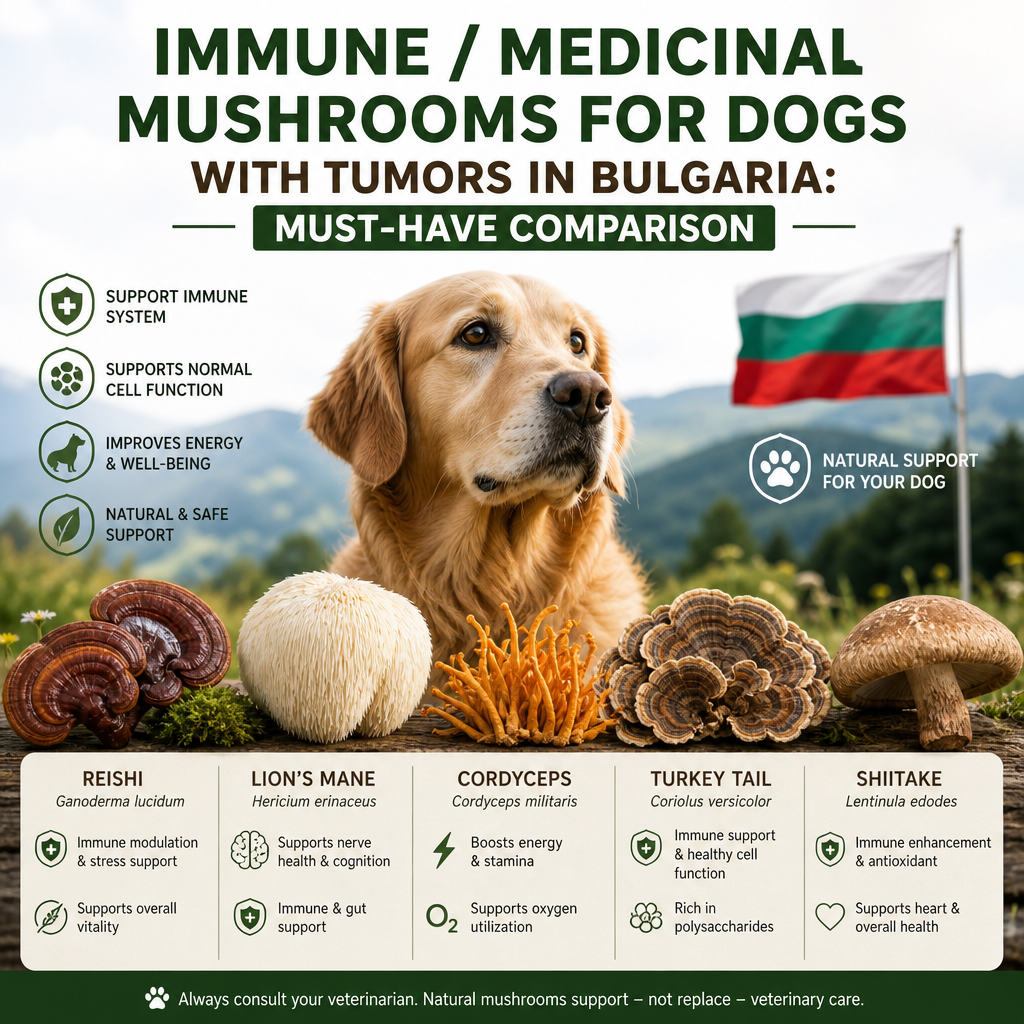
Immune / medicinal mushrooms contain biologically active substances such as beta-glucans, triterpenes, polysaccharides, and other compounds. Researchers have studied several mushroom species for their possible effects on immune signaling, inflammation, oxidative stress, and cellular activity. However, results from laboratory or human research cannot automatically be applied to dogs with cancer.
Dogs may respond differently depending on their breed, age, tumor type, liver and kidney function, and current treatment. A supplement that is tolerated by one dog may cause digestive upset or interact with medication in another. For this reason, mushroom products should be evaluated as part of an individual veterinary plan rather than treated as universal cancer remedies.
Commonly discussed species include turkey tail, reishi, shiitake, maitake, and cordyceps. Turkey tail is often mentioned in connection with canine cancer research, particularly because of compounds such as polysaccharide-K and polysaccharide peptide. Reishi is traditionally associated with immune and inflammatory support, while shiitake and maitake are valued for their beta-glucan content. Cordyceps products are marketed for vitality and stamina, although the quality and relevance of available evidence vary considerably.
For owners comparing options in Bulgaria, the goal is not to find a miracle product. The goal is to identify a supplement that fits the dog’s condition, is manufactured responsibly, and can be used without distracting from proven care. That is why immune / medicinal mushrooms should be reviewed with the same care as any other supportive product.
What owners should expect from immune / medicinal mushrooms
In a realistic care plan, immune / medicinal mushrooms are best viewed as supportive products rather than primary treatments. They may be used to complement an oncology protocol, but they should not be expected to replace diagnostics, staging, or follow-up. The more complex the dog’s medical history, the more important it becomes to avoid assumptions based on marketing language alone.
Some owners hope a supplement will provide a visible change in a few days. In reality, when a mushroom formula is helpful, the effects are usually subtle and gradual. The most meaningful outcomes are often better appetite, steadier energy, improved tolerance of the routine, or simply no adverse reaction at all. Those are useful goals, but they are not the same as proof of anti-tumor activity.
It is also worth remembering that cancer care is not one-size-fits-all. A dog with mast cell disease, lymphoma, a soft tissue sarcoma, or an oral tumor may need very different support. The same applies to immune / medicinal mushrooms: the right product for one case may be a poor fit for another. This is one reason the advice of an oncology-aware veterinarian matters so much.
Dog cancer supplements Bulgaria: what to compare
When reviewing dog cancer supplements Bulgaria, the first priority should be product quality rather than attractive claims. A responsible comparison should examine the following factors.
Mushroom species and extract type
A label should clearly identify the mushroom species and the part used. Products made from fruiting bodies may differ from products made primarily from mycelium or grain-grown material. Neither label alone guarantees effectiveness, but vague descriptions make meaningful evaluation difficult.
The extraction method also matters. Hot-water extraction is commonly used to make polysaccharides more available, while alcohol extraction may target other compounds, including certain triterpenes. Some formulas use dual extraction. The manufacturer should explain the process instead of simply listing “mushroom complex” without details.
When the label is incomplete, the buyer is left guessing. That makes it harder to compare two products fairly and harder still to discuss them with a veterinarian. Transparency is especially important because the phrase immune / medicinal mushrooms covers many different ingredients, concentrations, and production methods.
Standardization and active compounds
A reputable product should provide information about beta-glucan content or other measurable constituents. “Total polysaccharides” is not always equivalent to beta-glucans, and a high number on the label may be misleading if it includes inactive or poorly defined material.
Look for batch testing, certificates of analysis, and testing for heavy metals, pesticides, bacteria, molds, and unwanted contaminants. This is especially important because mushrooms can accumulate substances from their growing environment.
If you want to compare formulations more carefully, a trusted educational source such as the National Center for Complementary and Integrative Health can help you understand how supplement quality and evidence are typically evaluated.
For dog cancer supplements Bulgaria, standardization is often the difference between a product that merely sounds sophisticated and one that can be reviewed in a meaningful way. If a seller cannot explain what is standardized, what is tested, or what each serving contains, the product deserves caution.
Dosage transparency
Dog supplements should provide dosage guidance based on body weight, but veterinary advice remains essential. The appropriate amount may differ according to the extract’s concentration, the dog’s condition, and whether the product is being used alongside chemotherapy, corticosteroids, nonsteroidal anti-inflammatory drugs, or other treatments.
Avoid products that encourage very high doses without explaining the evidence or safety limits. More is not necessarily better, particularly when concentrated extracts are involved.
Good labeling should answer practical questions quickly: How much is in each capsule or scoop? How many milligrams are in a daily serving? Is the formula designed for small dogs, large dogs, or all sizes? Can the dose be divided easily? These details make a supplement easier to use correctly and easier to compare against other options.
Manufacturing standards
Choose products manufactured under clear quality-control procedures. Information about the producer, country of manufacture, batch number, expiry date, storage requirements, and contact details should be easy to find. Products sold through Bulgarian veterinary clinics, established pharmacies, or transparent specialist retailers may be easier to verify than anonymous listings on online marketplaces.
Owners who are also comparing regional support options may find it useful to review our guide on strengthening the immune system of dogs with mast cell tumors, since the same quality standards often apply.
A serious manufacturer should also be willing to answer basic questions about sourcing and testing. That does not guarantee clinical benefit, but it does reduce uncertainty. In a category filled with broad claims, the ability to document what is inside the bottle matters more than the size of the promise on the front label.
Ingredient simplicity and suitability for dogs
Some mushroom products are made for humans and then marketed as if they were equally suitable for pets. That can create avoidable problems. Human supplements may include sweeteners, herbs, flavors, or extra vitamins that are unnecessary or potentially unsuitable for dogs. In a dog with cancer, simplicity is usually better than a long ingredient list.
When a formula contains many added ingredients, it becomes harder to know what is doing what. It also becomes harder to identify the cause of a side effect if one appears. A more focused formula is generally easier to evaluate, especially when immune / medicinal mushrooms are being used only as a supportive option.
Potential benefits and limitations
Mushroom-based supplements may offer supportive benefits in some dogs, such as helping maintain appetite, energy, or general wellbeing. Certain compounds may influence immune activity, but immune stimulation is not automatically beneficial in every cancer case. Some tumors and autoimmune conditions require careful immune management, and the biological effects of a supplement may be unpredictable.
It is also important to distinguish between supporting quality of life and treating the tumor itself. A dog may appear more energetic after starting a supplement, but that does not prove the tumor is shrinking. Tumor response should be assessed through veterinary examinations and appropriate imaging or laboratory tests.
Evidence for specific mushroom extracts in canine oncology remains limited compared with the evidence for established cancer treatments. Owners should therefore be cautious about claims that a product can “cure,” “dissolve,” or “kill” tumors. Such statements are warning signs, especially when they are not supported by controlled veterinary studies.
In practical terms, immune / medicinal mushrooms may fit best when the aim is to support comfort and routine rather than to promise disease control. This is especially true for dogs already receiving a treatment plan from an oncology team.
There are also situations where a supplement may be a poor fit even if the ingredients sound appealing. For example, a dog with a sensitive stomach may struggle with concentrated extracts. A dog with a bleeding risk may need extra caution before surgery. A dog with immune-mediated disease may require a very different approach from a dog with a solid tumor. The label alone cannot answer those questions.
That is why owners should think in terms of balance. A helpful supportive product should fit into the larger plan without creating confusion, interaction risks, or false reassurance. Even a reputable formula is only one small part of a much broader care strategy.
Signs a mushroom product may not be worth the risk
Some warning signs are easy to spot once you know what to look for. Be skeptical if the product:
- Promises a cure or guarantees tumor shrinkage.
- Does not clearly identify the mushroom species or extract type.
- Hides the dose behind a proprietary blend.
- Uses vague terms like “immune booster” without details.
- Lacks batch testing or contaminant information.
- Has many unnecessary additives for flavor or color.
- Offers no clear guidance for dog-safe use.
When several of these signs appear together, it is usually wiser to choose a different product. In the long run, transparency saves time and reduces the chance of disappointment.
Dog tumor support Bulgaria: using supplements safely
Dog tumor support Bulgaria should begin with communication between the owner and the veterinary team. Before introducing a mushroom supplement, provide the veterinarian with the complete label, ingredient list, proposed dosage, and information about every other product the dog receives.
Extra caution is needed for dogs with liver disease, kidney disease, bleeding disorders, gastrointestinal problems, or immune-mediated conditions. Supplements may also be inappropriate before surgery or during periods when blood clotting, blood pressure, or immune function must be tightly controlled.
Possible adverse effects include diarrhea, vomiting, reduced appetite, itching, or lethargy. Stop the product and contact a veterinarian if severe or persistent symptoms occur. Keep a written record of when the supplement was started, the dosage used, changes in appetite and behavior, and any side effects. This makes it easier to determine whether the product is helping, causing problems, or having no noticeable effect.
Never delay urgent care while waiting for a supplement to work. Difficulty breathing, collapse, uncontrolled bleeding, repeated vomiting, severe pain, inability to urinate, or sudden neurological changes require immediate veterinary attention.
When in doubt, ask the clinic to review the full plan before adding any new supportive product. That precaution is especially useful when using immune / medicinal mushrooms alongside prescription medication.
Owners should also be cautious about stacking multiple supportive products at once. Even if each product seems harmless on its own, combining several supplements can make it difficult to know which item is useful and which one is creating side effects. A simpler plan is usually easier to monitor and safer to adjust.
Questions to ask your veterinarian
If you are considering immune / medicinal mushrooms, these questions can help guide the conversation:
- Is this supplement appropriate for my dog’s diagnosis and treatment plan?
- Could it interact with any current medication?
- What side effects should I watch for?
- How long should we trial it before deciding whether it helps?
- What monitoring should be done while my dog takes it?
These questions turn the supplement decision into a practical clinical discussion instead of a guess. That is especially valuable when the dog is already dealing with pain, fatigue, or multiple appointments.
How to make a practical comparison
A simple comparison table or checklist can help owners assess products consistently. Consider the mushroom species, extraction method, beta-glucan information, dosage per kilogram, contaminant testing, manufacturing location, veterinary guidance, and total monthly cost. Also check whether the product is intended for dogs rather than humans. Human formulations may contain ingredients that are unsuitable for animals, including sweeteners, herbs, concentrated vitamins, or excessive minerals.
Price should not be the only deciding factor. A cheaper product may contain very little active extract, while a more expensive product may provide better testing and clearer standardization. Compare the amount of active material per serving rather than comparing package prices alone.
In Bulgaria, product availability can change between veterinary pharmacies, specialized online stores, and clinics. Regardless of where a supplement is purchased, owners should be able to obtain complete labeling and basic quality information. A lack of transparency is a stronger reason to avoid a product than a lack of impressive marketing language is a reason to buy one.
For dogs whose owners are considering a broader list of tumor-support options, it can also help to compare formulations against articles such as Alternatives to Medicinal Mushrooms / Veterinary Mycotherapy: 7 Best Dog Tumor Supplements in Switzerland. Even if the market differs by country, the same comparison logic still applies.
When comparing immune / medicinal mushrooms, it can be useful to score each product on a simple scale: clarity of ingredients, quality of testing, ease of dosing, and veterinary suitability. A product that scores well in all four areas is usually preferable to one that merely claims to be advanced or natural.
Sample comparison checklist
- Exact mushroom species listed on the label
- Extract method explained clearly
- Beta-glucan or active compound information provided
- Batch testing or certificate of analysis available
- Dog-specific dosing instructions included
- No unnecessary additives or sweeteners
- Veterinary review completed before use
This type of checklist is practical because it turns a confusing marketplace into a more organized decision. Instead of focusing on claims, the owner can focus on evidence, safety, and fit.
A balanced role in canine cancer care
Immune / medicinal mushrooms may have a place in supportive canine care, but their role should remain realistic and carefully monitored. The strongest plan combines an accurate diagnosis, a treatment strategy designed by a veterinarian, pain and nausea control when needed, suitable nutrition, regular follow-up, and attention to the dog’s comfort.
Supplements can sometimes be considered when their ingredients are known, their quality is verifiable, and potential interactions have been reviewed. They should never replace professional cancer treatment or create false hope. For Bulgarian dog owners comparing dog cancer supplements Bulgaria and dog tumor support Bulgaria options, the most valuable choice is one based on evidence, transparency, and veterinary supervision rather than promises of a miracle cure.
Used carefully, immune / medicinal mushrooms may be one part of a broader supportive plan. Used carelessly, they can add cost, confusion, and risk without clear benefit. That is why the best decisions are usually the most balanced ones.
For many dogs, the goal is not dramatic change but steady support over time. If a product helps the dog eat better, tolerate treatment more comfortably, and maintain a stable routine without side effects, that may be meaningful. If it creates uncertainty, digestive issues, or false confidence, it is probably not the right choice.
In the end, good supplement decisions are less about hype and more about discipline. Check the label, review the evidence, confirm safety, and keep the veterinarian involved. That approach gives immune / medicinal mushrooms their best chance to play a useful, limited role within a thoughtful cancer care plan.
by TCMVET | Aug 25, 2026 | Research and News
Medicinal mushrooms / immune support has become an increasingly discussed topic among Lithuania dog owners looking for complementary ways to care for a dog with a tumor. Products containing mushroom extracts, vitamins, antioxidants, and other nutritional ingredients are often marketed as part of a broader wellness plan. However, choosing appropriate support requires careful comparison, realistic expectations, and close cooperation with a veterinarian.
A tumor diagnosis can be overwhelming. Owners may encounter a wide range of products described as immune boosters, natural cancer support, or nutritional supplements. Some may contain medicinal mushrooms such as turkey tail, reishi, maitake, or shiitake, while others combine these ingredients with omega-3 fatty acids, minerals, herbs, or digestive-support compounds. The quality, concentration, and safety of these products can vary significantly, so informed evaluation is essential.
Medicinal mushrooms / immune support: what owners should know
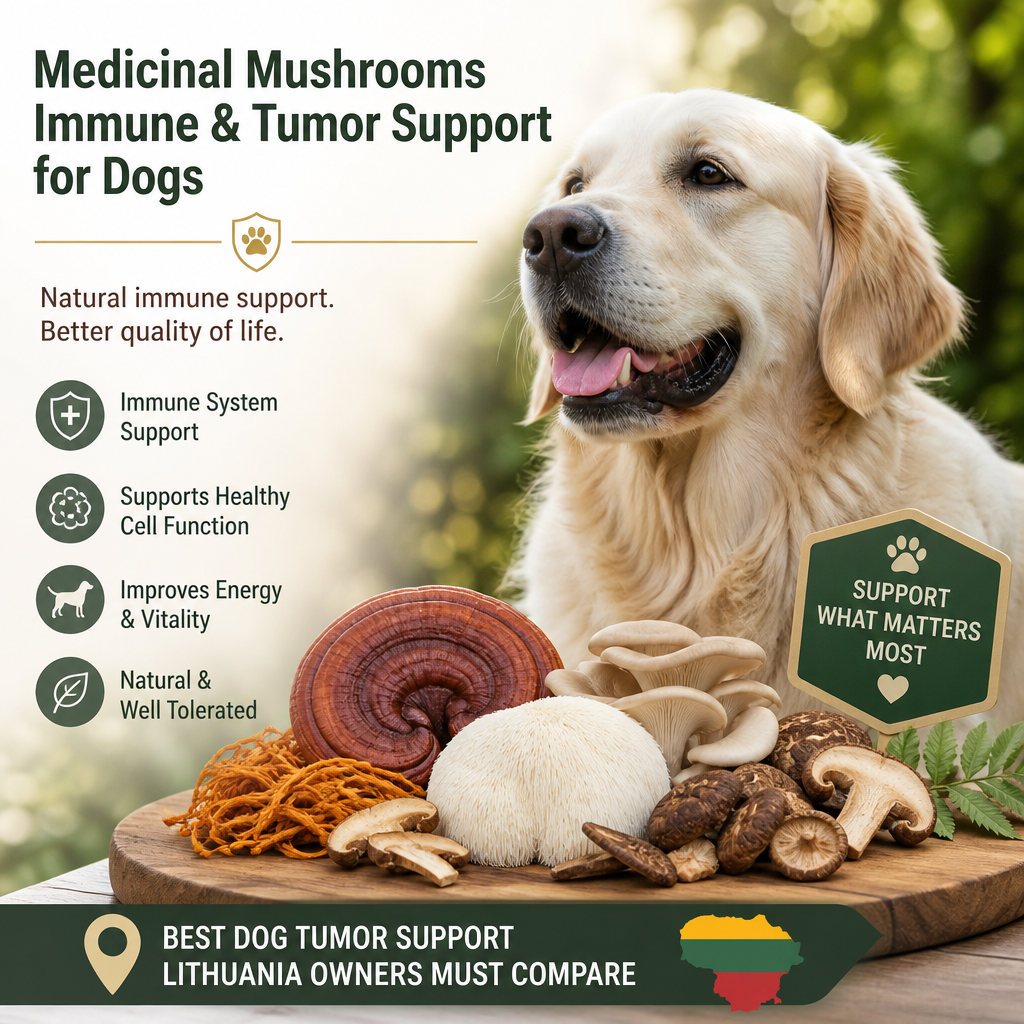
Medicinal mushrooms are fungi used in traditional health practices and modern nutritional products. Their most discussed compounds include beta-glucans and other polysaccharides, which may interact with immune cells. Turkey tail, also known as Trametes versicolor, is especially common in discussions about dog cancer supplements Lithuania owners can find online or through specialist retailers.
Research into mushroom compounds and canine cancer support is still developing. Some studies have explored whether mushroom-derived compounds may influence immune activity or complement conventional treatment. However, supplements should not be considered a cure for cancer, and evidence from laboratory or small clinical studies cannot automatically be applied to every dog, tumor type, or treatment plan.
The immune system is complex. Stimulating or modifying immune responses is not always appropriate, particularly for dogs with autoimmune disease, severe inflammation, or certain medications. A product labeled “immune support” may also contain several additional ingredients, making it difficult to determine which component is responsible for an effect or side effect.
For dog owners in Lithuania, it helps to compare mushroom products with the same caution used for any other part of a care plan. The most useful products are usually the ones that explain exactly what is inside, how it is processed, and why it may be appropriate for a specific dog. When a label is vague, the phrase medicinal mushrooms / immune support may sound reassuring, but it does not tell the full story.
One reliable background source is the National Center for Complementary and Integrative Health overview of mushroom supplements, which explains how mushroom products are studied and why quality matters. That kind of evidence-based context is useful before deciding whether medicinal mushrooms / immune products are worth discussing with a veterinary professional.
It is also helpful to remember that dogs vary widely in how they respond to supplements. A product that seems helpful for one patient may do little for another, even when the tumor type appears similar. That is one reason owners should avoid assuming that all dog cancer supplements Lithuania shoppers see online will work the same way. The details of the formula matter as much as the marketing language.
In practical terms, the first step is often to read the label carefully and identify the exact mushroom species. Turkey tail, reishi, maitake, and shiitake all have different profiles and should not be treated as interchangeable. If a product does not clearly identify the species, it becomes much harder to judge whether it belongs in a thoughtful support plan.
Another useful question is how the mushroom ingredient was prepared. Some products use whole mushroom powder, while others use extracts designed to concentrate certain compounds. The difference can be important, because the total weight listed on the package does not always reveal how much of the relevant material the dog is actually receiving. That is why careful comparison matters when reviewing medicinal mushrooms / immune formulas.
Owners who want a broader overview of the topic can also review a related internal guide on the benefits of medicinal mushrooms for dogs: boosting immune health naturally. That article can help frame the discussion before choosing a product or asking a veterinarian to review a specific supplement.
Comparing dog tumor support Lithuania products
When comparing dog tumor support Lithuania options, owners should begin with the label rather than the marketing claim. A reliable product should clearly state the ingredients, amount per serving, recommended use, batch information, storage instructions, and manufacturer details. Vague phrases such as “powerful mushroom blend” are less useful than a complete ingredient list showing the exact mushroom species and extract concentration.
Important comparison points include:
- Mushroom species: Turkey tail, reishi, maitake, and shiitake are not interchangeable. Each contains different compounds and may be processed differently.
- Extract standardization: Look for information about beta-glucan content or extract ratios when available. The total weight of mushroom powder does not necessarily indicate the amount of active compounds.
- Testing and quality control: Products made with independent testing for contaminants, heavy metals, microbes, and unwanted additives offer greater transparency.
- Formulation: Powders, capsules, liquids, and chews may have different dosing accuracy and palatability.
- Additional ingredients: Check for herbs, stimulants, high levels of vitamins, or minerals that could conflict with a prescribed diet or medication.
- Clear dosing instructions: Doses should be based on the dog’s weight and should not rely solely on broad human product guidelines.
Price alone is not a reliable indicator of quality. A less expensive product may contain a small amount of active extract, while a higher-priced product is not automatically better. Comparing the amount of relevant compounds per serving, manufacturing standards, and veterinary suitability is more meaningful than comparing package prices.
Owners should also think carefully about product transparency. If a supplement hides the amount of mushroom extract or combines multiple “support” ingredients into one proprietary blend, it becomes harder to judge whether the product is suitable. In that situation, even a well-known brand may not be the best choice for a dog with a tumor.
When possible, compare more than one option and write down the exact species, extract type, and intended use of each formula. This makes conversations with the veterinarian more productive and helps the owner separate genuine nutritional support from marketing language. For many families, that small step improves the quality of decision-making more than any advertising claim.
If the dog is already on medication, check the supplement label for ingredients that may overlap with the current treatment plan. A supplement that looks simple on the front can still contain botanicals, concentrates, or nutrient levels that deserve a second look. This is especially important when the goal is to use medicinal mushrooms / immune products as part of a broader, carefully monitored approach.
Some owners are tempted to choose the product with the longest ingredient list, assuming that more ingredients means stronger support. In reality, simpler is often easier to monitor. A formula with one clearly identified mushroom extract may be easier to assess than a complex blend, because the veterinarian can better judge whether the dog is tolerating it well.
Another practical tip is to save the product information sheet or package insert before starting. If the supplement has to be paused later, or if a different brand is considered, those details make it easier to compare formulas. That record can also help avoid accidental duplication when the dog is already receiving a prescription diet or other nutritional support.
For some families, the best way to compare dog cancer supplements Lithuania stores offer is to ask four simple questions: What exactly is in it? How is it made? Is it independently tested? Will it fit the dog’s medical plan? If the answer to any of those questions is unclear, the product probably needs more scrutiny before use.
What to look for on the label
A label that clearly lists the mushroom species, extract ratio, serving size, and manufacturer contact details is much easier to evaluate. If the product describes itself only as an “immune blend,” the owner may not know whether the formula includes turkey tail, reishi, or another species entirely. Clear labeling is especially important for medicinal mushrooms / immune support because quality and composition can differ widely.
Look for batch numbers, expiration dates, and storage guidance. These details do not prove a product is effective, but they do show that the manufacturer is organized and traceable. That matters when the supplement will be used alongside veterinary care and needs to be monitored over time.
How to think about product form
Powders may mix into food, while capsules can make exact dosing easier. Liquids may be convenient for small dogs or dogs with poor appetite, but they can also vary in taste. Treat-style products may be easier to give, yet they sometimes contain extra flavorings or sweeteners. The best form depends on the dog’s preferences, medical needs, and the owner’s ability to give it consistently.
Consistency is important because sporadic use makes it harder to know whether the supplement is helping or causing side effects. If a product is difficult to administer, the issue is not just convenience; it can affect how well the care plan works in real life.
When a simple formula may be better
A simple formula can be useful when the dog is sensitive, elderly, or already taking several medications. Fewer ingredients make it easier to identify the source of any improvement or side effect. That does not mean simpler products are automatically superior, but they often make decision-making clearer.
Many owners searching for dog tumor support Lithuania options assume that the most complex product will offer the best results. In practice, complexity can create uncertainty. A straightforward formula, reviewed by a veterinarian, is often easier to manage safely.
Veterinary guidance is essential
Before adding dog cancer supplements Lithuania owners should discuss them with the treating veterinarian or veterinary oncologist. This is especially important if the dog is receiving chemotherapy, radiation therapy, surgery, corticosteroids, nonsteroidal anti-inflammatory drugs, or other prescription medicines.
Some supplements can affect blood clotting, liver enzymes, blood pressure, or immune activity. These effects may create risks around surgery or alter how medications are processed. Reishi and certain herbal ingredients, for example, may be unsuitable for dogs with bleeding concerns or liver problems. A veterinarian can also advise whether a supplement should be paused before a procedure.
A complete medical review should consider the tumor type, stage, current treatment, blood test results, appetite, kidney and liver function, and any other health conditions. Dogs with reduced organ function may need a very different approach from otherwise healthy dogs. Professional advice also helps owners avoid delaying proven treatment while trying multiple products at once.
It is also worth asking whether the intended supplement fits the dog’s overall treatment goals. In some cases, the priority may be maintaining appetite and body weight. In other cases, the focus may be on managing nausea, supporting mobility, or keeping the dog comfortable during treatment. A veterinarian can help determine where medicinal mushrooms / immune products might fit, if at all.
Owners should bring the product label, dose instructions, and any online information to the consultation. That gives the veterinarian the chance to review the exact ingredients and identify conflicts more quickly. It also reduces the risk of using a product that appears natural but contains an ingredient that is not appropriate for the dog’s condition.
It is wise to avoid starting several supplements at the same time. When multiple products are introduced together, it becomes difficult to know which one caused a change in stool quality, appetite, energy, or skin condition. A step-by-step approach gives the veterinarian better information and allows safer decisions about whether to continue a product.
Veterinary input is particularly important if the dog has a history of autoimmune disease, immune-mediated illness, clotting problems, or severe liver disease. In these situations, a product marketed as immune support may not be appropriate without closer supervision. That is one reason medicinal mushrooms / immune supplements should not be chosen purely on the basis of popularity or online reviews.
What a supportive care plan may include
Tumor support is broader than supplementation. Maintaining appetite, hydration, comfortable movement, healthy body weight, and emotional well-being can be highly important. A veterinarian may recommend a tailored diet, pain management, anti-nausea medication, dental care, or strategies for supporting gastrointestinal health.
Omega-3 fatty acids are sometimes considered as part of nutritional support, but the appropriate source and dose depend on the dog’s diet and medical condition. High-calorie foods or treats may not be suitable for every patient, particularly when obesity, pancreatitis, or digestive disease is present. The goal should be a balanced plan that supports quality of life rather than adding as many products as possible.
Owners should introduce only one new supplement at a time. This makes it easier to identify changes in appetite, stool quality, energy, itching, vomiting, or other symptoms. Keeping a daily record can help the veterinary team assess whether the product appears beneficial, ineffective, or poorly tolerated.
Supportive care may also include practical steps at home. Comfortable bedding, short gentle walks, a predictable feeding schedule, and close observation of changes in behavior can all matter. These details do not replace treatment, but they can help a dog feel more stable while the owner and veterinarian decide whether a supplement is worth continuing.
In many homes, the best supplement strategy is not the largest one. It is the one that fits the dog’s needs, aligns with medical advice, and can be monitored carefully. That is why medicinal mushrooms / immune support should be treated as one possible tool, not the center of the plan. Responsible use means using fewer products, not more, when that improves clarity and safety.
Supportive care also includes communication. If the dog’s appetite drops, vomiting begins, or a new medication is added, the supplement plan may need to be reviewed. A product that seemed harmless at first can become less suitable if the dog’s condition changes. Regular check-ins help ensure that the plan stays practical rather than becoming a set-and-forget routine.
Some owners prefer to use supplements only after a specific conversation about goals. For example, the goal may be to maintain weight during treatment, keep the dog comfortable, or support normal activity. Defining the goal makes it easier to decide whether a supplement is worth the effort and cost. Without that clarity, even good products may be used inconsistently.
It is also helpful to think about nutrition as a whole rather than focusing on a single ingredient. A balanced diet, good hydration, and a stable routine often do more to support daily function than any single product can do alone. This broader perspective keeps medicinal mushrooms / immune products in a realistic role.
Warning signs and responsible use
Stop a supplement and contact a veterinarian if a dog develops persistent vomiting, diarrhea, facial swelling, breathing difficulty, unusual bruising, marked lethargy, yellowing of the gums or eyes, or a sudden loss of appetite. These signs may indicate an adverse reaction or progression of disease and should not be dismissed as normal adjustment.
Owners should also be cautious with products sold for humans. Human supplements may contain ingredients that are unsafe for dogs, including certain sweeteners, concentrated essential oils, excessive vitamin D, or inappropriate mineral levels. Imported products may have different labeling standards, and translations may not provide enough information to judge safety.
The most responsible approach to medicinal mushrooms / immune support is measured and evidence-aware. Mushroom extracts may be considered as complementary nutritional support for some dogs, but they should be selected for transparency and discussed with a veterinary professional. Comparing dog cancer supplements Lithuania products carefully can help owners avoid misleading claims and focus on quality, compatibility, and safety.
Ultimately, dog tumor support Lithuania owners choose should fit the individual animal, not simply follow a popular trend. A thoughtful plan combines veterinary treatment, nutrition, symptom control, monitoring, and compassionate daily care. Supplements may have a place within that plan, but they work best when used cautiously and never as a replacement for diagnosis or proven medical care.
For owners comparing options, the most useful questions are simple: What is in the product, how was it made, how will it be monitored, and does the veterinarian agree with the plan? If the answer to any of those questions is unclear, it is usually better to pause and gather more information before starting.
Used carefully, medicinal mushrooms / immune products may be one part of a broader supportive approach. Used without guidance, they can create confusion, waste money, or delay better care. A balanced, veterinary-led plan gives the dog the best chance of receiving support that is both practical and safe.
As a final check, remember that a supplement does not need to be dramatic to be useful. In many cases, the most helpful products are the ones that are clearly labeled, sensibly dosed, and easy to monitor. That is especially true when medicinal mushrooms / immune support is being considered alongside established veterinary care.
by TCMVET | Aug 25, 2026 | Research and News
Soins palliatifs chien cancer : lorsqu’un chien atteint d’un cancer ne peut plus être guéri, l’objectif des soins évolue. Il ne s’agit plus seulement de combattre la maladie, mais de préserver au mieux son confort, sa dignité et les moments de qualité partagés avec sa famille. Une prise en charge attentive, adaptée à chaque animal, peut contribuer à réduire la douleur, l’anxiété, les nausées et la fatigue tout en maintenant une routine rassurante.
Soins palliatifs chien cancer : privilégier la qualité de vie
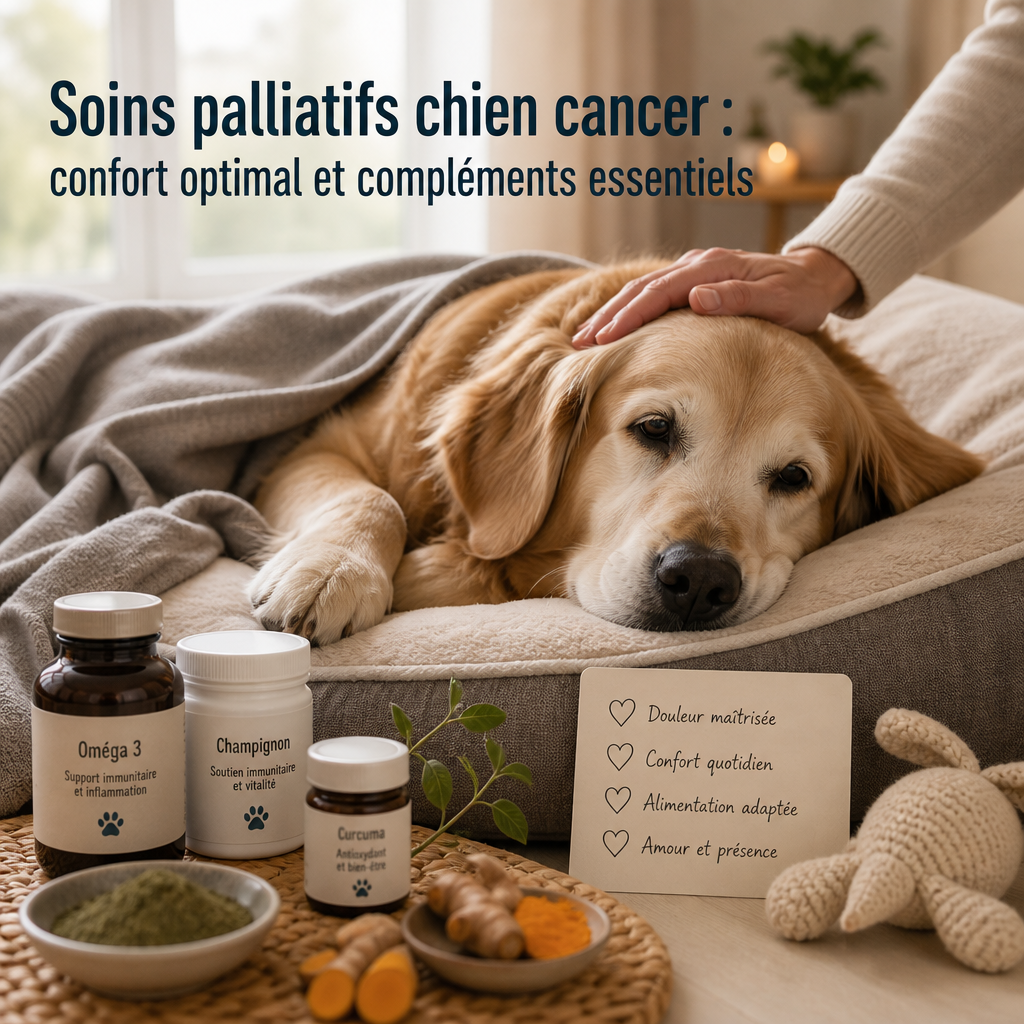
Les soins palliatifs ne signifient pas l’abandon des traitements. Ils consistent à soulager les symptômes et à accompagner le chien durant une phase avancée de la maladie. Selon le type de tumeur, sa localisation et l’état général de l’animal, le vétérinaire peut proposer des médicaments antidouleur, des anti-inflammatoires, des traitements contre les vomissements ou encore des solutions destinées à stimuler l’appétit.
La qualité de vie doit rester le principal indicateur. Un chien peut continuer à profiter de promenades courtes, de caresses, de repas appréciés et d’interactions familiales, même si ses activités sont réduites. Les décisions médicales doivent donc tenir compte de ses réactions quotidiennes plutôt que d’un calendrier théorique.
Pour suivre son évolution, il peut être utile de noter chaque jour plusieurs éléments : appétit, hydratation, douleur apparente, sommeil, mobilité, respiration, élimination et intérêt pour son environnement. Ce journal aide à repérer les changements progressifs et permet au vétérinaire d’ajuster rapidement le protocole.
Pour aller plus loin sur l’accompagnement nutritionnel, vous pouvez aussi consulter ce guide pratique sur le complément alimentaire chien cancer.
Chien cancer confort : aménager un environnement apaisant
Le confort physique passe d’abord par un espace calme, propre et facilement accessible. Un couchage épais, isolant du sol et suffisamment large permet au chien de changer de position sans difficulté. Les modèles à mémoire de forme ou les matelas orthopédiques peuvent être intéressants pour les animaux souffrant de douleurs articulaires ou de faiblesse musculaire.
La température mérite également une attention particulière. Un chien malade peut être plus sensible au froid, mais une source de chaleur trop intense peut provoquer des brûlures ou accentuer la déshydratation. Une couverture légère et une pièce tempérée sont généralement préférables à une bouillotte directement placée contre le corps.
Pour faciliter les déplacements, il est conseillé de limiter les escaliers, de sécuriser les sols glissants et d’installer les gamelles près du lieu de repos. Des tapis antidérapants peuvent aider un animal faible à se lever et à marcher avec davantage de confiance. Les sorties doivent être courtes, régulières et adaptées à son énergie. Même quelques minutes à l’extérieur peuvent préserver son bien-être mental et stimuler doucement ses sens.
Soulager la douleur et les symptômes associés
La douleur n’est pas toujours facile à identifier chez le chien. Certains animaux gémissent ou halètent, tandis que d’autres deviennent silencieux, se cachent ou cessent simplement de participer aux activités habituelles. Une posture voûtée, une respiration rapide, une irritabilité inhabituelle, un sommeil perturbé ou une difficulté à se coucher peuvent également être des signes d’inconfort.
Il ne faut jamais administrer un médicament humain sans l’accord du vétérinaire. Certains produits courants, comme le paracétamol ou l’ibuprofène, peuvent être toxiques pour les chiens. Le professionnel déterminera les molécules, les doses et les associations les plus sûres en fonction du poids, des reins, du foie et des autres traitements.
Les nausées, la constipation, la diarrhée et les difficultés respiratoires doivent aussi être prises au sérieux. Un changement alimentaire, une adaptation médicamenteuse ou une intervention rapide peuvent parfois améliorer considérablement le quotidien. En cas de respiration très difficile, de douleur incontrôlable, d’effondrement ou de vomissements répétés, une consultation vétérinaire urgente est nécessaire.
Selon les situations, un complément chien cancer palliatif peut être envisagé, mais uniquement après validation vétérinaire et en tenant compte des traitements en cours.
Alimentation et hydratation en phase palliative
L’alimentation doit être adaptée aux capacités et aux préférences du chien. Dans cette période, l’objectif est souvent de maintenir les apports et le plaisir de manger plutôt que d’imposer un régime strict. Des repas plus petits, servis plusieurs fois par jour, peuvent être mieux tolérés qu’une seule ration importante.
Les aliments humides sont parfois plus faciles à consommer et contribuent à l’hydratation. Il peut aussi être utile de réchauffer légèrement la nourriture afin d’en renforcer l’odeur, sans jamais la servir trop chaude. Si le chien refuse de manger, souffre en mâchant ou vomit régulièrement, il faut en rechercher la cause avec le vétérinaire.
L’eau doit rester disponible en permanence dans plusieurs endroits facilement accessibles. Une baisse de la consommation peut signaler une déshydratation, des nausées, une douleur ou une fatigue importante. Une réhydratation sous-cutanée peut parfois être envisagée à domicile, mais uniquement après démonstration et prescription vétérinaire.
Les propriétaires qui cherchent des repères complémentaires peuvent lire ce dossier sur le meilleur complément alimentaire chien cancer, afin de comparer les options les plus courantes avec l’avis du praticien.
Complément chien cancer palliatif : que peut-on envisager ?
La question du complément chien cancer palliatif revient fréquemment chez les propriétaires qui souhaitent soutenir leur animal. Certains compléments peuvent contribuer au maintien de l’état général, de la masse musculaire, de la digestion ou de l’appétit. Toutefois, ils ne remplacent ni un traitement vétérinaire ni une alimentation équilibrée, et leur intérêt dépend du type de cancer et des traitements en cours.
Les acides gras oméga-3, notamment ceux issus d’huiles marines de qualité, sont parfois utilisés dans le cadre d’un accompagnement nutritionnel. Des probiotiques peuvent être proposés pour soutenir l’équilibre digestif, en particulier après certains traitements. Des apports spécifiques en vitamines, minéraux ou antioxydants peuvent également être envisagés lorsque des carences sont identifiées.
La prudence est indispensable. Certains produits peuvent interagir avec la chimiothérapie, modifier la coagulation ou surcharger le foie et les reins. Les compléments à base de plantes ne sont pas automatiquement sans danger, même lorsqu’ils sont présentés comme naturels. Il est donc recommandé de transmettre au vétérinaire la composition exacte du produit, sa concentration et la dose envisagée avant toute administration.
Pour comprendre les formulations les plus souvent citées, un complément alimentaire chien cancer doit toujours être évalué en fonction de l’état général, des analyses et des objectifs de soin.
Les informations de référence sur la douleur chez les animaux de compagnie peuvent aussi être utiles. Vous pouvez consulter les conseils de l’American Veterinary Medical Association sur la prise en charge de la douleur chez les animaux de compagnie pour mieux comprendre les signes à surveiller.
Préserver le lien et accompagner la fin de vie
Le bien-être émotionnel compte autant que le confort physique. Une présence calme, une voix douce et des gestes familiers peuvent rassurer un chien affaibli. Il est préférable de respecter ses demandes de contact : certains animaux recherchent davantage la proximité, tandis que d’autres ont besoin de tranquillité.
La fin de vie se prépare avec l’équipe vétérinaire afin d’éviter autant que possible une situation de crise. Lorsque la douleur, la détresse respiratoire ou la perte totale de plaisir deviennent incontrôlables, l’euthanasie peut être évoquée comme un acte médical visant à mettre fin à la souffrance. Cette décision est profondément personnelle, mais elle peut être guidée par l’observation de la qualité de vie et par les conseils du vétérinaire.
Accompagner un chien atteint de cancer demande de la vigilance, de la compassion et des ajustements constants. En combinant traitements adaptés, environnement sécurisé, alimentation tolérée et compléments validés par un professionnel, il est possible de préserver au mieux son confort et de lui offrir une présence attentive jusqu’au bout.
Un suivi régulier, une communication claire avec le vétérinaire et des choix adaptés aux besoins du moment restent les meilleures bases pour des soins palliatifs chien cancer plus sereins et plus humains.
Dans cette approche, les soins palliatifs chien cancer doivent rester souples, individualisés et centrés sur les signes quotidiens de confort. Chaque ajustement vise à maintenir le plus longtemps possible une vie douce, avec moins de douleur et davantage de moments paisibles.
by TCMVET | Aug 25, 2026 | Research and News
Coriolus / immune / antioxidant supplements are increasingly discussed by Latvian dog owners looking for additional support during cancer treatment. Products based on medicinal mushrooms, vitamins, minerals, and plant antioxidants may help maintain general wellbeing, but they should never replace veterinary diagnosis or prescribed therapy. The best choice depends on the dog’s cancer type, treatment plan, age, weight, existing health conditions, and tolerance of supplements.
For owners comparing dog cancer supplements Latvia, the most important question is not which product sounds strongest, but which one fits the dog’s current medical needs. Some dogs may benefit from mushroom-based formulas, while others may do better with simpler nutritional support. A veterinarian can help determine whether Coriolus / immune / antioxidant products belong in the plan at all.
Understanding dog cancer supplements in Latvia
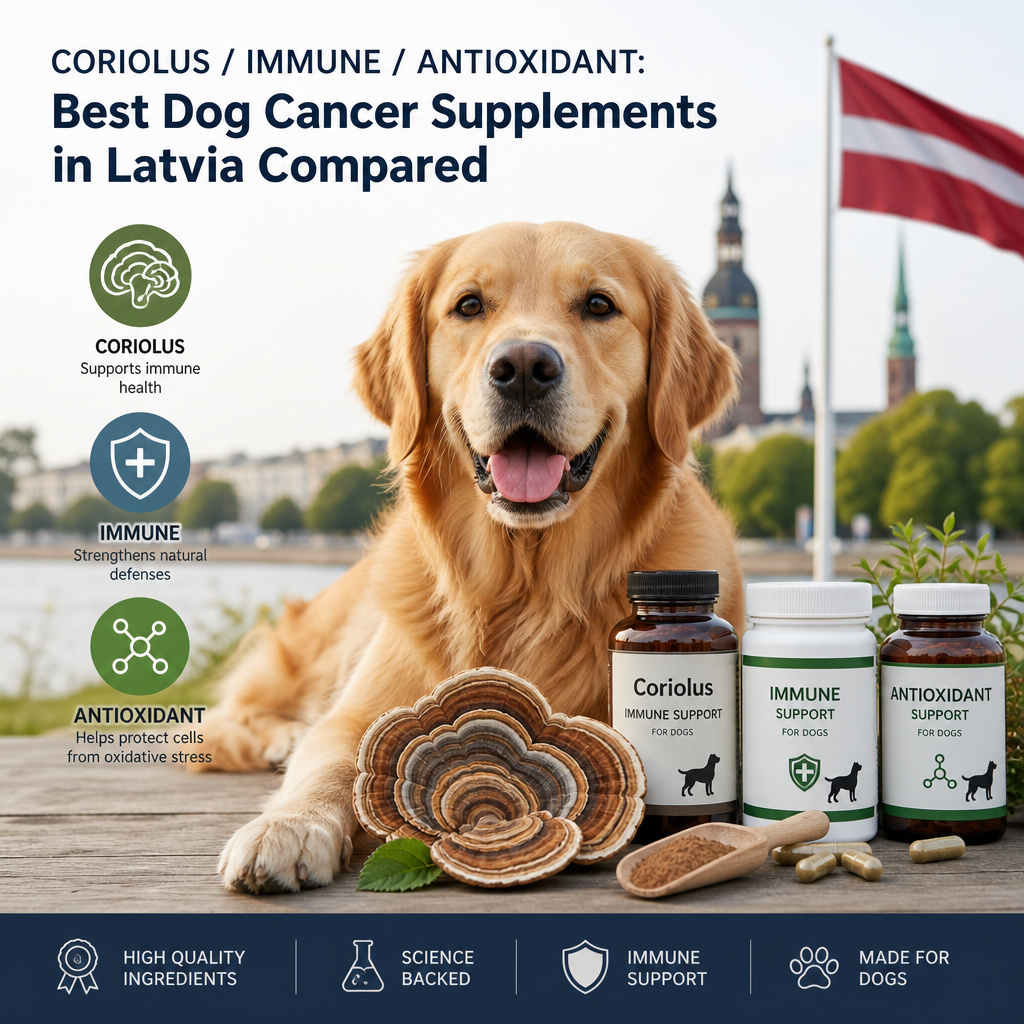
When searching for dog cancer supplements Latvia, owners may encounter a wide range of products sold through veterinary clinics, pet stores, pharmacies, and online retailers. These products can differ greatly in quality, concentration, ingredients, and intended use. Some are designed to support immune function, while others focus on antioxidant protection, appetite, digestion, or recovery during chemotherapy and radiation therapy.
The term “cancer supplement” can be misleading. A supplement is generally intended to support the body, not cure cancer. Scientific evidence varies considerably between ingredients, and results from laboratory studies or human research do not always apply directly to dogs. A responsible approach is to view supplements as part of an overall care plan that includes veterinary treatment, appropriate nutrition, pain control, monitoring, and regular follow-up examinations.
In practice, the best dog cancer supplements Latvia are usually the ones that are clearly labeled, appropriate for canine use, and selected with the dog’s treatment protocol in mind. A product that looks impressive on a sales page may still be a poor fit if it conflicts with medication or is difficult to dose accurately.
Owners often ask whether a Coriolus / immune / antioxidant formula is worth the cost compared with a simple vitamin blend. The answer depends less on marketing language and more on what problem the supplement is meant to solve. If the dog is losing weight, a nutritional support product may be more useful. If the goal is complementary support during treatment, a mushroom-based formula may be the option that deserves closer review.
Another practical issue is consistency. Many dogs with tumors in Latvia are already managing surgery recovery, chronic pain, or treatment-related nausea. In that setting, the best supplement is often one that is easy to give every day, easy to measure, and easy to stop if needed. That simplicity matters just as much as the ingredient list.
Coriolus / immune / antioxidant: What does it mean?
Coriolus, commonly known as turkey tail mushroom, refers to the mushroom species Trametes versicolor. It contains biologically active compounds, including polysaccharides and beta-glucans, which have attracted interest for their possible immune-modulating properties. Some studies have examined turkey tail extracts in relation to canine cancer, particularly as a complementary option alongside conventional care.
The phrase Coriolus / immune / antioxidant usually describes a supplement category rather than one standardized formula. Products may contain Coriolus extract together with vitamins, trace minerals, omega-3 fatty acids, or other medicinal mushrooms. The actual effect depends on the extraction method, concentration of active compounds, manufacturing standards, and dosage.
Immune support should not be confused with simply “boosting” the immune system. In cancer care, the immune response is complex. A product that influences immune activity may be helpful in some circumstances but unsuitable in others, especially if a dog has an autoimmune disorder or is receiving medication that affects immune function. Veterinary supervision is therefore particularly important.
For owners comparing Coriolus / immune / antioxidant formulas, the label should answer basic questions at a glance: what mushroom species is used, how much extract is included, and whether the formula is made for dogs. Without that information, it is hard to judge value or safety.
It is also useful to understand that not every “natural” product delivers the same level of support. Some formulas are standardized and transparent, while others hide the real dose behind a proprietary blend. A Coriolus / immune / antioxidant supplement with clear batch information and measured content is easier to evaluate than one that relies on vague claims about vitality or recovery.
When reading product pages, look closely at wording such as “supports normal immune function,” “contains antioxidant compounds,” or “formulated for daily wellness.” These phrases are more useful than dramatic promises. They also reflect a safer way to discuss supplements in veterinary care, where evidence and individual response matter far more than bold advertising.
Comparing common supplement categories
Turkey tail and other medicinal mushrooms
Coriolus supplements are among the most commonly discussed products for dog tumor support Latvia. Their appeal comes from research into beta-glucans and polysaccharide-protein complexes. When comparing products, look for clear labeling of the mushroom species, extract ratio, active compound content, batch testing, and the amount provided per serving.
Some products combine turkey tail with reishi, shiitake, maitake, or cordyceps. Combination formulas may offer a broader range of compounds, but they can also make it harder to determine which ingredient is responsible for a reaction. A simple, clearly labeled product is often easier to evaluate, especially when a dog is already taking several medications.
In other words, Coriolus / immune / antioxidant products are not all equivalent. Two supplements can share the same marketing language but differ dramatically in potency, source material, and quality control. That is why the product details matter more than the front label.
Owners comparing dog cancer supplements Latvia often start with mushroom products because they are widely discussed in pet wellness circles. Still, the right choice should be based on the dog’s condition rather than popularity. A formula that is too concentrated can be harder on digestion, while one that is too weak may add cost without meaningful support. Balance matters.
It may also help to ask whether the product has been used in a canine context or only borrowed from human supplement trends. Dogs have different dosing needs, different tolerances, and different risks. A product that works well for humans may be inappropriate for a dog with cancer, especially if the dog is older, frail, or receiving ongoing medication.
Antioxidant formulas
Antioxidants such as vitamins C and E, selenium, and plant compounds are frequently included in canine wellness products. They help protect cells from oxidative damage, but high doses are not automatically beneficial. During chemotherapy or radiation therapy, the timing and amount of antioxidant supplementation should be discussed with the treating veterinarian because some cancer therapies rely partly on oxidative mechanisms.
Antioxidants may be more appropriate for general nutritional support than as a direct cancer treatment. The dog’s diet, bloodwork, appetite, and treatment protocol should guide any decision.
Owners who are considering Coriolus / immune / antioxidant options often compare them with simpler antioxidant formulas. In many cases, the more modest choice is easier to use safely, especially when the dog is already receiving several prescriptions.
There is also an important practical difference between “food-based antioxidants” and concentrated supplements. A balanced diet may already provide helpful antioxidant nutrients, while a capsule or powder can push intake beyond what is useful. Because of that, adding more is not always better. In cancer care, the question is not whether antioxidants sound beneficial in theory, but whether the specific product fits the dog’s actual plan.
Omega-3 fatty acids
Fish oil containing EPA and DHA may support skin, coat, joints, and inflammatory balance. These fatty acids are sometimes considered in nutritional plans for dogs with cancer, particularly when maintaining body condition is a challenge. However, fish oil can affect platelet function and may cause digestive upset. It should be used carefully in dogs with bleeding disorders, pancreatitis, or upcoming surgery.
Omega-3s are not a substitute for Coriolus / immune / antioxidant products, but they can be part of the wider discussion when owners compare supportive care options. Some dogs tolerate fish oil well and benefit from it, while others develop loose stool or nausea. Dose, product purity, and the dog’s medical history all matter.
If a dog is already eating poorly, adding a rich oil may worsen appetite in some cases. For that reason, omega-3 decisions should be made with the same care as any other supplement choice. The best result comes from matching the product to the dog, not from chasing the longest ingredient list.
Appetite and digestive support
Some dogs undergoing cancer treatment experience nausea, diarrhea, constipation, or reduced appetite. Supplements containing probiotics, prebiotics, digestive enzymes, or gentle nutritional ingredients may be useful in selected cases. They should not delay treatment for persistent vomiting, severe diarrhea, dehydration, or rapid weight loss.
These supportive products are not replacements for Coriolus / immune / antioxidant formulas, but they may be more relevant if the dog’s biggest problem is maintaining food intake and comfort. In cancer care, the most useful supplement is often the one that addresses the most immediate issue.
A dog that cannot keep food down will not benefit much from an immune-support product until the stomach and bowel issues are controlled. That is why comparison should begin with the dog’s current symptoms. In some cases, digestive support is the first priority, and tumor-focused supplements come later once the dog is stable enough to tolerate them.
Owners should also remember that some “all-in-one” formulas combine mushroom extracts, antioxidants, herbs, and digestive aids in one capsule. While convenient, these blends can be difficult to assess. If there is a reaction, it may be impossible to know which ingredient caused it. Simpler formulations are often easier to introduce safely.
What to check before buying in Latvia
When evaluating dog tumor support Latvia, examine the product label rather than relying only on promotional claims. A trustworthy supplement should identify the manufacturer, full ingredient list, serving instructions, storage conditions, batch or lot information, and contact details. Avoid products that promise to shrink tumors, cure cancer, or replace chemotherapy.
It is also important to confirm whether the product is intended specifically for dogs. Human supplements may contain unsafe sweeteners, excessive doses, or ingredients that are poorly tolerated by animals. Xylitol, for example, is dangerous for dogs and can be found in some human products.
Choose a supplier that can provide information about quality control and testing for contamination. Mushroom products, herbs, and marine oils may vary substantially depending on cultivation, harvesting, processing, and storage. A low price does not necessarily indicate poor quality, but vague labeling and unrealistic claims are warning signs.
For a broader background on mushroom-based pet support, see Boosting Pet Immunity Naturally: The Power of YunZhi Mushroom Supplements. It offers a useful comparison point for owners who want to understand how medicinal mushroom formulas are discussed in veterinary care.
Price comparison alone is not enough. A product may look inexpensive until the owner realizes that the effective dose is much lower than expected or that multiple capsules are needed each day. When comparing dog cancer supplements Latvia, calculate cost per daily dose, not just cost per bottle. That approach makes it easier to judge real value.
Storage and freshness also matter. Heat, moisture, and long shelf times can reduce quality, especially in oils and mushroom preparations. If a supplier cannot explain how the supplement should be stored or when it was manufactured, that is a reasonable reason to keep looking. A transparent label is part of a transparent care plan.
Safety and veterinary supervision
Before introducing a Coriolus / immune / antioxidant product, provide the complete ingredient list to your veterinarian. This is especially important if the dog is receiving chemotherapy, corticosteroids, nonsteroidal anti-inflammatory drugs, anticoagulants, anticonvulsants, or other long-term medication.
Introduce only one new supplement at a time, using the recommended dose based on the dog’s body weight. Monitor appetite, stool consistency, vomiting, itching, tiredness, and any unusual change in behavior. Stop the product and contact a veterinarian if a significant reaction occurs.
Regular blood tests may be necessary for dogs undergoing cancer treatment. These tests can help monitor liver and kidney function, blood cell counts, hydration, and nutritional status. Supplements should be adjusted or discontinued when clinical circumstances change.
For owners who want a deeper look at the limits of evidence, the PubMed Central research library is a useful starting point for reading primary studies and review articles on medicinal mushrooms, antioxidants, and veterinary oncology.
Safety also means watching for subtle changes rather than only dramatic side effects. A dog may not vomit after a new supplement, yet still become less interested in food, more tired, or more gassy. These small changes can matter, particularly in a dog already coping with cancer. If the timing of symptoms lines up with a new product, the supplement should be reconsidered.
Another point to keep in mind is that “natural” does not equal risk-free. Herbal compounds, mushroom extracts, and concentrated antioxidants can still interact with medication or affect digestion. The safest approach is to treat any Coriolus / immune / antioxidant product as part of a monitored medical plan, not as an independent wellness experiment.
A practical comparison checklist
Before selecting dog cancer supplements Latvia, consider these questions:
– Is the product intended for dogs and suitable for the dog’s size?
– Does it clearly state the amount of each active ingredient?
– Is the Coriolus species and extract strength identified?
– Has the product been tested for contaminants and consistency?
– Could any ingredient interact with current medication?
– Does the dog have liver, kidney, digestive, bleeding, or autoimmune problems?
– Can the owner monitor the dog and attend follow-up veterinary appointments?
– Are the claims realistic and supported by credible information?
A supplement that meets these standards is generally easier to assess than a product based on broad promises and undisclosed blends.
When comparing Coriolus / immune / antioxidant products, it can also help to ask whether the formula is meant for short-term support or ongoing daily use. Some supplements are better suited to a defined period around treatment, while others are designed for long-term nutritional support.
You may also want to compare how each option fits into daily routines. If a supplement requires many capsules, complex mixing, or refrigeration that is not practical, adherence often drops. A simpler product that the dog will actually take may be more useful than a stronger one that is constantly missed. Practicality is part of effectiveness.
In some households, one supplement may be chosen because it is easier to source consistently in Latvia. That matters too. If a product cannot be replenished reliably, the dog may be forced to switch formulas repeatedly, which can make monitoring harder. Consistency in supply is one more reason to compare carefully before starting.
Supporting a dog beyond supplements
Supplements are only one small part of cancer support. Maintaining a healthy body weight, offering a complete and palatable diet, managing pain, reducing stress, and preserving gentle daily activity can have a major impact on quality of life. Keep a record of appetite, weight, energy, bowel movements, medication, and symptoms. This information helps the veterinary team identify changes early.
For many dogs, the most valuable goal is not adding numerous products but creating a safe, consistent, individualized care plan. Coriolus and other immune or antioxidant supplements may have a role for selected patients, yet their use should be based on product quality, medical evidence, and professional guidance. In Latvia, careful comparison and communication with a veterinarian can help owners make informed decisions while keeping the dog’s safety and comfort at the center of care.
If you are comparing Coriolus / immune / antioxidant options for a dog with cancer, the best choice is the one that supports the full treatment plan rather than competing with it. The right supplement should be practical, transparent, and medically appropriate for the individual dog.
It can also be helpful to think about the dog’s day-to-day comfort before focusing on any single ingredient. Hydration, rest, gentle movement, and a calm feeding routine often influence quality of life more than an additional supplement. In that sense, a supplement is only one tool among many. A good tool may help, but it works best when the rest of the plan is equally thoughtful.
For some owners, a second source of background reading is valuable before making a final decision. If you want to compare how medicinal mushrooms are discussed more broadly in pet health, the article Lack of Scientific Evidence? The Controversy and Promise of Herbal Medicine in Pet Cancer Treatment gives useful context on evidence, expectations, and cautious decision-making.
Ultimately, Coriolus / immune / antioxidant care should be approached as supportive care, not a shortcut. With careful selection, honest labeling, and veterinary supervision, Latvian dog owners can compare options more confidently and choose a supplement strategy that matches both the disease and the dog.
To keep expectations realistic, remember that the goal of Coriolus / immune / antioxidant support is usually to complement treatment, not replace it. That distinction helps owners avoid disappointment and makes it easier to notice whether a product is genuinely useful. When the focus stays on safety, transparency, and the dog’s changing needs, the comparison process becomes much more meaningful.
by TCMVET | Aug 25, 2026 | Research and News
Turkey Tail / immune / mushrooms supplements are attracting growing interest among Estonian dog owners looking for supportive care during a cancer diagnosis. These products are not cancer cures, and they should never replace veterinary treatment, but some mushroom-derived compounds may complement a carefully planned medical and nutritional approach. Understanding the evidence, product quality, safety considerations, and local purchasing options can help owners make more informed decisions.
Why consider dog cancer supplements in Estonia?
A cancer diagnosis can affect a dog’s appetite, energy, immune function, digestion, and overall quality of life. Veterinary treatment may include surgery, chemotherapy, radiation, pain management, dietary adjustments, or palliative care. Supplements are sometimes used alongside these treatments to support general wellbeing.
The phrase “dog cancer supplements Estonia” covers a wide range of products, including medicinal mushrooms, omega-3 fatty acids, antioxidants, vitamins, probiotics, and herbal formulas. Each category has different potential benefits and risks. A supplement that is appropriate for one dog may be unsuitable for another, particularly when the dog has liver or kidney disease or is taking prescription medication.
The most important first step is to identify the type and stage of cancer. A veterinarian can help determine whether a supplement is appropriate and whether it could interfere with surgery, chemotherapy, blood clotting, or other treatments. In some cases, a vet may also suggest alternatives such as The Healthy Hound Pure Turkey Tail Alternative: 7 Powerful Tumor Supplements NZ when owners want to compare mushroom-based options.
It is also helpful to think about supplements as part of a wider care plan. For many dogs, that means combining veterinary treatment with nutrition, symptom control, and carefully chosen supportive products. In that context, Turkey Tail / immune / mushrooms products may be one option among several, not the main event.
Turkey Tail / immune / mushrooms: what does the evidence show?
Turkey Tail, scientifically known as Trametes versicolor or Coriolus versicolor, is one of the most discussed medicinal mushrooms in canine cancer support. It contains polysaccharides, including beta-glucans and protein-bound compounds such as PSK and PSP. These substances have been studied for their possible effects on immune signaling.
Research into Turkey Tail for dogs has produced encouraging but limited results. Some veterinary and laboratory studies suggest that specific extracts may support immune responses or help dogs tolerate certain cancer-related challenges. However, the available evidence is not strong enough to claim that Turkey Tail eliminates tumors or works equally well for every cancer type.
The quality of the extract matters considerably. A product made from the mushroom’s fruiting body may differ from one made primarily from mycelium or grain substrate. Extraction methods also influence which compounds are available. Products should ideally state the mushroom species, extraction method, active compound levels, batch information, and testing for contaminants.
“Immune support” is also a broad marketing term. A supplement that influences immune activity is not automatically beneficial in every situation. Some dogs may have immune-mediated diseases, receive immunosuppressive medication, or undergo treatments where immune stimulation requires careful supervision.
For background on human and veterinary interest in fungi, some owners also read the U.S. National Center for Complementary and Integrative Health overview of medicinal mushrooms at the NCCIH medicinal mushrooms resource.
In other words, the evidence supports caution as much as curiosity. Turkey Tail / immune / mushrooms formulas may be promising, but they are still supplements with limits. The best use case is usually supportive care, not treatment replacement.
Comparing dog tumor support Estonia products
When comparing dog tumor support Estonia options, owners should look beyond attractive packaging and general health claims. A useful comparison begins with transparency and suitability.
1. Ingredient clarity
The label should identify the exact mushroom species and the amount provided per serving. “Mushroom blend” is less informative than a full list showing the quantity of each ingredient. If the formula includes Turkey Tail, the product should clearly state whether it uses a standardized extract or powdered mushroom material.
2. Testing and manufacturing standards
Look for manufacturers that provide certificates of analysis or independent testing. Important checks include heavy metals, pesticides, bacteria, mold, and unwanted fillers. Products manufactured under recognized quality-control standards offer greater confidence than supplements with no traceable production information.
3. Dosage guidance
A reliable product should provide dosing based on the dog’s weight and explain how to introduce it. Dogs differ widely in size, age, health status, and medication use, so vague instructions can be a warning sign. The veterinarian may recommend starting with a lower amount and monitoring tolerance.
4. Veterinary compatibility
Before purchasing, review the ingredient list with the treating veterinarian. This is especially important if the dog is taking chemotherapy drugs, corticosteroids, nonsteroidal anti-inflammatory drugs, anticoagulants, anticonvulsants, or medications for liver and kidney conditions.
5. Value rather than price alone
The cheapest product may contain very little active extract, while the most expensive product is not necessarily the best. Compare the price per measured amount of active ingredients, the concentration, testing documentation, and serving size.
If you are comparing formulations against other branded supports, it may help to review a product-specific guide such as The Healthy Hound Pure Turkey Tail Alternative: 7 Powerful Tumor Supplements NZ to understand how extract quality and dose transparency are presented in practice.
Owners who want to compare a broader range of products can also review local-market guides and ask whether each option is designed for general immune support or for a more targeted canine cancer support plan. In practice, Turkey Tail / immune / mushrooms products vary a lot in purity, concentration, and labeling accuracy, so the details matter.
Another practical point is consistency. If a supplement works well for a dog, the same brand and batch style should ideally be available for repeat use. Sudden changes in formulation can alter tolerance, which is why many veterinarians prefer products with stable manufacturing standards. This is one reason Turkey Tail / immune / mushrooms options that provide batch testing are often easier to trust.
Some supplements in this category are sold with broad wellness claims rather than clear nutrient or extract disclosure. Those products may look appealing, but they make comparison difficult. For dog owners, a better choice is usually a formula that identifies the source material, extraction ratio, and serving size in plain language.
When a product is marketed as a tumor support product, it should still be judged like any other supplement: by evidence, safety, transparency, and compatibility with the dog’s current care. That approach is especially helpful in Estonia, where owners may shop locally or import from European retailers.
Because turkey tail support products can differ so much, it can also help to think in terms of goals. Is the aim to support appetite, general immune function, or overall resilience during treatment? Once the goal is clear, it becomes easier to compare dog tumor support Estonia products without getting distracted by branding. In many cases, the simplest formula is the one easiest to evaluate.
When comparing brands, a useful question is whether the product offers real support for a dog’s care plan or only broad marketing language. Clear labeling, sensible dosing, and traceable testing usually matter more than dramatic promises. That is especially true for Turkey Tail / immune / mushrooms supplements, where extract quality can vary widely between manufacturers.
Owners should also consider how easy it will be to keep the supplement consistent over time. A product that is reliable, well documented, and available again from the same source is usually preferable to one that changes formula often. In supportive care, consistency can be just as important as the ingredient list itself.
Finally, compare the product in the context of the dog’s diagnosis. A supplement chosen for a dog with a mast cell tumor, for example, may not be the same choice for a dog with lymphoma or a soft tissue sarcoma. That is why the best Turkey Tail / immune / mushrooms option is not universal; it depends on the dog, the treatment plan, and the veterinarian’s guidance.
Other supplements sometimes used in supportive care
Turkey Tail is only one possible component of a broader support plan. Omega-3 fatty acids from purified fish oil may help maintain healthy inflammatory balance and support skin, coat, and general nutrition. They can also affect blood clotting, however, so veterinary guidance is important before surgery or when other blood-thinning products are used.
Probiotics may be considered for dogs experiencing digestive changes, especially during stressful periods or certain treatments. A balanced, highly digestible diet is often more important than adding multiple supplements. Some dogs need additional calories, while others require a carefully controlled diet because of pancreatitis, kidney disease, or gastrointestinal problems.
Antioxidant supplements require particular caution. Although antioxidants are commonly marketed for cancer support, high doses may not be appropriate during every type of chemotherapy or radiation treatment. The effect can depend on the treatment protocol, timing, dose, and the dog’s overall condition.
In a practical sense, support plans often work best when they focus on a few well-understood tools instead of many overlapping ones. That is also true for Turkey Tail / immune / mushrooms formulas, where the final choice should fit the dog’s diagnosis and medication plan rather than a generic label claim.
If a dog is already taking a prescription diet or several medications, it is usually wise to avoid adding multiple new products at once. That helps the veterinary team determine whether the supplement is helpful, neutral, or causing unwanted changes. The same caution applies to every form of supportive care, including mushroom-based supplements and other immune-focused products.
Some owners also ask whether supplements should be used only during active treatment or continued afterward. The answer depends on the dog’s condition, the underlying cancer type, and the veterinarian’s plan. In many cases, the safest approach is to reassess regularly rather than assume a supplement should continue indefinitely. That applies to Turkey Tail / immune / mushrooms products as well.
Supportive care is not always about adding more. Sometimes it is about simplifying the routine so the dog can tolerate meals, medications, and rest more comfortably. In that respect, a carefully chosen supplement may help, but only if it fits naturally into the rest of the plan.
How to use supplements safely
Introduce only one new supplement at a time. This makes it easier to identify side effects and determine whether the product is tolerated. Monitor appetite, vomiting, diarrhea, stool changes, itching, lethargy, and unusual bruising. Stop the product and contact a veterinarian if severe or persistent symptoms develop.
Keep a simple record of the dog’s weight, appetite, energy, medications, supplement doses, and treatment dates. This information can help the veterinary team assess whether the supplement is helpful or causing problems.
Avoid using human mushroom products unless a veterinarian specifically approves them. Human products may contain concentrated extracts, sweeteners, alcohol-based ingredients, or additional herbs that are unsafe for dogs. Never use wild-foraged mushrooms for therapeutic purposes because identification errors and contamination can be dangerous.
Safety matters even more when owners search broadly for Turkey Tail / immune / mushrooms support and try to mix several products at once. A single well-chosen formula is usually easier to monitor than a stack of overlapping supplements.
It is also important to consider timing. Some supplements may be better introduced after a treatment cycle, while others may be easier to evaluate during a stable period. A veterinarian can help decide when to start, pause, or stop a supplement based on the dog’s status. That careful pacing is especially useful when a dog is already receiving multiple therapies and the owner wants to add Turkey Tail / immune / mushrooms support.
Watch for simple warning signs such as reduced appetite, loose stool, restlessness, or changes in drinking habits. These signs do not always mean the supplement is the cause, but they should be reported so the care plan can be adjusted. Good monitoring is one of the most important parts of safe supplement use in any dog cancer support program.
In addition, owners should store products correctly and check expiration dates. Heat, moisture, and light can affect potency, especially with natural extracts. Proper storage helps preserve the quality of Turkey Tail / immune / mushrooms products and makes dosing more consistent over time.
If there is any uncertainty, the safest move is to pause and ask the veterinary team before continuing. That is especially important if the dog’s appetite changes, a new medication is added, or the treatment protocol shifts. Careful use matters more than aggressive supplement stacking.
Buying in Estonia
Estonian owners may find canine supplements through veterinary clinics, pet pharmacies, specialized online retailers, and European suppliers that deliver to Estonia. Local availability can vary, so check the product’s storage requirements, expiration date, shipping conditions, and customer support.
A reputable seller should make the full label available before purchase and provide clear contact information. Be cautious of websites promising guaranteed tumor shrinkage, replacing chemotherapy, or achieving results within a specific number of days. Such claims are not consistent with responsible veterinary practice.
The best product is not necessarily the one with the strongest advertising. It is the one with transparent ingredients, appropriate testing, realistic claims, and a clear place within the dog’s overall treatment plan.
For owners comparing options across Europe, this approach can also be useful when reviewing region-specific products like Alternatives to Medicinal mushrooms / mycotherapy: 7 Powerful Dog Tumor Support Options in Austria, because the same quality checks apply regardless of market.
When buying in Estonia, it can help to ask whether the seller can provide batch documentation, storage guidance, and ingredient details before payment. Those basics make it easier to compare dog cancer supplements Estonia products fairly and avoid low-quality options. If a seller cannot explain what is in the product, it is usually best to look elsewhere.
Online shopping may offer a wider selection, but it also increases the risk of unclear labeling or exaggerated claims. A careful buyer should look for contact details, a real ingredients panel, and a sensible return policy. For natural supplements, these signs of professionalism often matter more than flashy marketing.
Local availability can also influence long-term use. If a supplement is hard to reorder, the dog may be switched to a different product unnecessarily. That is another reason to prioritize transparency and consistency when choosing Turkey Tail / immune / mushrooms support in Estonia.
A balanced approach to canine cancer support
Mushroom supplements may offer potential supportive benefits, but they should be viewed as complementary tools rather than standalone cancer treatments. Veterinary supervision, accurate diagnosis, pain control, nutrition, hydration, and regular monitoring remain central to a dog’s care.
For owners comparing dog cancer supplements Estonia or searching for dog tumor support Estonia, Turkey Tail may be worth discussing with a veterinarian, particularly when the product is well documented and carefully selected. The safest approach combines evidence-informed choices with individualized medical advice, allowing the dog’s comfort and quality of life to remain the primary priorities.
In short, Turkey Tail / immune / mushrooms products can be one part of a thoughtful support plan, but they work best when the formulation is transparent, the dosage is appropriate, and the veterinary team stays involved from the start.
For many families, the goal is not to find a miracle product but to build a support plan that is realistic, affordable, and safe. That usually means choosing one clearly labeled supplement, monitoring the dog closely, and reviewing progress with the veterinarian at regular intervals. In that setting, Turkey Tail / immune / mushrooms support can be considered thoughtfully rather than emotionally.
Used well, these supplements may fit into a broader plan that includes nutrition, symptom management, and ongoing veterinary assessment. Used poorly, they can create confusion and delay better care. The difference is usually not the marketing claim; it is the quality of the product and the care team guiding its use.
With that approach, Estonia dog owners can compare options more confidently and decide whether a mushroom-based supplement belongs in their dog’s cancer support plan. The same careful thinking applies whether the product is local, imported, or recommended by a clinic.
For more details on medicinal mushroom science, review the NCCIH medicinal mushrooms resource alongside your veterinarian’s advice. Reliable information, not marketing language, should guide the final decision.
by TCMVET | Aug 25, 2026 | Research and News
Viusid alternative products are becoming increasingly interesting to dog owners in Cyprus who want additional nutritional support for a dog diagnosed with a tumor. While Viusid is known as a nutritional supplement containing ingredients such as amino acids, vitamins, antioxidants, and minerals, it may not always be easy to find, affordable, or suitable for every dog. Fortunately, there are several practical alternatives to Viusid that can support general health when used alongside professional veterinary care.
A dog tumor diagnosis can be overwhelming, and supplements should never be viewed as a replacement for surgery, chemotherapy, radiation therapy, pain management, or other treatments recommended by a veterinarian. However, carefully selected nutritional products may help support appetite, energy, immune function, digestion, and recovery. For pet owners searching for dog tumor supplements Cyprus, understanding the available options and how to choose safely is essential.
What Makes a Good Viusid Alternative?
A useful Viusid alternative should be selected according to the dog’s individual condition rather than based solely on price or marketing claims. Dogs with tumors can have different needs depending on the tumor type, location, stage, treatment plan, age, and overall health.
Many owners look for supplements that provide a combination of:
- Antioxidant support
- Vitamins and minerals
- Amino acids and protein-building nutrients
- Digestive and immune support
- Nutritional support during poor appetite
- Ingredients that help maintain normal energy levels
The ideal product should come from a reputable manufacturer, have clear dosage instructions, provide a complete ingredient list, and be appropriate for dogs. Human supplements can contain ingredients or concentrations that are unsafe for pets, so they should not be used without veterinary approval.
In practice, the best Viusid alternative is one that matches the dog’s current needs. A dog with reduced appetite may benefit more from calorie support, while another dog may need antioxidant support or digestive help. That is why the most effective choice is often the simplest one that fits the clinical picture.
For owners who want a more complete picture of supportive feeding, an evidence-based overview can also help guide decisions. The WSAVA Global Nutrition Guidelines explain how to assess nutritional adequacy in pets.
It also helps to think about the dog’s comfort from day to day. If meals are inconsistent, a supplement that looks excellent on paper may not be useful in real life. A simpler Viusid alternative that is easier to administer and better tolerated can sometimes provide more practical support than a complex formula.
Owners should pay attention to whether the product is easy to measure, easy to mix into food, and easy to store. In many households, those small details determine whether a supportive product is used consistently enough to matter.
Popular Alternatives to Viusid for Dogs
There is no single supplement that works for every dog, but several categories are commonly considered as alternatives to Viusid. These options may be available through veterinary clinics, pharmacies, pet supply stores, and online retailers serving Cyprus.
When comparing a Viusid alternative, it helps to think about the main goal first. Some products are designed for general nutritional support, while others are better suited to appetite, digestion, immune support, or recovery. Choosing with a clear purpose usually leads to better results and fewer unnecessary ingredients.
Below are the most common categories pet owners discuss with their veterinary team.
Veterinary Multivitamin and Antioxidant Formulas
A veterinary multivitamin may help fill nutritional gaps in dogs that are eating poorly or recovering from illness. Some formulas include vitamins A, C, and E, B-complex vitamins, selenium, zinc, and other micronutrients. Antioxidant ingredients may help protect cells from oxidative stress, although their use should be discussed with a veterinarian, particularly if the dog is receiving chemotherapy or radiation.
A high-quality veterinary formula is generally preferable to combining several individual supplements. This reduces the risk of excessive intake and makes it easier to monitor exactly what the dog is receiving.
For owners comparing a Viusid alternative with other support products, veterinary multivitamins are often the most straightforward place to start. They are familiar, easy to dose, and usually designed with canine safety in mind.
It is also worth checking whether the formula includes only what the dog truly needs. A long ingredient list can look impressive, but a simpler product is sometimes easier to use consistently and better tolerated over time.
In many cases, a veterinarian will suggest starting with a single dependable product before adding anything else. That approach can make it easier to tell whether the supplement is genuinely helping appetite, stool quality, or energy levels.
Mushroom-Based Supplements
Medicinal mushroom products are among the most frequently discussed dog tumor supplements Cyprus owners can find. Compounds from mushrooms such as turkey tail, reishi, maitake, and shiitake have attracted interest because of their beta-glucan content and potential immune-supporting properties.
Turkey tail mushroom, in particular, has been studied in canine health research. However, supplement quality can vary significantly. A product should identify the mushroom species, extraction method, concentration, and testing standards. Avoid products that contain vague “mushroom blends” without clear quantities or quality information.
Mushroom supplements may not be appropriate for dogs with autoimmune disease or those taking certain medications. Veterinary supervision is especially important when a dog is undergoing cancer treatment.
When used appropriately, a mushroom product may serve as a supportive Viusid alternative, especially if the goal is to add immune-focused nutrients without overcomplicating the routine. For some families, this is one of the most practical alternatives to Viusid because it can be added gradually and assessed in a structured way.
Some owners prefer to pair mushroom support with a broader nutrition plan rather than relying on it alone. That can be a sensible choice when the dog needs a more rounded routine that supports appetite, digestion, and daily comfort at the same time.
Omega-3 Fatty Acids
Fish oil containing EPA and DHA can be a valuable nutritional addition for some dogs. Omega-3 fatty acids support skin, coat, joint, and cardiovascular health, and they may also help maintain a balanced inflammatory response.
For dogs with tumors, omega-3 supplements are sometimes considered as part of a broader nutritional plan. The product should be designed for pets or carefully dosed by a veterinarian. Excessive amounts can cause digestive upset, weight gain, or increased bleeding risk, especially when combined with certain medications.
Choose a purified fish oil from a manufacturer that provides information about freshness, heavy-metal testing, and the actual EPA and DHA content. Cod liver oil should not automatically be substituted for fish oil because it may contain high levels of vitamins A and D.
Among available supplements, omega-3s are a practical Viusid alternative when the goal is gentle nutritional support rather than a complex blend of ingredients.
Because oils can spoil if they are stored poorly, Cyprus pet owners should pay close attention to packaging and expiration dates. Refrigeration, if recommended, can help preserve quality and make the product more reliable over time.
Digestive and Appetite Support
Some dogs with tumors experience nausea, constipation, diarrhea, or reduced appetite. Digestive support may include veterinary probiotics, prebiotic fiber, digestive enzymes, or calorie-dense nutritional gels. These products do not treat tumors, but they may help maintain food intake and body condition.
Maintaining a healthy weight is important because muscle loss and weakness can affect a dog’s ability to tolerate treatment. A veterinarian may recommend a more energy-dense diet, appetite medication, or treatment for nausea rather than relying on supplements alone.
If the main concern is eating less, a digestive-support product may be a better Viusid alternative than a broad supplement that the dog refuses to take. In that situation, the best support product is the one the dog accepts consistently, since consistency matters more than perfection.
Small feeding changes can also help. Warming food slightly, offering smaller meals more often, or using highly palatable veterinary diets may make a bigger difference than changing supplements repeatedly. The most successful routine is often the one that fits the dog’s actual daily pattern.
Supportive Nutritional Products Used in Veterinary Care
Some veterinary teams also recommend specialized recovery diets, liquid nutrition, or palatable supplement pastes. These products are not replacements for treatment, but they can make it easier to keep nutrition steady during difficult periods. In many cases, steady calorie intake matters more than a long list of ingredients.
For a dog that is weak, nauseous, or struggling with weight loss, a well-tolerated supportive food may be more useful than trying several different products at once. This approach can also reduce digestive upset and make the overall routine easier for the owner.
When appropriate, this kind of support can work alongside a Viusid alternative rather than replacing it entirely. Some dogs do better with a balanced food-first approach, while others benefit from a supplement layered into the routine.
These products are especially valuable when the dog needs help meeting caloric needs without large meal volumes. If a dog can only manage small amounts at a time, concentrated nutrition may be more practical than a standard diet alone.
Choosing Dog Tumor Supplements in Cyprus
When comparing dog tumor supplements Cyprus pet owners should look beyond attractive packaging and broad health claims. Check whether the product is manufactured according to recognized quality standards and whether it has been tested for contamination. Supplements imported into Cyprus may differ in labeling, concentration, and storage requirements.
Before purchasing, review the following:
- Ingredient transparency: Every active ingredient and its amount should be clearly listed.
- Veterinary suitability: The label should indicate that the product is intended for dogs or approved for veterinary use.
- Dosage guidance: Instructions should account for the dog’s weight and, ideally, age or medical condition.
- Manufacturing quality: Look for reputable companies with quality-control information.
- Medication compatibility: Confirm that the supplement will not interfere with prescribed treatment.
- Storage requirements: Cyprus’s warm climate can affect oils, probiotics, and other sensitive products.
- Local availability: Reliable access makes it easier to maintain consistent use and avoid interruptions.
Buying from a veterinary clinic or established pet-health retailer can provide greater confidence than purchasing an unverified product from an unknown online seller.
If you want a reliable place to review evidence-based pet nutrition guidance, the WSAVA Global Nutrition Guidelines are a useful reference for pet owners and veterinary teams.
For readers comparing options in real life, a Viusid alternative should be judged on safety, ingredient quality, and whether it truly fits the dog’s needs rather than on the label alone.
In Cyprus, climate and shipping conditions matter too. Heat and humidity can affect product quality, especially for oils and probiotics, so storage instructions should be followed carefully from the moment the package arrives.
It is also sensible to ask whether the product has clear batch information and a manufacturer contact point. When quality concerns arise, having traceable product details can help the veterinary team make better decisions.
Another practical point is cost over time. A supplement that is inexpensive but difficult to source consistently may not be the best long-term choice if it leads to interruptions in support.
Safety Considerations for Alternatives to Viusid
Natural does not always mean safe. Some herbal ingredients can affect the liver, kidneys, blood clotting, blood pressure, or the way medications are processed. Dogs with cancer may already have compromised organ function, making unnecessary supplementation especially risky.
Never give a new Viusid alternative without discussing it with the treating veterinarian. Provide the full product label, including inactive ingredients, because flavorings, sweeteners, and preservatives may also matter. Xylitol, for example, is highly toxic to dogs and can appear in some human products.
It is also important to introduce only one new supplement at a time. This makes it easier to identify side effects such as vomiting, diarrhea, itching, lethargy, or appetite changes. Stop the product and contact a veterinarian if concerning symptoms appear.
Even when a product seems gentle, a Viusid alternative can still interact with treatment or aggravate stomach upset. Careful monitoring is the safest approach.
Owners should also keep a simple log of what was started, when it was given, and how the dog responded. This makes veterinary follow-up easier and helps separate useful support from products that do not improve the dog’s comfort or appetite.
Watch for subtle changes as well. A dog may not have obvious side effects but may still show softer stools, reduced interest in food, or a change in drinking habits after a new supplement is added.
If a dog is already receiving prescription medication, do not assume that an over-the-counter product is automatically safe to combine. The veterinary team should review the full supplement routine before it becomes part of daily care.
Building a Complete Support Plan
A supplement is only one part of supportive cancer care. A complete plan may include a balanced diet, adequate hydration, pain control, regular monitoring, dental care, gentle exercise, and emotional support. Dogs often benefit from a calm routine and comfortable resting area, especially during treatment.
The veterinarian may recommend blood tests to monitor liver and kidney function, nutritional status, or treatment effects. These results can help determine whether a supplement is appropriate and whether the dosage needs adjustment.
For owners seeking a Viusid alternative, the best choice is usually a transparent, veterinary-formulated product that addresses a specific nutritional need. Affordable options can be effective, but cost should not come at the expense of ingredient quality, safety, or professional guidance. With careful selection and regular veterinary oversight, nutritional supplements may provide useful support while a dog receives the medical care needed for its individual condition.
It can also help to think in terms of daily priorities. If a dog is eating well, a broader antioxidant or multivitamin plan may be reasonable. If appetite is poor, the focus should shift toward calories, palatability, and nausea control before adding more products. That practical approach often leads to better outcomes than chasing multiple supplements at once.
In short, the right Viusid alternative is the one that helps your dog stay comfortable, nourished, and supported throughout care. If in doubt, ask your veterinarian to compare the most suitable options for your dog’s stage of treatment and daily needs.
For many families, the most positive result comes from a steady plan rather than a quick fix. A well-chosen Viusid alternative can be one useful part of that plan, especially when it is paired with close veterinary guidance and realistic expectations.
When owners compare a Viusid alternative with other supportive products, the decision should always come back to the dog’s tolerance, medical history, and treatment goals. The most helpful plan is usually the one that can be sustained safely and comfortably every day.
That is why discussion with the veterinary team matters so much. A product that seems useful online may not fit the dog’s case, while a simpler option may deliver better practical support with less risk. Used thoughtfully, a Viusid alternative can be a sensible addition to a broader care plan for dogs with tumors in Cyprus.
