by TCMVET | Aug 27, 2026 | Research and News
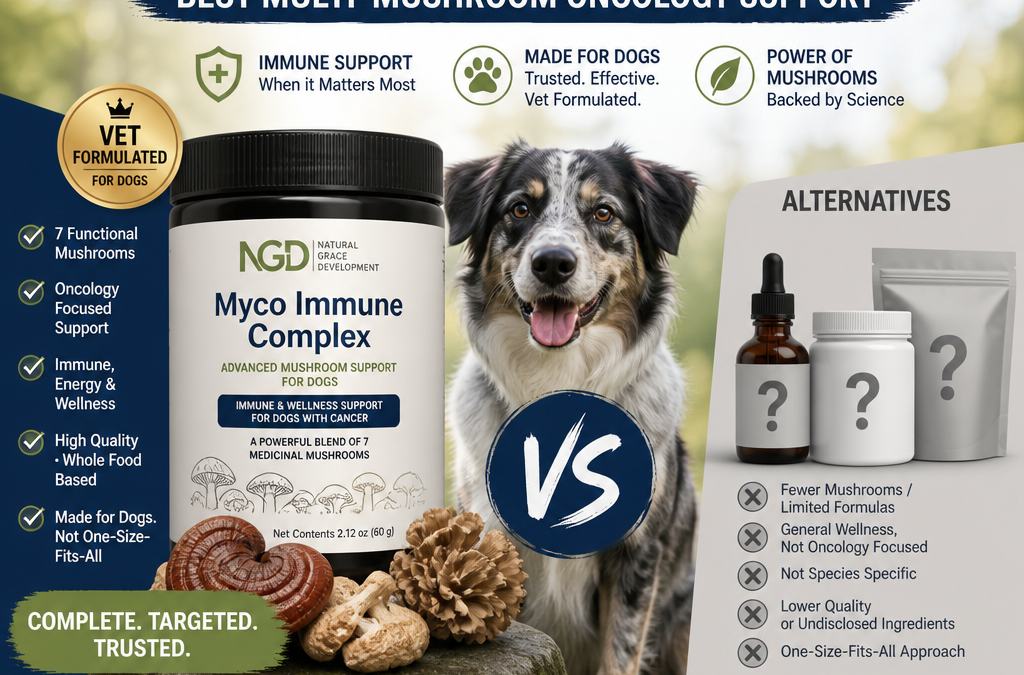
NGD Myco Immune Complex vs Alternatives is an important comparison for pet owners exploring supportive care for dogs with cancer or other serious health concerns. Multi-mushroom formulas are often discussed as complementary options because they may provide compounds associated with immune regulation, antioxidant activity, and general wellness. However, they are not substitutes for veterinary diagnosis or treatment. The best approach is to understand what these products contain, how they differ, and how they may fit safely into a veterinarian-guided care plan.
For readers in France and beyond, the same basic rule applies: compare the label, the extract method, the testing, and the dose before choosing a supplement. If you want another example of how formula design and affordability can affect selection, see this K9 Immunity alternative guide.
What Is a Multi-Mushroom Immune Complex?
A multi-mushroom immune complex typically combines extracts from several medicinal mushrooms in one supplement. Common ingredients may include turkey tail, reishi, maitake, shiitake, agaricus blazei, cordyceps, and lion’s mane. Each mushroom contains a different profile of polysaccharides, beta-glucans, triterpenes, antioxidants, or other naturally occurring compounds.
The goal of combining mushrooms is not necessarily to treat a tumor directly. Instead, these products are generally positioned as nutritional support for immune function, vitality, stress resilience, and overall well-being. In dogs undergoing cancer care, owners may consider them alongside surgery, chemotherapy, radiation, pain management, nutritional support, or palliative care.
Product quality matters substantially. Mushroom powders, hot-water extracts, dual extracts, and concentrated fruiting-body products are not equivalent. A label should clearly identify the mushroom species, plant part used, extraction method, serving size, and quality testing. Vague “mushroom blend” descriptions make it difficult to evaluate potency or compare formulas accurately.
When you review a formula, pay attention to whether the manufacturer explains the purpose of the blend. A transparent supplement will usually state whether it is designed for broad immune support, digestive comfort, stress response, or general vitality. In contrast, a vague marketing description can make it hard to understand how the product fits into a dog’s care plan.
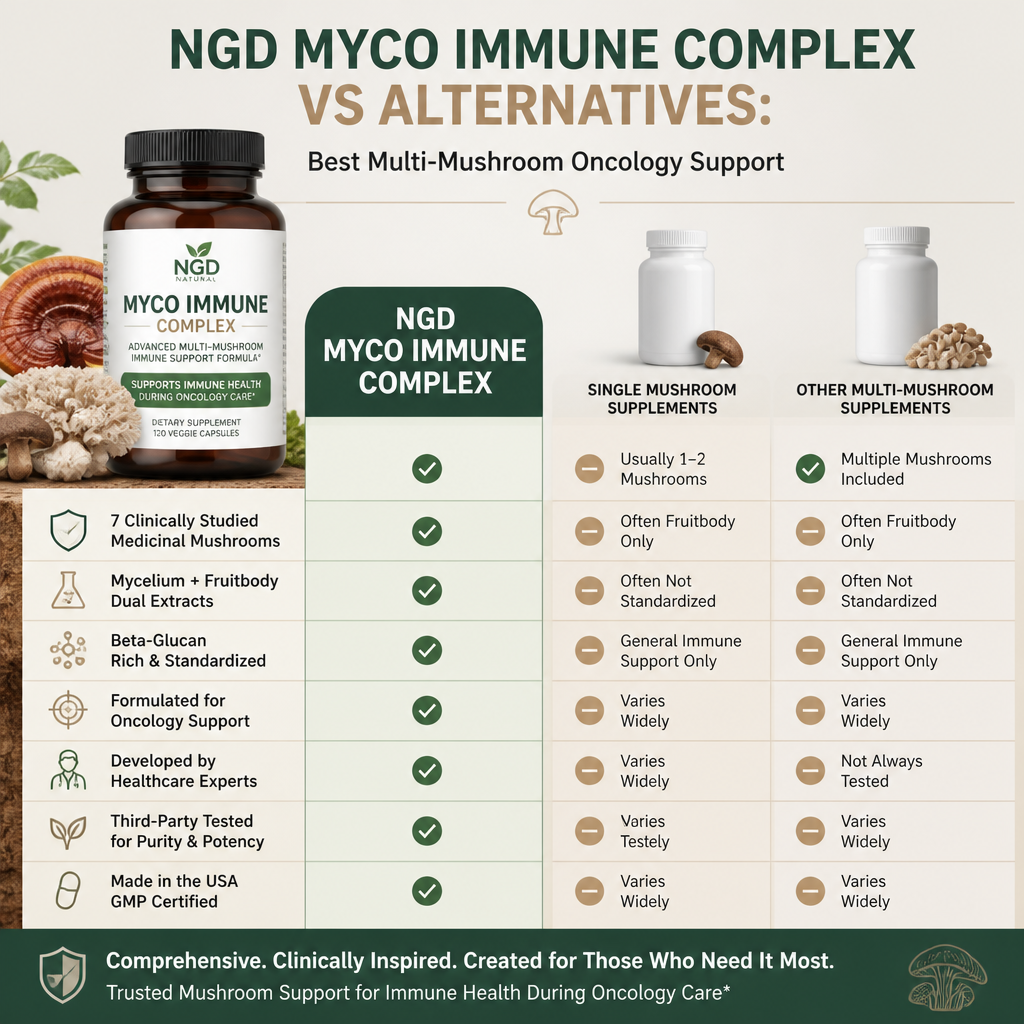
In practice, the best multi-mushroom products are easy to evaluate because the label answers simple questions: What mushrooms are included? Are the extracts standardized? Are the ingredients sourced from fruiting bodies, mycelium, or both? Does the company disclose contaminant testing? These details matter because they help owners compare one supplement to another without relying on marketing language alone.
Another helpful question is whether the formula is intended for short-term use, long-term daily support, or use during active oncology care. A supplement designed for broad wellness may be very different from one created for dogs with serious disease. Understanding that distinction makes the comparison more practical and may reduce the temptation to choose a product simply because it sounds comprehensive.
Some owners also prefer to look at the manufacturing process itself. For example, hot-water extraction may be used to concentrate certain mushroom compounds, while dual extraction can target a wider range of constituents. That does not automatically make one approach superior in every case, but it does give a clearer basis for comparison when reviewing multi-mushroom immune formulas.
NGD Myco Immune Complex vs Alternatives
When comparing NGD Myco Immune Complex vs alternatives, begin with the formula rather than the marketing claims. A broad-spectrum blend may offer convenience by bringing several mushrooms together, while a single-mushroom product may provide more focused dosing and easier monitoring.
A multi-mushroom product can be appealing when the goal is general oncology support and the owner wants to avoid giving several separate supplements. It may also provide a wider range of mushroom compounds. On the other hand, single-ingredient products can be useful when a veterinarian recommends a particular mushroom, when a dog has a sensitive digestive system, or when the owner wants to introduce one supplement at a time.
Important comparison points include:
- Ingredient transparency: Look for exact mushroom species and amounts.
- Extraction quality: Extracts may concentrate compounds differently from raw powders.
- Beta-glucan information: Stating beta-glucan content is often more useful than listing only total mushroom weight.
- Testing: Independent testing can help verify identity, purity, and the absence of contaminants.
- Inactive ingredients: Flavorings, fillers, sweeteners, and preservatives should be reviewed carefully.
- Dosing instructions: Products should provide dog-specific guidance or clearly direct owners to consult a veterinarian.
- Formulation purpose: Some blends emphasize immune support, while others focus on energy, digestion, or cognitive health.
No supplement is automatically superior simply because it contains more mushrooms. A carefully made formula with transparent labeling may be more valuable than a larger blend with unspecified quantities.
In practical terms, the right choice often depends on how the dog tolerates each ingredient. Some owners prefer a simpler product first, then add support only if the veterinarian feels it is appropriate. Others choose a combination formula because it is easier to administer consistently. Both approaches can be reasonable when the product quality is strong.
The comparison also becomes clearer when you think about goals. If the main objective is maintaining general wellbeing during treatment, a multi-mushroom formula may be enough. If the goal is to support a specific plan recommended by the oncology team, a more targeted product may be easier to monitor and adjust over time.
Another practical difference is cost per day. A lower sticker price does not always mean better value if the serving size is large or the extract concentration is low. Likewise, a premium product may still be poor value if the label is unclear or the product is hard to dose consistently. For many owners, the best choice is the one that combines clarity, tolerability, and realistic long-term affordability.
For dogs already receiving medication, the comparison should also include compatibility with the current plan. A formula that seems impressive on paper may still be a poor fit if it complicates appetite, causes loose stool, or overlaps with an ingredient already used elsewhere in the care routine. The safest way to compare NGD Myco Immune Complex vs alternatives is to think beyond the label and evaluate the whole care context.
In addition, consistency matters more than novelty. A dog that accepts one product reliably is often better supported than a dog that cycles through several different supplements without a clear plan. That is why the best alternative is not always the one with the longest ingredient list; it is the one that can be used steadily, safely, and with veterinary oversight.
Oncology + Multi-Mushroom Support
The concept of oncology + multi-mushroom support is based on using mushroom-derived compounds as complementary nutritional tools during cancer care. Research on medicinal mushrooms has investigated beta-glucans and other constituents for their interactions with immune cells, inflammatory signaling, and antioxidant pathways. Turkey tail, in particular, has received attention in veterinary and human research because of its polysaccharide content.
Still, evidence varies by mushroom, extract, cancer type, species, and study design. Results from laboratory experiments or human clinical trials cannot automatically be applied to every dog. A supplement that appears promising in one setting may not have been evaluated for a specific canine tumor, medication combination, or health condition.
Supportive care may help some dogs maintain appetite, body condition, energy, and quality of life, but these outcomes should be monitored realistically. Owners should track appetite, water intake, stool quality, vomiting, activity, pain behaviors, weight, and any changes occurring after a supplement is introduced. This information can help the veterinary team decide whether the product appears well tolerated.
For pet owners researching oncology + multi-mushroom support, it helps to separate research language from marketing language. Terms such as “immune support” or “cellular support” are broad, and they do not guarantee a specific outcome for an individual dog. What matters most is whether the product is cleanly made, appropriately dosed, and well tolerated over time.
If you want to review a trusted educational source on cancer and complementary care, the National Cancer Institute’s complementary and integrative medicine overview explains how supportive therapies are typically evaluated in evidence-based care.
In real-world use, supportive mushroom products are usually considered part of a broader strategy rather than a stand-alone intervention. That strategy may include pathology review, imaging, staging, pain control, dietary planning, and scheduled rechecks. Within that framework, NGD Myco Immune Complex vs alternatives becomes a question of fit: which product is most appropriate for the dog’s current treatment stage, appetite level, and ability to tolerate supplements?
It also helps to avoid unrealistic expectations. A dog may seem brighter after starting a new formula simply because the overall care plan improved at the same time. Conversely, a poor response to one supplement does not prove that all mushroom blends are ineffective. This is why record-keeping is useful. Simple notes about appetite, energy, stools, and behavior can make it easier to judge whether the supplement is contributing positively.
Dog Tumor Support Options Beyond Supplements
Dog tumor support options extend well beyond mushroom products. Veterinary oncology care may include surgery, chemotherapy, radiation therapy, targeted medication, immunotherapy, pain control, anti-nausea treatment, and nutritional planning. The appropriate combination depends on the tumor’s type, stage, location, grade, and the dog’s age and general health.
Nutrition is another important consideration. Dogs with cancer may need a complete and balanced diet that supports stable weight and muscle mass. Some dogs benefit from appetite support or adjustments in meal texture and frequency. There is no universal “cancer diet,” and restrictive homemade diets can create nutritional deficiencies unless formulated by a veterinary nutrition professional.
Lifestyle support also matters. Comfortable bedding, reduced household stress, gentle activity, hydration, and regular monitoring can improve daily quality of life. For dogs with advanced disease, palliative care may focus on comfort rather than aggressive treatment. Supplements should serve that plan, not distract from signs of pain, breathing difficulty, dehydration, or rapid decline.
Many families also ask whether dog tumor support options should change after diagnosis or after treatment begins. The answer depends on the case. A dog that is stable on therapy may tolerate one plan well, while a dog with nausea, weight loss, or liver changes may need a simpler approach. That is why rechecking the plan with the veterinary team matters as much as choosing the product itself.
In some cases, the most useful support is not another supplement at all. Consistent meals, careful symptom tracking, and prompt follow-up for new signs often provide more value than adding multiple products at once. Supplements are best used as part of a broader, organized care strategy.
Owners comparing supplement options often benefit from writing down the dog’s current treatment goals before buying anything new. For example, the priority might be maintaining appetite during chemotherapy, preserving energy during recovery, or reducing the number of separate capsules a senior dog must take each day. Once those goals are clear, it becomes easier to decide whether a mushroom blend, a targeted supplement, or no supplement at all is the best next step.
For more practical comparison research, it may also help to review another product example such as the Healthy Hound Pure Turkey Tail alternative guide, especially if you are comparing single-ingredient support with a broader mushroom blend. Looking at both categories side by side can make it easier to understand where a multi-mushroom product fits within a canine oncology plan.
It is also worth noting that supportive care does not have to be complicated to be effective. Sometimes a dog does better with fewer variables, not more. A simple routine that combines veterinary treatment, stable nutrition, and one well-chosen supplement can be easier to maintain than a large stack of products with overlapping purposes.
Safety and Veterinary Guidance
Mushroom supplements can cause gastrointestinal upset, loose stool, reduced appetite, or allergic reactions. They may also interact with medications that affect the immune system, blood clotting, blood pressure, or liver metabolism. Dogs with autoimmune disease, bleeding disorders, liver or kidney problems, or upcoming surgery may require special caution.
Never use a human supplement without checking its ingredients. Some products contain xylitol, concentrated herbs, high levels of vitamins, or other substances that may be unsafe for dogs. Even a pet-labeled product should be reviewed with the veterinarian, particularly when the dog is receiving chemotherapy, corticosteroids, nonsteroidal anti-inflammatory drugs, or other prescription treatments.
Introduce only one new supplement at a time whenever possible. This makes it easier to identify adverse reactions and determine whether the product is helping. Follow the label or veterinary instructions, and avoid assuming that a higher dose will produce better results.
If a dog develops vomiting, diarrhea, itching, swelling, weakness, or loss of appetite after starting a new formula, stop the product and contact the veterinary team. Monitoring matters just as much as the ingredient list. Even a natural product can be unsuitable for a particular dog if the timing, dose, or overall health status is not right.
A veterinarian can also help determine whether a supplement is useful during a specific phase of care. For example, a dog preparing for surgery may need a different plan from a dog in long-term maintenance or one receiving palliative support. That timing issue is easy to overlook, but it can be just as important as the ingredient panel.
It is helpful to keep an updated list of every supplement, medication, and treat the dog receives. This reduces the risk of duplication and makes it easier to spot possible interactions. When owners bring that list to the veterinary visit, discussions about NGD Myco Immune Complex vs alternatives become far more productive because the conversation is based on the full picture rather than a single product page.
For dogs with a history of sensitivity, a gradual introduction may be the most cautious approach. Starting with a small amount and observing the dog over several days can reveal whether the supplement is tolerated before any full-dose plan is considered. That cautious mindset is especially helpful when a dog is already dealing with cancer-related stress or digestive instability.
Making a Practical Comparison
The best choice among NGD Myco Immune Complex and alternatives depends on the dog’s medical situation, the product’s quality, and the veterinary team’s recommendations. A broad formula may be convenient, while a targeted product may make more sense for a dog with specific needs or medication concerns. Cost, availability, palatability, and the ability to maintain consistent dosing are also practical factors.
Most importantly, owners should view multi-mushroom products as supportive supplements rather than cancer cures. Transparent labeling, responsible sourcing, realistic expectations, and veterinary oversight provide the strongest foundation for safe use. When integrated thoughtfully with evidence-based oncology care, nutrition, symptom management, and quality-of-life monitoring, a mushroom supplement may become one part of a comprehensive support plan for a dog facing cancer.
For that reason, NGD Myco Immune Complex vs alternatives should be judged on substance, not hype. If a formula is clearly labeled, appropriate for dogs, and easy to give consistently, it may fit well into a veterinarian-guided plan. If it lacks testing, hides the extract details, or creates digestive problems, another option is likely a better choice.
In the end, NGD Myco Immune Complex vs alternatives is less about finding a universal winner and more about matching the right supplement to the right dog. When owners, veterinarians, and oncology teams work together, support decisions become safer, simpler, and more meaningful.
To make the comparison even more practical, focus on three questions: Can the dog take it comfortably, does it fit the current treatment plan, and does the company provide enough information to trust the formula? If the answer to all three is yes, the supplement may deserve a place in the plan. If not, it is reasonable to keep looking.
In that sense, the phrase NGD Myco Immune Complex vs alternatives is really a reminder to compare with care. A good product should support the dog’s comfort and the owner’s ability to keep a consistent routine. That combination is often more valuable than a long list of ingredients or a bold marketing promise.
Whether you are evaluating a multi-mushroom blend, a single mushroom extract, or another form of canine oncology support, the same principles apply: clarity, safety, and fit. Those are the qualities that matter most when choosing support for a dog with tumors in France or anywhere else.
by TCMVET | Aug 27, 2026 | Research and News
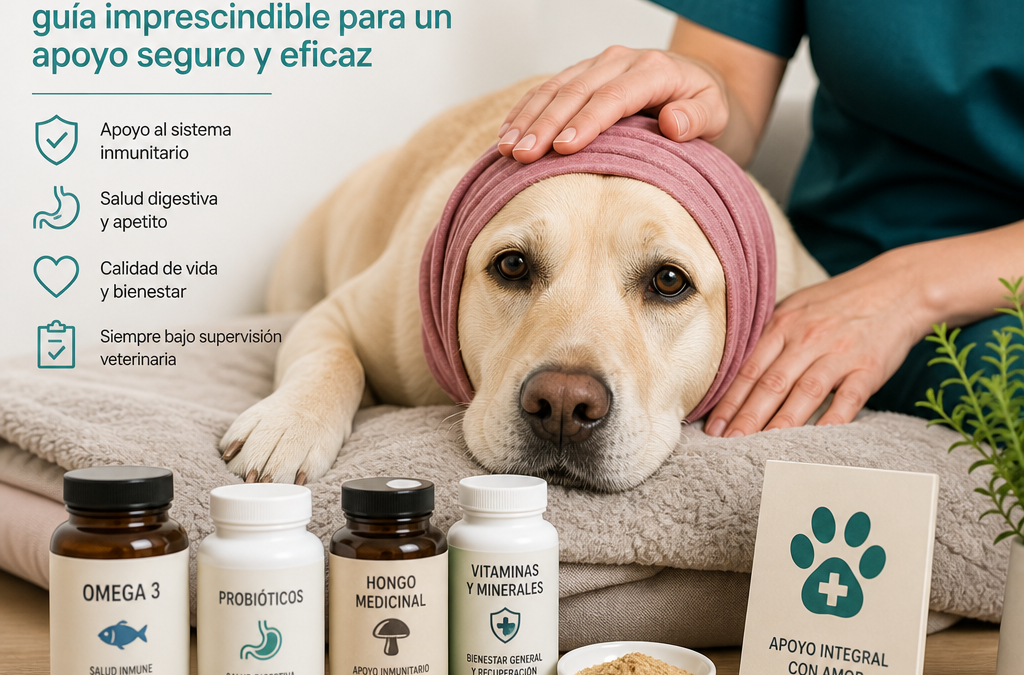
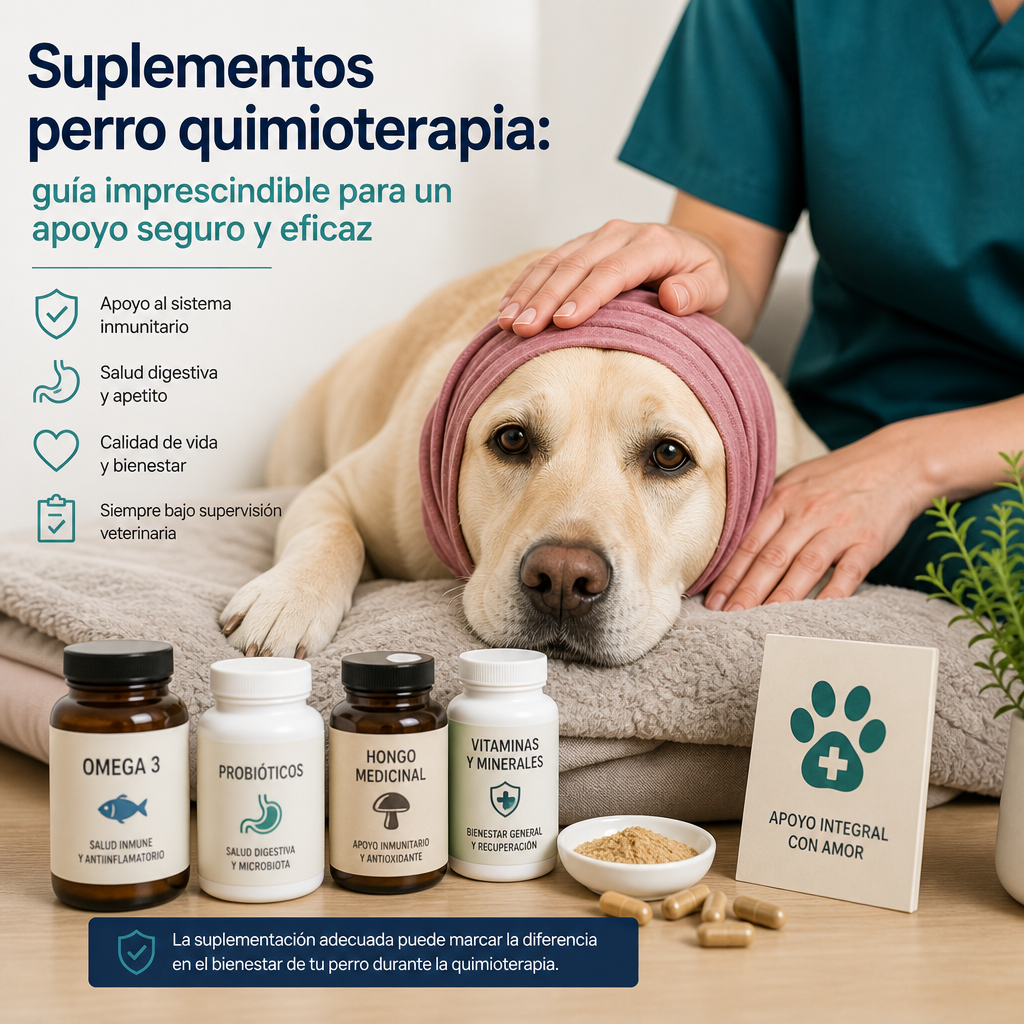
Los suplementos perro quimioterapia pueden ayudar a mantener el bienestar, el apetito y la calidad de vida del animal, pero nunca deben sustituir el tratamiento indicado por el veterinario. Durante la quimioterapia, el organismo del perro puede experimentar cambios digestivos, metabólicos y hematológicos que requieren seguimiento profesional. Por eso, cualquier vitamina, planta medicinal, aceite o complemento nutricional debe valorarse de forma individual y coordinarse con el oncólogo veterinario.
¿Por qué considerar suplementos durante quimioterapia en un perro?
La quimioterapia busca eliminar o controlar células tumorales, aunque también puede producir efectos secundarios. Algunos perros presentan náuseas, vómitos, diarrea, menor apetito, pérdida de peso, cansancio o alteraciones en los análisis sanguíneos. En estos casos, el objetivo de los complementos no es “curar” el cáncer, sino apoyar determinadas necesidades nutricionales y contribuir a una recuperación más cómoda.
Los suplementos perro quimioterapia pueden ser útiles cuando existe una carencia concreta, una ingesta insuficiente o una condición asociada que el veterinario haya identificado. Por ejemplo, un animal que come poco puede necesitar una estrategia nutricional específica, mientras que otro con una función renal delicada requerirá evitar ciertos productos.
La respuesta depende del tipo de tumor, el protocolo farmacológico, la edad, el peso, el estado general y la presencia de otras enfermedades. No todos los perros necesitan suplementos y, en algunos casos, añadirlos sin control puede ser contraproducente.
Apoyo perro cáncer quimio: objetivos principales
El apoyo perro cáncer quimio debe centrarse en medidas seguras y realistas. Entre los objetivos más habituales se encuentran:
- Mantener un peso corporal adecuado.
- Favorecer una ingesta suficiente de proteínas y energía.
- Controlar las náuseas, los vómitos o la diarrea bajo supervisión veterinaria.
- Ayudar a conservar la masa muscular.
- Detectar y tratar de forma temprana la deshidratación.
- Mejorar el confort y la calidad de vida.
- Vigilar posibles alteraciones en hígado, riñones o células sanguíneas.
La nutrición suele ser el pilar principal. Un alimento completo, equilibrado y bien tolerado puede aportar más beneficios que una combinación extensa de suplementos. Si el perro deja de comer, vomita repetidamente o pierde peso con rapidez, es preferible consultar pronto al veterinario en lugar de intentar resolverlo únicamente con complementos.
Suplementos perro quimioterapia: opciones que puede valorar el veterinario
Ácidos grasos omega-3
Los omega-3, presentes especialmente en aceites de pescado purificados, pueden formar parte de una estrategia nutricional para algunos pacientes. Se estudian por su relación con la inflamación y el metabolismo, aunque sus beneficios dependen de la situación clínica y de la dosis.
Es importante utilizar productos de calidad, calcular la cantidad según el peso y revisar su compatibilidad con otros medicamentos. También pueden causar molestias digestivas o aportar demasiadas calorías. Los aceites rancios o de procedencia dudosa deben evitarse.
Probióticos y apoyo digestivo
Algunos perros tratados contra el cáncer desarrollan alteraciones intestinales. Un probiótico veterinario concreto podría ayudar a mantener el equilibrio de la microbiota en determinados casos, especialmente cuando hay diarrea o cambios en la alimentación.
Sin embargo, no todos los probióticos tienen la misma composición ni la misma evidencia. Además, en animales con defensas muy bajas, enfermedades graves o infecciones activas, su uso debe estar estrictamente supervisado.
Vitaminas y minerales
Las vitaminas no deben administrarse de forma automática. Si el perro recibe un alimento completo, normalmente no necesita suplementos multivitamínicos. El exceso de vitaminas liposolubles, como A, D, E o K, puede acumularse y causar toxicidad. También algunos minerales pueden interferir con la absorción de medicamentos o sobrecargar los riñones.
La suplementación debe basarse en una deficiencia demostrada, una dieta incompleta o una indicación clínica concreta. Los análisis y la evaluación de la alimentación son esenciales para tomar una decisión segura.
Complementos para el apetito y la masa muscular
Cuando existe pérdida de apetito, el veterinario puede recomendar ajustes en la dieta, alimentos más palatables, comidas pequeñas y frecuentes o medicamentos específicos. Algunos complementos energéticos pueden ser útiles, pero deben incorporarse teniendo en cuenta las necesidades calóricas y el estado digestivo del animal.
La conservación de la masa muscular también depende de una cantidad adecuada de proteínas, actividad suave cuando sea posible y control del dolor o las náuseas. Ningún suplemento reemplaza una dieta bien formulada ni el tratamiento de los síntomas que impiden comer.
Si quieres profundizar en la elección de complementos con criterio, puedes revisar esta guía sobre mejores suplementos para perros con cáncer, especialmente útil para comparar opciones con más seguridad.
Plantas medicinales y productos naturales: precauciones esenciales
“Natural” no significa necesariamente seguro. La cúrcuma, el cardo mariano, el ajo, el ginseng, la equinácea, el CBD y otras sustancias pueden modificar la coagulación, la presión arterial, la función hepática o la forma en que el organismo procesa los fármacos.
Algunos productos pueden aumentar o reducir la concentración de un quimioterápico, alterar sus efectos o incrementar la toxicidad. También existe el riesgo de contaminación, etiquetado incompleto o dosis imprecisas en suplementos destinados a personas.
Por este motivo, nunca conviene administrar hierbas, extractos concentrados o productos de medicina integrativa sin informar al oncólogo veterinario. La coordinación entre profesionales permite valorar posibles interacciones y decidir si el beneficio esperado justifica el riesgo.
Además, una revisión de fuentes clínicas confiables puede ayudar a interpretar mejor cada caso. La guía de nutrición y control de peso de la AAHA ofrece recomendaciones útiles para tomar decisiones más informadas sobre alimentación y soporte nutricional.
Cómo administrar los complementos de forma segura
Antes de comenzar, conviene revisar con el veterinario:
- El nombre exacto y la composición del producto.
- La dosis calculada para el peso y la situación clínica del perro.
- El momento adecuado para administrarlo.
- Las posibles interacciones con la quimioterapia y otros medicamentos.
- Los efectos secundarios que deben vigilarse.
- La duración prevista del uso.
- La necesidad de repetir análisis o controles.
Es recomendable introducir un solo producto cada vez. Así será más fácil identificar si causa diarrea, vómitos, picor, somnolencia o cambios en el apetito. También ayuda llevar un registro diario de comida, agua, deposiciones, vómitos, energía y medicación.
En muchos hogares, el término suplementos perro quimioterapia se usa para todo tipo de productos, pero no todos tienen el mismo riesgo. Un aceite, un probiótico o una vitamina no se comportan igual, y la pauta correcta depende de la enfermedad concreta y de la tolerancia del perro.
Señales de alarma durante la quimioterapia
Algunos signos requieren contacto rápido con la clínica veterinaria: vómitos persistentes, diarrea intensa o con sangre, fiebre, encías pálidas, dificultad para respirar, debilidad marcada, dolor evidente, rechazo completo de la comida, incapacidad para beber o decaimiento repentino.
La quimioterapia puede reducir temporalmente las defensas, por lo que una infección puede avanzar con rapidez. No se debe esperar a que un suplemento haga efecto si aparecen síntomas importantes. El tratamiento de soporte, como antieméticos, protectores digestivos, fluidoterapia o ajustes dietéticos, debe indicarse de manera profesional.
Si el perro presenta un deterioro rápido, el objetivo principal no es probar más complementos, sino estabilizarlo cuanto antes. En ese contexto, los suplementos perro quimioterapia solo tienen sentido cuando el oncólogo confirma que encajan con el plan terapéutico.
Un enfoque personalizado y prudente
Los suplementos perro quimioterapia pueden desempeñar un papel complementario, pero su utilidad depende de una evaluación individual. La prioridad debe ser seguir el protocolo oncológico, mantener una alimentación adecuada, controlar los efectos secundarios y realizar las revisiones recomendadas.
Un buen apoyo combina observación diaria, comunicación con el equipo veterinario y decisiones basadas en la evidencia disponible. Con una planificación cuidadosa, es posible acompañar al perro durante el tratamiento de forma más segura, reduciendo riesgos innecesarios y centrando todos los esfuerzos en su bienestar y calidad de vida.
Si buscas una selección más específica para decidir con calma, esta otra lectura sobre suplementos para perros con cáncer puede ayudarte a ordenar prioridades antes de introducir cualquier producto nuevo.
En resumen, la quimioterapia no impide de forma automática el uso de complementos, pero sí exige criterio. Bien elegidos, pueden apoyar la alimentación, el confort y la recuperación; mal usados, pueden complicar el tratamiento. La mejor decisión siempre será la que se tome junto al oncólogo veterinario y con un seguimiento estrecho del perro.
Cuando se habla de suplementos perro quimioterapia, la clave está en individualizar: algunos perros necesitarán apoyo digestivo, otros un ajuste calórico y otros ningún complemento adicional. Con supervisión profesional, el uso de suplementos perro quimioterapia puede integrarse de forma prudente en el plan de cuidados, siempre priorizando la seguridad, la tolerancia y la calidad de vida.
En un plan bien diseñado, los suplementos perro quimioterapia se valoran como apoyo y no como sustituto del tratamiento. Por eso conviene revisar con calma qué necesita realmente cada paciente y evitar compras impulsivas guiadas solo por promesas comerciales.
Si el veterinario confirma una necesidad concreta, la elección debe basarse en la tolerancia, la calidad del producto y la compatibilidad con el protocolo oncológico. Con esa prudencia, los suplementos perro quimioterapia pueden encajar mejor en la rutina diaria sin añadir riesgos innecesarios.
La mejor estrategia sigue siendo sencilla: observar al perro, ajustar la dieta, consultar al equipo clínico y usar solo los productos que aporten un beneficio claro. Así, los suplementos perro quimioterapia cumplen su función de apoyo real y respetan el objetivo principal, que es mantener la mayor calidad de vida posible durante el tratamiento.
by TCMVET | Aug 27, 2026 | Research and News
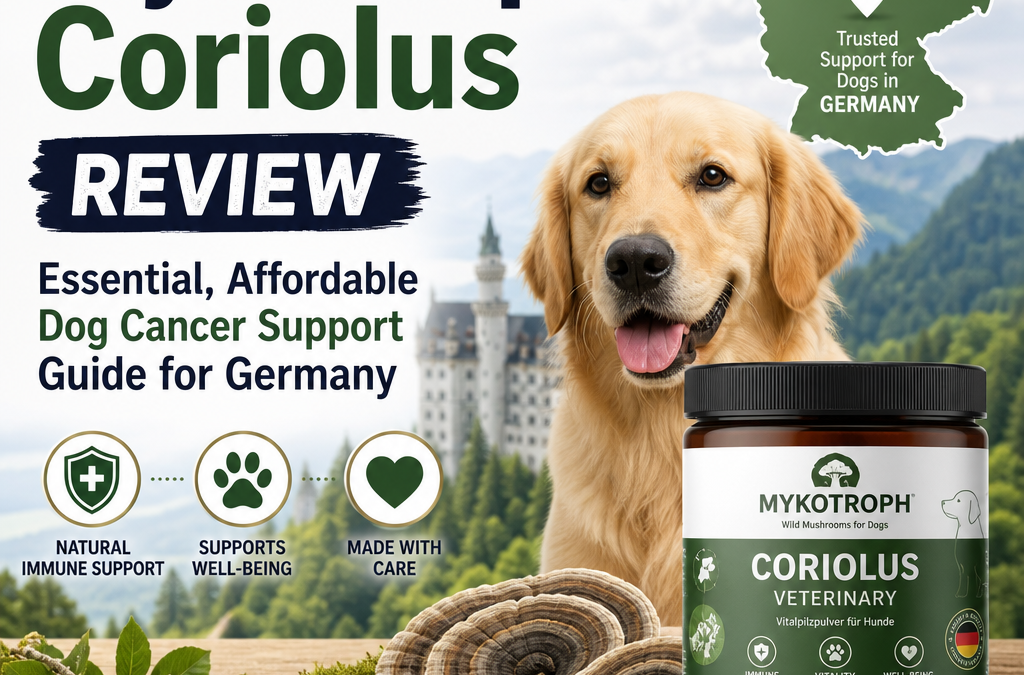
Mykotroph Coriolus is a mushroom-based supplement often considered by dog owners in Germany who are looking for additional nutritional support during a canine cancer diagnosis. Made from Coriolus versicolor, also known as Trametes versicolor or turkey tail mushroom, it is associated with naturally occurring compounds such as beta-glucans and polysaccharides. However, it should be viewed as complementary support rather than a cure or replacement for veterinary treatment. A careful review of the product, its ingredients, safety considerations, and appropriate use is essential before adding it to a dog’s care plan.
What Is Mykotroph Coriolus?
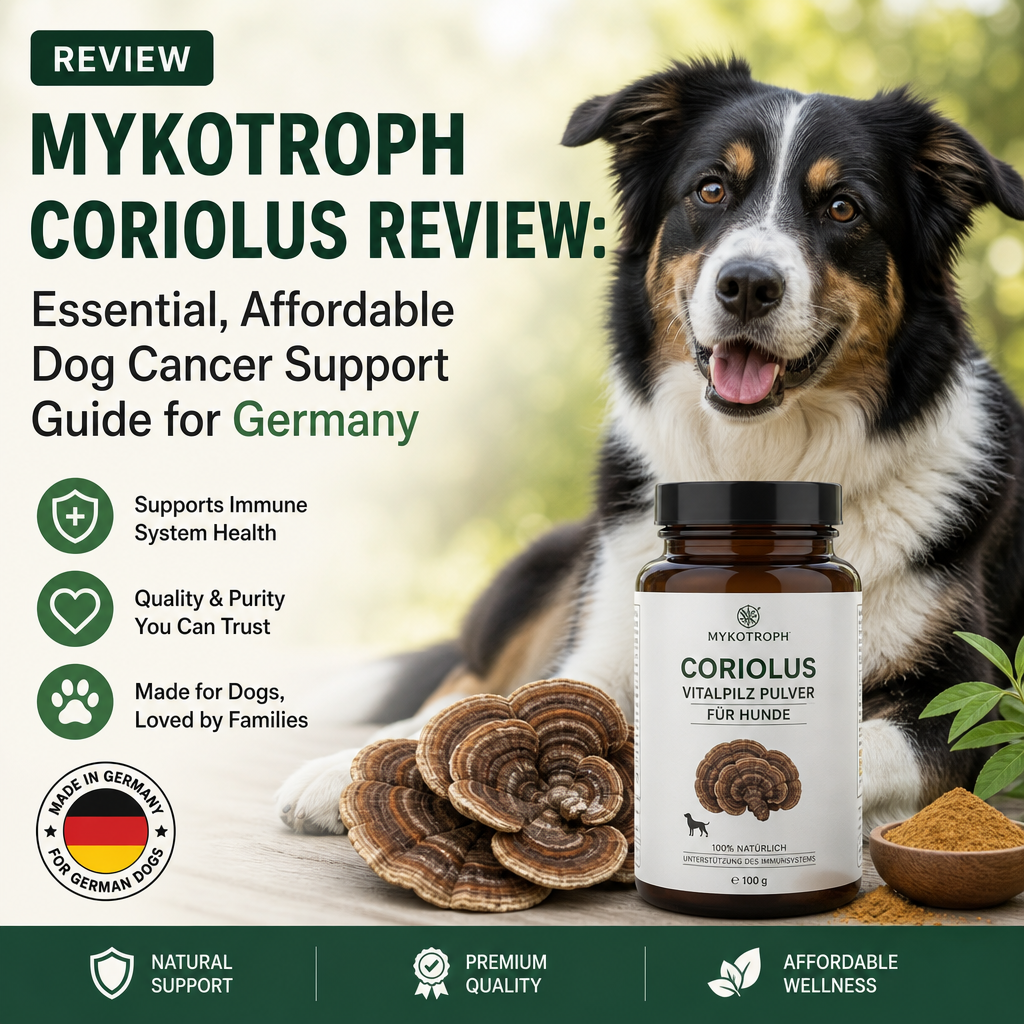
Mykotroph Coriolus is generally marketed as a supplement containing extracts or preparations derived from Coriolus versicolor. This medicinal mushroom has a long history of traditional use, particularly in Asian health practices. Modern interest has focused on compounds such as polysaccharide-K and polysaccharide peptide, which have been studied for their potential influence on immune activity.
For dogs, mushroom supplements are commonly considered during periods of illness, recovery, or increased physiological stress. Owners may explore them after a diagnosis of lymphoma, mast cell tumors, soft tissue sarcomas, or other cancers. The goal is usually to support overall resilience, appetite, immune balance, and quality of life while the dog receives veterinary care.
The exact composition can vary depending on the manufacturer, product format, extraction method, and batch. Therefore, reading the product label and requesting current technical information is important. A supplement described simply as “Coriolus” may not provide the same concentration or extract profile as a standardized product.
It is also helpful to understand what a supplement like this can and cannot do. Mykotroph Coriolus may fit into a supportive approach, but it does not replace diagnosis, staging, monitoring, or treatment planning. For dogs with tumors, the best outcomes usually come from a structured veterinary plan that matches the specific cancer type and the dog’s overall condition. When owners understand that role clearly, they can evaluate the product more calmly and realistically.
Another practical point is consistency. Dogs with serious illness often do better when changes are introduced one at a time. If a supplement is started at the same time as a new diet, pain medication, or chemotherapy protocol, it becomes harder to tell what is helping and what may be causing side effects. Careful observation matters, especially in the early weeks after introduction.
Mykotroph Coriolus dog cancer support: What Does the Evidence Suggest?
Interest in Mykotroph Coriolus dog cancer support is largely based on research into turkey tail mushroom and its immune-related compounds. Some laboratory and preliminary clinical studies have suggested that Coriolus extracts may influence immune responses and may have potential as an adjunct to conventional cancer management. Research involving dogs has attracted attention, but evidence remains limited compared with established treatments such as surgery, chemotherapy, radiation therapy, and targeted veterinary medicines.
This distinction matters. A supplement may show promising biological activity without proving that it can shrink tumors, prevent recurrence, or extend survival in every dog. Cancer is not one disease; outcomes depend on tumor type, stage, location, grade, the dog’s age, overall health, and the treatment selected by the veterinary team.
For this reason, a responsible approach treats Coriolus as supportive care. It may be discussed alongside prescribed treatment, nutritional planning, pain management, and regular monitoring. It should never delay diagnostic tests or replace a recommended oncology consultation. For a broader overview of supportive products, some owners also compare options such as Ocoxin Pets Alternative: 7 Best Affordable Dog Tumor Supplements in Luxembourg.
Evidence-based decision-making is especially important when a product is promoted with strong emotional language. Some supplements are marketed with claims that sound reassuring but are not backed by the same level of evidence as standard oncology care. Owners should therefore separate hopeful possibilities from proven outcomes. Mykotroph Coriolus may be interesting from a supportive-care perspective, but the current evidence does not justify treating it as a cure.
It can help to discuss the available information with a veterinarian who is comfortable evaluating supplements. A good discussion may include the dog’s diagnosis, current medications, appetite, weight, digestive history, and any previous reactions to supplements. That context makes it easier to judge whether a product is sensible for the individual dog rather than just attractive in theory.
Potential Benefits for Dogs
Dog owners considering this supplement often hope for several possible benefits:
- Support for normal immune function
- Nutritional assistance during periods of illness
- Help maintaining energy and general wellbeing
- Complementary support during cancer treatment
- A convenient mushroom-based addition to a broader care plan
These possible benefits should be described cautiously. Not every dog responds in the same way, and improvements in appetite or activity may reflect many factors, including pain control, medication changes, diet, or natural fluctuations in the disease. Keeping a simple health diary can help owners and veterinarians assess changes more objectively.
A diary might record appetite, water intake, stool quality, vomiting, energy, sleep, mobility, and any new symptoms. It is also useful to note when the supplement was introduced and whether the dose or other medications changed at the same time.
Mykotroph Coriolus may be considered most helpful when the aim is steady, practical support rather than dramatic short-term changes. That expectation makes it easier to judge whether the supplement is contributing positively to the dog’s overall comfort and routine.
Owners sometimes ask whether the supplement can help a dog feel “more normal” during treatment. The honest answer is that any supportive product has to be evaluated against real-life observations. If a dog is eating more consistently, seems calmer, and is tolerating treatment better after a supplement is introduced, that may be meaningful. If there is no change, or if gastrointestinal upset appears, the plan may need to be revised.
Supportive products also make the most sense when the rest of the care plan is stable. Good hydration, appropriate calories, pain control, and frequent communication with the veterinary team often matter more than any single supplement. Mykotroph Coriolus can be one part of that wider picture, but it should not carry the burden of the whole plan.
In some cases, owners compare mushroom products with other supportive formulas, then choose the option that is easiest to monitor and best aligned with the dog’s current treatment stage. That practical approach is often more useful than focusing on marketing descriptions alone.
Mykotroph Coriolus Review: Ingredients and Quality Questions
A useful Mykotroph Coriolus review should examine more than marketing claims. Product quality is especially important when a supplement is being used by a dog with a serious illness.
Check whether the label identifies:
- The scientific name of the mushroom
- The part of the mushroom used
- Whether the product contains a whole powder or an extract
- The extraction method
- The amount provided per serving
- Additional ingredients, fillers, or flavorings
- Batch or lot information
- Storage instructions and expiry date
Extracts may concentrate certain compounds differently from powdered mushroom material. However, a higher concentration is not automatically better for every dog. The appropriate choice depends on the dog’s size, health status, current medication, and veterinary advice.
Owners should also be cautious with broad statements such as “cures cancer,” “replaces chemotherapy,” or “works for all tumors.” These claims are not consistent with a responsible evidence-based approach. A trustworthy product should provide transparent information and encourage consultation with a veterinarian.
When possible, owners should look for clear manufacturing standards and accessible product details. The University of Giessen veterinary medicine resources are a useful example of the kind of evidence-based guidance dog owners can rely on when discussing cancer support with a veterinary professional.
For German buyers, the ingredient list deserves special attention. Some products may include flavorings, sweeteners, or other inactive ingredients that are acceptable for humans but not ideal for dogs. Even when the main ingredient is Coriolus versicolor, the surrounding formulation can affect tolerance. A simpler ingredient profile is often easier to assess, especially if the dog already receives multiple medications.
Another quality marker is transparency around origin and testing. While a supplement label may not answer every question, responsible manufacturers usually provide enough information to show that they understand pet-owner concerns. If a company cannot clearly explain dosage, extract ratio, or storage conditions, that is a reason to be cautious. A product for a dog with tumors should inspire confidence in its documentation, not confusion.
Safety, Side Effects, and Drug Interactions
Coriolus products may be tolerated by many dogs, but natural does not mean risk-free. Possible side effects can include digestive upset, soft stool, vomiting, reduced appetite, or signs of intolerance. Some products may also contain ingredients that are unsuitable for dogs, so the complete formulation must be reviewed.
Extra caution is needed if a dog has liver disease, kidney disease, autoimmune conditions, a history of allergies, or a sensitive digestive system. Dogs receiving chemotherapy, corticosteroids, immunosuppressive drugs, anticoagulants, or other prescription medicines should only receive a mushroom supplement after veterinary approval. Potential interactions may depend on the extract’s concentration and the dog’s treatment schedule.
Stop the product and contact a veterinarian if the dog develops persistent vomiting, severe diarrhea, facial swelling, breathing difficulty, unusual bruising, marked weakness, or a sudden decline in condition. Supplements should also be paused before any procedure if the veterinarian advises it.
If your dog is already taking another supportive formula, such as a non-mushroom cancer supplement, a veterinarian can help decide whether combinations are sensible. In some cases, owners compare products like Vicano Support Life Tabs alternative: 5 Smart, Affordable, Helpful Options for Dogs in Germany before settling on one approach.
Safety monitoring should continue after the first week or two. Some reactions are immediate, while others emerge gradually. A dog that initially seems fine may later show appetite changes or mild digestive upset. That is why owners should not assume a supplement is safe forever just because the first few doses were tolerated. Ongoing observation is part of responsible use.
If the dog is already fragile, a conservative approach is sensible. Introducing one change at a time, keeping the dose within the veterinarian’s recommendation, and tracking weight and stool quality can reduce the chance of confusion. This is especially important in dogs with tumors, where appetite, comfort, and treatment tolerance are already under pressure.
Mykotroph Coriolus Germany: Buying and Using It Responsibly
For owners searching for Mykotroph Coriolus Germany, purchasing through a reputable veterinary supplier, pharmacy, or established specialist retailer is generally preferable to buying from an unknown marketplace seller. Confirm that the packaging is sealed, the expiry date is visible, and the label includes clear dosage and composition information.
German consumers should also remember that supplements for animals are not automatically equivalent to licensed veterinary medicines. Product status, labeling, and permitted claims can differ. A German veterinarian can help assess whether the product is appropriate and can explain how it fits into the dog’s diagnosis and treatment plan.
Do not estimate a dose by copying instructions intended for humans or another animal. The correct amount may depend on body weight, the form of the product, the dog’s condition, and concurrent treatment. Introducing any new supplement gradually may make digestive reactions easier to identify, but the veterinarian’s instructions should take priority.
For owners in Germany, one practical question is whether the supplement is easy to source consistently. Consistent supply matters because changing brands too often can make it harder to track tolerance, response, and quality. Mykotroph Coriolus should ideally come from a supplier that can provide reliable labeling and repeatable batches.
Availability matters for another reason as well. If a product is helpful, it is frustrating to discover that the same formulation cannot be obtained again in a few weeks. Dogs with cancer often need stable routines, and that includes stable supportive products. Choosing a dependable source may be just as important as choosing the brand name itself.
Buyers should also compare the final cost per day rather than just the headline price. A smaller container may appear cheaper but provide fewer servings. Looking at cost, dose, and product concentration together gives a more realistic picture of value. In a long-term care plan, that practical calculation can matter a great deal.
How to Include It in a Broader Care Plan
The most sensible way to use Coriolus is as one element of comprehensive care. This may include an accurate diagnosis, staging tests, appropriate cancer treatment, balanced nutrition, pain relief, dental care, exercise adjusted to the dog’s ability, and regular quality-of-life assessments.
A supplement cannot compensate for uncontrolled pain, dehydration, infection, poor nutrition, or delayed treatment. Owners should focus on practical goals such as maintaining comfort, preserving appetite, supporting mobility, and recognizing changes early.
Simple routines can make supportive care more manageable. Many owners find it helpful to give the supplement at the same time each day, note appetite and stool quality, and keep medications organized in one place. These small steps can make conversations with the veterinary team more productive.
It is also wise to reassess the plan if the dog’s condition changes. What seems reasonable during a stable period may no longer fit if the dog begins chemotherapy, loses weight, or develops a new symptom. Mykotroph Coriolus should remain part of a flexible care strategy rather than a fixed assumption.
In practical terms, a broader care plan may also include scheduled checkups, blood tests when recommended, and attention to hydration and body condition. Owners sometimes focus heavily on supplements because they are easy to purchase and feel proactive, but the most meaningful progress often comes from basic supportive measures done consistently. The supplement should sit inside that structure, not replace it.
If the veterinarian advises continuing the product, it can be useful to review progress at regular intervals. Has the dog maintained weight? Is appetite steady? Are there fewer digestive disturbances than before? Has energy improved? These questions help determine whether the supplement is still worth using. If the answer is unclear, a time-limited trial with defined observations can be more useful than indefinite continuation.
Final Assessment
A balanced Mykotroph Coriolus review concludes that the product may be a reasonable complementary option for some dogs, particularly when discussed openly with a veterinarian. Its appeal comes from the potential immune-supportive properties of Coriolus versicolor and its relatively simple mushroom-based formulation. Nevertheless, the scientific evidence remains developing, and it should not be presented as a standalone cancer therapy.
For Mykotroph Coriolus dog cancer support, quality, dose, safety, and veterinary supervision are more important than promotional promises. German dog owners can make a better-informed decision by checking the label, reviewing possible interactions, purchasing from a reliable source, and monitoring the dog’s response carefully. Used responsibly, a Coriolus supplement may have a place in supportive care—but the dog’s veterinary treatment, comfort, and quality of life must remain the central priorities.
If you are comparing Mykotroph Coriolus with other supportive products, focus on transparent ingredients, clear dosing, and realistic expectations. That approach is far more likely to lead to a safe, positive choice for your dog.
In short, Mykotroph Coriolus can be worth discussing, especially if your dog is already under veterinary care and you want a thoughtful supportive option. The most positive outcome usually comes from careful selection, steady monitoring, and realistic goals. That combination gives owners the best chance of using Mykotroph Coriolus in a way that supports the dog without creating false hope.
by TCMVET | Aug 27, 2026 | Research and News
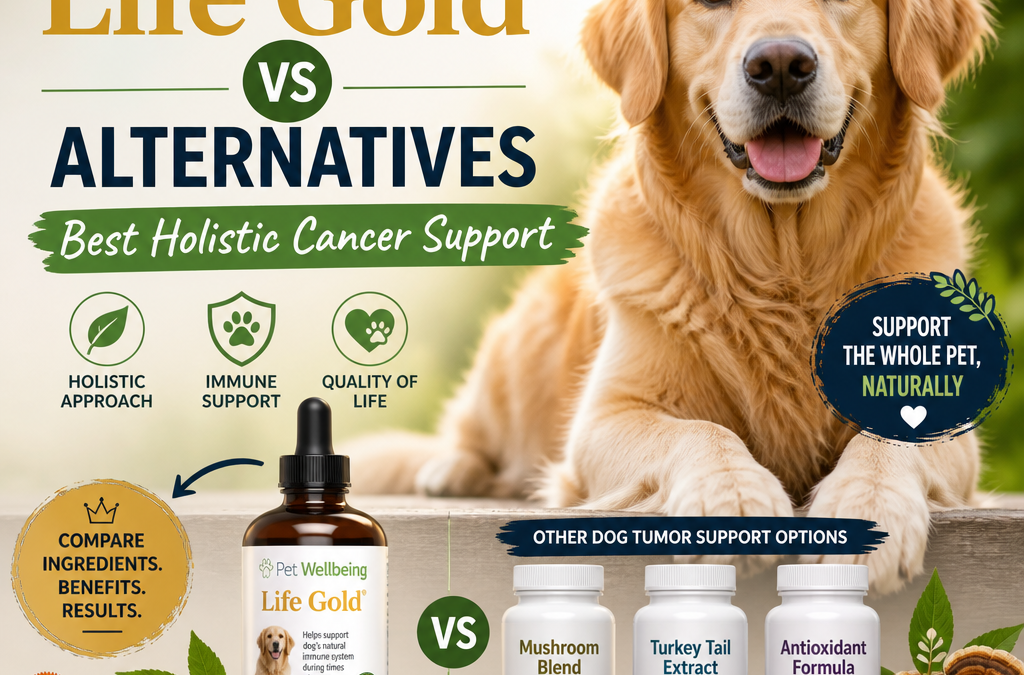
Pet Wellbeing Life Gold vs alternatives is an important comparison for pet guardians exploring holistic cancer support alongside veterinary care. When a dog or cat develops a tumor, families often look for gentle ways to support comfort, appetite, immune function, and overall quality of life. Supplements may have a role, but they should be selected carefully and used as part of a complete medical plan rather than as a replacement for diagnosis or treatment.
Cancer is not one single disease. Tumors differ in location, behavior, stage, and response to therapy. A supplement that is appropriate for one animal may be unsuitable for another, particularly when a pet is taking chemotherapy, corticosteroids, anti-inflammatory medication, anticoagulants, or other prescription drugs. Understanding ingredients, evidence, safety, and practical goals can make the decision more informed.
Understanding holistic cancer support
Holistic cancer support focuses on the whole patient rather than the tumor alone. This may include veterinary oncology, pain management, nutritional support, hydration, mobility assistance, stress reduction, and carefully chosen supplements. The objective is usually to help a pet tolerate treatment and maintain a better daily life.
A holistic approach does not mean rejecting conventional medicine. Surgery, chemotherapy, radiation, targeted therapies, and palliative care may be essential depending on the diagnosis. Integrative care combines these options with supportive strategies that address appetite, digestion, inflammation, sleep, anxiety, and comfort.
Before choosing any product, a veterinarian should confirm the diagnosis and discuss the pet’s current condition. Weight loss, vomiting, weakness, difficulty breathing, persistent pain, or a rapidly growing mass can require prompt medical attention. Supplements cannot replace imaging, biopsy, blood testing, or an individualized treatment plan.
In practice, holistic cancer support should match the pet’s stage of illness and day-to-day needs. For some animals, the goal is to maintain appetite and steady weight. For others, it may be to support energy, joint comfort, or calm behavior during treatment visits. That is why the same product will not suit every patient.
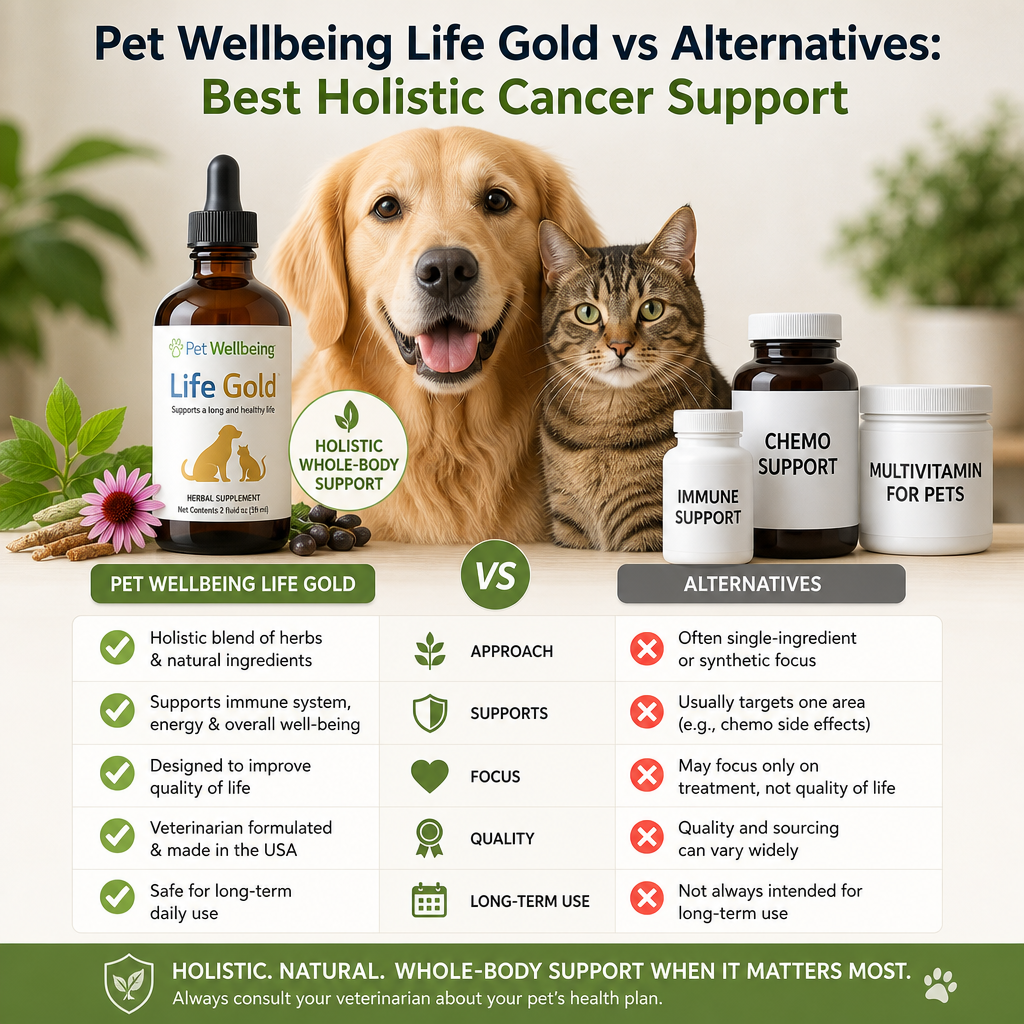
When families begin comparing supportive products, Pet Wellbeing Life Gold vs alternatives often becomes less about brand loyalty and more about fit. The best option is usually the one that aligns with the pet’s cancer type, current medications, and comfort goals.
Supportive care can also change over time. A supplement that made sense right after diagnosis may be less appropriate after surgery, during chemotherapy, or when the pet’s appetite changes. That is why any comparison of Pet Wellbeing Life Gold vs alternatives should be revisited as the treatment plan evolves.
Pet Wellbeing Life Gold vs alternatives: what to compare
When evaluating Pet Wellbeing Life Gold vs alternatives, the first consideration is the product’s intended purpose. Life Gold is marketed as a herbal supplement for dogs and cats, commonly used by owners seeking support during serious illness. Its botanical blend may include ingredients such as milk thistle, turmeric, astragalus, reishi, and other herbs, depending on the formulation and market labeling.
Because formulas can change, pet owners should read the current label and review the complete ingredient list with a veterinarian. The presence of a “natural” ingredient does not automatically mean it is harmless. Herbs can produce pharmacological effects, interact with medication, or affect the liver, kidneys, blood clotting, blood pressure, or immune system.
Useful comparison points include:
– Ingredient transparency: The label should clearly identify active ingredients and amounts whenever possible.
– Quality control: Look for manufacturing information, batch consistency, and appropriate testing for contamination.
– Species suitability: Dogs and cats metabolize some compounds differently, and products designed for one species may not be safe for another.
– Evidence: Laboratory findings or traditional use do not necessarily prove that a supplement shrinks tumors or extends survival.
– Administration: A product should be practical to give and appropriate for the pet’s appetite, digestive health, and treatment schedule.
– Veterinary compatibility: The supplement must fit safely with surgery, chemotherapy, radiation, and other medications.
No supplement should be judged solely by its ingredient count or marketing claims. A shorter formula with clear dosing and reliable quality may be preferable to a complex blend with uncertain concentrations. For a broader look at related approaches, some owners compare these choices with alternatives to medicinal mushrooms for dog tumor support as part of a larger care plan.
One practical way to compare Pet Wellbeing Life Gold vs alternatives is to ask three questions: What is the main goal, what is the risk of interaction, and how easy is it to monitor results? If the answer is unclear, the product may not be the best fit at that moment.
It also helps to think about the level of support you want. Some alternatives are designed to be broadly supportive, while others focus on one task such as inflammation, digestion, or liver support. In the Pet Wellbeing Life Gold vs alternatives discussion, narrower products can sometimes be easier to integrate into a veterinary plan because they are simpler to track.
Common dog tumor support options
Dog tumor support options vary according to the type of cancer and the pet’s symptoms. Some guardians consider medicinal mushrooms, omega-3 fatty acids, antioxidants, digestive support, or herbal formulas. These categories may offer supportive benefits, but their effects are not interchangeable.
Medicinal mushrooms such as turkey tail have attracted interest because of compounds called polysaccharopeptides. Early research, including veterinary investigations, has examined their potential role in immune support and cancer care. However, product quality and extract concentration differ substantially, so results from one preparation cannot automatically be applied to another.
Omega-3 fatty acids, particularly EPA and DHA, may help support skin, joints, and inflammatory balance. They are also sometimes included in nutritional plans for pets with cancer. The correct dose depends on body weight, diet, health status, and medication use. Fish oil can cause digestive upset and may affect blood clotting, making veterinary guidance especially important before surgery.
Milk thistle is commonly used for liver support, while turmeric is often selected for its anti-inflammatory properties. Both may be included in holistic formulas, but absorption, dosing, and interactions remain important concerns. Turmeric products can vary widely, and some enhanced-absorption formulations may have stronger effects than standard preparations.
A complete diet is another foundational support option. Pets with cancer may need calorie-dense, highly digestible food, especially when appetite is poor. The right nutritional strategy depends on the cancer type, treatment plan, kidney and liver function, and the pet’s preferences. Homemade diets should be formulated with a veterinary nutritionist to avoid deficiencies.
Owners who want to compare supplement routes with breed-specific risk education may also find it helpful to review canine cancer resources such as Golden Retriever cancer risks and early tumor signs, especially when they are trying to understand why individualized support matters.
For families evaluating holistic cancer support, the most useful dog tumor support options are usually the ones that can be monitored clearly. Appetite, stool quality, weight, hydration, and comfort can tell you more than a product description ever will.
In many cases, the best of the dog tumor support options is not the one with the longest ingredient panel. It is the one that a pet can tolerate consistently, the veterinarian can review safely, and the family can afford to continue over time.
Some owners also want to know whether a supplement is more appropriate during active treatment or during palliative care. That distinction matters. Supportive products may be used differently when the aim is symptom control rather than direct tumor management, and Pet Wellbeing Life Gold vs alternatives should be evaluated in that context.
How to judge evidence and expectations
Evidence for supplements varies widely. Some products have laboratory studies, some have small clinical trials, and some rely mainly on traditional use. That does not mean the weakest products are useless, but it does mean that claims should be weighed against the actual quality of evidence.
It is also important to separate supportive care from treatment claims. A supplement may help a pet feel better without proving it can treat cancer. That distinction matters, especially when a dog or cat has an aggressive tumor, is recovering from surgery, or is receiving chemotherapy.
Owners should be cautious with language that promises to “destroy,” “remove,” or “reverse” tumors. If a product sounds too certain, it often is. A responsible veterinary plan focuses on realistic goals such as comfort, function, appetite, and tolerance of treatment.
There are also practical signs that a product is doing something useful. A pet may have steadier appetite, fewer digestive issues, improved energy, or better mobility. Those changes do not prove a cure, but they can show that a supplement is serving a supportive purpose within the broader plan.
On the other hand, if a pet becomes nauseous, sleepy, itchy, or less interested in food after starting a product, the formula may not be a good match. This is another reason Pet Wellbeing Life Gold vs alternatives should be assessed with monitoring rather than assumptions.
Even when a supplement has a promising reputation, it still needs to be judged by the individual patient. A dog with liver disease, a cat with kidney compromise, or a pet on blood thinners may need a very different option from a healthy adult animal with an early-stage tumor.
Life Gold compared with single-ingredient supplements
A combination product can be convenient because it brings several herbs into one formula. This may appeal to owners who want broad support without giving multiple capsules or liquids. However, combination products can make it harder to identify which ingredient is helping or causing a reaction.
Single-ingredient supplements offer greater control. For example, a veterinarian may recommend a specific omega-3 product, a measured mushroom extract, or a nutritional supplement based on a pet’s needs. The tradeoff is that owners must manage more products and carefully avoid overlapping ingredients.
A veterinarian may also advise pausing supplements before surgery or during certain treatment periods. Some herbs and antioxidants can potentially interfere with drug metabolism, bleeding risk, or the intended effects of cancer therapy. Timing and coordination are therefore just as important as product selection.
This is one reason Pet Wellbeing Life Gold vs alternatives should never be reduced to a simple “natural equals better” decision. The best option is the one that fits the pet’s condition, medication schedule, and monitoring plan.
There is also a difference between general wellness support and cancer-focused support. A product can be useful for comfort without being the most appropriate choice for a pet with a tumor. When looking at Pet Wellbeing Life Gold vs alternatives, ask whether the formula targets a broad wellness goal or a more specific clinical need.
For example, a single-ingredient supplement may be preferred when the goal is to address one clear problem such as appetite, inflammation, or liver support. A blended herbal product may be more appealing when the goal is broader maintenance, provided the veterinarian is comfortable with the ingredient profile.
That is why the most useful comparison is not just what is inside the bottle, but how the formula fits the whole treatment plan. Pet Wellbeing Life Gold vs alternatives becomes easier to judge when the decision is tied to a measurable outcome and a specific timeline.
Seven practical holistic cancer support options
If you are narrowing the field, these seven categories are the most common holistic cancer support options pet owners discuss with veterinarians:
- Herbal blends such as Life Gold, which may offer broad supportive care.
- Medicinal mushroom extracts used for immune-related support.
- Omega-3 fatty acids for inflammation and nutritional support.
- Liver-support supplements such as milk thistle when clinically appropriate.
- Digestive support products for nausea, stool quality, and appetite changes.
- Targeted nutritional support including calorie-dense or highly digestible diets.
- Comfort-focused care such as pain management, mobility support, and calm routines.
These categories are not interchangeable, and a pet may benefit from more than one at the same time. The key is to avoid layering products without a reason. In a careful Pet Wellbeing Life Gold vs alternatives review, simplicity often improves safety and makes outcomes easier to interpret.
For example, if appetite loss is the main concern, a formula that supports digestion and palatability may matter more than a broad herbal blend. If the issue is inflammation, an omega-3 product or another targeted option may be more sensible. Matching the support to the symptom is usually the smartest approach.
Families sometimes compare holistic support with breed-specific cancer information to understand risk and urgency. Resources such as Bichon Frise cancer risks and early tumor signs can help reinforce why early veterinary evaluation is important, even when the goal is natural support.
Safety guidelines for holistic supplements
Always provide the veterinarian with photographs of supplement labels, exact doses, and a list of all medications. Monitor the pet after introducing a new product. Possible warning signs include vomiting, diarrhea, loss of appetite, itching, lethargy, yellowing of the gums or eyes, unusual bruising, or changes in urination.
Introduce only one new supplement at a time unless a veterinary professional gives different instructions. This makes it easier to identify a problem. Never use human cancer supplements, essential oils, concentrated herbal extracts, or products containing questionable ingredients without professional approval. Some substances that are tolerated by people can be toxic to pets.
Keep realistic expectations. Holistic cancer support may help with comfort, nutrition, or general wellbeing, but claims that a supplement can cure cancer should be viewed skeptically. The strongest care plan combines accurate diagnosis, evidence-based treatment, symptom control, emotional support, and regular reassessment.
For readers who want a reference point on safety and evidence standards, the American Veterinary Medical Association guidance on pet nutrition and supplements is a helpful educational source.
It is also wise to confirm whether any ingredient may be inappropriate for pets with liver, kidney, or clotting concerns. That precaution is especially important when comparing Pet Wellbeing Life Gold vs alternatives because herbal blends may include multiple active compounds.
If a pet has a scheduled procedure, ask the veterinarian whether supplements should be stopped in advance. The safest answer depends on the product, the dosage, the timing of surgery, and the pet’s health status.
The best choice in the Pet Wellbeing Life Gold vs alternatives discussion depends on the individual pet, not on a universal ranking. Life Gold may be considered when its ingredients, quality, and intended use fit the veterinary plan. An alternative may be better when a pet needs a targeted ingredient, has medication interactions, or cannot tolerate a complex herbal blend.
Track practical outcomes such as appetite, energy, stool quality, comfort, sleep, mobility, and interest in family activities. These observations help determine whether a product is providing meaningful support. Follow-up examinations and appropriate testing remain essential, even when the pet appears better.
Ultimately, responsible holistic cancer support is careful, coordinated, and centered on quality of life. Supplements can be one part of dog tumor support options, but they work best when chosen with professional guidance and integrated into a broader plan that respects both scientific evidence and the unique needs of the animal.
If you are comparing Pet Wellbeing Life Gold vs alternatives for a dog or cat with cancer, the most helpful next step is usually a veterinary review of the current treatment plan, the supplement label, and the specific goals for supportive care. That approach keeps the decision practical, safe, and aligned with the pet’s needs.
Many families find it useful to keep a simple log after starting a new product. Note changes in appetite, stool, comfort, sleep, and activity level, and bring that information to the next appointment. A short record can make Pet Wellbeing Life Gold vs alternatives much easier to evaluate objectively.
In the end, no supplement should replace a diagnostic plan or a thoughtful conversation with a veterinary professional. The best result is usually a combination of medical care, symptom management, and the right supportive product at the right time.
by TCMVET | Aug 27, 2026 | Research and News
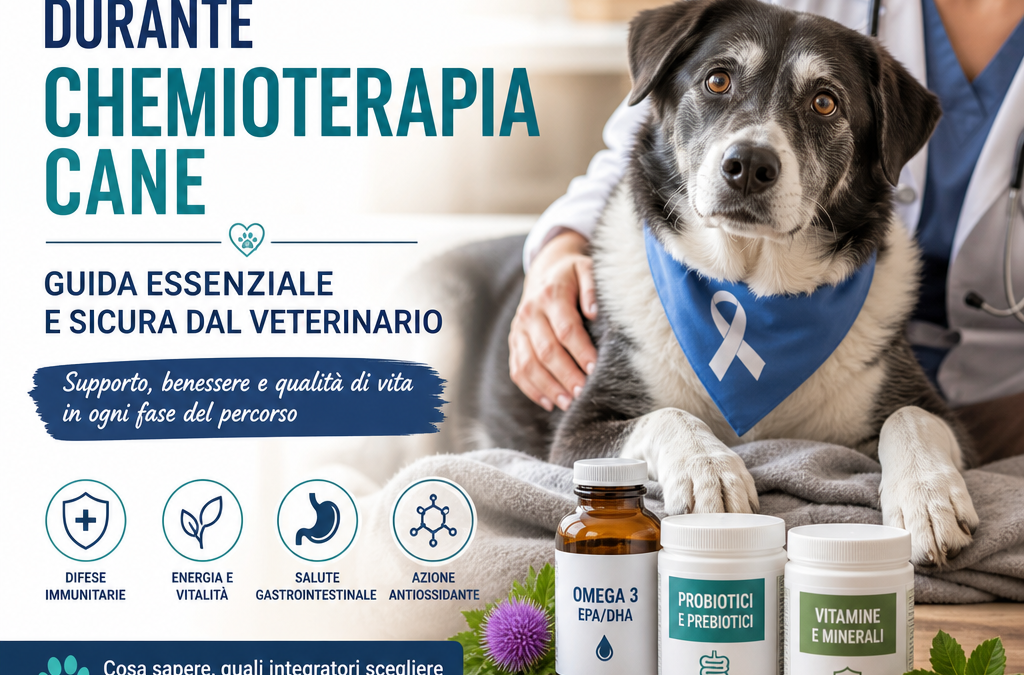
Integratori cane chemioterapia: prima di scegliere qualsiasi prodotto, è fondamentale parlarne con il veterinario oncologo. Durante il trattamento, infatti, l’obiettivo non è “rafforzare” genericamente il cane con soluzioni improvvisate, ma preservare il benessere, mantenere un’alimentazione adeguata e intervenire subito se compaiono effetti collaterali.
Perché valutare gli integratori durante la chemioterapia del cane
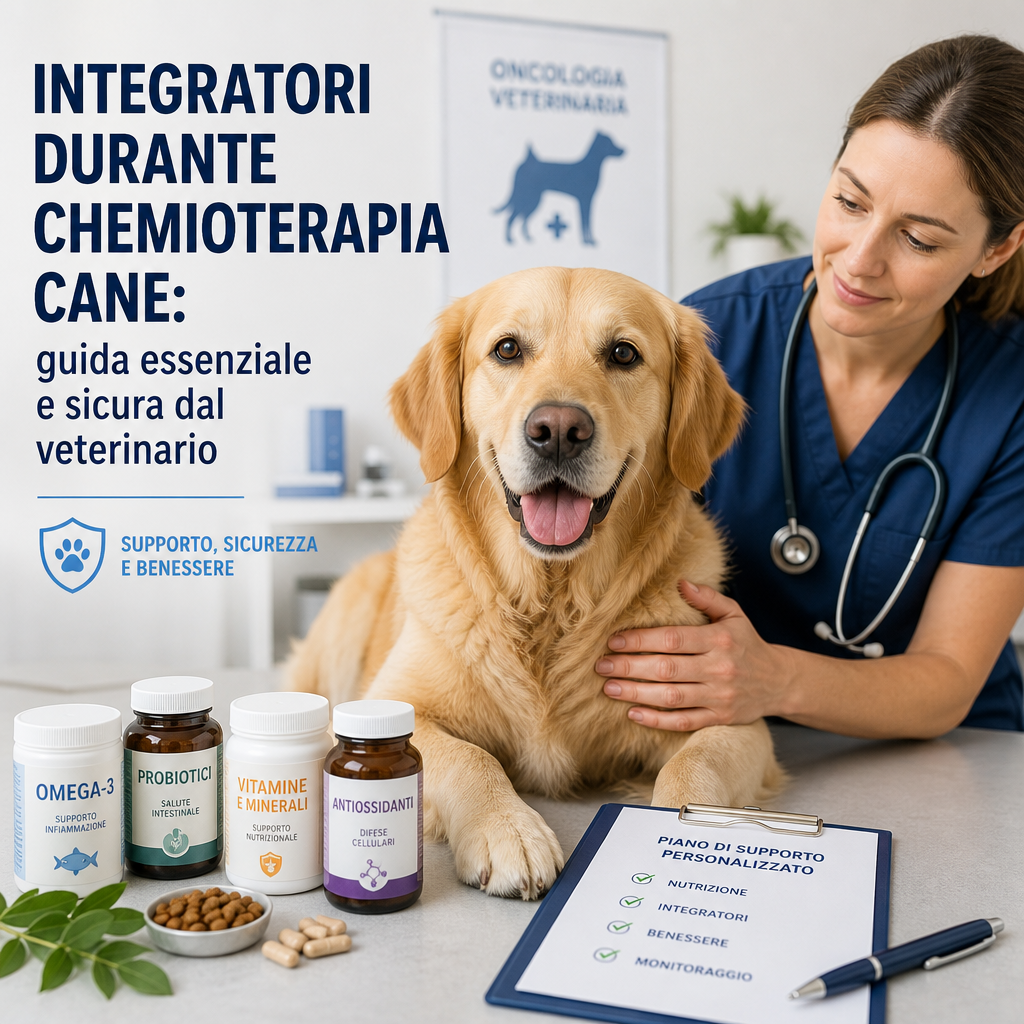
La chemioterapia può provocare nausea, vomito, diarrea, riduzione dell’appetito e stanchezza. Non tutti i cani manifestano questi disturbi e, nella maggior parte dei casi, i protocolli veterinari sono pensati per mantenere una buona qualità di vita. Tuttavia, alcuni pazienti possono avere difficoltà a introdurre sufficienti calorie o perdere peso durante il percorso terapeutico. In questi casi, gli integratori cane chemioterapia possono essere presi in considerazione solo se c’è un bisogno concreto e ben documentato.
Gli integratori cane chemioterapia possono essere presi in considerazione quando esiste una necessità specifica, come:
- perdita di peso o massa muscolare;
- ridotto appetito persistente;
- carenze nutrizionali documentate;
- alterazioni della funzionalità intestinale;
- difficoltà a mantenere una dieta completa ed equilibrata;
- condizioni concomitanti che richiedono un supporto mirato.
La scelta deve basarsi sul tipo di tumore, sui farmaci somministrati, sugli esami del sangue, sulla funzione di fegato e reni e sulle condizioni generali dell’animale. Per un inquadramento corretto, il veterinario può anche confrontare la situazione con un piano nutrizionale già impostato, come quello descritto nella guida sugli integratori cane cancro: 7 consigli pratici, utili e sicuri per scegliere bene.
Integratori cane chemioterapia: perché serve prudenza
Un prodotto naturale non è automaticamente innocuo. Alcune sostanze possono interferire con il metabolismo dei farmaci, modificare la coagulazione, aumentare il rischio di effetti indesiderati o alterare l’attività del sistema immunitario. Anche vitamine e minerali, se somministrati in quantità eccessive, possono diventare dannosi.
Per questo motivo è importante comunicare al veterinario tutti i prodotti già utilizzati: multivitaminici, oli, prodotti erboristici, probiotici, integratori articolari e rimedi acquistati online. Il medico potrà stabilire se siano compatibili con il protocollo oncologico o se sia preferibile sospenderli temporaneamente.
In particolare, è sconsigliabile iniziare autonomamente alte dosi di sostanze antiossidanti. In alcuni contesti oncologici, l’interazione tra antiossidanti concentrati e trattamento farmacologico non è sufficientemente prevedibile. Il veterinario valuterà il rapporto tra possibili benefici e rischi sulla base delle evidenze disponibili e della situazione individuale.
Quando si parla di integratori cane chemioterapia, la regola più utile è semplice: meno improvvisazione e più controllo clinico. Un prodotto che sembra promettente non è necessariamente adatto al singolo cane, soprattutto se la terapia è già complessa o se gli esami mostrano alterazioni del fegato o dei reni.
Quali categorie possono essere valutate
Supporti nutrizionali e alimenti completi
Quando il cane mangia poco, il primo intervento non è necessariamente un integratore, ma la revisione della dieta. Un alimento completo, altamente digeribile e sufficientemente appetibile può aiutare a mantenere il peso e l’energia. In alcuni casi il veterinario può consigliare alimenti terapeutici o formule ad alta densità calorica.
L’alimentazione deve essere personalizzata. Un cane con problemi renali, ad esempio, può avere esigenze molto diverse da un soggetto senza malattie concomitanti. Anche la consistenza, la temperatura e la suddivisione in piccoli pasti possono influire sull’assunzione del cibo.
Probiotici e supporto intestinale
I probiotici possono essere utili in alcuni cani con alterazioni della consistenza delle feci o della flora intestinale, ma non sono indicati in modo automatico per ogni paziente. La scelta del ceppo, della dose e della durata deve essere veterinaria. In caso di diarrea intensa, sangue nelle feci, febbre o abbattimento, il probiotico non deve sostituire una visita.
Acidi grassi omega-3
Gli omega-3, presenti soprattutto nell’olio di pesce, possono essere valutati come parte del supporto nutrizionale. Tuttavia, la dose deve essere corretta e il prodotto deve essere di qualità, adeguatamente conservato e privo di contaminanti. È inoltre necessario prestare attenzione nei cani con problemi di coagulazione, disturbi gastrointestinali o terapie concomitanti.
Vitamine e minerali
Vitamine e minerali sono generalmente già presenti in quantità adeguate negli alimenti completi. La supplementazione ha senso soprattutto quando viene riscontrata una carenza, quando l’animale segue una dieta particolare o quando il veterinario individua un’esigenza clinica precisa. Un eccesso di vitamina D, vitamina A, selenio o altri nutrienti può causare problemi anche seri.
Domande utili da fare al veterinario
Prima di iniziare un prodotto, può essere utile chiedere:
- se l’integratore è davvero necessario nel caso specifico;
- se può interferire con i farmaci della chemioterapia;
- quale dose è appropriata per peso e condizioni cliniche;
- per quanto tempo va somministrato;
- quali segnali richiedono la sospensione immediata.
Queste domande aiutano a evitare scelte affrettate e rendono più semplice seguire un piano coerente con la terapia in corso.
Il vero supporto cane cancro chemio parte dalle basi
Il supporto cane cancro chemio non consiste soltanto nella scelta di un prodotto. Comprende il controllo del dolore, la gestione della nausea, il monitoraggio del peso, l’idratazione, il riposo e l’osservazione quotidiana del comportamento.
È utile pesare il cane con regolarità e annotare:
- quantità di cibo e acqua assunte;
- episodi di vomito o diarrea;
- livello di energia;
- eventuale dolore o difficoltà respiratoria;
- colore delle gengive;
- minzione e defecazione;
- reazioni successive alla somministrazione dei farmaci.
Queste informazioni aiutano il veterinario a distinguere un effetto collaterale atteso da un segnale che richiede un intervento. Non bisogna attendere il controllo programmato se il cane non mangia per un periodo prolungato, vomita ripetutamente, presenta diarrea importante, appare molto depresso o ha difficoltà respiratorie.
Nel quotidiano, gli integratori cane chemioterapia hanno senso solo se restano parte di una strategia più ampia. Il punto centrale è sempre proteggere l’energia del cane, ridurre il disagio e mantenere un apporto nutrizionale davvero adeguato.
Come somministrare correttamente un integratore
Un integratore non dovrebbe essere nascosto nel cibo senza verificare prima che il cane riesca a consumare l’intera porzione. Se l’animale lascia parte della ciotola, la dose assunta diventa incerta. Inoltre, alcuni prodotti possono avere un odore o un sapore poco gradito e peggiorare il rifiuto del cibo.
È preferibile seguire con precisione le indicazioni sulla quantità e sull’orario. Non bisogna raddoppiare la dose se una somministrazione viene dimenticata, salvo diversa indicazione del veterinario. Conservazione, scadenza e modalità d’uso sono altrettanto importanti, soprattutto per oli e prodotti contenenti microrganismi vivi.
Quando il cane è già debilitato, anche piccoli dettagli pratici possono fare la differenza: offrire il prodotto con il pasto più gradito, dividere la dose in più momenti della giornata e controllare che non compaiano rifiuto del cibo o disturbi digestivi nelle ore successive.
Se il veterinario conferma che il prodotto è adatto, gli integratori cane chemioterapia vanno inseriti con costanza e senza cambiare spesso formula. Cambiare troppo spesso rende difficile capire se il supporto stia davvero aiutando oppure no.
Quando gli integratori cane chemioterapia non sono la priorità
In alcune fasi del percorso oncologico, la priorità non è aggiungere nuovi prodotti, ma stabilizzare il cane. Se l’animale ha nausea marcata, non riesce a tenere giù il cibo, mostra disidratazione o ha valori ematici alterati, il veterinario può decidere di sospendere temporaneamente ogni integrazione non essenziale.
Questo approccio è prudente e spesso più efficace. Prima si controllano i sintomi, poi si rivaluta l’eventuale utilità degli integratori cane chemioterapia. In molti casi, quando il quadro clinico torna più stabile, il supporto può essere ripreso con un piano più chiaro e più semplice da monitorare.
Segnali da riferire subito al veterinario
Durante la terapia è importante comunicare senza ritardi qualsiasi cambiamento rilevante. Alcuni segnali meritano un contatto immediato con il professionista:
- vomito ripetuto o persistente;
- diarrea grave o con sangue;
- rifiuto completo del cibo per più pasti;
- letargia marcata o peggioramento improvviso;
- tremori, debolezza o difficoltà a muoversi;
- gengive molto pallide o giallastre;
- segni di dolore evidente;
- difficoltà respiratoria.
Se uno di questi disturbi compare dopo l’introduzione di un prodotto nuovo, è utile segnalarlo insieme al nome commerciale, agli ingredienti e al momento della somministrazione. Questa informazione aiuta a capire se il problema sia legato alla terapia, alla dieta o a un possibile effetto dell’integratore.
Attenzione ai prodotti acquistati online
La qualità degli integratori può variare notevolmente. Un prodotto dovrebbe riportare chiaramente ingredienti, quantità dei principi attivi, lotto, scadenza, indicazioni d’uso e produttore. Le promesse di “cura del tumore”, “detossificazione” o sostituzione della chemioterapia sono segnali di scarsa affidabilità.
Gli integratori non curano il cancro e non devono sostituire chirurgia, chemioterapia, radioterapia o farmaci prescritti. Possono eventualmente inserirsi in un piano di supporto, sempre dopo una valutazione clinica.
Per verificare informazioni affidabili sulla sicurezza delle sostanze e sui possibili effetti collaterali, può essere utile consultare una fonte istituzionale come il sistema di farmacovigilanza veterinaria dell’EMA.
Un’ulteriore precauzione riguarda i prodotti “miracolosi” promossi come soluzioni rapide. Se una proposta sembra troppo aggressiva o troppo semplice, è bene fermarsi e chiedere un parere professionale prima di comprare.
Checklist rapida prima di iniziare gli integratori cane chemioterapia
Prima di introdurre qualsiasi nuovo supporto, può essere utile fare un controllo pratico:
- il cane ha davvero un bisogno nutrizionale o clinico documentato?
- il prodotto è compatibile con la terapia in corso?
- la dose è stata calcolata sul peso attuale?
- l’integratore è di provenienza chiara e con etichetta completa?
- è stato concordato quando sospenderlo o rivalutarlo?
Questa breve verifica riduce gli errori più comuni e rende più semplice mantenere un piano coerente, soprattutto quando il trattamento è lungo e richiede attenzione continua.
Un approccio personalizzato e monitorato
Ogni cane reagisce alla chemioterapia in modo diverso. Età, razza, tipo e stadio del tumore, protocollo farmacologico, peso e malattie concomitanti influenzano la scelta del supporto. Per questo gli integratori durante chemioterapia cane devono essere considerati strumenti opzionali e personalizzati, non una parte obbligatoria del trattamento.
La strategia più sicura è collaborare con il veterinario oncologo, riferire rapidamente ogni cambiamento e non modificare dieta o terapia senza indicazioni. Un’alimentazione completa, un monitoraggio costante e la gestione tempestiva degli effetti collaterali rappresentano spesso il sostegno più importante per accompagnare il cane durante la chemioterapia, proteggendone il comfort e la qualità di vita.
Se stai valutando un supporto alimentare più ampio, può esserti utile anche questa guida su miglior integratore cane tumore: 7 scelte davvero utili da valutare con attenzione, sempre da usare come punto di partenza e non come sostituto del parere clinico.
In sintesi, integratori cane chemioterapia significa soprattutto prudenza, personalizzazione e controllo veterinario. Se il prodotto è davvero indicato, può diventare un aiuto; se non lo è, il rischio è aggiungere complessità senza beneficio.
