by TCMVET | Aug 27, 2026 | Research and News
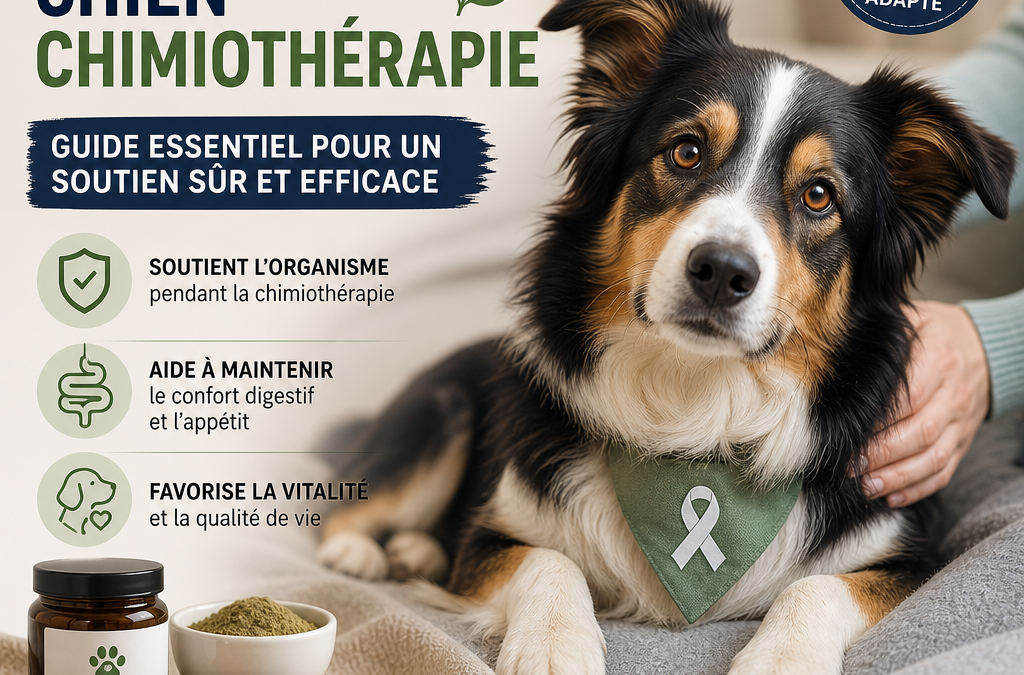
Complément chien chimiothérapie : accompagner un chien atteint de cancer demande une approche prudente, personnalisée et toujours coordonnée avec le vétérinaire. Certains compléments peuvent soutenir l’appétit, la digestion, l’état général ou la récupération, mais ils ne remplacent jamais le traitement anticancéreux et ne doivent pas être administrés sans validation professionnelle. La priorité reste de préserver la qualité de vie tout en évitant les interactions susceptibles de réduire l’efficacité de la chimiothérapie ou d’augmenter ses effets indésirables.
Pourquoi envisager un complément pour chien pendant la chimiothérapie ?
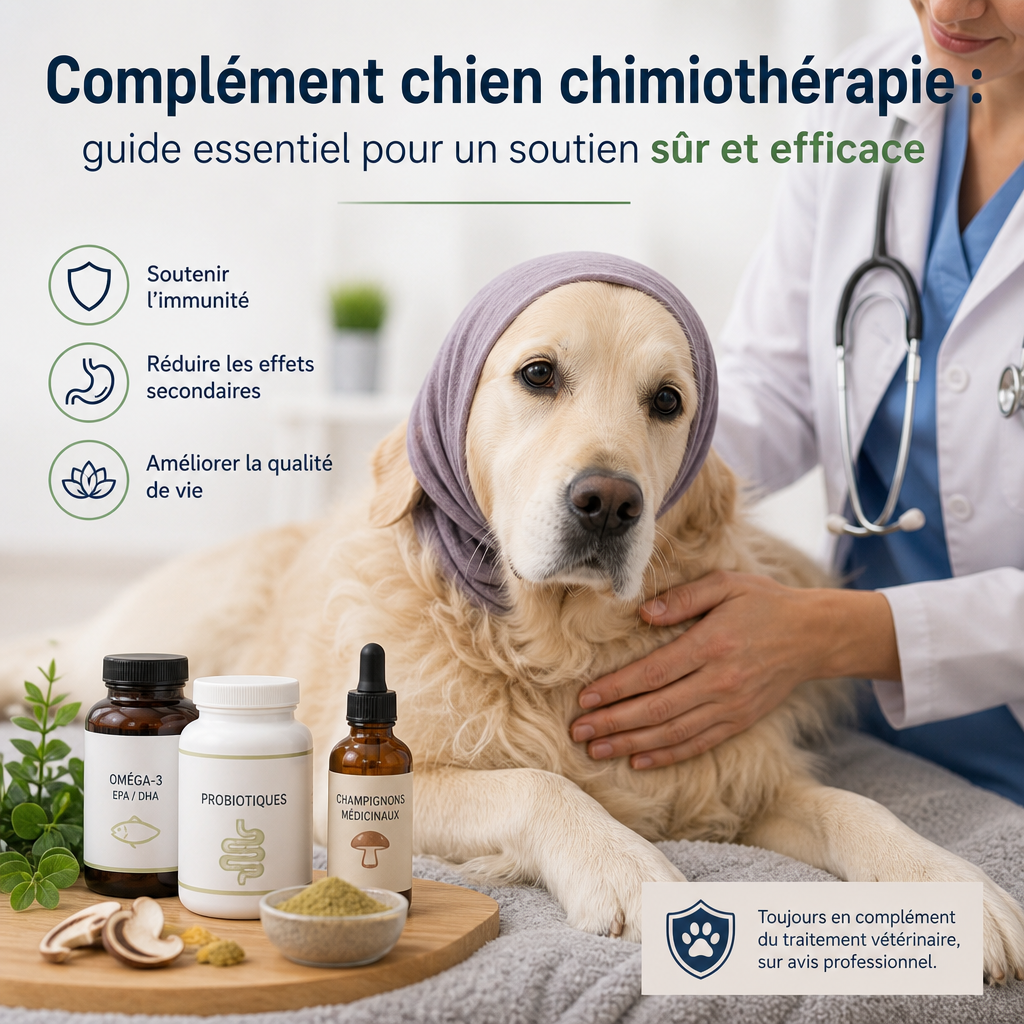
La chimiothérapie vétérinaire est généralement conçue pour limiter les effets secondaires tout en contrôlant la maladie. Malgré cela, certains chiens peuvent présenter une fatigue passagère, une baisse d’appétit, des nausées, des selles molles ou une sensibilité digestive. La maladie elle-même peut également modifier les besoins nutritionnels et affaiblir l’organisme.
Un complément peut alors être envisagé pour répondre à un objectif précis : maintenir l’apport énergétique, soutenir la masse musculaire, favoriser une digestion normale ou aider l’animal à retrouver un meilleur confort. Il ne s’agit pas de stimuler l’immunité de manière indiscriminée ni de « détoxifier » l’organisme, mais d’accompagner les fonctions dont le chien a réellement besoin.
Chaque situation est différente. Le type de cancer, le protocole utilisé, les autres médicaments, l’âge, le poids, la fonction rénale et hépatique ainsi que l’état nutritionnel influencent fortement le choix d’un produit.
Dans cette démarche, un complément chien chimiothérapie doit toujours être pensé comme un soutien ciblé, et non comme une solution miracle. Lorsqu’il est bien choisi, il peut contribuer à une prise en charge plus douce et plus rassurante pour le chien comme pour son propriétaire.
Compléments pendant chimiothérapie chien : les principales catégories
Soutien nutritionnel et énergétique
Le maintien du poids est un élément important chez le chien traité pour un cancer. Une alimentation complète, appétente et suffisamment calorique constitue la base. Si l’animal mange peu, le vétérinaire peut recommander une nourriture plus concentrée en énergie ou un aliment de récupération adapté.
Les compléments nutritionnels peuvent contenir des protéines, des acides gras, des vitamines ou des minéraux. Ils ne doivent toutefois pas déséquilibrer la ration ni remplacer durablement un aliment complet. Chez un chien qui refuse de s’alimenter, il faut rechercher rapidement la cause : nausées, douleur, stress, constipation, inflammation buccale ou effet du traitement.
Un complément chien chimiothérapie peut être utile quand l’objectif est simple et mesurable, par exemple limiter la fonte musculaire ou aider le chien à conserver un meilleur niveau d’énergie. Plus le besoin est précis, plus le choix du produit sera pertinent.
Acides gras oméga-3
Les oméga-3, notamment l’EPA et le DHA issus d’huiles de poisson purifiées, sont parfois utilisés dans l’accompagnement nutritionnel des chiens atteints de cancer. Ils peuvent contribuer au maintien de l’état inflammatoire normal et soutenir la peau, le pelage et la condition générale.
La qualité du produit est essentielle : il doit être correctement dosé, contrôlé contre les contaminants et adapté au poids du chien. Une prudence particulière est nécessaire en cas de troubles de la coagulation, de pancréatite ou de prise de médicaments influençant les plaquettes. Le dosage doit être défini avec le vétérinaire plutôt que choisi au hasard selon la quantité totale d’huile.
Bien utilisé, ce type de complément chien chimiothérapie s’intègre souvent dans une stratégie nutritionnelle plus large, surtout lorsque l’objectif est de soutenir l’état général sans surcharger le protocole.
Soutien digestif et probiotiques
Des probiotiques ou des compléments riches en fibres peuvent parfois aider à maintenir un équilibre digestif, notamment en cas de selles irrégulières. Cependant, une diarrhée ou des vomissements après une séance de chimiothérapie ne doivent pas être automatiquement traités par un complément. Ils peuvent signaler une complication nécessitant une prise en charge médicale.
Le vétérinaire pourra recommander une souche probiotique appropriée, une alimentation temporairement plus digestible ou un traitement contre les nausées. Les produits destinés à l’être humain ne sont pas toujours adaptés aux chiens et peuvent contenir des édulcorants ou des excipients dangereux.
Dans les périodes où l’intestin est plus sensible, un complément chien chimiothérapie destiné au confort digestif peut parfois améliorer la tolérance alimentaire et rendre les repas plus réguliers.
Ressources complémentaires à lire
Pour approfondir le sujet et comparer les options les plus adaptées, consultez aussi ce guide sur le complément alimentaire chien cancer, qui détaille des conseils pratiques pour soutenir un chien fragilisé par la maladie.
Soutien chien cancer chimio : les précautions indispensables
Le mot « naturel » ne signifie pas « sans risque ». Certaines plantes, huiles essentielles, algues, champignons médicinaux ou préparations concentrées peuvent modifier l’action des médicaments, affecter le foie ou les reins, influencer la coagulation ou stimuler certaines voies biologiques de façon imprévisible.
La prudence est particulièrement importante avec les compléments présentés comme immunostimulants, antioxydants puissants ou capables de renforcer l’action de la chimiothérapie. Leur efficacité n’est pas toujours démontrée chez le chien, et des données obtenues chez l’être humain ou en laboratoire ne suffisent pas à garantir leur innocuité pendant un protocole vétérinaire.
Avant toute administration, fournissez au vétérinaire la liste complète des produits utilisés : nom commercial, composition, dosage, fréquence et date de début. Cette transparence permet d’évaluer les interactions et d’éviter les doublons, notamment lorsque plusieurs compléments contiennent déjà les mêmes vitamines ou minéraux.
Pour mieux comprendre les précautions nutritionnelles et la qualité des ingrédients, vous pouvez aussi consulter une ressource vétérinaire reconnue comme le Merck Veterinary Manual, qui propose des repères utiles sur la santé canine et les approches thérapeutiques.
En pratique, un complément chien chimiothérapie ne doit jamais être introduit sur la seule base d’un témoignage ou d’une promesse commerciale. Le contexte médical du chien reste le seul point de départ fiable.
Comment choisir un complément adapté ?
Un bon complément doit répondre à un besoin identifié et présenter une composition clairement indiquée. Privilégiez les fabricants capables de fournir des informations précises sur la qualité des matières premières, la concentration en actifs et les contrôles réalisés. Méfiez-vous des promesses absolues comme « guérison du cancer », « remplacement de la chimiothérapie » ou « absence totale d’effets secondaires ».
Le dosage doit être calculé en fonction du poids, de l’état de santé et du protocole du chien. Commencer plusieurs produits simultanément est déconseillé : en cas de réaction digestive ou d’allergie, il devient difficile d’identifier le responsable. Introduire un seul changement à la fois, avec l’accord du vétérinaire, facilite le suivi.
Il est également utile de tenir un carnet indiquant l’appétit, la consommation d’eau, le poids, les selles, les vomissements, le niveau d’activité et les dates de chimiothérapie. Ces observations aident l’équipe soignante à ajuster rapidement le traitement de soutien.
Dans certains cas, un meilleur complément alimentaire chien cancer peut être envisagé pour cibler plus précisément l’appétit, l’énergie ou le confort digestif, à condition de rester dans une stratégie validée par le vétérinaire.
Quand un complément chien chimiothérapie peut-il aider ?
Dans les situations où l’appétit baisse légèrement, où la digestion devient plus sensible ou où l’animal semble fatigué, un complément chien chimiothérapie peut parfois apporter un soutien utile. L’objectif reste d’accompagner le chien sans alourdir son protocole, avec des produits simples, documentés et bien tolérés.
Il peut aussi être envisagé lors des phases où le chien récupère entre deux séances, lorsque l’équipe vétérinaire souhaite préserver sa vitalité et maintenir une routine alimentaire rassurante.
Un chien sous chimiothérapie doit être surveillé attentivement, sans pour autant être privé de ses activités habituelles. Contactez rapidement le vétérinaire en cas de vomissements répétés, diarrhée importante ou sanglante, refus complet de s’alimenter, grande faiblesse, fièvre, difficultés respiratoires, douleurs inhabituelles ou déshydratation.
Après certains traitements, une baisse des globules blancs peut augmenter le risque d’infection. Une température anormale, des frissons ou un abattement marqué nécessitent donc un avis médical rapide. N’attendez pas qu’un complément produise un effet lorsque les symptômes sont importants.
Si les signes digestifs, la fatigue ou l’inappétence persistent, il faut revoir le protocole de soin plutôt que multiplier les produits. Un complément chien chimiothérapie ne doit jamais retarder une consultation utile.
Une réaction rapide permet souvent d’éviter qu’un inconfort passager ne se transforme en problème plus sérieux. C’est aussi la meilleure manière d’assurer la sécurité du chien pendant toute la durée du traitement.
Une approche globale avant tout
Le meilleur soutien repose sur plusieurs éléments complémentaires : une alimentation adaptée, une bonne gestion des nausées et de la douleur, un environnement calme, une hydratation suffisante et des contrôles vétérinaires réguliers. Les promenades douces, le repos et le maintien des habitudes rassurantes peuvent aussi contribuer au bien-être.
Un complément chien chimiothérapie peut trouver sa place dans cette stratégie lorsqu’il est choisi pour une indication précise et intégré au protocole médical. Utilisé avec discernement, il peut soutenir certains aspects de la santé et du confort. Utilisé sans supervision, il risque au contraire de provoquer des effets indésirables ou de compliquer le traitement. La décision la plus sûre consiste donc à privilégier la qualité de vie, l’observation quotidienne et un dialogue constant avec le vétérinaire oncologue.
En pratique, la question n’est pas seulement de savoir si l’on peut donner un complément chien chimiothérapie, mais surtout de déterminer lequel, à quel moment et avec quel objectif. Cette réflexion évite les erreurs fréquentes et aide à construire un accompagnement vraiment utile, centré sur le confort et la sécurité du chien.
Si votre chien est déjà suivi pour un cancer, notez les produits, les doses et les dates d’administration avant chaque rendez-vous. Cette simple habitude facilite l’échange avec le vétérinaire et permet d’ajuster rapidement la prise en charge si nécessaire.
Pour aller plus loin, retenez qu’un complément chien chimiothérapie n’est pertinent que s’il s’inscrit dans un suivi vétérinaire clair, avec des objectifs mesurables et une surveillance régulière. C’est cette approche qui aide le chien à traverser la chimiothérapie dans les meilleures conditions possibles.
Lorsqu’il est choisi avec soin, un complément chien chimiothérapie peut donc devenir un appui utile, discret et rassurant, sans jamais remplacer l’avis médical ni le traitement principal.
En résumé, la meilleure démarche consiste à privilégier des produits adaptés, un suivi précis et une communication régulière avec le vétérinaire afin de protéger au mieux le chien pendant son traitement.
by TCMVET | Aug 27, 2026 | Research and News
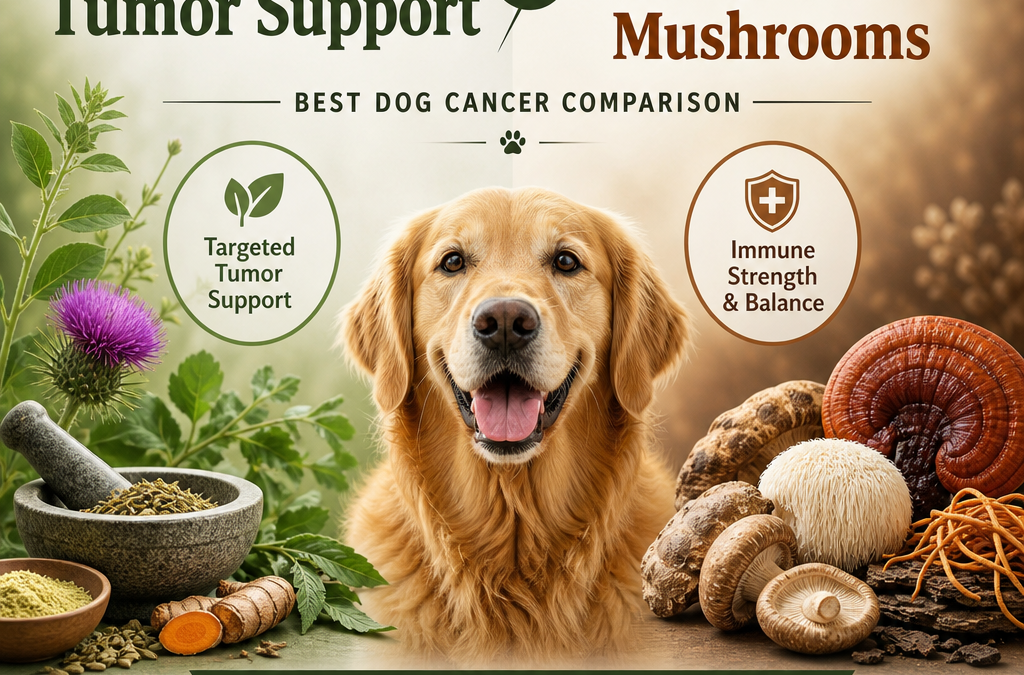
Botanical tumor support vs Immune / medicinal mushrooms is an important comparison for dog guardians exploring complementary care during a canine cancer diagnosis. Both categories may offer supportive benefits, but they are not interchangeable, and neither should replace veterinary treatment. The right choice depends on the dog’s diagnosis, current medications, overall health, and treatment goals.
Cancer care for dogs often involves surgery, chemotherapy, radiation, targeted medication, or palliative support. Supplements may be considered to help maintain appetite, digestion, energy, immune function, or quality of life. However, “natural” does not automatically mean safe. Plant extracts and mushroom products can have powerful biological effects, interact with medications, or place additional strain on the liver and kidneys. A veterinarian—ideally one experienced in veterinary oncology—should review any supplement before it is introduced.
Botanical tumor support vs Immune / medicinal mushrooms: What is the difference?
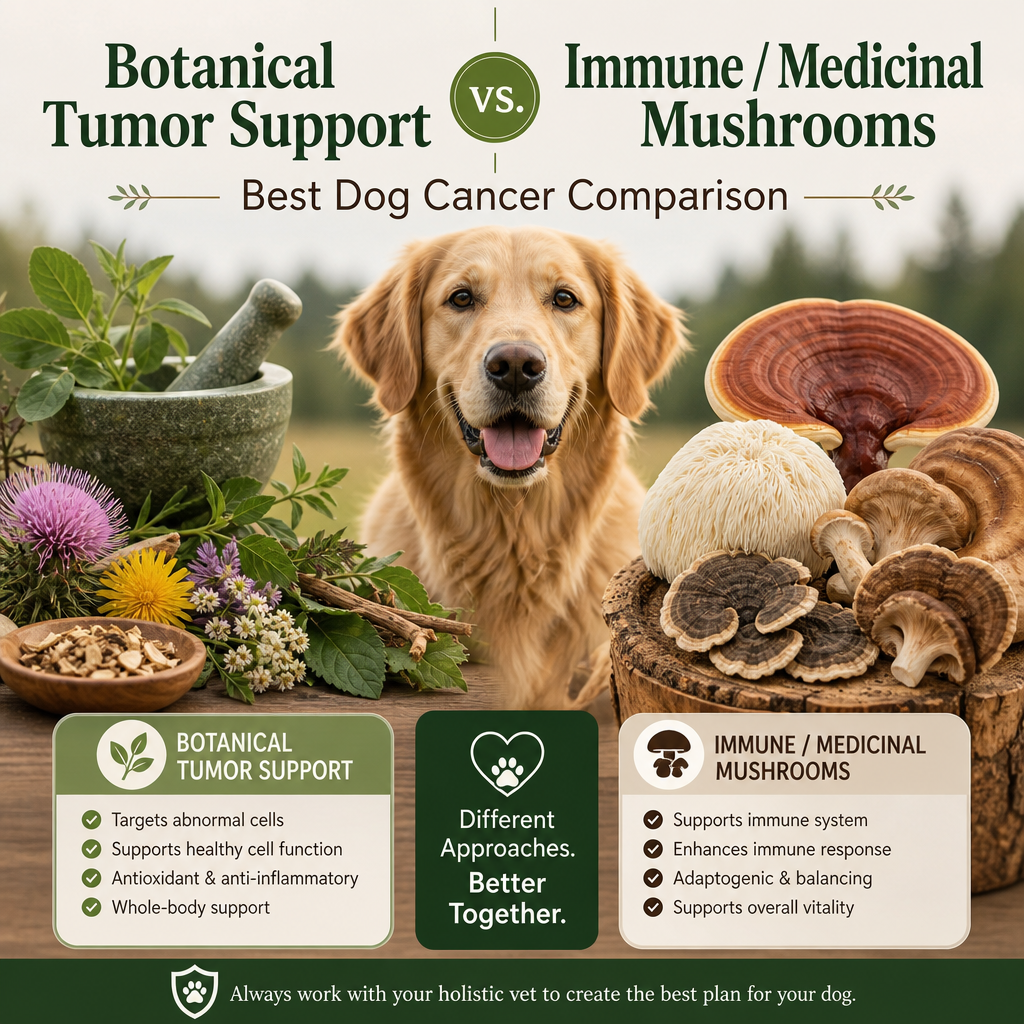
Botanical tumor support generally refers to plant-based ingredients selected for their potential effects on inflammation, oxidative stress, cellular signaling, circulation, or tumor biology. Examples may include turmeric extracts, green tea compounds, milk thistle, resveratrol, medicinal herbs, and other concentrated plant constituents. Formulas vary significantly, and their effects depend on the specific plant, extraction method, dose, and combination of ingredients.
Immune or medicinal mushrooms are fungi used in traditional wellness systems and modern complementary products. Common examples include turkey tail, reishi, maitake, shiitake, and cordyceps. These mushrooms contain compounds such as beta-glucans, polysaccharides, triterpenes, and other bioactive substances. Many mushroom supplements are marketed primarily for immune modulation rather than direct tumor support.
The distinction is not absolute. Some botanicals may influence immune activity, while mushrooms may affect inflammation and cellular pathways beyond the immune system. Still, the categories are useful when comparing products and discussing goals with a veterinary professional. For dog owners in Europe, the same logic applies whether the product is a mushroom blend or a plant formula.
If you want a broader overview of supplement selection, this guide to Dog Cancer Supplements: 7 Essential, Affordable and Positive Buying Tips for UK Pet Owners is a helpful starting point.
In practical terms, botanical tumor support vs Immune / medicinal mushrooms comes down to how a product is designed and what the manufacturer says it should do. A botanical formula may be centered on liver support, antioxidant activity, inflammation control, or circulation. A mushroom product is more often positioned around immune balance, though some mushrooms may also be used for energy or resilience. Understanding the intended role of the supplement makes it easier to talk with your veterinary team.
Potential benefits of botanical formulas
Botanical products may be designed to support several aspects of canine wellness during cancer care. Certain plant compounds have antioxidant or anti-inflammatory properties, while others are studied for effects on cell signaling or blood vessel formation. Some herbs may also support digestion, liver function, or general comfort.
For example, milk thistle is commonly included in formulas intended to support the liver, particularly when a dog is receiving medications that require hepatic metabolism. Turmeric-derived curcumin is often used for inflammatory support, although absorption can be limited and high doses may cause digestive upset or affect blood clotting. Green tea extracts contain compounds studied for cellular and antioxidant activity, but concentrated products require caution because of possible liver concerns and caffeine-related risks.
Botanical formulas can therefore be broad in purpose. One product may focus on inflammation, another on liver support, and another on a combination of cellular and immune pathways. This flexibility can be useful, but it also makes label review essential. A long ingredient list is not necessarily a sign of greater effectiveness or safety. In the context of botanical tumor support vs Immune / medicinal mushrooms, the plant-based side often offers more targeted choices for comfort or detox-style support.
Some dog owners are drawn to botanical products because they can feel easier to integrate with day-to-day feeding routines. A liquid extract, capsule, or powder may be mixed into food and used alongside standard care when the ingredient profile is clear. Still, convenience should never outweigh safety. If a product is poorly labeled, uses vague proprietary blends, or hides the actual amount of each ingredient, it becomes much harder to judge whether it belongs in the dog’s plan.
Botanical formulas can also be attractive when the primary goal is not direct immune modulation but broader support for the body during treatment. For instance, a dog that is eating less, has mild digestive upset, or needs additional antioxidant support may benefit more from a carefully selected herbal formula than from a mushroom-only option. That said, botanical support is not automatically mild. Concentrated extracts can be potent, and the same properties that make them interesting to researchers can also increase the risk of interactions.
Another reason veterinarians may consider plant-based products is that some ingredients have a history of use in supportive care plans for liver and gastrointestinal function. In a dog with cancer, those systems matter because medications, stress, reduced appetite, and changing routines can all affect how well the body tolerates treatment. A botanical formula may help fill a narrow support gap if it is chosen thoughtfully and monitored closely.
Potential benefits of medicinal mushroom supplements
Medicinal mushrooms are often selected for their beta-glucan content. These compounds may interact with immune receptors and help regulate immune responses. The goal is generally not to “boost” the immune system indiscriminately, but to support balanced immune activity.
Turkey tail is among the most discussed mushrooms in canine cancer research. Some veterinary studies have examined mushroom-derived compounds as complementary support, particularly in dogs with certain cancers. Results from research can be encouraging, but findings from a specific extract, dose, or clinical setting cannot automatically be applied to every mushroom powder or blended supplement.
Reishi may be used for immune and inflammatory support, while maitake and shiitake are also found in immune-focused products. Cordyceps is sometimes marketed for stamina and energy. The quality and concentration of these products differ widely, and whole mushroom powders may not contain the same active compounds as standardized extracts.
Mushrooms may be attractive in a dog cancer supplement comparison because they are often perceived as relatively focused products. Nevertheless, they can still cause gastrointestinal upset, allergic reactions, changes in blood sugar, or interactions with immune-modulating and blood-thinning medications. For readers who are considering mushroom-based options, the article on Alternatives to Medicinal Mushrooms / Veterinary Mycotherapy: 7 Best Dog Tumor Supplements in Switzerland offers another useful reference point.
One advantage of mushrooms is that they are often discussed specifically in the context of immune balance, which can make them easier to compare against a dog’s current needs. If the veterinarian wants a more focused supplement strategy, a standardized mushroom extract may be preferred over a multi-ingredient botanical blend. On the other hand, if the dog has liver concerns, poor appetite, or needs a broader comfort approach, a mushroom alone may not fully address the goal. That is why botanical tumor support vs Immune / medicinal mushrooms should be viewed as two different tools rather than direct substitutes.
It is also worth noting that not every product marketed as a mushroom supplement contains the same level of active compounds. Extraction method matters, and some products rely heavily on powders that may not deliver the concentration many owners expect. A label that names the species but not the extract ratio, beta-glucan content, or testing status may leave too many questions unanswered. In a sensitive patient, those details matter.
Dog cancer supplement comparison: Which option is better?
There is no universal winner between botanical support and medicinal mushrooms. The better option depends on the dog’s medical situation and the purpose of supplementation.
A mushroom-based product may be considered when the primary goal is immune modulation and the formulation has credible sourcing, appropriate testing, and clear information about beta-glucan content. A botanical formula may be more appropriate when the goal involves inflammation, digestive support, antioxidant protection, or liver support. In some cases, a veterinarian may recommend avoiding both categories temporarily, especially around surgery or during periods of intensive chemotherapy.
The diagnosis also matters. A supplement that may be reasonable for one type of tumor could be unsuitable for another. For example, ingredients that affect hormones, blood clotting, or immune activity may require special caution in dogs with hormone-sensitive disease, bleeding risks, autoimmune disorders, or low platelet counts.
For owners who are comparing options across countries, the same decision-making process can help narrow the field. The key is not simply botanical tumor support vs Immune / medicinal mushrooms, but whether a product fits the dog’s exact situation and the veterinary plan.
In practice, the most useful question is often whether the product supports the dog’s current goals: comfort, appetite, energy, immune balance, or tolerance of treatment. That is why many veterinarians prefer a step-by-step review rather than stacking several products at once. If a dog is already on a cancer protocol, even a promising supplement should be assessed for timing, dose, and possible interactions before use.
Owners sometimes assume that one category is always safer because it is “plant-based” or “mushroom-based.” That assumption can be misleading. A concentrated botanical extract may be more potent than a basic mushroom powder, while a standardized mushroom extract may be more research-aligned than a loosely labeled herbal blend. When comparing botanical tumor support vs Immune / medicinal mushrooms, quality and context matter as much as ingredient type.
Another practical difference is the intended use. Botanical formulas are often chosen for broader support, while mushroom products are often chosen for immune-focused support. That does not make either option better by default, but it can help dog owners match the supplement to the care goal. The safest path is the one that avoids unnecessary complexity and fits the treatment schedule.
In a real-world consultation, the veterinary team may also ask about the dog’s appetite, stool quality, current pain control, and energy level before recommending one category over the other. If a dog is already struggling with nausea or loose stools, the more aggressive formula may be the wrong starting point. If the dog is stable but needs a long-term supportive option, the choice may tilt toward the product that is easier to monitor and better documented.
For some families, the choice is also influenced by what they can realistically give every day. A supplement only helps if it is tolerable, affordable, and consistent. When reviewing botanical tumor support vs Immune / medicinal mushrooms, simpler options can sometimes outperform more complicated blends because they are easier to dose accurately and easier to stop if problems arise.
When botanical support may be the more practical choice
Botanical formulas can be useful when a dog needs support beyond immune function. For example, a dog with reduced appetite, sluggish digestion, or elevated liver enzymes may benefit more from a carefully selected plant-based formula than from a mushroom-only product. Some botanical ingredients are chosen specifically for circulation, bile flow, antioxidant support, or comfort.
That said, “more practical” does not mean “more aggressive.” Many plant compounds are bioactive and should be used thoughtfully. Dogs that are sensitive to medications, have a history of digestive upset, or are taking blood thinners may need extra caution. A veterinarian can help determine whether a botanical approach makes sense based on the dog’s current lab work and medical history.
Botanical products may also be helpful when a dog’s cancer care plan includes medications that strain the liver or when the goal is to support general resilience. In those cases, owners often want a formula that is easy to understand and can be integrated without adding unnecessary complexity. If the product includes multiple herbs, it is especially important to know why each ingredient is present. More ingredients do not necessarily make the formula better; they can simply make reactions harder to track.
When medicinal mushrooms may be the more practical choice
Medicinal mushrooms are often preferred when the goal is immune modulation with a relatively focused ingredient profile. Some owners like that mushroom products frequently rely on recognizable species such as turkey tail or reishi, especially when the extract is standardized and independently tested. That structure can make the product easier to evaluate.
However, mushroom products are not interchangeable. A whole mushroom powder, an extract, and a blend with multiple fungi can behave differently. The label should specify the species, extraction method, amount per serving, and testing status whenever possible. If any of that information is missing, the product may be harder to assess safely.
Many owners also like that mushroom formulas are often positioned around immune support rather than broader “cancer cure” claims. That can make expectations more realistic. Still, a realistic expectation is not the same as a harmless one. A product that supports immune balance can still be unsuitable for dogs with autoimmune disease, clotting issues, or specific drug protocols. This is why botanical tumor support vs Immune / medicinal mushrooms should always be discussed in the context of the whole medical plan.
In some cases, mushroom products are chosen because the dog is already receiving other supportive therapies and the care team wants a narrower, easier-to-monitor supplement. That may be especially helpful for older dogs or dogs on multiple medications. A simple mushroom protocol can be easier to pause if appetite changes, stool quality shifts, or lab work changes unexpectedly.
Safety considerations before choosing a supplement
The most important factor is product quality. Look for clear ingredient names, precise amounts, lot identification, expiration dates, and independent testing for contaminants such as heavy metals, pesticides, bacteria, and undeclared pharmaceuticals. Avoid products that rely entirely on vague claims such as “cures cancer” or “works for every tumor.”
Medication interactions are another major concern. Botanicals and mushrooms may influence blood clotting, blood pressure, blood sugar, liver enzymes, or immune activity. These effects can change how chemotherapy drugs, steroids, nonsteroidal anti-inflammatory drugs, anticoagulants, anesthetics, and other medications work.
It is also wise to introduce only one new product at a time. This makes it easier to identify side effects and determine whether the supplement is helping. Watch for vomiting, diarrhea, appetite changes, lethargy, itching, unusual bruising, pale gums, increased thirst, or changes in urination. Any concerning symptom should be reported promptly.
When research is needed, a dependable reference such as the National Cancer Institute’s overview of complementary and alternative medicine can help readers understand how supportive therapies are evaluated.
It is also important to remember that quality control varies by brand and by batch. A product that looks promising on paper may still be poorly tolerated if it contains unnecessary fillers, unclear extracts, or inconsistent active compounds. For that reason, many oncology teams prefer brands that provide transparent labeling and clear third-party testing. This is especially relevant when comparing botanical tumor support vs Immune / medicinal mushrooms, since both categories can include highly concentrated ingredients.
Before starting anything new, ask whether the dog’s latest bloodwork suggests any caution. Liver values, kidney values, platelet counts, and inflammatory markers can all influence how a supplement should be used. If the dog is frail, losing weight, or experiencing diarrhea, the threshold for side effects may be lower than expected. A small dose may be appropriate at first, followed by careful monitoring.
Another useful safety step is to review the complete formula, not just the headline ingredient. Added preservatives, flavoring agents, carrier oils, sweeteners, or unnecessary herbs may create problems in sensitive dogs. A product with a short, transparent ingredient list is often easier to evaluate than a complex blend with marketing-heavy language. When possible, keep a record of the exact brand, dose, and start date so the veterinary team can track the dog’s response accurately.
How to discuss supplements with a veterinary team
Bring the complete product label, including inactive ingredients and suggested serving size, to the appointment. The veterinarian may assess the dog’s bloodwork, liver and kidney function, platelet count, cancer type, treatment schedule, and current medications before offering guidance.
Ask whether the product should be stopped before surgery, whether it is appropriate during chemotherapy or radiation, and which signs would indicate intolerance. Regular monitoring may be needed, particularly when a supplement is used for several weeks or combined with prescription treatment.
Ultimately, supplements should be viewed as supportive tools rather than standalone cancer therapies. Nutrition, pain control, hydration, treatment adherence, stress reduction, and regular veterinary monitoring often have a greater effect on daily quality of life than adding multiple untested products.
Botanical tumor support vs Immune / medicinal mushrooms is best understood as a personalized decision, not a simple competition. Carefully selected products may complement conventional care, but evidence, safety, transparency, and veterinary oversight should guide every choice. When in doubt, choose the option that best matches the dog’s diagnosis, the treatment timeline, and the veterinary team’s recommendations.
For many dog owners, the most reassuring approach is to keep the plan simple: one clear goal, one well-reviewed product if needed, and regular follow-up with the veterinarian. That approach reduces confusion, helps identify side effects early, and makes it easier to judge whether the supplement is truly useful. Whether you lean toward botanical tumor support vs Immune / medicinal mushrooms, the best results usually come from careful selection rather than aggressive stacking.
If you are still comparing product categories, a useful next step is to review how similar formulas are positioned in other markets and whether the ingredient profile matches your dog’s needs. That makes it easier to separate marketing language from practical support. With a thoughtful plan, botanical tumor support vs Immune / medicinal mushrooms can be assessed in a way that keeps your dog’s comfort and safety first.
by TCMVET | Aug 27, 2026 | Research and News
Botanical tumor support vs Medicinal mushrooms / immune is an important comparison for dog owners exploring complementary care after a cancer diagnosis. Both approaches may be used to support overall wellness, but they are not interchangeable, and neither should replace a veterinarian-directed treatment plan. The best choice depends on the dog’s cancer type, current medications, liver and kidney health, appetite, immune status, and treatment goals.
When people search for botanical tumor support vs Medicinal mushrooms / immune, they are usually trying to understand what each supplement category is meant to do, how much evidence supports it, and whether it is safe to use with conventional care. That is a smart place to start, because the most expensive product is not always the most appropriate one, and the most natural product is not always the safest one.
Understanding the difference between the two approaches
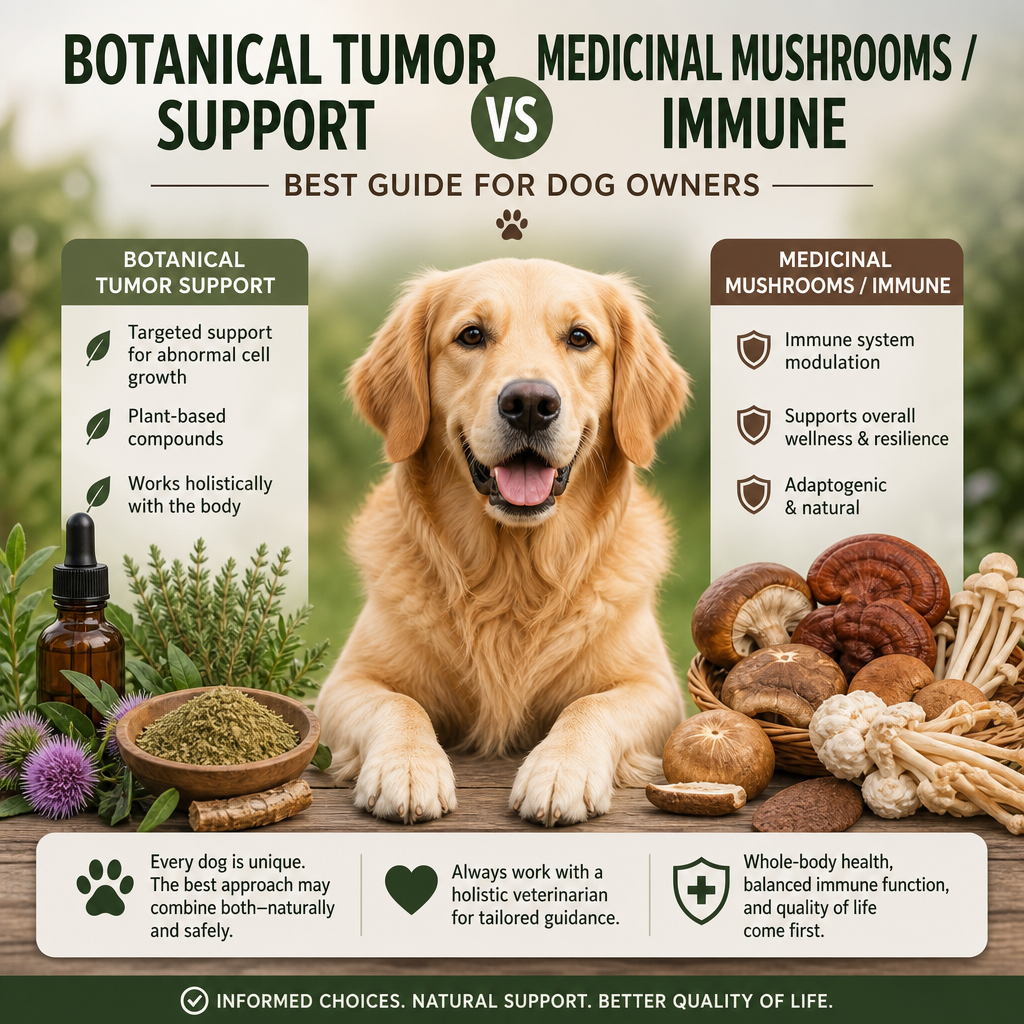
Botanical tumor support generally refers to plant-based ingredients selected for their antioxidant, anti-inflammatory, digestive, or cellular-support properties. These formulas may contain herbs, concentrated extracts, polyphenols, or other compounds traditionally used to help maintain normal immune function and overall resilience.
Medicinal mushrooms, by contrast, are fungi commonly used in wellness products for their beta-glucans and other naturally occurring compounds. Popular examples include turkey tail, reishi, maitake, shiitake, and cordyceps. Mushroom-based supplements are often positioned primarily as immune-support products, although some research has examined their potential role in cancer-supportive care.
The distinction matters because a product marketed for “tumor support” may be designed around several biological pathways, while a mushroom formula may focus more heavily on immune modulation. These labels are not standardized, however. Two products with similar claims can differ significantly in ingredient quality, concentration, testing, and safety.
For dog owners in Lithuania and elsewhere, this means the label alone is not enough. A careful botanical tumor support vs Medicinal mushrooms / immune review should start with the ingredient list, the intended use, and whether the product fits the dog’s medical situation.
In simple terms, botanical formulas are often broader in scope, while mushroom products are usually narrower and more immune-focused. That does not make one category better than the other. It only means the dog owner should match the supplement type to the need, instead of assuming all support products work the same way.
Botanical tumor support vs Medicinal mushrooms / immune: how they may work
A dog cancer supplement comparison should begin with the intended function of each formula rather than the marketing language on the label.
Botanical products may combine ingredients intended to support:
- Normal inflammatory balance
- Antioxidant defenses
- Healthy digestion and appetite
- Liver function and metabolic processes
- General cellular protection
- Comfort and quality of life
Medicinal mushroom products are commonly formulated to provide beta-glucans, which may interact with elements of the innate immune system. The goal is usually not to “boost” immunity indiscriminately, but to help maintain balanced immune signaling. This distinction is especially important for dogs receiving chemotherapy, corticosteroids, immunosuppressive drugs, or treatment for autoimmune disease.
Some mushroom extracts may also contain compounds associated with antioxidant and inflammatory pathways. However, laboratory findings do not automatically translate into proven clinical benefits for every dog or every cancer type. The strength of evidence varies by mushroom species, extract type, dosage, and study design.
In practical terms, botanical tumor support vs Medicinal mushrooms / immune comes down to the main aim of the formula. One may emphasize broader plant-based support, while the other may focus more specifically on fungal compounds and immune balance.
It is also helpful to understand that support formulas do not work in isolation. A dog’s hydration status, nutrition, medication schedule, and overall stress level can influence how well any supplement is tolerated. For that reason, the best supplement is usually the one that fits comfortably into the veterinary plan and can be used consistently without causing digestive upset or other new problems.
Another useful way to think about botanical tumor support vs Medicinal mushrooms / immune is to separate “supportive goals” from “direct treatment goals.” Supportive formulas may help a dog feel better, eat more reliably, or maintain steadier energy, while the primary cancer plan focuses on the disease itself. Keeping those roles separate makes it easier to make realistic decisions.
Some formulas are marketed as all-purpose wellness products, but a dog with cancer often needs a more specific approach. A product that seems attractive because it contains many ingredients may actually be harder to evaluate. Fewer ingredients can sometimes mean more clarity about what is helping and what is not.
Because dogs can vary so much in age, breed, size, and treatment history, the same formula can produce different results from one patient to another. That is one more reason why botanical tumor support vs Medicinal mushrooms / immune should be viewed as an individualized choice rather than a universal recommendation.
What research can and cannot tell dog owners
Turkey tail is among the most studied medicinal mushrooms in cancer-support research, including research involving dogs. Certain studies have explored its use alongside conventional treatment, particularly in dogs with specific cancers. These findings are encouraging but should not be interpreted as proof that every turkey tail supplement will produce the same result.
For readers who want a deeper overview of mushroom use in canine wellness, see The Benefits of Medicinal Mushrooms for Dogs: Boosting Immune Health Naturally.
Research on botanical ingredients is similarly mixed. A plant may demonstrate promising effects in cell cultures or laboratory animals, yet behave differently in a living dog. Absorption, metabolism, dosage, product quality, and interactions with other treatments all influence real-world outcomes.
Another challenge is that supplements are often tested as individual ingredients, while commercial products may contain multi-ingredient blends. A formula that combines several herbs and mushrooms may be difficult to evaluate because the exact contribution of each ingredient is unclear.
For these reasons, supplements should be viewed as complementary tools. The most meaningful measure of success is often practical: maintaining appetite, energy, comfort, digestion, hydration, and quality of life while following the primary veterinary treatment plan.
When comparing botanical tumor support vs Medicinal mushrooms / immune, it helps to remember that research quality varies widely. A product with promising early data is not the same as a proven therapy, and veterinary guidance remains essential.
Owners sometimes ask whether a single ingredient with a strong research history is better than a more complex formula. In many cases, a simpler product with better transparency is easier to evaluate and monitor. If a dog’s condition changes, the veterinary team can more easily determine whether the supplement, the disease, or another medication is responsible.
One reason this comparison remains difficult is that supplement studies do not always use the same extract strength, growing conditions, or manufacturing standards. For example, two turkey tail products may look similar on the label but differ in active compound content. That makes it difficult to generalize results from one product to another.
Dog owners should also be cautious about extrapolating from human data. A botanical ingredient that appears useful in people may not behave the same way in dogs. Species differences in digestion, metabolism, and immune response can change both effectiveness and safety.
If the research sounds promising but the product information is vague, that is a sign to slow down and ask more questions. In the context of botanical tumor support vs Medicinal mushrooms / immune, the most responsible choice is usually the one with the clearest evidence, not the loudest claims.
Comparing ingredient quality and product transparency
The quality of a supplement can matter as much as the category. Dog owners should look for products that clearly disclose:
- The exact species and part of each mushroom or plant used
- Whether the ingredient is a powder, liquid extract, or standardized extract
- The amount provided per serving and per active compound when available
- Batch testing for contaminants, heavy metals, microbes, and pesticides
- Manufacturing standards and expiration information
- Clear dosing instructions based on a dog’s weight
For medicinal mushrooms, a label should ideally identify the mushroom species and explain whether the product contains fruiting body, mycelium, or both. These materials can differ in their active compounds and nutritional profiles.
For botanical formulas, vague terms such as “proprietary herbal blend” make it harder to assess safety. Transparency is particularly important when a dog is taking chemotherapy, pain medication, steroids, anti-inflammatory drugs, or anticoagulants.
A careful Botanical tumor support vs Medicinal mushrooms / immune decision should also account for testing and manufacturing standards. If a company cannot explain how its product is made or tested, that is a reason to be cautious.
Quality control is especially important because supplements sold for dogs can vary widely from one brand to another. Some products rely on raw plant powders that may contain only small amounts of the compounds people expect, while others use concentrated extracts with more predictable potency. In both categories, the best label is the one that tells you exactly what you are giving your dog.
If you are comparing products, ask whether the company provides a certificate of analysis, whether each batch is checked for safety, and whether the formulation is intended for dogs rather than adapted from a human product. Those details may seem small, but they can make a large difference in real-world use.
Owners should also think about storage and freshness. Some extracts lose potency when exposed to heat, moisture, or light. A product that is poorly packaged may not deliver the same consistency as a well-protected one, even if the ingredients look similar on paper.
It is also worth checking whether the product lists unnecessary fillers, artificial flavors, or sweeteners. Dogs with cancer often have sensitive digestion, and a clean formula is easier to monitor. In a Botanical tumor support vs Medicinal mushrooms / immune comparison, the simplest product with the most transparent label often has the advantage.
Safety concerns and possible interactions
Natural does not mean risk-free. Some herbs and mushroom extracts may affect blood clotting, blood pressure, blood sugar, liver enzymes, or immune activity. Others may cause digestive upset, loose stool, nausea, or reduced appetite.
A supplement may also interact with cancer medications by changing how a drug is absorbed or metabolized. Antioxidant-heavy products can be especially complicated because some conventional treatments rely partly on oxidative damage to abnormal cells. The clinical importance of this interaction depends on the specific therapy, but it is one reason a veterinary oncologist should review the full ingredient list.
Dogs with liver disease, kidney disease, bleeding disorders, diabetes, autoimmune conditions, or a history of pancreatitis may require additional caution. Puppies, senior dogs, and dogs with poor appetite may also respond differently to concentrated extracts.
Introduce only one new supplement at a time, unless a veterinarian gives different instructions. Starting with a conservative amount can make it easier to identify intolerance. Stop the product and contact the veterinary team if the dog develops persistent vomiting, diarrhea, unusual lethargy, yellowing of the gums or eyes, bruising, appetite loss, or other concerning symptoms.
Veterinary safety advice can also be checked through a trusted public source such as the U.S. FDA Center for Veterinary Medicine, which explains regulated animal-health information and safety considerations.
In any Botanical tumor support vs Medicinal mushrooms / immune plan, safety should come first. A conservative approach is usually better than adding multiple products at once.
This is also why timing matters. If the dog is already in a fragile phase of treatment, adding a new supplement may make it harder to identify the cause of changes in appetite, stool quality, or energy. A slow, monitored approach gives the owner and veterinarian more useful information.
Safety also includes thinking about surgery and procedures. If a dog is scheduled for a biopsy, operation, or dental treatment, the veterinary team may want certain supplements paused in advance. That is another reason to keep an updated list of everything the dog is taking, including botanical blends and mushroom formulas.
When in doubt, ask whether the product has any known effect on clotting, glucose, sedation, or liver processing. Those questions are especially useful for a Botanical tumor support vs Medicinal mushrooms / immune decision because the two categories can have different risk profiles depending on the ingredients involved.
Choosing between botanical and mushroom support
The right option is not necessarily the one with the most ingredients or the strongest claim. A better decision begins with the dog’s individual needs.
A mushroom-focused product may be considered when the primary goal is immune-supportive nutrition and the formula has strong quality controls. A botanical formula may be more appropriate when the goal includes digestive support, antioxidant balance, or broader wellness support. In some cases, a veterinarian may recommend neither, particularly if the dog is medically unstable or taking medications with a high interaction risk.
It is also possible that a dog does not tolerate a product that appears suitable on paper. Digestive comfort, palatability, and consistent use are practical factors. A complicated formula that causes nausea is unlikely to provide meaningful support.
For owners comparing botanical tumor support vs Medicinal mushrooms / immune, the best choice is the one the dog can tolerate consistently and safely. That often matters more than headline claims.
A useful way to think about the decision is to ask three questions: What is the current goal, what is the dog already taking, and what can be monitored over time? If a supplement does not clearly fit those three points, it may not be the right option yet.
Some dog owners also compare products based on country-specific availability, pricing, and formulation style. That can be helpful, but it should never override the basics: clear ingredients, safe dosing, and veterinary oversight. A less flashy product with better manufacturing standards may be the stronger long-term choice.
For broader comparison reading, the internal guide Alternatives to Medicinal Mushrooms / Veterinary Mycotherapy: 7 Best Dog Tumor Supplements in Switzerland may help you compare common options more clearly.
One practical strategy is to choose a single goal for the first product trial. For example, if the priority is appetite support, a formula with a cleaner digestive profile may be better than one that tries to do everything at once. If the goal is immune support, a mushroom-based product with clear testing may be the better fit.
Owners should also consider whether the supplement can be measured objectively. If the dog is eating a little better, having fewer stomach issues, or maintaining weight more steadily, those are concrete signs that the plan may be helping. That makes botanical tumor support vs Medicinal mushrooms / immune less about theory and more about real-life results.
If the veterinarian is already using diet changes, anti-nausea medication, or pain control, the supplement should complement those efforts rather than complicate them. The best support plan is coordinated, not crowded.
A practical dog cancer supplement comparison checklist
Before purchasing any supplement, dog owners can review these questions:
- What is the specific goal: immune support, appetite, digestion, comfort, or general wellness?
- Has the product been reviewed by the dog’s veterinarian or veterinary oncologist?
- Are all active and inactive ingredients listed?
- Does the company provide independent testing or a certificate of analysis?
- Is the dose appropriate for the dog’s weight and health status?
- Could any ingredient affect chemotherapy, surgery, clotting, or liver metabolism?
- Can the dog be monitored for side effects?
- Is the supplement being used alongside, rather than instead of, recommended cancer care?
Keeping a written list of medications, supplements, doses, and observed symptoms can help the veterinary team make safer decisions.
If you are building a plan around botanical tumor support vs Medicinal mushrooms / immune, it also helps to set a review date. For example, note the start date, the intended purpose, and the observations you want to track after one to two weeks. That simple habit can reduce guesswork and make follow-up conversations with the veterinarian much more productive.
Owners should also remember that quality of life may improve for reasons unrelated to tumor size. Better appetite, easier digestion, less nausea, or improved calmness can be meaningful outcomes even when the cancer itself is unchanged. A thoughtful supplement plan should support those day-to-day goals while remaining realistic about what complementary care can and cannot do.
If a product is difficult to administer, smells unpleasant, or causes repeated refusal, that is a practical sign it may not be sustainable. Compliance matters because the best formula in theory is not useful if the dog will not eat it or if it creates stress at every dose.
On the other hand, a well-formulated product that is easy to give and easy to tolerate can be much more valuable than a stronger-sounding product that sits unused on the shelf. The day-to-day experience of the dog matters just as much as the label claims.
Botanical tumor support vs Medicinal mushrooms / immune is ultimately a decision about fit, not fashion. The most useful supplement is the one that aligns with the diagnosis, supports the treatment plan, and can be monitored carefully for benefit and safety.
When choosing among botanical tumor support vs Medicinal mushrooms / immune products, remember the core priorities: evidence, transparency, safety, and veterinary guidance. Those four factors matter more than marketing language, and they are the best guide for making a responsible choice for your dog.
As a final reminder, botanical tumor support vs Medicinal mushrooms / immune is not a contest with a single winner. The right answer depends on the dog in front of you, the treatment plan already in place, and the supplement’s quality and tolerability. When those pieces line up, complementary support can be more practical and more helpful.
by TCMVET | Aug 27, 2026 | Research and News
Botanical tumor support vs Coriolus / immune / antioxidant is an important comparison for dog owners exploring complementary support during cancer care. These products are not interchangeable, and their purposes, evidence, ingredients, and safety considerations can vary considerably. The best choice depends on the dog’s diagnosis, current treatment, overall health, and veterinary guidance—not on a supplement label alone.
Understanding the Main Supplement Categories
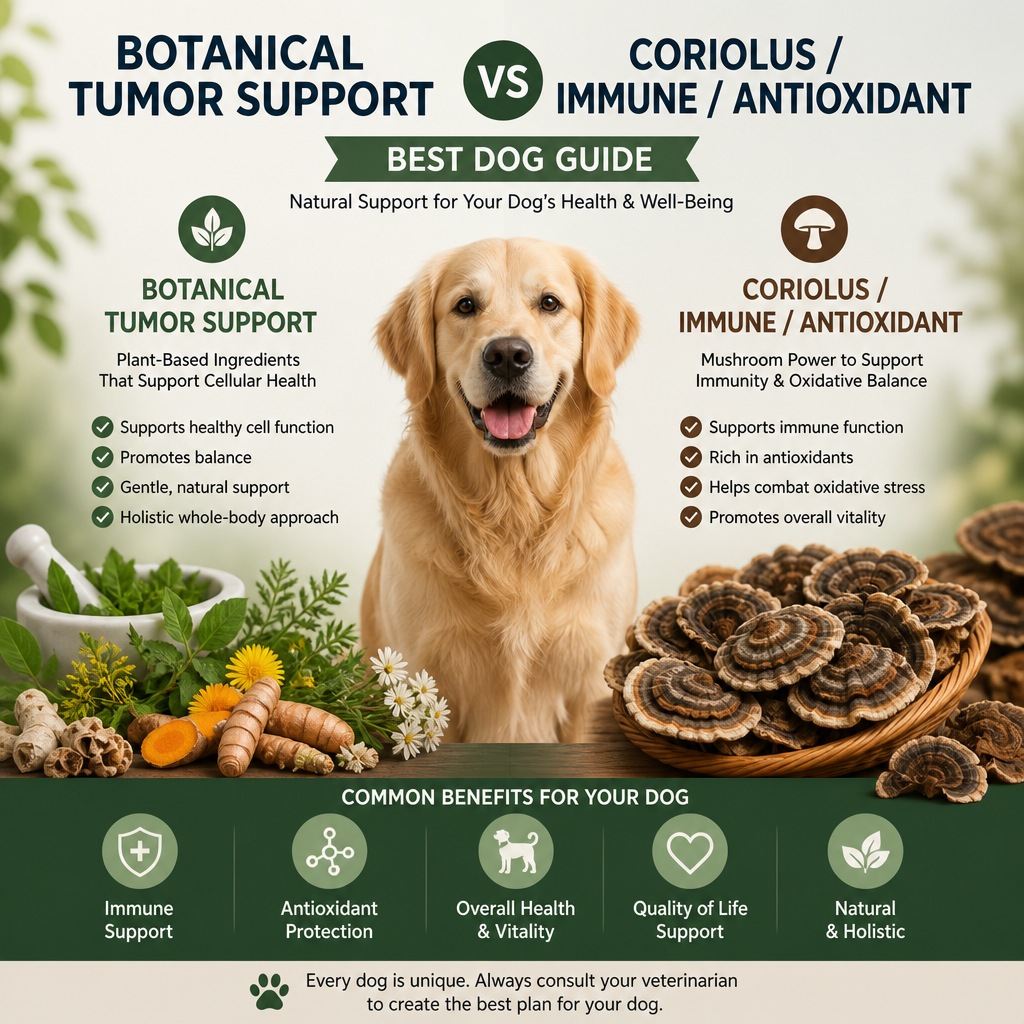
Canine cancer supplements are often grouped into three broad categories: botanical tumor-support formulas, Coriolus-based products, and general immune or antioxidant supplements. Although these groups may overlap, each is usually designed with a different goal. For dog owners trying to compare options, botanical tumor support vs Coriolus / immune / antioxidant is best approached as a question of purpose, not branding.
Botanical tumor-support formulas typically combine several plant-derived ingredients selected for their potential effects on inflammation, cellular signaling, circulation, or abnormal tissue growth. Common ingredients may include medicinal mushrooms, turmeric compounds, green tea extracts, milk thistle, resveratrol, or other herbs. Formulas differ widely, so the word “botanical” does not describe one standardized product.
Coriolus supplements are generally based on extracts from Trametes versicolor, also known as turkey tail mushroom. These products commonly contain polysaccharide-rich compounds, including polysaccharide-K, or PSK, and polysaccharide peptide, or PSP. Their primary focus is usually immune modulation rather than direct antioxidant support. In many cases, botanical tumor support vs Coriolus / immune / antioxidant comes down to whether the owner wants a broad blend or a more focused mushroom extract.
Immune supplements are formulated to support immune-system function, appetite, resilience, or recovery. They may contain mushroom extracts, beta-glucans, vitamins, minerals, colostrum, or other nutrients. Some products are intended for general wellness rather than cancer-specific use, so it is important to read the label carefully before assuming the product fits a treatment plan.
Antioxidant supplements aim to help manage oxidative stress by providing compounds such as vitamins C and E, selenium, coenzyme Q10, or plant polyphenols. Oxidative stress is involved in normal aging, inflammation, and disease, but antioxidant supplementation during cancer treatment requires particular care. That is one reason botanical tumor support vs Coriolus / immune / antioxidant should never be reduced to a simple “natural equals safe” assumption.
For readers looking at mushroom-based support more broadly, a related article may help provide context: veterinary mycotherapy guide for dogs in Switzerland.
Botanical tumor support vs Coriolus / immune / antioxidant
When comparing these categories, the most useful question is not which one is universally “best,” but which one matches the dog’s clinical needs. In practice, botanical tumor support vs Coriolus / immune / antioxidant choices depend on whether the goal is broad support, a more targeted mushroom-based strategy, or a carefully selected antioxidant role. This comparison is most useful when the owner has a clear objective, such as appetite support, immune balance, or better tolerance during treatment.
Botanical tumor-support products may appeal to owners seeking a broad, multi-ingredient approach. Their potential advantage is that several ingredients may target different biological pathways at once. However, this complexity can also create challenges. It may be difficult to determine which ingredient is responsible for a benefit or side effect, and multiple herbs may increase the possibility of interactions with prescription medicines. In other words, botanical tumor support vs Coriolus / immune / antioxidant is partly a question of simplicity versus breadth.
Coriolus products are often more focused. Turkey tail has been studied for immune-related activity, especially through mushroom polysaccharides that may influence immune-cell communication. Research in dogs remains limited compared with conventional cancer treatments, but some veterinary oncology discussions include turkey tail as a complementary option. Product quality is crucial because extraction methods, beta-glucan content, purity, and dosing can vary greatly. If you want a broader review of mushroom-based options, see this veterinary mycotherapy guide for dogs in Switzerland.
Immune-support products may be useful when a dog is recovering from illness, coping with treatment-related stress, or experiencing reduced appetite and energy. However, “immune boosting” is a broad marketing term. A strong immune response is not always desirable, particularly in dogs with autoimmune disease or those receiving medications that affect immune activity. Supporting balanced immune function is more appropriate than attempting to stimulate the immune system indiscriminately. That is why botanical tumor support vs Coriolus / immune / antioxidant decisions should be made with specific health goals in mind.
Antioxidants may help maintain normal cellular defenses and support general health, but they should not automatically be combined with chemotherapy or radiation. Some cancer treatments rely partly on oxidative mechanisms to damage cancer cells. Whether a specific antioxidant interferes with treatment depends on the compound, dose, timing, and therapy involved. Veterinary oncology guidance is essential before adding concentrated antioxidant products. The comparison between botanical tumor support vs Coriolus / immune / antioxidant is therefore not only about ingredients, but also about timing and compatibility with treatment.
For many owners, botanical tumor support vs Coriolus / immune / antioxidant also raises a practical question: which product is simplest to monitor? A focused formula is often easier to evaluate than a long ingredient list, especially when a dog is already receiving several medications. Simpler does not always mean better, but it can make adjustment and observation much more manageable.
A related regional example of product comparison can be helpful when browsing options: K9 Immunity / K9 Immunity Plus Alternative: Best Dog Tumor Supplements Finland.
A Practical Dog Cancer Supplement Comparison
A dog cancer supplement comparison should begin with product transparency. Look for a complete ingredient list, clearly stated amounts, lot or batch testing, expiration information, and manufacturing standards. Products made for humans may contain ingredients that are unsuitable for dogs, including certain sweeteners, excessive vitamin levels, or herbs that are poorly tolerated by animals. When owners compare botanical tumor support vs Coriolus / immune / antioxidant products, this transparency is often the first sign of product quality.
The diagnosis also matters. A supplement approach for lymphoma may not be appropriate for a dog with a mast cell tumor, osteosarcoma, hemangiosarcoma, or a noncancerous growth. Tumor type, stage, surgery status, chemotherapy protocol, radiation plan, and laboratory results can all influence the risk-benefit assessment. This is why botanical tumor support vs Coriolus / immune / antioxidant decisions should always be individualized rather than copied from another dog’s plan.
The dog’s existing medications must be reviewed as well. Potential concerns include effects on blood clotting, liver enzymes, blood pressure, blood sugar, sedation, or immune activity. For example, some herbs may increase bleeding risk around surgery, while others can alter how medications are metabolized. A supplement that is generally safe in a healthy dog may be unsuitable for a dog with liver disease, kidney disease, gastrointestinal ulcers, or low platelet counts.
When possible, compare brands using reliable product information rather than advertising language. The National Center for Complementary and Integrative Health’s herbs overview is a useful educational reference for learning how herbs may work, what evidence exists, and why safety matters.
A dog cancer supplement comparison also benefits from a simple checklist:
- What is the exact purpose of the supplement?
- Are the ingredients clearly labeled and dosed?
- Does the product fit the dog’s treatment plan?
- Could it affect surgery, chemotherapy, radiation, or lab results?
- Can the owner monitor a clear outcome, such as appetite or comfort?
- Is the formula easy to pause or adjust if needed?
Using these questions makes botanical tumor support vs Coriolus / immune / antioxidant much easier to evaluate in real-world care. It also helps prevent the common mistake of buying a supplement because it sounds “natural” rather than because it fits the dog’s needs. A thoughtful dog cancer supplement comparison should always prioritize clarity, compatibility, and monitoring.
What to Look for in a Product Label
When reading a label, pay attention to the form of each ingredient. For example, some mushroom products list raw powder, while others use hot-water or dual extraction. Those differences matter because extraction affects which compounds are actually present. The same is true for botanicals, where a whole herb extract may not behave like an isolated compound. This is especially relevant when evaluating botanical tumor support vs Coriolus / immune / antioxidant products side by side.
If a product combines many ingredients, ask why each one is included. A well-designed formula should have a clear purpose. In contrast, a long label with overlapping ingredients may simply create confusion. That is another reason a structured botanical tumor support vs Coriolus / immune / antioxidant comparison is so helpful for dog owners.
It is also wise to confirm whether the product was designed for animals or adapted from human use. Even when the ingredients appear familiar, canine dosing and tolerance can differ. Dogs can react differently to herbs, concentrated extracts, and excipients than people do. A label that looks impressive may still be unsuitable if the formulation was not built with canine metabolism in mind.
Owners should also look for practical information that supports day-to-day use: serving size, storage instructions, possible cautions, and consistency between batches. If a supplement is difficult to dose accurately, it becomes harder to assess whether botanical tumor support vs Coriolus / immune / antioxidant is actually helping or simply adding another variable.
Another useful sign is whether the company explains the intended use in plain language. A responsible product will usually describe whether it is meant for immune support, general wellness, or complementary cancer care. When the claims are vague or exaggerated, caution is warranted. No supplement label should replace informed veterinary advice.
Safety and Monitoring
Introduce only one new supplement at a time unless a veterinarian provides a different plan. This makes it easier to identify side effects and evaluate tolerance. Start with the veterinary-recommended amount, and never assume that a larger dose will produce better results. That principle applies whether the choice is botanical tumor support vs Coriolus / immune / antioxidant, or any other complementary option.
Watch for vomiting, diarrhea, reduced appetite, itching, lethargy, unusual thirst, changes in urination, bruising, or worsening discomfort. These signs should be reported to a veterinarian, especially if the dog is undergoing active cancer treatment. It may also be useful to note whether symptoms begin shortly after starting the supplement or whether they appear unrelated.
It is also useful to track practical outcomes. Record appetite, body weight, stool quality, activity, pain levels, and treatment-related symptoms. A supplement should be judged by meaningful improvements in quality of life or measurable clinical goals, not by claims that it can “cure” cancer. This is one of the most important parts of any botanical tumor support vs Coriolus / immune / antioxidant review.
Special caution is warranted around surgery, chemotherapy, and radiation. Some products that seem harmless can still influence clotting, liver processing, or sensitivity to treatment. If a dog has a scheduled procedure, the veterinary team should know about every supplement being used, including products that are marketed as natural or gentle.
Owners should also remember that monitoring is not only about side effects. A good supplement plan should be revisited periodically. If a dog’s condition changes, the product may need to be paused, adjusted, or replaced. Botanical tumor support vs Coriolus / immune / antioxidant choices may evolve as the disease progresses or as treatment goals shift.
How to Choose the Most Appropriate Option
For some dogs, a carefully selected Coriolus product may provide a relatively focused immune-support approach. For others, a botanical formula may be considered when broader complementary support is desired and the ingredient profile is compatible with treatment. An antioxidant product may be reasonable for a specific nutritional purpose, but concentrated antioxidants should be evaluated carefully during chemotherapy or radiation. In practice, botanical tumor support vs Coriolus / immune / antioxidant decisions are best made after the dog’s veterinary team reviews the full health picture.
In many cases, the most important supportive measures are not supplements. Adequate calories and protein, pain control, hydration, dental care, management of nausea, appropriate exercise, and regular veterinary monitoring often have a greater impact on daily well-being. Supplements should complement these foundations rather than replace them.
The central lesson in botanical tumor support vs Coriolus / immune / antioxidant comparisons is that categories do not guarantee quality or effectiveness. A focused, transparent product used for a clear purpose may be more appropriate than a complicated formula containing numerous poorly studied ingredients. Work with a veterinarian, preferably a veterinary oncologist or integrative veterinary professional, to review the product, dose, timing, and monitoring plan.
If you are reviewing this topic alongside other mushroom-based support options, the supplement choice should stay aligned with the dog’s condition and treatment goals. That is true whether the product is a botanical blend, a turkey tail extract, or a general immune formula. The most practical approach is usually the one that fits the diagnosis, supports the dog’s comfort, and does not complicate treatment.
Used thoughtfully, complementary supplements may support comfort and overall wellness for some dogs with cancer. They should always be treated as part of a coordinated care plan—not as substitutes for diagnosis, surgery, chemotherapy, radiation, or other evidence-based veterinary treatment.
In short, botanical tumor support vs Coriolus / immune / antioxidant decisions should be made with clear goals, realistic expectations, and veterinary oversight. When the product matches the dog’s needs, it is easier to support quality of life without adding unnecessary complexity. That is the most responsible way to approach a dog cancer supplement comparison in real-world care.
For owners who want to compare a different market example, this page can provide another useful reference point: VEBIOT Neoplasmoxan alternative: 7 Powerful Must-Know Options for Dogs with Tumors in Poland.
by TCMVET | Aug 27, 2026 | Research and News
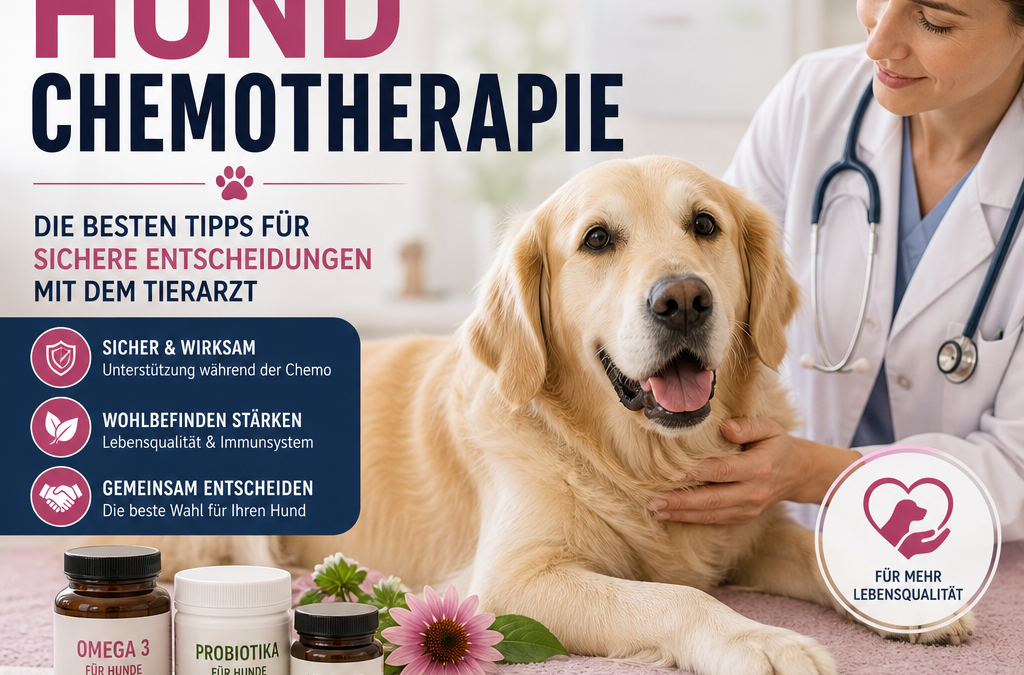
Nahrungsergänzung Hund Chemotherapie kann für viele Halter ein wichtiges Thema sein, wenn der eigene Vierbeiner an Krebs erkrankt. Der Wunsch, die Behandlung bestmöglich zu unterstützen, ist verständlich. Gleichzeitig können bestimmte Vitamine, Kräuter oder Öle die Wirkung einer Chemotherapie beeinflussen oder unerwünschte Nebenwirkungen verstärken. Deshalb sollte jede Ergänzung individuell mit der behandelnden Tierärztin oder dem behandelnden Tierarzt abgestimmt werden.
Warum Nahrungsergänzung Hund Chemotherapie besonders sorgfältig geplant werden muss
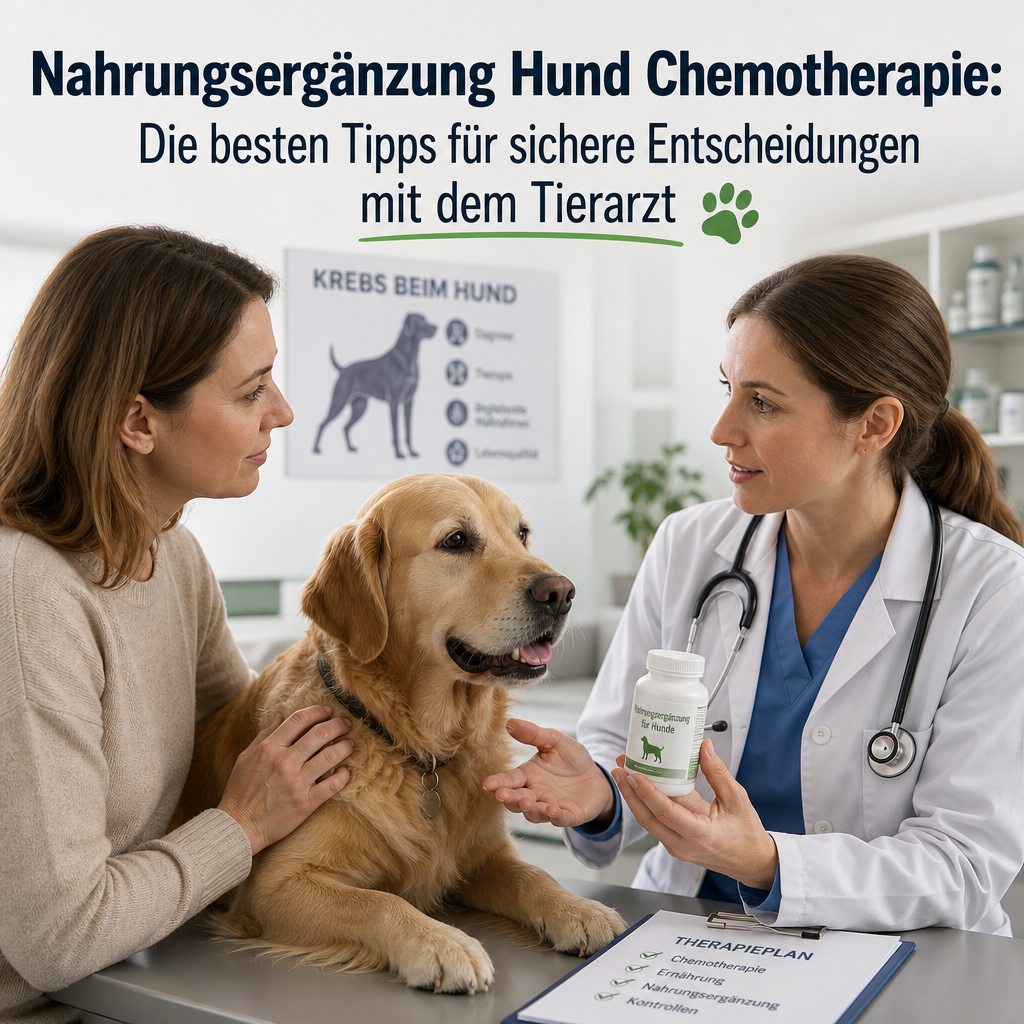
Eine Chemotherapie wirkt, indem sie bestimmte Zellprozesse hemmt oder schnell wachsende Tumorzellen schädigt. Dabei können auch gesunde Zellen betroffen sein, etwa im Magen-Darm-Trakt oder im Knochenmark. Viele Hunde vertragen die Behandlung dennoch besser als Menschen. Mögliche Nebenwirkungen sind Appetitlosigkeit, Übelkeit, Durchfall, Müdigkeit oder eine vorübergehende Schwächung des Immunsystems.
Nahrungsergänzungsmittel sind nicht grundsätzlich harmlos, nur weil sie „natürlich“ sind. Pflanzenstoffe, hoch dosierte Vitamine und Mineralstoffe können den Stoffwechsel von Medikamenten verändern. Manche Substanzen wirken zudem blutverdünnend, beeinflussen die Leber oder stimulieren das Immunsystem. Genau diese Effekte können während einer Krebstherapie problematisch sein.
Das wichtigste Ziel ist daher nicht, möglichst viele Präparate einzusetzen. Entscheidend ist eine ausgewogene, verträgliche und medizinisch sinnvolle Unterstützung. Wer über Nahrungsergänzung Hund Chemotherapie nachdenkt, sollte deshalb immer zuerst den aktuellen Behandlungsplan prüfen lassen.
Hund Krebs Ergänzung während Chemo: Was zuerst geprüft werden sollte
Bevor ein Präparat gekauft wird, sollte die aktuelle Situation des Hundes beurteilt werden. Dazu gehören unter anderem:
- Art und Stadium der Krebserkrankung
- verwendete Chemotherapeutika
- Leber- und Nierenwerte
- Blutbild und Immunstatus
- Körpergewicht und Ernährungszustand
- bestehende Erkrankungen
- weitere Medikamente oder Schmerzmittel
- aktuelle Beschwerden wie Erbrechen oder Durchfall
Ein Hund mit Gewichtsverlust benötigt möglicherweise eine andere Unterstützung als ein Tier, das sein Gewicht hält, aber unter Übelkeit leidet. Ebenso unterscheiden sich die Empfehlungen bei einem Lymphom, einem Mastzelltumor oder einer anderen Tumorerkrankung. Eine pauschale Empfehlung für alle Hunde ist deshalb nicht möglich.
Hilfreich ist es, eine vollständige Liste aller Produkte zur tierärztlichen Untersuchung mitzubringen. Dazu gehören auch Leckerlis mit Kräutern, Öle, Zahnpflegeprodukte und frei verkäufliche Mittel. Nur so lässt sich beurteilen, ob mögliche Wechselwirkungen bestehen. Genau hier zeigt sich, warum Nahrungsergänzung Hund Chemotherapie nie nach dem Zufallsprinzip entschieden werden sollte.
Welche Informationen für die Praxis besonders nützlich sind
Je genauer die Angaben sind, desto besser kann die Praxis einschätzen, ob ein Präparat sinnvoll ist. Notieren Sie, seit wann ein Produkt verwendet wird, wie es dosiert wird und ob sich danach Symptome verändert haben. Auch eine kurze Liste der täglichen Fütterung kann helfen, weil manche Nährstoffe bereits über das Futter ausreichend aufgenommen werden. Wer bereits früh dokumentiert, kann spätere Rückfragen deutlich schneller beantworten.
Welche Ergänzungsmittel Chemotherapie Hund betreffen können
Omega-3-Fettsäuren
Omega-3-Fettsäuren aus Fischöl werden häufig zur Unterstützung der Haut, des Fells und bestimmter Entzündungsprozesse eingesetzt. Bei krebskranken Hunden können sie in manchen Fällen Teil eines abgestimmten Ernährungskonzepts sein. Die Dosierung sollte jedoch zum Körpergewicht, zur Ernährung und zum Gesundheitszustand passen.
Zu hohe Mengen können Magen-Darm-Beschwerden verursachen und bei bestimmten Erkrankungen die Blutgerinnung beeinflussen. Besonders vorsichtig ist man, wenn der Hund zusätzlich Medikamente erhält, die ebenfalls auf die Blutgerinnung wirken.
Vitamine und Mineralstoffe
Ein nachgewiesener Mangel kann eine gezielte Ergänzung sinnvoll machen. Ohne Mangel ist eine hoch dosierte Gabe jedoch nicht automatisch hilfreich. Fettlösliche Vitamine wie A, D, E und K können im Körper gespeichert werden und bei Überdosierung gesundheitliche Schäden verursachen.
Auch Mineralstoffe sollten nicht ohne Anlass ergänzt werden. Ein Zuviel an Kalzium, Eisen oder bestimmten Spurenelementen kann die Organe belasten oder andere Nährstoffe aus dem Gleichgewicht bringen. Besser ist eine bedarfsgerechte Ernährung, die anhand von Blutwerten und der Futterzusammensetzung beurteilt wird. Bei Nahrungsergänzung Hund Chemotherapie gilt deshalb: lieber gezielt als wahllos ergänzen.
Kräuter und pflanzliche Präparate
Mariendistel, Kurkuma, Grüntee-Extrakte, Echinacea und andere pflanzliche Produkte werden oft als unterstützend beworben. Ihre Inhaltsstoffe können jedoch die Aktivität von Leberenzymen verändern und damit möglicherweise beeinflussen, wie Medikamente abgebaut werden.
Auch die Qualität solcher Präparate schwankt. Nicht jedes Produkt enthält die angegebene Menge des Wirkstoffs, und manche Produkte können verunreinigt sein. Pflanzliche Mittel sollten während einer Chemotherapie deshalb nur nach ausdrücklicher Rücksprache mit der Tierarztpraxis eingesetzt werden.
Probiotika
Probiotische Produkte können bei bestimmten Magen-Darm-Problemen interessant sein. Während einer Chemotherapie ist jedoch zunächst zu klären, ob das Immunsystem des Hundes ausreichend stabil ist. Bei einer starken Abwehrschwäche oder einer ausgeprägten Schleimhautschädigung ist besondere Vorsicht notwendig.
Nicht jeder Durchfall erfordert ein Probiotikum. Manchmal sind eine angepasste Fütterung, ausreichend Flüssigkeit oder eine gezielte tierärztliche Behandlung wichtiger. Auch diese Entscheidung sollte im Rahmen von Nahrungsergänzung Hund Chemotherapie immer individuell fallen.
Was Halter eher vermeiden sollten
Problematisch sind vor allem Präparate mit unklarer Zusammensetzung, sehr hohen Dosierungen oder mehreren „Wirkversprechen“ auf einmal. Wenn ein Produkt gleichzeitig als Immunbooster, Entgiftungshilfe und Krebsunterstützung vermarktet wird, ist Zurückhaltung sinnvoll. Je einfacher und transparenter ein Ergänzungsmittel aufgebaut ist, desto leichter lässt es sich mit der laufenden Therapie abstimmen. Das schützt vor unnötigen Risiken und erleichtert die Kontrolle möglicher Nebenwirkungen.
Ernährung als wichtigste Grundlage
Eine passende Ernährung ist häufig wertvoller als eine lange Liste von Ergänzungsmitteln. Das Futter sollte gut verträglich sein, ausreichend Energie liefern und den Hund mit hochwertigen Nährstoffen versorgen. Bei Appetitlosigkeit können kleinere, häufigere Mahlzeiten helfen. Manche Hunde akzeptieren leicht angewärmtes Futter besser, weil es intensiver riecht.
Bei deutlichem Gewichtsverlust kann eine tierärztliche Ernährungsberatung sinnvoll sein. Dabei lässt sich prüfen, ob das Futter genügend Kalorien und Eiweiß enthält und ob die Zusammensetzung zur Erkrankung passt. Eine eigenständige, sehr fettreiche oder extrem kohlenhydratarme Ernährung ist nicht für jeden Hund geeignet und kann Beschwerden verschlimmern.
Wichtig ist außerdem, Veränderungen zu dokumentieren. Gewicht, Futteraufnahme, Trinkmenge, Kot, Erbrechen und Aktivitätsniveau liefern der Tierarztpraxis wertvolle Hinweise. So kann die Behandlung schneller angepasst werden. Wer die Beobachtungen schriftlich festhält, verbessert die Entscheidungsgrundlage für jede Form von Nahrungsergänzung Hund Chemotherapie.
Wenn Sie sich zusätzlich allgemein über begleitende Produkte für erkrankte Hunde informieren möchten, kann auch dieser Beitrag hilfreich sein: Nahrungsergänzungsmittel Hund Krebs: 7 wichtige, sichere Kauf-Tipps für eine gute Entscheidung.
Praktische Fütterungstipps im Alltag
Viele Hunde profitieren davon, wenn die Mahlzeiten ruhig angeboten werden und der Futterplatz nicht mitten im Trubel liegt. Frisches Wasser sollte jederzeit erreichbar sein. Bei empfindlichem Magen kann es helfen, neue Futtersorten nur langsam über mehrere Tage einzuführen. So lässt sich besser erkennen, ob ein Produkt wirklich gut vertragen wird oder ob eher eine Rücksprache mit der Praxis nötig ist.
Warnzeichen ernst nehmen
Während der Chemotherapie sollte man nicht allein auf Nahrungsergänzung setzen, wenn Beschwerden auftreten. Sofortige Rücksprache ist besonders wichtig bei:
- anhaltendem Erbrechen oder starkem Durchfall
- deutlicher Teilnahmslosigkeit
- Futterverweigerung über einen längeren Zeitraum
- Fieber oder auffälliger Körpertemperatur
- Atemnot oder Kollaps
- blassen Schleimhäuten
- Blut im Kot oder Urin
- deutlicher Verschlechterung des Allgemeinzustands
Manche Nebenwirkungen lassen sich gut behandeln, etwa durch Medikamente gegen Übelkeit, Flüssigkeitstherapie oder eine Anpassung des Therapieplans. Je früher die Ursache erkannt wird, desto besser kann der Hund unterstützt werden. Gerade in einer sensiblen Phase sollte Nahrungsergänzung Hund Chemotherapie nie dazu führen, dass ernsthafte Symptome übersehen werden.
Eine gute Orientierung zu allgemeinen Warnsignalen und seriösen Informationsquellen bietet auch die American Veterinary Medical Association, die verständlich über Krebs bei Haustieren informiert.
So treffen Halter sichere Entscheidungen
Eine gute Vorgehensweise besteht darin, immer nur eine Veränderung nach der anderen vorzunehmen. Wird gleichzeitig das Futter gewechselt und mehrere Präparate begonnen, lässt sich später kaum feststellen, was geholfen oder Beschwerden verursacht hat.
Vor der Gabe sollte man folgende Fragen mit dem Tierarzt klären:
- Gibt es einen nachgewiesenen Mangel oder ein konkretes Therapieziel?
- Kann das Präparat die Chemotherapie oder andere Medikamente beeinflussen?
- Ist die Dosierung für Gewicht, Alter und Organgesundheit geeignet?
- Wie lange soll das Mittel verwendet werden?
- Welche Nebenwirkungen müssen beobachtet werden?
- Wann sollte die Ergänzung wieder abgesetzt werden?
Eine Nahrungsergänzung kann in bestimmten Fällen sinnvoll sein, ersetzt aber weder die Chemotherapie noch regelmäßige Kontrollen. Die sicherste Entscheidung entsteht aus einer individuellen Bewertung von Tumorerkrankung, Behandlung, Ernährung und Allgemeinzustand. So bleibt die Unterstützung des Hundes gezielt, nachvollziehbar und möglichst risikoarm. Wer Nahrungsergänzung Hund Chemotherapie sorgfältig plant, gibt dem Tier die beste Chance auf eine stabile und verträgliche Begleitung.
Kurze Checkliste vor dem Kauf
- Nur mit klarer tierärztlicher Empfehlung starten
- Inhaltsstoffe und Dosierung genau prüfen
- Keine Produkte mit unklaren Wirkversprechen wählen
- Beobachtungen nach Beginn schriftlich festhalten
- Bei Unsicherheit lieber nachfragen als experimentieren
So wird aus einem gut gemeinten Zusatz kein unnötiges Risiko. Mit fachlicher Begleitung und realistischer Erwartung kann Nahrungsergänzung Hund Chemotherapie in einzelnen Fällen sinnvoll eingebettet werden, ohne die laufende Behandlung zu belasten.
by TCMVET | Aug 27, 2026 | Research and News
Botanical tumor support vs Turkey Tail / immune / mushrooms is an important comparison for dog owners exploring complementary support during cancer care. Both approaches may be used alongside conventional veterinary treatment, but they are not interchangeable. Botanical formulas often combine several plant extracts selected for antioxidant, anti-inflammatory, digestive, or general wellness purposes, while Turkey Tail and other medicinal mushrooms are typically used to support immune function.
A thoughtful dog cancer supplement comparison should focus on evidence, safety, product quality, treatment compatibility, and the individual dog’s diagnosis. Supplements may offer supportive benefits, but they should never replace surgery, chemotherapy, radiation, targeted therapy, pain control, or other veterinary recommendations.
Understanding the Difference Between Botanical and Mushroom Support
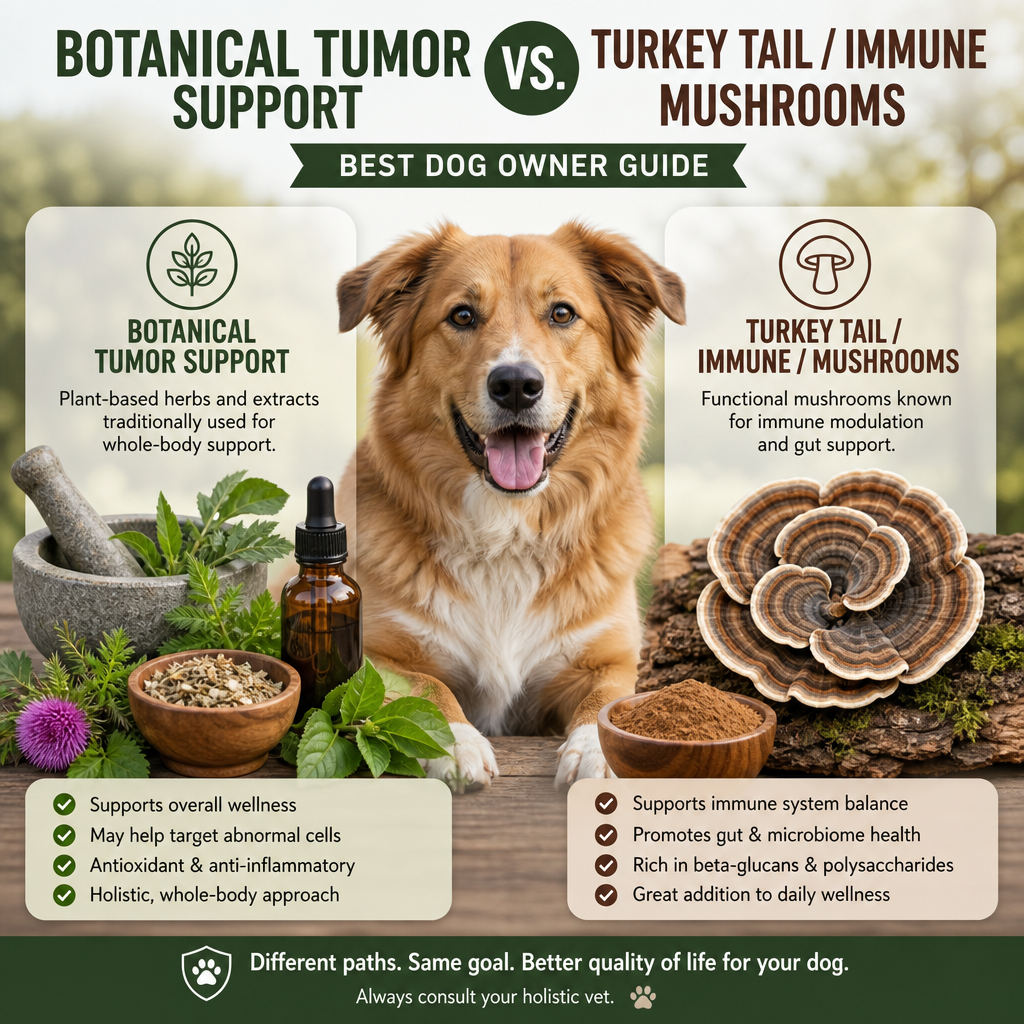
Botanical tumor support usually refers to a blend of plant-based ingredients. Depending on the product, these may include herbs, roots, medicinal plants, concentrated extracts, vitamins, minerals, and other compounds. Their intended roles can vary widely. Some formulas are designed to support appetite and digestion, while others emphasize antioxidant activity, normal inflammatory balance, or overall vitality.
Turkey Tail, scientifically known as Trametes versicolor or Coriolus versicolor, is a medicinal mushroom that has received particular interest in immune-support research. It contains polysaccharides and other compounds that may influence immune signaling. Other mushrooms commonly found in canine supplements include Reishi, Maitake, Shiitake, Agaricus blazei, and Cordyceps. For a related look at mushroom-based products, see alternatives to medicinal mushrooms for dogs.
The key distinction is that botanical blends often target multiple body systems through a combination of plant compounds, whereas mushroom products are generally centered on immune modulation and mushroom-specific constituents. In practical terms, botanical tumor support may feel broader, while a mushroom formula is often more focused.
What Does the Research Say About Turkey Tail for Dogs?
Turkey Tail has attracted attention because of research involving polysaccharide compounds such as PSK and PSP. In human medicine, these compounds have been studied as adjuncts to conventional cancer treatment. Canine research is more limited, but some early studies have investigated Turkey Tail in dogs with naturally occurring cancers.
One frequently discussed area is canine hemangiosarcoma, an aggressive cancer affecting blood vessel tissues. Preliminary research has explored whether standardized Turkey Tail extracts may help support dogs when used with veterinary oncology care. These findings are promising but should be interpreted carefully. Small studies do not establish that every Turkey Tail product will produce the same results, and they do not prove that mushrooms can treat or cure cancer.
Product standardization matters considerably. A supplement made from whole mushroom powder may differ substantially from one containing a concentrated, tested extract. Differences in mushroom species, growing conditions, extraction method, beta-glucan content, contaminants, and serving size can affect quality and consistency.
When owners compare botanical tumor support vs Turkey Tail / immune / mushrooms, the strongest evidence usually comes from products that clearly identify the source material and testing methods. The National Center for Complementary and Integrative Health offers a helpful overview of supplement quality and safety at Dietary Supplements and Cancer.
Potential Benefits of Botanical Tumor Support
Botanical formulas may be useful when a dog needs broad nutritional and wellness support. Depending on the ingredients, a carefully designed product may help address:
- Appetite and digestive comfort
- Normal inflammatory balance
- Oxidative stress
- Liver and metabolic support
- General energy and vitality
- Recovery after illness or treatment
However, “natural” does not automatically mean safe or effective. Botanical ingredients can have drug-like effects. Some may influence blood clotting, blood pressure, liver enzymes, immune activity, or sedation. A blend with many ingredients can also make it difficult to identify which component is helping or causing a reaction.
For this reason, dog owners should avoid judging a botanical product only by the number of ingredients listed on the label. More ingredients do not necessarily mean better support. A shorter formula with transparent dosing and quality testing may be more appropriate than a complex blend with proprietary amounts.
In the context of botanical tumor support vs Turkey Tail / immune / mushrooms, the plant-based option is often chosen for broader support goals rather than a single immune-focused purpose. That broader scope can be helpful, but it also requires more careful review of the ingredient list and the dog’s current medications.
When considering botanical tumor support vs Turkey Tail / immune / mushrooms, the best choice depends on the dog’s clinical needs and the goals of supplementation.
Mushroom-based products may be more appealing when the primary goal is immune support and the formula provides clearly stated mushroom species, extract ratios, and beta-glucan levels. Turkey Tail is often selected because it has more cancer-related canine research than many other mushrooms.
A botanical blend may be considered when the dog needs broader support, such as help maintaining digestion, appetite, or normal inflammatory responses during treatment. Yet the wider range of ingredients also creates more opportunities for interactions. A formula containing several herbs may be less suitable for a dog taking multiple medications than a simpler, well-characterized product.
Neither category should be described as universally superior. The diagnosis, treatment plan, bloodwork, age, liver and kidney function, and current symptoms all affect the decision. If you want a country-specific supplement comparison, this same practical approach can be seen in guides such as K9 Immunity / K9 Immunity Plus Alternative, where ingredient transparency and clinical fit matter more than marketing claims.
For some dogs, botanical tumor support vs Turkey Tail / immune / mushrooms may not be an either-or decision at all. Instead, the better answer may be to choose one product that matches the top priority and avoid stacking multiple overlapping formulas.
Safety and Medication Interactions
Before introducing any supplement, discuss it with the veterinarian or veterinary oncologist. This is especially important if a dog is receiving chemotherapy, radiation, corticosteroids, nonsteroidal anti-inflammatory drugs, anticoagulants, seizure medication, or immune-modulating therapy.
Potential concerns include:
- Increased bleeding risk around surgery
- Changes in drug metabolism
- Excessive immune stimulation or suppression
- Gastrointestinal upset
- Liver or kidney strain
- Allergic reactions
- Interference with carefully timed cancer treatment
Supplements may also need to be stopped before surgery or certain procedures. A veterinarian can help determine whether a product should be used, paused, or avoided altogether.
This is one reason botanical tumor support vs Turkey Tail / immune / mushrooms should be reviewed with the same seriousness as any other part of a cancer care plan. A supplement that seems gentle on paper may still affect the dog’s treatment schedule or lab values.
How to Evaluate a Dog Cancer Supplement
A reliable dog cancer supplement comparison should begin with the label and manufacturer rather than marketing claims. Look for the following qualities:
- Full ingredient disclosure: Every active ingredient should be listed with an amount per serving.
- Clear dosing instructions: The label should explain dosing by weight and identify whether recommendations are for maintenance or therapeutic support.
- Third-party testing: Testing for identity, potency, heavy metals, pesticides, microbes, and other contaminants adds confidence.
- Appropriate extraction details: For mushrooms, the product should explain whether it uses fruiting bodies, mycelium, hot-water extraction, or another method.
- Veterinary or scientific oversight: Formulas developed with qualified veterinary or scientific input are preferable to products relying solely on testimonials.
- Batch consistency: A reputable company should be able to provide certificates of analysis or batch information.
Be cautious with products that promise to shrink tumors, cure cancer, replace chemotherapy, or work for every type of cancer. These claims are not consistent with responsible veterinary care.
When people ask whether botanical tumor support vs Turkey Tail / immune / mushrooms is the better option, the answer usually depends on which product can prove quality, consistency, and reasonable compatibility with the dog’s current care plan.
Making a Practical Decision
The most useful approach is to define the purpose of supplementation. Is the goal immune support, appetite maintenance, digestive comfort, recovery, or general quality of life? Once the goal is clear, select the simplest product that fits that purpose and can be monitored safely.
Introduce only one new supplement at a time. Begin with the veterinarian-approved amount, observe the dog for several days, and track appetite, stool quality, energy, vomiting, itching, and other changes. Keep a written list of all medications and supplements so the veterinary team can review the complete regimen.
Quality of life should remain the central measure. A supplement is not helpful if it causes nausea, reduces appetite, complicates treatment, or creates unnecessary expense without a clear benefit. Regular examinations and recommended blood tests are essential for monitoring the disease and detecting treatment-related changes.
Ultimately, botanical tumor support vs Turkey Tail / immune / mushrooms is not a competition with one universal winner. Turkey Tail may be a reasonable immune-support option for some dogs, while a carefully selected botanical formula may better address broader wellness needs. The safest choice is one based on veterinary guidance, transparent product quality, realistic expectations, and close observation of the individual dog.
For dog owners in Estonia and beyond, the goal is not to find a perfect supplement. It is to choose the most suitable support tool, use it carefully, and keep the dog’s veterinary treatment plan at the center of every decision.
