by TCMVET | Aug 26, 2026 | Research and News
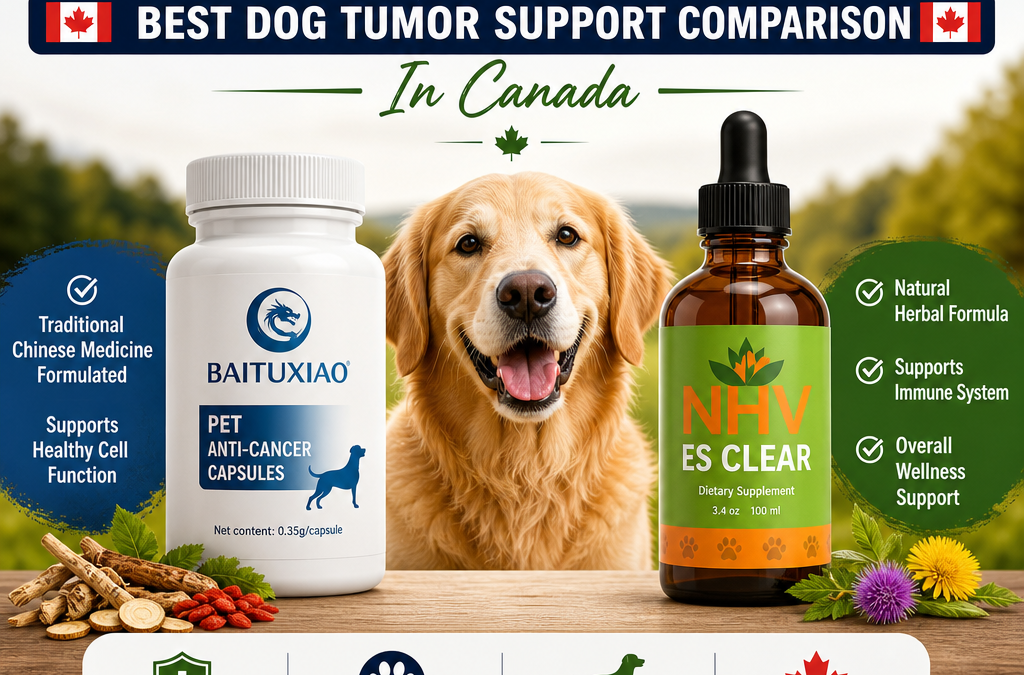
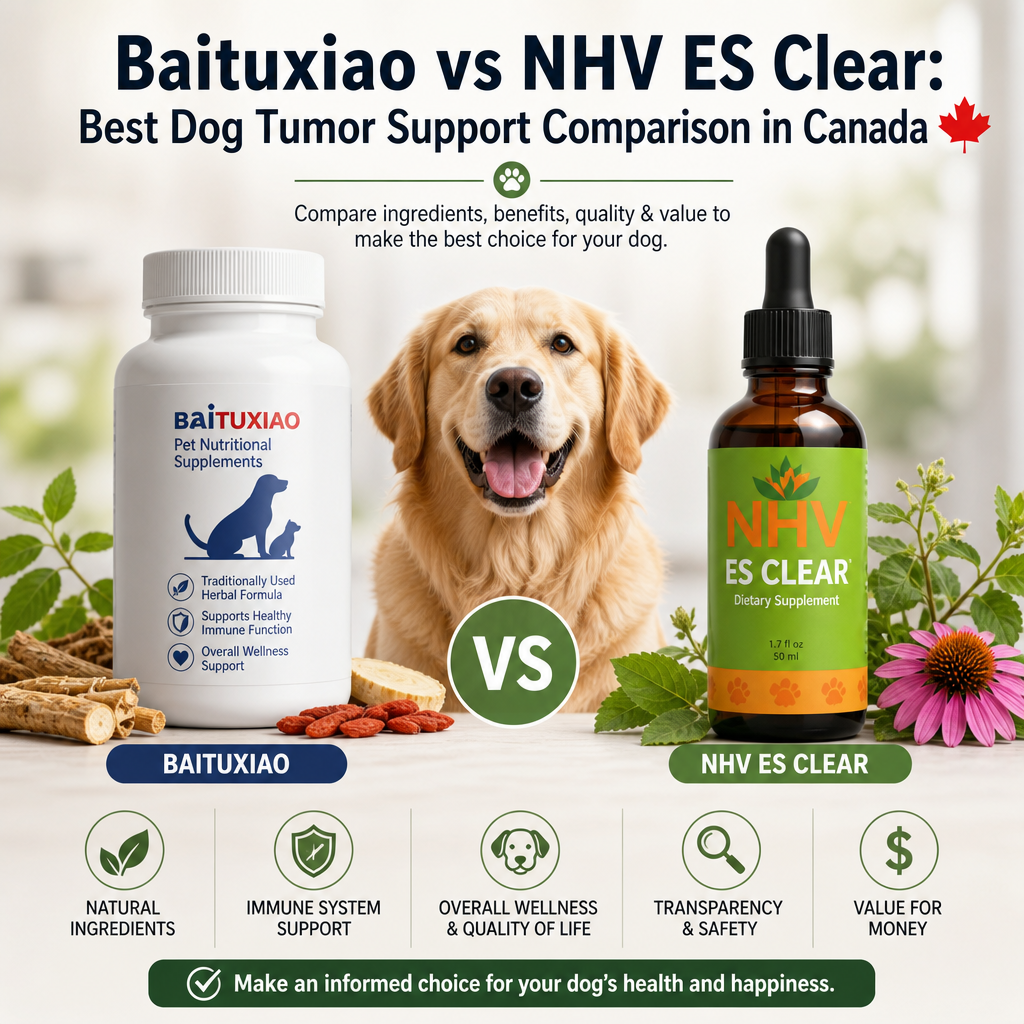
Baituxiao vs NHV ES Clear is a comparison many Canadian dog owners explore after discovering a lump, mass, or suspected tumor. Both products are marketed as supportive herbal formulas, but they are not substitutes for veterinary diagnosis or cancer treatment. The right choice depends on your dog’s condition, current medications, treatment plan, and overall health. Understanding the differences can help you have a more productive conversation with your veterinarian.
Why Veterinary Guidance Comes First
A lump can have many causes, including a benign fatty growth, cyst, infection, or malignant tumor. Appearance alone cannot reliably identify the problem. A veterinarian may recommend a physical examination, fine-needle aspiration, biopsy, blood testing, ultrasound, or other diagnostic procedures.
This step is essential because supportive supplements may affect appetite, digestion, liver metabolism, bleeding risk, or the way certain medications work. Dogs receiving chemotherapy, corticosteroids, anti-inflammatory drugs, pain medication, or surgery-related care require especially careful supervision.
Herbal products should therefore be viewed as complementary support rather than cures. Neither Baituxiao vs NHV ES Clear should be used to delay biopsy, surgery, oncology referral, or emergency treatment. If your dog already has a confirmed diagnosis, your veterinarian can help you decide whether Baituxiao vs NHV ES Clear fits the care plan.
For general reference on cancer evaluation and follow-up in pets, the American Veterinary Medical Association provides helpful educational material: AVMA cancer information for pet owners.
Baituxiao vs NHV ES Clear: What Are They?
Baituxiao and NHV ES Clear are both commonly discussed in natural-support circles, but their product positioning and ingredient profiles differ. Baituxiao is generally presented as a traditional herbal formula intended to support dogs with masses or abnormal tissue growth. NHV ES Clear is marketed as a targeted herbal blend designed to provide support for dogs dealing with growths and related health concerns.
Because formulas, serving instructions, and product versions may change, Canadian pet owners should read the current product label rather than rely only on older online descriptions. Check the complete ingredient list, concentration, recommended dosage, storage requirements, country of manufacture, and importer information.
The practical distinction is that Baituxiao is often chosen by owners seeking a more traditional multi-herb approach, while NHV ES Clear is commonly considered by those who prefer a product from a supplement line with broader pet-health resources. Neither general reputation nor marketing language proves that one formula is clinically superior.
In a real-world Baituxiao vs NHV ES Clear decision, it also helps to ask how the product will be used alongside diagnostics, surgery, or medication. A supplement that sounds appealing in theory may be less suitable if your dog has a sensitive stomach, a clotting issue, or a complex treatment schedule.
For owners comparing products over time, Baituxiao vs NHV ES Clear often comes down to practical details such as how easy the formula is to source in Canada, how clearly the label is written, and whether the serving routine can be followed consistently at home. Those factors can matter just as much as the marketing claims.
NHV ES Clear comparison: Ingredients and Formulation
A meaningful NHV ES Clear comparison should begin with the actual label. Herbal formulas may contain multiple botanical ingredients, and their effects can depend on dose, extraction method, and the dog’s individual metabolism. Two products can appear similar while differing significantly in strength and tolerability.
When evaluating NHV ES Clear, consider:
- The full list of active and inactive ingredients
- The amount provided per millilitre, capsule, tablet, or serving
- Whether the formula is alcohol-free or contains another liquid base
- Instructions for small, medium, and large dogs
- Potential cautions for liver, kidney, gastrointestinal, or bleeding disorders
- Whether batch, expiration, and quality-control information is available
It is also important to distinguish between “supports immune health” or “supports healthy cellular function” and proven tumor reduction. These claims generally describe intended supplement support, not confirmed cancer treatment outcomes.
When owners compare Baituxiao vs NHV ES Clear, the label details matter more than general product category. A shorter ingredient list is not automatically better, and a longer list is not automatically more effective.
In practice, many owners also compare how each formula is tolerated over time. Baituxiao vs NHV ES Clear may look similar at first glance, yet the one that best suits your dog could be the product that causes fewer stomach issues, is easier to dose, and fits better with your veterinarian’s recommendations.
If you are reviewing an NHV ES Clear comparison for the first time, take a few minutes to look at serving size, storage instructions, and manufacturer contact details. These small details can help you judge whether the product is a reliable option or simply a convenient-sounding purchase.
Comparing Baituxiao and NHV ES Clear for Canadian Dogs
The best dog tumor support comparison is not simply a question of which product has more herbs. It should assess safety, transparency, convenience, compatibility with veterinary care, and the dog’s response.
For some households, Baituxiao vs NHV ES Clear comes down to which product is easier to verify, easier to administer, and easier to fit into a veterinary plan. That practical lens is often more useful than online testimonials.
Ingredient transparency
Choose a product with a clearly listed formula and understandable serving instructions. Avoid products that conceal all active ingredients under vague proprietary blends, especially when your dog takes prescription medication.
Veterinary compatibility
Ask your veterinarian to review the label before starting either supplement. This is particularly important if your dog has a confirmed tumor, is scheduled for surgery, or receives chemotherapy. Some herbs may influence clotting, sedation, blood pressure, liver enzymes, or immune activity.
Ease of administration
A liquid may be easier for dogs that refuse tablets, while capsules or tablets may be more practical for owners who need consistent, mess-free dosing. The best product is one your dog can take reliably without significant stress or digestive upset.
Product quality and Canadian availability
Canadian buyers should verify shipping conditions, seller reputation, return policies, labeling compliance, and whether the product is imported. Supplements purchased through unofficial marketplaces may be expired, improperly stored, counterfeit, or different from the manufacturer’s current formula.
Cost over time
Compare the cost per day rather than the price of one bottle. A product that appears inexpensive may require a larger serving or more frequent reordering. Also account for shipping, taxes, and possible delays at the border.
If you want to compare similar supportive products, our guide to dog tumour supplements explains how to assess ingredient lists, safety, and quality before buying.
For a practical buying checklist, remember that Baituxiao vs NHV ES Clear should be judged against the same basics: clear labeling, appropriate dosing, reliable sourcing, and compatibility with your dog’s treatment plan. Those factors often matter more than brand familiarity.
When Canadian owners compare Baituxiao vs NHV ES Clear, they often ask which one is more natural or more advanced. A better question is which option is better documented, better tolerated, and less likely to complicate the care your veterinarian has already planned.
One more useful point is consistency. If you choose a product, keep the same dose schedule unless your veterinarian advises a change. Switching repeatedly between supplements can make it difficult to tell whether a change in appetite, stool quality, or energy is related to the product itself or to the underlying condition.
Possible Benefits and Limitations
Owners often seek herbal support to help maintain appetite, energy, digestion, or general comfort. Some dogs tolerate supplements well, and a carefully selected product may fit into a broader wellness plan. However, evidence for herbal tumor-support products in dogs is limited compared with established veterinary treatments.
Possible limitations include inconsistent research, variable product quality, uncertain interactions, and individual differences in response. A dog may experience vomiting, diarrhea, reduced appetite, itching, lethargy, or other symptoms after starting a supplement. Stop the product and contact a veterinarian if concerning reactions occur.
Do not interpret a stable or shrinking lump without appropriate testing. Similarly, a dog seeming brighter does not confirm that a tumor is responding. Objective monitoring may require repeat examinations, measurements, imaging, bloodwork, or pathology.
Baituxiao vs NHV ES Clear can both be part of supportive care, but neither should be viewed as a stand-alone solution. The safest approach is to treat them as optional aids that may or may not fit your dog’s medical needs.
It is also wise to consider your dog’s overall comfort. If appetite drops, stools change, or energy declines after starting a supplement, the timing may be a clue. In that situation, your veterinarian can help you decide whether to stop the product, adjust the plan, or pursue further testing.
Supportive products may play a role in quality of life, especially when they are used with realistic expectations. The goal is not to replace veterinary oncology or surgery, but to support your dog while the medical team addresses the underlying disease. That is why Baituxiao vs NHV ES Clear should always be weighed against the full treatment picture.
How to Choose Between the Two
When deciding between Baituxiao vs NHV ES Clear, create a simple comparison with your veterinarian. Record your dog’s diagnosis, medications, allergies, liver and kidney status, planned procedures, and treatment goals. Then review the current labels side by side.
A veterinarian may recommend avoiding both products, selecting one, or waiting until after surgery or other treatment. In some cases, the most useful support may be a balanced therapeutic diet, pain control, nausea management, hydration, dental care, or nutritional assistance rather than an herbal formula.
If your dog has rapid tumor growth, bleeding, breathing difficulty, repeated vomiting, severe pain, collapse, pale gums, or sudden weakness, seek urgent veterinary care. These signs require prompt evaluation and should not be managed with supplements alone.
When comparing Baituxiao vs NHV ES Clear, it also helps to set a short trial period with clear goals, such as appetite, stool quality, comfort, and energy. If those markers worsen, the product may not be a good fit.
Some owners find it helpful to keep notes for one to two weeks after starting a supplement. A simple log can show whether your dog is eating better, resting comfortably, or showing side effects. That record can make future follow-up visits more productive.
It can also help to involve your pharmacy or veterinary clinic if your dog is on multiple medicines. A quick medication review may identify potential overlap in liver metabolism, blood pressure effects, or bleeding concerns before you commit to long-term use.
If cost is a deciding factor, look beyond the bottle price and compare the total monthly expense. Baituxiao vs NHV ES Clear may differ in serving frequency, bottle size, shipping charges, and how often you need to reorder. A more affordable option on paper may become less practical over time.
Final Considerations
Baituxiao vs NHV ES Clear is best understood as a supportive-care decision, not a contest between two proven cancer cures. A responsible dog tumor support comparison should prioritize diagnosis, veterinary oversight, label transparency, medication safety, product quality, and measurable outcomes.
For Canadian pet owners, the most appropriate choice is the product—if any—that fits safely into an individualized veterinary plan. Keep a record of the supplement, dose, start date, appetite, stool quality, energy, lump measurements, and any side effects. This information can help your veterinary team determine whether continuing the product makes sense while ensuring that evidence-based diagnosis and treatment remain the foundation of your dog’s care.
In the end, Baituxiao vs NHV ES Clear should be approached carefully, with your veterinarian guiding the decision and your dog’s comfort and safety remaining the priority. If you revisit the comparison later, use the same criteria each time so your decision stays based on your dog’s current needs rather than marketing claims.
To make the decision process easier, focus on a few repeatable questions: Is the label clear? Does the product fit your dog’s current medications? Can you source it reliably in Canada? Does your dog tolerate it well? If the answer to any of these is no, the safer choice may be to pause and reassess with your veterinarian before continuing.
With that approach, Baituxiao vs NHV ES Clear becomes less about choosing a winner and more about choosing a support option that is sensible, transparent, and medically appropriate for your dog.
by TCMVET | Aug 26, 2026 | Research and News
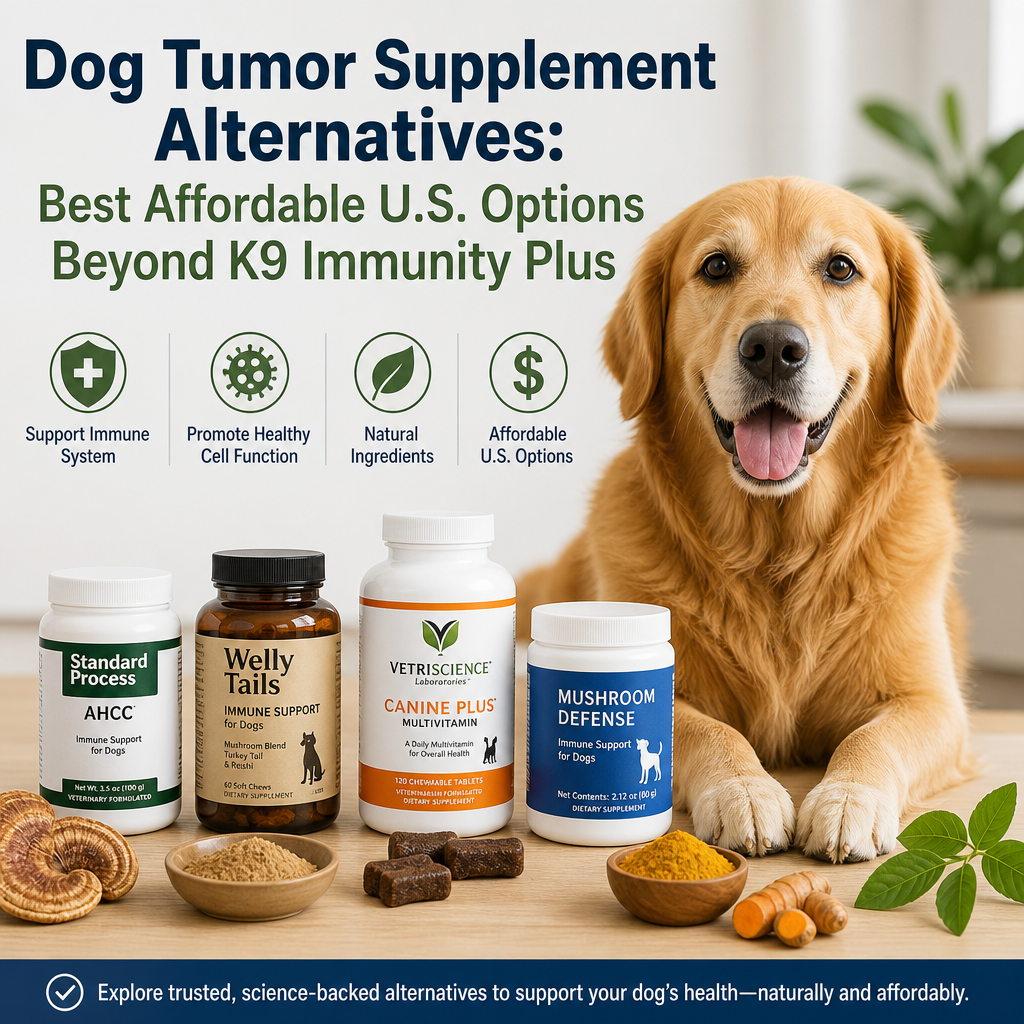
Dog Tumor Supplement Alternatives can help pet owners explore supportive nutrition without paying premium prices for a single branded formula. K9 Immunity Plus is well known among people seeking immune-support products for dogs with cancer, but it is not the only option available in the United States. Depending on a dog’s diagnosis, treatment plan, diet, and overall health, other supplements or nutrition strategies may provide useful support at a lower cost.
Many families begin with K9 Immunity Plus because it is familiar, widely discussed, and marketed as a convenient all-in-one choice. Still, dog tumor supplement alternatives may offer a better fit when a dog needs a more targeted ingredient list, a different delivery format, or a lower monthly expense. In many cases, the best choice is the one that matches the dog’s specific medical needs rather than the most heavily advertised bottle on the shelf.
Why Consider Alternatives to K9 Immunity Plus?
K9 Immunity Plus is marketed as a comprehensive supplement for dogs with serious illnesses, particularly cancer. Products in this category commonly contain mushrooms, antioxidants, digestive-support ingredients, vitamins, minerals, and herbal compounds. While some owners value the convenience of an all-in-one formula, the price can become challenging when a dog needs long-term support. That is why many families begin researching dog tumor supplement alternatives early in the care process.
There are several reasons pet owners search for alternatives to K9 Immunity or K9 Immunity Plus:
- Monthly costs may be difficult to maintain.
- Some dogs may not tolerate every ingredient.
- A veterinarian may recommend a more targeted approach.
- Owners may prefer products with clearer ingredient labels.
- Individual ingredients may be available at a lower total cost.
- A dog’s needs may change during surgery, chemotherapy, radiation, or recovery.
The most appropriate choice depends on the dog’s medical condition. Supplements should complement veterinary care, not replace diagnosis, surgery, chemotherapy, radiation, prescription medication, or regular monitoring.
For owners comparing dog tumor supplement alternatives, the goal is not to find a miracle product. The goal is to choose a support option that fits the dog’s condition, budget, and treatment plan. When a supplement is chosen carefully, it may be easier to maintain consistency over time, which matters because supportive care often works best when it is sustainable.
Some dogs do better with a simple formula that contains one or two focused ingredients. Others may benefit from a broader blend if their veterinarian wants to address appetite, digestion, inflammation, and immune support at the same time. That flexibility is one reason dog tumor supplement alternatives are worth comparing instead of assuming one brand is the only reasonable option.
What to Look for in Dog Tumor Supplements in the United States
When comparing dog tumor supplements in the United States, quality and transparency matter more than attractive marketing claims. Look for products made by companies that clearly identify each ingredient and provide serving instructions based on a dog’s weight.
Important features include:
Transparent ingredient labels
Avoid products that rely heavily on vague terms such as “proprietary blend” without listing amounts. Knowing the quantity of each ingredient helps veterinarians evaluate possible benefits, risks, and interactions. It also makes it easier to compare different dog tumor supplement alternatives on a true value basis instead of judging by packaging alone.
Third-party testing
Independent testing can help verify identity, purity, and contamination levels. Look for companies that provide certificates of analysis or clearly explain their quality-control procedures. The U.S. Food and Drug Administration offers helpful guidance on pet food labeling and safety at its pet food safety and labeling resource.
Appropriate dosing information
A supplement designed for a 10-pound dog may not be suitable for a 100-pound dog without careful adjustment. Products should include practical dosing guidance and warnings for puppies, seniors, pregnant dogs, and animals with liver or kidney disease.
U.S. manufacturing and sourcing information
U.S.-based production does not automatically guarantee quality, but clear information about manufacturing facilities, sourcing, and compliance can make a product easier to evaluate.
Veterinary compatibility
A reputable supplement company should not imply that its product cures cancer or can replace medical treatment. Be cautious of dramatic claims, guaranteed outcomes, and testimonials presented as scientific proof. The safest dog tumor supplement alternatives are usually the ones that stay within realistic claims and support established veterinary care.
It is also useful to think about the form of the supplement. Some dogs swallow capsules easily, while others accept powders mixed into food or soft chews. The best product on paper is not always the best product in practice if the dog refuses to take it. Ease of administration can matter just as much as ingredient quality when a long-term routine is involved.
Mushroom-Based Supplements
Medicinal mushrooms are among the most common dog tumor supplement alternatives. Ingredients such as turkey tail, reishi, maitake, shiitake, and cordyceps are used in various canine formulas.
Turkey tail mushroom is especially popular because it contains polysaccharides, including beta-glucans, that have attracted scientific interest in immune function. However, research in dogs remains limited compared with conventional cancer treatments, and results may vary based on the mushroom species, extraction method, concentration, and health condition.
When choosing a mushroom product, check whether it uses the fruiting body, mycelium, or a combination. Also review the beta-glucan content, since a high percentage of filler or starch may reduce the value of the formula. Mushroom supplements may be available as powders, capsules, chews, or liquid extracts, making it possible to compare cost per serving.
Dogs receiving immune-modulating drugs or chemotherapy should use mushroom products only with veterinary approval. Immune-active supplements can potentially affect medications or complicate treatment decisions.
Some pet owners compare several dog tumor supplement alternatives and then decide whether a single mushroom extract, a blend, or a broader nutrition plan makes the most sense for daily use. This is especially helpful when the dog already receives multiple prescriptions and the family wants to avoid unnecessary overlap.
In practical terms, mushroom-based products are often chosen for immune support, but they should still be evaluated like any other supplement. Look for extraction methods, species names, and measurable active compounds rather than only reading the front label. Clear labeling makes a big difference when comparing dog tumor supplement alternatives side by side.
Dog Tumor Supplement Alternatives: Omega-3 Fatty Acids and Fish Oil
Fish oil is another widely available option among dog tumor supplement alternatives. It supplies omega-3 fatty acids, primarily EPA and DHA, which may support normal inflammatory balance, skin health, joint function, and overall nutritional status.
For dogs with cancer, fish oil may be considered as part of a broader nutrition plan, particularly when appetite, weight, or inflammation is a concern. However, not every fish oil product is equal. Choose one that lists the actual amounts of EPA and DHA rather than only stating the total amount of fish oil.
Products should be tested for oxidation and contaminants such as heavy metals. Store fish oil according to label directions, and watch for side effects including diarrhea, vomiting, fishy odor, or unusual bruising. Fish oil may also interact with blood-thinning medications or become inappropriate before certain procedures.
Because omega-3s are so widely available, they are often part of a practical plan for owners who want dog tumor supplement alternatives without relying on a single all-in-one formula. In many homes, omega-3s become one of the most cost-effective ways to add nutritional support because they are familiar, easy to source, and straightforward to dose.
That said, the source and concentration matter. Some products contain low EPA and DHA levels, which can make the daily serving larger and the monthly cost less attractive. When comparing dog tumor supplement alternatives, it is smart to calculate how much active omega-3 a dog actually receives each day instead of focusing only on container size.
Antioxidant and Nutritional Support
Some dogs may benefit from carefully selected vitamins, minerals, or antioxidant nutrients when a veterinarian identifies a dietary need. Examples may include vitamin E, selenium, vitamin C, or specific amino acids. These nutrients are involved in normal cellular and immune functions, but more is not necessarily better.
High doses of certain vitamins can cause toxicity or interfere with treatment. For example, fat-soluble vitamins can accumulate in the body, while excessive minerals may strain the kidneys or disrupt nutrient balance. A complete, balanced diet is usually safer than adding several individual products without professional guidance.
Owners should also consider whether a dog is maintaining a healthy weight. A calorie-dense, highly digestible diet may be more valuable than an expensive supplement if the dog is losing muscle or refusing food. Veterinary nutritionists can help create a plan based on the dog’s tumor type, treatment, appetite, and laboratory results.
In some cases, the best of the dog tumor supplement alternatives is not a capsule at all, but a nutrition strategy that supports weight, hydration, and consistent calorie intake. Supportive feeding plans may include more frequent meals, warmed food to improve aroma, or a change in texture for dogs with reduced appetite.
Owners often look for antioxidant support because the idea sounds simple and natural, but the real-world decision is more nuanced. The right nutritional approach depends on whether the dog is trying to maintain weight, recover from treatment, or cope with side effects such as nausea. That is why dog tumor supplement alternatives should be considered alongside the dog’s full treatment picture, not in isolation.
When a simpler supplement plan makes sense
Sometimes the safest plan is not the longest one. If a dog already receives a prescription diet or several medications, adding too many supplements may create confusion. A simpler routine can make it easier to monitor appetite, stool quality, and energy level. For many owners, this is one of the clearest advantages of dog tumor supplement alternatives: they can build a more focused plan without paying for ingredients the dog does not need.
Probiotics and Digestive Support
Cancer treatment, stress, antibiotics, and dietary changes can affect digestion. Probiotics may support normal gastrointestinal function in some dogs, especially those experiencing loose stools or changes in appetite. Products should contain clearly identified bacterial strains and provide storage instructions.
Digestive enzymes, fiber, or prebiotic ingredients may also be included in canine supplements, but they are not appropriate for every dog. A dog with pancreatitis, inflammatory bowel disease, obstruction risk, or severe vomiting may need a specialized medical diet instead.
For dogs dealing with treatment-related digestive upset, dog tumor supplement alternatives that focus on gut health may be more practical than products with broad claims and many overlapping ingredients. In some situations, digestion support can improve the dog’s ability to eat consistently, which may matter more than adding another immune-focused ingredient.
It is also worth paying attention to storage and stability. Some probiotics require refrigeration, while others are shelf-stable only for a limited period after opening. If a product loses potency before the container is finished, the true value drops quickly. This is another area where comparing dog tumor supplement alternatives carefully can save both money and frustration.
How to Compare Cost and Value
The cheapest supplement is not always the best value. Compare the cost per daily serving, not just the price of the container. A product that requires several scoops or capsules each day may cost more than a smaller but more concentrated formula.
Owners can also compare a complete blend with individual ingredients. For example, a veterinary-approved combination of fish oil and a mushroom extract might cost less than a premium all-in-one product. However, using multiple products increases the chance of overlapping ingredients and excessive dosing.
Keep a written list of every supplement, medication, treat, and food topper the dog receives. This makes it easier for a veterinarian to identify interactions and decide which products are genuinely useful.
It can also help to compare labels side by side when reviewing dog tumor supplement alternatives. That simple habit often reveals whether a product is truly concentrated or mostly made up of fillers. If two products look similar but one delivers more active ingredient per serving, the more expensive bottle may actually be the better investment.
Another smart step is to estimate the monthly cost instead of only looking at the sticker price. A supplement that seems affordable at first may become expensive if the dose is high or if multiple containers are needed each month. When a dog requires long-term support, affordability should be measured over time rather than by a one-time purchase.
Dog Tumor Supplement Alternatives are most helpful when they create a sustainable plan. A product that fits the budget is more likely to be used consistently, and consistency is often what gives supportive nutrition its practical value.
Questions to ask before buying
- What exact ingredients are included?
- How much of each active ingredient does the dog receive?
- Is the product tested for quality and purity?
- How many servings does one container provide?
- Will this overlap with current medications or supplements?
- Is there a simpler option that meets the same goal?
These questions can prevent unnecessary spending and help owners compare dog tumor supplement alternatives based on usefulness rather than branding.
Safety Comes Before Supplements
No supplement has been proven to cure cancer in dogs, and unregulated products can create false hope or delay effective treatment. Before adding any dog tumor supplements in the United States, speak with the veterinarian managing the dog’s condition. This is particularly important if the dog has liver disease, kidney disease, diabetes, bleeding problems, allergies, or is undergoing chemotherapy or surgery.
Stop a product and contact a veterinary professional if the dog develops persistent vomiting, diarrhea, weakness, swelling, breathing difficulty, bleeding, severe itching, or a sudden change in appetite.
Affordable alternatives to K9 Immunity Plus are available, including mushroom extracts, omega-3 products, targeted nutritional formulas, and digestive-support supplements. The best choice is not necessarily the most heavily advertised product. It is the option with transparent ingredients, appropriate testing, realistic claims, manageable cost, and a role that fits the dog’s individualized veterinary care plan.
For readers who are comparing dog tumor supplement alternatives, the safest path is to prioritize evidence, quality control, and veterinary guidance over marketing language. That approach helps reduce the chance of wasting money on a product that does not fit the dog’s actual needs.
It is also wise to keep expectations grounded. Supplements can support comfort, nutrition, and overall wellness, but they are not substitutes for diagnostic imaging, pathology, surgery, or medical oncology. The most responsible use of dog tumor supplement alternatives is as part of a larger, veterinarian-led plan.
Putting It All Together
Dog Tumor Supplement Alternatives can be useful when owners want more flexibility than an all-in-one branded product provides. In the United States, the strongest options usually share the same basic qualities: transparent labeling, sensible dosing, reasonable cost, and a clear purpose within the dog’s care plan.
For some dogs, a mushroom formula may be the best fit. For others, fish oil, digestive support, or a nutrition-focused approach may make more sense. The right answer depends on the dog’s condition, current treatment, appetite, and tolerance for each ingredient.
If you are comparing dog tumor supplement alternatives, start by asking what problem you want the supplement to solve. That could be immune support, digestive comfort, inflammation balance, weight maintenance, or a combination of several goals. Once the goal is clear, it becomes much easier to evaluate whether a product is worth the cost.
Finally, remember that the most effective plan is usually the one a dog can stay on safely. A modest supplement that is well chosen and used consistently may offer more practical value than a premium formula that is difficult to afford or too complicated to give. When in doubt, work with your veterinarian to decide which of the many dog tumor supplement alternatives is most appropriate for your pet.
If you are also comparing regional product styles and ingredient strategies, you may want to review K9 Immunity / K9 Immunity Plus Alternative: Best Dog Tumor Supplements in Denmark for another example of how supplement selection can vary by market and formulation.
by TCMVET | Aug 26, 2026 | Research and News
Nahrungsergänzung nach Tumor OP Hund kann die Genesungsphase sinnvoll begleiten, ersetzt jedoch niemals die tierärztliche Behandlung. Nach einer Operation braucht der Körper Zeit, Energie und geeignete Nährstoffe, um Wunden zu schließen, das Immunsystem zu unterstützen und Muskulatur sowie Allgemeinzustand wieder aufzubauen. Welche Ergänzung tatsächlich geeignet ist, hängt unter anderem von der Tumorart, dem Operationsumfang, dem Alter, dem Gewicht und möglichen Begleiterkrankungen des Hundes ab.
Hund Tumor OP Erholung: Was der Körper jetzt benötigt
Die Erholung nach einer Tumoroperation beginnt bereits in den ersten Stunden nach dem Eingriff. Schmerzen, Narkose, Stress und die Wundheilung belasten den Organismus. Gleichzeitig benötigt der Körper ausreichend Eiweiß, Energie, Flüssigkeit und bestimmte Mikronährstoffe. Viele Hunde fressen in den ersten Tagen weniger oder verweigern ihr gewohntes Futter vollständig. Dadurch kann es zu Gewichtsverlust und einem Abbau von Muskelmasse kommen.
Eine gute Nachsorge sollte deshalb mehrere Bereiche berücksichtigen:
– eine bedarfsgerechte Ernährung
– ausreichend Flüssigkeit
– konsequente Schmerztherapie
– sorgfältige Wundkontrolle
– sanfte, vom Tierarzt erlaubte Bewegung
– Beobachtung von Appetit, Kotabsatz und Allgemeinbefinden
Eine Nahrungsergänzung ist vor allem dann sinnvoll, wenn der Hund über das normale Futter nicht genügend Nährstoffe aufnimmt oder ein konkreter erhöhter Bedarf besteht. In der Praxis ist dabei weniger die Menge entscheidend als die Passgenauigkeit. Genau deshalb sollte Nahrungsergänzung nach Tumor OP Hund immer als individueller Baustein der Nachsorge gesehen werden.
Wichtig ist auch die zeitliche Einordnung: In der unmittelbaren postoperativen Phase steht die Stabilisierung im Vordergrund, nicht die möglichst breite Versorgung mit vielen Extras. Erst wenn Appetit, Verdauung und Kreislauf sich beruhigen, lässt sich besser beurteilen, ob zusätzliche Produkte überhaupt einen Nutzen haben. Viele Halter möchten aus Sorge möglichst schnell viel tun, doch gerade nach einer Operation ist ein ruhiger, abgestimmter Plan meist die bessere und sichere Lösung.
In den ersten Tagen hilft es außerdem, die Erholung ganz praktisch zu betrachten: Frisst der Hund? Trinkt er genug? Bewegt er sich vorsichtig, aber ohne starke Schmerzen? Solche Alltagsfragen sind oft aussagekräftiger als einzelne Werbeversprechen auf Präparaten. Nahrungsergänzung nach Tumor OP Hund sollte deshalb immer in einen klaren Gesamtplan eingebettet sein, der Ernährung, Medikamente und Kontrolltermine miteinander verbindet.
Für Halter ist außerdem hilfreich, die ersten Tage sehr bewusst zu beobachten. Kleine Veränderungen im Verhalten, etwa weniger Freude am Futter, eine andere Körperhaltung oder Unruhe in der Nacht, können Hinweise darauf sein, dass der Hund mehr Unterstützung braucht. Gerade nach einer Tumoroperation ist die Kombination aus Ruhe, Kontrolle und einer passenden Nachsorge oft der wichtigste Faktor für eine stabile Erholung.
Auch die Kommunikation mit der Tierarztpraxis ist in dieser Phase wertvoll. Wer unsicher ist, ob ein Präparat sinnvoll ist, sollte lieber kurz nachfragen, statt vorschnell mehrere Produkte zu beginnen. So bleibt die Nachsorge übersichtlich und die Nahrungsergänzung nach Tumor OP Hund kann gezielt und sicher eingesetzt werden.
Nahrungsergänzung nach Tumor OP Hund: Welche Inhaltsstoffe können sinnvoll sein?
Nicht jedes Präparat ist für jeden Hund geeignet. Nahrungsergänzungsmittel sollten gezielt und möglichst nach Rücksprache mit der behandelnden Tierarztpraxis ausgewählt werden. Vor allem bei gleichzeitiger Medikamentengabe oder bei Hunden mit Vorerkrankungen ist Vorsicht wichtig.
Hochwertige Proteine und Aminosäuren
Eiweiß ist für die Wundheilung, den Erhalt der Muskulatur und viele Stoffwechselvorgänge unverzichtbar. Nach einer Operation kann ein leicht verdauliches Futter mit hochwertigem tierischem Protein hilfreich sein. Bei Hunden mit Nieren- oder Lebererkrankungen muss die Proteinmenge jedoch individuell angepasst werden.
In manchen Fällen werden spezielle Aminosäuren wie L-Glutamin oder Arginin diskutiert. Ob eine zusätzliche Gabe sinnvoll ist, hängt vom Ernährungszustand und vom medizinischen Gesamtbild ab. Eine eigenständige Dosierung sollte vermieden werden. Gerade wenn Nahrungsergänzung nach Tumor OP Hund geplant ist, sollte die Eiweißversorgung zuerst über das Hauptfutter geprüft werden, bevor einzelne Präparate ergänzt werden.
Auch die Verdaulichkeit spielt eine Rolle. Ein hochwertiges Protein nützt wenig, wenn der Hund es wegen Übelkeit, Schmerzen oder Stress nicht aufnehmen kann. Dann ist es oft klüger, vorübergehend mit kleineren Portionen, wärmerem Futter oder einer anderen Konsistenz zu arbeiten. So wird die Ernährung besser akzeptiert und die Genesung verläuft häufig ruhiger.
Bei manchen Hunden lohnt sich zudem ein Blick auf die gesamte Zusammensetzung des Futters. Nicht nur der Eiweißgehalt, sondern auch Fettmenge, Faseranteil und Energiegehalt beeinflussen, wie gut der Körper nach der Operation versorgt wird. Eine gut verträgliche Mahlzeit kann für die Erholung oft mehr bewirken als ein einzelnes Ergänzungsprodukt.
Omega-3-Fettsäuren
Omega-3-Fettsäuren, insbesondere EPA und DHA aus Fischöl, können eine ausgewogene Ernährung ergänzen. Sie spielen eine Rolle bei verschiedenen entzündungsbezogenen Prozessen und unterstützen unter anderem Haut, Fell und Zellfunktionen. Wichtig sind ein hochwertiges, sauber geprüftes Produkt und eine korrekte Dosierung nach Körpergewicht.
Zu hohe Mengen können Verdauungsprobleme verursachen oder die Blutgerinnung beeinflussen. Deshalb sollte Fischöl insbesondere bei blutverdünnenden Medikamenten, Gerinnungsstörungen oder kurz nach einem Eingriff nur nach tierärztlicher Empfehlung gegeben werden. Wenn der Hund empfindlich reagiert, ist ein langsamer Einstieg oft besser als eine sofortige höhere Dosis.
Für manche Hunde ist Omega-3 nur dann sinnvoll, wenn das Futter selbst wenig davon enthält oder der Tierarzt einen konkreten Bedarf sieht. Nahrungsergänzung nach Tumor OP Hund sollte sich hier nicht an allgemeinen Trends orientieren, sondern an der tatsächlichen Situation des einzelnen Tieres. Ein kleines, gut verträgliches Produkt ist oft hilfreicher als eine große Mischung mit vielen Zusätzen.
Besonders wichtig ist außerdem die Produktqualität. Fischöl sollte sauber verarbeitet und möglichst auf Oxidation geprüft sein, damit der Hund keine belasteten Fette erhält. Wer auf eine langsame Steigerung achtet, kann die Verträglichkeit oft besser einschätzen und das Risiko von Übelkeit oder weichem Kot reduzieren.
Vitamine und Mineralstoffe
Vitamine und Mineralstoffe sind an der Wundheilung und am Energiestoffwechsel beteiligt. Ein vollständiges therapeutisches oder hochwertiges Alleinfutter deckt den Bedarf meist bereits ab. Werden zusätzlich Multivitaminpräparate gegeben, kann es zu einer Überversorgung kommen.
Besondere Vorsicht gilt bei fettlöslichen Vitaminen wie A, D und E, da diese im Körper gespeichert werden können. Auch Mineralstoffe wie Kalzium, Zink oder Selen sollten nicht ohne konkreten Grund und fachkundige Beratung ergänzt werden. Für viele Hunde ist eine gezielte Futteroptimierung sinnvoller als eine breite und unkontrollierte Ergänzung.
Wenn der Hund nach der Operation sehr wenig frisst, liegt das Problem oft nicht an einem Mangel an einzelnen Vitaminen, sondern an der insgesamt zu geringen Energieaufnahme. In diesem Fall ist die richtige Futtermenge meist wichtiger als ein weiteres Präparat. Nahrungsergänzung nach Tumor OP Hund sollte deshalb zuerst die Frage beantworten, ob überhaupt eine echte Lücke besteht.
Bei Vitaminen und Mineralstoffen gilt besonders: Mehr ist nicht automatisch besser. Eine Überversorgung kann den Organismus unnötig belasten und im schlimmsten Fall die Genesung behindern. Deshalb ist es sinnvoll, zuerst das Hauptfutter und die tatsächliche Futteraufnahme zu prüfen, bevor einzelne Nährstoffe ergänzt werden.
Probiotika und Ballaststoffe
Nach Narkose, Stress oder einer Antibiotikabehandlung kann die Verdauung aus dem Gleichgewicht geraten. Probiotische Präparate oder ausgewählte Ballaststoffe können bei manchen Hunden helfen, die Darmfunktion zu stabilisieren. Sie sind jedoch nicht automatisch notwendig und können bei empfindlichen Tieren zunächst Blähungen oder Durchfall auslösen.
Bei anhaltendem Erbrechen, starkem Durchfall oder fehlendem Kotabsatz muss die Ursache tierärztlich abgeklärt werden. Solche Beschwerden sollten nicht allein mit Nahrungsergänzung behandelt werden. Auch hier gilt: Nahrungsergänzung nach Tumor OP Hund ist eine Unterstützung, aber kein Ersatz für eine klare medizinische Kontrolle.
Gerade wenn der Magen-Darm-Trakt empfindlich reagiert, ist ein vorsichtiger Einstieg sinnvoll. Ein neues Präparat sollte immer nur einzeln eingeführt werden, damit Reaktionen besser zugeordnet werden können. Wer mehrere Produkte gleichzeitig beginnt, erkennt oft nicht mehr, was dem Hund hilft und was ihn belastet.
Ballaststoffe können in manchen Fällen helfen, die Kotkonsistenz zu stabilisieren oder die Darmflora sanft zu unterstützen. Allerdings braucht nicht jeder Hund diese Ergänzung. Entscheidend ist, ob Verdauungsbeschwerden tatsächlich bestehen und ob sie mit dem restlichen Fütterungskonzept zusammenpassen.
Ausgewählte pflanzliche Zusätze und Antioxidantien
Manche Halter interessieren sich für pflanzliche Zusätze oder Antioxidantien. Diese können in Einzelfällen sinnvoll erscheinen, müssen aber besonders vorsichtig beurteilt werden. Kräuterextrakte, hoch dosierte Pflanzenstoffe oder Antioxidantien in großen Mengen sind nicht automatisch harmlos und können mit Medikamenten wechselwirken. Wer solche Produkte erwägt, sollte unbedingt die genaue Zusammensetzung prüfen und Rücksprache mit der Tierarztpraxis halten.
Besonders in der Zeit direkt nach der Operation ist Zurückhaltung angebracht. Der Hund bekommt häufig bereits mehrere Medikamente, und zusätzliche Wirkstoffe können die Verträglichkeit erschweren. Daher sollte Nahrungsergänzung nach Tumor OP Hund immer mit Blick auf Sicherheit, Wechselwirkungen und den tatsächlichen Nutzen ausgewählt werden.
Bei pflanzlichen Produkten ist außerdem wichtig, nicht nur auf Schlagworte auf der Verpackung zu achten. Entscheidend sind die genaue Dosierung, die Qualität der Rohstoffe und die Frage, ob der Hund die Stoffe überhaupt braucht. Eine seriöse Auswahl ist oft weniger spektakulär, dafür aber deutlich sinnvoller.
Wer pflanzliche oder antioxidative Zusätze in Betracht zieht, sollte auch die Dauer der Anwendung festlegen. Kurzfristig kann ein Produkt sinnvoll sein, langfristig aber unnötig werden. Eine klare zeitliche Planung hilft, die Erholung strukturiert zu begleiten und unnötige Experimente zu vermeiden.
Unterstützung nach Tumoroperation Hund: Ernährung im Alltag
In der frühen Genesungsphase sind kleine, häufige Mahlzeiten oft besser verträglich als eine große Portion. Das Futter sollte schmackhaft, leicht verdaulich und auf den individuellen Energiebedarf abgestimmt sein. Manche Hunde akzeptieren vorübergehend leicht angewärmtes Futter besser, da es intensiver riecht.
Bei Appetitlosigkeit können folgende Maßnahmen hilfreich sein:
– mehrere kleine Portionen über den Tag verteilt
– ruhige Futterplätze ohne Stress
– leicht angewärmtes Nassfutter
– langsame Rückkehr zum gewohnten Futter
– ausreichendes Angebot an frischem Wasser
Leckerlis, Tischreste und häufige Futterwechsel sind dagegen meist keine gute Lösung. Sie können die Verdauung belasten und erschweren die Beurteilung, welche Nahrung der Hund verträgt. Wenn der Hund seine normale Portion nicht frisst, sollte zuerst geprüft werden, ob Schmerzen, Übelkeit oder Nebenwirkungen von Medikamenten dahinterstecken. Gerade dann wird deutlich, dass Nahrungsergänzung nach Tumor OP Hund nur im Zusammenhang mit der Gesamtsituation sinnvoll beurteilt werden kann.
Ein hilfreicher Ansatz ist es, den Tagesbedarf in mehrere kleine, gut verdauliche Mahlzeiten aufzuteilen. So lässt sich die Energieaufnahme oft verbessern, ohne den Magen zu überfordern. Bei sehr wählerischen Hunden kann eine vorübergehende Anpassung des Futters sinnvoll sein, zum Beispiel durch eine leicht verdauliche Rezeptur mit moderatem Fettgehalt und gutem Eiweißprofil. Wichtig bleibt aber, Änderungen nicht zu häufig vorzunehmen.
Auch die Fütterungsroutine selbst trägt zur Erholung bei. Feste Zeiten, ruhige Umgebung und möglichst wenig Aufregung helfen vielen Hunden, wieder Vertrauen ins Fressen zu entwickeln. Gerade nach einer Tumoroperation ist Stabilität im Alltag oft ein unterschätzter Faktor. Nahrungsergänzung nach Tumor OP Hund entfaltet ihren Nutzen meist nur dann richtig, wenn der restliche Fütterungsrahmen ebenso gut angepasst ist.
Wer den Alltag zusätzlich entlasten möchte, sollte außerdem auf eine stressarme Umgebung achten. Lärm, Besuch oder zu viel Aktivität können den Hund unnötig anstrengen. Eine ruhige Phase nach der Operation unterstützt nicht nur den Appetit, sondern auch die Bereitschaft, Nahrung überhaupt wieder regelmäßig aufzunehmen.
Was bei Nahrungsergänzungsmitteln nach der Operation zu beachten ist
„Natürlich“ bedeutet nicht automatisch „harmlos“. Kräuter, hoch dosierte Antioxidantien und frei verkäufliche Präparate können mit Medikamenten wechselwirken. Das gilt besonders für Mittel gegen Schmerzen, Entzündungen oder Übelkeit sowie für Medikamente, die im Rahmen einer weiteren Tumorbehandlung eingesetzt werden.
Auch die Qualität der Produkte ist entscheidend. Empfehlenswert sind Präparate mit klarer Deklaration, nachvollziehbarer Dosierung und möglichst geprüfter Herkunft. Mischungen mit vielen Inhaltsstoffen erschweren die Einschätzung von Wirkung und Verträglichkeit. Sinnvoller ist häufig ein gezielt ausgewähltes Produkt, das zu einem konkreten Bedarf passt.
Vor der Gabe sollten Halter der Tierarztpraxis mitteilen:
– welches Präparat verwendet werden soll
– welche Inhaltsstoffe und Mengen enthalten sind
– welche Medikamente der Hund erhält
– ob Leber, Nieren, Magen oder Darm vorbelastet sind
– ob eine Chemotherapie oder weitere Behandlung geplant ist
Ein zusätzlicher Punkt ist die Dokumentation. Wer neu startet, sollte Datum, Produkt, Dosierung und Reaktion des Hundes notieren. So lässt sich besser erkennen, ob ein Präparat vertragen wird oder ob Beschwerden zeitlich damit zusammenhängen. Das ist vor allem bei mehreren gleichzeitigen Maßnahmen wichtig, weil sich Veränderungen sonst schwer zuordnen lassen.
Für viele Leser ist auch eine seriöse Informationsquelle hilfreich. Allgemeine Hinweise zur Ernährung nach Erkrankungen und operativen Eingriffen finden sich zum Beispiel auf der Website des U.S. Food & Drug Administration, Center for Veterinary Medicine. Solche Quellen ersetzen keine individuelle Tierarztberatung, können aber dabei helfen, Produkte und Versprechen besser einzuordnen.
Wer zusätzlich nach fundierten Hintergrundinformationen sucht, sollte immer darauf achten, zwischen allgemeinen Empfehlungen und einer konkreten Entscheidung für den eigenen Hund zu unterscheiden. Nahrungsergänzung nach Tumor OP Hund ist kein Standardprodukt, sondern eine individuelle Maßnahme, die zum Krankheitsverlauf, zu den Medikamenten und zur aktuellen Futteraufnahme passen muss.
Im Idealfall wird jedes Präparat wie ein Baustein betrachtet, nicht wie eine schnelle Lösung. Diese Sichtweise schützt vor unnötiger Überversorgung und unterstützt eine klare, nachvollziehbare Nachsorge. So bleibt die Erholung planbar und für den Hund besser verträglich.
Warnzeichen während der Hund Tumor OP Erholung
Die Genesung verläuft nicht bei jedem Hund gleich. Eine gewisse Müdigkeit und ein reduzierter Appetit können unmittelbar nach der Narkose normal sein. Verschlechtert sich der Zustand jedoch oder bleibt eine Verbesserung aus, ist eine tierärztliche Kontrolle erforderlich.
Sofortige Abklärung ist unter anderem notwendig bei:
– starker Teilnahmslosigkeit oder Kreislaufproblemen
– wiederholtem Erbrechen
– anhaltendem Durchfall
– stark geröteter, geschwollener oder nässender Operationswunde
– plötzlich zunehmenden Schmerzen
– Fieber oder auffällig niedriger Körpertemperatur
– Atemnot
– fehlendem Trinken oder über längere Zeit vollständiger Futterverweigerung
Nahrungsergänzung kann die Genesung begleiten, aber keine Komplikation verhindern oder behandeln. Wenn eine Wunde auffällig wird oder der Hund deutlich abbaut, sollte nicht auf den Effekt eines Ergänzungsmittels gehofft werden. In solchen Fällen ist die medizinische Ursache vorrangig abzuklären.
Auch ein langsamer Verlauf ist nicht automatisch problematisch, solange der Hund insgesamt stabil bleibt und schrittweise Fortschritte zeigt. Manche Tiere brauchen nach einer Operation einfach mehr Zeit, um wieder Vertrauen, Appetit und Kraft zu entwickeln. Die Kunst liegt darin, zwischen normaler Erholung und einem echten Warnsignal zu unterscheiden.
Wenn Unsicherheit besteht, ist es meist besser, einmal zu früh als zu spät nachfragen. Ein kurzer Anruf in der Praxis kann helfen, Risiken früh zu erkennen und unnötige Experimente zu vermeiden. Genau deshalb sollte Nahrungsergänzung nach Tumor OP Hund nie als Ersatz für Beobachtung und Kontrolle verstanden werden.
Besonders aufmerksam sollte man sein, wenn mehrere Symptome gleichzeitig auftreten. Müdigkeit allein ist oft weniger besorgniserregend als Müdigkeit zusammen mit Erbrechen, Fieber oder einer auffälligen Wunde. In solchen Situationen ist schnelle Rücksprache der sicherste Weg.
Geduld und regelmäßige Kontrollen
Eine erfolgreiche Unterstützung nach Tumoroperation Hund besteht aus mehreren Bausteinen. Dazu gehören die verordneten Medikamente, eine geeignete Ernährung, kontrollierte Bewegung, Ruhe und regelmäßige Nachuntersuchungen. Je nach Tumorart können zusätzlich histologische Befunde, Bildgebung oder weitere Therapieentscheidungen notwendig sein.
Am besten wird der Ernährungszustand regelmäßig überprüft. Gewicht, Muskelmasse, Appetit, Kot und Verhalten liefern wichtige Hinweise darauf, ob der Hund Fortschritte macht. Nahrungsergänzungsmittel sollten dabei nicht pauschal, sondern individuell und zeitlich begrenzt eingesetzt werden. In enger Abstimmung mit der Tierarztpraxis können sie dazu beitragen, die Erholungsphase gezielt zu unterstützen, ohne den Körper durch unnötige oder ungeeignete Zusätze zu belasten.
Wer zusätzlich passende Hintergrundinformationen sucht, findet weiterführende Hinweise im Beitrag Nahrungsergänzung Hund Krebs: 7 sichere Optionen mit wichtigen, positiven Tipps. Dieser kann helfen, Nahrungsergänzung nach Tumor OP Hund besser einzuordnen und die nächsten Schritte mit der Praxis gezielt zu besprechen.
Am Ende zählt vor allem ein ruhiger, kontrollierter und individueller Plan. Wenn Appetit, Verdauung, Wundheilung und Belastbarkeit sich langsam verbessern, ist das oft ein gutes Zeichen. Mit Beobachtung, Geduld und einer fachlich abgestimmten Nahrungsergänzung kann die Genesung nach einer Tumoroperation gut begleitet werden.
Wer die Erholung langfristig im Blick behält, profitiert meist von kleinen, konsequenten Schritten statt von schnellen Wechseln. Nahrungsergänzung nach Tumor OP Hund kann dabei ein sinnvoller Teil der Unterstützung sein, wenn sie sorgfältig ausgewählt, richtig dosiert und regelmäßig überprüft wird. So entsteht ein sicherer Rahmen, in dem der Hund die beste Chance auf eine stabile und positive Erholung hat.
by TCMVET | Aug 26, 2026 | Research and News
Olive’s Kitchen Dog Mushroom Powder – Turkey Tail alternative products are becoming increasingly popular among New Zealand dog owners looking for complementary support during veterinary cancer care. Turkey tail mushroom is widely discussed because it contains beta-glucans and other compounds studied for immune-system activity, but it is not the only mushroom-based option available. Choosing a suitable product requires careful attention to ingredients, quality, dosing information, and your dog’s individual health needs.
If you are comparing an Olive’s Kitchen Dog Mushroom Powder – Turkey Tail alternative, it helps to look beyond marketing claims and focus on transparent labels, tested ingredients, and veterinary guidance. This article outlines what to check, how to compare products, and when a mushroom supplement may or may not be appropriate.
Why turkey tail mushroom is used for dogs
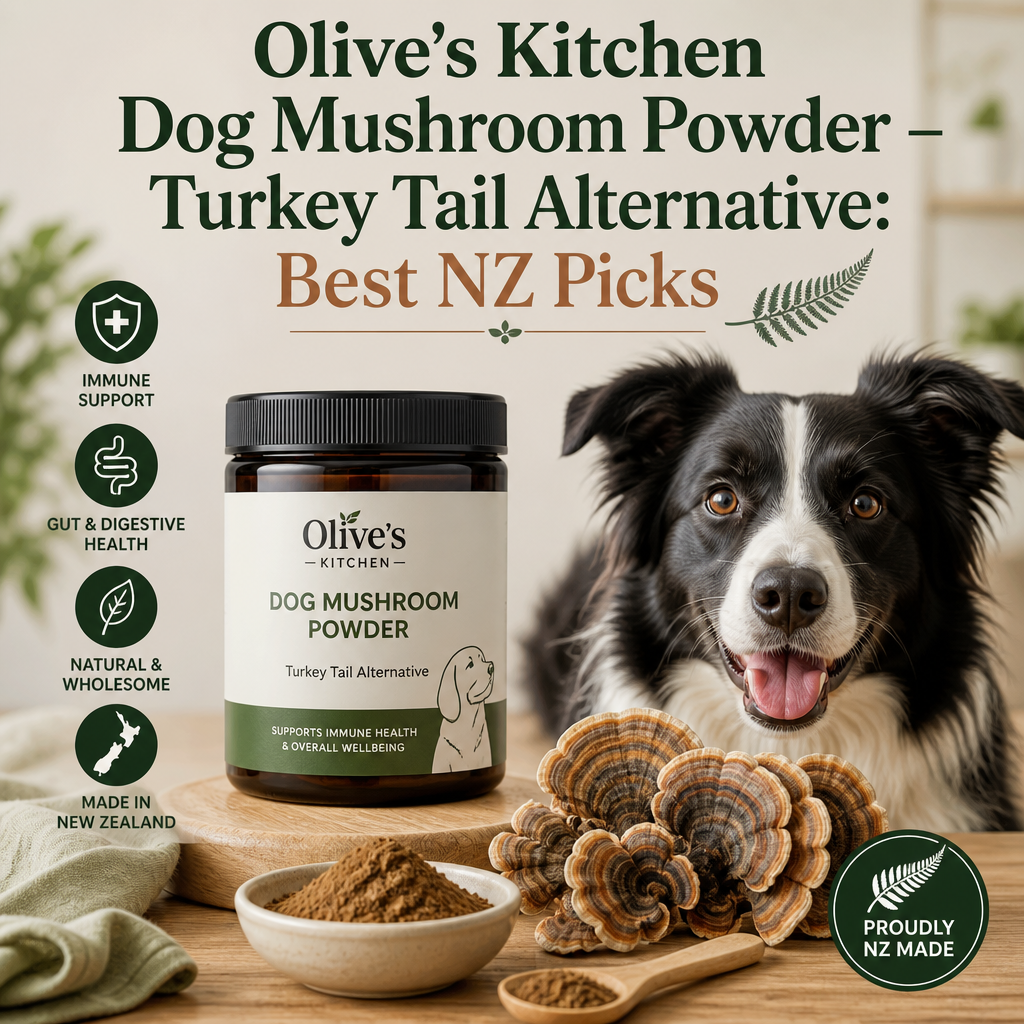
Turkey tail, also known as Trametes versicolor or Coriolus versicolor, is a medicinal mushroom traditionally used in various health applications. Its naturally occurring polysaccharides, including beta-glucans, have attracted scientific interest because of their potential role in supporting normal immune function. Many owners researching an Olive’s Kitchen Dog Mushroom Powder – Turkey Tail alternative are looking for the same general type of supportive care.
For dogs, turkey tail products are generally considered complementary supplements rather than treatments. Some owners use them alongside veterinary care for dogs diagnosed with tumours, while others choose mushroom powders to support general wellness in older pets. However, supplements should never replace surgery, chemotherapy, radiation therapy, pain management, or other treatments recommended by a veterinarian.
The quality of mushroom supplements can vary substantially. A product made from properly identified fruiting bodies may differ from one made primarily from mycelium or grain substrate. Extraction methods also matter, as hot-water extraction can help make certain mushroom compounds more accessible. Clear labelling is therefore essential when comparing products.
For a broader overview of mushroom-based support products, see Exploring Turkey Tail Mushrooms: A Natural Ally for Dogs Fighting Cancer.
Olive’s Kitchen Dog Mushroom Powder – Turkey Tail alternative options
When searching for an Olive’s Kitchen Dog Mushroom Powder – Turkey Tail alternative, New Zealand pet owners may encounter several categories of products. These include single-mushroom powders, multi-mushroom blends, liquid extracts, capsules, and veterinary-formulated immune-support supplements.
A single-mushroom product may be suitable for owners who want a straightforward ingredient profile. Common options include reishi, shiitake, maitake, lion’s mane, and chaga. Each mushroom has a different nutritional and traditional-use profile, so they should not be treated as interchangeable versions of turkey tail.
Multi-mushroom blends combine two or more fungi and may be designed to provide broader nutritional support. These formulas can be convenient, but the label should state the amount of each mushroom rather than listing a proprietary blend without quantities. Without transparent dosing, it is difficult to assess what a dog is receiving.
Liquid extracts may appeal to owners whose dogs refuse powders mixed into food. They can also be useful when accurate measurement is important. However, liquids may contain alcohol, glycerine, flavourings, preservatives, or other ingredients that are not suitable for every dog. Always check the full ingredient list.
When a product is positioned as an Olive’s Kitchen Dog Mushroom Powder – Turkey Tail alternative, the best choice is often the one that is easiest to verify. Look for clear sourcing, a simple formula, and a company that explains how the product fits into canine support care.
What to look for in dog mushroom supplements
The best alternatives to Olive’s Kitchen Dog Mushroom Powder – Turkey Tail should offer clear, reliable information. Before purchasing, check whether the product identifies the mushroom species, part used, extraction method, serving size, and intended animal use.
Look for products that provide:
- A complete ingredient list
- The scientific name of each mushroom
- Clear directions based on body weight
- Batch or lot identification
- Storage instructions
- Manufacturer contact details
- Evidence of quality testing where available
- No unnecessary artificial sweeteners or flavourings
It is also useful to check whether the powder is intended specifically for dogs. Human supplements may contain ingredients that are unsuitable for pets, including concentrated herbs, high levels of certain vitamins, xylitol, or other additives. Products designed for veterinary use may provide more appropriate dosing guidance.
A reputable manufacturer should be willing to explain where the mushrooms are sourced and how products are tested for contaminants such as heavy metals, pesticides, bacteria, and mould. This is particularly important for concentrated powders, because quality problems may not be obvious from appearance alone.
For a relevant product example and comparison point, review The Healthy Hound Pure Turkey Tail Alternative: 7 Powerful Tumor Supplements NZ.
Dog tumor supplements New Zealand: choosing responsibly
Interest in dog tumor supplements New Zealand owners can purchase has grown as more people seek supportive options for ageing or seriously ill pets. Yet the term “tumour supplement” can be misleading. No over-the-counter mushroom powder should be presented as a cure for cancer, and claims of guaranteed tumour reduction should be treated with caution.
Cancer is not one single disease. A supplement that may be appropriate for one dog could be unsuitable for another because of differences in tumour type, medication, liver function, kidney health, immune status, or appetite. Dogs receiving chemotherapy, corticosteroids, anti-inflammatory medication, or other treatments may require particularly careful supervision.
Before introducing any supplement, provide your veterinarian with the product label and the proposed dose. This allows them to consider possible interactions and determine whether the product is suitable. Your vet may also recommend blood tests or monitoring if your dog has an ongoing medical condition.
Veterinary oncology resources such as the American Veterinary Medical Association’s cancer guidance for pets can also help owners understand why supportive supplements should be considered alongside professional treatment rather than instead of it.
Potential safety considerations
Mushroom supplements are not automatically risk-free because they are natural. Some dogs may develop digestive upset, including loose stools, vomiting, reduced appetite, or abdominal discomfort. Allergic reactions are uncommon but possible. Stop the product and contact a veterinarian if your dog develops facial swelling, breathing difficulty, severe vomiting, or sudden weakness.
Extra caution is warranted for dogs with autoimmune disease, bleeding disorders, liver or kidney problems, or a history of mushroom sensitivity. Pregnant or nursing dogs should only receive supplements under veterinary guidance.
Introduce any new powder gradually and follow the manufacturer’s directions rather than assuming that a larger amount will provide greater benefit. Keep the product sealed, dry, and out of reach of pets and children. A supplement should complement a complete diet, regular veterinary checks, and an appropriate treatment plan.
In practical terms, the safest Olive’s Kitchen Dog Mushroom Powder – Turkey Tail alternative is the one your veterinarian is comfortable with and your dog tolerates well. Supportive care should remain simple, traceable, and easy to review if health changes occur.
Comparative guide for New Zealand buyers
When comparing local products, do not focus solely on price or the number of ingredients. Consider the concentration, serving size, testing standards, packaging, customer support, and whether the company provides animal-specific guidance. A small, clearly labelled product may be a better choice than a large container with vague claims.
New Zealand buyers should also confirm shipping and storage conditions, particularly for products affected by heat or moisture. Buy from established retailers, veterinary clinics, or manufacturers with traceable business information. Be cautious of marketplace listings that lack batch details or make dramatic claims about curing cancer.
Ultimately, the most suitable Olive’s Kitchen Dog Mushroom Powder – Turkey Tail alternative is one with transparent ingredients, responsible marketing, and veterinary approval for your dog’s circumstances. Mushroom supplements may have a role as part of supportive care, but they should be approached thoughtfully and never used to delay professional diagnosis or treatment.
If your veterinarian recommends a mushroom-based option, compare labels carefully and look for consistency across batches. In the long term, the right Olive’s Kitchen Dog Mushroom Powder – Turkey Tail alternative should fit your dog’s needs, your budget, and your vet’s plan without adding confusion. Many owners also prefer to keep their chosen Olive’s Kitchen Dog Mushroom Powder – Turkey Tail alternative consistent rather than changing products frequently, because steady routines make it easier to assess tolerance and response. For dogs already on cancer support protocols, a well-chosen Olive’s Kitchen Dog Mushroom Powder – Turkey Tail alternative may be one part of a broader care plan that also includes nutrition, monitoring, and medication review.
For additional background on mushroom support in dogs with cancer, compare this guide with Revitalizing Canine Health: The Breakthrough Power of Turkey Tail Mushroom for Dogs with Lymphoma. If your dog has a specific diagnosis, that context can help you and your veterinarian decide whether a mushroom supplement belongs in the plan.
by TCMVET | Aug 26, 2026 | Research and News
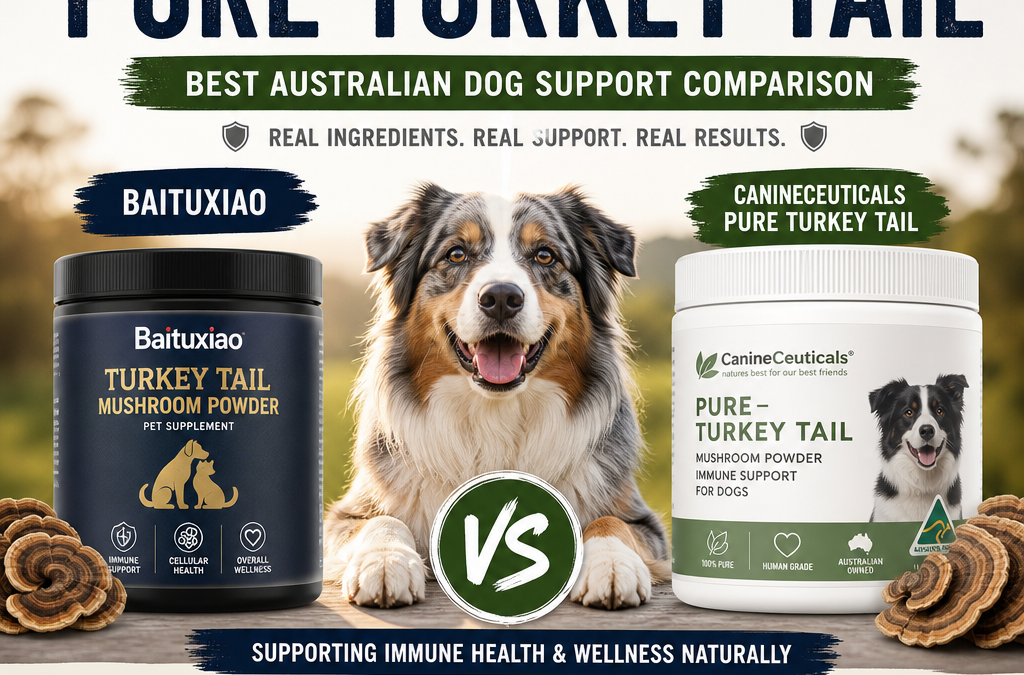
Baituxiao vs CanineCeuticals Pure Turkey Tail is a comparison many Australian dog owners consider when looking for nutritional support for a dog facing a serious health concern. Both products are associated with mushroom-based wellness strategies, but they are not automatically interchangeable. Differences in ingredients, intended use, formulation, quality controls, dosing guidance, and veterinary oversight can influence which option is more appropriate for an individual dog.
This guide provides a practical dog tumor support comparison without presenting either supplement as a cure. Nutritional products may help support general wellbeing, immune function, appetite, or quality of life, but they should not replace diagnosis or treatment from a qualified veterinarian.
Because cancer care can feel overwhelming, many owners want a simple way to compare products without getting lost in marketing claims. The best approach is to look at each formula as a support tool, then ask whether it offers clear ingredients, sensible dosing, and trustworthy manufacturing information. That kind of careful review is especially important when a dog is already on medication or is recovering from surgery, chemotherapy, or another veterinary intervention.
In practical terms, the Baituxiao vs CanineCeuticals Pure Turkey Tail question is not just about brand preference. It is about whether a product is easy to understand, whether it fits the dog’s current health plan, and whether it can be used safely over time. For many owners, those details matter more than the front-label claims.
Why mushroom supplements are considered for dogs
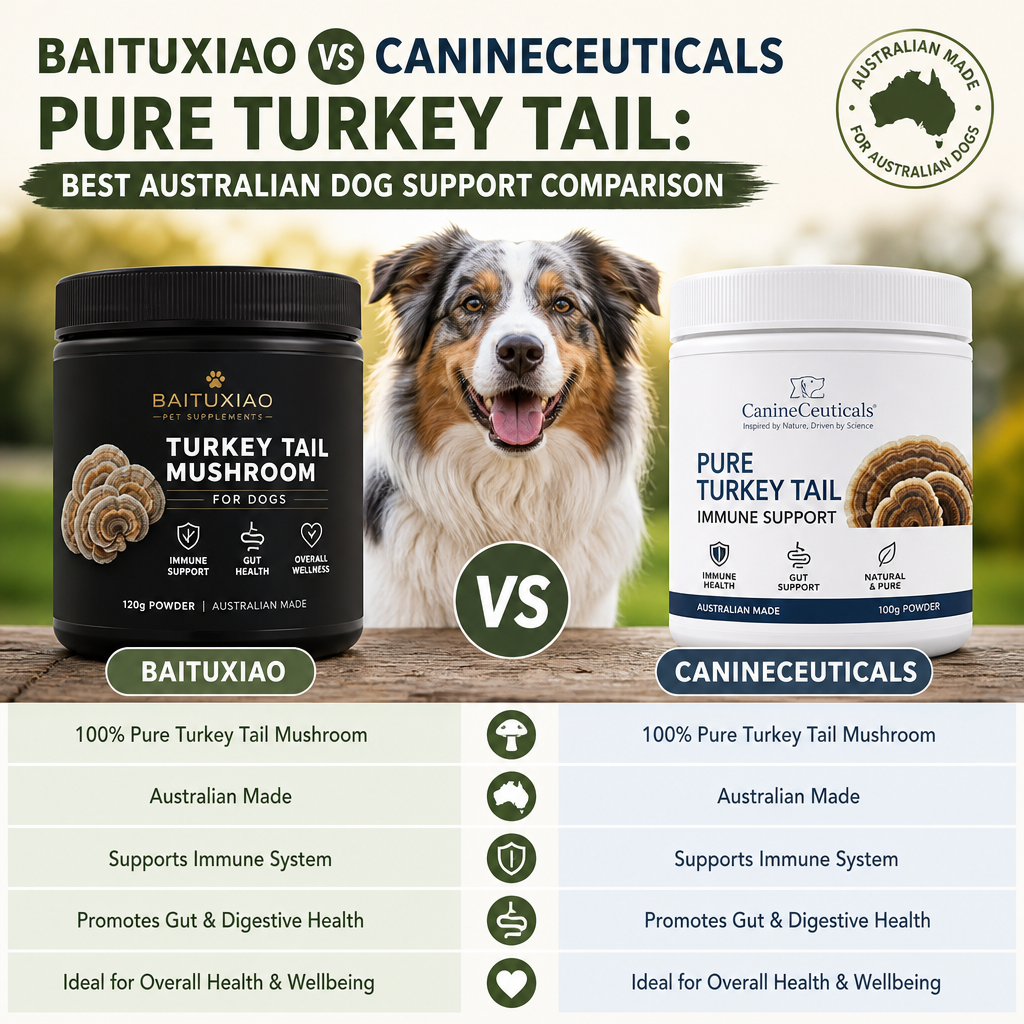
Medicinal mushrooms have attracted attention because they contain naturally occurring compounds such as beta-glucans, polysaccharides, triterpenes, and other antioxidants. These compounds may interact with the immune system and contribute to broader nutritional support. Turkey tail, in particular, is widely studied for its polysaccharide content and has become a popular ingredient in canine wellness products. In many cases, Baituxiao vs CanineCeuticals Pure Turkey Tail becomes a question of how focused that support should be.
However, research quality varies. Findings from laboratory studies, human research, or small veterinary investigations cannot always be applied directly to every dog. A supplement’s potential value depends on factors such as the mushroom species, extraction method, concentration, purity, dose, and the dog’s overall medical condition. That is why owners comparing Baituxiao vs CanineCeuticals Pure Turkey Tail should look beyond brand names and focus on the evidence behind the formula.
For Australian owners comparing mushroom products, it also helps to review credible background information from the Merck Veterinary Manual before making decisions with a veterinarian.
When evaluating a dog tumor support comparison, it is also useful to remember that supportive care is only one part of a wider treatment plan. A supplement may fit well alongside veterinary advice, but it does not replace imaging, biopsy, bloodwork, pain control, or monitoring.
Dogs with cancer or suspected tumors may experience changes in appetite, energy, digestion, and body weight. Some owners look for mushroom supplements because they want something gentle that can be added to an existing plan. That said, “gentle” does not mean “appropriate for every dog.” A product that suits one patient may be a poor fit for another, particularly if the dog has a history of stomach sensitivity or is taking several medications.
It is also worth remembering that supportive supplements are typically intended to work gradually. They are not fast-acting rescue treatments, and they should not create unrealistic expectations. A thoughtful comparison should therefore focus on consistency, safety, and practicality rather than dramatic promises.
How to read the label before comparing brands
Before deciding between the two, it helps to slow down and read the product label carefully. A supplement label should tell you exactly what the product contains, how much of each ingredient is present, and how the product is meant to be given. This is especially helpful when the packaging uses broad language such as “immune support” without explaining the actual formulation.
Look for the mushroom’s scientific name, the part used in the product, and whether the supplement relies on fruiting bodies, mycelium, or both. Fruiting bodies and mycelium are not identical, and the extraction method can influence the final content of active compounds. If a label does not make this clear, it becomes harder to compare one brand with another in a meaningful way.
Also check whether the product provides a per-serving amount rather than only a proprietary blend. Proprietary blends can hide the exact contribution of each ingredient, making it difficult to know whether the dose is substantial or minimal. For dogs with medical needs, that level of transparency matters. When owners ask Baituxiao vs CanineCeuticals Pure Turkey Tail which one is better, the answer often depends on which brand provides the clearest label.
Useful label details include:
- scientific ingredient names
- amount per serving
- weight-based dosing instructions
- batch or lot number
- expiry date
- storage guidance
- manufacturer or distributor contact information
These details do not guarantee that a supplement will work for every dog, but they do make it easier to judge quality and consistency. If the label is vague, incomplete, or filled with marketing language instead of facts, it is reasonable to be cautious.
Another helpful step is to compare the product description against the actual supplement facts panel. Sometimes a product is marketed as a turkey tail formula, but the full label reveals additional herbs, fillers, or flavoring agents. Those additions may not be problematic in every case, but they do matter when a dog has a sensitive stomach or when the owner wants to keep the supplement plan as simple as possible.
The most important starting point in a Baituxiao vs CanineCeuticals Pure Turkey Tail comparison is to examine what each product actually contains. A single-ingredient turkey tail supplement is generally designed to provide a focused source of turkey tail mushroom compounds. This may appeal to owners who want a simpler ingredient profile and prefer to introduce one supplement at a time. In a Baituxiao vs CanineCeuticals Pure Turkey Tail review, that simplicity can make day-to-day monitoring easier.
Baituxiao may be positioned as a broader or more complex formula, depending on the specific product version and market. Multi-ingredient formulas can combine mushroom extracts with additional botanical or nutritional ingredients. The benefit of this approach is that several ingredients may be selected to support different aspects of wellbeing. The drawback is that it can be harder to determine which ingredient is responsible for a reaction, benefit, or interaction. For owners who are already managing a sensitive treatment plan, Baituxiao vs CanineCeuticals Pure Turkey Tail may therefore come down to simplicity versus breadth.
Product labels should be checked carefully rather than relying only on brand descriptions. Look for the scientific name of each mushroom, the amount per serving, whether the product uses fruiting bodies or mycelium, and whether active compounds are standardized. A label that lists only a proprietary blend may make it difficult to assess the actual dose of each ingredient.
When you compare Baituxiao vs CanineCeuticals Pure Turkey Tail closely, the label details often matter more than the marketing language on the front of the package.
A well-documented label also helps your veterinarian assess whether the supplement fits the dog’s needs. If dosing, sourcing, and testing are easy to verify, Baituxiao vs CanineCeuticals Pure Turkey Tail becomes a more practical conversation and less of a guessing game.
Another factor to consider is palatability. Some dogs willingly accept chewable or powder-based supplements, while others refuse products that smell strong or change the flavor of their food. If the dog is already eating poorly, even a well-designed formula can become difficult to use if it is not easy to administer. In real-world use, the best option is not always the one with the most impressive ingredient list; it is often the one the dog will actually take consistently.
Consistency also affects the way owners judge results. If a supplement is difficult to give, doses may be skipped, split unevenly, or mixed into food in a way that the dog does not fully consume. That makes it harder to tell whether the product is helping. A transparent formulation with straightforward directions gives the owner a better chance of sticking to a plan and observing whether the supplement is tolerated.
Turkey tail focus versus a broader support strategy
CanineCeuticals Pure Turkey Tail may be more suitable for owners seeking a straightforward, narrowly targeted supplement. A simple formulation can make monitoring easier, especially when a dog is already taking prescription medicines, undergoing chemotherapy, or managing digestive sensitivity. In that setting, Baituxiao vs CanineCeuticals Pure Turkey Tail often favors the product that is easier to track.
Baituxiao may be considered by owners interested in a more comprehensive product. Yet “more ingredients” does not necessarily mean “more effective.” Each additional component increases the importance of checking safety, tolerability, and potential interactions. Dogs with liver disease, kidney disease, pancreatitis, immune-mediated conditions, or multiple medications may require especially careful supervision.
The best choice in this dog tumor support comparison should therefore be based on the dog’s medical plan rather than the number of ingredients listed on the packaging. A broader formula can be appealing, but it should still be judged by quality, consistency, and the likelihood that each ingredient has a clear purpose.
In practical terms, Baituxiao vs CanineCeuticals Pure Turkey Tail often comes down to whether you want a broader wellness blend or a cleaner single-mushroom formula that is easier to assess over time. Many owners prefer the single-ingredient approach when they are trying to isolate effects and avoid unnecessary overlap with existing medications or supplements.
If you are still deciding, think about the dog’s current treatment goals. Is the priority appetite, digestion, immune support, or simply a cautious add-on to an existing plan? Once those goals are clear, Baituxiao vs CanineCeuticals Pure Turkey Tail is easier to evaluate in a way that stays aligned with veterinary advice.
For example, if the goal is simply to support a dog while keeping the plan as uncomplicated as possible, a focused turkey tail formula can be easier to integrate. If the owner is searching for broader nutritional coverage and the veterinary team is comfortable with the ingredients, a multi-component product may be considered. The key is matching the supplement to the dog rather than matching the dog to the supplement.
Quality, testing, and manufacturing standards
Quality is a major factor when comparing supplements available to Australian pet owners. A reputable product should provide clear information about manufacturing, batch consistency, ingredient sourcing, and contamination testing. Mushroom products should ideally be tested for heavy metals, pesticides, microbes, and unwanted adulterants. That level of transparency is especially important in a Baituxiao vs CanineCeuticals Pure Turkey Tail comparison because mushroom products can vary widely in quality.
Australian buyers should also consider how a product is imported, stored, and distributed. Heat, humidity, and lengthy transport can affect product stability. Packaging should include an expiry date, batch or lot number, storage instructions, and contact details for the manufacturer or distributor. If those details are missing, it is harder to trust the product’s consistency from one purchase to the next.
It is also useful to distinguish between a product being “natural” and being well controlled. Natural ingredients can still vary in strength and may cause side effects or interact with medicines. Transparent documentation is more valuable than broad marketing claims. In short, Baituxiao vs CanineCeuticals Pure Turkey Tail should be judged on the quality evidence available, not on packaging language alone.
For a closer look at how mushroom supplements are often assessed in practice, it can also help to compare formulas listed in the Dog Tumour Supplements: 7 Safe, Effective Support Options Compared guide. That can give owners a broader frame of reference before narrowing the choice.
Good manufacturing practice matters because it helps make a Baituxiao vs CanineCeuticals Pure Turkey Tail decision less guesswork-driven and more evidence-based. The more transparent the product, the easier it is for a vet and owner to decide whether it deserves a place in the dog’s care plan.
When a company clearly explains sourcing and quality control, it signals that the supplement has been developed with consistency in mind. That does not guarantee results, but it does reduce uncertainty. If a product makes strong claims while offering very little detail about testing, it is reasonable to treat those claims carefully.
For owners in Australia, this point is especially important because imported supplements may pass through multiple supply steps before reaching the customer. Each step can introduce variation. A brand that documents its process well is usually easier to trust than one that relies mostly on promotional language.
Safety and possible side effects
Mushroom-based supplements are often tolerated by dogs, but they are not risk-free. Possible side effects can include loose stools, vomiting, reduced appetite, gas, or allergic reactions. Some products may also affect immune activity or blood clotting, which can be relevant before surgery or alongside specific medications. For that reason, Baituxiao vs CanineCeuticals Pure Turkey Tail should always be considered with the dog’s broader medical picture in mind.
Owners should tell their veterinarian about every supplement the dog receives. This is particularly important if the dog is taking corticosteroids, immunosuppressive medicines, anticoagulants, non-steroidal anti-inflammatory drugs, or cancer therapies. A veterinarian may recommend avoiding a supplement temporarily, adjusting the timing, or monitoring bloodwork. That review is especially helpful when deciding whether Baituxiao vs CanineCeuticals Pure Turkey Tail suits the dog at the current stage of treatment.
Introduce only one new product at a time, use the label’s weight-based guidance, and observe the dog closely during the first several days. Stop the product and seek veterinary advice if there is persistent vomiting, severe diarrhea, facial swelling, breathing difficulty, marked lethargy, or another sudden change.
If your dog is already on a treatment plan, Baituxiao vs CanineCeuticals Pure Turkey Tail should be reviewed with the same caution you would give any other supportive product. A careful start and close observation matter more than rushing to add multiple supplements at once.
It can also help to think about safety in terms of the whole household routine. For example, if one person gives the supplement with breakfast and another person gives medication later in the day, everyone should be clear about the timing and dose. Accidental double dosing or inconsistent administration can create confusion and make it difficult to judge how the dog is responding.
Safety monitoring does not have to be complicated. A simple notebook or phone note can track stool quality, appetite, energy level, and any unusual signs after starting the supplement. This record can make follow-up conversations with your vet much more useful, especially if the dog has ongoing cancer care or a complex medical history.
Choosing between the two options
When deciding between Baituxiao vs CanineCeuticals Pure Turkey Tail, consider the following questions:
- Does the dog need a single-ingredient product or a broader formula?
- Is the complete ingredient list clearly disclosed?
- Are active amounts provided rather than hidden in a blend?
- Does the manufacturer provide evidence of batch testing?
- Could any ingredient interact with current treatment?
- Can the product be sourced and stored reliably in Australia?
- Is the dog’s veterinarian comfortable with its use?
- Is there a clear plan for assessing whether the supplement is helping?
A simpler turkey tail product may be easier to evaluate, while a broader formula may be attractive when multiple nutritional goals are being considered. Neither option should be selected solely because of online testimonials or claims that imply guaranteed tumor shrinkage. A sensible Baituxiao vs CanineCeuticals Pure Turkey Tail decision should be grounded in the dog’s actual needs and in transparent product information.
For owners comparing Baituxiao vs CanineCeuticals Pure Turkey Tail, the safest approach is to match the product to the dog’s health plan, not to the loudest brand promise. If a supplement cannot be explained clearly, it is usually better to keep looking or ask the veterinarian for a more suitable option.
If you want to compare other mushroom-based choices after narrowing this one down, the Ocoxin Pets alternative: 5 Powerful, Affordable Options for Dogs With Tumors in the Netherlands article shows how ingredient profiles and support goals can differ across products.
It may also help to compare the practicality of the formula. Ask whether it is easy to measure, whether it can be mixed into food without upsetting the dog, and whether the serving size remains realistic for the dog’s body weight. A product that is theoretically useful but hard to administer may end up being less effective in everyday life than a simpler alternative.
If cost is a concern, do not judge value only by the bottle price. Consider how long the product lasts, how many servings are included, and whether the formula replaces or duplicates something else already in the care plan. Sometimes a cheaper bottle becomes less economical if it is difficult to use or if the dog refuses it.
Setting realistic expectations
A responsible dog tumor support comparison should focus on support, not promises. Supplements may contribute to appetite, energy, digestion, or general nutritional care in some dogs, but outcomes vary considerably. The type, location, and stage of a tumor, along with the dog’s age and treatment plan, are much more significant than the supplement brand alone. That is why Baituxiao vs CanineCeuticals Pure Turkey Tail should be treated as a support decision, not a cure decision.
Keep a basic record of appetite, stool quality, activity, weight, pain indicators, and any changes after starting a product. This information can help the veterinarian determine whether the supplement is tolerated and whether it fits into the wider care plan. It can also help reveal whether the dog is benefiting from the chosen Baituxiao vs CanineCeuticals Pure Turkey Tail option or whether a different approach would be better.
Ultimately, Baituxiao vs CanineCeuticals Pure Turkey Tail represents different formulation approaches rather than universally better or worse choices. The most appropriate product is the one with transparent quality information, a suitable ingredient profile, reliable dosing guidance, and veterinary approval for the individual dog.
If you are still weighing Baituxiao vs CanineCeuticals Pure Turkey Tail, the best next step is to review the label with your veterinarian and confirm whether the supplement complements the rest of the dog’s care plan. With that guidance, the choice becomes clearer and more practical for the dog’s long-term wellbeing.
It is also sensible to define success before starting. For one dog, success might mean improved appetite or steadier energy. For another, it might mean no digestive upset and a supplement that fits cleanly into the treatment routine. These are realistic goals, and they are often more meaningful than expecting dramatic changes that no supplement can reliably deliver.
Owners should also be prepared to stop or change the product if circumstances change. A dog’s needs can shift quickly during cancer care, especially if appetite drops, medications are adjusted, or surgery is scheduled. What works during one phase of treatment may need to be reconsidered later.
Questions to ask your veterinarian
If you are discussing Baituxiao vs CanineCeuticals Pure Turkey Tail with a veterinarian, these questions can help guide the conversation:
- Is this supplement appropriate for my dog’s diagnosis and current treatment?
- Could it interact with any prescription medication my dog is taking?
- Should it be given with food or on an empty stomach?
- How long should I trial it before reassessing?
- What signs would suggest my dog is not tolerating it?
- Are there any lab values or symptoms I should monitor?
- Would a single-ingredient product be safer than a blended formula?
These questions are useful because they move the conversation away from brand hype and toward practical care. They also help set clear expectations for follow-up. A supplement that seems promising in theory may still be a poor choice if it complicates the dog’s medication schedule or causes stomach upset.
Veterinarians may also be able to suggest whether a mushroom supplement is even necessary. In some cases, the most beneficial step is not adding another product, but focusing on diet, hydration, pain control, anti-nausea support, or a different treatment adjustment. That perspective can save owners time, money, and stress.
Final thoughts
Baituxiao vs CanineCeuticals Pure Turkey Tail is best viewed as a comparison between two different ways of delivering mushroom-based support. One may offer a broader formula, while the other may provide a more focused turkey tail approach. The better option depends on ingredient transparency, testing, safety, veterinary compatibility, and the dog’s individual needs.
For Australian dog owners, the most reliable path is to choose cautiously, read labels carefully, and work with a veterinarian who understands the dog’s full treatment plan. If a product is clearly explained, easy to dose, and suitable for the dog’s condition, it is easier to use with confidence. If it is vague, overly complex, or difficult to verify, it may be worth exploring other options.
In the end, the best Baituxiao vs CanineCeuticals Pure Turkey Tail decision is the one that supports the dog without adding unnecessary risk or confusion. Thoughtful comparison, not marketing pressure, leads to the most practical choice.
by TCMVET | Aug 26, 2026 | Research and News
Botanical tumor support vs Medicinal mushrooms / immune is an important comparison for Finnish dog owners looking for complementary nutritional support during a cancer diagnosis. These supplements are not cancer treatments, and they should never replace veterinary care, surgery, chemotherapy, radiation, or prescribed medication. However, carefully selected products may help support appetite, general wellbeing, digestion, or immune function when used under professional guidance.
Understanding the two supplement categories
Botanical tumor support products typically contain plant-based ingredients chosen for their antioxidant, anti-inflammatory, or general cellular-support properties. Depending on the formula, they may include herbs, concentrated plant extracts, vitamins, minerals, or compounds traditionally used to support normal body functions.
Medicinal mushroom products, by contrast, are usually based on fungi such as reishi, turkey tail, shiitake, maitake, or cordyceps. Their key compounds often include beta-glucans and other polysaccharides. These substances are studied for their potential effects on immune signaling, although research in dogs remains limited and product quality varies considerably.
The difference is not simply “plants versus mushrooms.” The more useful distinction concerns the intended role of the product. Botanical formulas may provide broader nutritional and antioxidant support, while medicinal mushroom products are commonly marketed for immune modulation. Neither category should be assumed to work directly against a tumor.
For many owners, the first step in evaluating botanical tumor support vs Medicinal mushrooms / immune products is to ask what problem the supplement is actually meant to address. Appetite, digestion, overall resilience, and quality of life are different goals, and they call for different ingredients.
Botanical tumor support vs Medicinal mushrooms / immune: key differences
When comparing botanical tumor support vs Medicinal mushrooms / immune products, begin with the label’s purpose and ingredient profile rather than marketing language.
Botanical products may be selected when a dog needs general nutritional support, help maintaining normal inflammatory balance, or assistance with appetite and vitality. Some formulas combine several herbs, which can make them difficult to evaluate because each ingredient may have different effects and possible interactions.
Medicinal mushrooms are often more narrowly focused on immune-related support. Beta-glucans may interact with immune receptors and influence immune activity, but “immune boosting” is an oversimplification. An immune system that is already activated does not always benefit from indiscriminate stimulation. The desired effect is balance, not simply more activity.
For this reason, a dog undergoing cancer treatment may be better served by a carefully chosen, standardized product than by a complex blend containing many poorly documented ingredients.
Dog owners comparing botanical tumor support vs Medicinal mushrooms / immune formulas should also pay attention to the form of the product. Capsules, powders, chews, tinctures, and liquid extracts can behave differently in the body, and palatability matters when a dog is already eating less than usual.
What research can and cannot tell us
Research into medicinal mushrooms and canine cancer support is developing, but evidence is not equally strong for every species or supplement. Some mushroom compounds have been investigated in laboratory studies, animal models, and limited clinical settings. Results from human or laboratory research cannot automatically be transferred to dogs.
Botanical ingredients have similar limitations. A plant extract may show antioxidant or anti-inflammatory activity in a test tube, yet the same effect may not occur at practical oral doses in a dog. Absorption, metabolism, tumor type, dosage, and the dog’s overall health all influence results.
A responsible dog cancer supplement comparison should therefore distinguish between:
- Laboratory evidence
- Studies in rodents or other animals
- Clinical studies in dogs
- Human clinical evidence
- Traditional use without strong clinical confirmation
The strongest practical evidence usually comes from veterinary experience, product consistency, safety monitoring, and a clear understanding of how the supplement fits into the dog’s treatment plan.
If you want a broader background on mushroom-based support, the article on the benefits of medicinal mushrooms for dogs explains how these products are commonly used in supportive care.
For readers who want to understand the science behind mushroom compounds, the U.S. National Center for Complementary and Integrative Health provides a useful overview of medicinal mushrooms and their evidence base at https://www.nccih.nih.gov/health/providers/digest/mushrooms-science.
Safety considerations for dogs with cancer
Cancer patients can be medically fragile. They may have reduced appetite, liver or kidney concerns, anemia, digestive problems, or a weakened ability to tolerate unnecessary ingredients. Supplements can also interact with cancer drugs, pain medication, steroids, blood thinners, anesthetics, and immune-modulating therapies.
Potential concerns include changes in blood clotting, altered liver enzyme activity, gastrointestinal upset, allergic reactions, and effects on blood pressure or blood sugar. Certain herbs and mushroom extracts may be inappropriate before surgery or during specific chemotherapy protocols.
Quality is another major issue. Choose products made specifically for dogs, with clear ingredient quantities, batch testing, manufacturing information, and instructions based on body weight. Avoid products that hide amounts in proprietary blends or make promises such as “cures cancer,” “destroys tumors,” or “replaces chemotherapy.” These claims are warning signs rather than evidence of effectiveness.
Because botanical tumor support vs Medicinal mushrooms / immune products can both interact with treatment plans, it is smart to introduce only one product at a time and track any change in stool quality, appetite, energy, or vomiting.
How to compare a product responsibly
A useful dog cancer supplement comparison should examine more than the number of ingredients. Consider the following factors:
Ingredient transparency
The label should identify each ingredient and its amount per serving. Mushroom products should ideally specify the species, part used, extraction method, and beta-glucan content. Botanical formulas should list standardized extracts where possible.
Product purity
Look for testing for heavy metals, pesticides, microbes, and contaminants. This is especially important with mushrooms, herbs, and products sourced from environments where contamination can occur.
Veterinary compatibility
The product should be reviewed by the dog’s veterinarian, particularly if treatment involves chemotherapy, radiation, surgery, corticosteroids, or anticoagulants. A veterinary oncologist or clinical nutritionist may provide the most relevant guidance.
Practical tolerance
A supplement that causes vomiting, diarrhea, poor appetite, or lethargy is not providing useful support. Introduce only one new product at a time, use the lowest appropriate dose, and monitor the dog closely.
Realistic goals
The most reasonable goals are maintaining quality of life, supporting normal nutrition, helping preserve appetite, and complementing the treatment plan. Supplements should not be judged by dramatic promises or anecdotal claims.
Which option may suit a Finnish dog?
Finnish conditions do not fundamentally change how a supplement works, but climate, availability, and regulatory standards may influence purchasing decisions. Owners should buy from reputable Nordic or European suppliers that provide clear labeling and traceability. Products imported from outside Europe may have inconsistent concentrations or limited quality documentation.
The best choice depends on the individual dog. A dog with poor appetite may need nutritional and digestive support rather than an immune-focused mushroom blend. A dog receiving chemotherapy may require a simpler formula to reduce interaction risks. Another dog may not need a supplement at all if it is eating well and maintaining stable health.
Veterinary care should remain central. Regular blood tests, weight checks, appetite monitoring, and communication with the oncology team are more important than adding multiple products. For Finnish owners comparing botanical tumor support vs Medicinal mushrooms / immune options, a calm, evidence-aware approach is usually the safest one.
If your dog’s veterinarian recommends a broader supplement plan, you may also want to review the veterinary mycotherapy alternatives page for another perspective on supportive products used in cancer care.
Final perspective
Botanical tumor support vs Medicinal mushrooms / immune is not a contest with one universal winner. Botanical formulas may offer broader plant-based support, while medicinal mushrooms are generally chosen for immune-related purposes. Both categories have potential limitations, uncertain evidence, and possible interactions.
For Finnish dog owners, the safest approach is to select a transparent, quality-tested product that matches the dog’s diagnosis, treatment, and current symptoms. Use one supplement at a time, monitor carefully, and keep the veterinary team informed. A thoughtful supplement can complement responsible cancer care, but it should never distract from proven treatment or create unrealistic expectations.
In short, botanical tumor support vs Medicinal mushrooms / immune products can both have a place in supportive care, but only when their role is understood clearly and their use is coordinated with a veterinarian.
