by TCMVET | Aug 26, 2026 | Research and News
Cane cancro perdita appetito e peso sono segnali che meritano attenzione, soprattutto quando compaiono insieme. In un cane affetto da tumore, mangiare meno può dipendere dalla malattia, dal dolore, dalla nausea o dagli effetti delle terapie, mentre il dimagrimento può derivare sia da una ridotta assunzione di cibo sia da alterazioni del metabolismo. Intervenire presto, con il supporto del veterinario, aiuta a preservare energia, massa muscolare e qualità della vita.
In questo contesto, la cane cancro perdita appetito non va mai considerata un semplice capriccio: è spesso un campanello d’allarme che richiede osservazione, pazienza e un piano nutrizionale ben costruito. L’obiettivo non è solo farlo mangiare di più, ma aiutarlo a nutrirsi meglio, in modo sicuro e sostenibile.
Perché il tumore può causare perdita di appetito
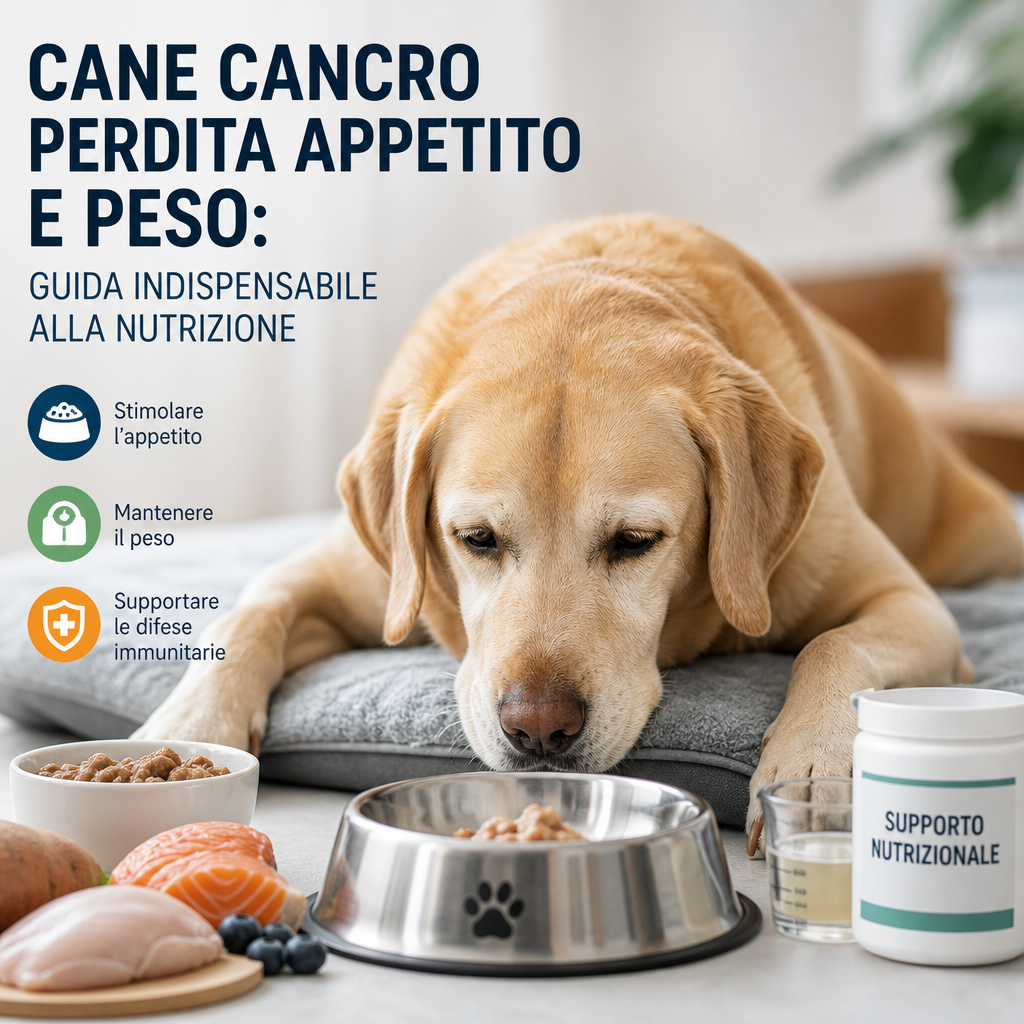
La perdita dell’appetito, chiamata anche anoressia o iporexia quando è parziale, è frequente nei cani malati. Il tumore può produrre sostanze infiammatorie che alterano il senso di fame e il modo in cui l’organismo utilizza nutrienti e riserve energetiche. Anche la localizzazione della massa può influenzare l’alimentazione: un tumore nella bocca, nella gola o nell’apparato digerente può rendere difficile o doloroso masticare e deglutire.
A questo si aggiungono fattori come nausea, stitichezza, dolore, febbre, ansia e stanchezza. Chemioterapia, radioterapia e alcuni farmaci possono modificare il gusto o provocare disturbi gastrointestinali. Per questo, quando si osserva un cane con cancro e perdita di appetito, è importante non attribuire automaticamente il problema a un semplice “capriccio”.
In molti casi il cane mostra segnali sottili prima di smettere del tutto di mangiare: annusa la ciotola, si allontana, lecca appena il cibo oppure preferisce piccoli bocconi. Notare questi cambiamenti ai primi segnali di cane cancro perdita appetito permette di intervenire prima che il calo dell’introito alimentare diventi più difficile da recuperare.
Ci sono anche fattori indiretti che pesano molto sulla fame. Un cane con dolore cronico può associare il momento del pasto a una sensazione spiacevole; un cane nauseato può voler evitare odori forti; un cane stanco può semplicemente non avere l’energia per alzarsi e andare verso la ciotola. Nei giorni peggiori, la cane cancro perdita appetito può apparire improvvisa, ma spesso è il risultato di una somma di piccoli cambiamenti progressivi.
Per questo la valutazione non dovrebbe concentrarsi solo su “quanto mangia”, ma anche su come si comporta prima, durante e dopo il pasto. Se il cane si avvicina al cibo ma poi si ferma, se mangia solo di sera o se preferisce leccare invece di masticare, queste informazioni possono orientare meglio la scelta terapeutica e nutrizionale.
Cane con cancro e perdita di peso: cosa significa
Il cane con cancro e perdita di peso può andare incontro a una condizione chiamata cachessia neoplastica. Si tratta di una perdita progressiva di peso e massa muscolare legata alla malattia, che non sempre si risolve aumentando semplicemente le calorie. L’organismo può infatti consumare energia in modo anomalo e utilizzare le proteine muscolari come fonte energetica.
Il dimagrimento va valutato osservando diversi elementi:
- rapidità e quantità della perdita di peso;
- riduzione della massa muscolare, soprattutto lungo la colonna e sugli arti;
- presenza di vomito, diarrea o difficoltà a deglutire;
- livello di energia e capacità di svolgere le normali attività;
- consumo effettivo di acqua e alimento;
- eventuali cambiamenti nelle feci o nella minzione.
Pesare il cane una volta alla settimana, possibilmente alla stessa ora e con lo stesso strumento, può aiutare a individuare cambiamenti significativi. Tuttavia, il peso da solo non è sufficiente: un cane può mantenere un peso simile ma perdere muscolo e accumulare liquidi o grasso.
Per questo è utile osservare anche il profilo corporeo complessivo, la tonicità dei muscoli e la tolleranza ai pasti. Quando il problema è legato alla cane cancro perdita appetito, il peso scende spesso in modo graduale; se invece la malattia è più aggressiva o ci sono nausea e dolore importanti, il calo può essere rapido e più evidente.
Un aspetto spesso sottovalutato è la differenza tra peso e condizione corporea. Il cane può sembrare “ancora uguale” a un primo sguardo, ma presentare un evidente svuotamento dei muscoli delle tempie, delle spalle o dei fianchi. In questi casi il proprietario nota una minore forza quando il cane sale le scale, si stanca prima durante le passeggiate o cerca più spesso di sdraiarsi. La cane cancro perdita appetito va quindi letta insieme a questi segnali funzionali, non solo ai numeri della bilancia.
Nutrizione del cane con tumore: obiettivi principali
La nutrizione del cane con tumore deve essere personalizzata. Non esiste una dieta unica adatta a tutti i pazienti oncologici, perché contano il tipo di tumore, la fase della malattia, le terapie in corso, l’età, la funzionalità di reni e fegato e l’eventuale presenza di diabete o altre patologie.
Gli obiettivi più importanti sono:
- mantenere un apporto calorico adeguato;
- limitare la perdita di massa muscolare;
- fornire proteine di buona qualità, nella quantità indicata dal veterinario;
- garantire una corretta idratazione;
- ridurre nausea, dolore e disturbi digestivi;
- rendere il pasto appetibile e facilmente digeribile.
In alcuni casi viene consigliato un alimento veterinario completo e bilanciato, formulato per cani con esigenze specifiche. In altri, può essere necessaria una dieta casalinga elaborata da un veterinario esperto in nutrizione. Preparare pasti domestici senza una formulazione professionale può causare carenze di vitamine, minerali, acidi grassi o aminoacidi.
Se vuoi approfondire anche il tema degli integratori, può essere utile leggere Integratori cane cancro: 7 consigli pratici, utili e sicuri per scegliere bene, soprattutto per capire quali criteri usare prima di aggiungere prodotti alla dieta.
Nel cane oncologico la qualità della dieta conta quanto la quantità. Un alimento ben tollerato, con una consistenza adatta e un profilo nutrizionale completo, può risultare più utile di un cibo molto calorico ma poco accettato. Per questo il piano alimentare va costruito con criteri realistici: meglio un cane che mangia regolarmente un pasto adeguato che un cane costretto a rifiutare una proposta “perfetta” sulla carta.
In alcune situazioni il veterinario può consigliare strategie temporanee per sostenere l’introito calorico, come pasti più frequenti, snack clinicamente appropriati o, quando necessario, assistenza nutrizionale mirata. La priorità resta sempre ridurre il catabolismo e proteggere i muscoli, perché la perdita di massa magra peggiora la qualità di vita e riduce la capacità di recupero.
Come favorire l’assunzione di cibo
Quando il cane mangia poco, alcune strategie possono essere utili, ma devono essere adattate alle sue condizioni cliniche. Offrire piccole porzioni più volte al giorno spesso è meglio di un unico pasto abbondante. Il cibo può essere leggermente riscaldato per intensificarne l’aroma, purché non sia caldo eccessivamente.
È importante proporre il pasto in un ambiente tranquillo, lontano da rumori, altri animali o odori sgradevoli. Una ciotola facilmente accessibile può aiutare i cani deboli o con dolore al collo e alle articolazioni. Se il cane sembra interessato al cibo ma non riesce a masticare o deglutire, occorre informare rapidamente il veterinario.
Non bisogna forzare il cane a mangiare, né somministrare alimenti grassi, avanzi, dolci o prodotti potenzialmente tossici. Cambiare continuamente alimento può aumentare i disturbi gastrointestinali. Qualsiasi modifica significativa dovrebbe avvenire gradualmente, salvo diverse indicazioni mediche.
Altri accorgimenti pratici possono migliorare la risposta al pasto: mantenere orari regolari, evitare sessioni troppo lunghe, offrire consistenze diverse se consentito dal veterinario e monitorare quali cibi risultano più accettati. Nei cani con cane cancro perdita appetito, piccoli adattamenti quotidiani possono fare una grande differenza nel consumo calorico totale.
Segnali utili da osservare ogni giorno
Annotare il comportamento del cane può aiutare il veterinario a capire come intervenire. Tra i segnali più utili ci sono l’interesse per il cibo, il tempo impiegato per finire il pasto, la presenza di nausea, la qualità delle feci e l’energia dopo aver mangiato. Anche un cambiamento nel modo in cui il cane beve può indicare disidratazione o discomfort.
Un diario alimentare semplice, anche solo con poche note giornaliere, può fare la differenza. Segnare cosa viene offerto, quanto viene consumato e quali sintomi compaiono dopo il pasto permette di individuare schemi ricorrenti. Questo aiuta a capire se la cane cancro perdita appetito migliora con un certo alimento, peggiora in determinate ore della giornata o si associa a episodi di nausea e dolore.
In casa, osservare il cane con attenzione non significa allarmarsi a ogni piccolo cambiamento, ma riconoscere pattern stabili. Ad esempio, un cane che mangia meglio al mattino potrebbe avere nausea serale; un cane che gradisce solo cibi morbidi potrebbe avere difficoltà orali; un cane che lascia il cibo a metà potrebbe aver raggiunto il suo limite di comfort. Tutte queste informazioni sono preziose per personalizzare l’intervento.
Quando il cane rifiuta il cibo: cosa fare nelle prime 24 ore
Se un cane con tumore inizia a rifiutare il pasto, nelle prime 24 ore conviene mantenere la calma e osservare con attenzione. Prima di cambiare dieta in modo drastico, è utile verificare se ci sono segnali di dolore, nausea, febbre o stipsi. Un solo pasto saltato non sempre indica un’emergenza, ma la persistenza del problema va sempre considerata seriamente.
Si può provare a offrire una piccola quantità di alimento abituale, presentato in modo più appetibile, senza insistere se il cane si allontana. È meglio evitare di aggiungere troppi cibi diversi nello stesso momento, perché potrebbe diventare più difficile capire cosa tollera davvero.
Se il cane continua a non mangiare, oppure mostra debolezza, vomito o dolore, bisogna contattare il veterinario. In un quadro di cane cancro perdita appetito, agire in fretta è importante perché un’assenza di cibo prolungata può aggravare rapidamente il calo di energia e la perdita di massa muscolare.
Alcune misure di supporto non sono da improvvisare a casa: farmaci anti-nausea, analgesici, stimolanti dell’appetito o integrazioni particolari devono essere prescritti e dosati da un professionista. L’uso “fai da te” può peggiorare il quadro o mascherare i sintomi senza risolvere la causa.
Integratori e alimenti “anticancro”: attenzione alle promesse
Sul mercato esistono numerosi integratori pubblicizzati per sostenere le difese immunitarie o contrastare i tumori. Alcuni nutrienti, come gli acidi grassi omega-3, possono essere presi in considerazione in determinati pazienti, ma il loro utilizzo deve essere valutato dal veterinario. Dose, qualità del prodotto e interazioni con farmaci sono aspetti fondamentali.
Anche rimedi naturali, estratti vegetali e alte dosi di vitamine possono essere rischiosi. Un prodotto “naturale” non è automaticamente sicuro e alcuni integratori possono interferire con chemioterapia, coagulazione o funzionalità epatica e renale. La nutrizione deve sostenere il trattamento oncologico, non sostituirlo.
Per questo motivo, prima di comprare un prodotto pubblicizzato online, è meglio verificare se esistono dati affidabili, se il dosaggio è corretto e se il cane sta assumendo altri farmaci. Una risorsa utile per orientarsi tra le scelte più comuni è anche Miglior integratore cane tumore: 7 scelte davvero utili da valutare con attenzione, sempre con il parere del veterinario come punto di partenza.
Quando il cane mangia poco, il rischio maggiore è fare “troppo” o “troppo presto” senza una guida. In alcuni casi il supporto nutrizionale può includere integratori, ma in altri il problema principale è il dolore, la nausea o un disturbo della deglutizione. Ecco perché, davanti a cane cancro perdita appetito, il focus deve restare sulla causa di fondo e non solo sul prodotto da acquistare.
Se desideri verificare informazioni attendibili sulla nutrizione clinica e sulla sicurezza di alcuni nutrienti, può essere utile consultare una fonte educativa affidabile come le linee guida dell’Tufts Veterinary Nutrition. È un riferimento utile per approfondire, ma non sostituisce il parere del veterinario che conosce la storia clinica del cane.
Gestire i giorni difficili: piccole azioni che possono aiutare
Nei giorni in cui il cane sembra più debole, la priorità è ridurre il carico e rendere il pasto il più semplice possibile. Una routine prevedibile aiuta: stessi orari, stesso luogo, stessa ciotola se il cane la tollera bene. Alcuni cani apprezzano meglio alimenti tiepidi e morbidi, altri preferiscono consistenze più asciutte o semi-umide.
Può essere utile anche dividere il cibo in micro-porzioni e offrirle in momenti diversi della giornata. L’obiettivo è aumentare l’introito totale senza provocare disgusto o affaticamento. Se il cane ha dolore alla bocca, al collo o all’addome, la posizione della ciotola e il modo in cui si avvicina al cibo possono incidere molto.
Il supporto emotivo conta quanto quello nutrizionale. Un cane sereno, che si sente accompagnato senza pressione, tende spesso ad accettare meglio il pasto. Per questo il proprietario dovrebbe osservare, incoraggiare con calma e riferire al veterinario ogni variazione, anche minima, nel comportamento alimentare.
In questa fase è utile evitare cambiamenti inutili o “test” continui di alimenti nuovi. La stabilità è spesso più preziosa della novità. Con la cane cancro perdita appetito, l’approccio migliore è di solito quello più semplice: meno stress, più monitoraggio, più comunicazione con il veterinario.
Cane cancro perdita appetito: quando rivolgersi subito al veterinario
Un cane malato di tumore deve essere valutato rapidamente se non mangia per circa 24 ore, beve molto meno del solito, vomita ripetutamente, presenta diarrea intensa, è estremamente abbattuto o mostra dolore evidente. Anche una perdita di peso progressiva, alito insolito, difficoltà respiratoria o problemi a deglutire richiedono un controllo.
Il veterinario può eseguire esami del sangue, valutare idratazione e massa muscolare, controllare il dolore e prescrivere farmaci contro nausea, vomito o inappetenza quando appropriato. In alcune situazioni può essere necessario ricorrere temporaneamente a metodi assistiti di alimentazione, sempre sotto controllo professionale.
È utile anche intervenire prima che il cane arrivi a un punto di rifiuto totale del cibo. Un calo dell’appetito persistente, anche se non completo, merita attenzione perché può precedere il peggioramento della condizione generale. In pratica, nella gestione della cane cancro perdita appetito, la tempestività conta quasi quanto la scelta degli alimenti.
Se noti che il cane respira male, sembra confuso, non riesce a stare in piedi, rifiuta anche l’acqua o appare molto dolorante, non aspettare: contatta subito il veterinario o la struttura di emergenza. Questi segnali possono indicare un peggioramento importante che richiede valutazione immediata.
Domande utili da fare in visita
Durante il controllo, può essere utile chiedere quali sono le priorità del momento: controllo del dolore, gestione della nausea, scelta del cibo, frequenza dei pasti o eventuale necessità di integrazione. Chiedere al veterinario quale peso mantenere come obiettivo e quali segnali monitorare a casa aiuta a rendere la terapia più efficace e concreta.
Può essere utile anche chiedere se esistono effetti collaterali attesi delle terapie in corso e per quanto tempo potrebbero influenzare l’appetito. Sapere in anticipo cosa aspettarsi aiuta a distinguere un disturbo transitorio da una situazione che va rivalutata subito. Questa chiarezza riduce l’ansia del proprietario e rende più semplice intervenire in modo rapido se la cane cancro perdita appetito peggiora.
Un approccio personalizzato migliora il benessere
Gestire un cane con cancro, perdita di appetito e dimagrimento richiede osservazione quotidiana e collaborazione con il team veterinario. Annotare quanto mangia e beve, il peso, i sintomi e il livello di energia offre informazioni preziose per modificare tempestivamente il piano di cura.
Una nutrizione adeguata non elimina il tumore, ma può aiutare il cane a tollerare meglio le terapie, mantenere più a lungo la forza e affrontare la malattia con maggiore comfort. L’obiettivo principale è sempre il benessere complessivo dell’animale, attraverso scelte sicure, realistiche e basate sulle sue specifiche necessità.
Quando il proprietario osserva con attenzione la cane cancro perdita appetito e interviene con il supporto del veterinario, spesso riesce a migliorare l’energia quotidiana del cane, ridurre il disagio e preservare meglio la massa muscolare. Anche se ogni caso è diverso, una strategia nutrizionale ben seguita può fare una differenza concreta nella qualità di vita.
In sintesi, la chiave è combinare ascolto, monitoraggio e competenza professionale: riconoscere presto i cambiamenti, evitare soluzioni improvvisate e costruire un piano alimentare che tenga conto della malattia, delle terapie e delle reali capacità del cane di mangiare e assimilare. Questo approccio rende più gestibile il percorso e aiuta a proteggere il suo comfort giorno dopo giorno.
La gestione quotidiana funziona meglio quando è semplice e coerente: monitorare il peso, annotare gli episodi di rifiuto del cibo, controllare l’idratazione e mantenere un dialogo costante con il veterinario. Anche piccoli progressi, come finire un pasto in più o mostrare più interesse per l’alimento, sono segnali utili da valorizzare. Con la cane cancro perdita appetito, l’obiettivo realistico non è perfezione assoluta, ma stabilità, comfort e prevenzione del peggioramento nutrizionale.
Se il percorso terapeutico è lungo, può essere utile rivedere periodicamente il piano alimentare, perché le esigenze del cane possono cambiare nel tempo. Un alimento ben tollerato oggi potrebbe non esserlo tra alcune settimane, e viceversa. Per questo la flessibilità, sempre guidata da indicazioni professionali, è parte essenziale della cura.
by TCMVET | Aug 26, 2026 | Research and News
HerbalVet Turkey Tail is attracting attention among Hungarian dog owners looking for gentle, supportive options during a pet’s cancer care journey. Made with turkey tail mushroom, a natural source of bioactive compounds, the supplement is commonly discussed as part of a broader wellness routine. However, it is important to understand what this product may offer, how it should be used, and why it cannot replace professional veterinary treatment.
What Is HerbalVet Turkey Tail?
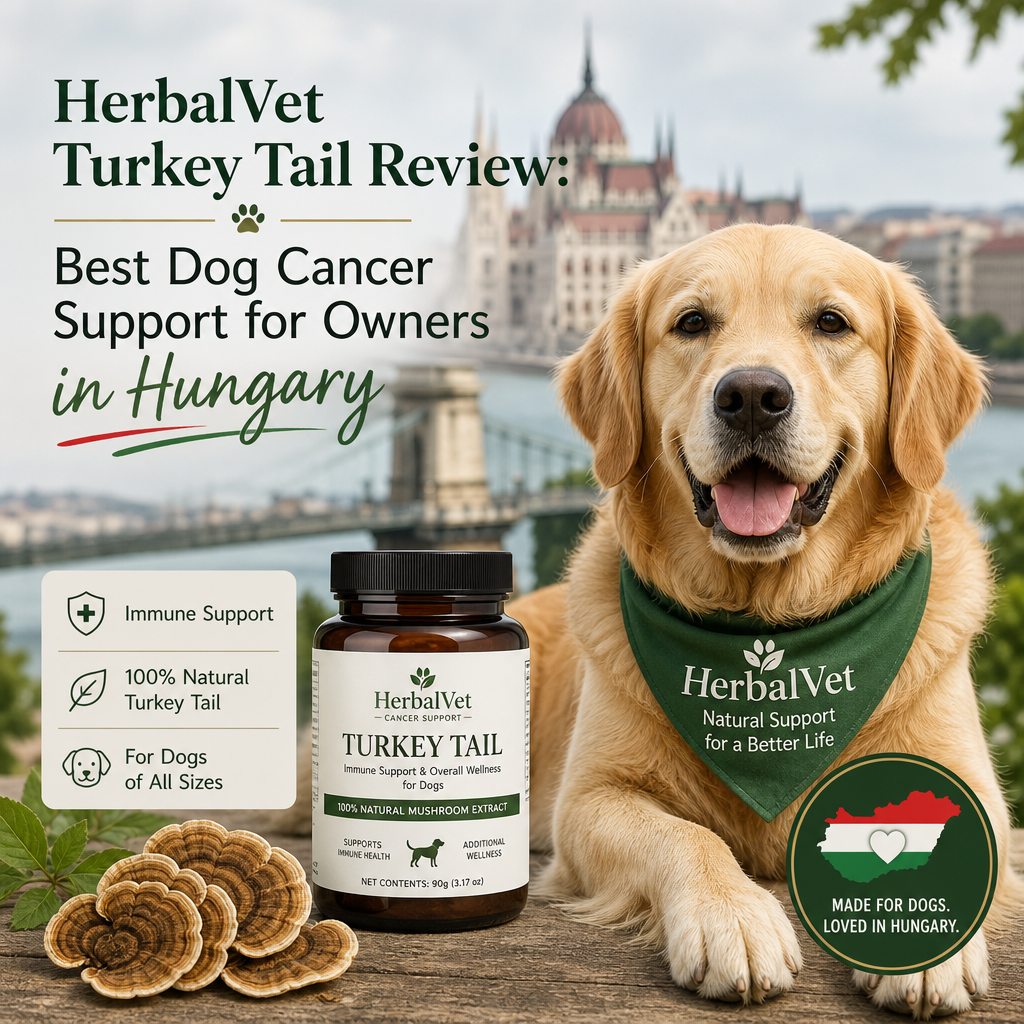
HerbalVet Turkey Tail is a mushroom-based supplement formulated for dogs. Its primary ingredient, turkey tail mushroom, is known scientifically as Trametes versicolor or Coriolus versicolor. The mushroom contains polysaccharides, including beta-glucans and compounds often studied for their potential effects on immune function.
Turkey tail has a long history of use in traditional wellness practices, and modern research has examined mushroom-derived compounds in connection with immune support. For dogs with serious illnesses, including cancer, owners may consider this type of supplement to help maintain general resilience, appetite, energy, and quality of life.
The exact benefits depend on the product’s formulation, concentration, extraction method, and the dog’s individual health status. A supplement made from a standardized extract may differ significantly from one containing only powdered mushroom material.
If you are comparing different options, it can help to review broader guidance on mushroom-based pet supplements as well. For example, this guide to affordable dog tumor supplements in Hungary can provide useful context when evaluating ingredients and pricing.
HerbalVet Turkey Tail dog cancer support: What Owners Should Know
The phrase HerbalVet Turkey Tail dog cancer support generally refers to using turkey tail as a complementary product during veterinary cancer care. “Complementary” is the key word. The supplement should be viewed as an addition to a veterinarian-approved treatment plan rather than a cure or replacement for chemotherapy, surgery, radiation, pain management, or other prescribed care.
Dogs respond differently to cancer and to supplements. Some may tolerate mushroom products without difficulty, while others could experience digestive upset or changes in appetite. In addition, dogs may be taking several medications at once, making it especially important to check for possible interactions.
Owners should discuss the supplement with a veterinarian before giving it to a dog diagnosed with cancer. This is particularly important when the dog has liver or kidney disease, an autoimmune condition, bleeding problems, or a history of allergies. Veterinary guidance is also essential for puppies, senior dogs, pregnant dogs, and pets recovering from surgery.
For general evidence on mushroom compounds and veterinary cancer support, the National Center for Complementary and Integrative Health offers a helpful overview of medicinal mushrooms and their research status: NCCIH medicinal mushrooms science summary.
HerbalVet Turkey Tail review: Potential Benefits
A balanced HerbalVet Turkey Tail review should consider both possible advantages and limitations. The main reason owners explore turkey tail is its naturally occurring beta-glucans and other compounds that may interact with immune pathways. While research in this area is promising, results from laboratory studies, human research, and veterinary studies should not be treated as identical.
Potential reasons for considering a turkey tail supplement include:
- Supporting normal immune system function
- Helping maintain general vitality during demanding treatment
- Providing nutritional support when appetite is inconsistent
- Complementing a balanced diet and veterinary wellness plan
- Giving owners an additional way to support quality of life
These potential benefits do not mean that every dog will show an obvious improvement. Supplements usually work, if at all, as part of a wider approach that includes appropriate medical care, good nutrition, hydration, rest, and regular monitoring.
Owners should also be cautious about claims that promise to shrink tumors, eliminate cancer, or guarantee longer survival. Such statements are not appropriate substitutes for evidence-based veterinary advice.
Product Quality and Ingredients Matter
Not all turkey tail products are equal. Before purchasing HerbalVet Turkey Tail, examine the label carefully. Important details include the amount of turkey tail per serving, whether the product uses a concentrated extract, the beta-glucan content, recommended dosage, batch information, and quality-control testing.
A transparent manufacturer should provide clear ingredient information and directions designed specifically for dogs. Products intended for humans may contain additives, sweeteners, herbs, or dosage levels that are unsuitable for pets. Avoid any supplement containing ingredients known to be dangerous to dogs, such as xylitol.
It is also wise to check storage instructions and expiry information. Mushroom products can lose quality if exposed to heat, humidity, or improper storage. Buying from an established supplier may reduce the risk of counterfeit, contaminated, or poorly labeled products.
HerbalVet Turkey Tail Hungary: Buying and Delivery Considerations
For people searching for HerbalVet Turkey Tail Hungary, availability, delivery times, and product authenticity are practical concerns. Hungarian buyers should confirm whether the seller ships directly to Hungary, provides an invoice, and clearly explains delivery charges. It is also useful to check whether the product is sold through an authorized retailer or the manufacturer’s official distribution channel.
Product labeling and consumer information may vary depending on where the supplement is purchased. Buyers should look for clear instructions in a language they understand and verify that the packaging is sealed and undamaged upon arrival. If the package appears altered, lacks a batch number, or differs from the product description, it should not be given to the dog until its authenticity has been confirmed.
Owners should also consider the total cost of regular use. A product may appear affordable initially but become expensive if the recommended serving is high or if ongoing use is required. Cost should never lead an owner to reduce prescribed medication or skip veterinary appointments.
How to Use It Responsibly
The correct amount depends on the dog’s weight, age, health, diet, and other treatments. Follow the manufacturer’s instructions unless a veterinarian provides different guidance. Never assume that a higher dose will produce better results.
When introducing a new supplement, many owners prefer to begin cautiously and monitor the dog for several days, but this should be discussed with a veterinarian when the dog has cancer or another serious condition. Watch for vomiting, diarrhea, unusual tiredness, itching, swelling, reduced appetite, or any sudden change in behavior. Stop use and seek veterinary advice if concerning symptoms appear.
Keep a simple record of the dog’s appetite, weight, energy, bowel movements, medication schedule, and overall comfort. This information can help the veterinarian determine whether the supplement is well tolerated and whether changes in the dog’s condition require further investigation.
When in doubt, ask the clinic managing your pet’s care whether the supplement fits into the current treatment plan. That extra step is especially useful when multiple therapies, prescription diets, or pain medications are already part of daily care.
A Supportive, Not Standalone, Approach
The most responsible way to view HerbalVet Turkey Tail is as one possible component of comprehensive canine care. A dog with cancer may benefit from a tailored combination of medical treatment, pain relief, nutritional planning, exercise appropriate to its condition, emotional comfort, and regular checkups.
A supplement cannot diagnose cancer, determine its stage, or replace diagnostic tests. It also cannot guarantee a particular outcome. Nevertheless, a carefully selected product may have a role in supporting general wellness when used with realistic expectations and professional supervision.
For Hungarian dog owners considering HerbalVet Turkey Tail, the best decision involves checking product quality, discussing the ingredients with a veterinarian, monitoring the dog closely, and maintaining the primary treatment plan. In that context, turkey tail may serve as a thoughtful complementary option rather than an unsupported promise of a cure.
If you want a broader comparison before buying, review a second opinion from a product-focused guide and use it alongside veterinary advice rather than instead of it. That approach makes it easier to choose a supplement that matches your dog’s needs, budget, and treatment plan.
by TCMVET | Aug 26, 2026 | Research and News
Energyvet Annovet vs Alternatives is an important comparison for dog owners exploring supportive care during a cancer diagnosis. While no supplement should be considered a cure for cancer, integrative approaches may help support comfort, appetite, digestive function, hydration, and overall quality of life when used alongside veterinary treatment. The best plan depends on the type of tumor, disease stage, current medications, and the dog’s individual needs.
Understanding natural and integrative oncology support
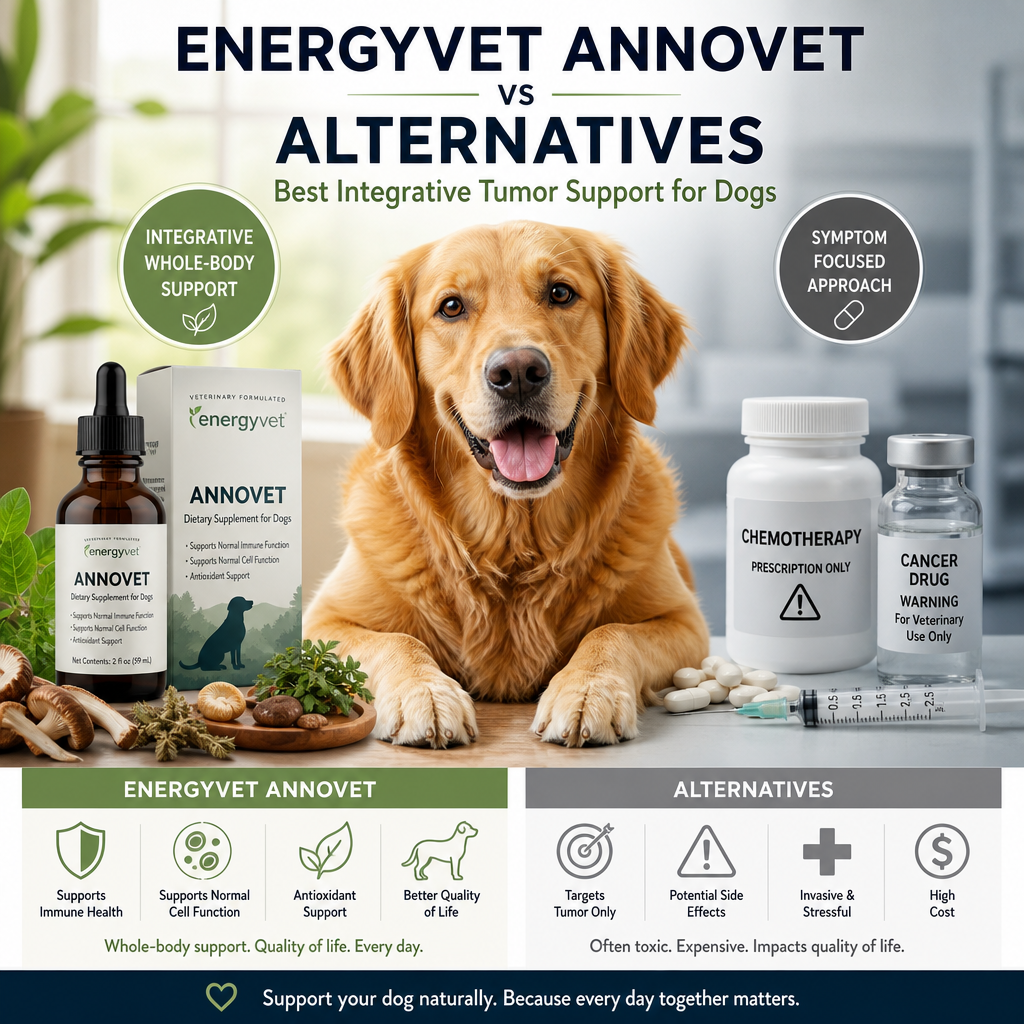
Natural/integrative oncology support combines conventional veterinary medicine with carefully selected complementary therapies. Conventional care may include surgery, chemotherapy, radiation, targeted medication, or palliative treatment. Integrative care focuses on the whole patient, adding nutritional strategies, symptom management, rehabilitation, and selected supplements where appropriate.
The goal is not to replace evidence-based cancer treatment. Instead, supportive therapies may help a dog tolerate treatment, maintain strength, manage side effects, and enjoy a better quality of life. A veterinary oncologist or veterinarian with integrative training should guide the process, especially because supplements can interact with chemotherapy, steroids, anti-inflammatory drugs, anticoagulants, and anesthetic agents.
For owners who want to compare broader product categories, this context is useful when reviewing Energyvet Annovet Alternative: 7 Best Affordable Dog Tumor Supplements in Czech Republic alongside a dog’s medical plan.
In practice, Energyvet Annovet vs alternatives should be assessed through the same lens: does the product support the dog’s current needs, and is it appropriate for the treatment stage the dog is in?
It also helps to remember that supportive care is not a single decision but an ongoing process. As a dog’s condition changes, the balance between appetite support, comfort, hydration, and medication tolerance can change too. A product that seems useful early on may become unnecessary later, while another option may become more important after surgery or during chemotherapy. That is why Energyvet Annovet vs alternatives should be rechecked at each major treatment step rather than decided once and forgotten.
Owners often feel pressure to act quickly after hearing a cancer diagnosis, but a careful review usually leads to better choices. Taking time to understand how each supplement or supportive measure fits into the broader care plan can prevent unnecessary spending, reduce the risk of interactions, and keep the dog’s comfort at the center of the decision.
What is Energyvet Annovet?
Energyvet Annovet is marketed as a veterinary complementary product for animals with serious health conditions, including tumor-related concerns. Product formulations and recommended uses may vary by region, so owners should carefully review the current label and discuss the product with a veterinarian before use.
Some practitioners consider products in this category as part of a broader supportive-care program. However, claims about directly shrinking tumors, eliminating cancer, or replacing medical treatment should be treated cautiously. Cancer is not one disease; lymphoma, mast cell tumors, osteosarcoma, mammary tumors, and hemangiosarcoma all behave differently and require different treatment strategies.
Before considering Annovet, owners should ask:
- What is the confirmed diagnosis?
- Is the product intended for general support or a specific condition?
- Could its ingredients affect clotting, liver metabolism, blood pressure, or immune function?
- Should it be stopped before surgery or chemotherapy?
- How will the dog’s response and safety be monitored?
A supplement should have a clear role in the treatment plan rather than being added simply because it is labeled “natural.” That same rule applies when comparing Energyvet Annovet vs alternatives for dogs with tumors.
In many cases, the most useful question is not whether a supplement sounds promising, but whether it fits the dog’s current situation. For example, a dog with poor appetite and weight loss may need nutrition and anti-nausea support before any additional supplement is considered. A dog with bleeding risk may need certain ingredients avoided entirely. Those practical details matter more than marketing claims, and they are central to a safe comparison of Energyvet Annovet vs alternatives.
It is also important to understand that supportive products are not all aiming at the same problem. Some are designed to support digestion, some to improve nutrient intake, some to help with inflammation, and some to fit into broader integrative oncology routines. That is why comparing labels carefully, alongside the dog’s diagnosis and lab work, is more useful than comparing product names alone.
Energyvet Annovet vs Alternatives: key comparison factors
When evaluating Energyvet Annovet vs alternatives, the most useful comparison is not based solely on brand reputation. Owners should examine evidence, safety, ingredients, quality control, and compatibility with the dog’s primary treatment.
1. Evidence and transparency
Look for clearly identified ingredients, standardized amounts, manufacturing information, and realistic claims. A product that promises to cure multiple forms of cancer is a warning sign. Veterinary supplements often have less research than prescription medications, so transparency is especially important.
Transparency also means understanding what the product is not meant to do. A supportive supplement may be used to assist comfort, digestion, or recovery, but that is very different from a treatment proven to control tumor growth. When Energyvet Annovet vs alternatives are compared honestly, the best option is usually the one with the clearest purpose and the most understandable label.
2. Safety and interactions
Natural products can produce side effects. Certain herbs and concentrated compounds may affect liver enzymes, kidney function, blood clotting, blood pressure, or immune activity. This matters greatly for dogs undergoing surgery, chemotherapy, radiation, or long-term medication.
Interactions are especially important when several products are used together. A supplement that seems harmless by itself can become a concern when combined with another ingredient that also affects the same body system. This is one reason veterinarians often want a full list of everything the dog receives, including treats, powders, oils, and chews. In a thoughtful review of Energyvet Annovet vs alternatives, safety should always be considered before convenience.
3. Quality control
Choose products from manufacturers that test for contamination, ingredient identity, and consistency between batches. Supplements intended for humans may contain ingredients or concentrations that are inappropriate for dogs. Products containing xylitol, high doses of vitamin D, essential oils, or other toxic substances should never be given without explicit veterinary approval.
Quality control is particularly important in long-term support. A dog may receive a product for weeks or months, so the same formula should be consistently manufactured. If a brand changes ingredients or sourcing, the response in the dog may change too. That is another practical reason Energyvet Annovet vs alternatives should be reviewed with attention to product quality, not only to price.
4. Practical goals
A supplement should address a specific concern, such as poor appetite, gastrointestinal upset, muscle loss, or general nutritional support. Vague goals make it difficult to determine whether the product is helping or causing problems.
These same rules apply to Energyvet Annovet vs alternatives in everyday practice: if a product does not fit the diagnosis, the dose, and the treatment timeline, it is probably not the right choice.
Good decision-making also includes setting a time frame. A product should be evaluated after a reasonable trial, with attention to appetite, stool quality, comfort, activity, and lab values when relevant. If no meaningful benefit appears, it may be better to stop it and focus on more direct supportive measures.
Dog tumor support options to discuss with a veterinarian
There are several dog tumor support options that may complement cancer treatment. Their suitability depends on the dog’s diagnosis and medical status.
Nutrition and weight maintenance
Maintaining body weight and muscle is often one of the most important supportive goals. A complete, balanced diet with adequate calories and protein may help preserve strength. Some dogs benefit from highly palatable therapeutic diets, while others need customized feeding plans because of nausea, pancreatitis, kidney disease, or gastrointestinal problems.
Restrictive “cancer diets” can be risky if they cause weight loss or nutritional deficiencies. Homemade diets should be formulated by a veterinary nutritionist rather than assembled from internet recipes.
In many cases, good nutrition is the foundation for evaluating Energyvet Annovet vs alternatives because a supplement cannot compensate for inadequate calories or uncontrolled nausea.
Feeding support may also involve practical adjustments at home. Smaller meals, warmed food, hand feeding, changing food texture, or adding veterinary-approved toppers can make a major difference in intake. These simple strategies often provide more immediate relief than introducing multiple products at once. When owners are overwhelmed by choices, it helps to remember that the most effective dog tumor support options are often the simplest ones that improve eating and hydration.
Omega-3 fatty acids
Veterinary-formulated fish oil may support skin health, inflammation management, and nutritional balance. It can also add calories, which may be useful for some dogs. However, high doses may cause diarrhea or affect platelet function, so dosing should be determined by a veterinarian. Fish oil is not appropriate for every patient, particularly dogs with certain bleeding or pancreatic disorders.
Omega-3 products are often discussed in integrative oncology because they can be part of a broader nutritional strategy. Still, dose and timing matter. A product that is too concentrated may upset the stomach, while a product that is too low in EPA and DHA may not provide the intended benefit. If Energyvet Annovet vs alternatives is being considered in a dog already using fish oil, the veterinarian should review the full supplement list to avoid unnecessary overlap or digestive upset.
Digestive and appetite support
Cancer and its treatments may cause nausea, constipation, diarrhea, or appetite loss. Prescription anti-nausea medications, appetite stimulants, hydration therapy, and dietary adjustments often provide more predictable benefits than untested supplements. Probiotics may be useful in selected cases, but product quality and strain selection matter.
When owners compare Energyvet Annovet vs alternatives, digestive support often matters more than a supplement’s marketing language because comfort and food intake can change quickly during treatment.
Digestive support should also be matched to the underlying issue. A dog with nausea needs a different plan from a dog with loose stool or a dog that simply feels too tired to eat. Because of that, the best dog tumor support options are often the ones that target a specific symptom rather than trying to do everything at once.
Pain management and rehabilitation
Pain control is a central part of integrative oncology. Depending on the condition, care may include prescription analgesics, acupuncture, physical rehabilitation, massage, laser therapy, mobility support, or environmental changes. These approaches should be coordinated so that complementary therapies do not delay necessary treatment.
For many dogs, pain control and mobility support are the most meaningful dog tumor support options because they directly affect activity, sleep, and willingness to eat.
Rehabilitation can be especially helpful after surgery or when a tumor affects movement. Short, gentle walks, traction on slippery floors, ramps, supportive bedding, and careful exercise planning may reduce strain and improve confidence. These non-drug approaches are often overlooked, yet they can be a major part of a dog’s comfort and day-to-day quality of life.
Herbal and antioxidant products
Herbal formulas and antioxidant supplements are sometimes used in integrative care, but they require particular caution. Some antioxidants or plant compounds may theoretically interfere with radiation or chemotherapy, while others may increase bleeding risk or alter drug metabolism. “Natural” does not automatically mean safe, especially at concentrated doses.
This is one reason Energyvet Annovet vs alternatives should always be reviewed with a veterinarian who knows the dog’s full treatment plan.
Herbal products may also vary in strength and purity. The same plant-based ingredient can behave differently depending on how it is extracted, standardized, and stored. If an owner is considering an herbal supportive product, consistency and monitoring become just as important as the ingredient list itself.
Because tumors and treatments differ widely, there is no single best choice among dog tumor support options. A dog with early-stage disease may need a different approach than a dog receiving palliative care. That is why individualized guidance is essential before starting any product.
Comfort-focused supportive care
Not every useful measure has to be a supplement. Warm resting areas, gentle grooming, easier access to water, reduced stair use, and low-stress routines can all support a dog receiving cancer care. These comfort measures do not replace medical treatment, but they can improve daily living in a very real way.
When owners compare Energyvet Annovet vs alternatives, it is worth remembering that the most effective support plan usually combines products, medications, and home adjustments rather than relying on one category alone. This broader perspective helps prevent disappointment and supports more realistic expectations.
How to build a safer integrative plan
Start with a confirmed diagnosis and a written list of every medication, supplement, treat, and diet the dog receives. Ask the veterinary team to identify the primary goals of supportive care. These may include maintaining appetite, reducing nausea, controlling pain, preserving mobility, or supporting recovery after surgery.
Introduce only one new product at a time. This makes it easier to identify side effects and determine whether the product is producing a meaningful benefit. Keep a simple daily record of appetite, water intake, vomiting, stool quality, energy, pain signs, weight, and general comfort.
Stop a product and contact the veterinarian if the dog develops persistent vomiting, diarrhea, jaundice, unusual bruising, severe lethargy, breathing changes, seizures, or a sudden decline. Supplements should also be reviewed before procedures, changes in chemotherapy, or the addition of new prescriptions.
If you are still weighing Energyvet Annovet vs alternatives, use the same safety checklist for every option so the final plan is based on evidence and observation rather than assumptions.
One practical way to keep decisions grounded is to compare any product with the dog’s real-world response over time. If appetite improves, nausea settles, or mobility becomes easier, that is meaningful. If nothing changes, or side effects appear, the product may not belong in the plan.
Supportive care also works best when everyone on the veterinary team is informed. A general practitioner, oncologist, surgeon, and rehabilitation specialist can each notice different risks. Sharing the full list of products helps avoid duplicate ingredients and accidental interactions.
Owners in the Czech Republic often face the same challenge as pet parents elsewhere: there are many options, but not every option suits every dog. That is why a calm, structured review of Energyvet Annovet vs alternatives is more valuable than a quick decision based on online claims.
It can also help to write down questions before each veterinary visit. Asking how a product might affect anesthesia, whether it should be paused during chemotherapy, and what signs of intolerance to watch for can make supportive care safer and less stressful. This kind of planning turns the comparison of Energyvet Annovet vs alternatives into a practical decision rather than a guess.
If the dog has more than one medical issue, the plan may need to be even more selective. Heart disease, kidney disease, liver disease, or endocrine disorders can all affect which supportive products are appropriate. In those cases, the most useful dog tumor support options are often the ones that do not complicate existing disease management.
The best natural/integrative oncology support is individualized, evidence-aware, and safety-focused. Energyvet Annovet may be considered by some owners as one component of a broader supportive plan, but it should not replace diagnosis, oncology consultation, surgery, chemotherapy, radiation, or appropriate palliative care.
Comparing Energyvet Annovet vs alternatives requires more than choosing the product with the strongest marketing. Consider the dog’s tumor type, current treatment, laboratory results, nutritional status, comfort, and quality of life. A carefully monitored plan that combines proven veterinary care with appropriate supportive measures is generally safer and more useful than relying on a single supplement as a stand-alone cancer treatment.
For more details on the practical product landscape, review the options in Czech Republic with your veterinary team and use trusted sources such as the American Veterinary Medical Association cancer care guidance for pets to help guide discussion and expectations.
In short, Energyvet Annovet vs alternatives should be decided by diagnosis, safety, and goals of care. The right choice is the one that supports the dog’s comfort and treatment plan without creating unnecessary risk.
When in doubt, ask the veterinarian to rank the available dog tumor support options by urgency: what is essential now, what may help later, and what should be avoided entirely. That approach keeps treatment organized and gives the dog the best chance of staying comfortable during care.
For many families, the most reassuring decision is the one that blends realism with hope. There may not be a cure in every case, but there is still value in comfort, appetite, and time together. A thoughtful comparison of Energyvet Annovet vs alternatives can help owners choose support that truly fits the dog in front of them, rather than a generic idea of cancer care.
As treatment progresses, the plan may need to evolve. A product that was useful after diagnosis may no longer be needed months later, or a new supportive therapy may become appropriate if side effects increase. Regular reassessment keeps care aligned with the dog’s changing needs and makes the entire integrative approach more effective.
by TCMVET | Aug 26, 2026 | Research and News
NGD Care Myco Immune Complex is a nutritional supplement designed to support dogs whose immune systems may need additional nutritional assistance, including dogs undergoing veterinary care for serious conditions. Interest in mushroom-based formulas has grown among pet owners in the Netherlands because certain medicinal mushrooms contain naturally occurring compounds associated with immune function. However, a supplement should complement—not replace—professional veterinary diagnosis and treatment.
What is NGD Care Myco Immune Complex?
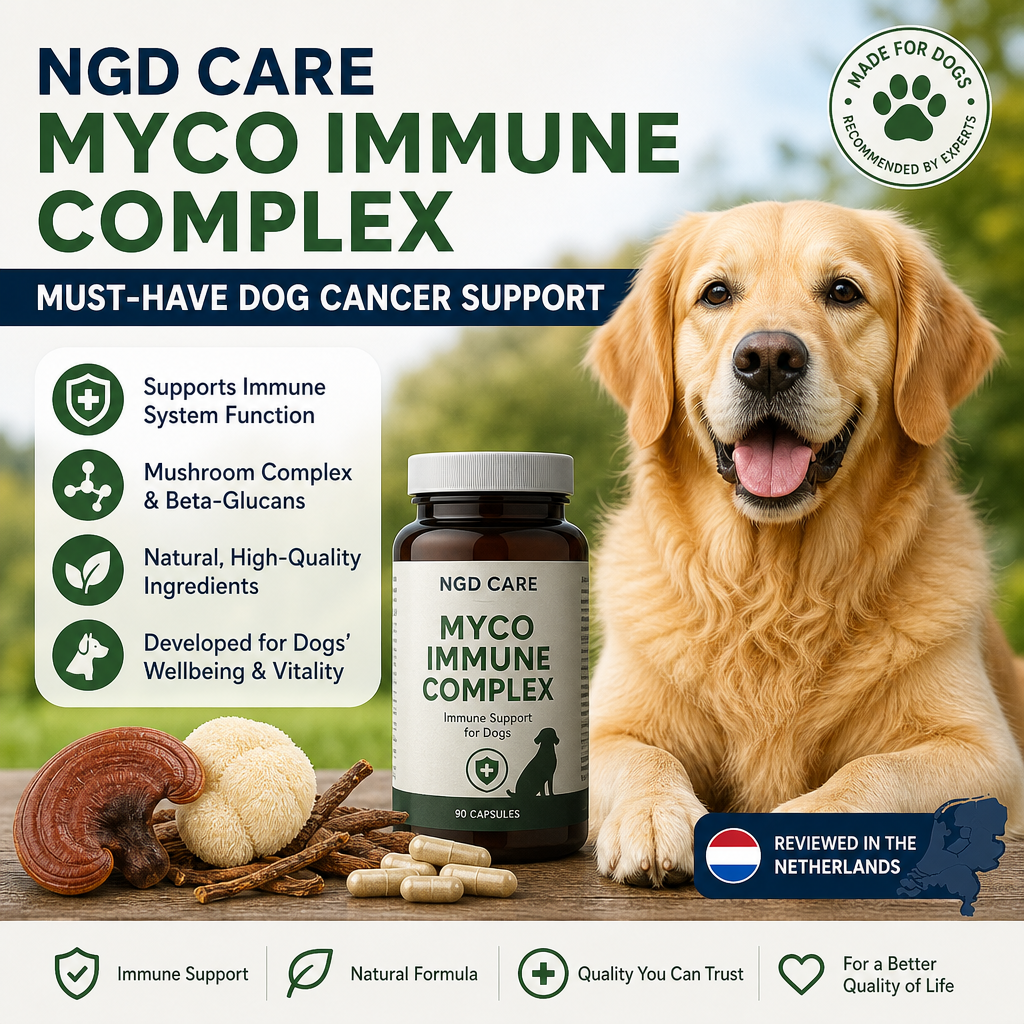
NGD Care Myco Immune Complex is generally positioned as a mushroom-based immune-support formula for dogs. Products in this category commonly contain extracts from medicinal fungi such as turkey tail, reishi, maitake, shiitake, or cordyceps. These mushrooms are valued for compounds including beta-glucans, polysaccharides, triterpenes, and other bioactive constituents.
The purpose of a formula like this is usually to provide nutritional support for normal immune function, resilience, and overall wellbeing. It may be considered for senior dogs, dogs recovering from illness, or dogs receiving treatment for cancer. The exact ingredients, concentrations, extraction methods, and recommended serving size should always be checked on the current product label, since formulas can change.
It is also important to distinguish between immune support and cancer treatment. No supplement can reliably cure cancer, eliminate tumors, or replace surgery, chemotherapy, radiation, or other treatments recommended by a veterinarian. A responsible approach uses supplements only as part of a broader care plan.
NGD Care Myco Immune Complex dog cancer support
Many dog owners search for NGD Care Myco Immune Complex dog cancer support after receiving a difficult diagnosis. Their interest is understandable: they want to help their dog maintain strength, appetite, comfort, and quality of life during treatment. Mushroom extracts are often discussed in veterinary nutrition because beta-glucans may interact with immune cells and may help support normal immune responses.
However, scientific evidence for medicinal mushrooms in canine cancer care remains developing. Some laboratory and small-scale studies are encouraging, but results from laboratory research do not automatically prove that a supplement will treat cancer in a household pet. The type of cancer, disease stage, treatment plan, general health, and individual response all matter.
A supplement may be considered as supportive nutrition, but it should never delay a veterinary appointment. Dogs with suspected or confirmed cancer need an individualized plan. This may include diagnostic imaging, blood tests, biopsy results, pain management, dietary adjustments, and monitoring for treatment side effects.
For a broader overview of integrative support options, many owners also review TCM Vet resources while continuing to follow their own veterinarian’s guidance.
Potential benefits and limitations
The potential appeal of a mushroom complex lies in its nutritional profile. Depending on the formula, possible goals may include:
- Supporting normal immune system activity
- Helping maintain vitality in older or recovering dogs
- Providing antioxidant compounds
- Supporting appetite and general wellbeing
- Complementing a balanced diet during veterinary care
These possible benefits should be viewed realistically. A supplement is not guaranteed to improve survival, shrink a tumor, or prevent recurrence. It may also take time before any noticeable change occurs, and some dogs may experience no visible benefit at all.
Quality is another important consideration. Mushroom supplements differ substantially in the species used, the part of the mushroom included, the extraction process, and the amount of active compounds. A product made from concentrated fruiting-body extracts may not be equivalent to one made primarily from mycelium or powder. Clear labeling and reliable manufacturing are therefore essential.
When possible, it helps to compare product claims with recognized background information on medicinal mushrooms from the U.S. National Center for Complementary and Integrative Health, especially when you want a cautious, evidence-based starting point.
NGD Care Myco Immune Complex review: what should owners assess?
Anyone reading an NGD Care Myco Immune Complex review should look beyond promotional claims. A useful review should explain the formula, intended use, serving instructions, safety considerations, and practical experience without presenting the product as a guaranteed cure.
Before buying, check whether the label identifies each mushroom species and gives clear dosing guidance based on a dog’s weight. It is also worth checking the batch information, expiry date, storage instructions, and manufacturer details. Independent quality testing, where available, can provide additional reassurance about contamination, potency, and consistency.
Customer reviews may describe changes in appetite, energy, digestion, or general comfort, but these observations are subjective. A dog may improve because of veterinary treatment, recovery from an infection, dietary changes, or natural fluctuations in symptoms. Reviews can be useful for understanding palatability and ease of use, but they cannot replace controlled clinical evidence.
Because every case is different, a careful NGD Care Myco Immune Complex review should also ask whether the product fits the dog’s current medicines, diagnosis, and nutrition plan. That practical check matters as much as the marketing language on the package.
Safety and veterinary guidance
Natural does not automatically mean risk-free. Some mushroom ingredients may cause digestive upset, loose stools, nausea, or reduced appetite. Dogs with allergies, liver disease, kidney disease, autoimmune disorders, bleeding problems, or significant chronic illness may require particular caution.
Potential interactions with medicines are also important. Dogs receiving chemotherapy, corticosteroids, immunosuppressive drugs, anticoagulants, or other prescription treatments should not start a supplement without veterinary approval. A veterinarian may recommend avoiding certain products around surgery or adjusting monitoring based on the dog’s condition.
Introduce any new supplement gradually and follow the label rather than assuming that a larger amount will provide greater support. Monitor for vomiting, diarrhea, unusual tiredness, itching, changes in drinking or urination, or any worsening of the dog’s condition. Stop use and contact a veterinarian if concerning symptoms appear.
It is also wise to keep a short log of the first two weeks of use, including appetite, stool quality, energy, and any medication changes. That simple record can help your veterinary team decide whether the supplement is helping, neutral, or unsuitable.
NGD Care Myco Immune Complex Netherlands: purchasing considerations
For owners searching for NGD Care Myco Immune Complex Netherlands, availability, shipping conditions, and product authenticity deserve attention. Buy from a reputable retailer or an authorized source whenever possible. Avoid products with damaged seals, unclear labels, missing batch information, or exaggerated medical promises.
Dutch pet owners should also consider whether the product is appropriately labeled for the local market and whether customer support can answer questions about ingredients and dosage. Imported supplements may have different labeling standards, serving instructions, or regulatory classifications. A veterinary clinic in the Netherlands can help assess whether the product is suitable alongside the dog’s current care.
Cost is another practical factor. Long-term supplementation can become expensive, especially for larger dogs. Compare the amount of active ingredients, serving size, and total monthly cost rather than comparing container prices alone.
For official guidance on veterinary medicines and animal health regulation in the Netherlands, it can be helpful to review the Dutch government’s veterinary medicines and animal health information before making a purchase decision.
A balanced approach to canine cancer care
The most valuable role for a supplement is usually supportive rather than curative. A dog with cancer also benefits from regular veterinary monitoring, appropriate pain control, adequate hydration, a complete and palatable diet, stress reduction, and plenty of rest. Keeping a simple record of appetite, weight, energy, bowel movements, and symptoms can help the veterinary team identify changes early.
NGD Care Myco Immune Complex may be worth discussing with a veterinarian as one part of an individualized support plan. The decision should be based on the dog’s diagnosis, medications, overall health, and treatment goals. Used cautiously and with realistic expectations, a mushroom-based formula may offer nutritional support, but informed veterinary care remains the foundation of responsible cancer management. For many families, the best results come from combining sound medical treatment with careful supportive care rather than relying on any single product.
In that context, NGD Care Myco Immune Complex can be viewed as one possible tool, not a replacement for the treatment plan your veterinarian recommends.
by TCMVET | Aug 26, 2026 | Research and News
Chien cancer perte appétit : lorsqu’un chien atteint d’un cancer mange moins, chaque repas devient une source d’inquiétude pour sa famille. La diminution de l’appétit peut être liée à la maladie elle-même, aux traitements, à la douleur, aux nausées ou encore au stress. Une prise en charge nutritionnelle adaptée ne remplace pas les soins vétérinaires, mais elle peut contribuer à maintenir l’énergie, la masse musculaire et la qualité de vie de l’animal.
Comprendre la perte d’appétit chez le chien atteint d’un cancer
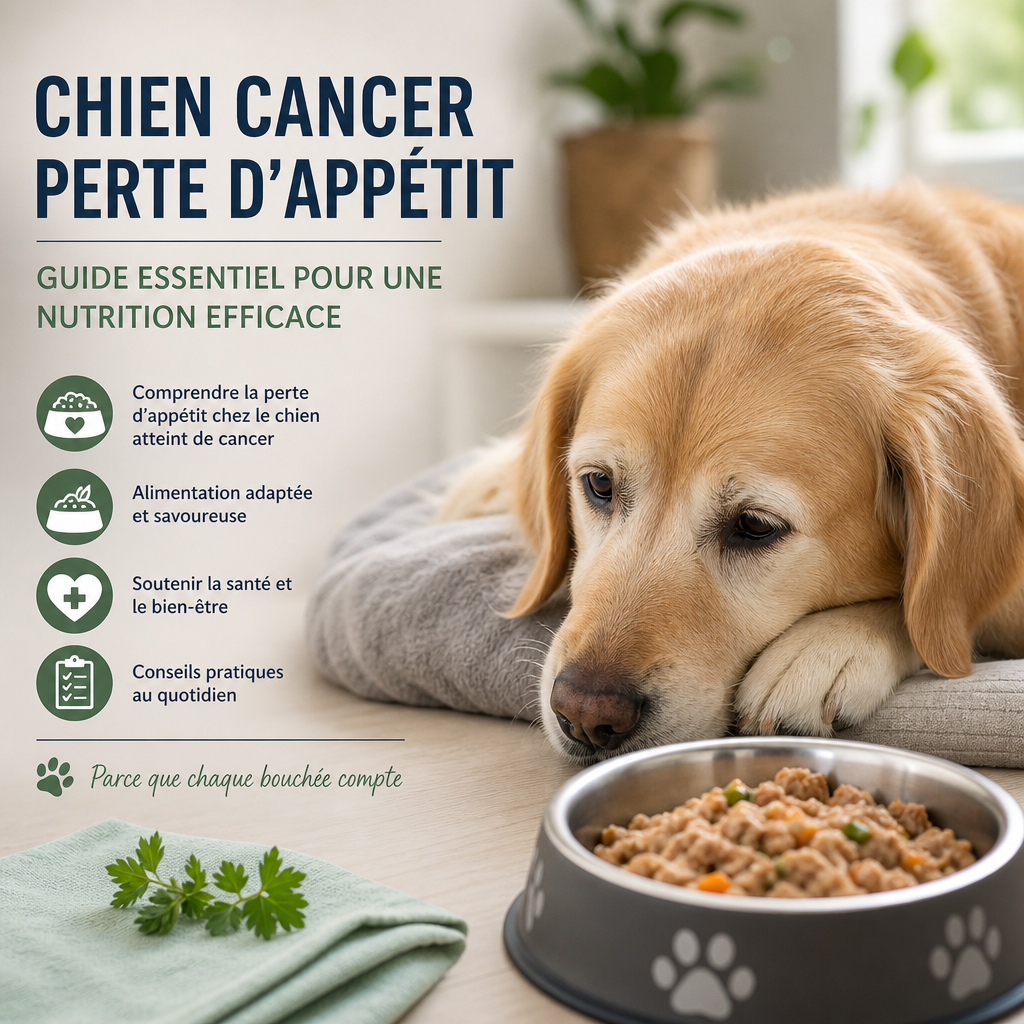
Le cancer peut modifier profondément le fonctionnement de l’organisme. Certaines tumeurs augmentent les besoins énergétiques, tandis que l’inflammation chronique perturbe l’utilisation des nutriments. Le chien peut alors perdre du poids et du muscle même lorsqu’il continue à manger une quantité apparemment correcte.
La perte d’appétit peut également être provoquée par :
- les nausées ou les vomissements ;
- la douleur ;
- les effets secondaires de la chimiothérapie ou de la radiothérapie ;
- des problèmes buccaux ou dentaires ;
- la fatigue et le stress ;
- des troubles digestifs ;
- une modification de l’odorat ou du goût ;
- une difficulté à mâcher ou à avaler.
Il est important de ne pas attribuer automatiquement cette situation au cancer. Une infection, une déshydratation, une insuffisance rénale ou un effet indésirable médicamenteux peuvent aussi expliquer le refus de manger. Une consultation vétérinaire permet de rechercher la cause et d’agir rapidement.
Pour mieux comprendre le contexte médical, vous pouvez aussi consulter des ressources fiables comme les recommandations de l’Cornell University College of Veterinary Medicine sur la nutrition et les soins vétérinaires.
Chien cancer perte appétit : quand faut-il consulter ?
Un chien qui saute exceptionnellement un repas n’est pas toujours en danger, surtout s’il reste alerte et boit normalement. En revanche, une absence d’alimentation prolongée, une perte de poids visible ou une baisse importante d’énergie doivent être signalées au vétérinaire.
Il faut consulter rapidement si le chien :
- ne mange presque plus pendant 24 heures ;
- vomit de façon répétée ;
- présente une diarrhée persistante ;
- refuse également de boire ;
- semble souffrir ou respire difficilement ;
- est très faible, désorienté ou apathique ;
- perd du poids rapidement ;
- ne parvient pas à garder les aliments ou l’eau.
Chez un animal affaibli, quelques jours de mauvaise alimentation peuvent accélérer la fonte musculaire et compliquer la récupération. Le vétérinaire pourra proposer un traitement contre les nausées, une meilleure gestion de la douleur, un stimulant de l’appétit ou une alimentation thérapeutique.
Dans les cas où la situation évolue vite, il ne faut pas attendre que le chien cancer perte appétit se dégrade davantage avant de demander conseil.
Chien cancer perte poids : pourquoi la masse musculaire est essentielle
Le terme chien cancer perte poids ne désigne pas seulement une diminution de la graisse corporelle. Dans de nombreux cas, le chien perd surtout de la masse musculaire. Cette fonte musculaire peut réduire la mobilité, affaiblir les défenses immunitaires et diminuer la tolérance aux traitements.
Le poids doit donc être surveillé régulièrement, mais il ne constitue pas l’unique indicateur. Il est utile d’observer aussi :
- la visibilité des côtes et de la colonne vertébrale ;
- le volume des muscles des cuisses et du dos ;
- la facilité à se lever et à marcher ;
- l’état du pelage ;
- le niveau d’activité ;
- la quantité de nourriture réellement consommée.
Peser le chien une fois par semaine, dans des conditions similaires, peut aider à détecter une évolution. Une perte de poids progressive doit être discutée avec le vétérinaire, même si l’animal semble encore relativement actif.
Sur ce point, un suivi attentif du chien cancer perte poids permet souvent d’intervenir avant que la fatigue ne devienne trop marquée.
Les principes d’une nutrition chien cancer adaptée
La nutrition chien cancer doit être personnalisée selon le type de tumeur, le stade de la maladie, les traitements en cours, l’âge et les éventuelles maladies associées. Il n’existe pas de régime universel capable de guérir le cancer.
De manière générale, l’objectif est de fournir une alimentation suffisamment énergétique, digestible et appétente. Les protéines de qualité sont importantes pour soutenir les muscles, mais leur quantité doit être adaptée si le chien souffre d’une maladie rénale ou hépatique. Les matières grasses peuvent augmenter la densité énergétique des repas, mais elles ne conviennent pas à tous les animaux, notamment en cas de pancréatite ou de troubles digestifs.
Les aliments thérapeutiques vétérinaires peuvent être intéressants, car leur composition est conçue pour répondre à certains besoins nutritionnels. Toutefois, ils doivent être introduits progressivement et choisis avec l’avis d’un professionnel.
Dans certains cas, le vétérinaire peut aussi recommander une surveillance plus fine de l’hydratation et de l’état corporel, surtout si le chien présente un soutien nutritionnel complémentaire pour chien atteint de cancer. L’objectif est de limiter la fonte musculaire sans surcharger le système digestif.
Une nutrition chien cancer bien pensée aide à préserver les forces, surtout lorsque l’appétit fluctue d’un jour à l’autre.
Comment encourager un chien à manger ?
Plusieurs mesures simples peuvent rendre les repas plus attractifs :
- proposer de petites portions plusieurs fois par jour ;
- servir la nourriture légèrement tiédie afin de renforcer son odeur ;
- offrir les repas dans un endroit calme ;
- utiliser une gamelle facilement accessible ;
- humidifier les croquettes avec de l’eau tiède si le chien les tolère ;
- éviter les changements alimentaires brusques ;
- maintenir des horaires réguliers ;
- limiter les friandises qui coupent l’appétit ;
- présenter une alimentation à texture adaptée en cas de douleur buccale.
Il est préférable de ne pas forcer le chien à manger, car cela peut créer une aversion durable et augmenter son stress. Si les tentatives à domicile échouent, le vétérinaire pourra évaluer la nécessité d’une assistance nutritionnelle temporaire.
Chez certains animaux, une routine simple et stable aide beaucoup : même heure, même endroit, même texture, et une présentation très appétente. Cette approche peut sembler modeste, mais elle soutient réellement le chien cancer perte appétit au quotidien.
Lorsque l’odeur des aliments devient moins attirante, il peut être utile de proposer très brièvement plusieurs options compatibles avec les recommandations du vétérinaire pour relancer l’envie de manger.
Les compléments alimentaires sont-ils utiles ?
Les compléments doivent être utilisés avec prudence. Certains produits peuvent interagir avec les médicaments, perturber la coagulation ou aggraver une maladie existante. Les huiles riches en oméga-3, par exemple, peuvent parfois être envisagées dans un programme nutritionnel, mais leur dosage doit être validé par le vétérinaire.
Les vitamines, plantes, antioxydants et produits présentés comme capables de « combattre » le cancer ne sont pas nécessairement sans danger. Un complément ne doit jamais remplacer une chimiothérapie, une chirurgie, une radiothérapie ou un traitement contre la douleur. Il est essentiel de communiquer au vétérinaire la liste complète des aliments et produits donnés au chien.
Si vous souhaitez approfondir les options disponibles, consultez aussi ce guide sur le meilleur complément alimentaire pour chien atteint de cancer. Il rappelle les points de vigilance essentiels avant toute utilisation.
Le bon choix dépend toujours du contexte clinique, et un complément alimentaire chien cancer n’est utile que s’il s’intègre à une stratégie validée par un professionnel.
Adapter les repas aux traitements
Les besoins alimentaires peuvent évoluer au fil du protocole. Après une séance de chimiothérapie, certains chiens présentent des nausées ou une fatigue temporaire. Il peut alors être utile de proposer des repas plus petits, digestes et odorants, tout en suivant les prescriptions médicales.
En cas de radiothérapie ou de chirurgie, la texture des aliments peut devoir être modifiée. Si la bouche, la gorge ou le système digestif sont concernés, une nourriture molle peut être mieux tolérée. À l’inverse, certains chiens supportent mieux une alimentation familière plutôt qu’un nouveau régime imposé pendant une période déjà stressante.
Un suivi régulier permet d’ajuster les quantités, la fréquence des repas et la composition nutritionnelle. Le vétérinaire peut également orienter la famille vers un spécialiste en nutrition animale lorsque la situation est complexe.
Lorsque la maladie progresse, il peut être utile de surveiller aussi l’évolution des métastases et les signes généraux d’aggravation. Un article comme cancer chez le chien et propagation de la tumeur peut aider à mieux comprendre le contexte médical, sans remplacer l’avis du vétérinaire.
Dans cette phase, l’objectif reste d’adapter les repas aux traitements sans ajouter de stress inutile au chien cancer perte appétit.
Une approche globale pour préserver la qualité de vie
L’alimentation ne doit pas être considérée séparément du reste des soins. La gestion de la douleur, des nausées, de l’anxiété et de la fatigue influence directement l’envie de manger. Un chien confortable, suffisamment hydraté et installé dans un environnement rassurant a davantage de chances de maintenir une alimentation correcte.
L’objectif principal n’est pas de faire suivre un régime parfait à tout prix, mais de préserver le bien-être et les forces de l’animal. Une observation attentive, un dialogue régulier avec le vétérinaire et une adaptation rapide des soins permettent souvent de mieux accompagner le chien pendant sa maladie.
En pratique, le suivi du poids, de l’appétit et de la masse musculaire reste un repère très utile. Pour un chien cancer perte appétit, la priorité est de soutenir l’organisme sans le sursolliciter, tout en ajustant la stratégie au jour le jour.
Avec une prise en charge précoce, une nutrition chien cancer bien pensée et des mesures simples à la maison, il est souvent possible d’améliorer le confort alimentaire et de préserver la qualité de vie plus longtemps.
Enfin, une surveillance régulière et des ajustements rapides peuvent faire une vraie différence lorsque le chien cancer perte appétit traverse une période difficile.
by TCMVET | Aug 26, 2026 | Research and News
STUBBS S-Onco vs Alternatives is a comparison many Portuguese dog owners consider after a veterinary diagnosis involving a tumor or cancer. Choosing a supportive product can feel overwhelming, especially when there are supplements, medicinal mushrooms, botanical formulas, special diets, and conventional treatments available. The most important point is that supportive products should complement—not replace—veterinary oncology care. A thoughtful decision considers the dog’s diagnosis, treatment plan, general health, medication interactions, product quality, and realistic goals.
Understanding dog tumor support options
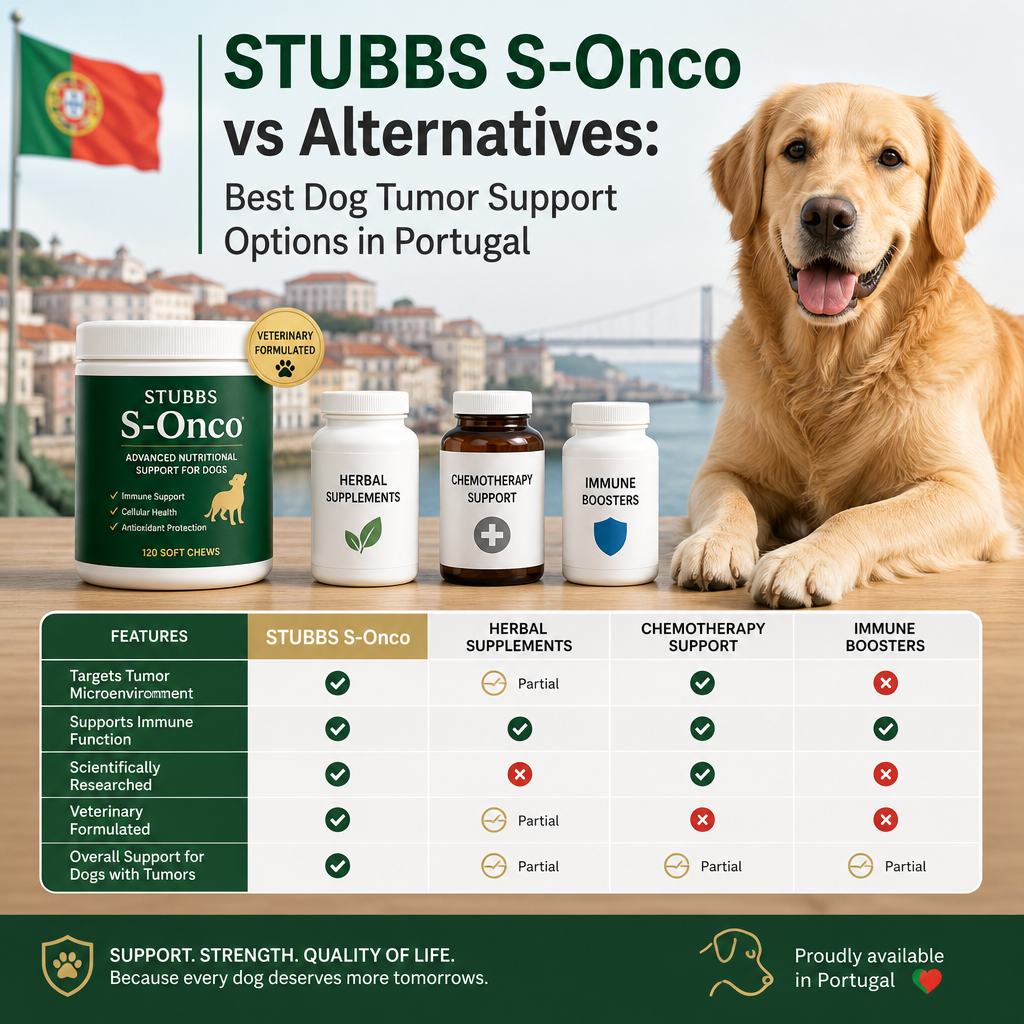
Dog tumor support options are designed to help maintain overall well-being during a challenging period. Depending on the formula, they may support appetite, digestion, immune function, energy, antioxidant defenses, or recovery during surgery, chemotherapy, or radiation therapy. However, no supplement can be considered a guaranteed cancer treatment, and evidence varies considerably between ingredients and products.
Veterinary guidance should come first because different tumors behave differently. A supplement that may be appropriate for one dog could be unsuitable for another, particularly when the dog has liver disease, kidney problems, bleeding risks, diabetes, or is taking several medicines. Your veterinarian may also recommend avoiding certain products before surgery or during specific chemotherapy protocols.
In Portugal, owners can find products through veterinary clinics, pharmacies, pet retailers, and online stores. Availability does not necessarily prove quality or effectiveness. Before purchasing, check whether the product has clear labeling, batch information, dosage instructions, storage guidance, and a transparent manufacturer. It is also wise to ask whether the product has been tested for contamination, heavy metals, pesticides, and accurate ingredient levels.
For readers comparing options across markets, this guide on Dog Tumour Supplements: 7 Safe, Effective Support Options Compared is a useful next step when evaluating product types and safety priorities.
It can also help to set expectations early. Supportive care is usually about comfort, stability, and preserving quality of life rather than dramatic short-term changes. A product may be useful if it helps a dog eat better, maintain body weight, or tolerate treatment with fewer digestive issues. The best results often come from pairing the right supportive product with consistent feeding routines, regular monitoring, and close communication with the veterinary team. That is why STUBBS S-Onco vs alternatives should be reviewed as part of the whole treatment plan, not in isolation.
Many owners also want a clear framework for comparing products. A practical checklist includes ingredient transparency, dosing clarity, manufacturer reputation, testing standards, palatability, and compatibility with the dog’s current medications. If a product does not provide enough detail to evaluate those points, it becomes harder to justify its use even if the marketing sounds convincing. In other words, the most helpful dog tumor support options are often the ones that are easiest to assess and monitor over time.
STUBBS S-Onco vs Alternatives: what makes the comparison useful?
The phrase STUBBS S-Onco vs alternatives usually refers to comparing a combined oncology-support formula with simpler or more targeted products. A multi-ingredient supplement may be convenient because it brings several botanical and mushroom ingredients into one formulation. By contrast, individual supplements allow more precise control over dosage and may make it easier to identify which ingredient causes a benefit or side effect.
A combined product can be appealing when owners want broad nutritional and wellness support. It may also reduce the number of containers and daily administration steps. On the other hand, a complex formula may create more potential for interactions, especially if the dog is already receiving medication or other supplements.
The best comparison is not based only on the number of ingredients. Consider the quality of the evidence, the concentration of active compounds, manufacturing standards, palatability, cost per daily serving, and whether the formula fits the dog’s medical needs. A product with fewer ingredients but clearer testing and better veterinary oversight may be more appropriate than a long ingredient list with limited documentation.
For broader context on related product choices in Europe, you may also find the Alternatives to Medicinal Mushrooms / Veterinary Mycotherapy: 7 Best Dog Tumor Supplements in Switzerland article helpful when comparing support strategies.
There is also a practical reason this comparison matters in real life. When a dog is unwell, owners often want to act quickly, and that urgency can make product selection feel emotional. STUBBS S-Onco vs alternatives should therefore be approached with a calm, structured review of the label, the dog’s diagnosis, and the current treatment phase. A careful comparison can prevent unnecessary spending and reduce the chance of giving a product that is poorly matched to the dog’s needs.
In some cases, veterinarians may prefer a gradual approach. That means starting with one well-chosen support product, observing the dog closely, and only then considering whether any additional support is needed. This method is especially useful when the dog is already on chemotherapy, pain relief, or gastrointestinal medication. The simpler the trial, the easier it is to know whether the supportive care is actually helping.
Multi-botanical + medicinal-mushroom oncology support
Multi-botanical + medicinal-mushroom oncology support often combines plant extracts with mushrooms such as turkey tail, reishi, maitake, or shiitake. These ingredients are commonly selected for their polysaccharides, beta-glucans, polyphenols, or other naturally occurring compounds. In laboratory and preliminary clinical research, some mushroom-derived compounds have been investigated for immune-related effects and potential supportive roles in cancer care.
However, laboratory findings should not be treated as proof that a finished supplement will control or cure cancer in dogs. Extract type, concentration, purity, preparation method, and dosage can vary significantly. “Mushroom powder” is not necessarily equivalent to a standardized extract, and a high ingredient count does not automatically indicate a stronger product.
Botanical ingredients also deserve careful review. Herbs may influence inflammation, blood clotting, liver enzymes, blood pressure, or the metabolism of prescription medicines. Some substances considered safe for people can be unsuitable for dogs, particularly at concentrated doses. Owners should provide the veterinarian with the complete label rather than relying on a product name or marketing description.
When discussing multi-ingredient formulas, STUBBS S-Onco vs alternatives often comes down to whether the dog needs broad support or a more focused plan. In some cases, a veterinary team may prefer a simpler product and add only what is needed.
It is also worth remembering that botanical and mushroom ingredients are not interchangeable just because they sound similar. Two formulas may both mention mushrooms, yet one may use a small amount of a general powder while another contains a more concentrated extract with better-defined active compounds. That distinction can matter a great deal when a dog is dealing with a serious illness. For this reason, STUBBS S-Onco vs alternatives should be evaluated by composition and quality, not by broad category alone.
When owners review ingredient panels, they should look for more than just the presence of familiar names. Questions such as “How much is included?”, “What part of the mushroom is used?”, “Is the extract standardized?”, and “Are there any filler ingredients that dilute the formula?” can be more useful than the front label. A well-formulated product should make these details easy to find.
Comparing supplement categories
When evaluating dog tumor support options, it helps to separate products into broad categories.
Combination oncology formulas: These may include several mushrooms, herbs, antioxidants, and nutritional compounds. They offer convenience and broad coverage but can be harder to evaluate ingredient by ingredient.
Single-ingredient supplements: These focus on one compound, such as a specific mushroom extract or omega-3 fatty acid. They may be easier to dose and monitor, although they provide narrower support.
Nutritional support products: These may target appetite, weight maintenance, gastrointestinal health, or recovery. For many dogs, maintaining nutrition and body condition is a practical priority during treatment.
Prescription veterinary therapies: Surgery, chemotherapy, radiation therapy, targeted drugs, and pain management are not alternatives to supplements; they are evidence-based medical options that may be used alongside carefully selected supportive care.
Dietary approaches: A complete, balanced diet appropriate to the dog’s condition is essential. Homemade diets should be formulated with a veterinary nutritionist because nutritional deficiencies can worsen weakness and recovery.
For a more focused comparison of supportive products, see STUBBS S-Onco alternative: 5 Powerful, Positive Choices for Dogs with Tumors in Portugal, which covers practical considerations for choosing another approach.
These categories overlap in real life, and that is one reason selection can be confusing. A supplement may act partly as nutritional support and partly as a botanical formula, while another product may be marketed as an oncology aid even though its main value is appetite support. The right interpretation depends on the dog’s actual needs. If the main issue is appetite loss, then a palatable nutritional aid may be more helpful than a complex botanical blend. If the goal is general supportive care during treatment, a more comprehensive formula might make sense. STUBBS S-Onco vs alternatives therefore works best as a comparison of function, not just branding.
Owners sometimes ask whether “more ingredients” means better support. Not necessarily. Extra ingredients can increase the chance of overlap, unnecessary cost, or tolerability issues. A shorter formula with clear documentation may be more suitable, especially if the dog already has a complicated medication schedule. In practice, the best dog tumor support options are the ones that align with a specific, measurable goal.
Safety and medication considerations
Before starting STUBBS S-Onco or any alternative, discuss the product with the treating veterinarian. This is particularly important if the dog is receiving chemotherapy, corticosteroids, nonsteroidal anti-inflammatory drugs, anticoagulants, anticonvulsants, antibiotics, or medications processed by the liver.
Potential warning signs after introducing a supplement include vomiting, diarrhea, reduced appetite, unusual tiredness, itching, swelling, bruising, bleeding, or changes in thirst and urination. Stop the product and contact a veterinary professional if serious or persistent symptoms appear. Do not introduce multiple new supplements at once, since doing so makes it difficult to identify the cause of a reaction.
Keep a written record of every supplement, medication, dose, and administration time. This simple habit helps the veterinary team evaluate interactions and decide whether a product should be paused before a procedure or changed during treatment.
To better understand how ingredients are evaluated, the U.S. National Center for Complementary and Integrative Health offers a useful overview of herbal medicine safety and evidence considerations.
Timing also matters. Some supportive products may be acceptable during stable periods but should be paused before surgery or reviewed when a new chemotherapy protocol begins. This is especially relevant for formulas that may affect clotting, inflammation, or liver metabolism. Even a product that seems gentle can become a concern when combined with other treatments. That is why STUBBS S-Onco vs alternatives should always be checked against the current medication list.
Owners should also watch for subtle changes rather than waiting for obvious side effects. A supplement might not cause vomiting yet still reduce appetite, loosen stools, or make a dog less interested in food. Those smaller changes can affect body condition over time. Recording daily observations makes it easier to see whether the dog is truly benefiting from the product or merely tolerating it.
How Portuguese dog owners can make a practical decision
Start by asking what the primary goal is. Is the aim to support appetite, maintain weight, improve digestive tolerance, or provide general wellness during treatment? A clear goal makes it easier to measure whether a product is useful.
Next, review the label with a veterinarian. Look for exact ingredient amounts rather than vague proprietary blends. Ask about the form of each ingredient, the daily dose for the dog’s weight, and whether the manufacturer provides independent testing. Cost should be calculated per month, not only per container, because a cheaper product may require a higher daily amount.
Finally, monitor objective outcomes. Track appetite, body weight, stool quality, activity, hydration, and treatment-related side effects. Supplements should not delay diagnostic tests, surgery, oncology consultations, or changes in medical treatment.
As a practical rule, STUBBS S-Onco vs alternatives should be decided by fit, not by marketing claims. The right choice is the one that supports the treatment plan without creating avoidable risk.
Some owners also ask whether the same product can be used throughout the full treatment journey. In practice, the answer depends on the dog’s diagnosis and response. A formula that seems useful during appetite loss may not be the best choice before surgery, and a product tolerated during recovery may still need review once chemotherapy begins. That is another reason STUBBS S-Onco vs alternatives should always be reassessed with the veterinary team rather than treated as a one-time purchase.
Another useful question is whether the dog already gets enough support from diet and standard care. If the dog is eating well, maintaining weight, and tolerating treatment, a supplement may offer only a small incremental benefit. If appetite, digestion, or energy are declining, however, a carefully selected supportive product can play a more meaningful role. In both cases, the product should align with the dog’s real needs rather than assumptions based on the label.
Owners should also think about consistency. If a product is difficult to administer, has a strong odor, or causes mild digestive upset, long-term use may be impractical. Palatability matters because the best support plan is the one the dog can actually take regularly. For that reason, the choice between STUBBS S-Onco vs alternatives may come down to the format, flavor, and dosing schedule as much as the ingredient list.
It can help to compare products side by side with a short decision table in your own notes. For example, list the dog’s diagnosis, current medications, the product’s ingredients, the daily cost, the expected purpose, and any known cautions. Even a simple comparison can make the decision much clearer and reduce the pressure to choose based on packaging or online claims. STUBBS S-Onco vs alternatives becomes much easier to evaluate when the facts are written down in one place.
When in doubt, ask the veterinarian these four questions: Is this product safe with the current treatment plan? Is there evidence it may help with the dog’s main problem? Is there a more appropriate alternative? And what signs should we monitor after starting it? Those questions are often more valuable than looking for a universal “best” supplement, because support needs can change quickly during cancer care.
A balanced conclusion
STUBBS S-Onco vs Alternatives is not a simple contest with one universal winner. A combined multi-botanical and medicinal-mushroom formula may suit some dogs when its ingredients, quality, and safety profile have been reviewed by a veterinarian. Other dogs may benefit more from targeted nutritional support, a single well-characterized ingredient, or no supplement at all.
The most responsible approach to dog tumor support options is individualized care. Use supplements only as part of a broader plan that prioritizes accurate diagnosis, evidence-based treatment, nutrition, pain control, monitoring, and quality of life. In Portugal, owners should seek guidance from the dog’s veterinarian or a veterinary oncology service before adding any product, especially when conventional cancer treatment is underway.
For many families, the final decision becomes clearer after comparing the formula, the dog’s current treatment plan, and the available evidence. When in doubt, ask the veterinary team to help decide whether STUBBS S-Onco vs alternatives offers the safest and most sensible support for the individual dog.
As treatment progresses, it is normal to revisit the plan several times. A product that made sense early on may no longer be needed later, while a different supportive choice may become more relevant after surgery, during chemotherapy, or in recovery. The goal is not to find a perfect universal product, but to choose the most appropriate support at each stage with veterinary supervision.
In that sense, STUBBS S-Onco vs alternatives is less about branding and more about practical fit, quality, and safety. When those three factors are reviewed carefully, owners are better positioned to make informed decisions that support both comfort and treatment goals.
Used well, supportive care can be a helpful part of a wider oncology plan. Used carelessly, it can add confusion, cost, or risk. That is why a measured, evidence-aware approach is best. If a product is chosen thoughtfully, monitored carefully, and adjusted when needed, it can contribute meaningfully to the dog’s comfort and day-to-day wellbeing throughout treatment.
